Running a or a is one of the most rewarding jobs in the world — and one of the most chaotic. On any given morning, you might be juggling a wailing toddler in one arm, a stack of supplies in the other, and a golden retriever who has decided that right now is the perfect moment to bolt for the lobby.
In environments like these, a door is never just a door. It is a frontline safety barrier. And when that barrier fails — when a latch doesn't catch, when a gate swings open behind a distracted staff member — the consequences range from a frantic chase across a parking lot to a that could shut your business down.
The frustrating truth is that most door failures aren't caused by broken hardware. They're caused by busy humans. A caregiver whose hands are full of bottles and blankets simply cannot reach back to pull a door shut. A kennel attendant walking three dogs at once cannot stop to twist a deadbolt. The problem isn't negligence — it's physics. You only have two hands, and they're already occupied.
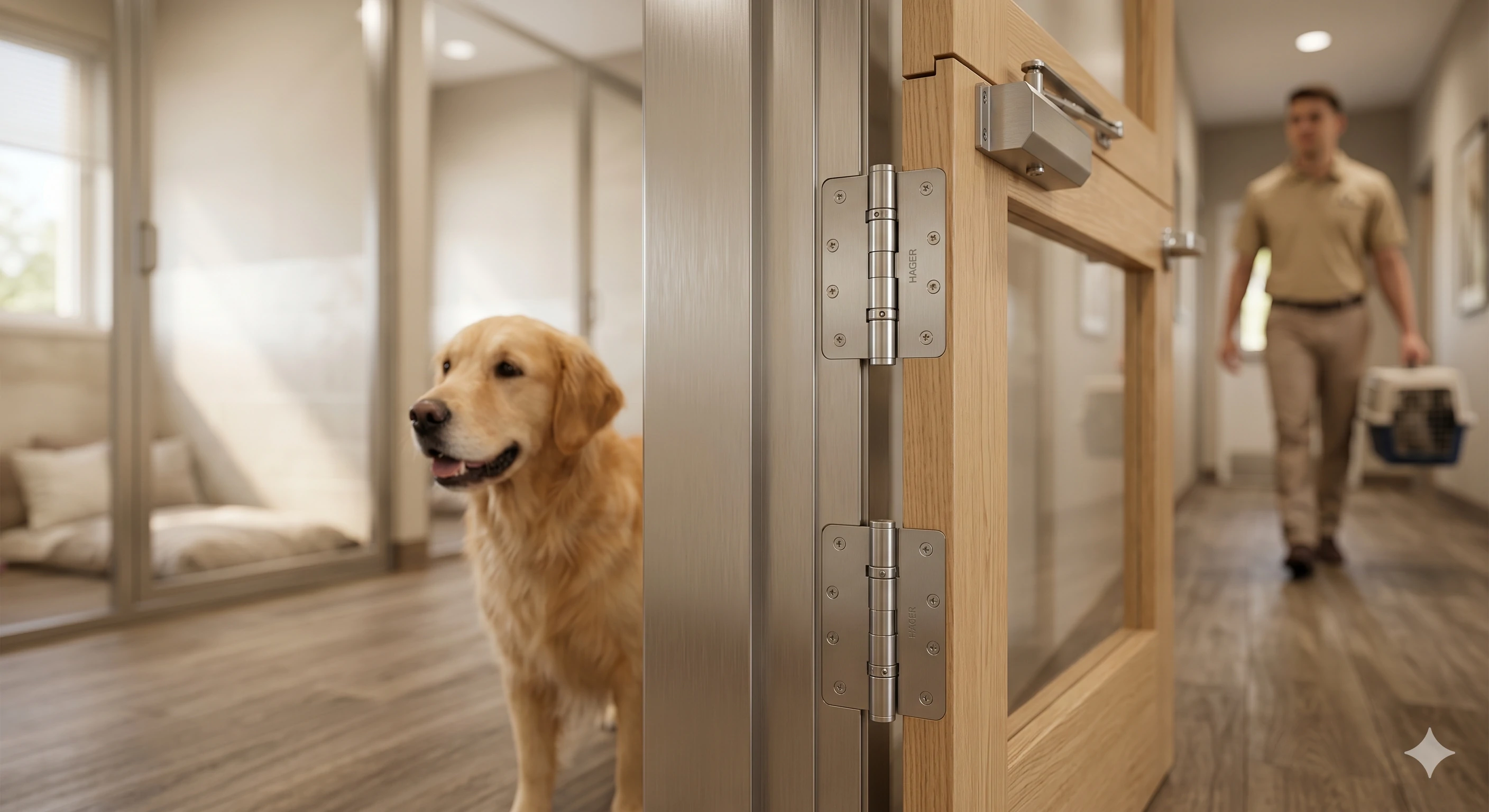
Meanwhile, the opposite problem is just as dangerous. A heavy door caught by a gust of wind or released carelessly can slam shut with bone-crushing force. For a toddler whose fingers are wrapped around a door jamb, or a puppy whose tail is in the wrong place at the wrong moment, the result is a serious injury and an no facility owner ever wants to file.
There is a solution that removes human error from the equation entirely: commercial-grade, auto-closing spring hinges. Think of them as an invisible security guard stationed at every door and gate in your facility — ensuring that every barrier closes automatically, softly, and securely, every single time, without anyone lifting a finger.
This guide will walk you through exactly how these hinges work, why they outperform every alternative on the market, and how they can transform the safety profile of your childcare center or pet facility overnight.
Understanding the Real Dangers: Why Your Current Doors Are a Liability
Before we talk about solutions, let's be honest about the problems. If you manage a facility full of children or animals, you already know the daily stress of keeping everyone safe. But it helps to name the specific threats so we can solve them systematically.
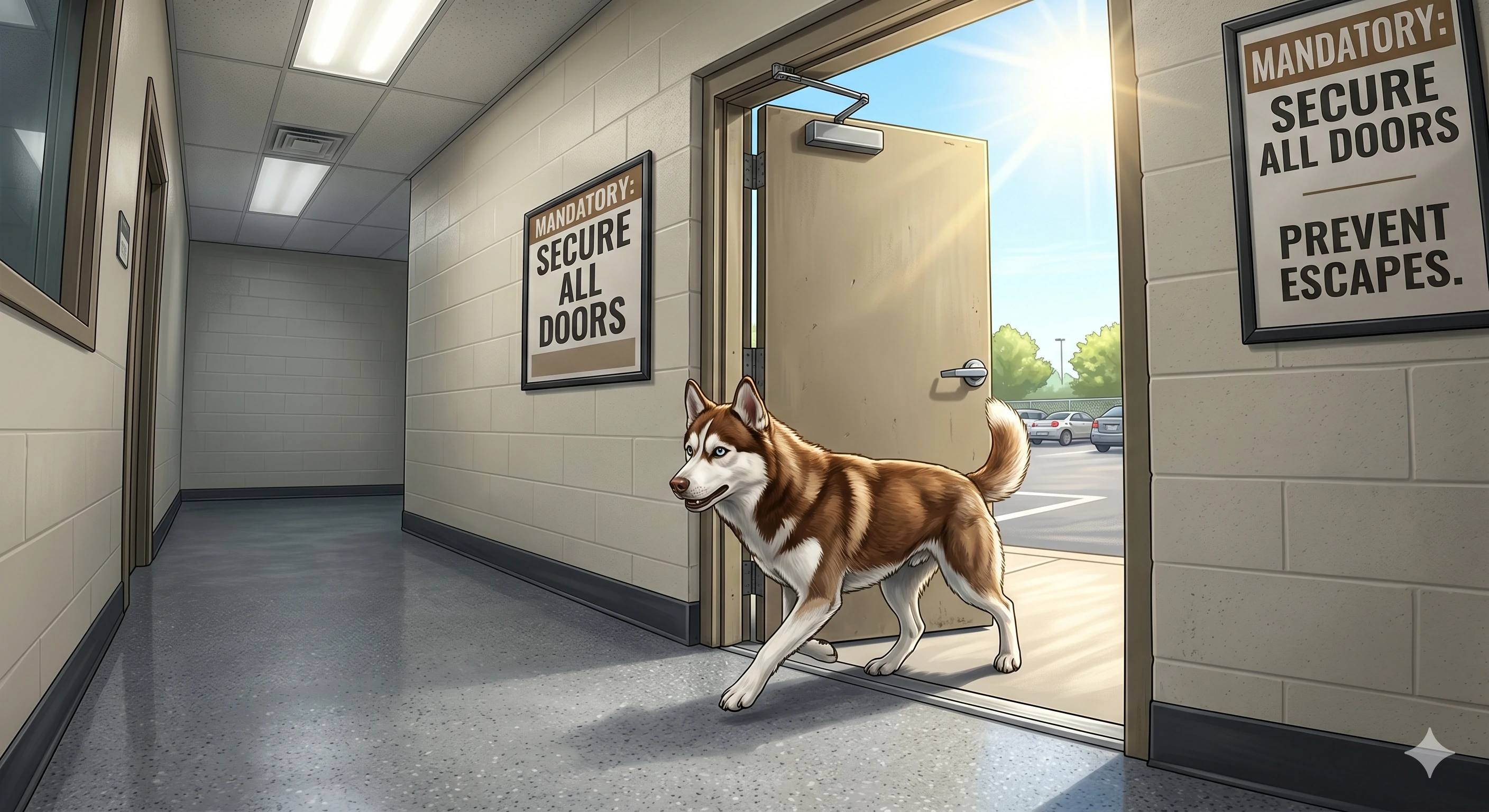
The "Door-Dashing" Threat
Toddlers and pets share one inconvenient trait: they are relentless opportunists. A standard door that doesn't click shut on its own is not a barrier — it's an invitation.
Dogs, especially , are masters of the door-dash. They watch for that half-second gap when a client walks in or a staff member steps out, and they launch toward it with zero hesitation. In a boarding or daycare facility, an escaped dog doesn't just cause panic — it creates immediate danger. A loose animal near a road, a parking lot, or unfamiliar territory can be injured, lost, or worse.
Children are no different in their curiosity. A toddler who sees a door ajar will push it open and wander into areas they were never meant to access: a kitchen with hot surfaces, a supply closet with , or an outdoor space without supervision. These "near-miss" escapes happen more often than most facility owners are comfortable admitting, and it only takes one real escape to create a catastrophe.
The root cause is almost always the same. Someone walked through a door, their hands were full, and the door didn't close behind them. It stayed open for three seconds — and three seconds was all it took.
The "Full-Hands" Struggle
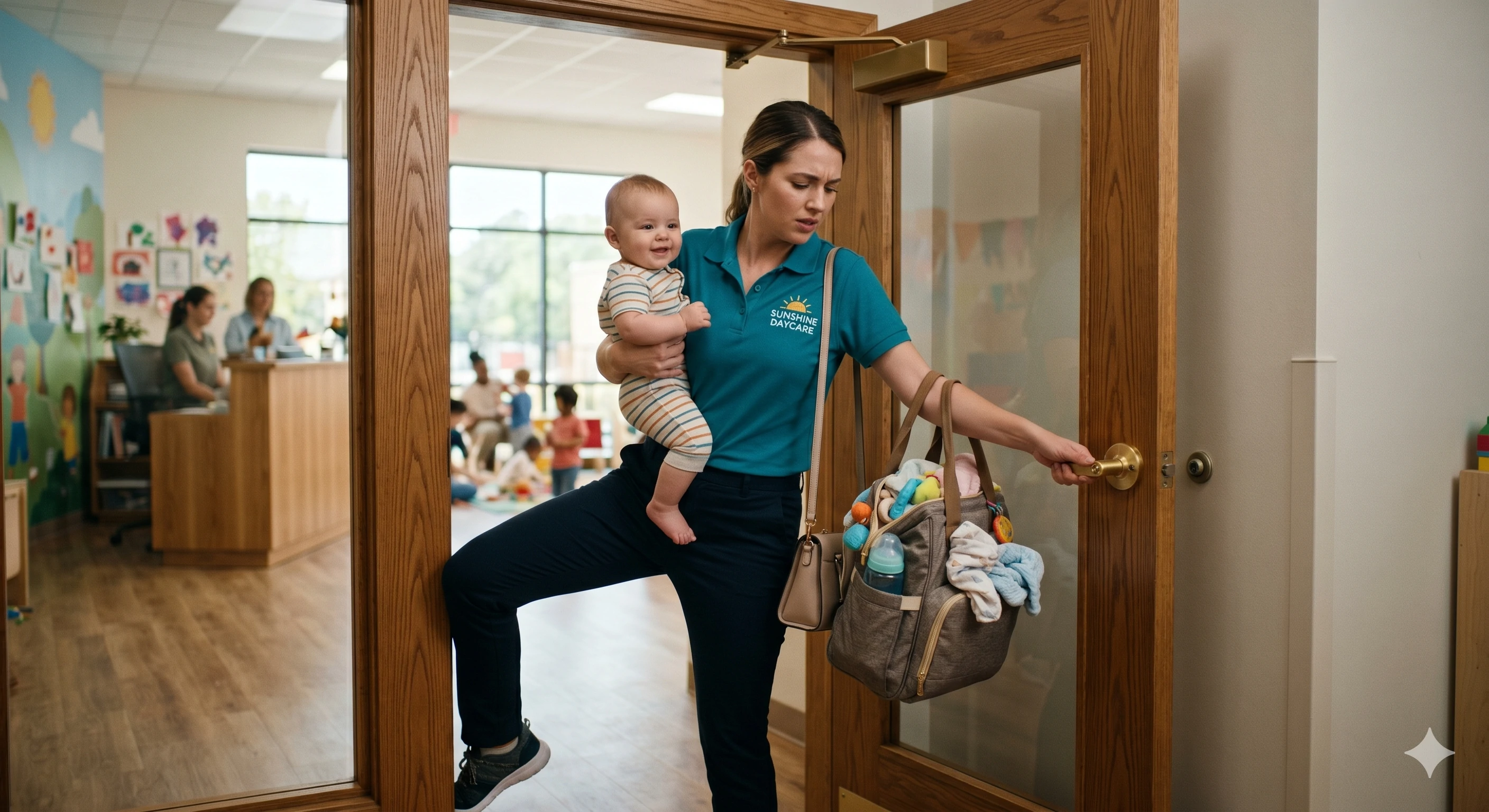
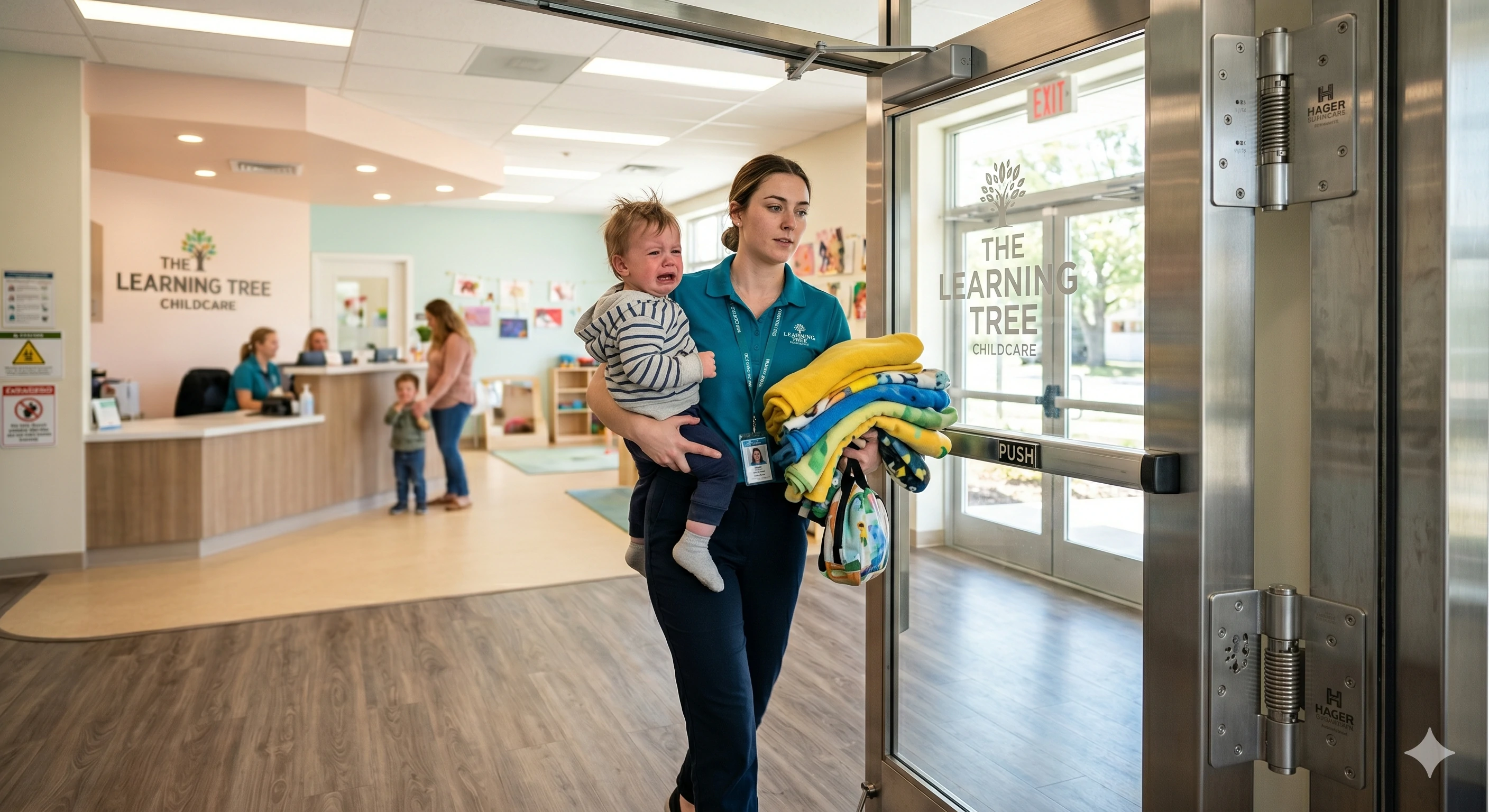
Picture the reality of a typical shift. A daycare teacher is carrying a crying infant against her shoulder with one arm and gripping a with the other. She backs through a doorway using her hip. She needs to get to the changing area quickly. Reaching back to grab a door handle, pull it shut, and confirm the latch has engaged is physically impossible without setting something — or someone — down.
Now multiply that scenario across an entire staff, across an entire day. Kennel workers walking multiple dogs on leashes. Caregivers transporting meals, supplies, and medication. Volunteers unfamiliar with your facility's door protocols. Every single transit through a doorway is a moment of vulnerability, and relying on memory and manual effort to close every door, every time, is a system designed to fail.
The Pinch Hazard
If an uncontrolled door is a security risk when it stays open, it becomes an injury risk when it closes too aggressively. Heavy commercial doors can swing with surprising force, especially in buildings with cross-ventilation or . A door that catches a gust and slams shut can deliver enough impact to fracture a small child's finger or severely injure a pet's paw or tail caught in the closing gap.
This is the cruel paradox of door safety in these environments. You need doors to close reliably to prevent escapes, but you need them to close gently to prevent injuries. Most standard door hardware forces you to choose one or the other. Auto-closing spring hinges give you both.
How Auto-Closing Spring Hinges Solve the Problem
Now that you understand the stakes, let's look at the engineering behind the solution. An auto-closing spring hinge is not a complicated device, but its simplicity is exactly what makes it so reliable. There are no batteries to die, no electronics to glitch, and no settings for staff to accidentally disable. It is a purely mechanical system that works every single time.
The Fail-Proof Automatic Barrier
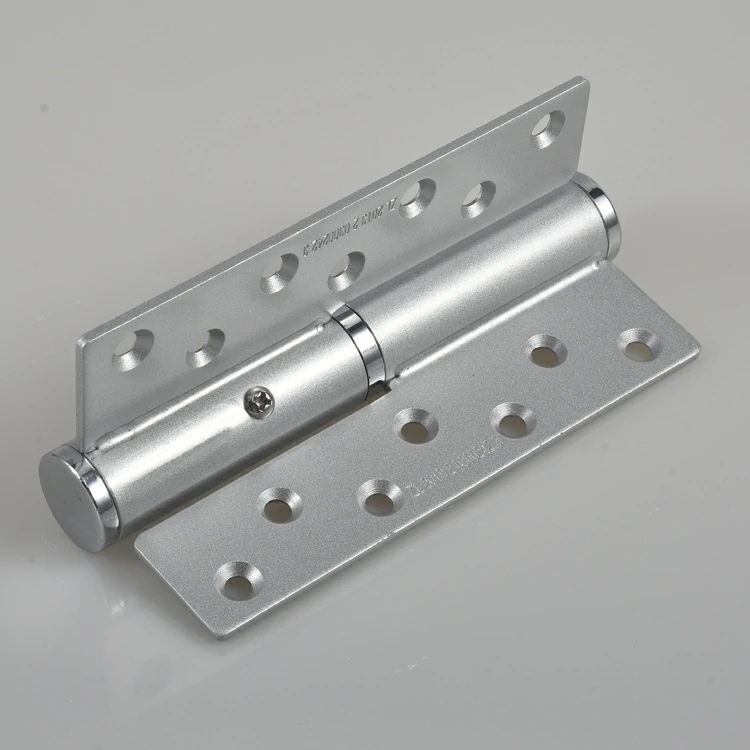
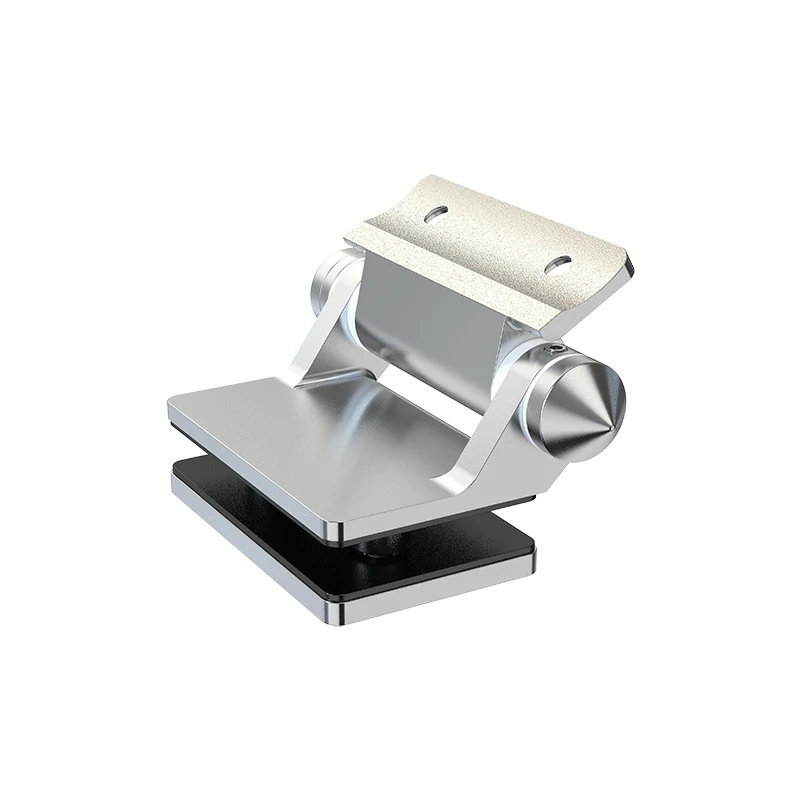
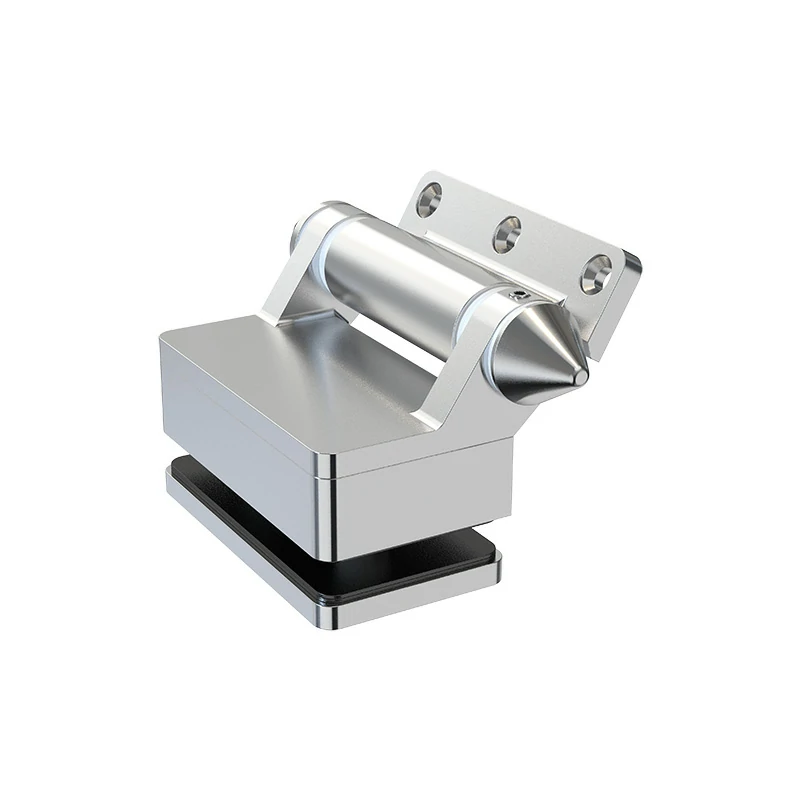
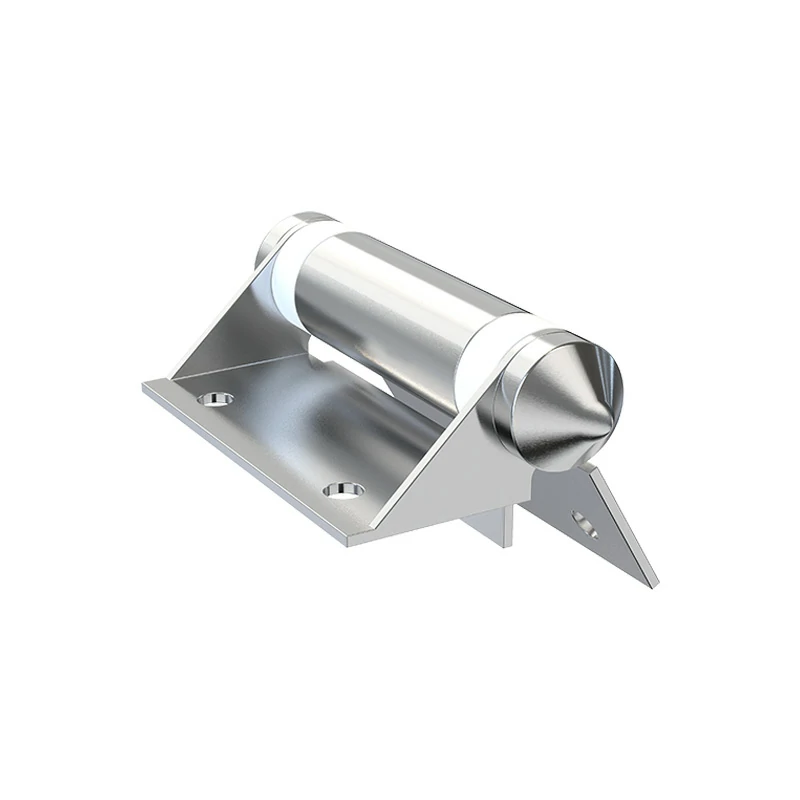
At its core, a spring hinge contains a coiled spring mechanism built directly into the hinge barrel. When someone pushes through a door or gate, the spring compresses. The moment they let go, the stored energy in the spring immediately pulls the door back to the closed position and into the latch.
This means that every door in your facility becomes self-closing by default. It doesn't matter if the staff member is carrying an armload of supplies. It doesn't matter if a client forgets to pull the door shut behind them. It doesn't matter if it's the end of a twelve-hour shift and everyone is exhausted. The hinge does the work, and the door closes. Every time, without exception.
For facility managers, this is a transformative shift. You move from a system dependent on human vigilance — which will inevitably fail — to a passive mechanical system that never forgets, never gets tired, and never takes a shortcut.
"Soft-Close" Technology: Strength Without the Slam
The most common objection facility owners raise is understandable: "If I put a strong spring on the door, won't it slam shut and hurt someone?"
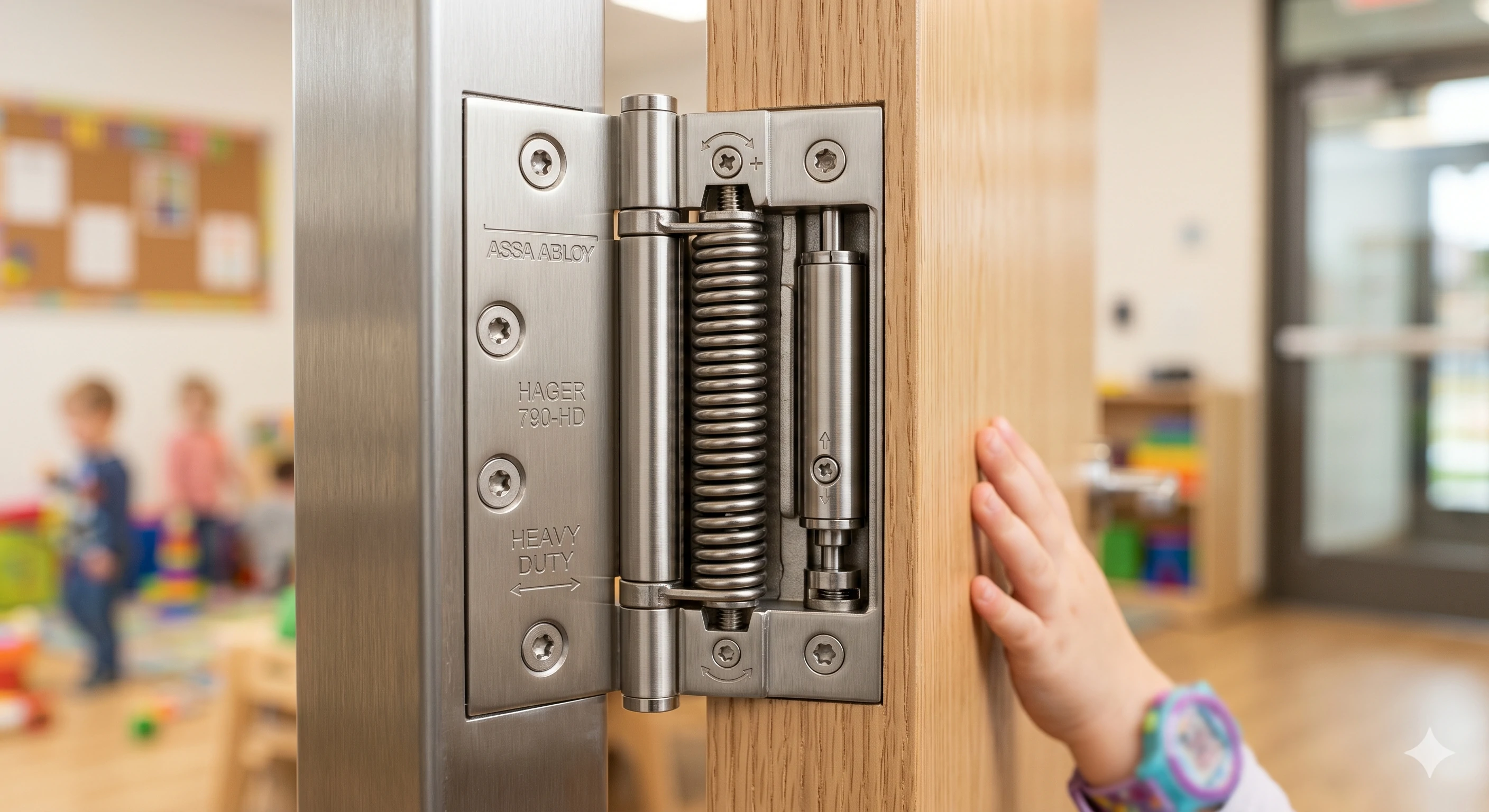
This is where premium commercial spring hinges separate themselves from basic hardware-store models. The best auto-closing spring hinges feature two critical adjustable mechanisms working in harmony.
The first is adjustable spring tension. This allows you to calibrate exactly how much closing force the hinge generates. A gate in a large-dog play area might need high tension to overcome the weight of a heavy door and resist a 70-pound Labrador pushing against it. A door in an infant care room might need lighter tension so staff can push through it easily. You dial in the exact force required for each specific application.
The second is , often called the soft-close feature. This is what eliminates the slam. As the door approaches its fully closed position — typically within the final 10 to 15 degrees of swing — the hydraulic dampener takes over, dramatically slowing the door's movement. The door closes with enough authority to latch securely, but it arrives at the frame gently, with no impact force. Tiny fingers resting on the jamb, a puppy's tail trailing behind — neither is at risk because the closing speed in that critical final zone is reduced to a slow, controlled glide.
The combination of these two features solves the paradox. The door closes quickly enough that no pet or child can slip through the gap. But it closes softly enough that it poses zero pinch or crush risk. Speed where you need it, gentleness where it matters.
The Dutch Door Advantage
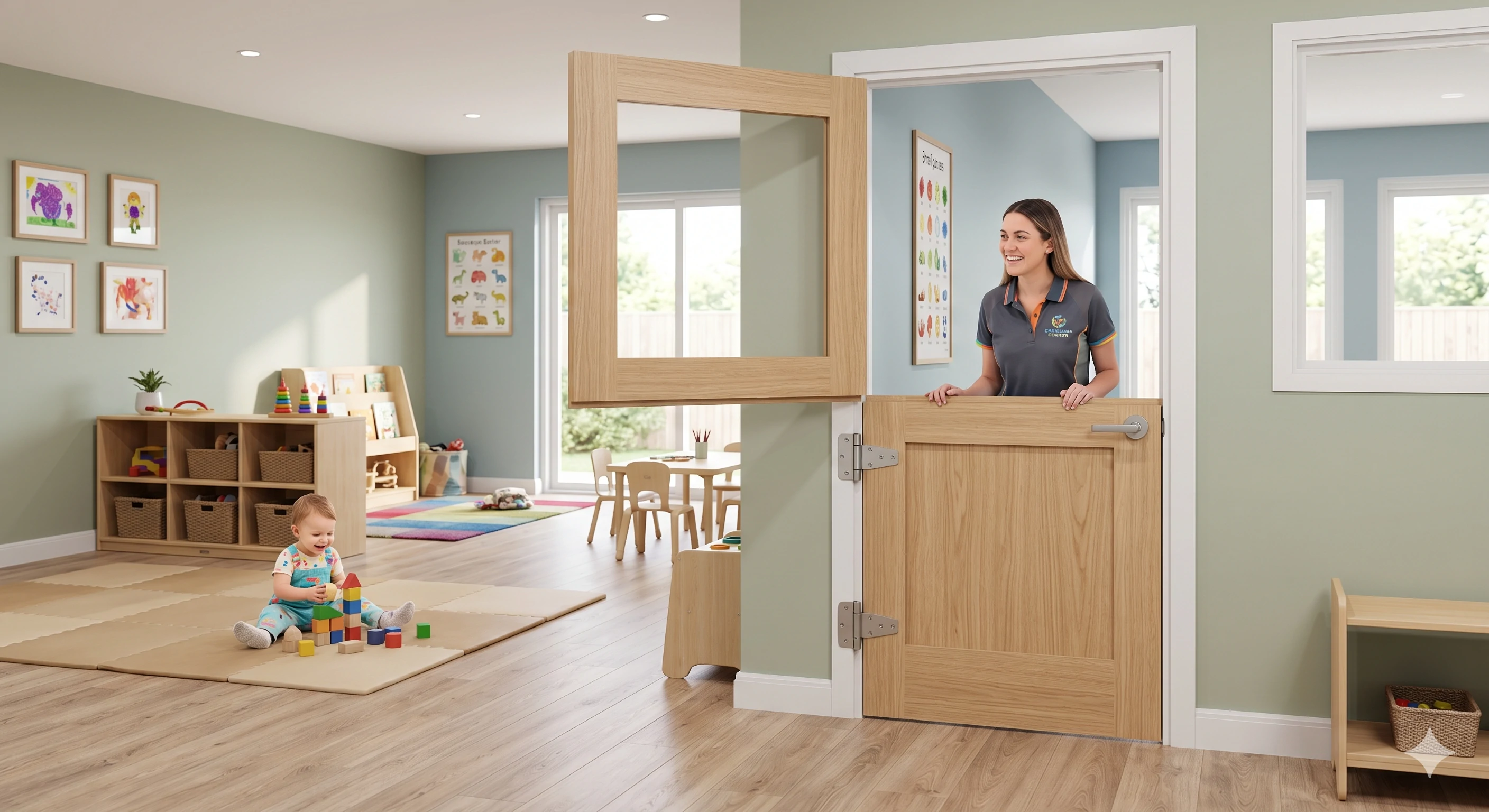
One of the most popular applications of spring hinges in childcare and pet facilities is the Dutch door, also known as a half-door or split-door configuration. In this setup, the door is divided horizontally into two independent sections. The top half can swing open while the bottom half remains closed and latched.
This design is a game-changer for facility operations. Staff can open the top half to maintain full visual and auditory supervision of a room — passing items over the barrier, communicating with colleagues, and monitoring activity — while the bottom half serves as a rigid, self-latching physical barrier at floor level.
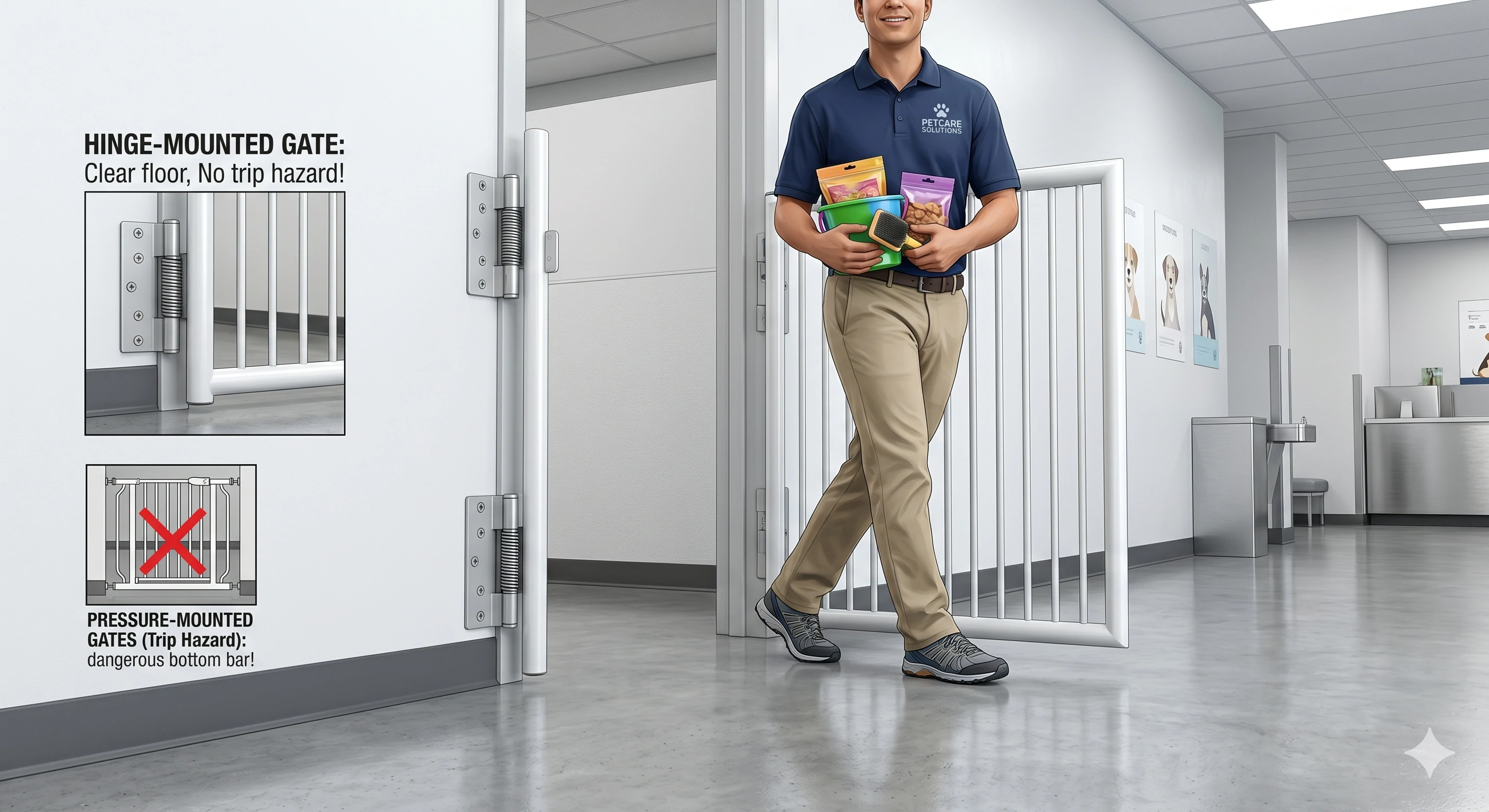
When you mount spring hinges on the lower section of a Dutch door, you create a waist-height gate that closes and latches automatically every time a staff member walks through. Unlike flimsy pressure-mounted baby gates that wobble, tip over, and create tripping hazards on the floor, a Dutch door with spring hinges is permanently mounted, structurally solid, and completely flush with the floor threshold. Staff walk through it naturally, without stepping over anything, and the gate takes care of itself.
For pet facilities, this is especially valuable. Dogs can see and interact with handlers over the top of the door, reducing anxiety and barking, while the spring-loaded lower gate prevents any chance of escape. For childcare centers, it allows teachers to maintain the open, connected feel of their classroom environment without compromising the physical containment of the space.
Why Commercial-Grade Hinges Are the Only Smart Choice
At this point, you might be thinking: "This all sounds great. I'll just grab some spring hinges from the hardware store this weekend." Before you do, let's talk about why that decision could cost you more money, more headaches, and more risk than doing nothing at all.
Spring Hinges vs. Pressure-Mounted Gates
Many childcare facilities still rely on pressure-mounted baby gates — the kind you wedge into a doorway using rubber pads and a tension rod. They're inexpensive, they require no tools to install, and they seem like a quick fix. But in a commercial environment, they are a poor and potentially dangerous choice.
First, they are a tripping hazard. Every pressure-mounted gate has a raised bar running across the floor at the threshold. Staff members carrying children, food, or supplies must step over this bar dozens of times per day. Trips and falls are inevitable, and in a facility full of hard floors and sharp furniture corners, a stumbling adult holding an infant is a serious accident waiting to happen.
Second, they are not durable. Pressure-mounted gates rely on friction to stay in place. A determined toddler who leans on one repeatedly, or a large dog who jumps against it, will eventually dislodge it. When the gate fails, it fails completely — collapsing onto the floor and leaving the doorway wide open.
A swing gate mounted on auto-closing spring hinges eliminates both of these problems. There is no floor-level bar to trip over. The gate is permanently mounted on hinges, so it cannot be knocked down or dislodged. And because it closes automatically, it requires zero effort from staff to maintain the barrier.
Commercial-Grade vs. Residential Hardware
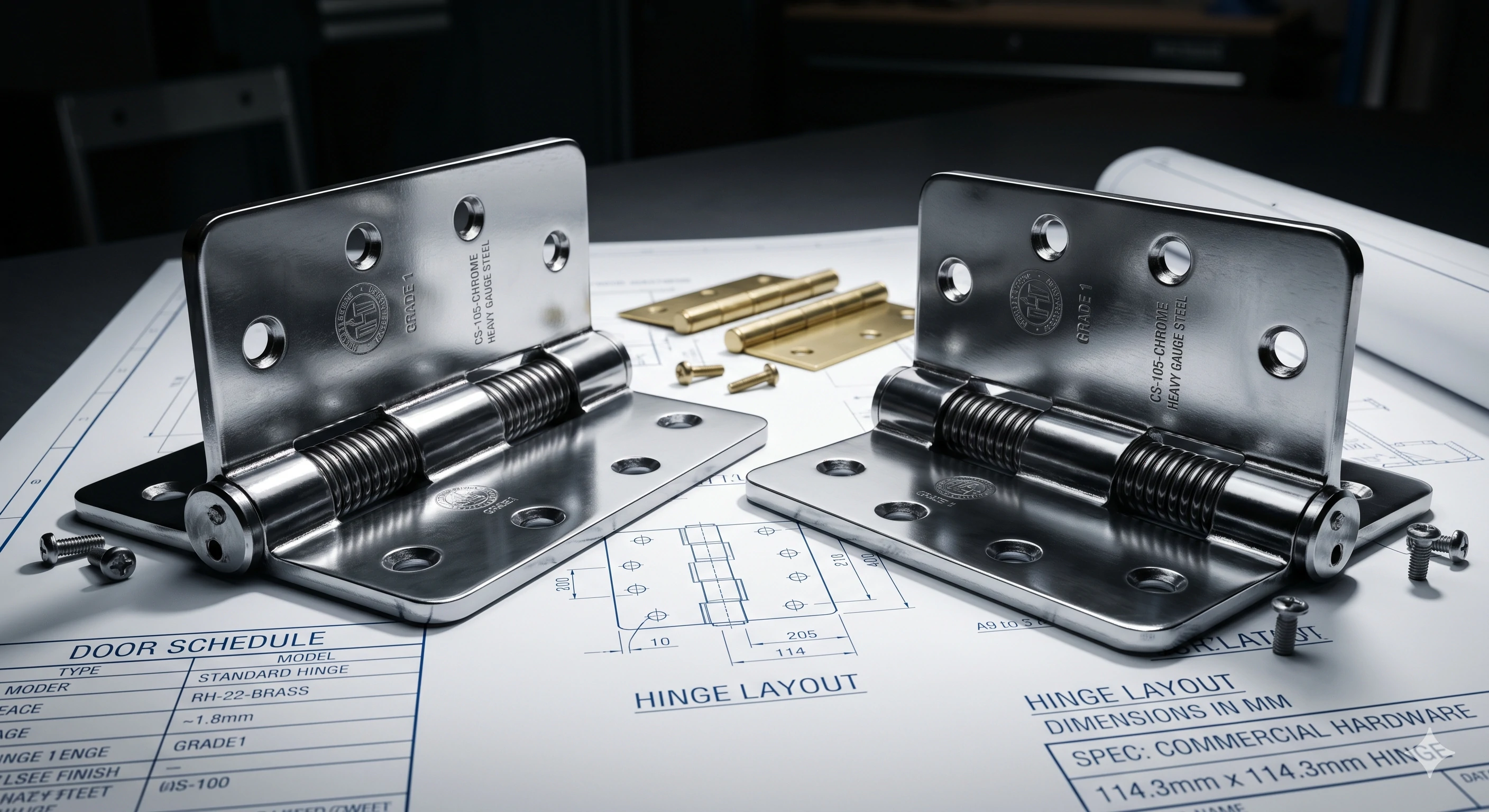
Not all spring hinges are created equal. The lightweight spring hinges sold at home improvement stores are designed for residential interior doors — a bedroom door that gets opened and closed a few times a day by a single family. They are built with thin materials, light-gauge springs, and minimal load ratings.
In a commercial childcare or pet facility, doors and gates endure an entirely different level of abuse. Consider the forces at play: a 90-pound German Shepherd jumping against a kennel gate, twenty toddlers pushing and pulling on a playroom door throughout the day, staff members shouldering through doors with full hands dozens of times per shift. The cycle count on a commercial facility door can be ten to twenty times higher than a residential door.
Residential spring hinges subjected to this punishment will fail — and they'll fail quickly. Springs lose tension and the door stops closing fully. Hinge pins bend and the door starts to sag. Mounting screws strip out of lightweight frames. Within weeks, you're back to a door that doesn't close on its own, and you've wasted both your money and your time.
Commercial-grade spring hinges are engineered for exactly this environment. They feature heavy-gauge steel construction, reinforced hinge pins, and industrial-strength springs rated for hundreds of thousands of cycles. Many models are built with welded or riveted construction rather than crimped or pressed assembly, giving them structural integrity that won't degrade under repeated high-force impacts. They are designed to maintain consistent closing force and smooth operation for years of heavy commercial use.
Compliance, Liability, and Peace of Mind
Beyond the practical advantages, there is a powerful business case for upgrading to commercial auto-closing spring hinges. Childcare centers operate under strict , and door and gate safety is a frequent inspection point. Pet boarding facilities face similar scrutiny from industry accreditation bodies and local health departments.
Reliable, self-closing doors with soft-close dampening demonstrate a proactive commitment to safety that inspectors recognize and appreciate. They show that your facility has invested in permanent, engineered safety systems rather than relying on ad-hoc solutions and staff diligence.
From a liability perspective, the calculus is straightforward. If a child is injured by a slamming door, or a pet escapes through an unlatched gate, the question every attorney will ask is: "What systems did the facility have in place to prevent this?" The answer of "We rely on our staff to remember to close the door" is not a defense. The answer of "Every door and gate in our facility is equipped with commercial-grade, self-closing, soft-close hinges that function automatically" is.
For parents dropping off their children and pet owners leaving their animals in your care, visible safety infrastructure builds trust. When a parent sees a gate that closes smoothly and latches securely behind them without anyone touching it, they feel reassured. That confidence translates directly into retention, referrals, and reputation — the foundations of a thriving facility.
Take Human Error Out of the Equation
In a childcare center or pet facility, safety cannot depend on someone remembering to close a door. Memory fails. Hands are full. Shifts are long. Distractions are constant. The only system you can truly rely on is one that works whether anyone is paying attention or not.
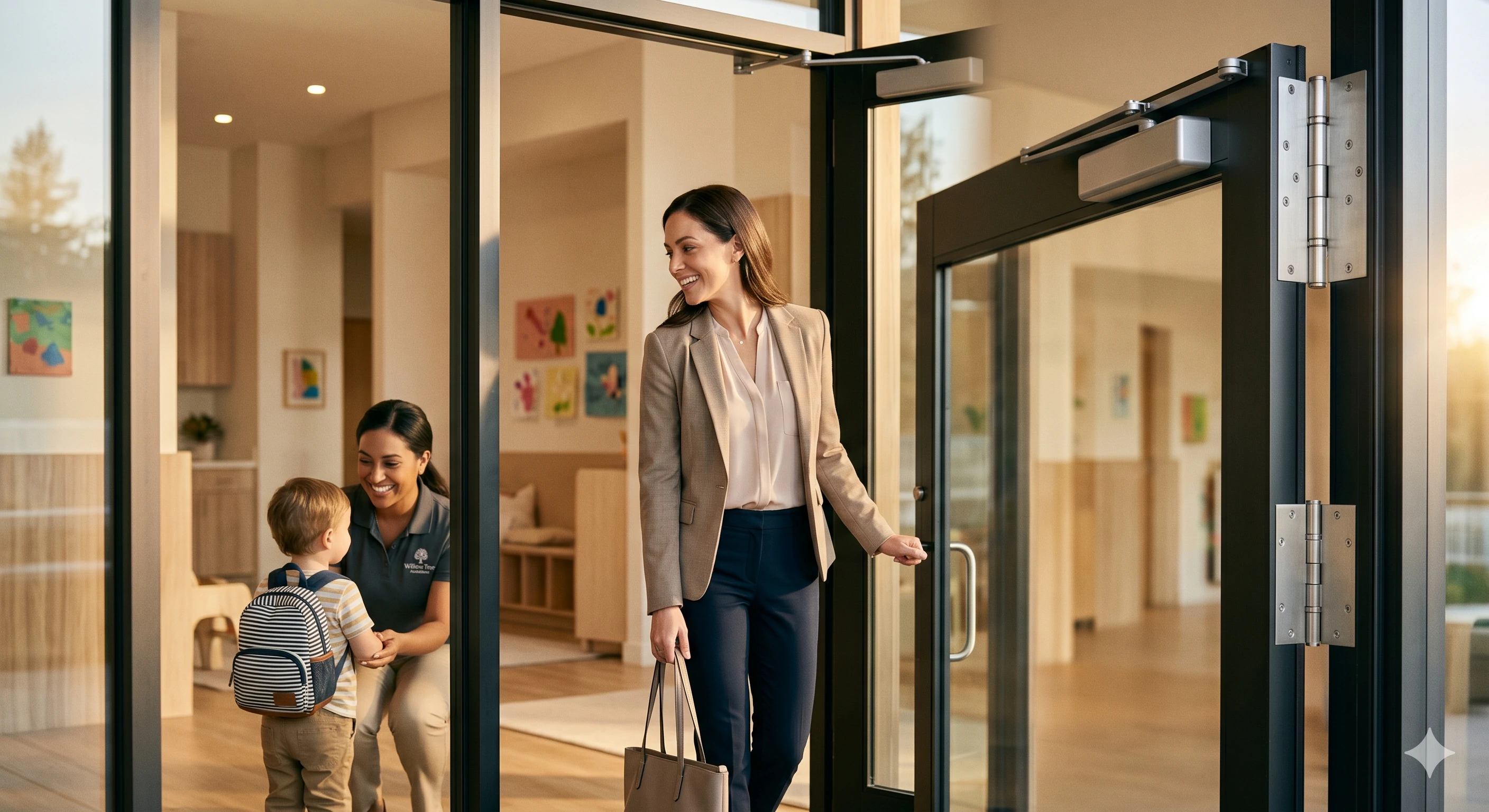
Auto-closing spring hinges are that system. They transform every door and gate in your facility into a self-managing safety barrier — one that closes automatically, latches securely, and arrives at the frame gently enough to protect the smallest fingers and the most delicate paws. They eliminate the door-dashing threat, solve the full-hands problem, and remove the pinch hazard, all with a single, maintenance-free hardware upgrade.
Don't leave the safety of your facility up to chance. Upgrade your gates and doors with heavy-duty, soft-closing spring hinges today. Contact our hardware specialists to find the perfect solution for your daycare, kennel, or boarding facility — and give yourself, your staff, and every parent and pet owner who walks through your doors the peace of mind they deserve.
Spring Hinges
Hydraulic Hinges
Footnotes
1. Read more about early childhood care standards and operations.
2. Overview of animal care and boarding industry practices.
3. Understanding legal accountability and risk management for commercial organizations.
4. Guidelines for properly documenting and addressing workplace incidents.
5. Learn about the behavior and active characteristics of specific working dogs.
6. Information on safe storage and properties of industrial sanitary products.
7. Common supplies carried by caregivers managing infants and toddlers.
8. How building climate control systems generate indoor air pressure changes.
9. Explore mechanical principles used to absorb impact and control movement.