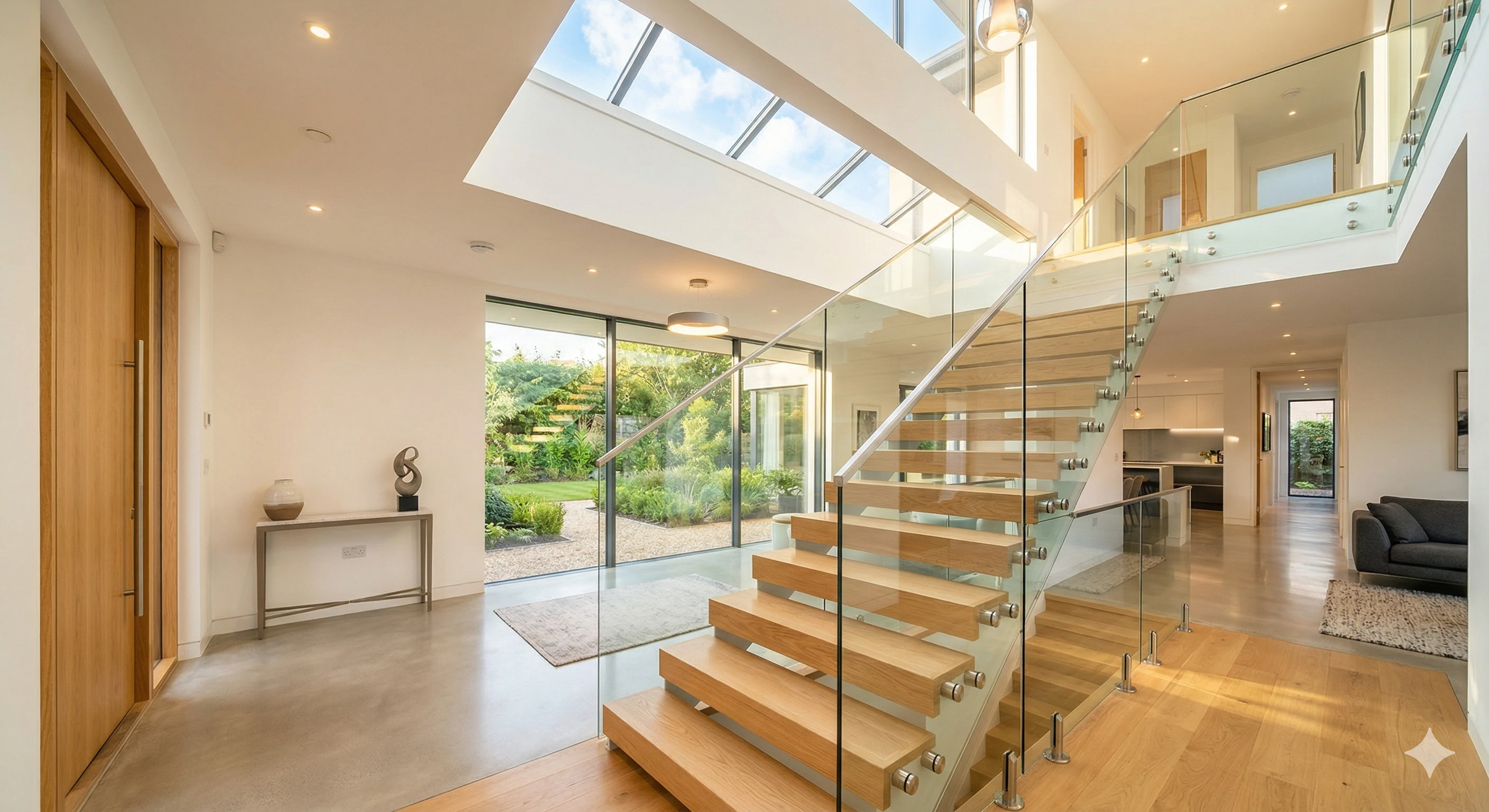
The staircase is the spine of your home. It links your living spaces, anchors your entryway, and often sits in the first sightline a guest sees when they walk through the door. Yet for all that visual weight, staircases are routinely the darkest, most neglected corners of a house — boxed in by chunky wooden balusters, blocked off by solid half-walls, and dressed in finishes that stopped feeling current a decade ago.
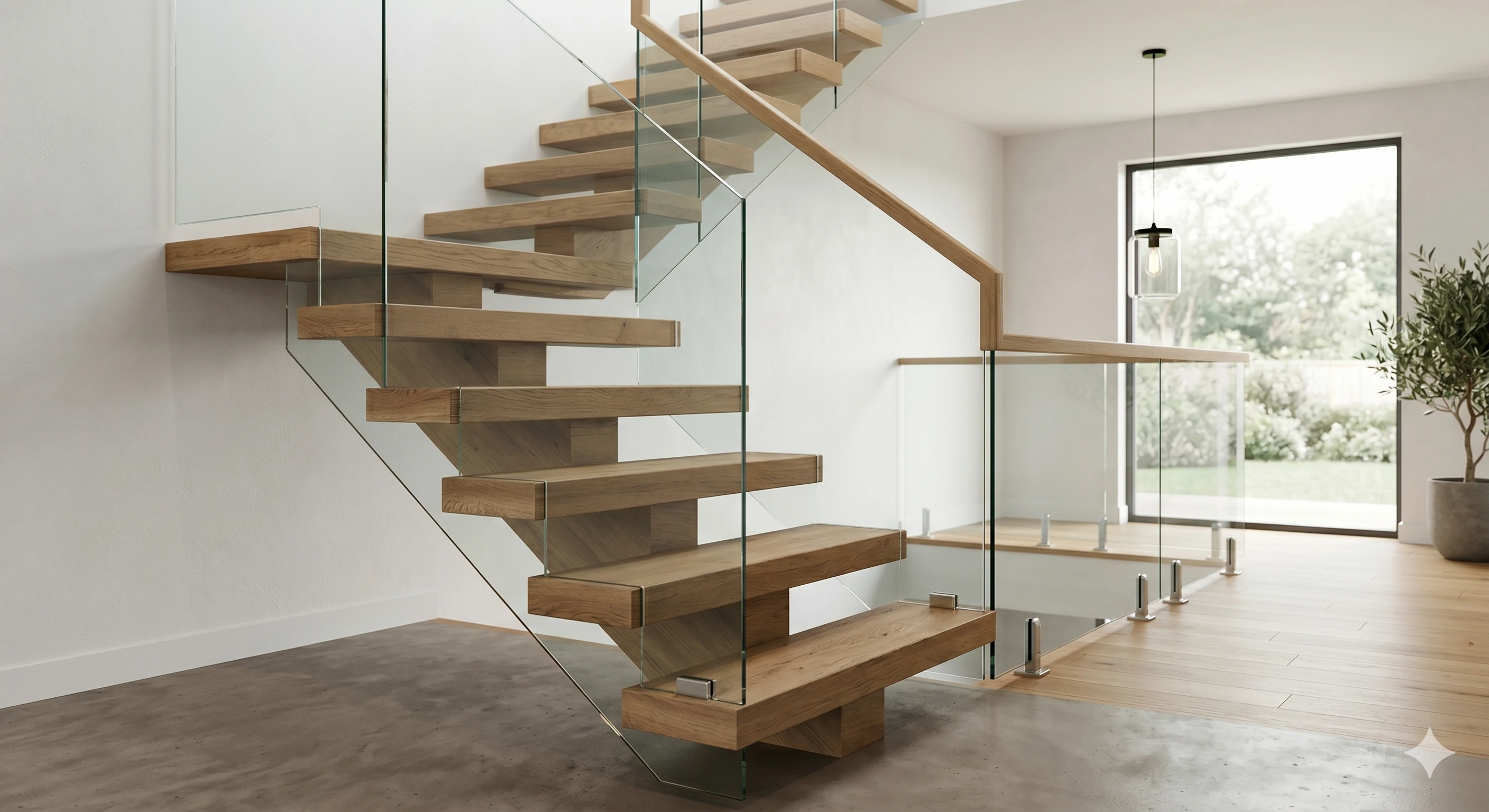
If your stairwell has turned into a shadowy tunnel that makes the rest of your home feel smaller, there is a better way. Frameless glass stair railings, supported by stainless steel glass spigots, let you "float" your staircase, flood the space with , and eliminate the cleaning dead-zones that plague every traditional design. Here is everything you need to know before you make the switch.
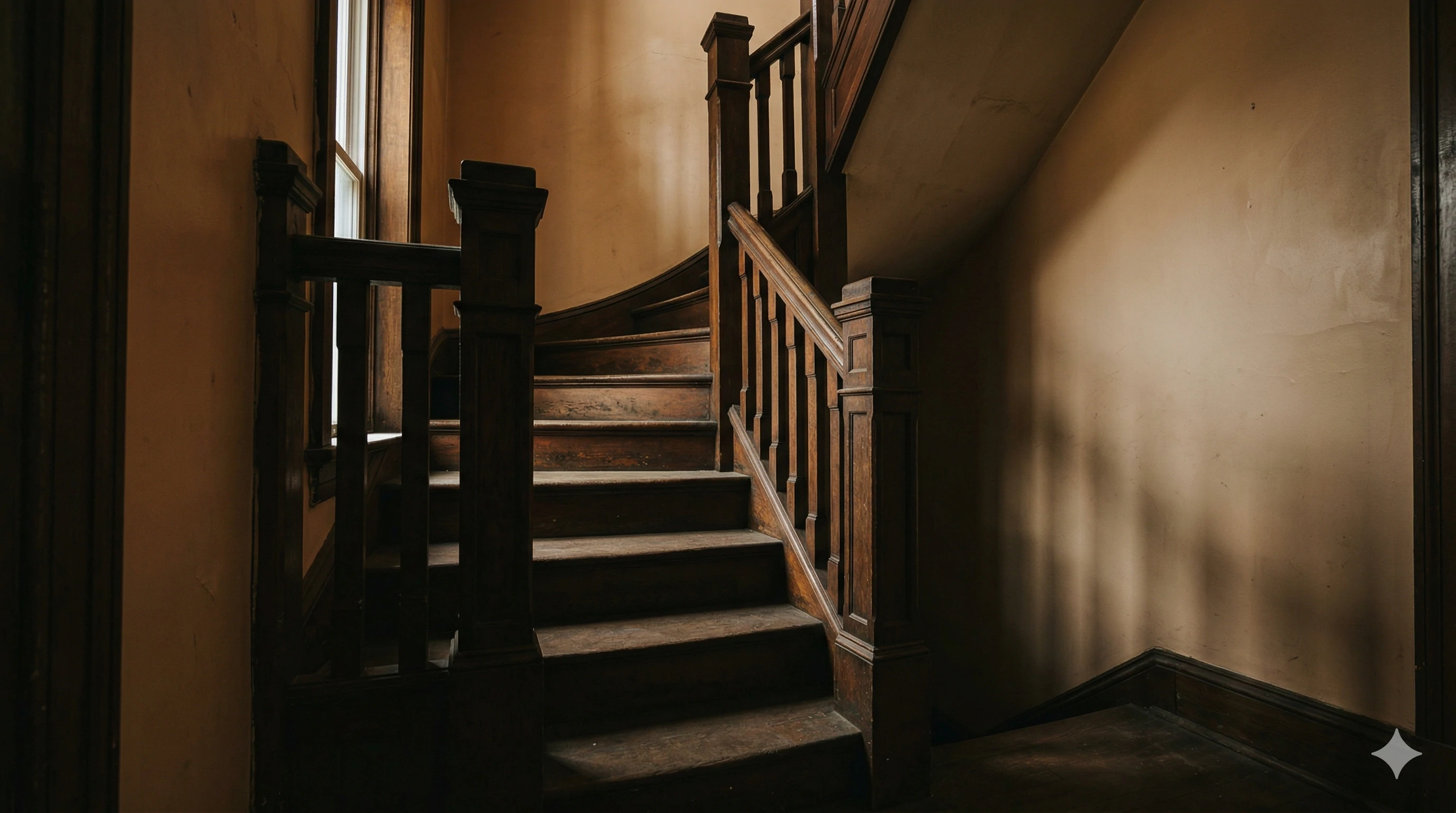
Why Traditional Staircases Feel Dated and Dark
Before we talk about glass, it helps to name exactly what is wrong with the staircase you already have. Most homeowners who start looking into this upgrade are reacting to three specific frustrations.
The "Dark Tunnel" Effect
Solid handrails, thick newel posts, and closely spaced wooden balusters do something sneaky to a home: they trap shadows. Light coming from an upstairs window or skylight hits that wall of vertical slats and simply stops. Instead of spilling down into the living room or entryway, it gets absorbed and chopped up. The result is a home that feels segmented, claustrophobic, and years older than it actually is — even when every other room has been recently renovated.
Gaps, Slips, and Small Children
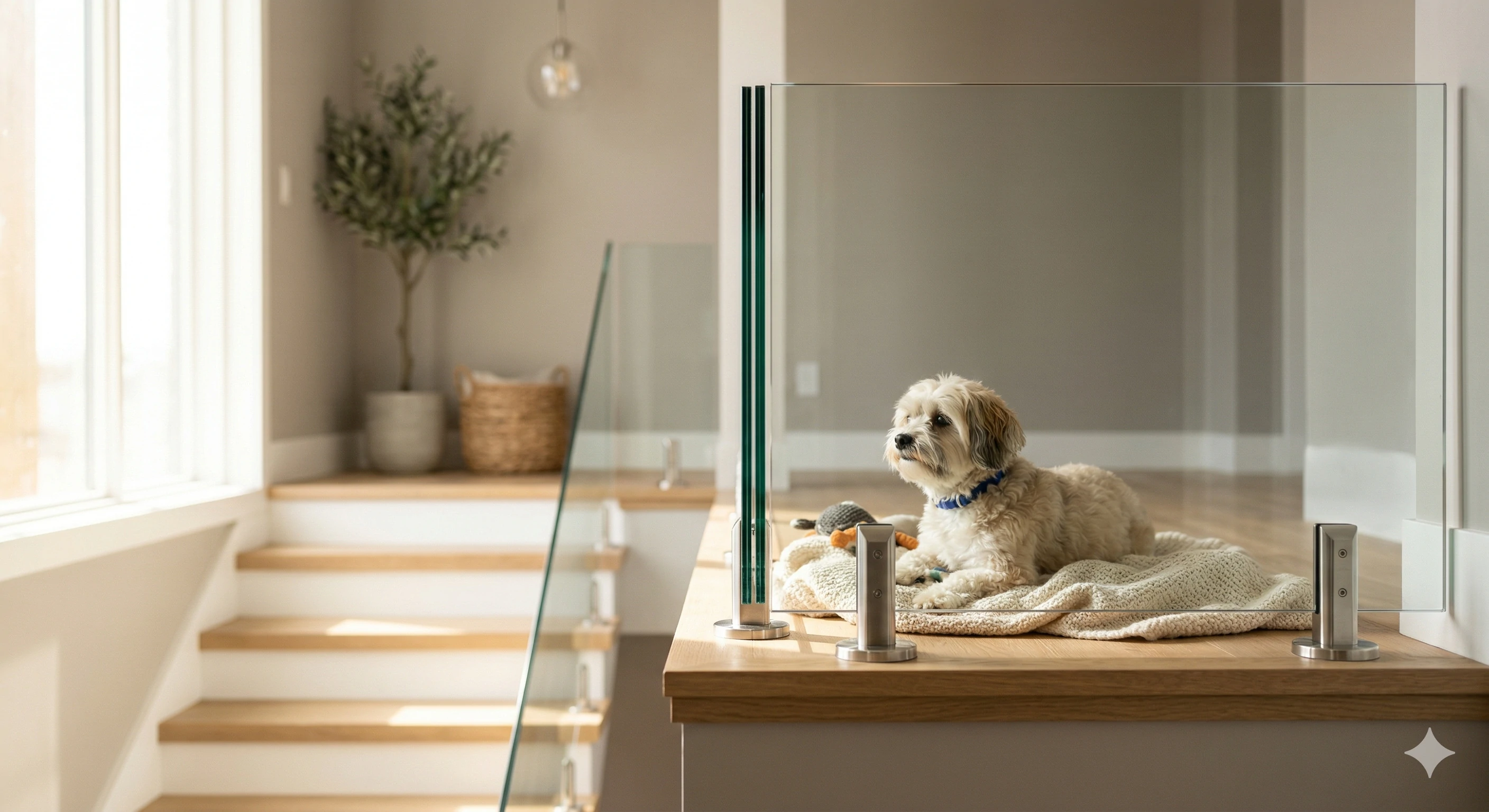
For parents and pet owners, traditional railings carry a quieter anxiety. Iron and wood spindles are spaced with gaps wide enough for a toddler's head, a cat, or a small dog to slip through. Balls, toys, and shoes disappear between them constantly. Even when a railing technically , watching a two-year-old navigate the top landing is rarely a relaxing experience.
A Style That Clashes With Everything Else
Ornate woodwork and heavy carved balusters belong to a different era of . If the rest of your home leans , the staircase ends up looking like a museum piece bolted into the middle of a modern floor plan. It is often the single element preventing a house from feeling cohesive.
The Solution: Frameless Glass and How Spigots Make It Work
Once homeowners start looking at glass railings, the next question is almost always practical: "That looks beautiful in a showroom, but how does it actually work on a staircase without bulky metal frames ruining the look?" The answer is a small, precision-engineered piece of hardware called a glass spigot.
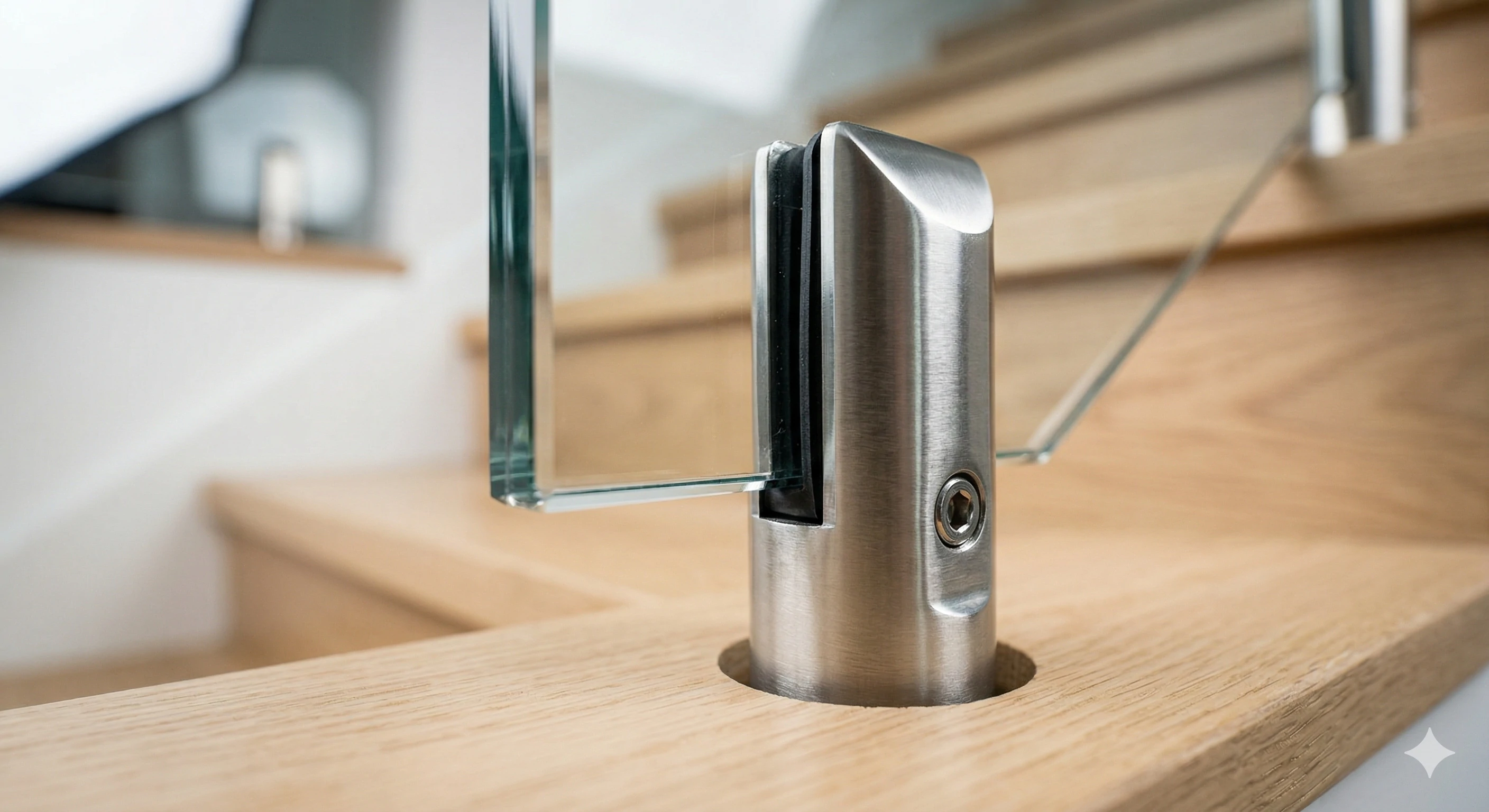
What a Spigot Actually Is
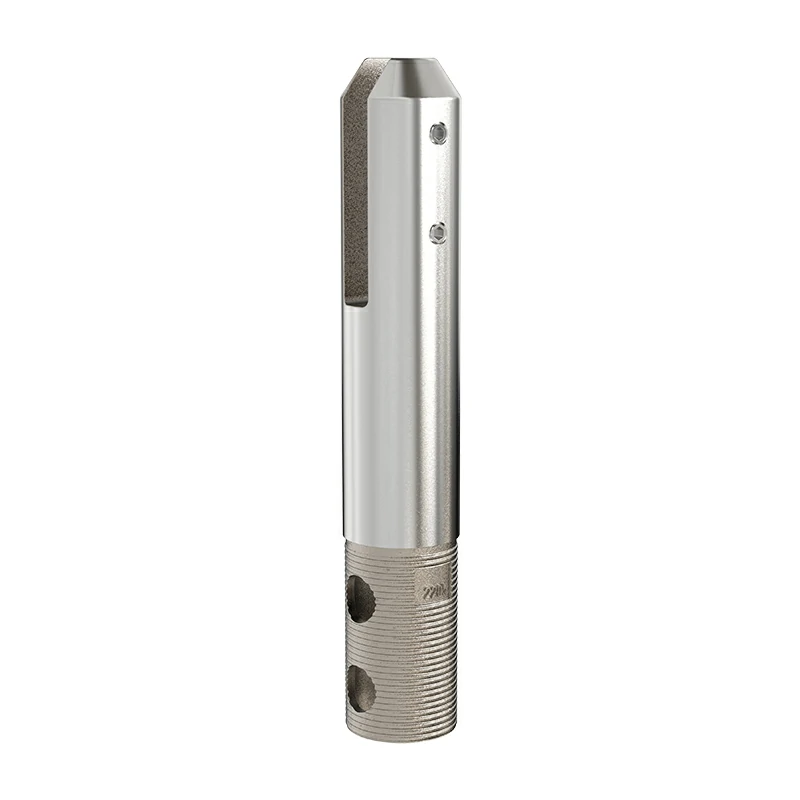
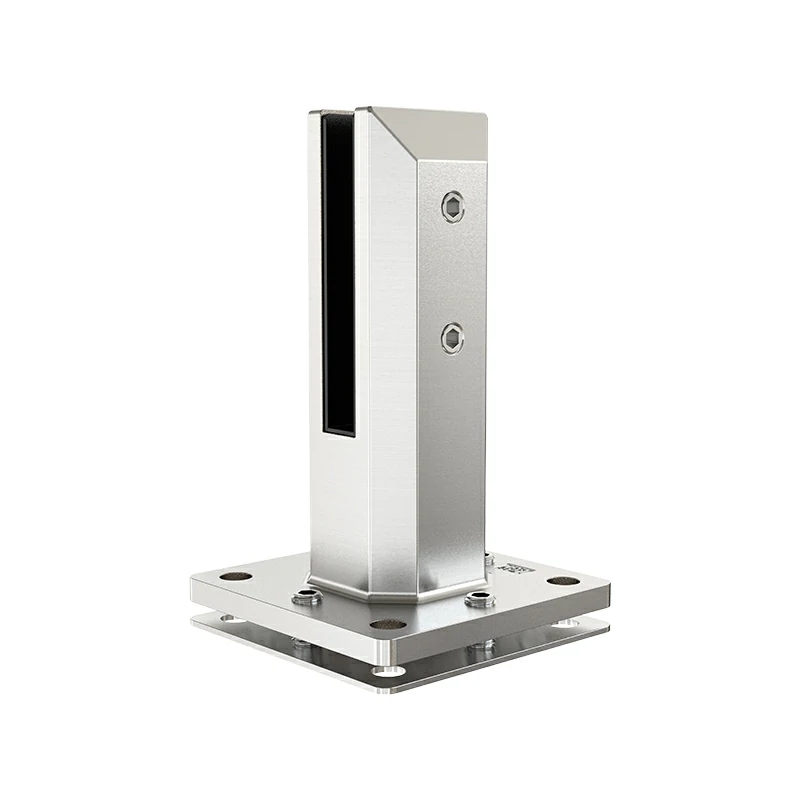
A glass spigot is a heavy-duty stainless steel clamp — typically four to six inches tall — that mounts either to the edge of each stair tread (side-mounted) or to the top surface (core-drilled). Inside, a rubber gasket and a set of internal wedges grip a thick panel of and hold it rigidly in place. Two spigots per panel is standard; larger panels may use three.
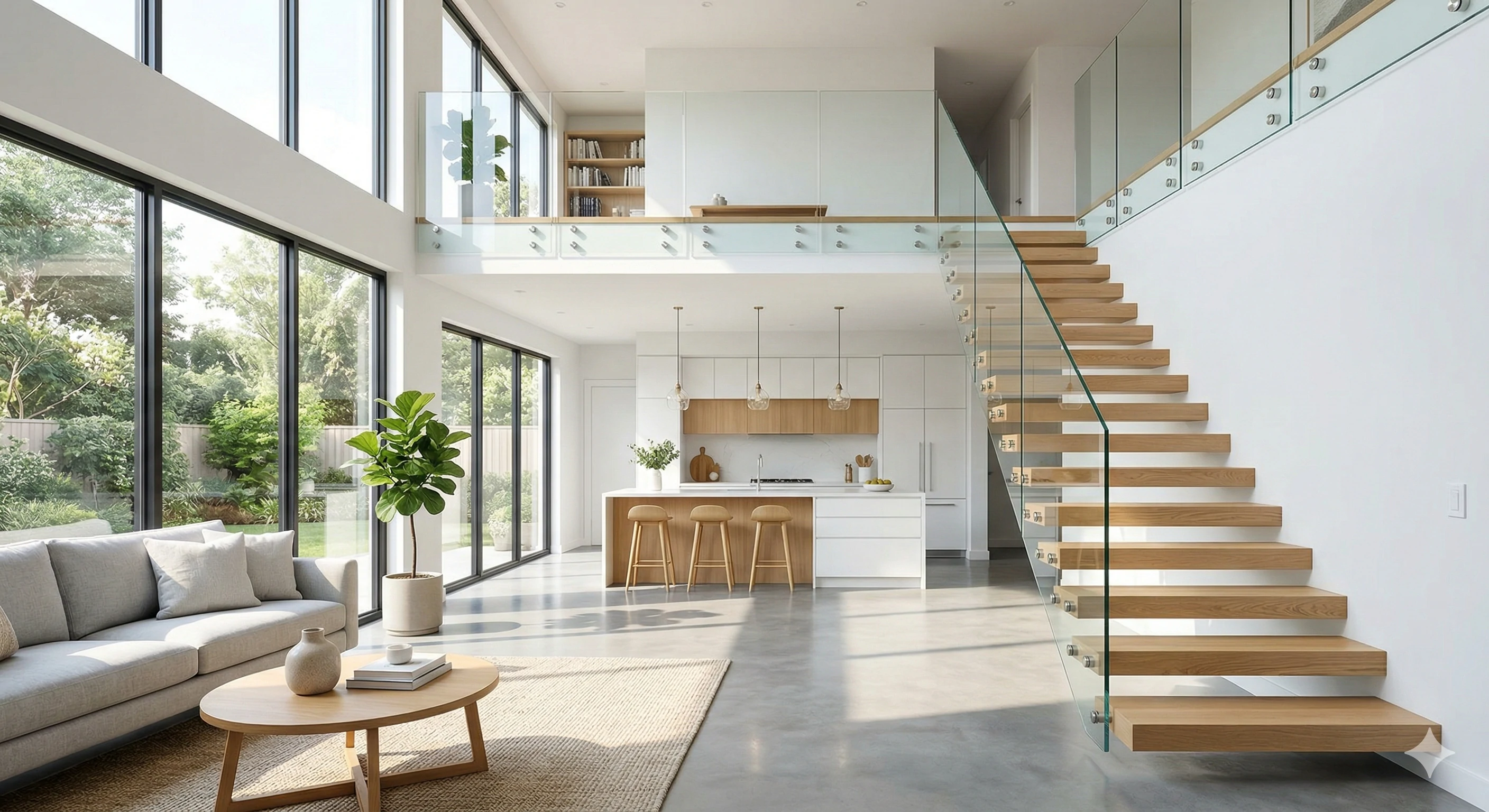
Because the spigots are the only visible hardware, there are no vertical posts, no top rails, and no ugly frames breaking up the view. The glass appears to rise organically out of the stairs themselves. This is the "floating glass" look that have been featuring for years, and spigots are the quiet reason it works.
A Seamless, Gap-Free Safety Barrier
Spigot-mounted glass is not just prettier than a traditional railing — it is measurably safer. The panels are typically 12mm to 21.5mm thick, tempered, and often laminated with an interlayer that holds the glass together even if it is somehow broken. There are no vertical gaps a child can squeeze through, no horizontal rails to climb, and no loose spindles to work free over time. You get a solid, transparent wall of protection that is essentially indestructible under normal household use.
The "Easy-Clean" Gap You Did Not Know You Needed
Here is the feature nobody mentions in the brochures but every homeowner notices within a week of installation. Spigots hold the glass panel about one to two inches above the stair tread, leaving a small, deliberate gap at the bottom.
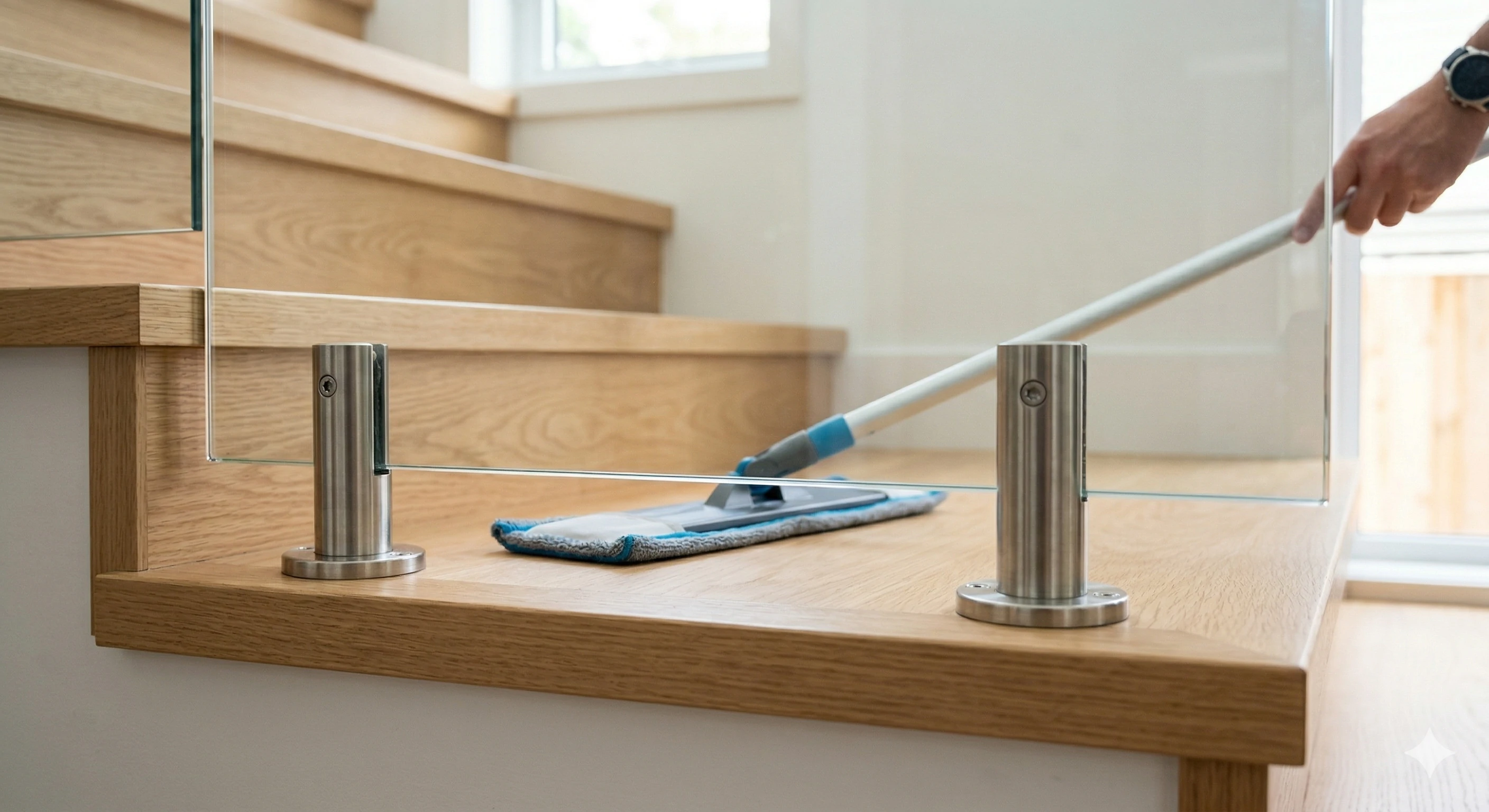
That gap matters. On any railing that meets the floor directly — including most base shoe systems — the 90-degree corner between the glass and the step becomes a dirt trap. Dust, pet hair, grit from shoes, and mop water all collect there, and you can only reach it with a toothbrush. The spigot gap eliminates that problem entirely. A broom or vacuum passes straight under the glass; a mop glides through without catching. Cleaning a spigot staircase takes about as long as cleaning a plain wooden one, which is something you cannot say about most premium railing systems.
Spigots vs. the Alternatives
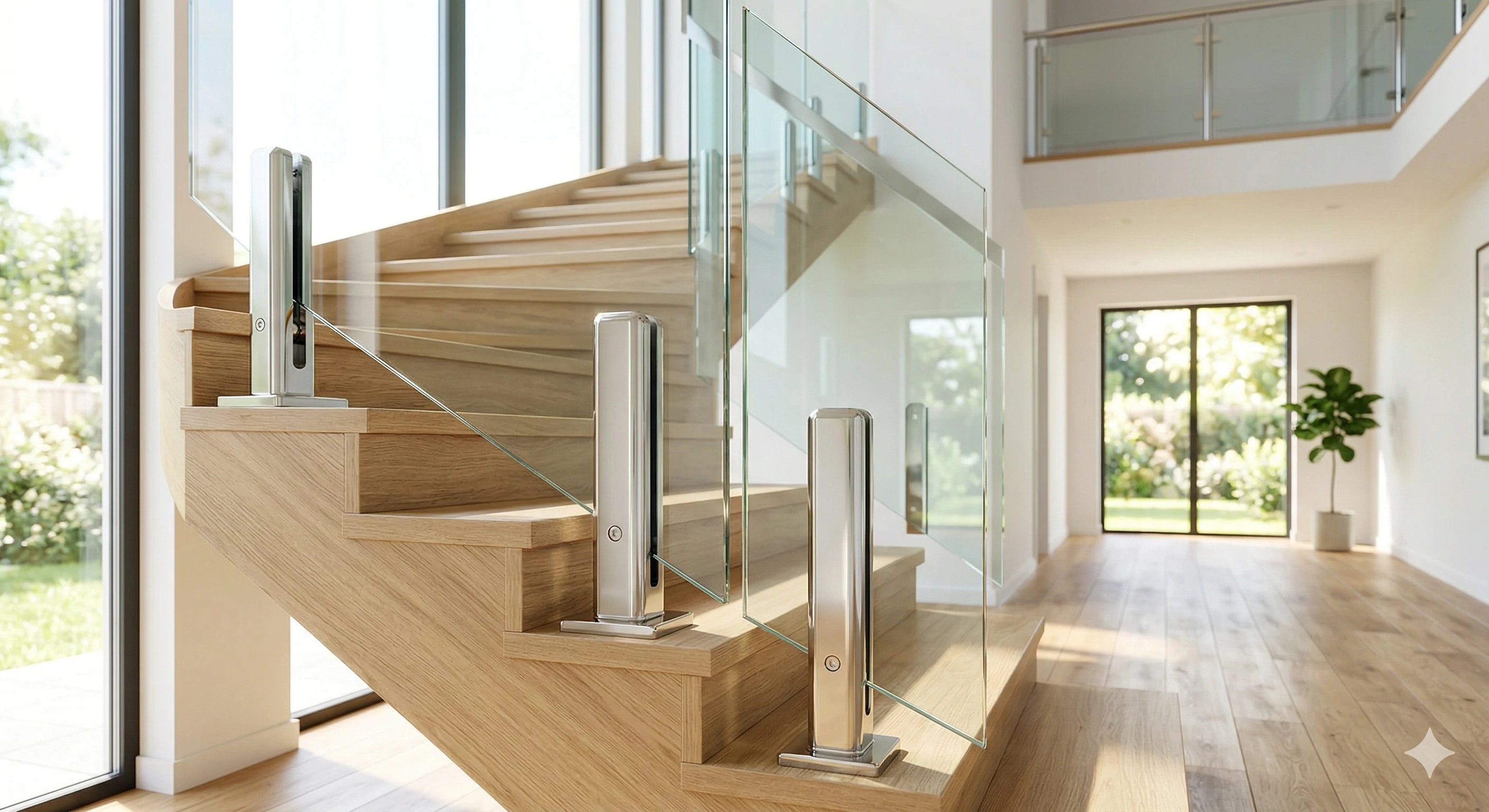
If you have already decided on glass, you will run into two other mounting options: base shoes (also called U-channels) and standoffs. Both work, but neither delivers the same combination of looks, cleanliness, and long-term livability as spigots.
Spigots vs. Base Shoes (U-Channels)
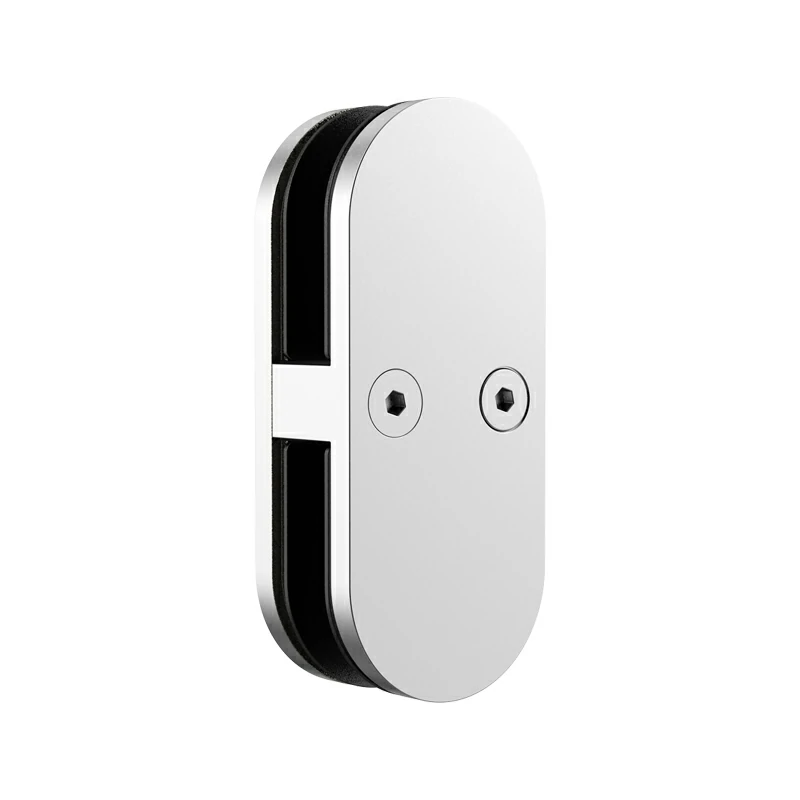
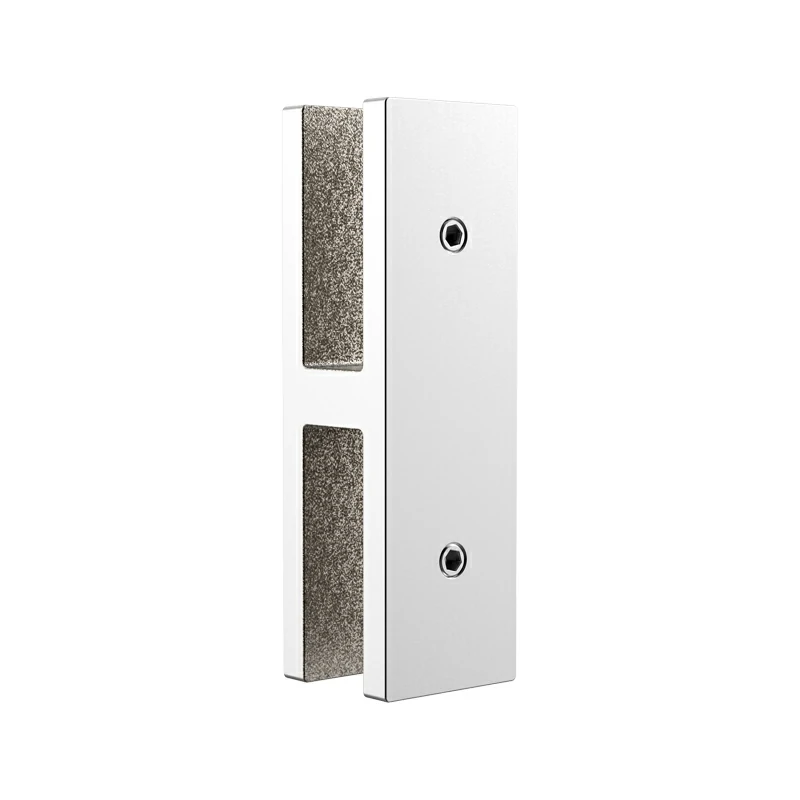
A base shoe is a continuous metal track — usually aluminum — that runs the full length of the railing. The glass slides down into the channel and is locked in place with wedges or a . It is a clean, modern look, and it is genuinely strong.
The trade-off is maintenance. That continuous channel is a continuous groove, and on a staircase it collects everything: dust, pet hair, spilled drinks, mop water that seeps in and has nowhere to drain. Over a year or two, most base shoe installations develop a visible line of grime along the bottom edge of the glass that is nearly impossible to get out without removing the cover plate. Spigots give you the same minimalist look without the trench.
Spigots vs. Wood You Already Own
The other comparison worth making is against the staircase you currently have. Refinishing wooden balusters is not a one-time project. It is a cycle: sand, stain, seal, and repeat every few years as the finish wears down from foot traffic, . Painted spindles chip. Stained handrails develop worn spots where hands rest.
Stainless steel spigots, by contrast, require almost nothing. A microfiber cloth and standard glass cleaner handle the panels. The hardware itself is on quality installations, which means it will not rust, pit, or discolor for decades. The "maintenance schedule" for a spigot staircase is essentially "wipe the glass when it looks smudged."
The Resale Argument
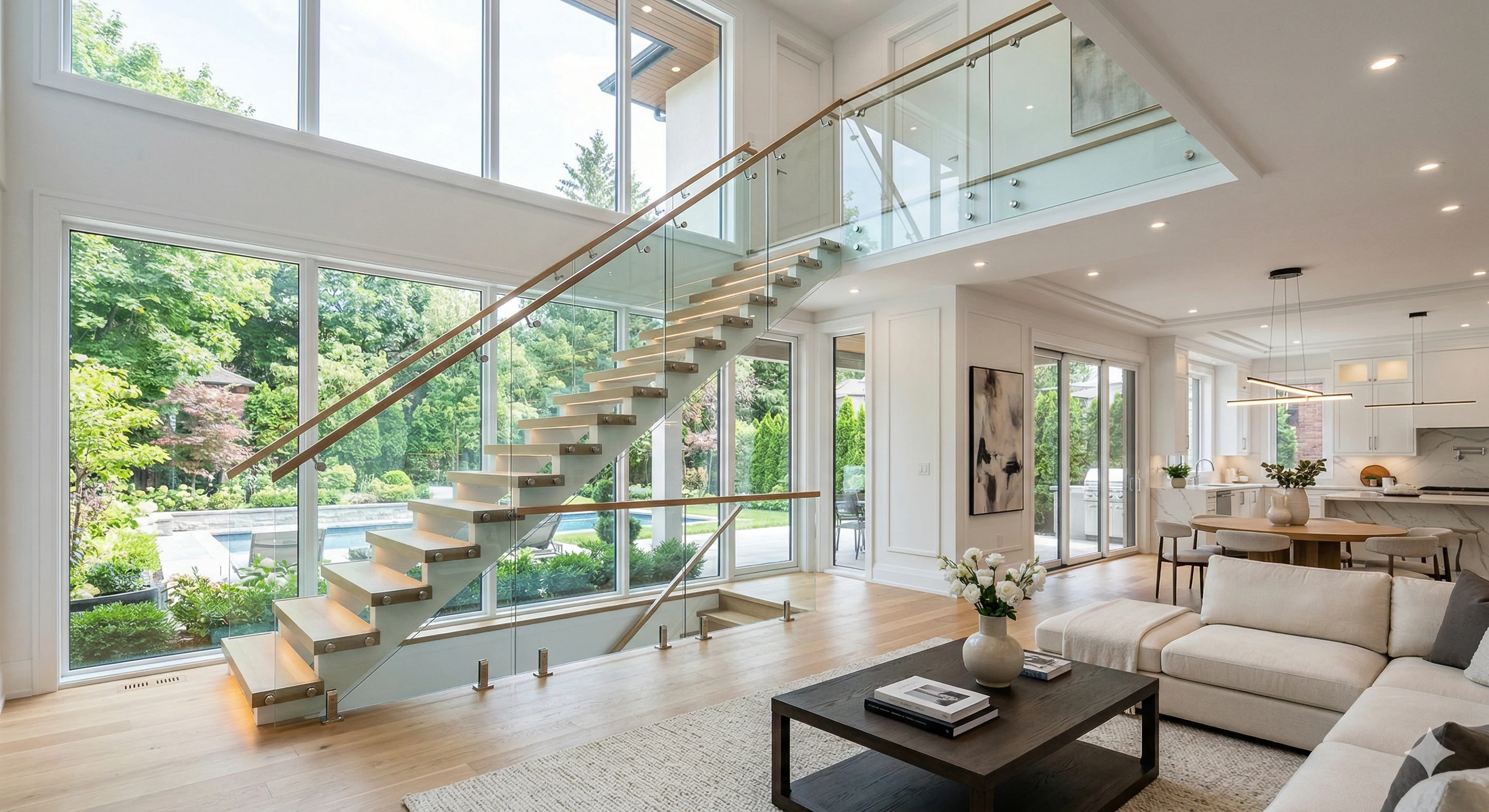
There is also a angle worth naming. Real estate listings lean heavily on a few photographed rooms — the kitchen, the main living area, and whatever architectural feature photographs best. A floating glass staircase is exactly that kind of feature. It shows up in the first five photos, it communicates "recently updated" without a word of copy, and it tends to be one of the details buyers mention in showings. For homeowners planning to sell within the next several years, it is one of the few upgrades that genuinely pays for itself at closing.
The Transformation, in One Sentence
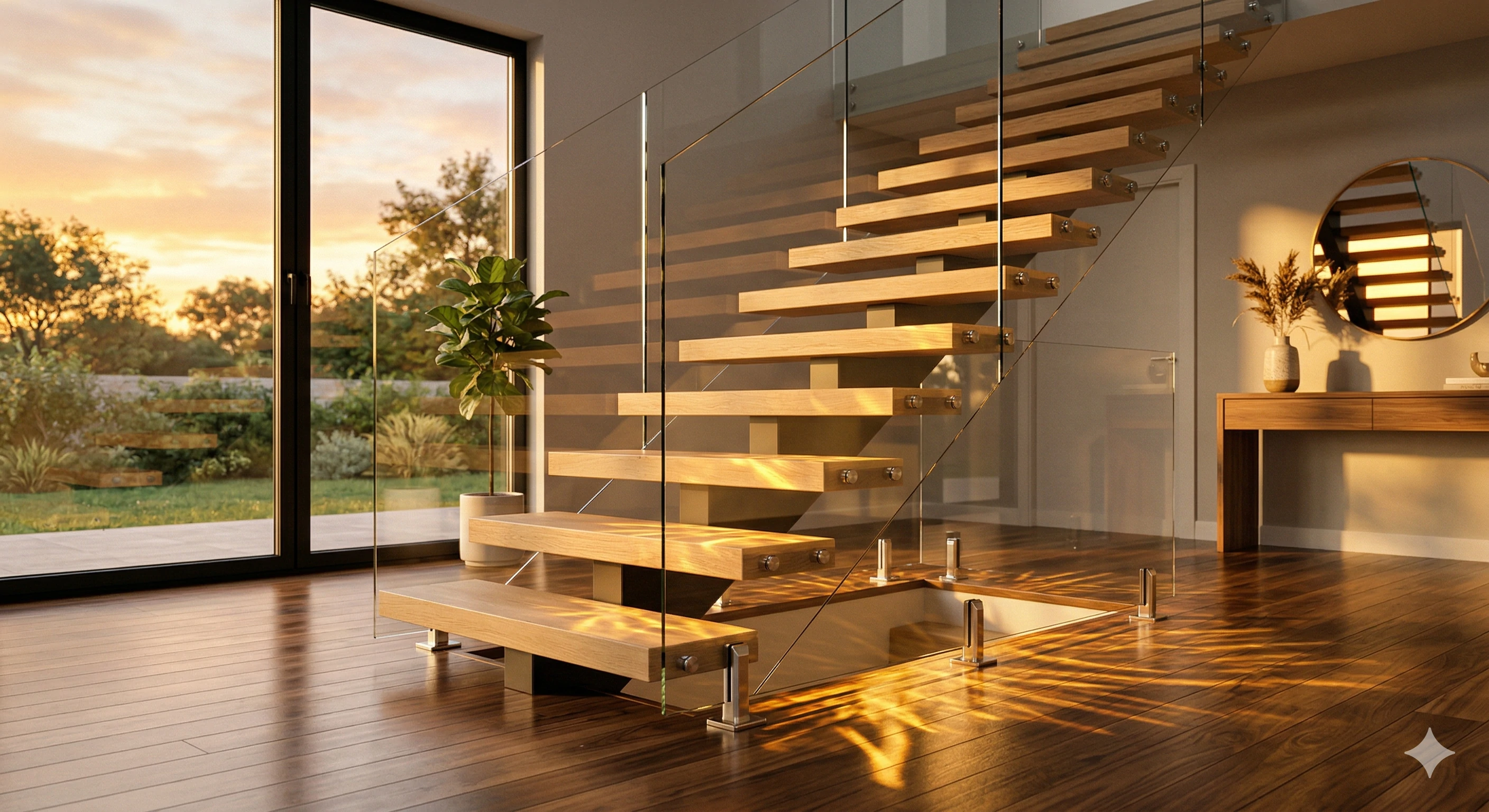
A frameless glass staircase with spigots is not really a railing upgrade. It is a lighting upgrade, a safety upgrade, a cleaning upgrade, and a design upgrade that happens to take the shape of a railing. It opens up sightlines, lets natural light travel through the house the way the architect probably intended, removes the gaps parents worry about, and gets rid of the maintenance cycle that comes with wood. The hardware disappears into the design, and what you are left with is a staircase that looks like it is floating in mid-air.
Ready to Let the Light In?
If you are tired of looking at a dated, dim stairwell every time you walk through your front door, the fix is more accessible than you think. Browse our collection of premium stainless steel stair spigots to see the exact hardware that makes this look possible — or reach out to our design team for a custom quote tailored to your staircase, your glass thickness, and your home's style.
Your staircase is the spine of your home. It is time it looked like it.
Footnotes
1. Explore how daylighting improves interior spaces and overall wellness.
2. Learn about the standards and regulations governing building safety.
3. Discover the evolution, history, and core concepts of interior design.
4. Read about the history and characteristics of Scandinavian design styles.
5. Understand the safety and durability benefits of laminated safety glass.
6. See examples of high-end architectural and interior design publications.
7. Learn how structural sealants provide durable and watertight bonding.
8. Discover techniques for preserving wood against environmental damage.
9. Read why marine-grade stainless steel resists corrosion effectively.