When we design and develop precision glass hardware at our production lines, we constantly evaluate the best machinery for the job. Many clients picture a traditional machine spinning a piece of metal horizontally, parallel to the floor, which often prompts the question: wouldn't vertical save valuable floor space? This misconception can lead to poor procurement decisions and a misunderstanding of how are actually manufactured.
Lathes are actually available in vertical configurations, known as Vertical Turning Lathes (VTLs), which are essential powerhouses for the heavy manufacturing industry. While horizontal lathes are the default for long shafts, VTLs are specifically designed to safely machine massive castings.
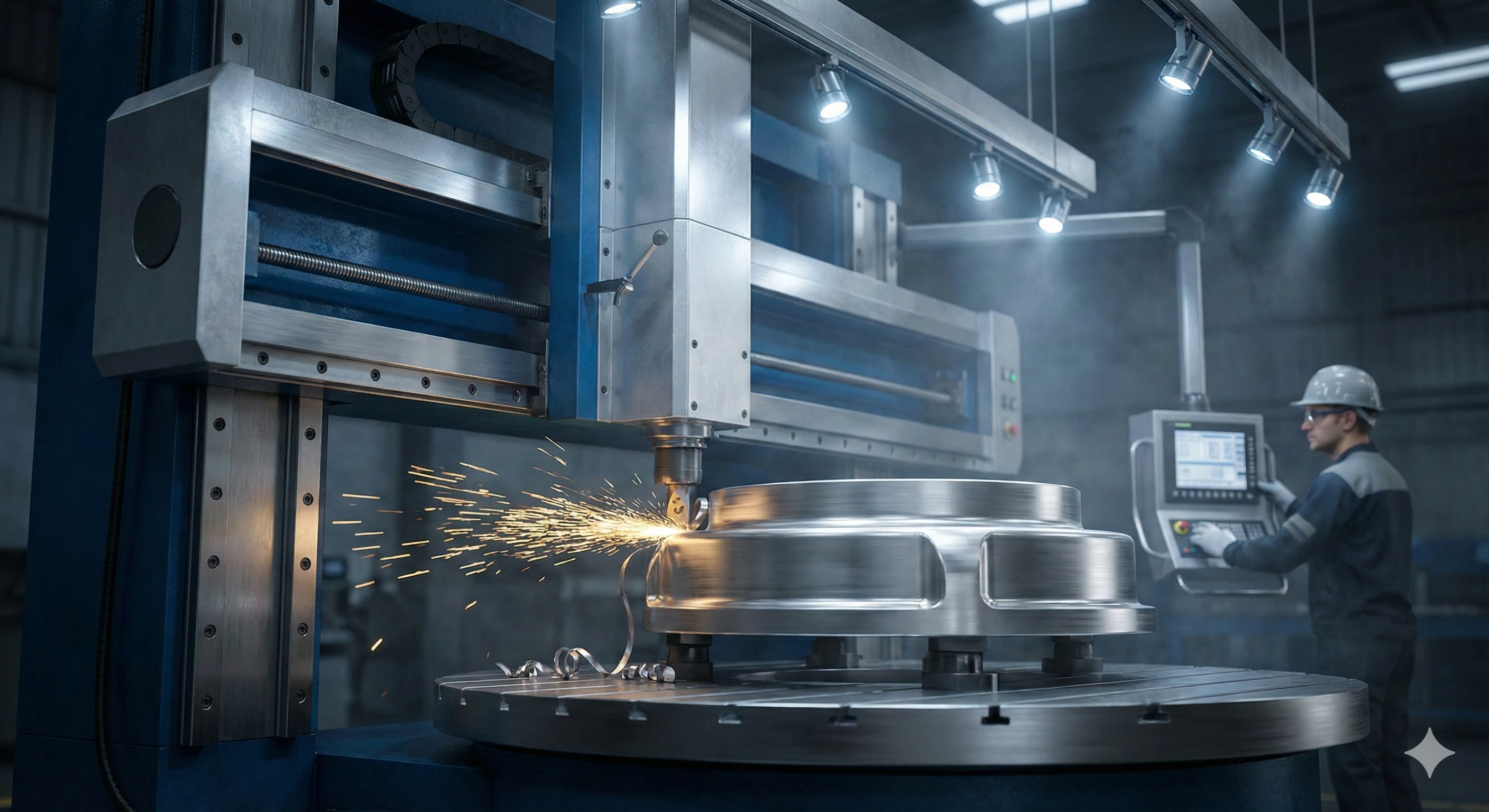
Let us explore the mechanics behind these machines and exactly when engineers must switch to a vertical orientation to achieve reliable results.
Why is Horizontal the Standard for Machining Long Parts?
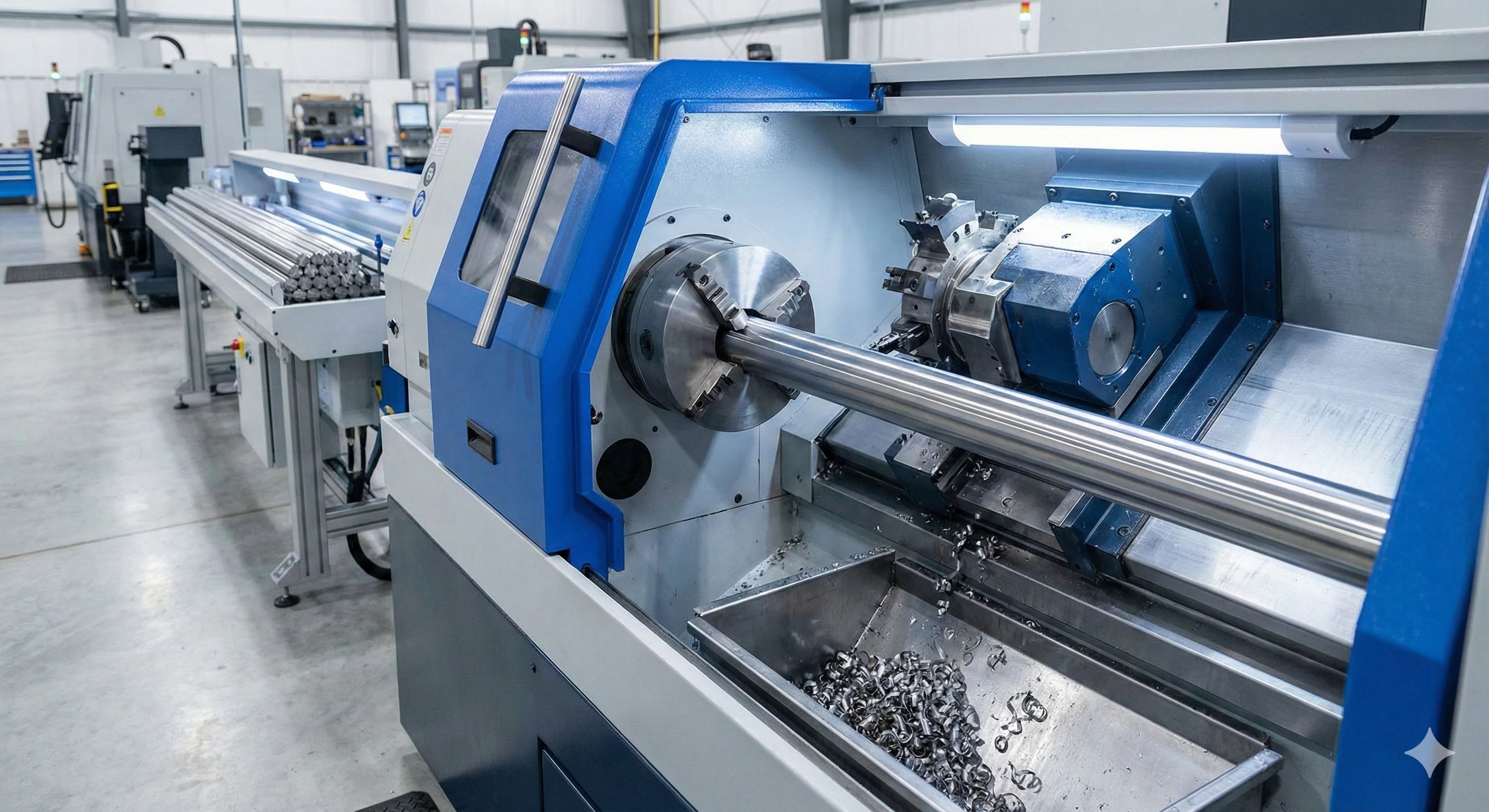
In our machining centers, we frequently process long for glass railing fittings. You might struggle with material bending or poor chip management if you use improper equipment. Fortunately, traditional machines evolved from the traditional specifically to handle these elongated shapes.
Horizontal lathes are considered the standard because they are specifically engineered for parts where the length is greater than the diameter, such as shafts, pins, rods, and screws. This design allows for automated bar feeding and essential tailstock support.
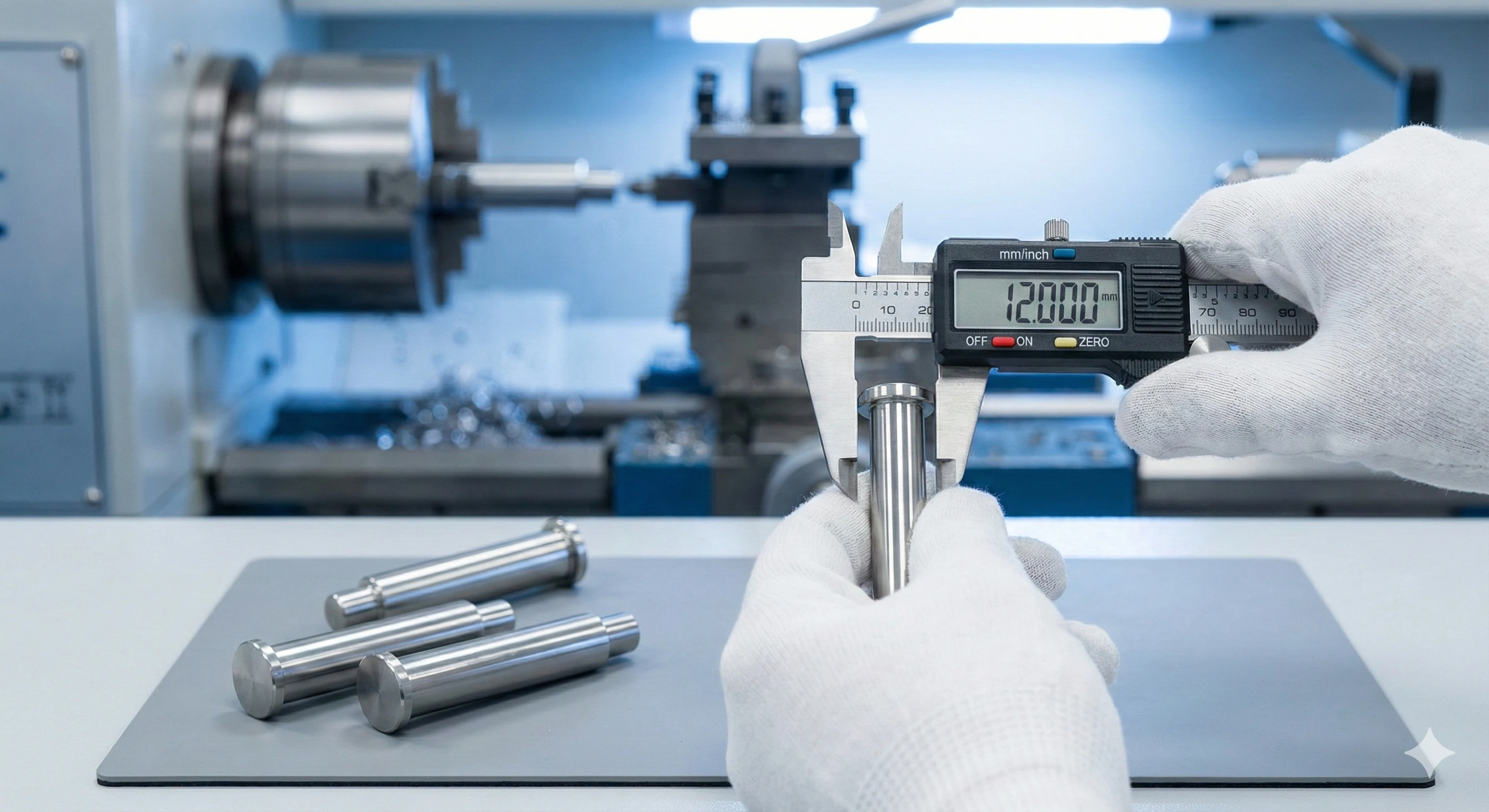
Automated Production and Continuous Feeding
Horizontal lathes are designed with a specific geometry that excels at handling long, slender items. This horizontal layout provides distinct advantages for continuous, . For example, you can easily feed long, 12-foot bars of steel through the back of the spindle. This capability allows our operators to run high-volume orders of glass hardware pins without manually loading each individual piece. It keeps production moving quickly and keeps costs down for our B2B partners.
Essential Support and Easy Maintenance
For long parts, you need to support both ends so the metal does not bend while cutting. A horizontal bed makes it very easy to slide a "tailstock" up to hold the tip of the part securely. Without this support, the pressure from the cutting tool would push the metal away, ruining the of the product. Furthermore, the horizontal orientation simplifies daily maintenance. Chips naturally fall straight down into the collection pan due to gravity. This prevents metal shavings from tangling around the workpiece.
Horizontal Lathe Applications
Understanding these mechanics helps buyers source the right products. Below is a breakdown of how the horizontal orientation serves specific production needs.
| Feature | Horizontal Lathe Benefit | Typical Application |
|---|---|---|
| Material Feeding | Allows 12-foot bars through the spindle. | High-volume hardware pins. |
| Part Support | Tailstock slides easily on a horizontal bed. | Long shafts and rods. |
| Waste Management | Chips naturally fall straight down. | Continuous automated turning. |
What is the Problem with Heavy Castings on a Horizontal Lathe?
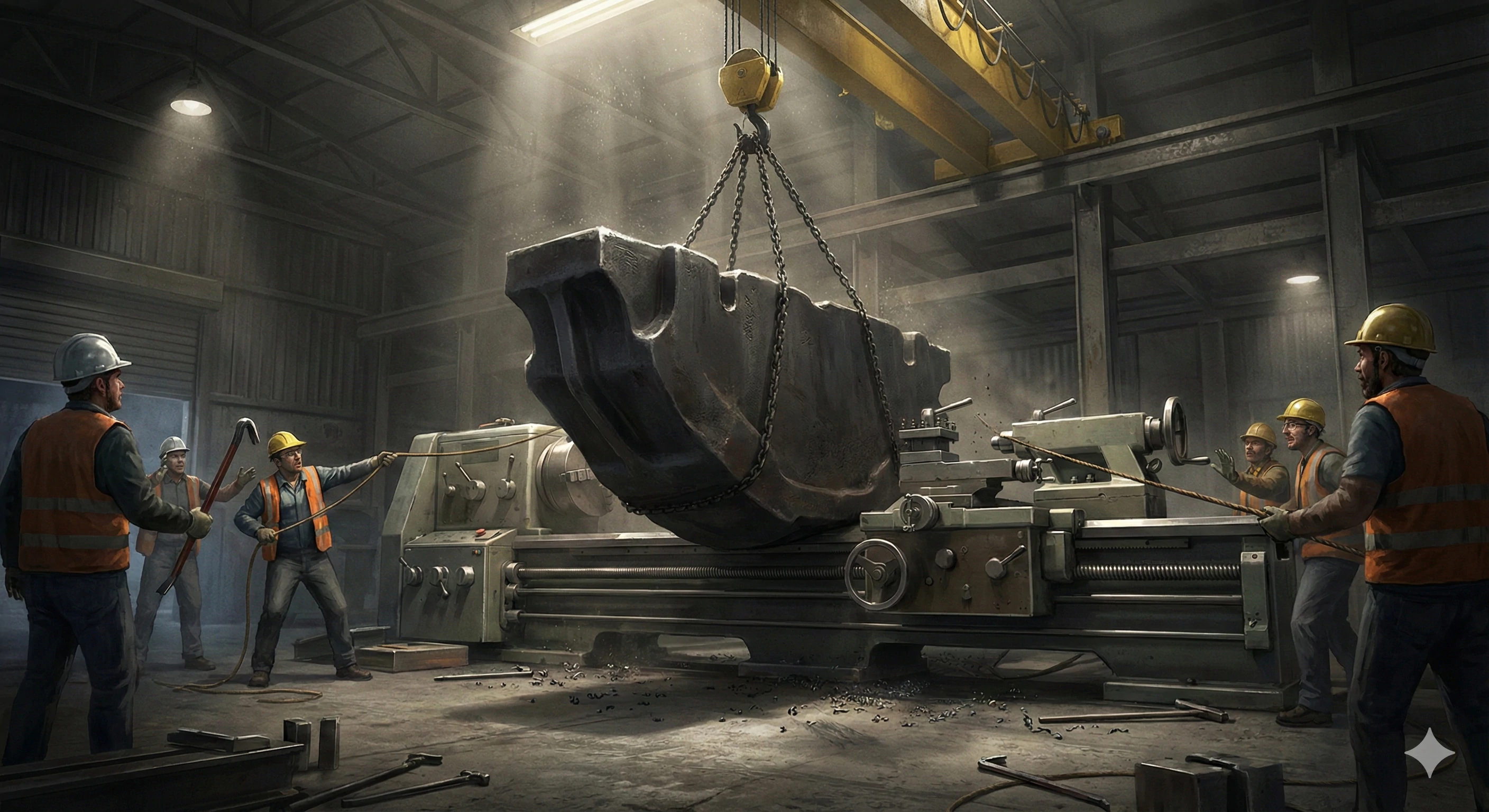
When our engineers scale up production for massive industrial components, we face severe physical limitations. Clamping a tremendously heavy part horizontally creates extreme danger and rapid equipment degradation. Gravity works constantly against the setup, pulling the heavy mass downward and risking catastrophic failure in the workshop.
Machining heavy castings on a horizontal lathe causes gravity to pull the massive weight down perpendicularly, which puts extreme stress on the machine's spindle bearings. It also makes safe loading nearly impossible without a crane swinging wildly.
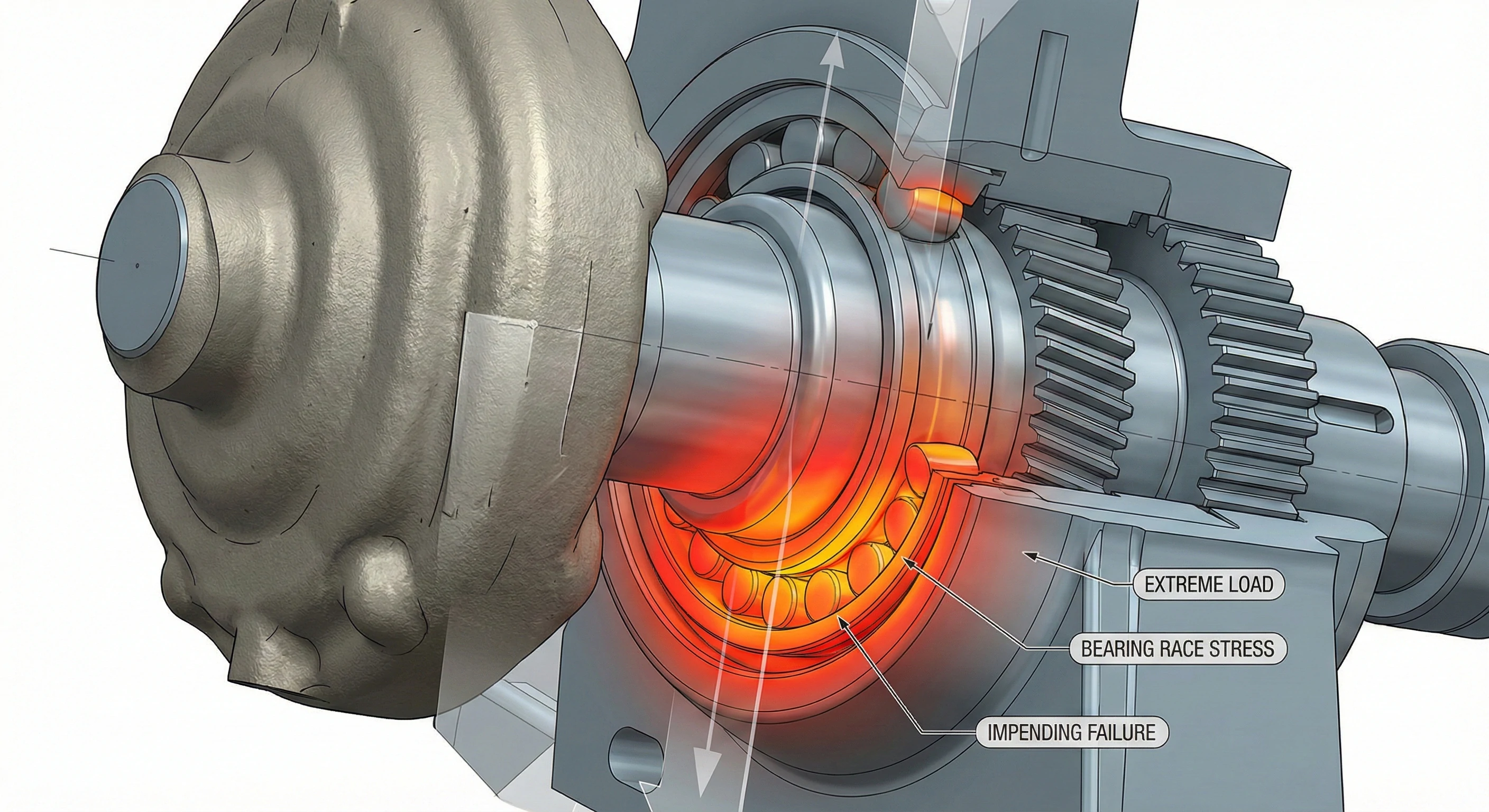
The Physics of Heavy Mass
Imagine trying to clamp a 500 lb (225 kg) cast iron pump impeller horizontally into a chuck. This creates a severe physics issue. The "sag" is a real threat because gravity is continuously pulling that massive weight down, perpendicular to the chuck. The heavy component essentially wants to fall out of the machine. This extreme stress damages the machine's rapidly. Our require stable machining environments, and a vibrating, over-stressed horizontal spindle cannot produce the tight tolerances required for high-end glass hardware or industrial valves.
Operational Dangers and Loading Issues
Beyond the mechanical wear on the bearings, horizontal loading presents a massive safety hazard. It makes it very difficult for the operator to load the part safely. Attempting to maneuver a heavy casting into a vertical chuck face requires a crane. During this process, the crane often ends up swinging wildly as the operator tries to align the heavy part with the jaws. This slows down production and endangers the staff.
The Risks of Horizontal Heavy Machining
To clearly illustrate why we avoid this method for heavy components, review the structural risks outlined below.
| Risk Factor | Consequence | Impact on Procurement |
|---|---|---|
| Perpendicular Gravity | Pulls part out of the chuck. | High risk of rejected parts. |
| Bearing Stress | Destroys machine spindle. | Delayed deliveries and machine downtime. |
| Loading Difficulty | Crane swings wildly during setup. | Increased labor costs and safety hazards. |
How Does the Vertical Turning Lathe (VTL) Solve Heavy Machining?
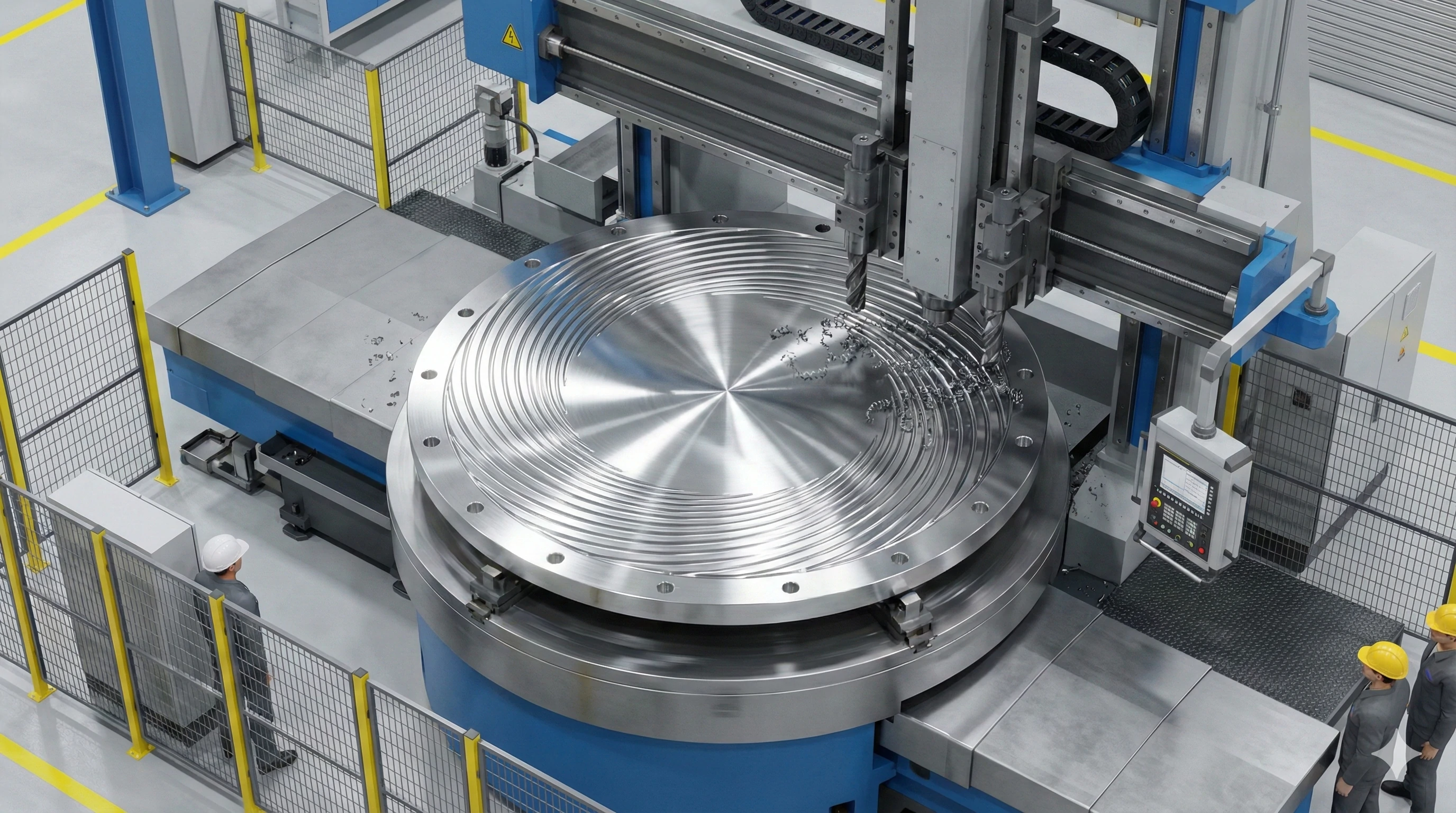
Producing large-scale flanges for OEM clients demands absolute stability and safety. Using standard horizontal equipment for these wide, heavy items leads to ruined parts and severe delays. The solution is standing the machine on its end, allowing gravity to assist rather than destroy the precision cutting process.
A Vertical Turning Lathe (VTL) solves heavy machining challenges by laying the chuck flat on the ground like a potter's wheel. This design allows gravity to safely hold heavy parts where the diameter is greater than the length.
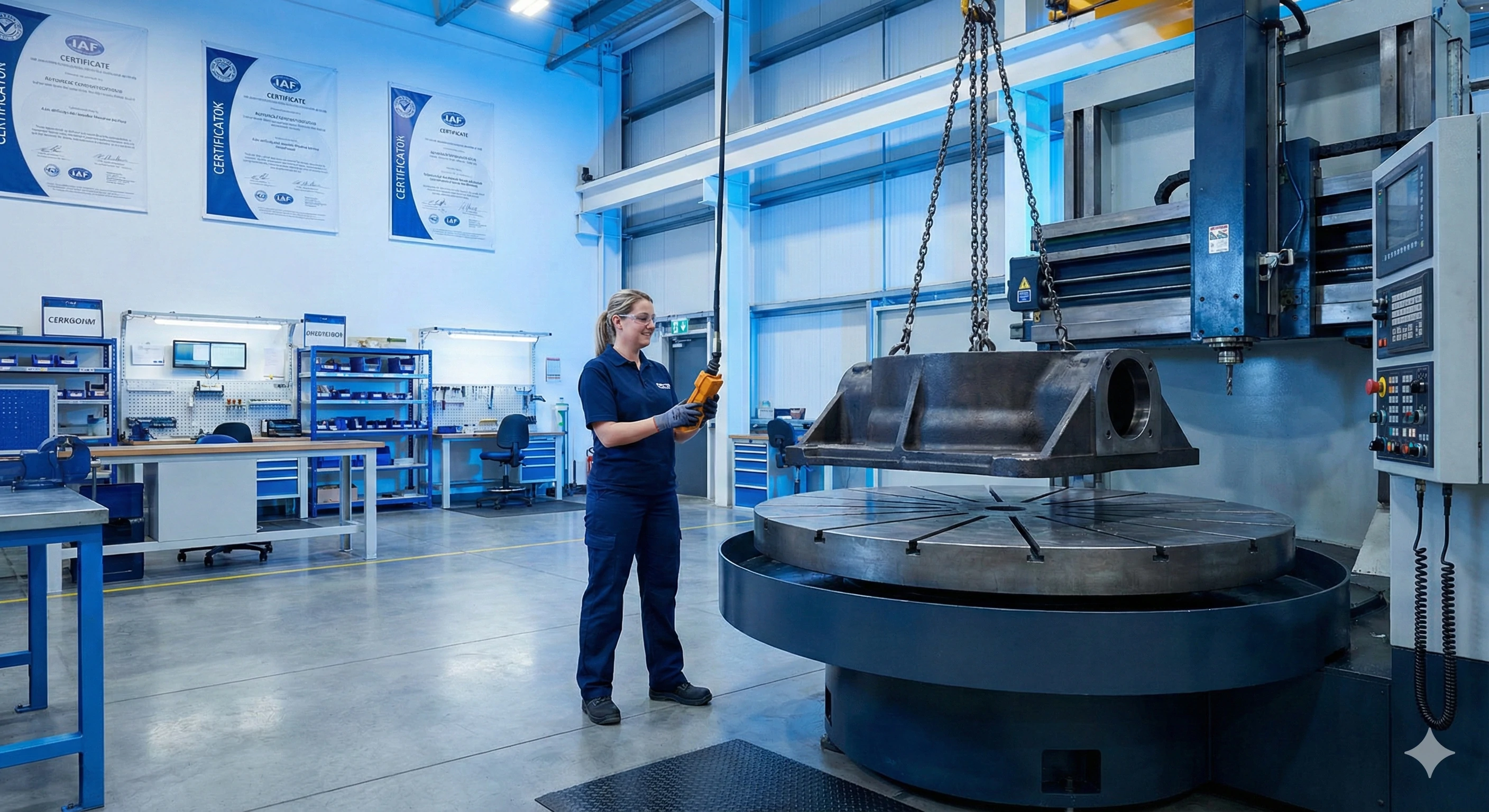
Embracing Gravity for Stability
This is where we showcase heavy-duty capabilities. A VTL is essentially a horizontal lathe stood up on its end. The cutting tools come down from above. We use the analogy to help visualize this process: the chuck spins flat on the floor. VTLs are specifically designed for parts where the diameter is greater than the length, such as large flanges, train wheels, and massive valve bodies. In this orientation, gravity is your friend. You simply lower the heavy casting onto the flat table, and gravity helps hold it in place while you clamp it safely.
Protecting the Machine and Saving Space
Because the part rests flat, the weight of the part pushes straight down into the machine's foundation, saving the bearings. This spindle protection ensures the machine maintains its precision over years of heavy use. Additionally, VTLs offer a smaller footprint. For cutting a 60-inch diameter part, a VTL takes up significantly less floor space than a horizontal lathe of the same capacity. Just like horizontal mills are better for chip evacuation, vertical lathes are fundamentally better for part weight.
The Decision Matrix
We use a strict set of criteria to route your components to the correct machine. This decision matrix highlights the operational differences.
| Feature | Horizontal Lathe (Standard) | Vertical Turning Lathe (VTL) |
|---|---|---|
| Best For | Long, slender parts (Shafts, Pins) | Large, heavy, wide parts (Rings, Valves) |
| Part Weight | Light to Medium | Extremely Heavy |
| Gravity's Effect | Pulls part out of the chuck | Pushes part into the chuck |
| Loading Method | Manual or Bar Feeder | Overhead Crane / Hoist |
How We Turn Castings for Your Industry?
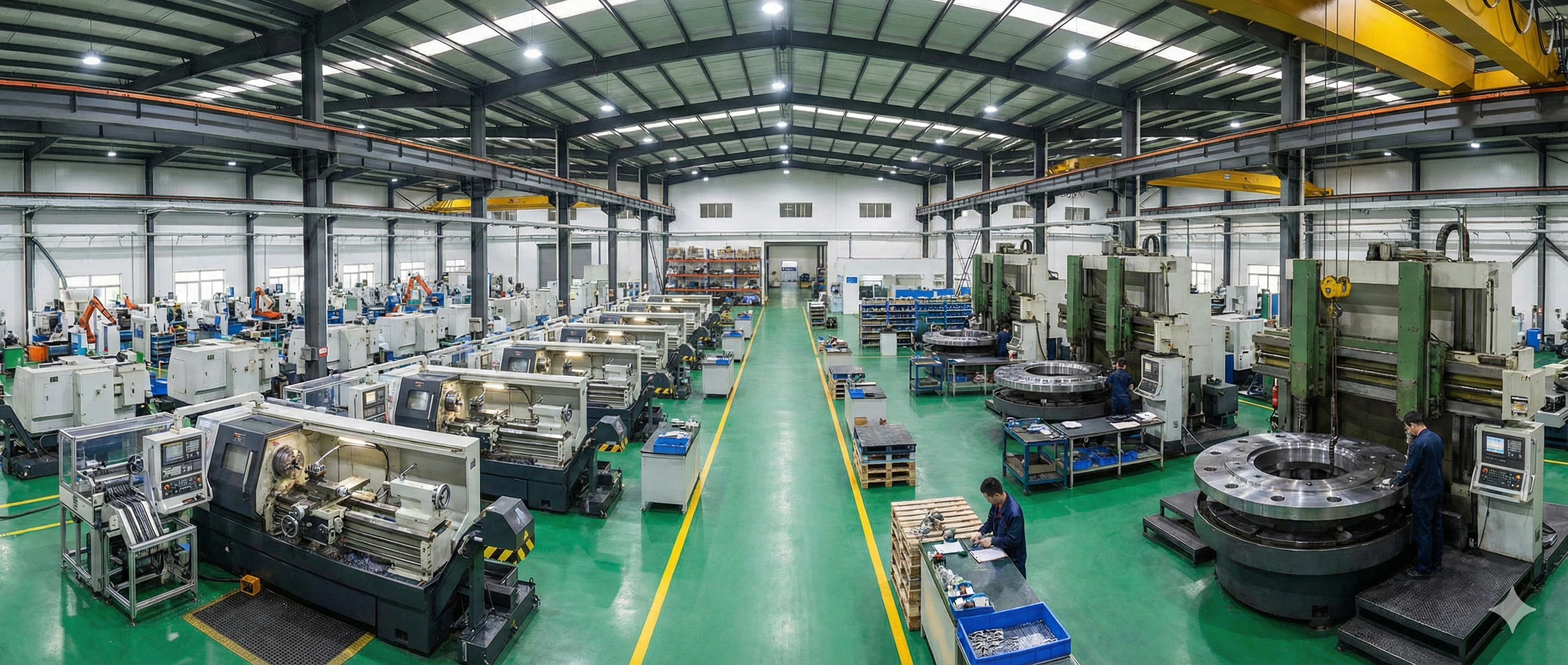
Procuring reliable glass hardware requires a partner with diverse engineering capabilities. Relying on a supplier with limited machinery often results in delayed deliveries or out-of-spec components. Our complete manufacturing facility utilizes both lathe orientations to guarantee precise, durable results for every unique B2B project we handle.
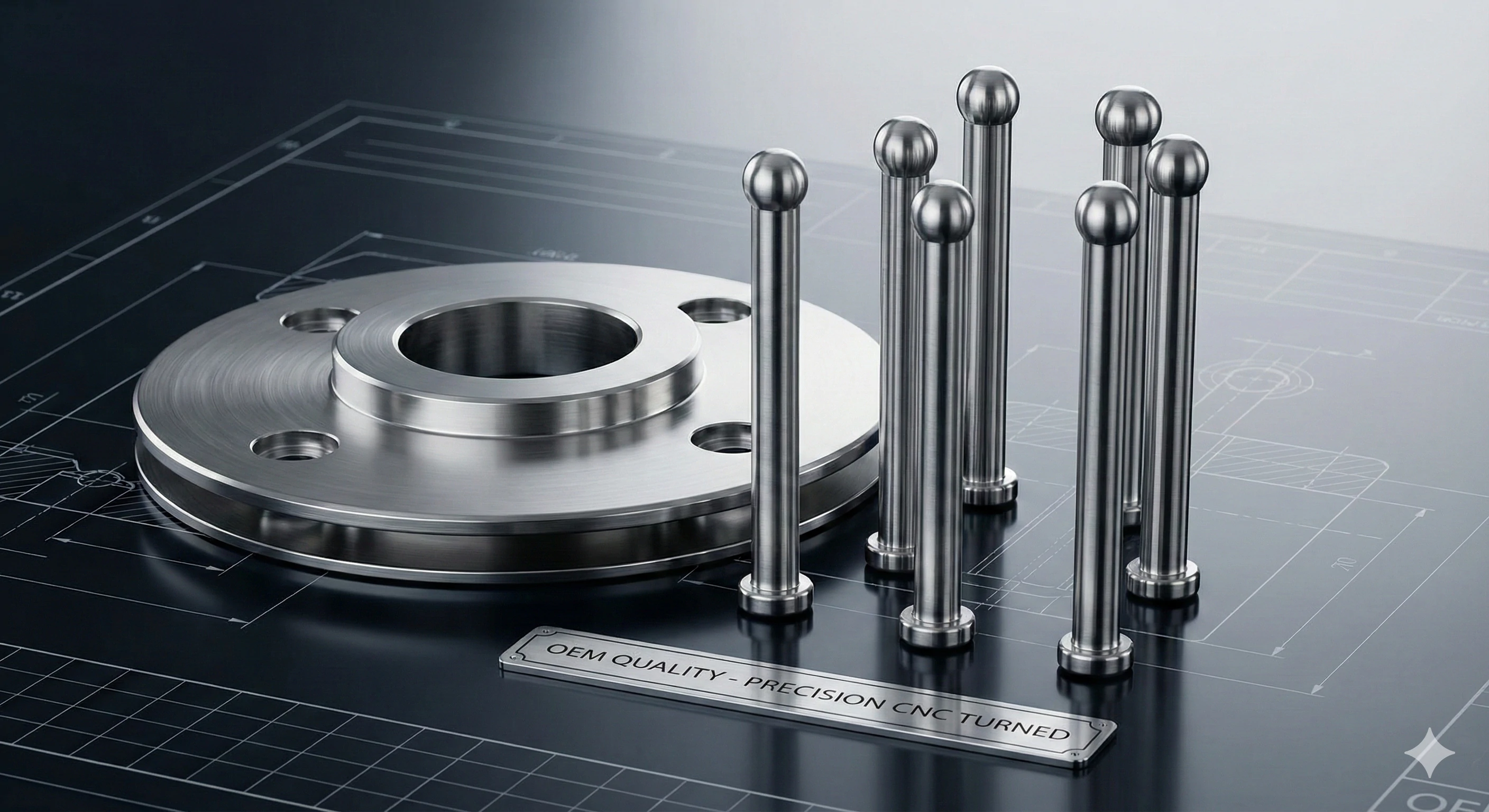
We turn castings for your industry by utilizing a complete manufacturing facility equipped with both horizontal and vertical CNC machines. This synergy ensures we can perfectly machine both small internal stems and massive stainless steel flanges with precision.
The Synergy of a Complete Facility
A complete manufacturing facility requires both types of turning centers to serve diverse industry needs. When an OEM client requires comprehensive , we do not force a single machine to do every job. We match the component to the physics of the machine. For the "small" stuff, like the internal stems of a valve or the threaded pins of a glass spigot, we use high-speed horizontal CNC lathes. This ensures fast, cost-effective production for slender components.
Machining the Heavy Components
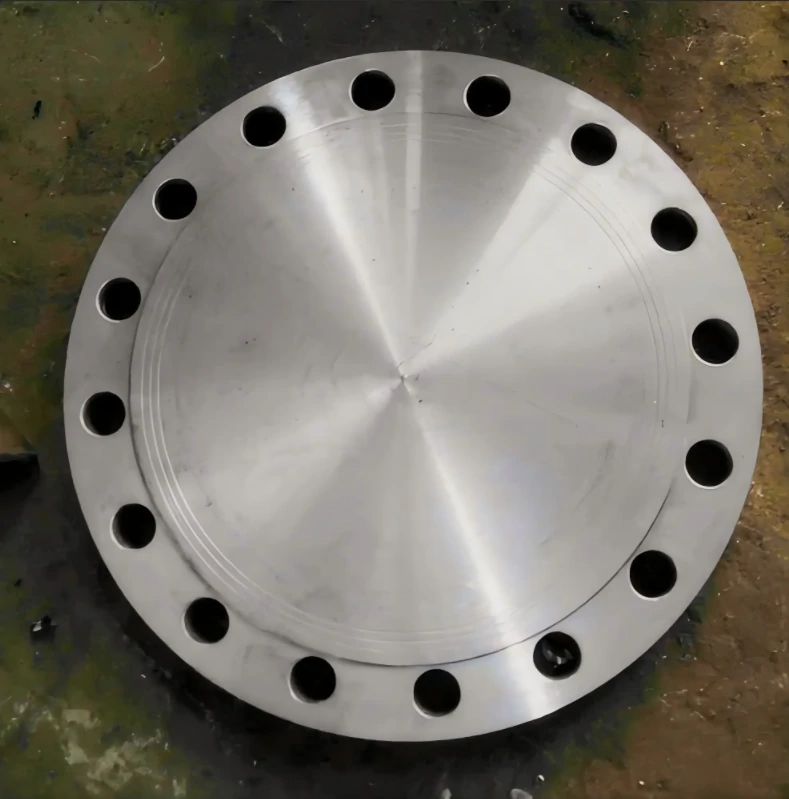
For the "big" stuff, the approach completely shifts. When an OEM client orders a 24-inch stainless steel flange or a heavy pump housing, we use a VTL to face the sealing surfaces with absolute flatness and safety. This capability directly addresses common procurement pain points. It prevents the delivery of substandard products and ensures that the components you buy are highly durable. We maintain strict quality control by never over-stressing our equipment, which means your products will have stable performance in the field.
Equipment Allocation by Component
Here is how we distribute different types of hardware across our advanced turning centers to optimize quality.
| Component Type | Size Profile | Assigned Machine |
|---|---|---|
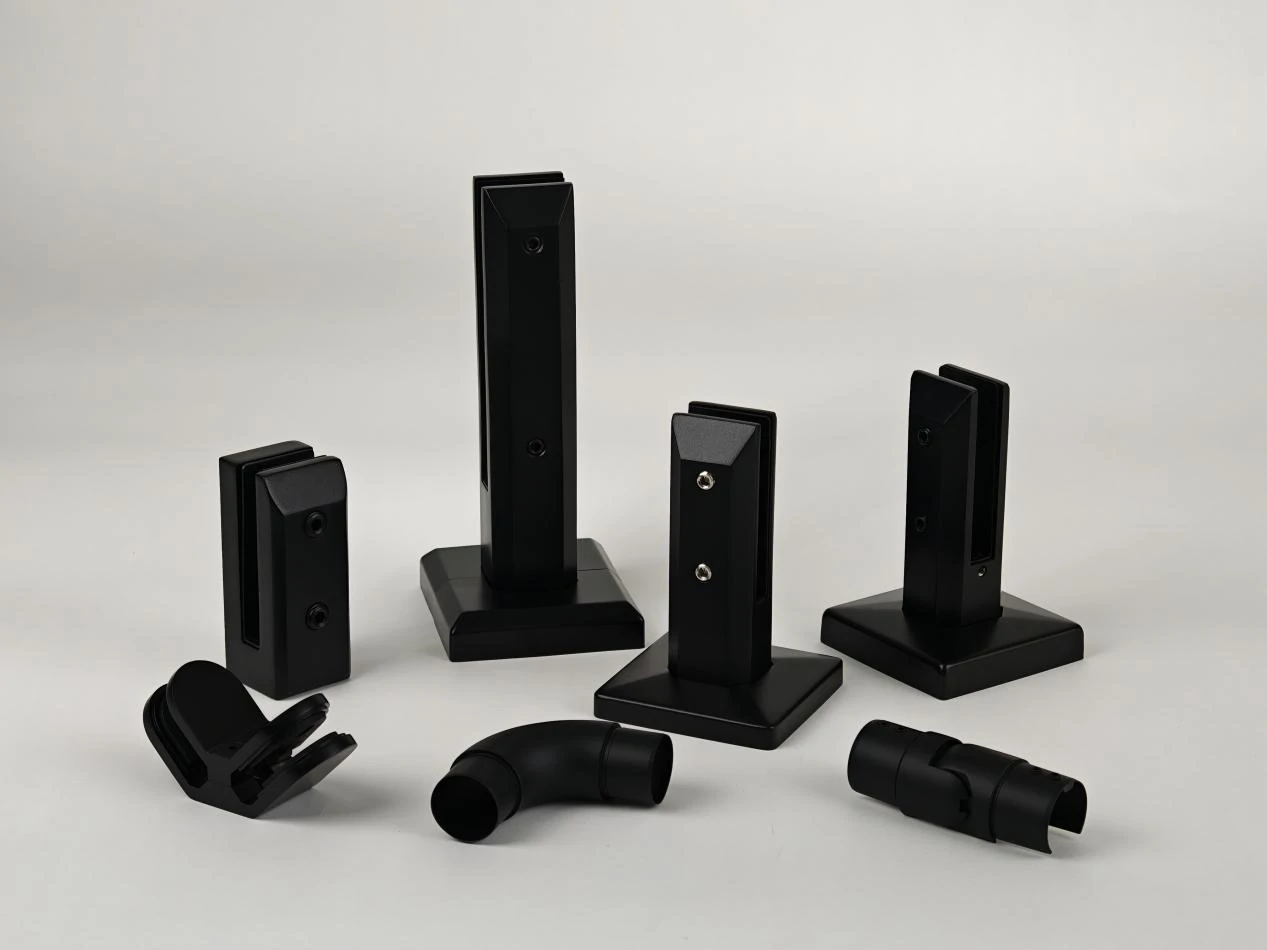
| Glass Spigot Pins | Long and slender | Horizontal CNC Lathe |
| Valve Internal Stems | Narrow diameter | Horizontal CNC Lathe |
| Stainless Steel Flanges | 24-inch diameter, heavy | Vertical Turning Lathe (VTL) |
| Heavy Pump Housings | Massive weight, wide | Vertical Turning Lathe (VTL) |
What is the Conclusion?
When sourcing components, you want to avoid costly mistakes and technical failures. Partnering with a shop that ignores fundamental machining physics wastes your time and money. We provide the right solutions by deeply understanding how different machine architectures impact final product quality and delivery timelines.
Horizontal lathes are fundamentally designed for making stick-like parts, while vertical lathes excel at manufacturing plate-like components. Understanding the physics of both machine types ensures your heavy parts are consistently machined safely, accurately, and highly efficiently.
Addressing Your Advanced Queries
Our engineering team often fields questions about specialized machining equipment. Can a be used as a lathe? Generally, no. While they look similar because a spindle comes down to a table, a mill spins the cutting tool, while a lathe spins the metal part itself. Standard mills cannot turn large diameters effectively, though advanced multi-tasking machines (Mill-Turns) can do both.
What is a Vertical Boring Mill (VBM)? A VBM is very similar to a VTL, but is typically even larger and used for the most massive industrial components, like hydroelectric turbine housings. In modern CNC shops, the terms are often used interchangeably.
Finally, are vertical lathes more expensive? Yes. Because VTLs are designed specifically to handle extreme weights and massive diameters, their cast-iron frames and thrust bearings are heavily reinforced, making them significantly more expensive than standard horizontal lathes.
Do you have large-diameter castings that require precision turning? We utilize advanced CNC turning centers—both horizontal and vertical—to machine components of all sizes. Send us your drawing for a machining evaluation.
Footnotes
1. Understand the scope and scale of heavy industry manufacturing.
2. Properties and applications of stainless steel in manufacturing.
3. The history and mechanics of traditional lathe machines.
4. How automation improves efficiency in continuous production environments.
5. The importance of engineering tolerances for part accuracy.
6. Function and importance of mechanical bearings in machinery.
7. Principles of maintaining quality in manufacturing processes.
8. Historical context and mechanics of the potter's wheel.
9. The stages involved in bringing a new product to market.