Building codes often feel full of complicated details, but some rules are both simple and critically important. The 4-inch sphere rule is one of them. If you’re installing deck railings, balcony guards, or glass panels, understanding this requirement is essential—not just for passing inspection, but for protecting children.
Why Does the 4-Inch Rule Exist?
The purpose of this rule is straightforward: prevent accidents involving children. Major building codes such as the International Building Code (IBC) and the International Residential Code (IRC) are designed to minimize common and predictable safety risks.
A small child’s head is typically just over 4 inches in diameter. The 4-inch sphere rule ensures that no opening in a railing system is large enough for a child’s head to pass through or become trapped. This simple limitation has played a major role in reducing falls and serious injuries over the years.
The General Rule: Decks and Balconies
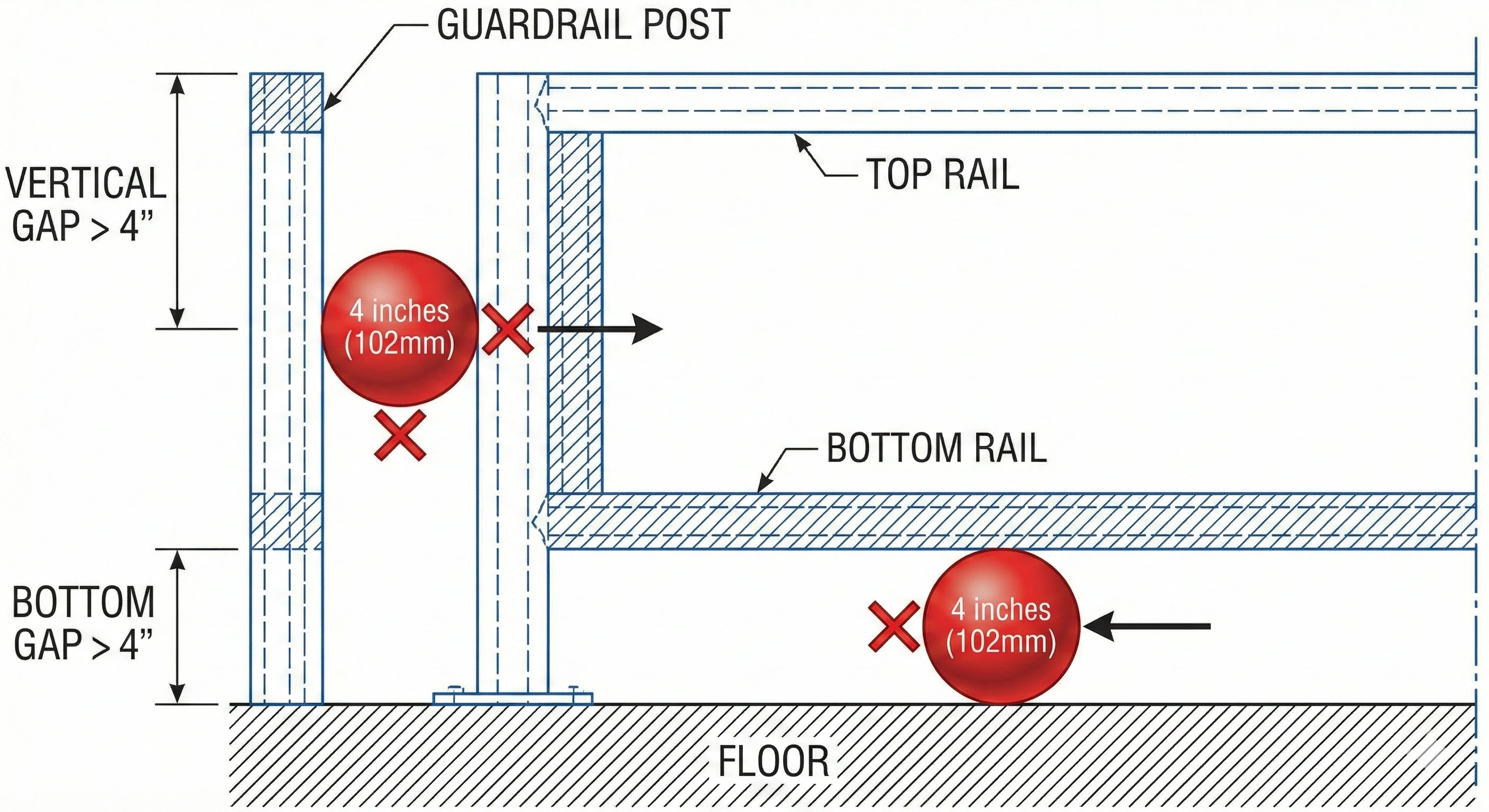
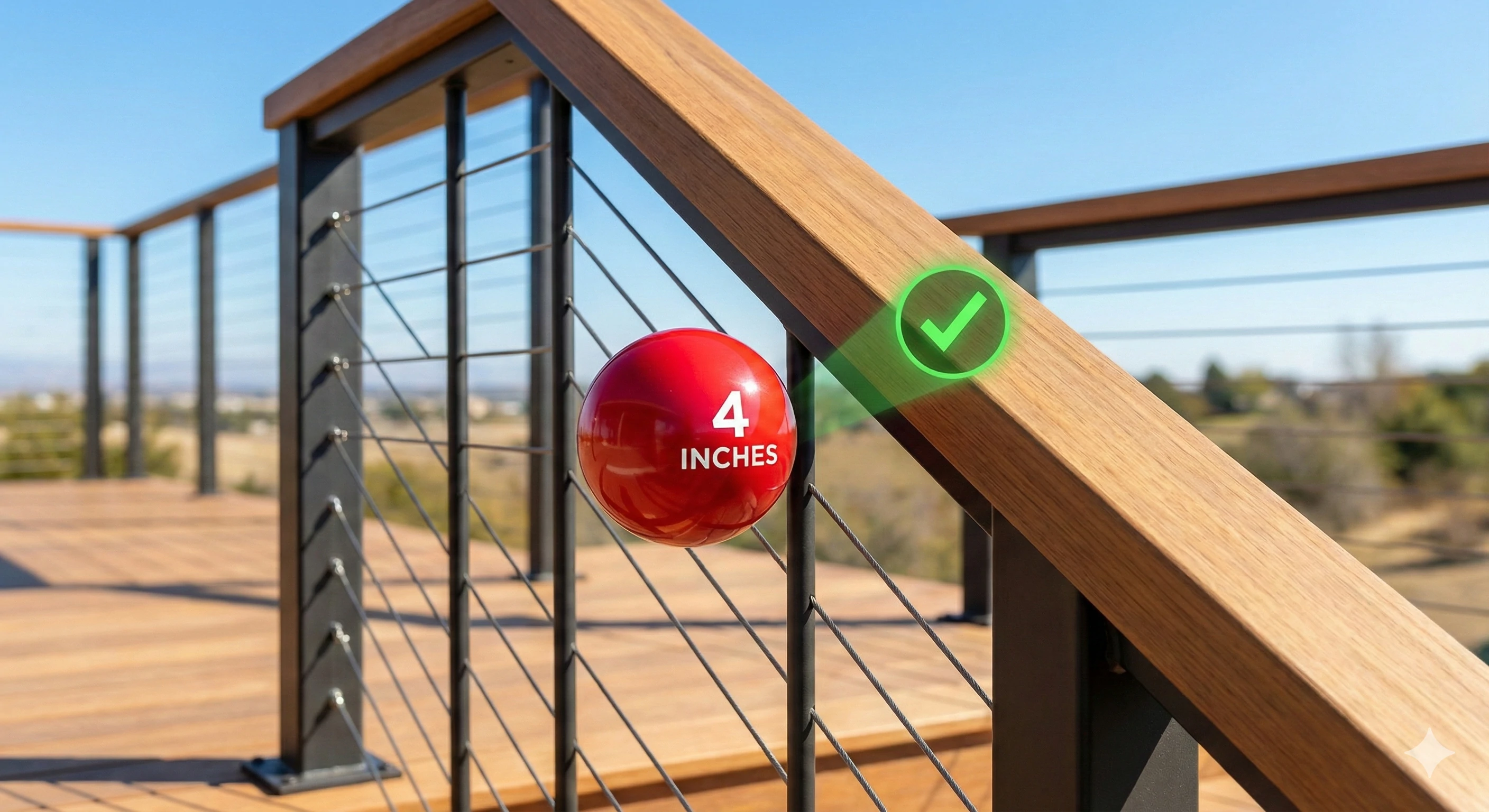
Under both the IBC and IRC, openings in guards (the official term used in building codes) must not allow a sphere measuring 4 inches (102 mm) in diameter to pass through.
This requirement applies to several key areas:
Spacing between vertical balusters
Whether the railing uses wood pickets, metal spindles, or another vertical infill, the clear space between each element must be no more than 4 inches.
The gap below the bottom rail
The distance between the walking surface (such as a deck floor) and the bottom rail—or the lower edge of a glass panel—must also meet the 4-inch limit.
Spacing between glass panels
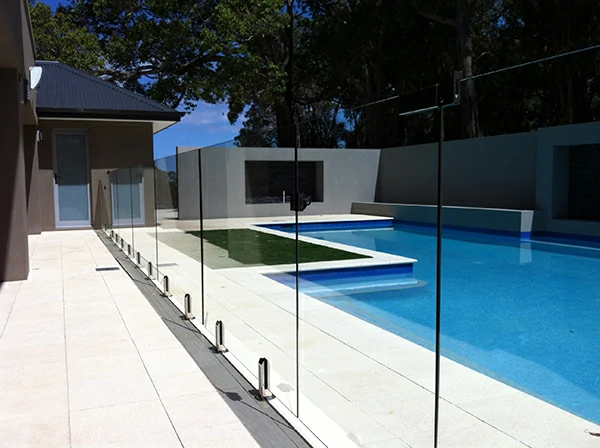
For frameless glass railing systems, the gap between adjacent glass panels must be small enough to block a 4-inch sphere.
This is a firm requirement. Inspectors often test it on-site, and there’s no flexibility if it fails.
The Exceptions: The "Staircase" Rules
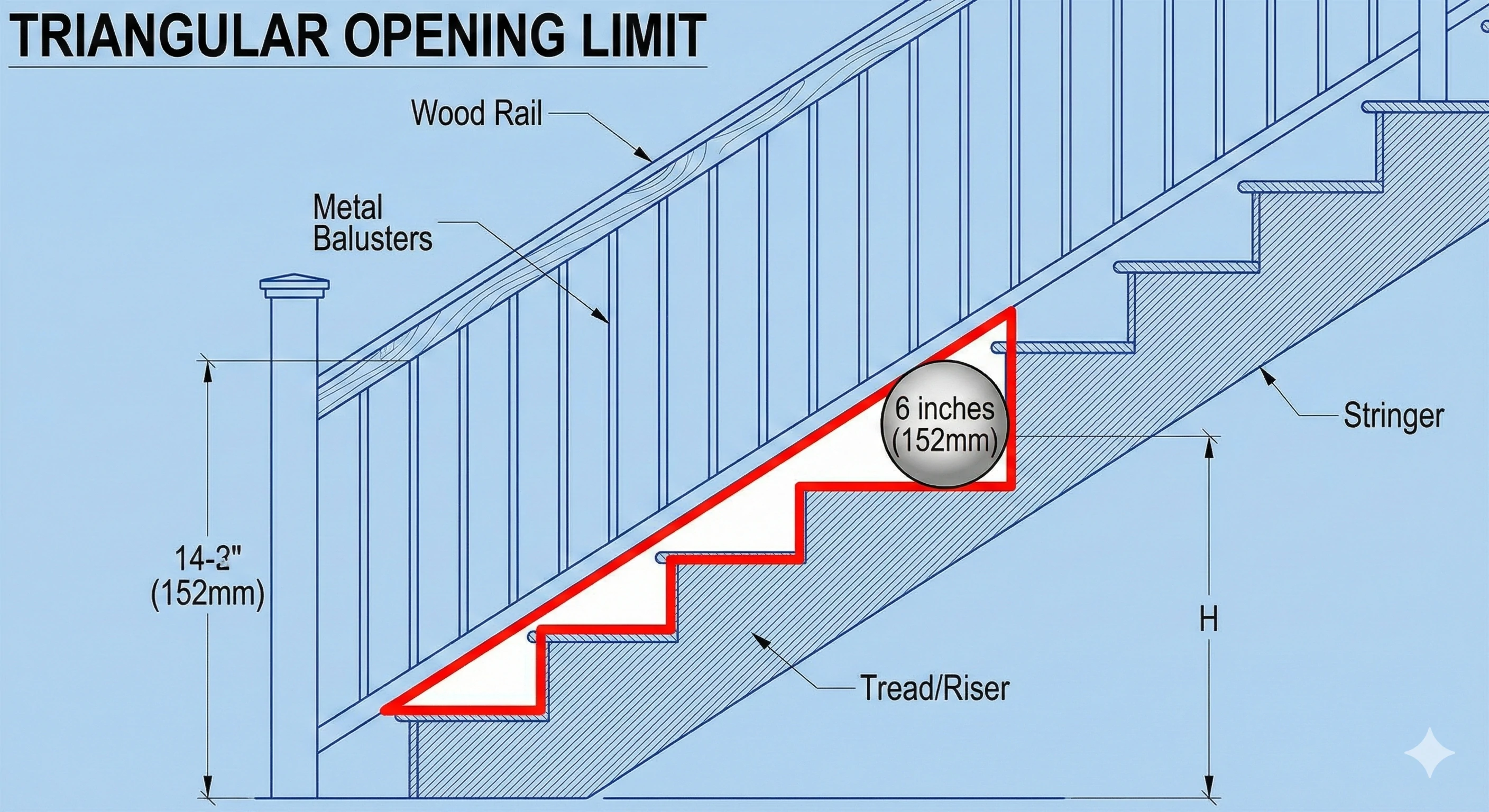
Stairs introduce angled geometry, which is why they follow slightly different standards. This is a common source of confusion for homeowners and installers.
1. The "4 3/8 Inch" Rule (Stair Railings)
On the open side of staircases, the space between balusters is permitted to be up to 4 3/8 inches (111 mm).
This allowance exists because stair balusters are usually installed vertically, while the handrail follows the slope of the stairs. The extra tolerance accounts for this geometry while still maintaining child safety.
2. The "6-Inch" Rule (The Triangular Opening)
Another important stair-related rule applies to the triangular space formed between the stair tread, stair riser, and the bottom edge of the guard.
A 6-inch (152 mm) sphere must not be able to pass through this triangular opening. This requirement prevents children from slipping through one of the most vulnerable areas of a stair guard system.
How This Applies to Frameless Glass Railings

If you’re planning to install a frameless glass railing system, here’s how the 4-inch sphere rule typically applies in practice.
1. The Gap Below the Glass (Spigot Height)
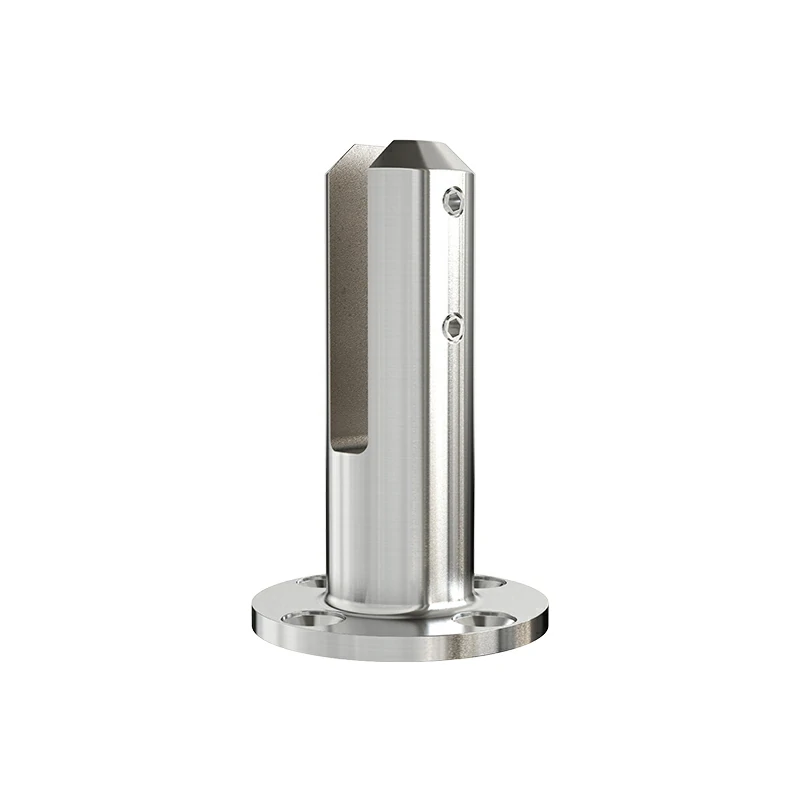
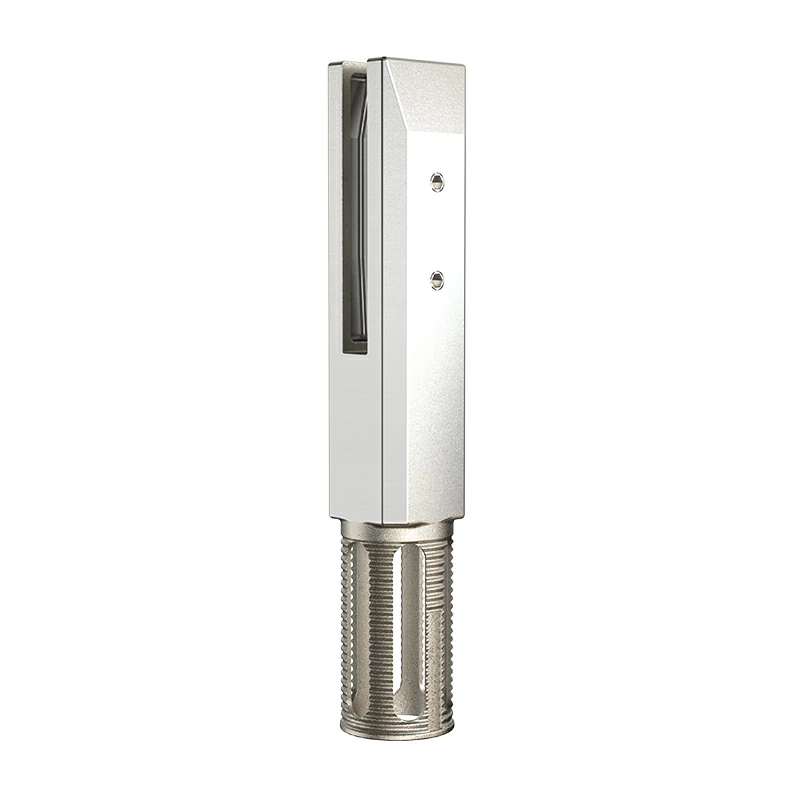
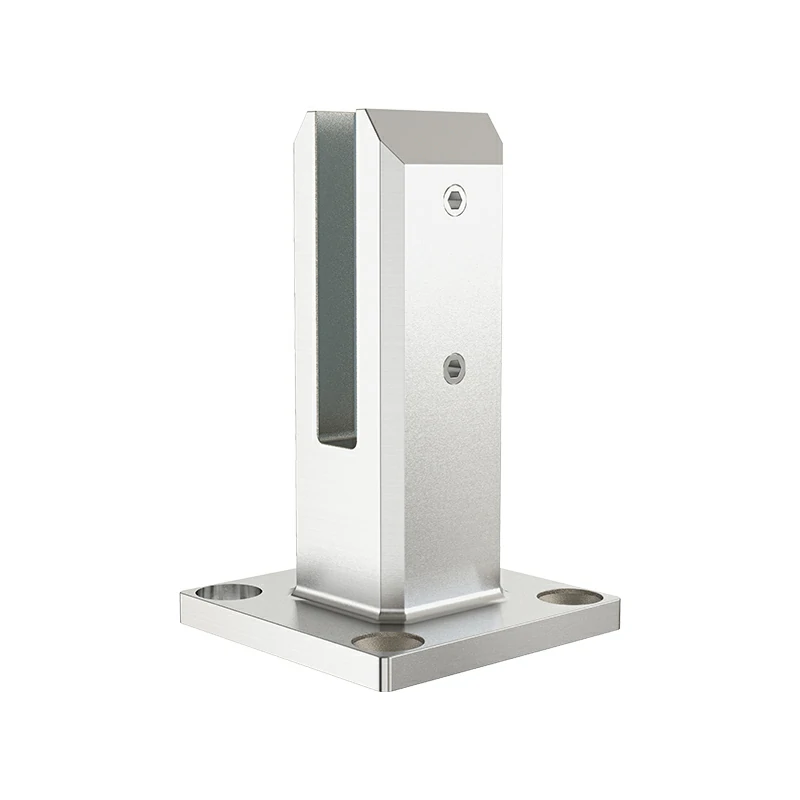
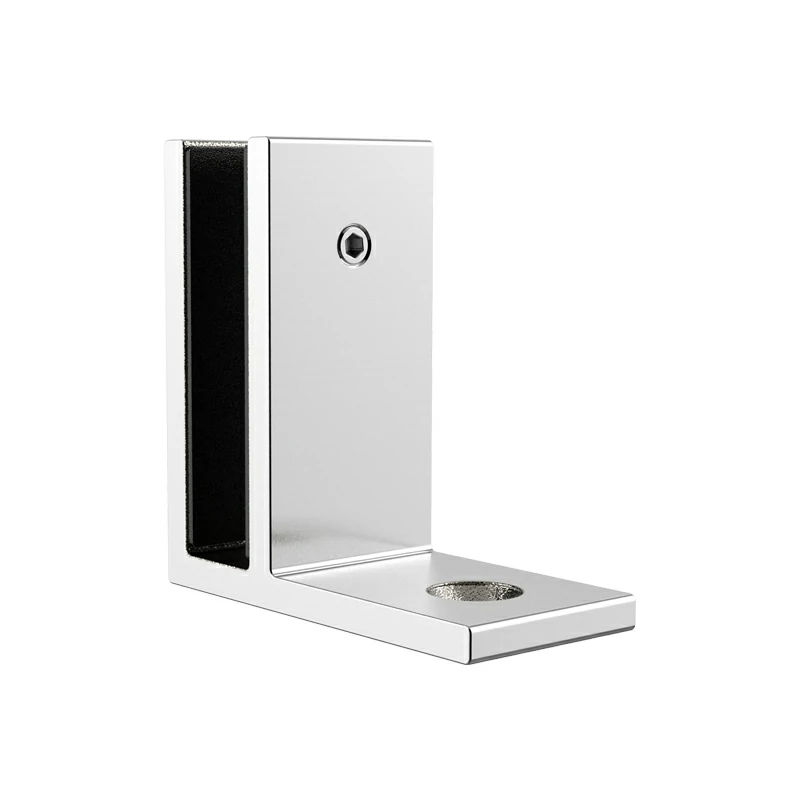
Most glass spigots raise the glass panel about 50–60 mm (2–2.5 inches) above the finished surface.
Verdict: Safe. This clearance is well within the 4-inch limit and also allows for proper drainage and cleaning.
2. The Gap Between Glass Panels
To allow for installation tolerance and thermal movement, installers usually leave 10–50 mm (0.4–2 inches) between glass panels.
Verdict: Safe. Even at the upper end of this range, the spacing fully complies with code.
3. The "Corner" Gap
Important: When glass panels meet at a 90-degree corner, the diagonal opening created at that intersection must be measured carefully. Inspectors often check this point, and it’s a common place for otherwise compliant systems to fail. Always confirm the diagonal measurement stays under 4 inches.
The "Climbability" Factor (The Ladder Effect)
While the 4-inch sphere rule focuses on preventing children from slipping through railings, building codes also consider how easy a railing is to climb.
Systems with horizontal elements—such as cable railings—can create a ladder-like effect that encourages climbing. For this reason, some jurisdictions impose additional limits on horizontal spacing.
Glass advantage: Frameless glass railings eliminate this concern entirely. With no footholds or handholds, glass panels are extremely difficult to climb, making them one of the safest guard options available.
How to Test Your Railing (DIY Inspection)
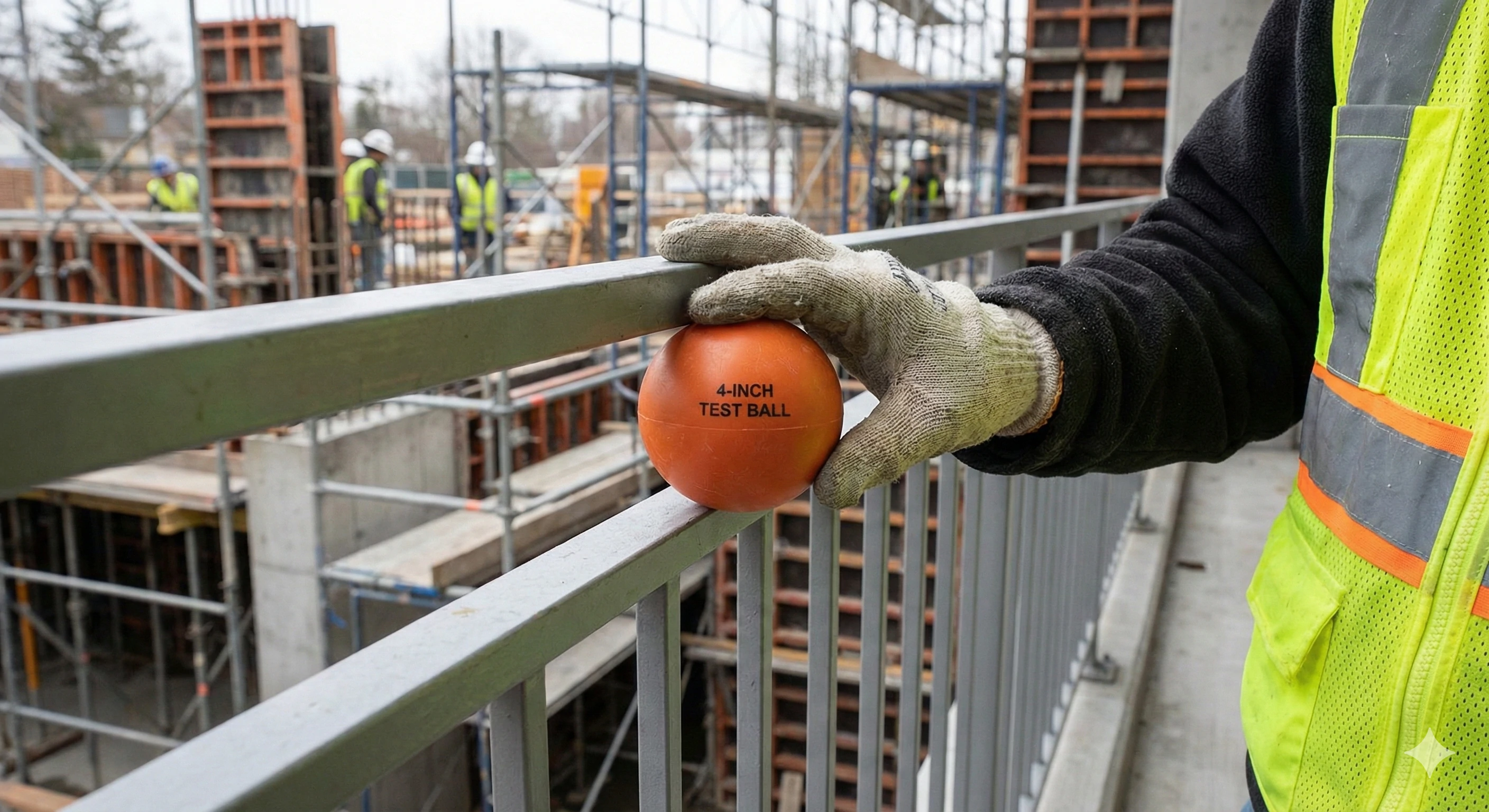
You don’t need specialized equipment to check compliance before an inspection.
What you need:
A rigid ball, foam sphere, or template measuring exactly 4 inches (102 mm) in diameter. Official test spheres are also available online.
How to test:
Press the sphere firmly against every opening
Check between balusters or glass panels
Test the gap below the bottom rail in multiple locations
Inspect corners, transitions, and irregular openings
Results:
If the sphere passes through → Fail
If it stops or cannot pass through → Pass
Performing this test ahead of time can save you from costly corrections and re-inspection delays.
Summary: Safety First, Compliance Always
The 4-inch sphere rule is a non-negotiable requirement in modern building codes. Its purpose is simple: protect children from falls and entrapment. Whether you’re building a residential deck, a commercial balcony, or installing frameless glass railings, following this rule ensures your project meets both safety and inspection standards.
Planning a deck or balcony project? Our Glass Spigot Systems are engineered for precise spacing and built-in code compliance, helping you achieve a clean installation with confidence.
Frequently Asked Questions
Does the 4-inch rule apply to the bottom of the railing?
Yes. The gap between the walking surface and the bottom rail or glass edge must also block a 4-inch sphere. This is one of the most commonly overlooked inspection points.
Why is stair spacing allowed to be 4 3/8 inches?
The additional tolerance accounts for the angled geometry of stairs, where vertical balusters interact with a sloped handrail. This adjustment maintains safety while allowing practical installation.
What is the minimum railing height?
Most residential guardrails must be at least 36 inches (914 mm) high, while commercial guards typically require 42 inches (1,067 mm). Regardless of height, internal spacing must still comply with the 4-inch sphere rule.