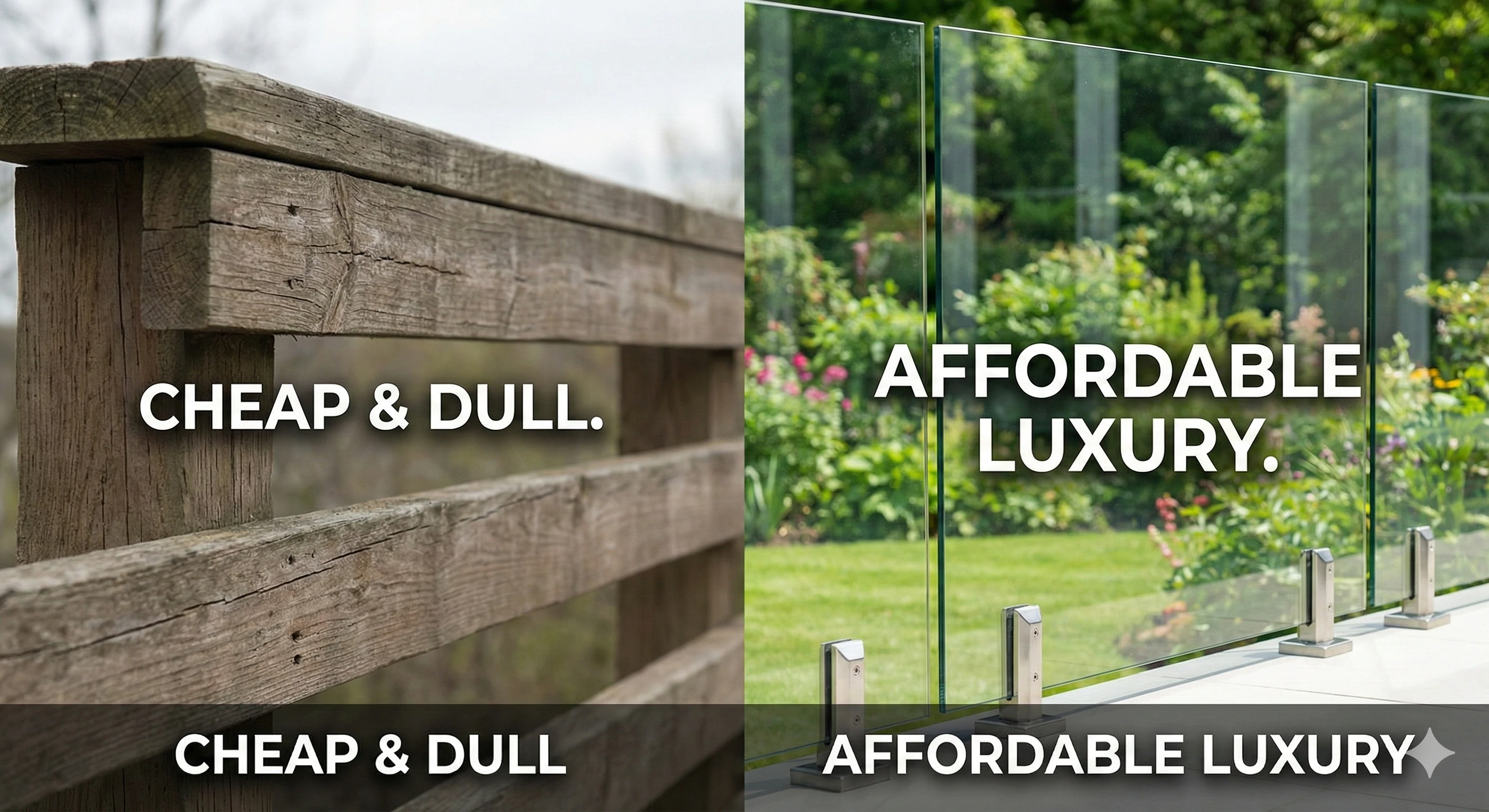
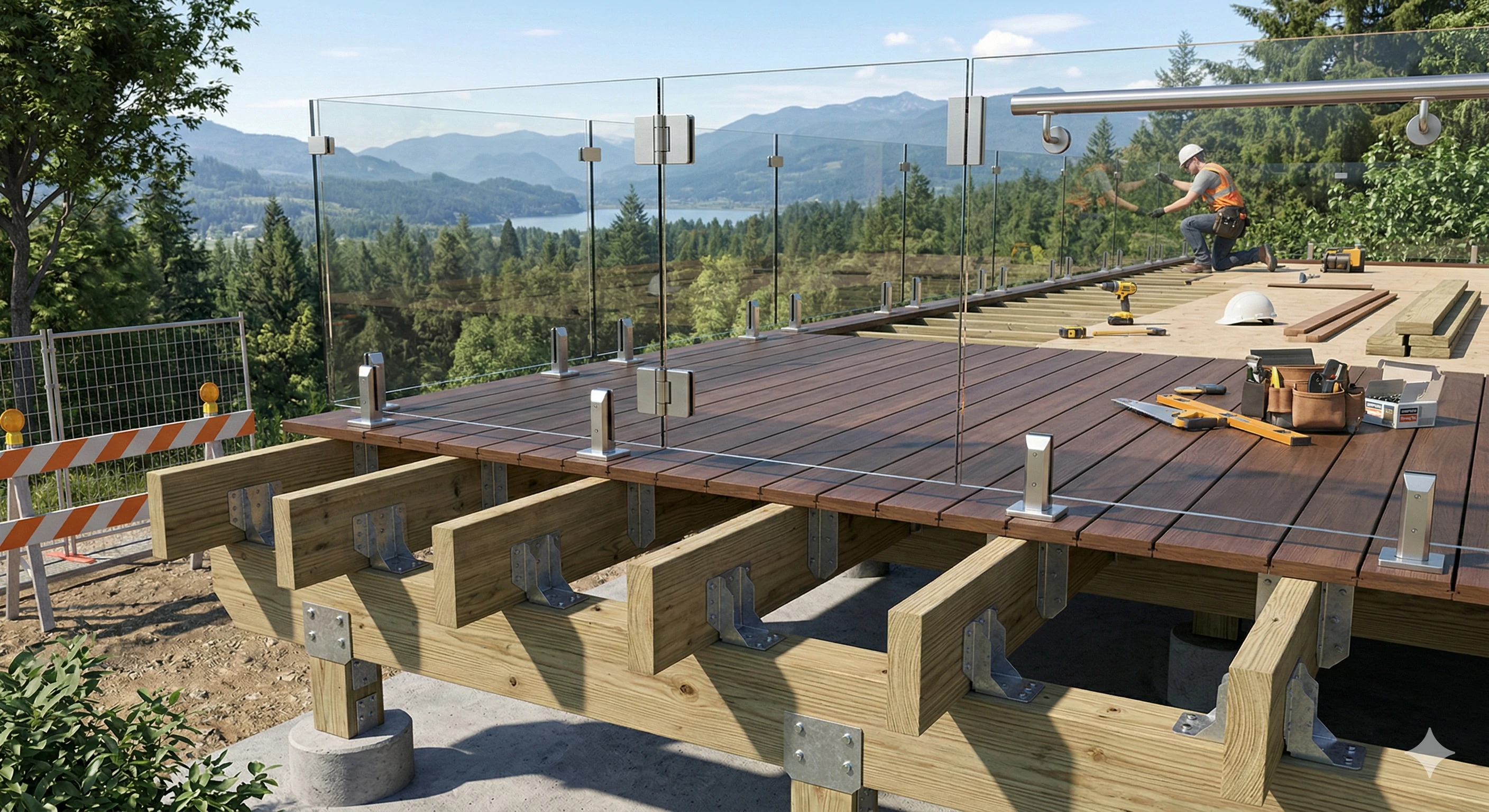
When we speak with contractors and procurement managers building high-end outdoor spaces, they often struggle with a critical problem: pairing a beautifully framed outdoor structure with the right finishing touches. A weak railing system or rapidly corroding brackets can completely ruin the visual appeal and safety of an entire project. At our production facilities, we focus on engineering the premium visible finishing pieces that transform a standard wood build into a luxury, maintenance-free space. Here is how you can select the perfect components for your next major installation.
Building a deck requires two distinct layers of hardware: hidden structural components like joist hangers to hold the foundation up, and visible architectural hardware like glass spigots and hydraulic hinges to make the outdoor space beautiful, functional, and exceptionally safe.

Let us explore the complete checklist of essential components you need to build a secure, compliant, and visually stunning outdoor platform.
What is Structural Deck Hardware?
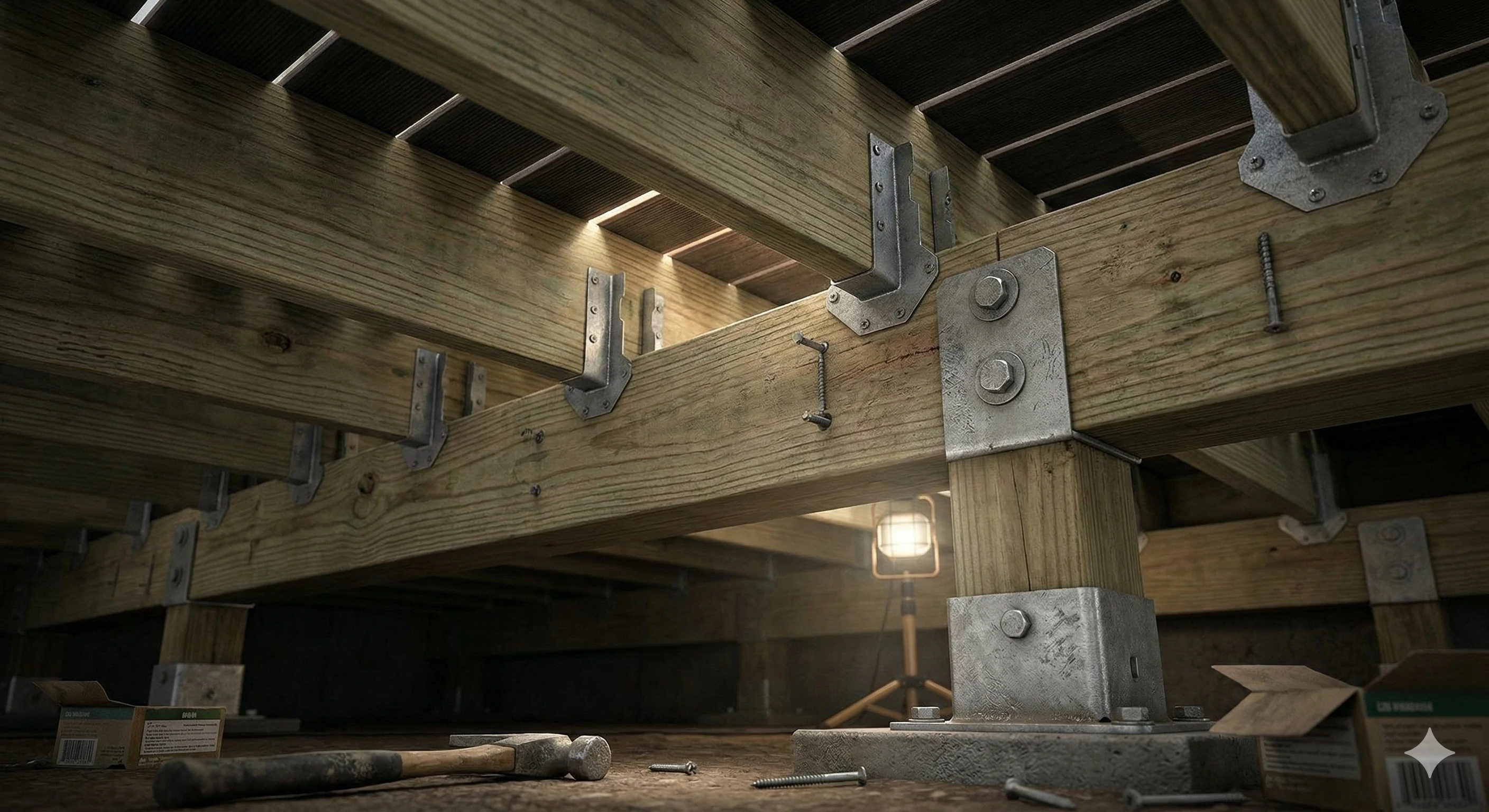
Whenever our factory tests the load capacities of our glass railing bases, we always remind clients that our premium architectural hardware relies entirely on the strength of the wood or composite foundation directly beneath it. If you use cheap or incorrect framing connectors, the entire platform risks sagging, warping, or collapsing under heavy loads. You must secure the base structural framework first before you can safely install any high-end visible finishes.
Structural deck hardware consists of heavy-duty metal brackets, joist hangers, post bases, and coated fasteners hidden beneath the floorboards. These essential components connect the framing securely, ensuring the entire deck structure remains strong, stable, and highly resistant to rot and decay.
The Hidden Foundation Connectors
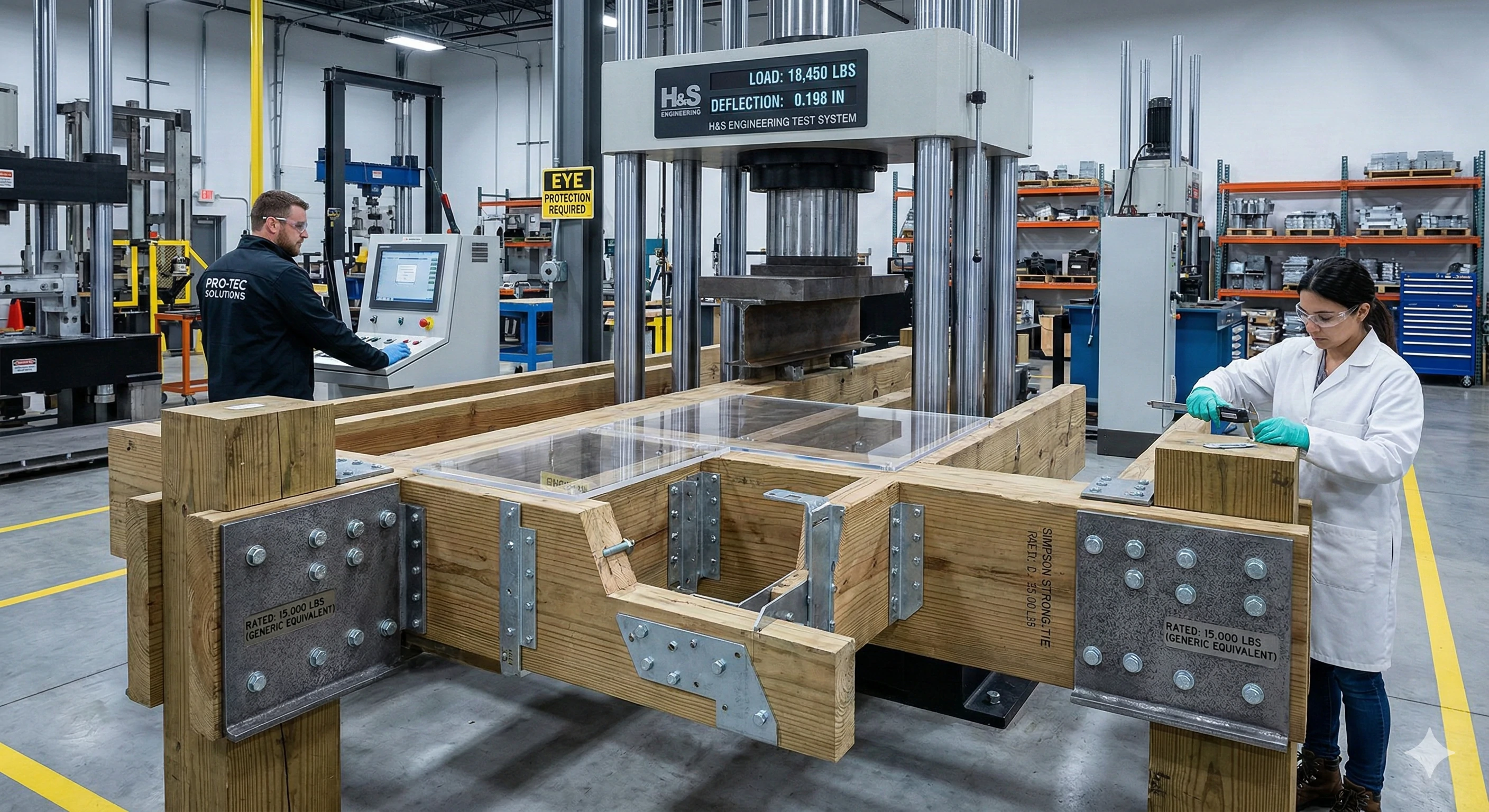
A great deck relies on two distinct layers of hardware, and the structural layer is the hidden foundation that keeps everything standing. While this hardware is hidden underneath the floorboards, it performs the most critical safety functions. Structural hardware usually consists of or epoxy-coated metals. It does not need to look pretty, but it absolutely must resist rot and decay.
The structural system begins at the ground level with post bases and caps. These are durable metal brackets that secure the vertical 4x4 or 6x6 wood posts directly to the concrete footings, preventing moisture from wicking up into the wood. Moving up the frame, builders use joist hangers. These are U-shaped metal brackets that securely attach the horizontal floor joists to the main ledger board, carrying the primary weight of the deck.
Heavy-Duty Fastening Systems
You cannot build a deck with standard indoor nails. You must use specialized fasteners, including coated screws and heavy-duty bolts. and lag screws are heavy-duty fasteners used specifically for critical framing connections. Meanwhile, deck screws are specially coated to resist the harsh chemicals found in .
| Component Category | Specific Hardware | Primary Function | Ideal Material |
|---|---|---|---|
| Ground Connections | Post Bases & Caps | Secures vertical wood posts to concrete footings | Hot-Dipped Galvanized Steel |
| Framing Supports | Joist Hangers | Attaches horizontal floor joists securely to the ledger board | Galvanized Steel |
| Heavy Fasteners | Carriage Bolts & Lag Screws | Provides maximum holding power for primary framing | Hot-Dipped Galvanized Steel |
| Board Fasteners | Coated Deck Screws | Resists chemicals in pressure-treated wood | Epoxy-Coated Steel |
What is Architectural Deck Hardware?
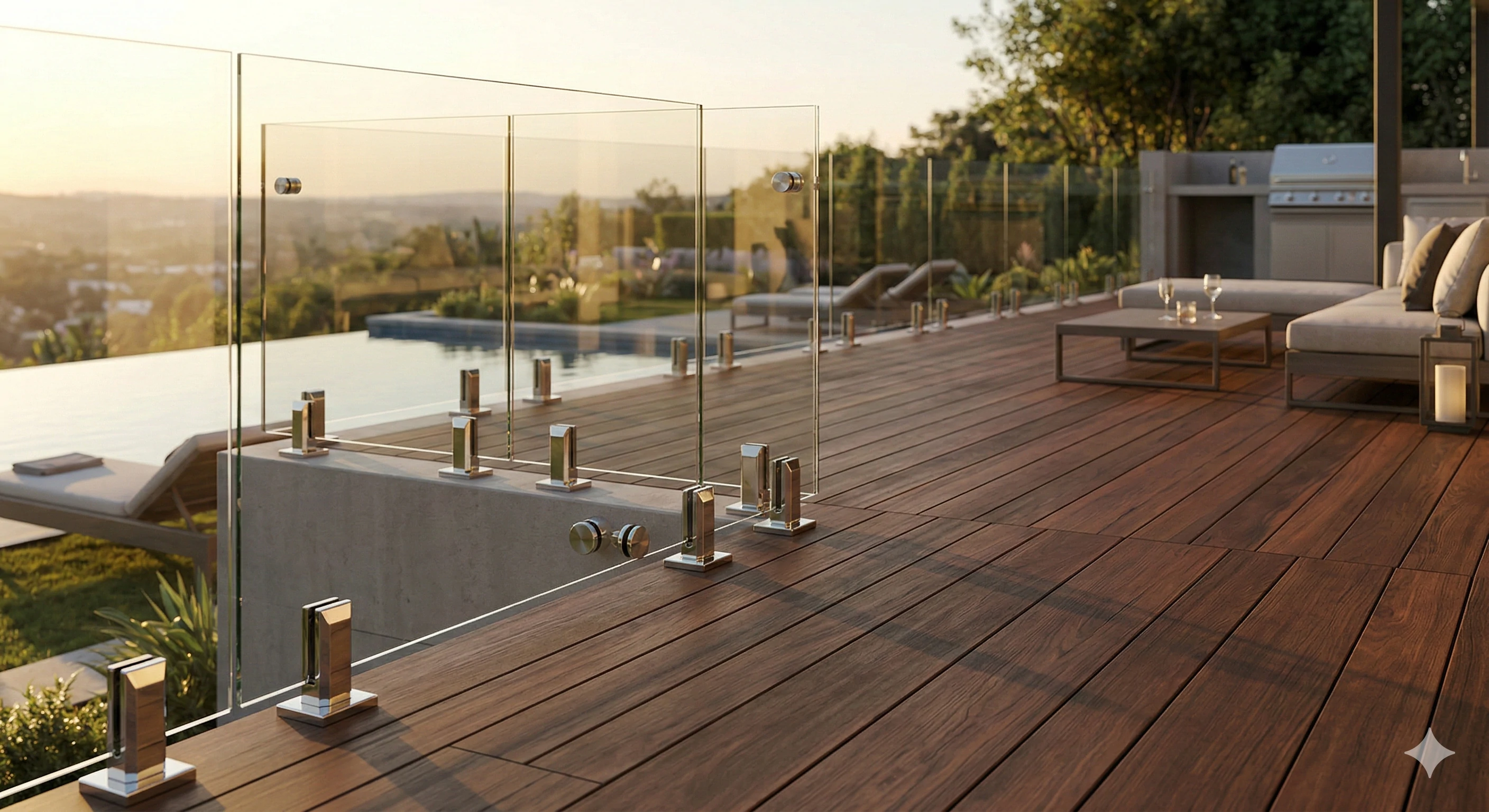
Exporting premium fittings to contractors globally has taught our engineering team a valuable lesson: the visible hardware ultimately defines the true value and luxury feel of the property. Clients become deeply frustrated when cheap, traditional wooden balusters block their beautiful backyard views or require constant repainting and maintenance. Upgrading to sleek, modern systems like frameless glass perfectly solves this aesthetic headache while providing an incredibly strong safety barrier.
Architectural deck hardware refers to the highly visible structural elements installed above the deck floor, including frameless glass spigots, standoffs, and gate hinges. This premium hardware provides crucial safety barriers while significantly elevating the modern aesthetic and overall property value.
Elevating the Visual Experience
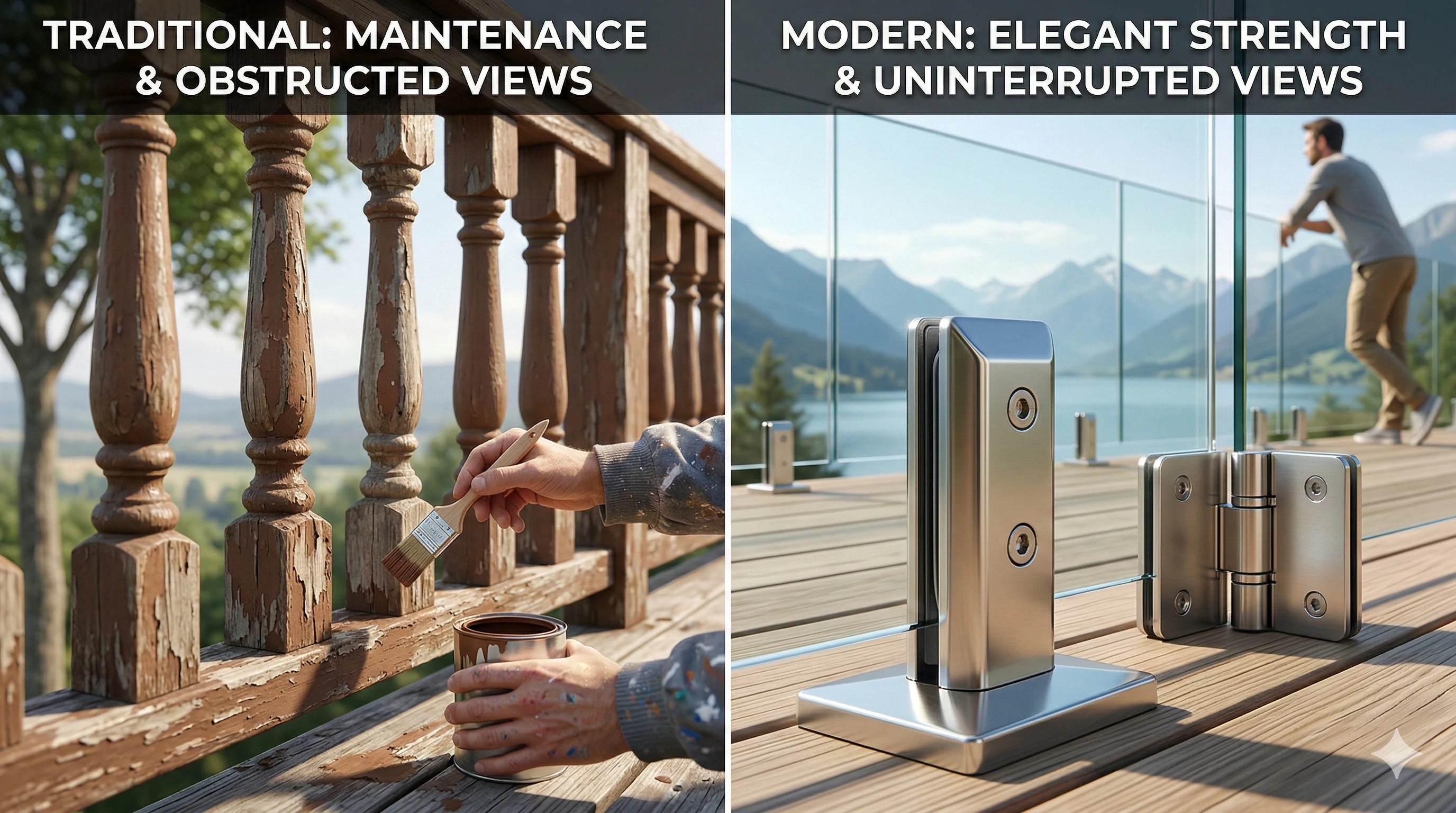
Once the structural floor is down, the construction focus shifts entirely to safety and design. The railing is the most visible element of the entire deck, making it the most important visual decision for the project. While many older homes use cheap wooden balusters, modern decks utilize open-view systems like or cable wire to modernize the space.
Architectural hardware is not hidden; it sits directly on top of the deck and interacts with the users daily. Because it is exposed to the sun, rain, and daily wear, it requires a much higher standard of manufacturing and material selection.
The Shift to Modern Railings
Choosing between traditional wood and modern frameless glass completely changes the atmosphere of the backyard. A frameless glass deck railing relies on specialized architectural hardware that holds thick glass panels without obstructing the scenery. This upgrade is perfect for contractors who want to upsell their clients from a basic wood railing to a premium glass railing system.
| Railing Style | Typical Hardware Used | Aesthetic Result | View Quality |
|---|---|---|---|
| Traditional Wood | Wood screws, metal balusters | Dated, heavy, and closed-off | Blocks backyard views |
| Modern Cable Wire | Turnbuckles, tensioners, steel posts | Industrial and highly modern | Partially obstructed by horizontal wires |
| Frameless Glass | Glass spigots deck mount, standoff pins | Luxurious, clean, and elegant | 100% unobstructed views |
What Glass Railing Hardware is Essential?
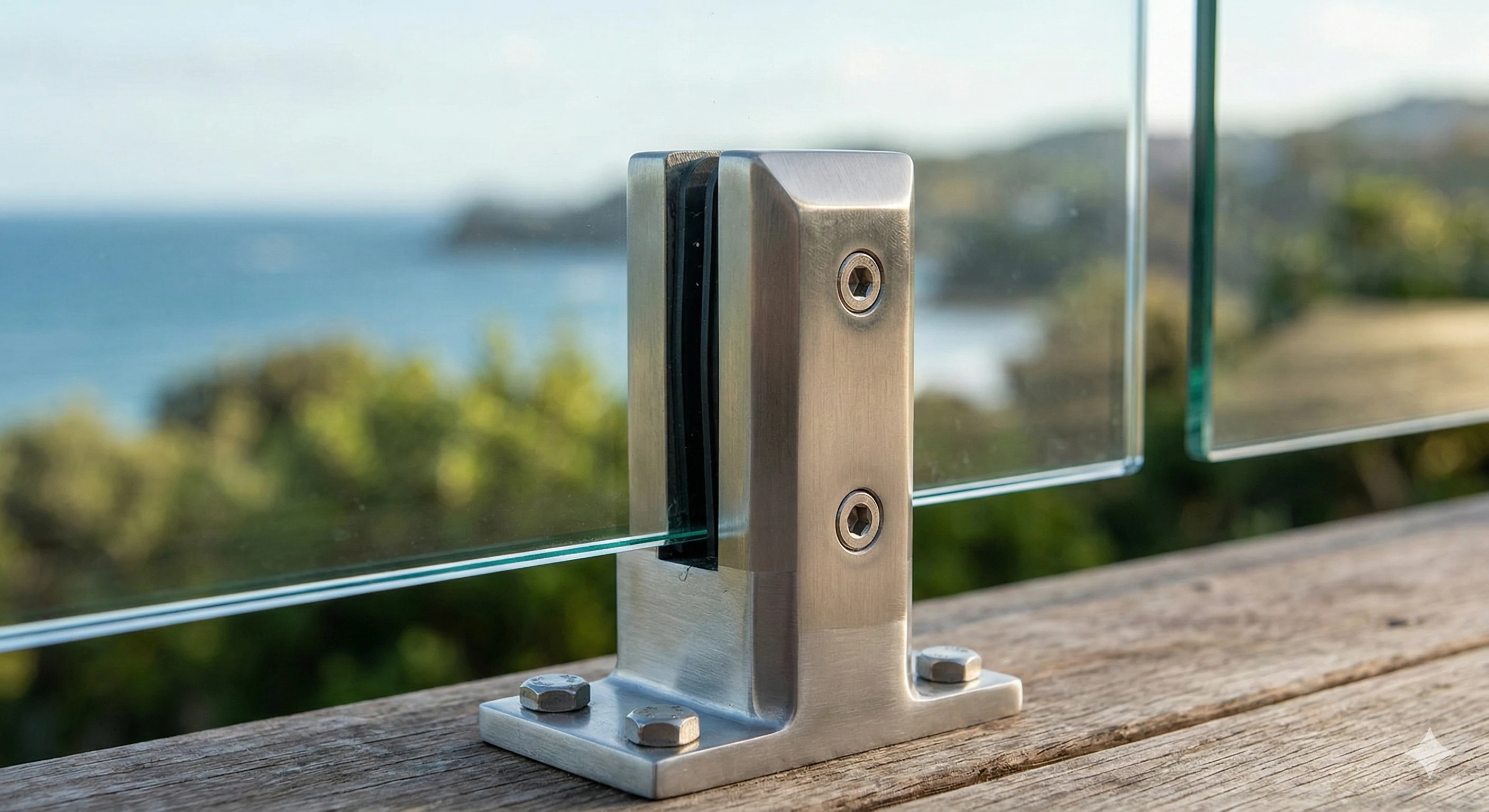
When we calibrate our to produce heavy-duty glass fittings, we obsess over dimensional precision because user safety is absolutely non-negotiable. Flimsy or poorly cast clamps can cause heavy glass panels to slip over time, creating a massive safety hazard for homeowners and guests. By utilizing precisely engineered friction-fit systems, you secure the deck perimeter safely while maintaining a pristine, completely open view of the surrounding landscape.
Essential glass railing hardware includes heavy-duty glass spigots, side-mounted standoff pins, and wall-mounted handrail brackets. These structural components firmly grip thick glass panels using advanced friction systems, completely eliminating the need for bulky top rails or vertical support posts.
The "Invisible" Safety Barrier
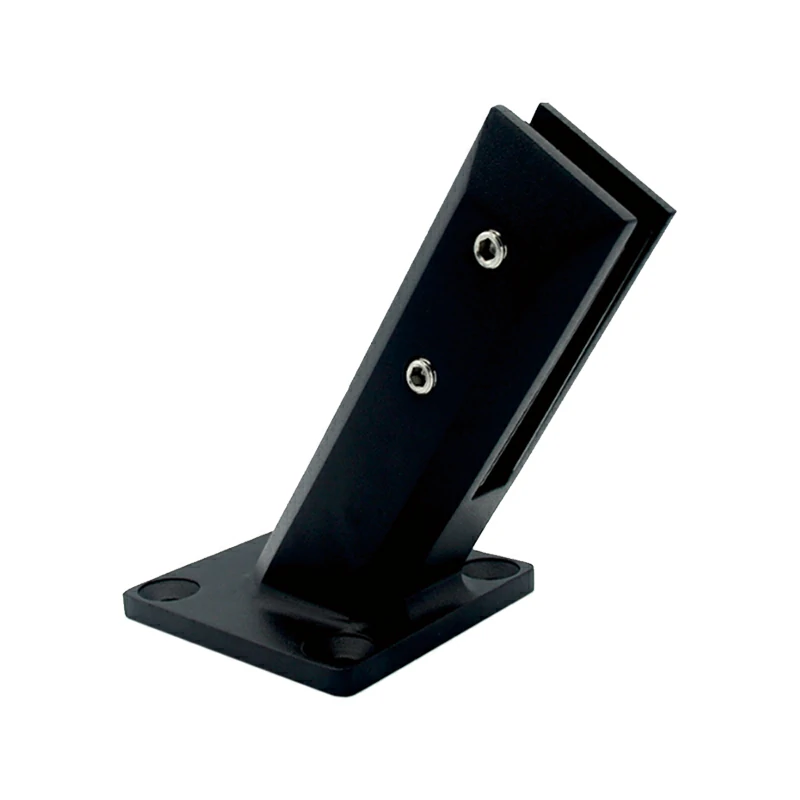
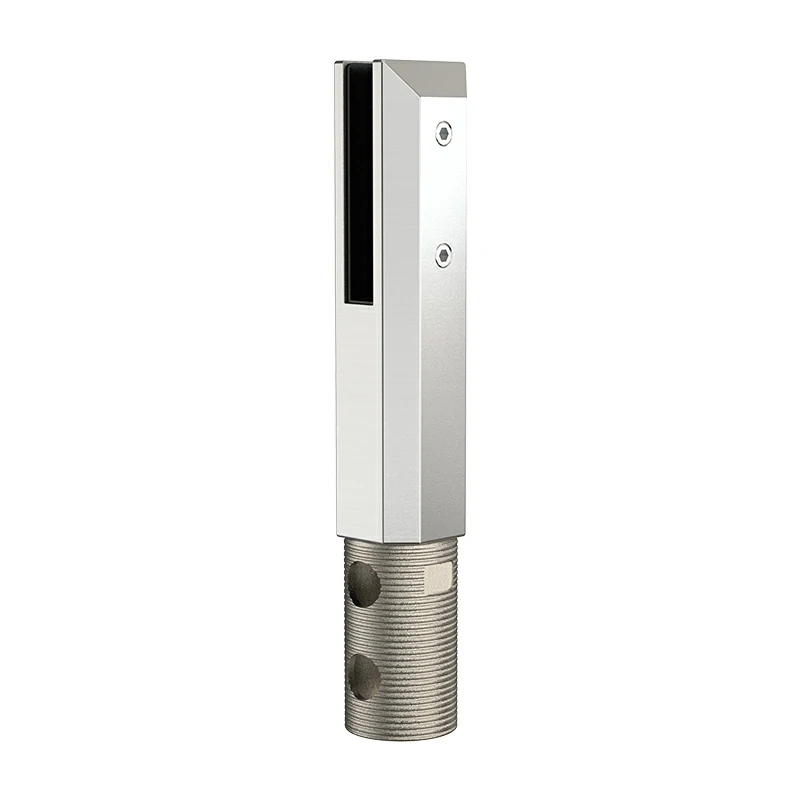
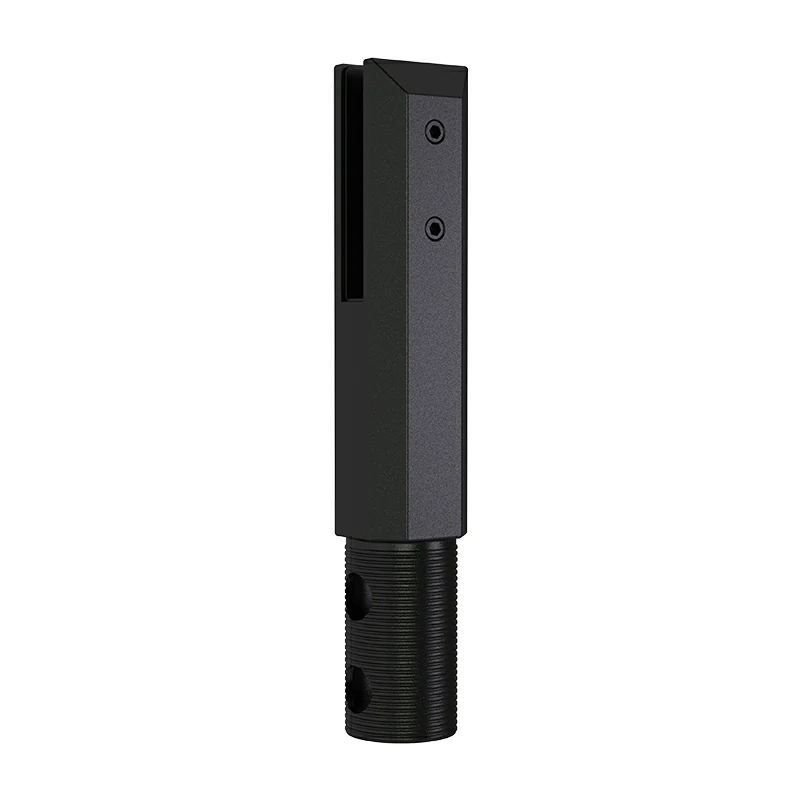
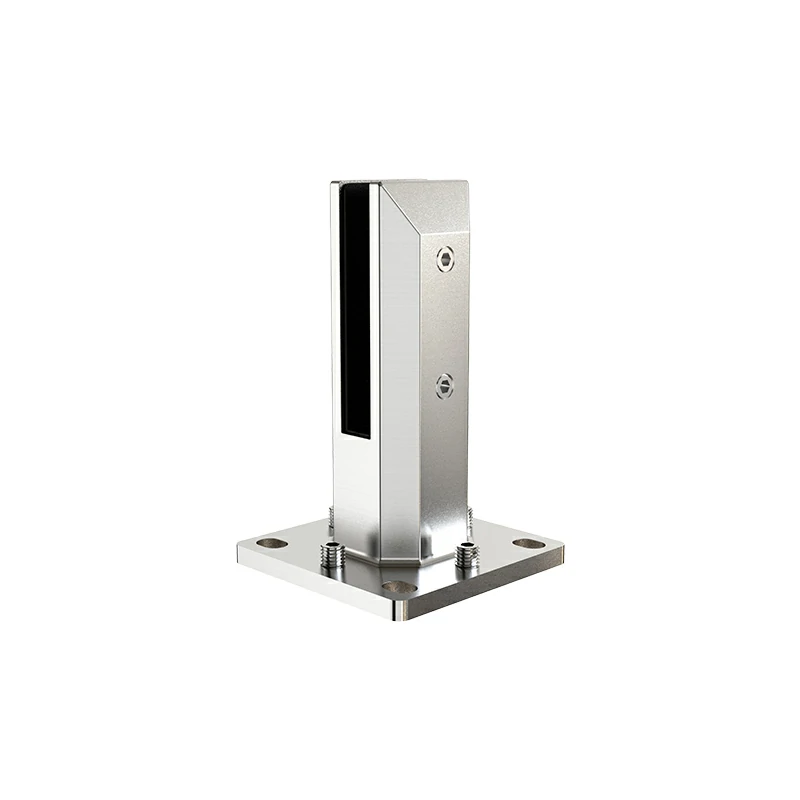
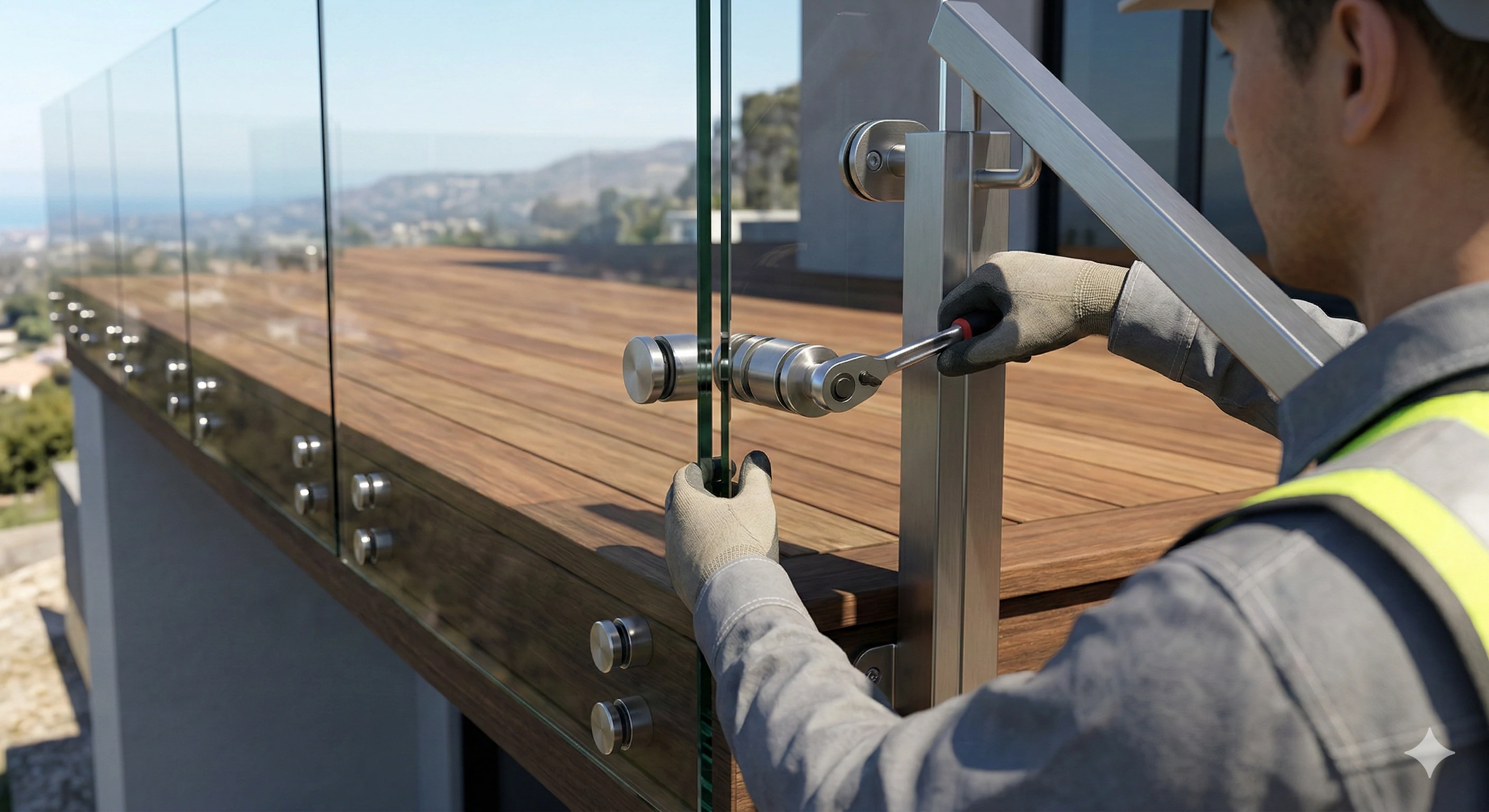
To achieve a truly modern look, builders use specialized hardware that creates an "invisible" barrier. The core component of this system is the glass spigot, also known as a mini-post. What they are: heavy-duty stainless steel clamps that hold thick glass panels securely by friction. The primary benefit of using a glass spigot deck mount is that no top rail or bulky posts are required, giving homeowners 100% unobstructed views of the backyard. We cast these specific components in for ultimate strength and durability.
Alternative Mounting and Support Options
Sometimes, mounting directly on top of the deck boards takes up too much valuable walking space. In these cases, builders use standoff pins. These are robust stainless steel cylinders used if you want to mount the glass to the side (fascia) of the deck to maximize walking space.
Additionally, depending on the height of the deck, local may require a grippable top rail for safety. For this, you need handrail brackets, which are wall-mounted or glass-mounted supports that firmly hold a top rail in place.
| Glass Hardware Type | Mounting Location | Core Function |
|---|---|---|
| Glass Spigots (Mini-Posts) | Deck surface (Top mount) | Holds glass securely by friction without top rails |
| Standoff Pins | Deck fascia (Side mount) | Maximizes walking space by mounting glass to the side |
| Handrail Brackets | Wall or Glass panel | Supports a grippable top rail to meet local building codes |
What Gate and Access Hardware Do You Need?
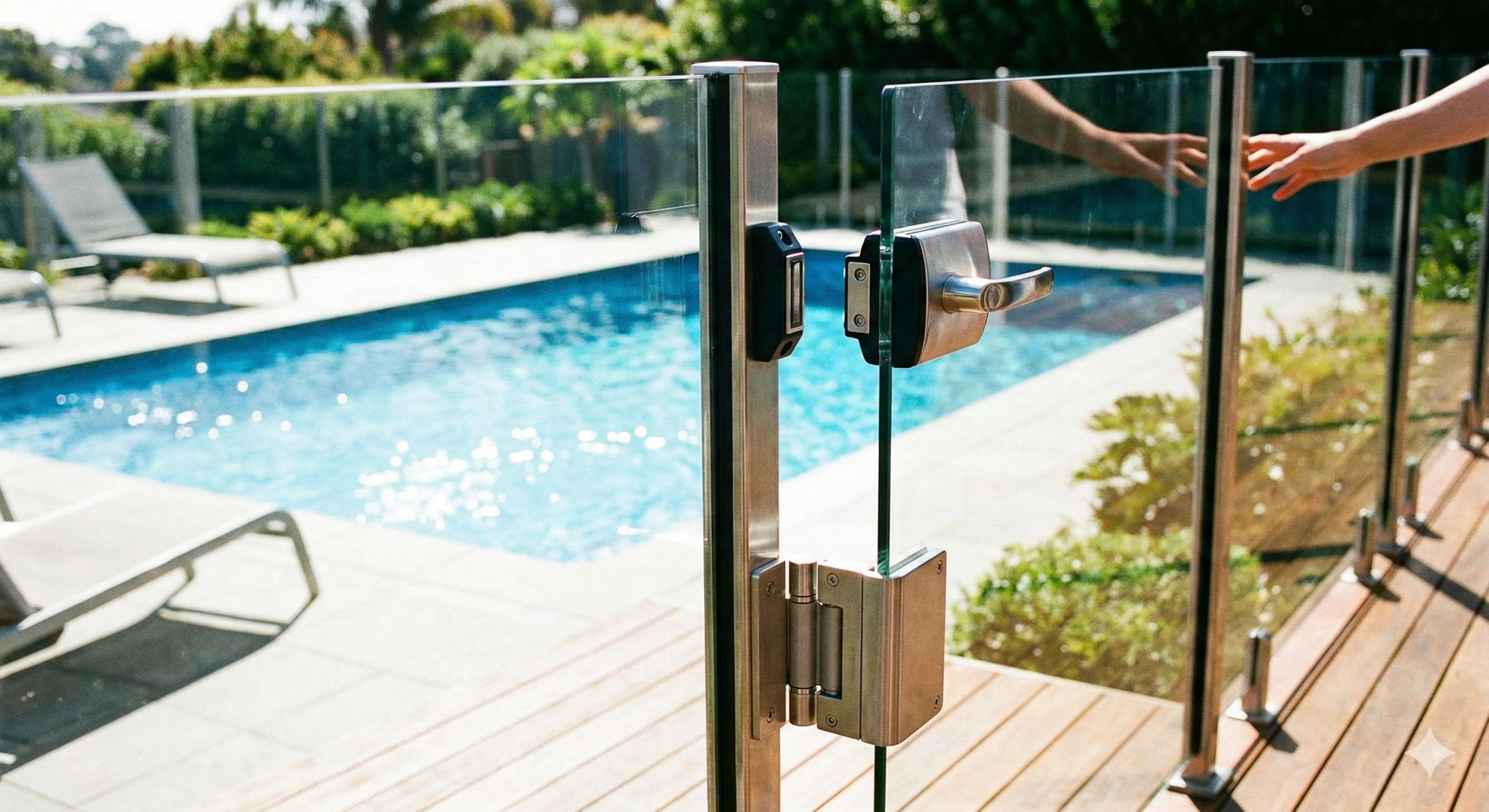
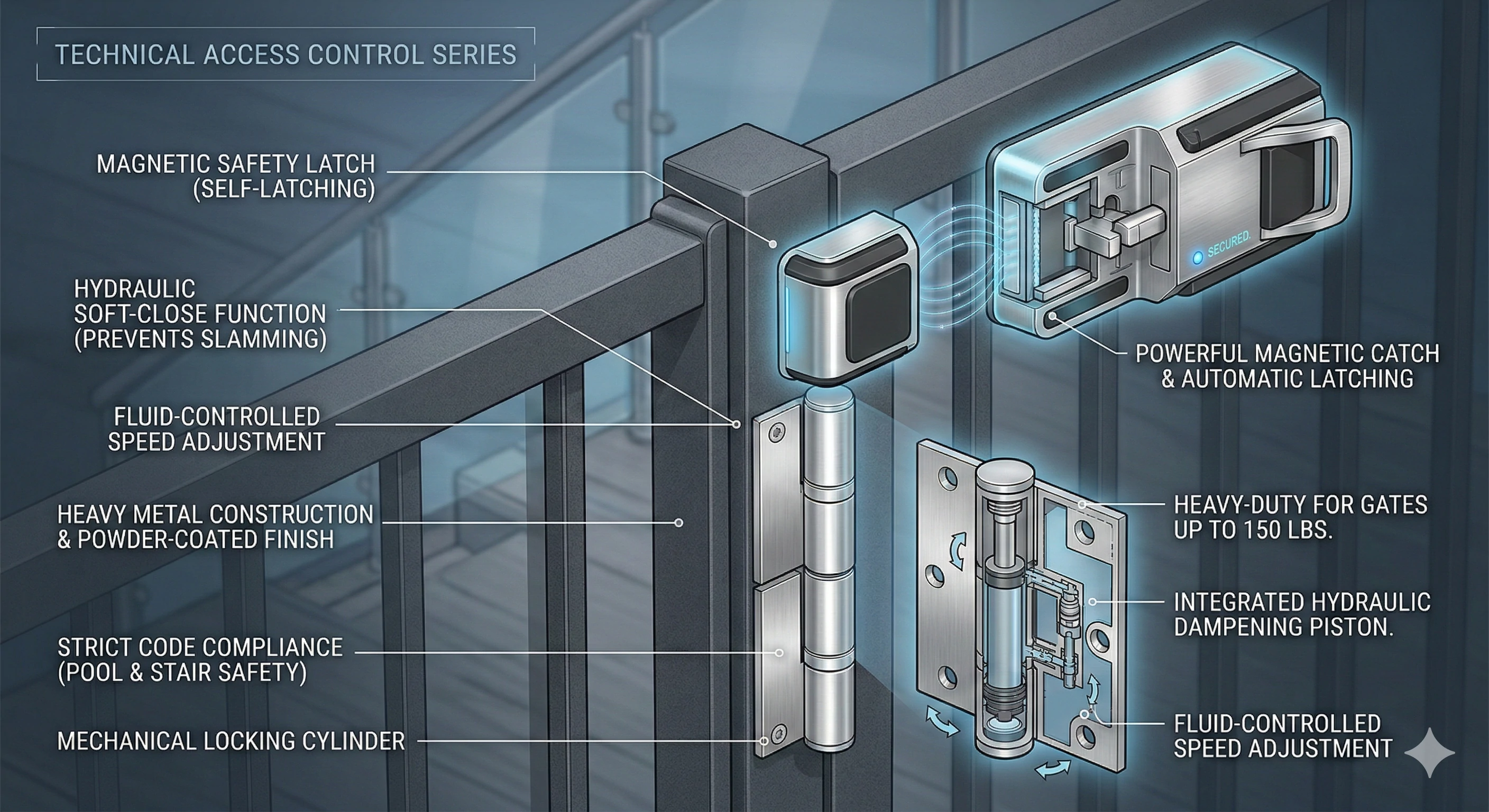
Designing reliable access systems has always been a top priority on our manufacturing floor, especially since loud, slamming gates are a major nuisance and a significant safety risk. If a pool gate fails to latch properly due to cheap hardware, the consequences can be catastrophic for families with children or pets. Investing in fluid-controlled soft-close hinges and secure magnetic safety latches guarantees total peace of mind and strict code compliance for any property.
You need hydraulic soft-close hinges and magnetic safety latches to build a secure, functional, and compliant deck gate. These engineered components ensure heavy glass or metal gates close silently and lock automatically every single time, providing essential safety around stairs and pools.
Safety Meets Seamless Function
If your deck surrounds a pool or has stairs, you absolutely need a gate. A gate is the most active part of any deck railing system, meaning the hardware endures the highest amount of mechanical stress. The need for high-quality hardware here cannot be overstated.
Contractors must forget about using loud, slamming spring hinges. Spring hinges lose their tension over time, causing the gate to either slam violently or fail to close entirely. Instead, modern builds require hydraulic soft-close hinges. Investment cast hydraulic hinges use internal fluids to slowly and silently close heavy glass or metal gates, preventing injuries and extending the lifespan of the gate.
Code Compliance and Locking Mechanisms
A slow-closing gate is only effective if it actually locks when it shuts. This is where magnetic safety latches come into play. These specialized latches are essential for , ensuring the gate locks automatically every time it swings shut. The magnetic mechanism is highly reliable and immune to the jamming issues that plague traditional mechanical spring latches.
| Gate Hardware Component | Traditional Problem | The Modern Solution |
|---|---|---|
| Hinges | Loud, slamming spring hinges that lose tension | Hydraulic hinges use internal fluids to close silently |
| Latches | Mechanical latches that jam or fail to engage | Magnetic safety latches ensure automatic locking |
| Overall System Goal | Flimsy components that fail safety inspections | Essential for pool code compliance and safety |
What is the Golden Rule of Outdoor Deck Hardware?
Our quality control engineers constantly remind material buyers that harsh weather is the ultimate enemy of any outdoor installation. Installing cheap, zinc-plated fittings might save a few dollars in the initial budget, but they will inevitably rust, bleed brown stains onto the deck boards, and require complete replacement within just one year. Choosing the absolute correct metal alloy from the very start is the only proven way to protect your long-term investment.
The golden rule of outdoor deck hardware is to always select marine-grade materials like Stainless Steel 316 or Duplex 2205. These premium metal alloys contain molybdenum, which actively prevents chloride and salt corrosion, guaranteeing long-lasting performance in extremely harsh weather environments.
The Threat of Environmental Corrosion
Understanding material selection justifies the quality and price of premium architectural hardware. The threat to outdoor hardware is constant: rain, snow, UV rays, and especially salt will destroy cheap hardware very quickly. This is particularly true if the property is located near the ocean or features a saltwater pool.
Builders must strictly avoid zinc or chrome-plated hardware for architectural elements. It will peel and rust within one year outdoors, ruining the aesthetic of the deck.
Selecting the Right Stainless Steel
Not all stainless steel is created equal. Stainless Steel 304 is generally good for dry, inland areas where salt exposure is minimal. However, and Duplex 2205 are the absolute gold standard for premium installations. These specific alloys contain , a chemical element which prevents chloride (salt) corrosion. This superior resistance to rust is exactly why this is the material we use for all our deck and pool hardware.
| Material Type | Corrosion Resistance Level | Ideal Environment | Recommendation |
|---|---|---|---|
| Zinc / Chrome-Plated | Very Low | Indoor use only | Avoid. It will peel and rust within one year outdoors |
| Stainless Steel 304 | Medium | Dry, inland areas | Good for basic outdoor use away from coasts |
| Stainless Steel 316 | High | Coastal areas, near standard pools | Excellent choice, contains Molybdenum |
| Duplex 2205 | Extremely High | Harsh marine environments, saltwater pools | The absolute gold standard |
What Are the Most Common Deck Hardware FAQs?
When our technical support team assists contractors with complex installations, we frequently encounter the same critical questions regarding material compatibility and spacing guidelines. Improper hardware spacing or using the wrong screw type can completely compromise the structural integrity of the entire railing system. By following engineered best practices and precise installation formulas, builders can easily avoid costly teardowns and ensure long-term structural safety.
The most common deck hardware questions revolve around fastener selection, glass spigot spacing, and pool deck material requirements. Answering these questions correctly ensures builders use coated screws for framing, properly space spigots for balanced weight, and utilize marine-grade steel near corrosive environments.
Fastener and Framing Questions
One of the most frequent questions we receive is: Can I use regular indoor screws on a deck?. The answer is absolutely not. Standard indoor screws will quickly rust and snap when exposed to the weather and the highly corrosive copper-based chemicals heavily used in pressure-treated deck lumber. You must always use coated deck screws or premium stainless steel fasteners to ensure the frame stays intact.
Glass Installation and Pool Decking
When installing frameless systems, builders often ask: How far apart should glass spigots be on a deck?. As a general rule, a standard 4-foot (1200mm) wide glass panel requires exactly two spigots. The spigots are typically positioned roughly one-sixth of the total panel width inward from each edge, ensuring perfectly balanced weight distribution across the glass.
Finally, buyers frequently ask: What is the best hardware for a pool deck?. If your deck is located near a pool, you must use Marine Grade Stainless Steel (SS316) or Duplex 2205. The harsh chlorine and salt from the pool water will cause standard 304 stainless steel to develop "tea staining" (surface rust) very quickly, destroying the luxury look of the space.
| FAQ Topic | Common Question | Professional Answer |
|---|---|---|
| Fasteners | Can I use regular indoor screws on a deck? | Absolutely not. Always use coated deck screws or stainless steel fasteners. |
| Installation | How far apart should glass spigots be? | A 4-foot panel needs two spigots, positioned one-sixth inward from each edge. |
| Material | What is the best hardware for a pool deck? | You must use Marine Grade Stainless Steel (SS316) or Duplex 2205. |
Conclusion
Do not let cheap, rusting railing hardware ruin a perfectly framed deck. Building a high-end outdoor space requires careful attention to both the hidden and visible components. The hidden structural hardware keeps the deck safe and stable, but the visible architectural hardware ultimately defines its aesthetic value and luxury appeal. By choosing premium materials like Duplex 2205 and SS316, you ensure your project remains beautiful and maintenance-free for years to come.
Upgrading your deck's aesthetic? We manufacture heavy-duty, corrosion-resistant Stainless Steel Glass Spigots and Hydraulic Hinges for modern deck designs. Browse our architectural hardware catalog today.
Footnotes
1. Learn about the galvanization process for protecting steel.
2. Explore the mechanics and structural uses of carriage bolts.
3. Understand how wood preservation extends timber lifespan.
4. Read about the properties and applications of architectural glass.
5. Discover how numerical control automates precision machining tools.
6. Understand the high strength of duplex stainless steel.
7. Overview of building codes and structural safety regulations.
8. Information on safety barriers and pool fencing compliance standards.
9. Learn why marine-grade stainless steel resists environmental corrosion.