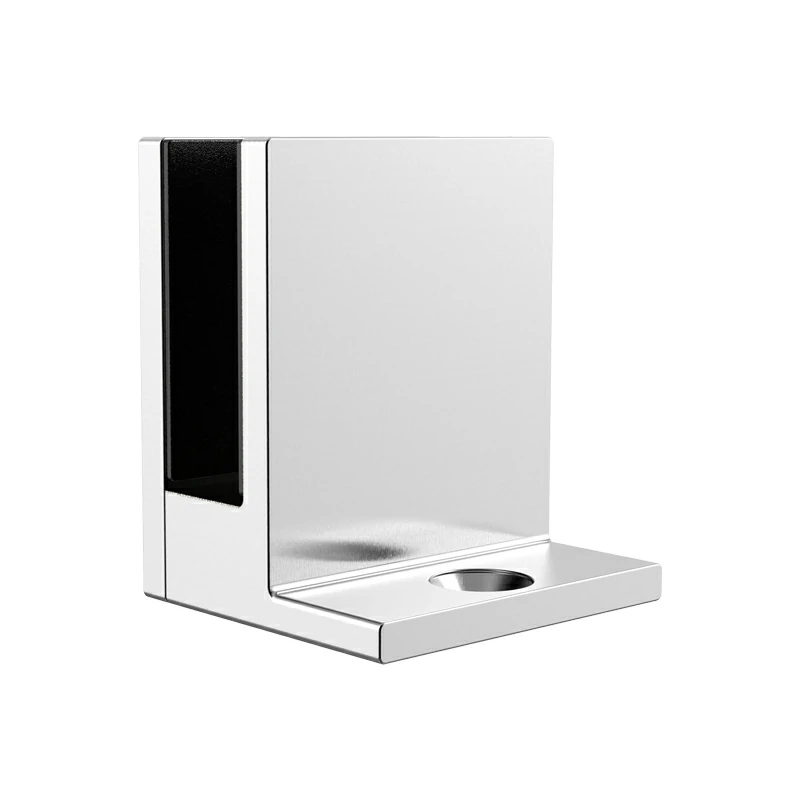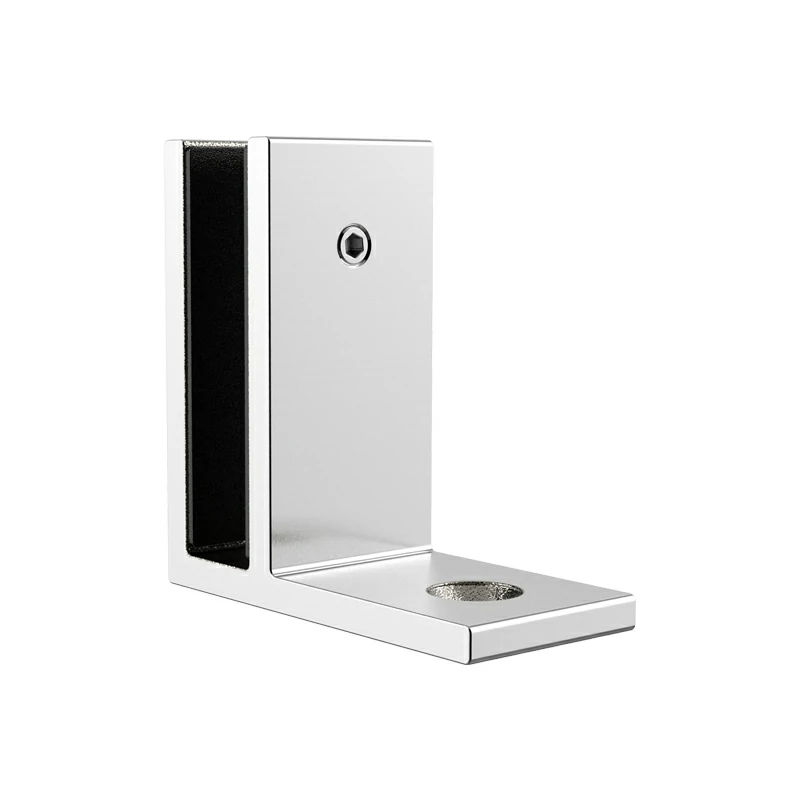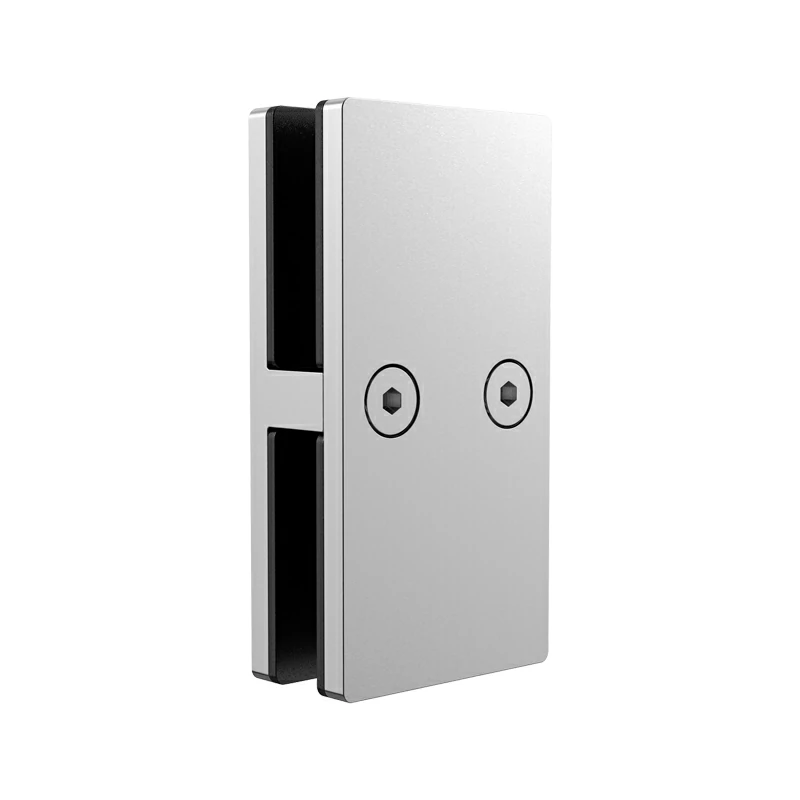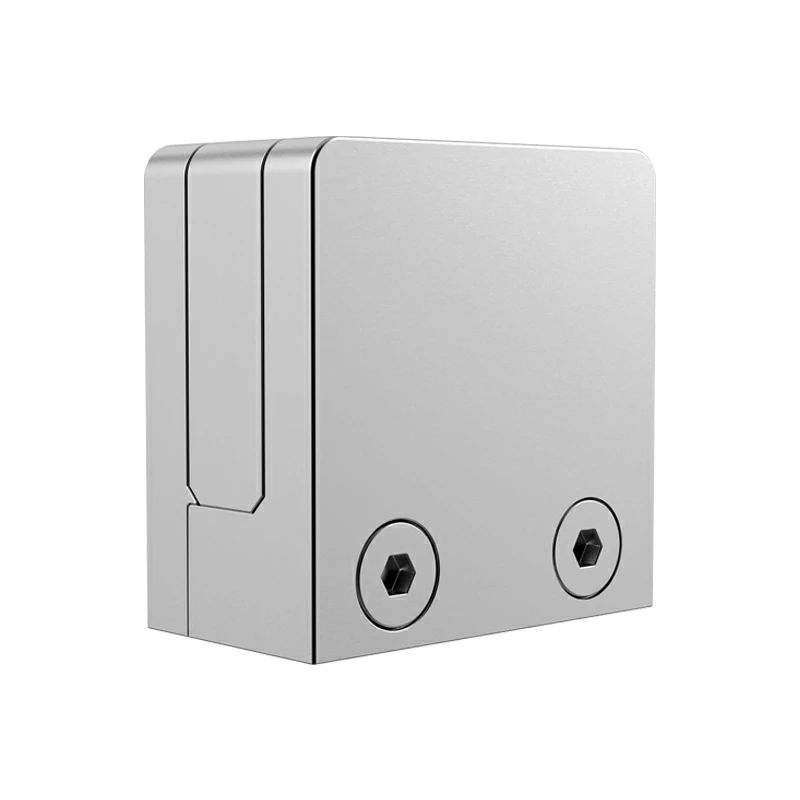
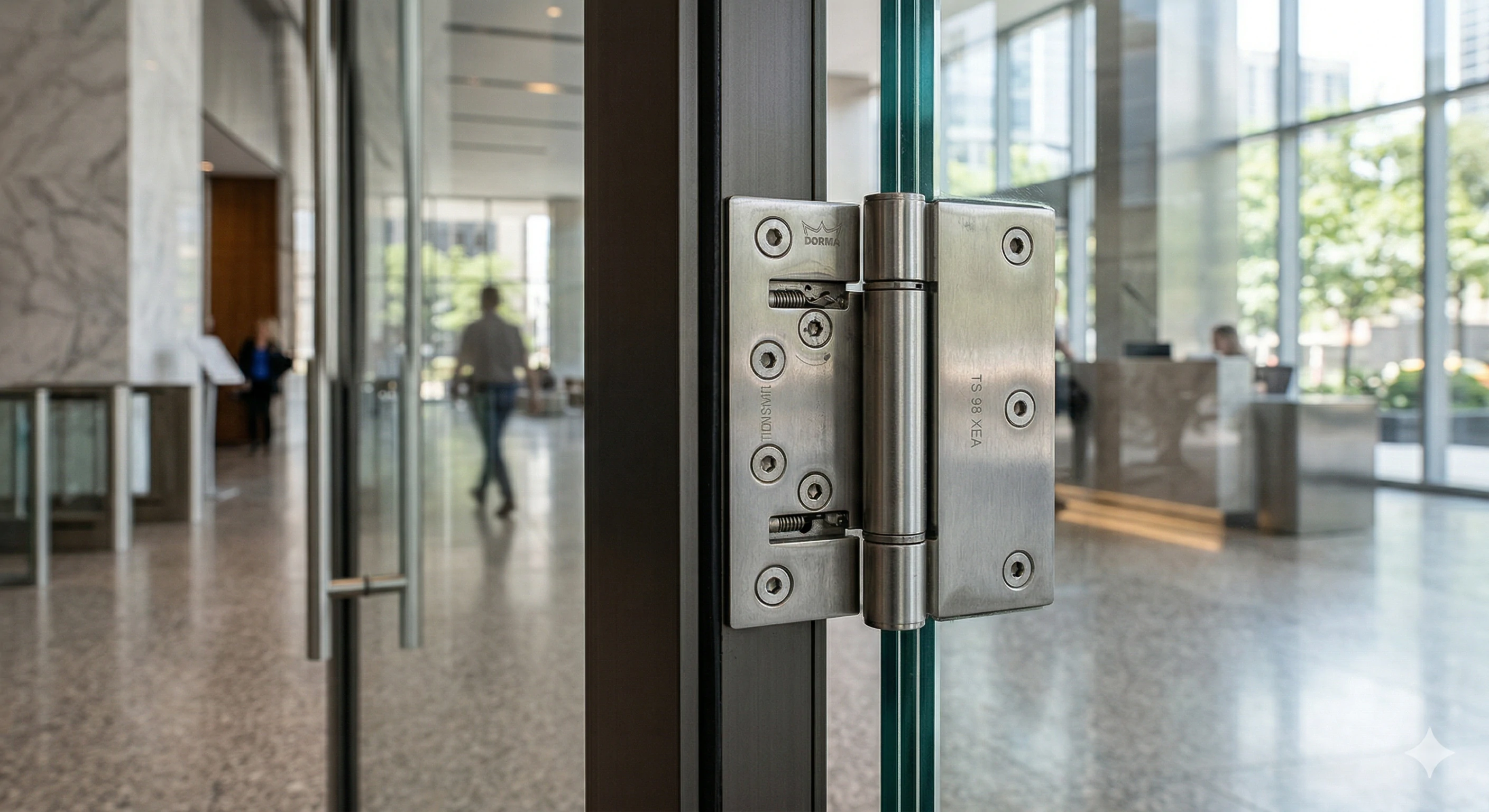
A spring hinge has an internal mechanism designed to automatically pull the door closed after someone opens it. While they add convenience to a kitchen door, spring hinges are primarily used as life-saving safety devices for pool enclosures and fire containment.
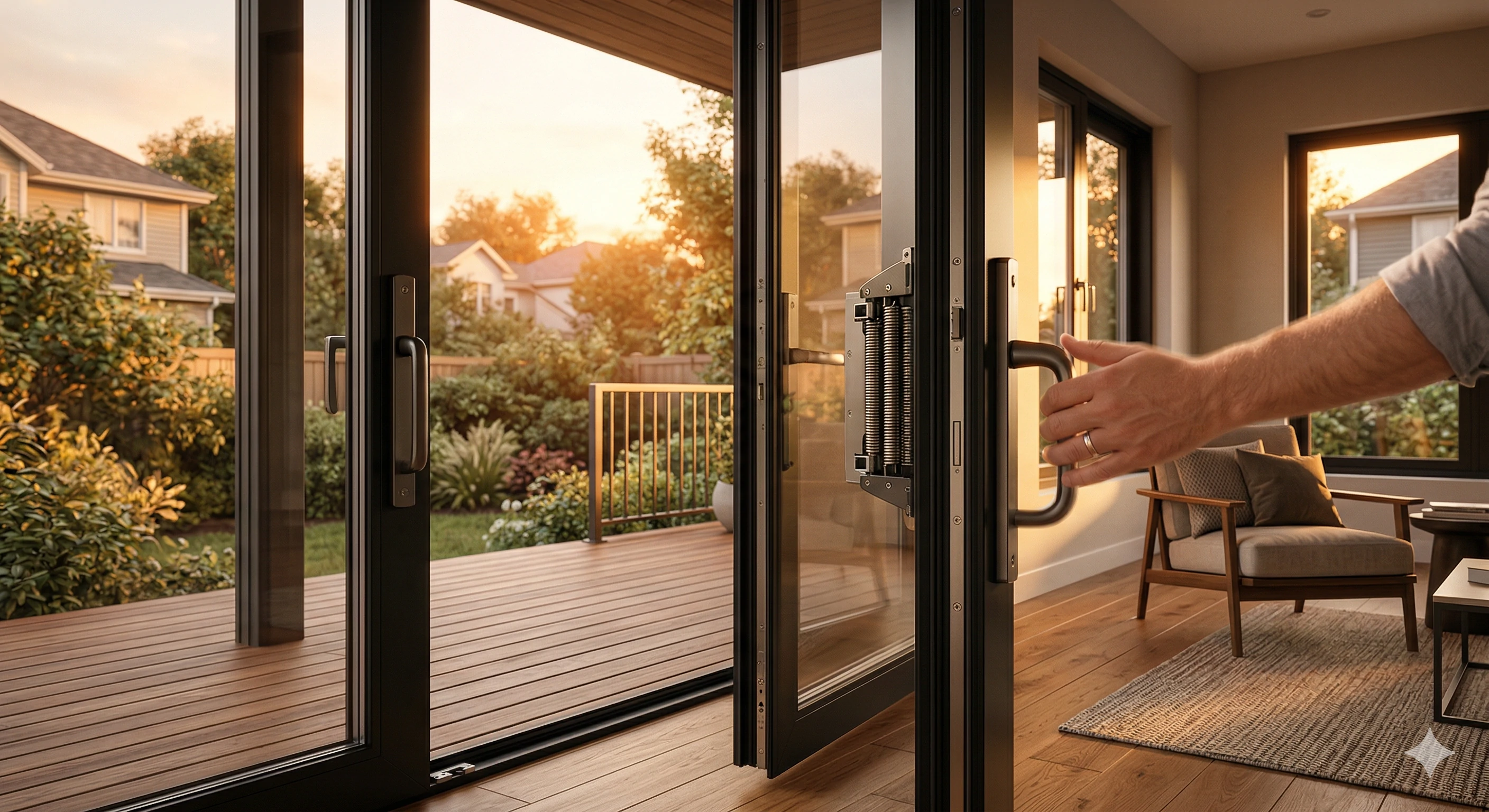
This guide explains the mechanics of these self-closing devices, where building codes mandate their use, and why heavy glass doors require precision-cast to prevent catastrophic slamming.
1. What Is the Primary Purpose of Spring Hinges for Safety and Code Compliance?
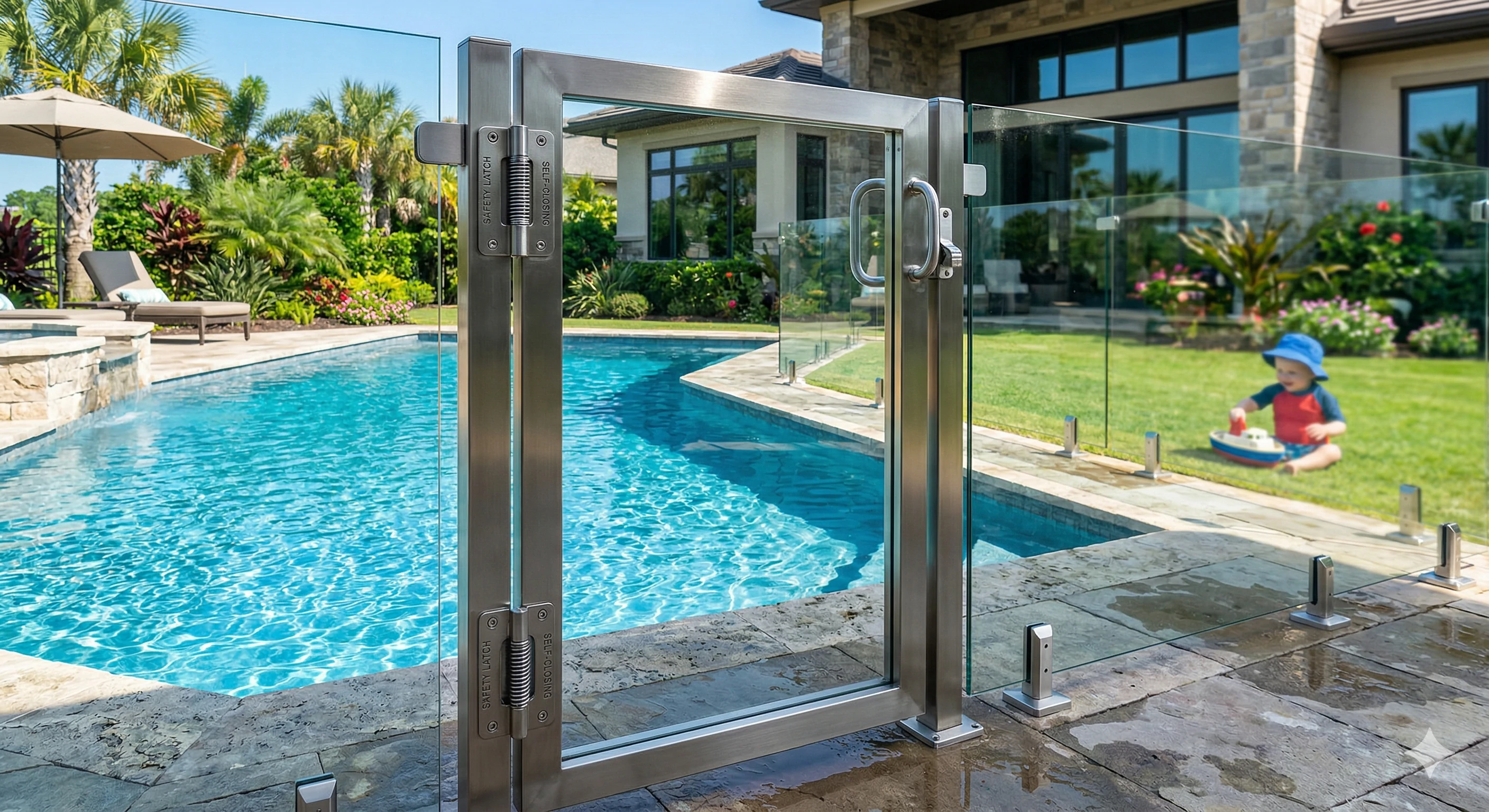
It is a terrifying thought for any property owner: a child wandering into a restricted pool area because someone forgot to secure the gate. In our years of manufacturing hardware, we have seen how a single lapse in memory can lead to tragic consequences. We design our self-closing systems specifically to eliminate this human error, giving property owners total peace of mind while ensuring strict compliance with local regulations.
The primary purpose of a spring hinge is safety, as building codes in almost every country require pool fences to have a self-closing, self-latching gate. If a child enters the pool area and forgets to shut the gate, the spring hinge ensures the barrier is instantly secured behind them.
Understanding Building Code Requirements
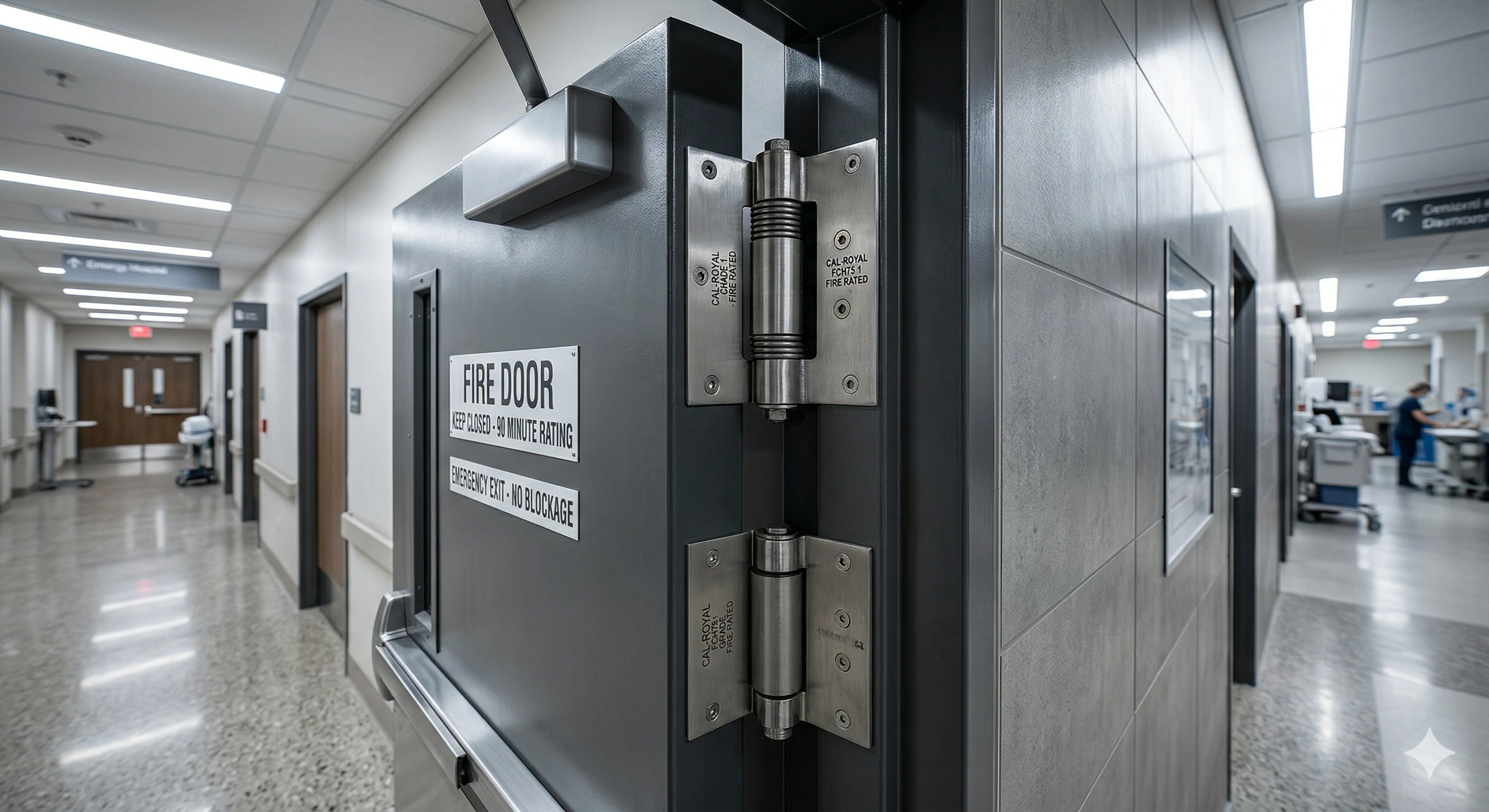
Safety is the fundamental reason these hinges exist. We constantly remind our procurement clients that a gate is only as secure as its hardware. In commercial buildings, heavy use spring hinges to ensure a fire is contained to one room. Without an automatic closing mechanism, a fire could spread rapidly through an open doorway. Security doors rely on them to ensure restricted areas are never accidentally left wide open.
When we test our products, we simulate thousands of opening and closing cycles. This guarantees the hinge will not fail during an emergency. Building inspectors look for this reliability. They check if the gate closes smoothly from various open angles. They also check if the latch engages fully without manual assistance. If the hinge lacks sufficient tension, the gate will bounce off the latch. This creates a false sense of security and a code violation.
Common Applications and Standards
We categorize the use of self-closing hinges into three main areas. Each area demands different levels of strength and durability from the hardware.
| Application Type | Primary Goal | Critical Requirement |
|---|---|---|
| Residential Pool Fences | Child safety and drowning prevention | Must auto-close and self-latch from any angle |
| Commercial Fire Doors | Containment of fire and smoke | Must withstand high temperatures and close heavy doors |
| Restricted Security Areas | Preventing unauthorized access | Must reliably close immediately after a person passes |
By understanding these applications, you can see why installing standard hardware is never an option for these critical access points. The right hinge does the remembering for you.
2. How Do Spring Hinges Work Using Tension and Torque?
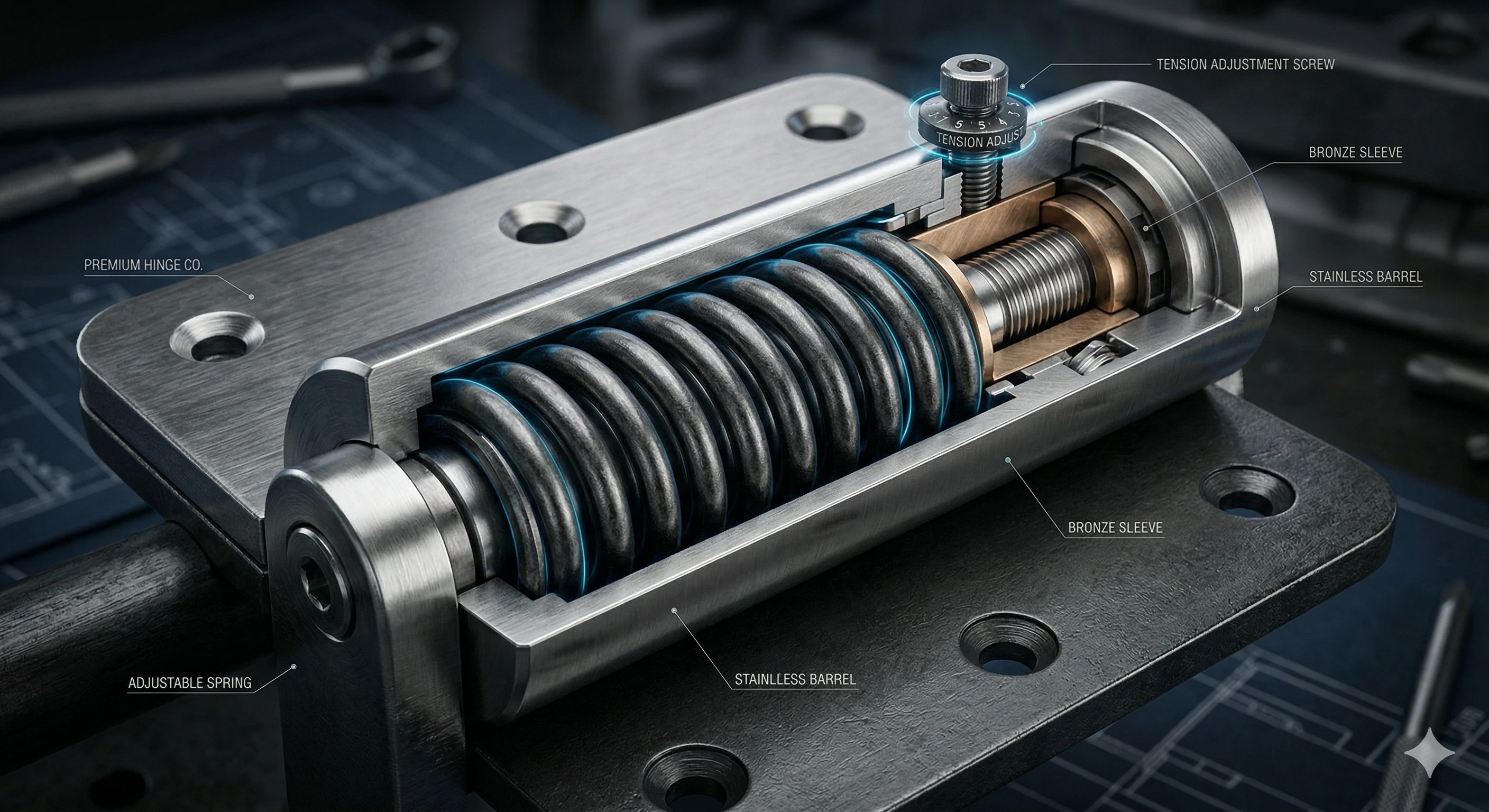
Have you ever installed a heavy gate only to find it swings shut too weakly or slams too violently? This frustration usually stems from a misunderstanding of torque. When our factory calibrates our , we focus heavily on the balance between and resistance. We engineer our hinge barrels to house robust coils that handle immense pressure without warping, ensuring a consistent and reliable closing force every single time.
Inside the barrel of the hinge is a coiled steel spring. When you push the door open, you create tension on the spring. When you let go, the spring releases that kinetic energy, swinging the door shut with sufficient force.
The Mechanics of Adjustable Tension
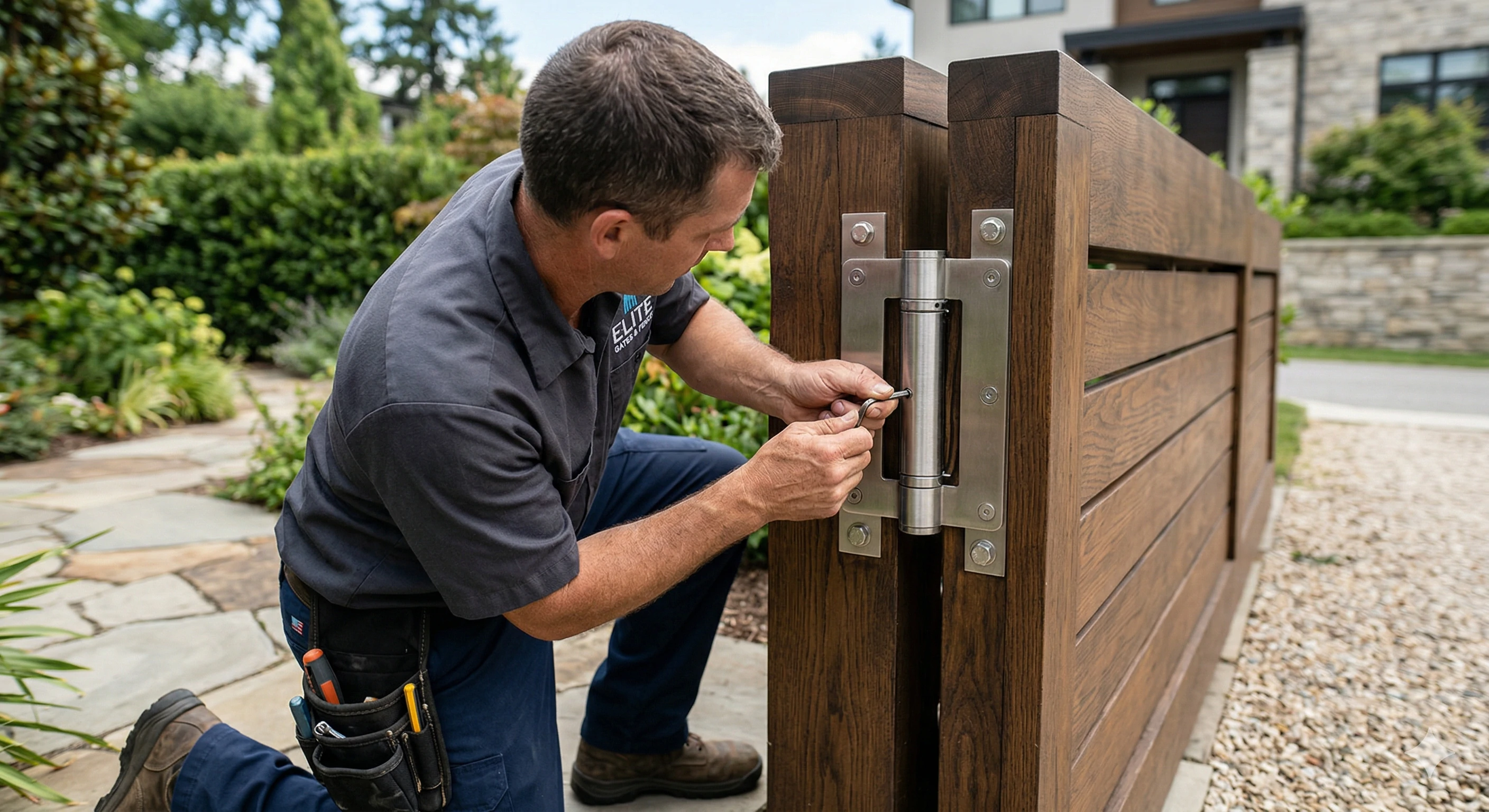
High-quality spring hinges are adjustable. You cannot expect a one-size-fits-all approach to work for every door. A lightweight wooden gate requires much less force to close than a thick, framed metal door. Using an or a tension pin, the installer can tighten or loosen the internal coil. This allows them to dictate exactly how fast and hard the door closes based on its specific weight.
We design our adjustment mechanisms to be user-friendly but highly secure. By inserting a hex wrench or a tension bar into the top of the hinge barrel and turning it, you can wind the internal spring tighter for a faster close. Alternatively, you can loosen it for a slower, gentler close. This customization is crucial for balancing safety with usability. If the tension is too high, the door becomes difficult to open, especially for children or the elderly.
Balancing Force and Weight
Achieving the perfect close is a matter of simple physics. The torque generated by the hinge must overcome the friction of the latch and the air resistance pushing against the door.
| Door Weight Category | Recommended Tension Level | Expected Closing Behavior |
|---|---|---|
| Light (Under 30 lbs) | Low Tension | Gentle swing, smooth latching |
| Medium (30 - 80 lbs) | Moderate Tension | Firm swing, overcomes moderate wind |
| Heavy (Over 80 lbs) | High Tension | Strong swing, requires heavy-duty components |
We always advise our clients to test the tension multiple times during installation. A properly adjusted hinge operates silently and efficiently, utilizing kinetic energy without causing unnecessary wear on the door frame.
3. What Are the Dangers of Cheap Hinges and the Slam Effect?
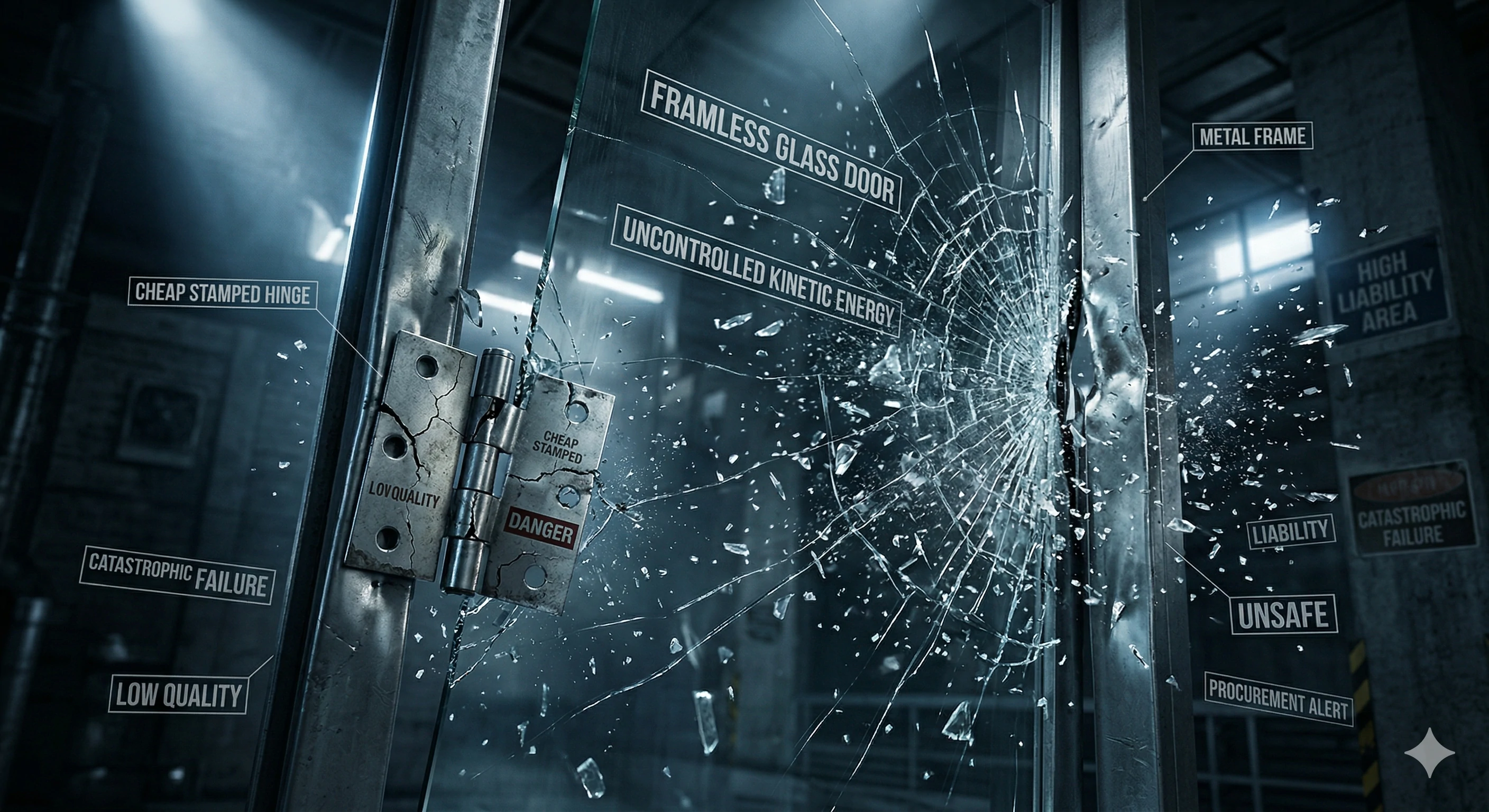
You invest thousands of dollars into a premium frameless glass pool fence, only to have the glass panels shatter into pieces after a few weeks. We often hear from contractors who tried to cut costs on hardware, and the result is always a dangerous, expensive mess. At our testing facility, we have seen firsthand how cheap stamped-metal components fail under the weight of , compromising the entire installation.
Cheap, stamped-metal spring hinges only know one speed: fast. When applied to a heavy door, they create a violent slam. If you are building a modern frameless glass pool fence, you cannot use standard spring hinges because the violent slamming force will shatter the tempered glass panels.
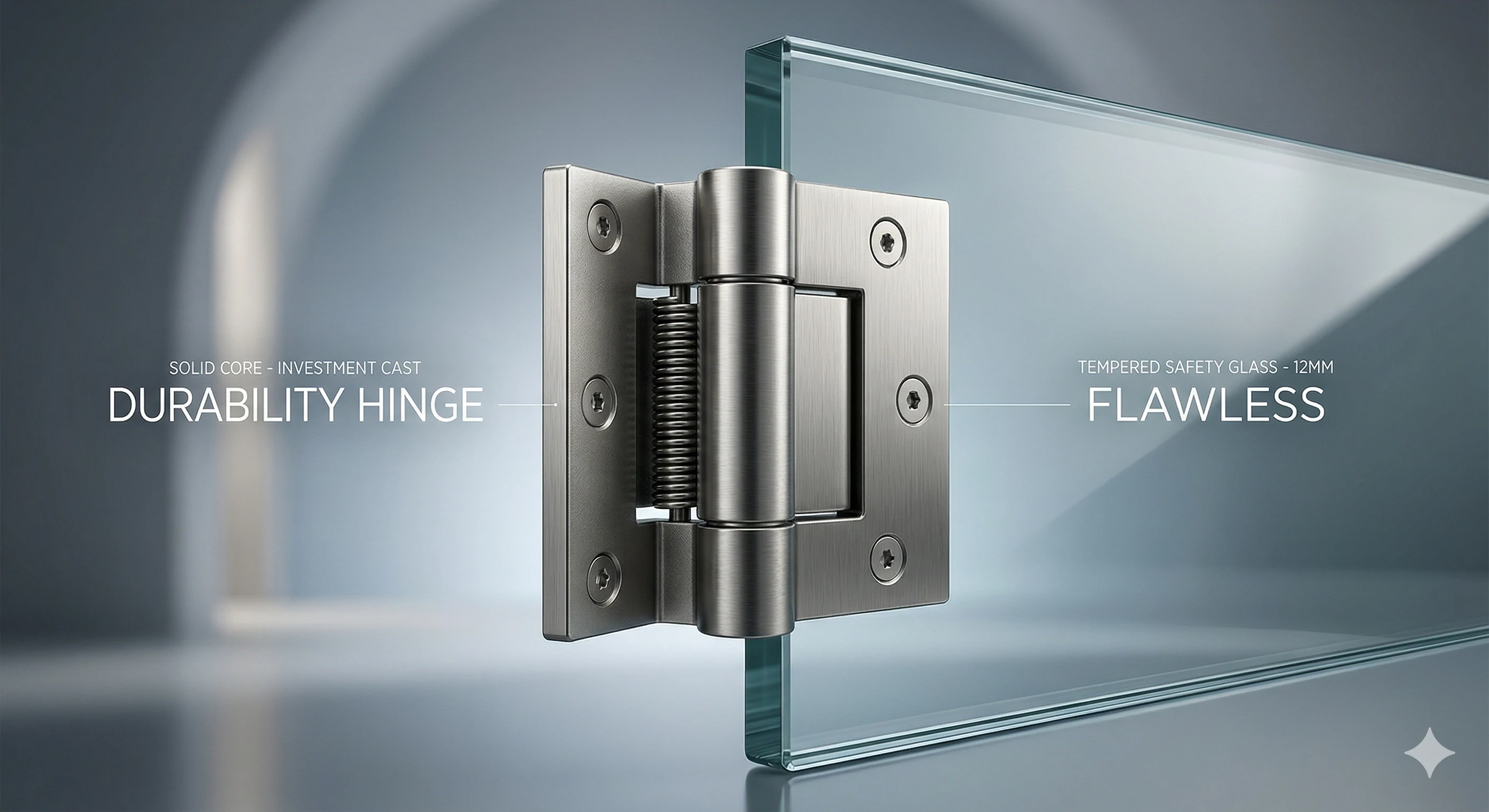
Why Tempered Glass Requires Precision Hardware
The danger of a violent slam goes beyond just loud noise. When a heavy door accelerates rapidly, it generates a massive amount of kinetic energy. If that door is made of , an uncontrolled slam transfers all that shock directly into the glass panel. Tempered glass is incredibly strong against blunt force, but it is highly vulnerable to the sharp, sudden vibrations caused by metal-on-metal slamming.
We frequently educate our procurement clients on this specific hazard. Cheap hinges lack any mechanism to decelerate the door before it hits the frame. They pull with maximum force until the door stops abruptly. This is why we absolutely prohibit the use of basic spring hinges on frameless glass setups. The risk of shattering is too high, and the liability is immense. You must control the speed of the door during the final few inches of its closing arc.
The Cost of Poor Quality
When buyers opt for low-cost hardware, they often face hidden expenses down the line. Cheap springs lose their elasticity quickly. The stamped metal housings bend and deform under continuous stress.
| Hinge Quality | Manufacturing Method | Performance Result | Risk Factor |
|---|---|---|---|
| Low-End | Stamped Metal / Zinc | Single fast speed, loses tension quickly | High risk of glass shattering |
| Premium | Investment Casting | Consistent torque, maintains structural integrity | Low risk, safe operation |
The initial savings of a cheap hinge are instantly wiped out if you have to replace a broken glass panel or face a lawsuit over a safety failure. Investing in precision-engineered hardware is the only way to protect your architectural assets.
4. Why Upgrade to Heavy-Duty and Hydraulic Hinges?
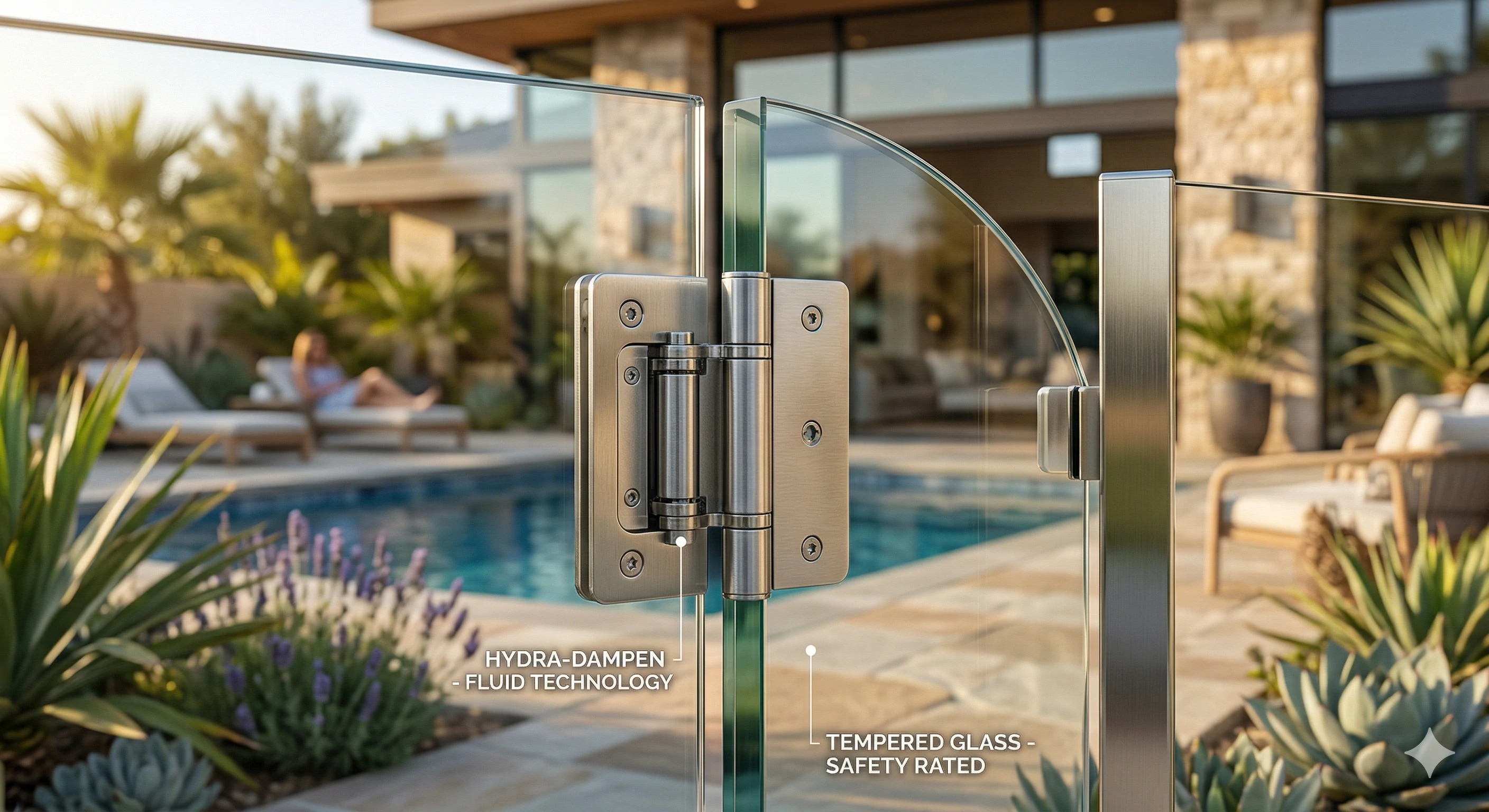
Upgrading your property should not mean settling for hardware that sags or rusts within a year. A dragging gate ruins the aesthetic and compromises security. We tackle this by manufacturing solid, investment-cast hardware that holds its shape forever. When we produce our hydraulic systems, we focus on delivering a silent, controlled close that perfectly complements your high-end luxury glass installations.
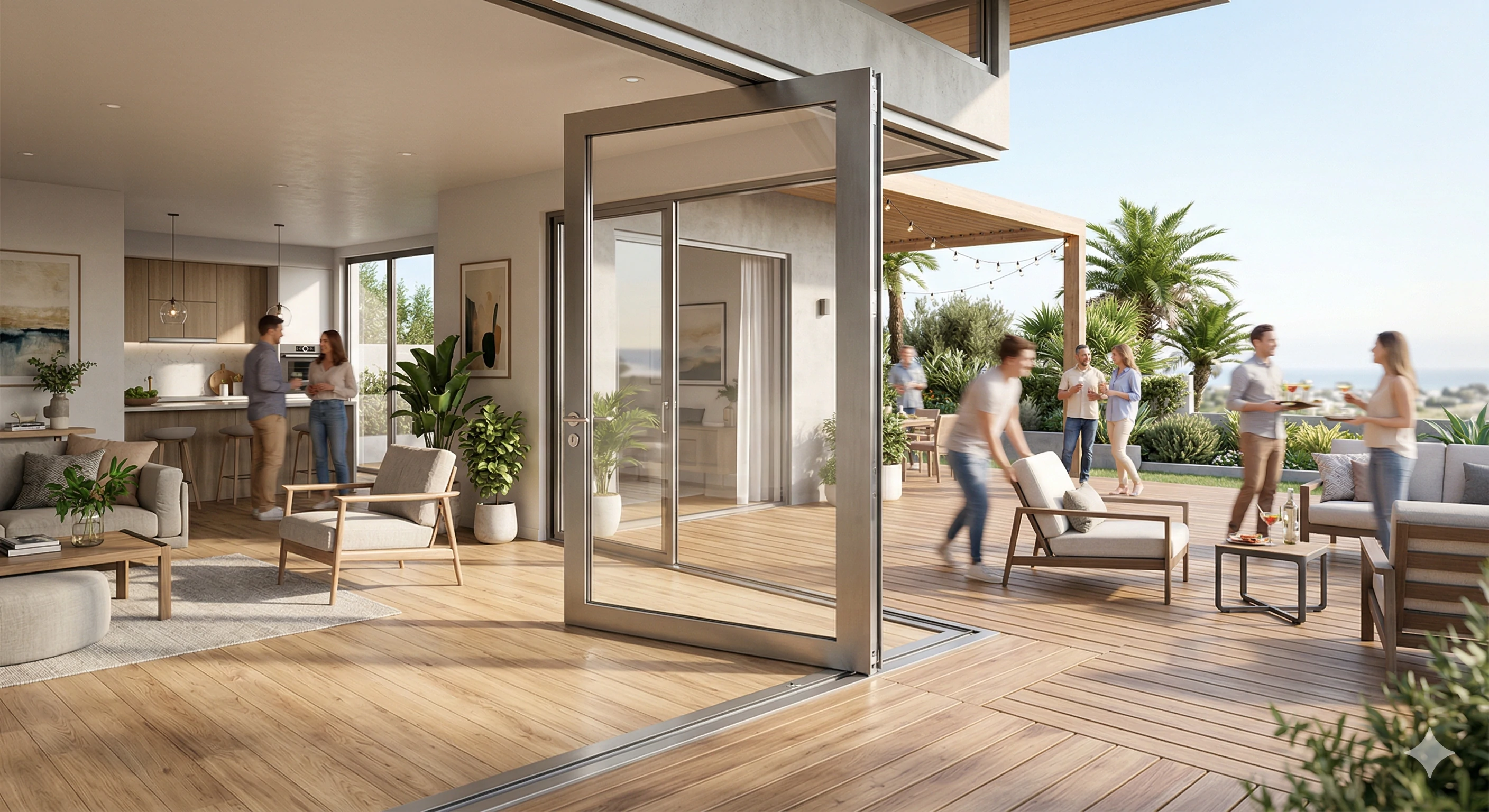
For heavy wood or metal gates, we manufacture solid, investment-cast stainless steel spring hinges. Unlike hollow zinc hinges that warp under heavy loads, a cast hinge maintains perfect vertical alignment. For luxury glass doors, we upgrade from pure spring tension to Hydraulic Dampening.
The Hydraulic Soft-Close Revolution
Standard spring hinges do a great job of pulling a door shut. However, they lack finesse. This is where hydraulic technology changes the game entirely. With Hydraulic Dampening, the internal spring pushes the door closed, but an internal hydraulic fluid chamber catches the door at the last second. This provides a silent, gentle "soft-close" that protects the glass from impact.
We engineer these hydraulic chambers to bleed fluid at a highly controlled rate. As the door swings shut, it moves quickly at first. Then, about ten degrees before closing, the hydraulic mechanism takes over. The door visibly slows down and softly clicks into the latch. This technology mimics the premium feel of high-end kitchen cabinets, applied to heavy exterior architecture. It entirely eliminates the dangerous "slam effect" discussed earlier.
Advanced Architectural Features
Beyond just a soft close, advanced architectural hinges offer superior functionality for daily life.
| Feature | Description | Benefit |
|---|---|---|
| Investment Casting | Solid metal construction with no air pockets | Prevents the gate from dragging or sagging |
| Hydraulic Dampening | Fluid-based deceleration chamber | Silent closing, protects tempered glass |
| Hold-Open Function | Internal mechanism locks the door past 90 degrees | Allows for easy moving of furniture or entertaining |
Standard spring hinges are designed only to close the door. However, advanced architectural hinges, like our hydraulic glass gate hinges, can feature a "Hold-Open" function. If you push the door past 90 degrees, an internal mechanism locks it open for moving furniture or entertaining. It will still securely self-close from any angle below 90 degrees.
5. Why Does Material Matter for Surviving the Elements?
Imagine a security gate failing to latch because the internal components have completely rusted out from saltwater exposure. This is a massive liability for any homeowner or commercial property manager. In our metallurgical lab, we strictly test our alloys against severe weather conditions because we know that outdoor hardware must survive harsh environments for decades without losing its functional integrity.
A rusted spring hinge loses its tension and fails to close the door—a massive liability for a pool fence. All outdoor self-closing hinges must be manufactured from Stainless Steel 316 or Duplex 2205. These alloys contain Molybdenum, which makes them highly resistant to extreme weather.
Selecting the Right Alloy for Your Environment
The environment your hardware lives in dictates the material you must choose. Standard steel or cheap zinc alloys will corrode rapidly when exposed to rain, let alone the harsh chemicals found near a swimming pool. The internal spring is particularly vulnerable. If moisture penetrates the barrel and rusts the coil, the hinge will simply snap under pressure.
This is why we rely heavily on marine-grade alloys. Stainless Steel 316 and Duplex 2205 contain Molybdenum. This specific element acts as a chemical shield. It makes the internal springs and external housing highly resistant to chlorine, salt water, and extreme weather. When we supply hardware for coastal properties or indoor heated pools, we refuse to compromise on these metallurgical standards.
The True Cost of Corrosion
When you evaluate procurement options, you must look past the initial price tag and consider the lifecycle of the metal.
| Material Grade | Corrosion Resistance | Best Application Environment |
|---|---|---|
| Zinc Alloy / Standard Steel | Very Low | Dry, indoor environments only |
| Stainless Steel 304 | Moderate | Mild outdoor areas, away from coasts |
| Stainless Steel 316 | High | Pool areas, coastal environments |
| Duplex 2205 | Extreme | High-salt marine environments, heavy commercial |
A rusted hinge is not just an aesthetic flaw; it is a critical safety failure. Ensuring your hardware operates smoothly over decades requires rust-proof alloys and heavy-duty casting.
6. How Many Spring Hinges Do You Actually Need?
You might think one strong hinge is enough to secure a large exterior door, only to watch it get caught by a gust of wind and stay wide open. We constantly guide our procurement clients on load-bearing calculations. Our engineering support team always emphasizes that matching the hardware count to the door's weight, width, and environmental wind resistance is critical for reliable, long-term operation.
For a standard lightweight interior door, one or two spring hinges combined with standard hinges may be enough. However, for heavy exterior gates, solid wood fire doors, or thick tempered glass, you typically need two or three heavy-duty spring hinges to generate enough torque to close the door reliably against wind resistance.
Calculating Torque and Wind Resistance
Determining the correct number of hinges is a science. You cannot guess. We instruct installers to calculate the total weight of the door panel and factor in the door's width. A wider door creates a longer lever arm, which requires significantly more torque to pull shut. If you use too few hinges, the internal springs will be overworked. They will stretch beyond their operational limits and fail prematurely.
Wind resistance is another massive factor for outdoor installations. A glass pool gate acts like a sail when the wind blows. If the wind is pushing against the closing direction, a single hinge will never overcome that aerodynamic force. The gate will stall halfway and fail to latch. This is a direct violation of safety codes.
Recommended Hinge Configurations
To guarantee safety and performance, we recommend over-engineering the hinge setup rather than under-engineering it.
| Door Type & Weight | Environmental Factors | Recommended Hinge Count |
|---|---|---|
| Interior Wood (Light) | No wind, climate controlled | 1-2 Spring Hinges |
| Exterior Metal Gate (Medium) | Moderate wind, outdoor exposure | 2 Heavy-Duty Spring Hinges |
| Frameless Glass Gate (Heavy) | High wind, pool environment | 2-3 Hydraulic Soft-Close Hinges |
By distributing the load across multiple robust hinges, you ensure the tension remains consistent. The hardware will operate smoothly for years without needing constant readjustment.
Conclusion
Spring hinges are essential safety components that automate security. They remove human error from the equation, ensuring that pool fences, fire doors, and restricted areas are instantly secured the moment someone walks through them. However, ensuring they operate smoothly over decades requires adjustable tension, rust-proof alloys, and heavy-duty casting. Without these premium features, property owners risk dangerous slamming, rapid corrosion, and critical safety failures.
Designing a secure pool fence or commercial enclosure? We manufacture premium, marine-grade Stainless Steel Spring Hinges and Hydraulic Soft-Close Hinges engineered for heavy architectural glass and metal doors. Browse our self-closing hardware catalog today.
Footnotes
1. Overview of design and structural standards for commercial buildings.
2. Details on mechanical devices used to automatically close doors safely.
3. Information on the corrosion resistance and properties of stainless steel.
4. Safety guidelines and common requirements for swimming pool fencing.
5. How fire doors help contain smoke and fire in buildings.
6. General mechanics and variations of adjustable architectural hinges.
7. Understanding the energy of motion generated by a closing door.
8. Common tools used for adjusting mechanical hardware tension.
9. Use cases and engineering standards for glass in architecture.