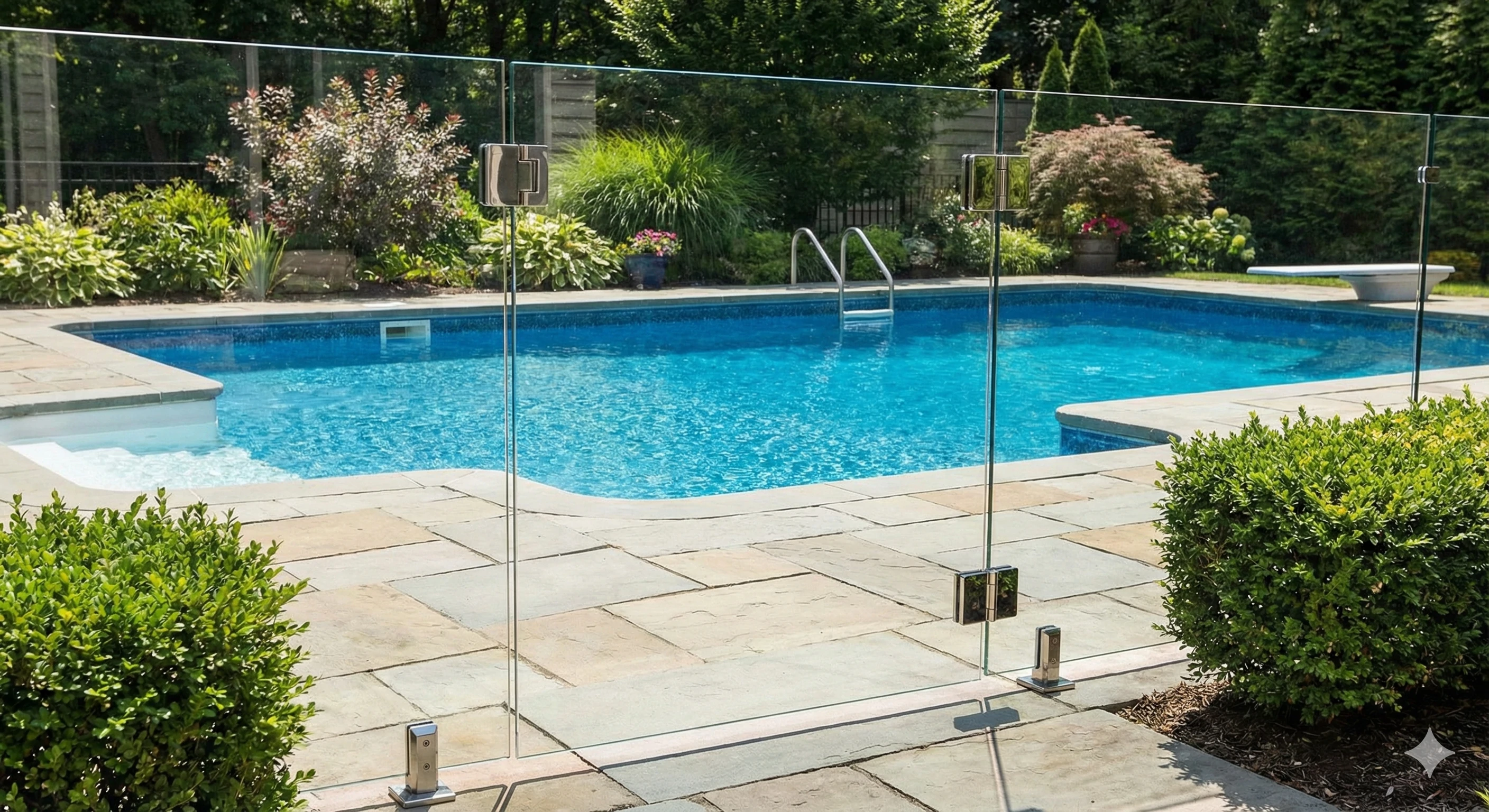
Modern architecture has made one thing very clear: clients want light, transparency, and an uninterrupted view. The "floating glass" balcony has become shorthand for a premium property, the finishing touch that signals a project has been done properly.
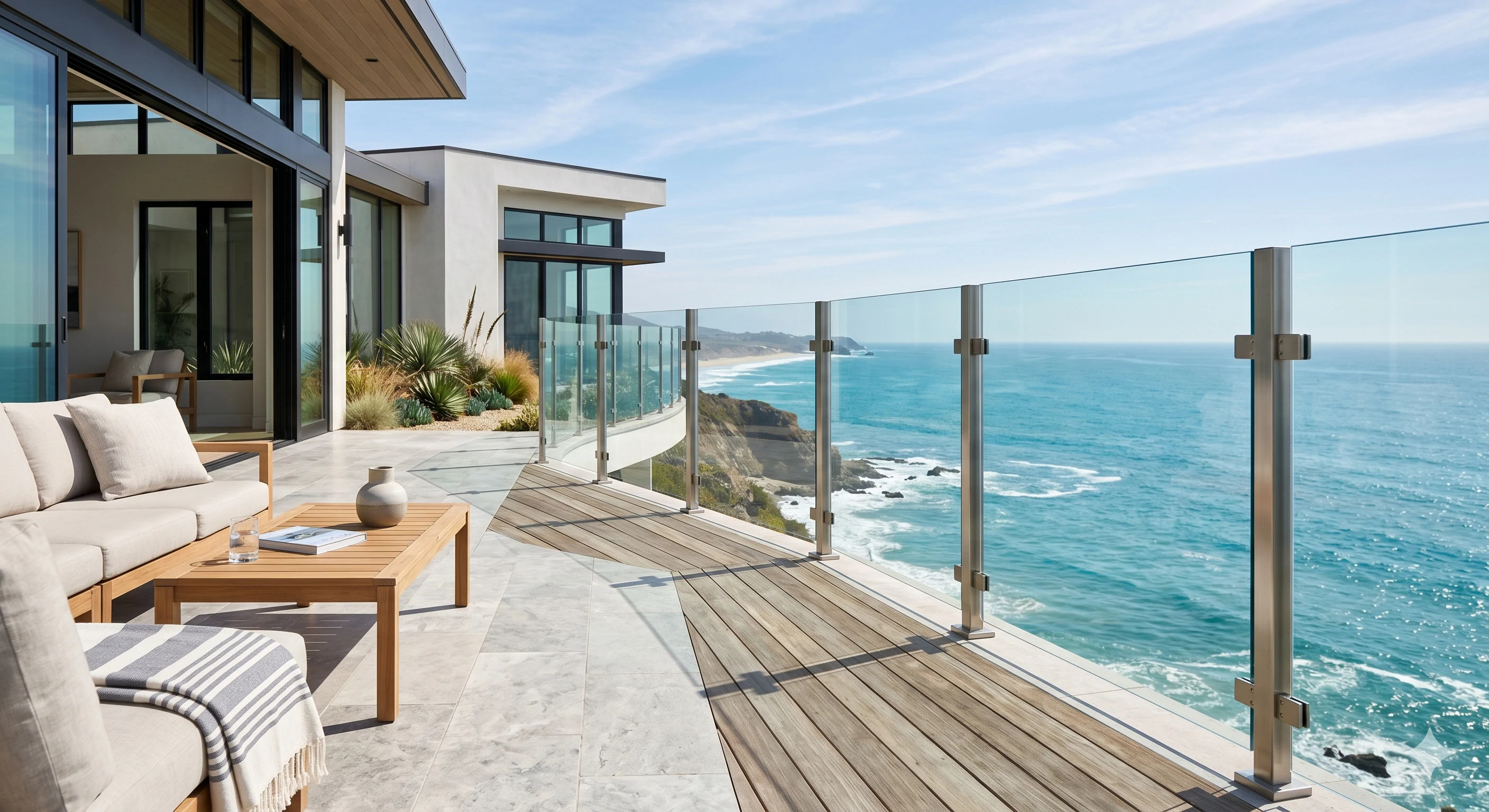
The problem is what happens when that vision meets a real-world budget. Fully frameless glass systems demand thick laminated panes, reinforced slab edges, heavy-duty base channels, and that quickly pushes costs into territory most projects simply can't absorb. And the traditional fallback — metal balusters or timber spindles — drags the whole aesthetic back twenty years and cages in the view the client paid premium for in the first place.
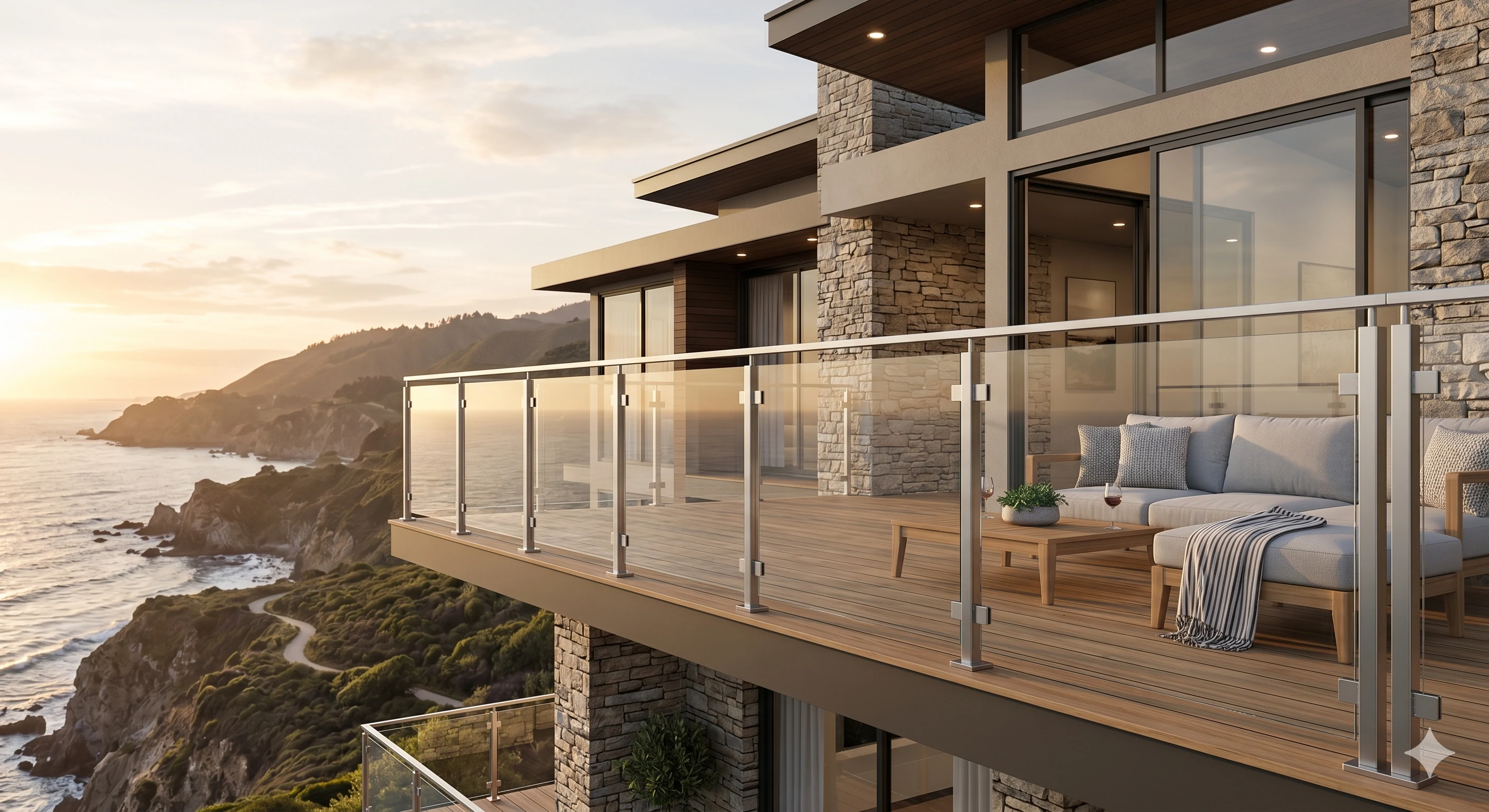
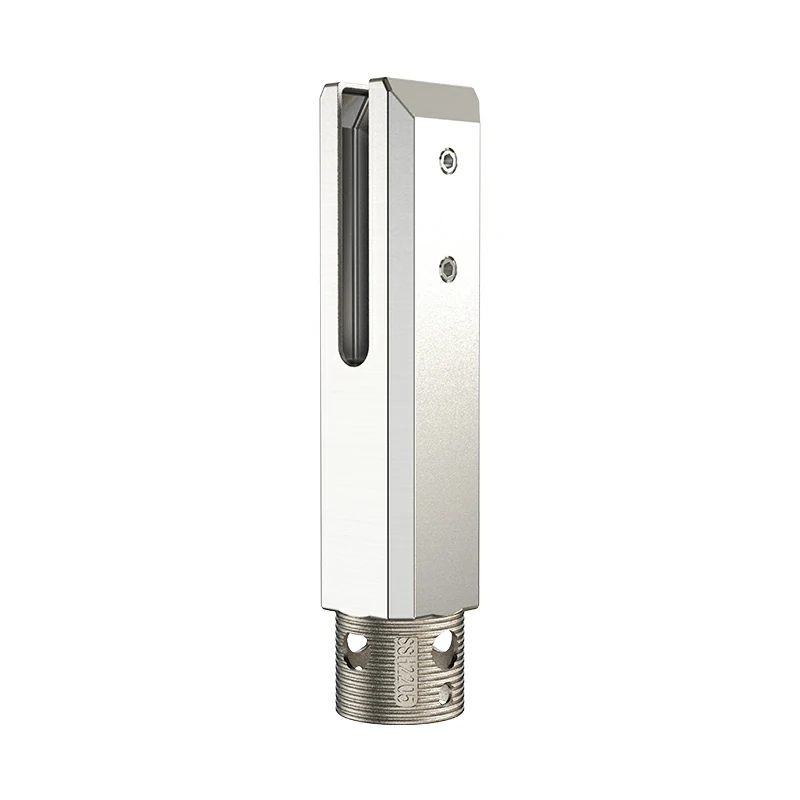
There is a third option, and it's the one most experienced contractors quietly prefer: the semi-frameless glass balustrade. By combining with precision-engineered glass clamps, this hybrid approach delivers the clean, modern look of a glass railing at a fraction of the cost of a fully frameless system — and without the structural headaches. This guide walks through how these systems work, where they fit, and how to specify the right hardware so your project delivers on both design and durability.
Why Semi-Frameless Is the Smart Money on Most Projects
If you've priced out a fully frameless glass balustrade recently, you already know the pain points. The structural substrate has to be massively overbuilt to carry the through a base shoe. The glass itself typically needs to be 15mm or thicker, often laminated, which triples the material cost compared to a standard 10mm tempered pane. Engineering sign-offs, custom fabrication lead times, and specialist installation crews stack additional cost on top.
For a rooftop terrace on a high-end new build, that investment may be justified. For the everyday residential balcony, pool surround, or Juliet balcony that makes up the bulk of most contractors' work, it isn't. And yet clients still want the look.
The budget gap between frameless and traditional
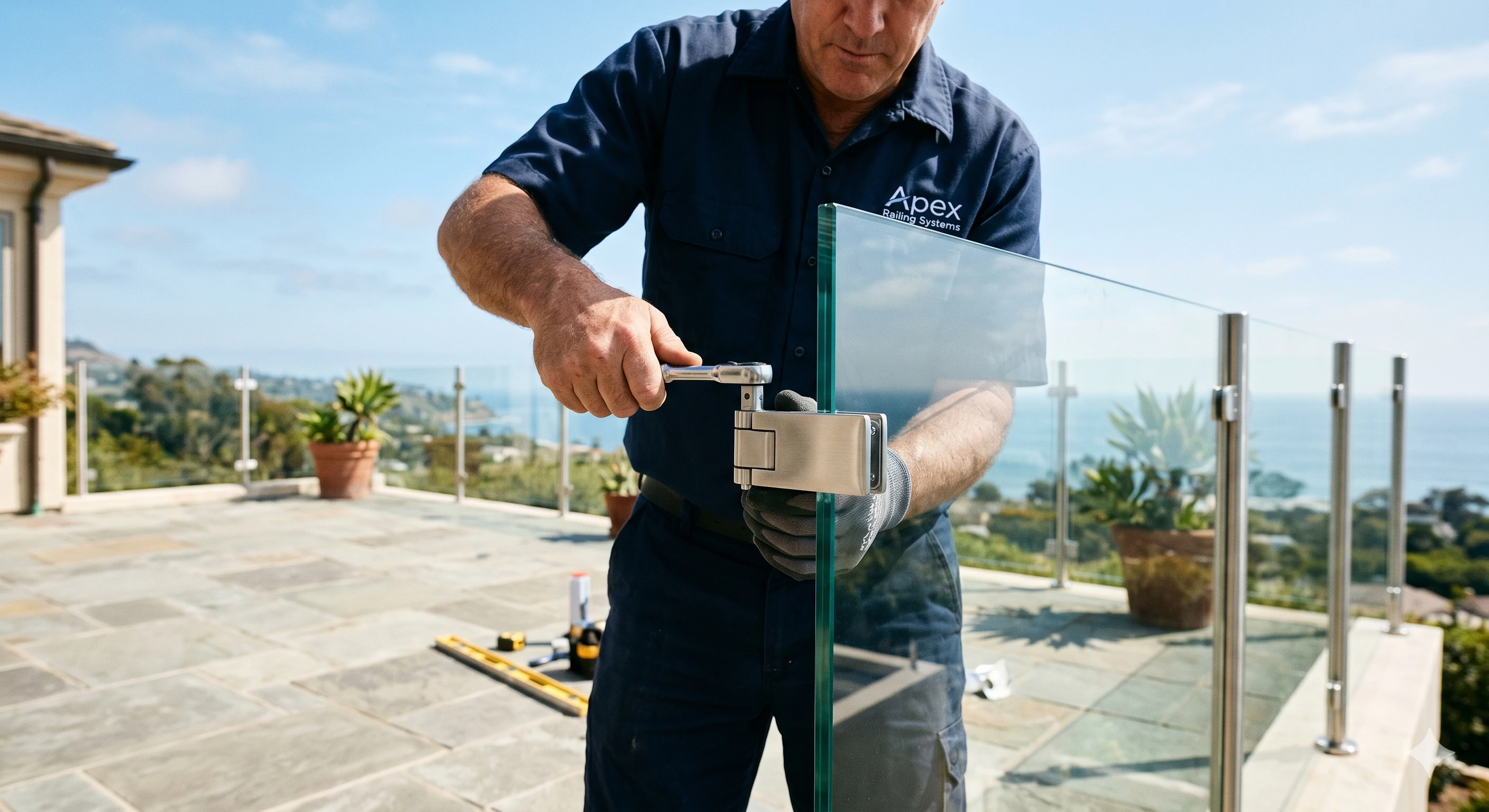
This is where semi-frameless systems earn their reputation. By transferring the structural load to stainless steel posts spaced at regular intervals, the glass panels no longer need to carry the railing themselves — they simply fill the space between posts. That single change unlocks the entire cost structure of the project:
-
Thinner glass becomes viable. Panels can drop from 15mm laminated down to 8mm or 10mm tempered, cutting material costs dramatically.
-
No base shoe required. You skip the expensive U-channel, the grout, and the slab reinforcement that comes with it.
-
Standard panels, standard tolerances. Off-the-shelf glass sizes work in most layouts, eliminating custom fabrication fees.
-
Faster installation. Posts and clamps install with standard tools, not the specialist rigging a frameless system often needs.
The aesthetic difference, from a few metres away, is surprisingly small. The visual character is still glass-dominant, the view is still open, and the posts themselves — when properly specified in brushed or polished stainless — read as intentional design elements rather than compromises.
Why drilling the glass is the wrong answer
Early post-and-infill glass systems often bolted panels directly through drilled holes. It worked, but it created a set of problems that the industry has largely moved away from:
Drilling is a specialist job that must be done before tempering. Every hole is a stress concentration point, and tolerances are unforgiving — a hole drilled 2mm out of position means a new panel. Lead times extend, scrap rates climb, and the glass itself becomes weaker at exactly the points where it's being asked to carry load. For contractors, it also means the glass has to arrive on site already committed to a specific layout. One site measurement error and you're waiting three weeks for a replacement.
The drill-free clamp approach removes all of this from the critical path. Glass arrives as a simple rectangle. Brackets are positioned based on the installed posts. If something needs to shift, you shift the clamp, not the glass.
Keeping the view the client paid for
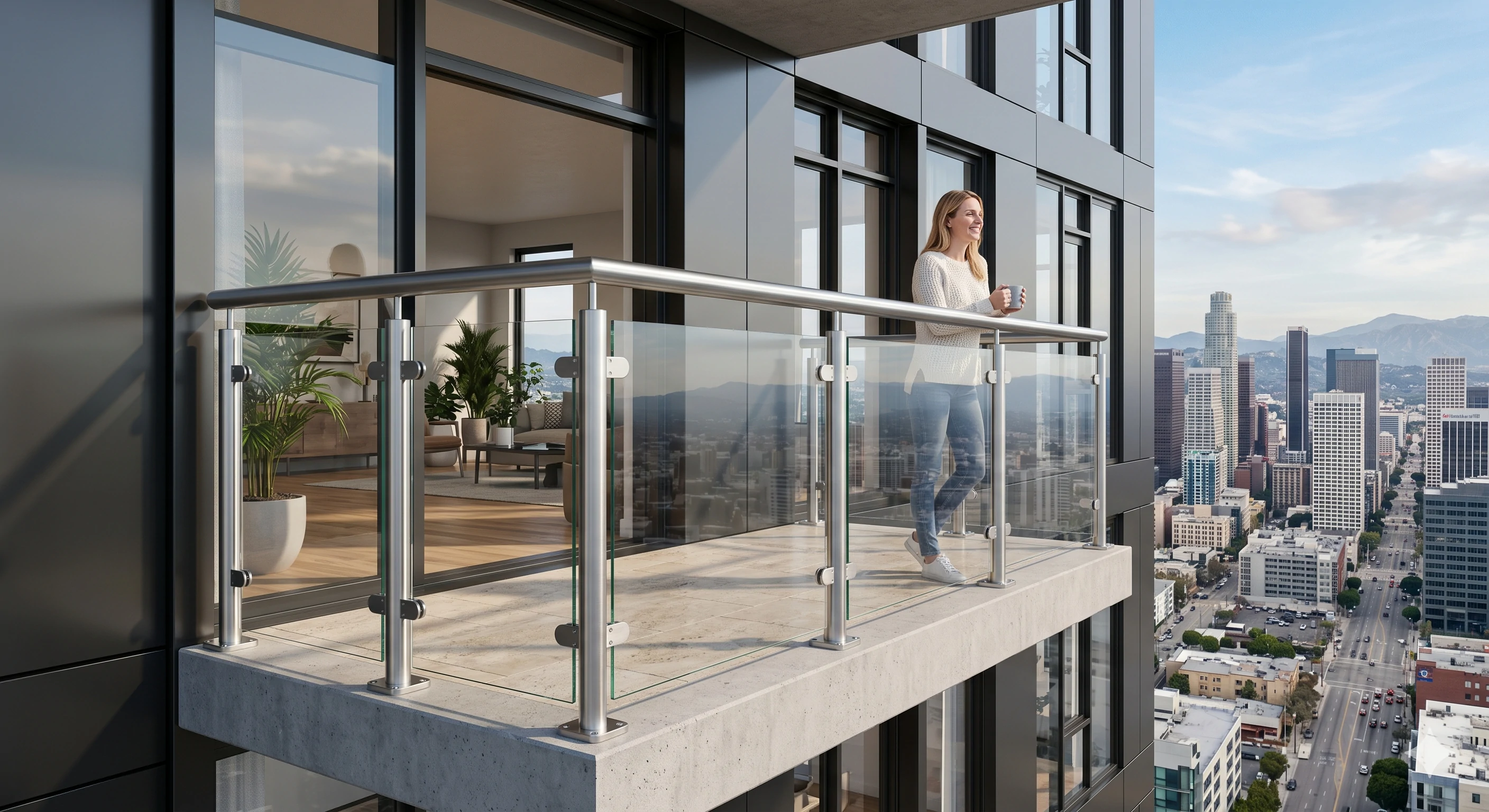
It's worth stating plainly: going back to metal balusters or timber spindles isn't a real alternative for most clients commissioning modern work. Vertical bars fragment the sightline, cast shadow patterns across interior spaces, and signal "builder-grade" in a way that undermines the rest of the finish. Semi-frameless keeps the reason the client wanted the balcony in the first place — the view — fully intact.
How Drill-Free Clamps Actually Hold the Glass
The most common question from anyone specifying these systems for the first time is the same one: if the bracket doesn't bolt through the glass, what's stopping the panel from slipping out? It's a reasonable concern, especially on an exposed balcony where wind loads are in play, or on a staircase where gravity is working against you.
The answer is friction — but friction engineered to a standard that makes it as reliable as a mechanical fixing.
The friction fit, explained
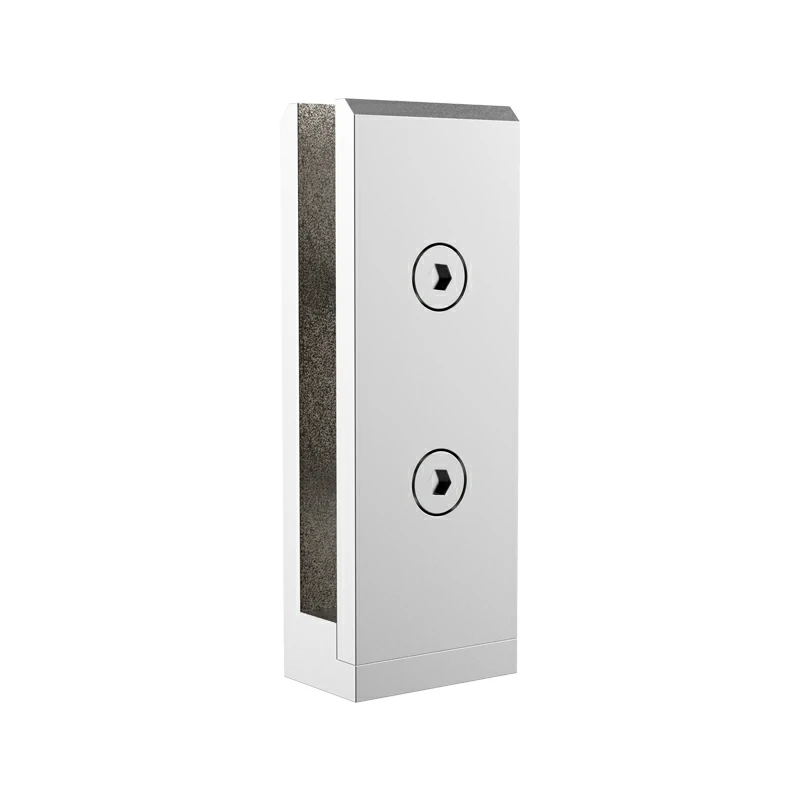
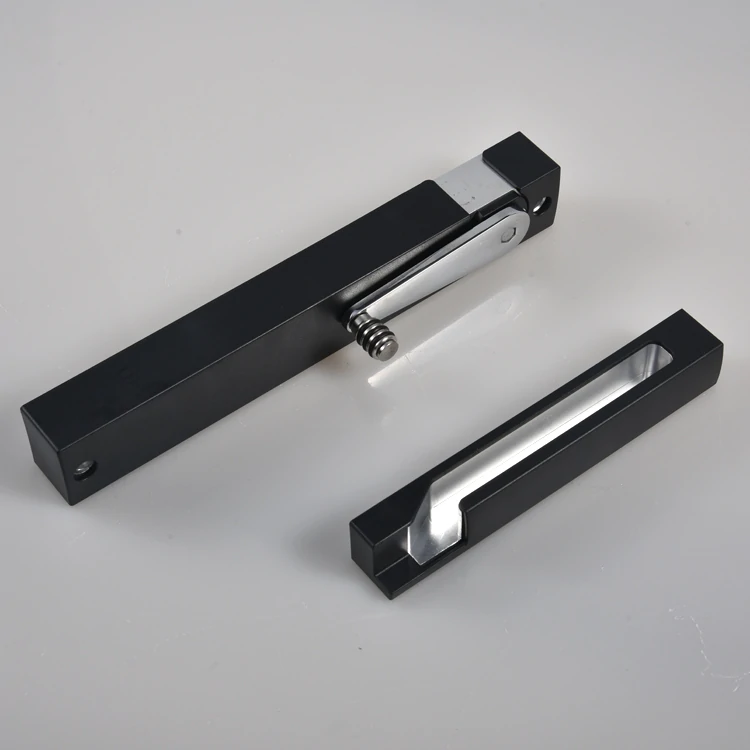
Inside every quality D-clamp or square bracket is a set of high-density rubber or EPDM gaskets. These gaskets are sized so that when the clamp is tightened onto the glass panel, they compress under significant force, conforming to every micro-irregularity on the glass surface and the inner face of the bracket. The result is a gasket-to-glass contact patch with enormous — the panel cannot move laterally, vertically, or rotationally without overcoming the full compressive load of the clamp.
In engineering terms, the clamp works the same way a works on a steel shaft: radial compression converts to axial grip. A properly torqued pair of clamps on a standard 10mm panel will hold far more load than code requires, including the dynamic horizontal loads specified for outdoor railings.
The gasket material matters. Cheap clamps use generic rubber that hardens and shrinks over time, eventually reducing clamping force and allowing the glass to shift. Quality systems specify or silicone compounds rated for the full service life of the railing.
Handling stairs, slopes, and non-standard angles
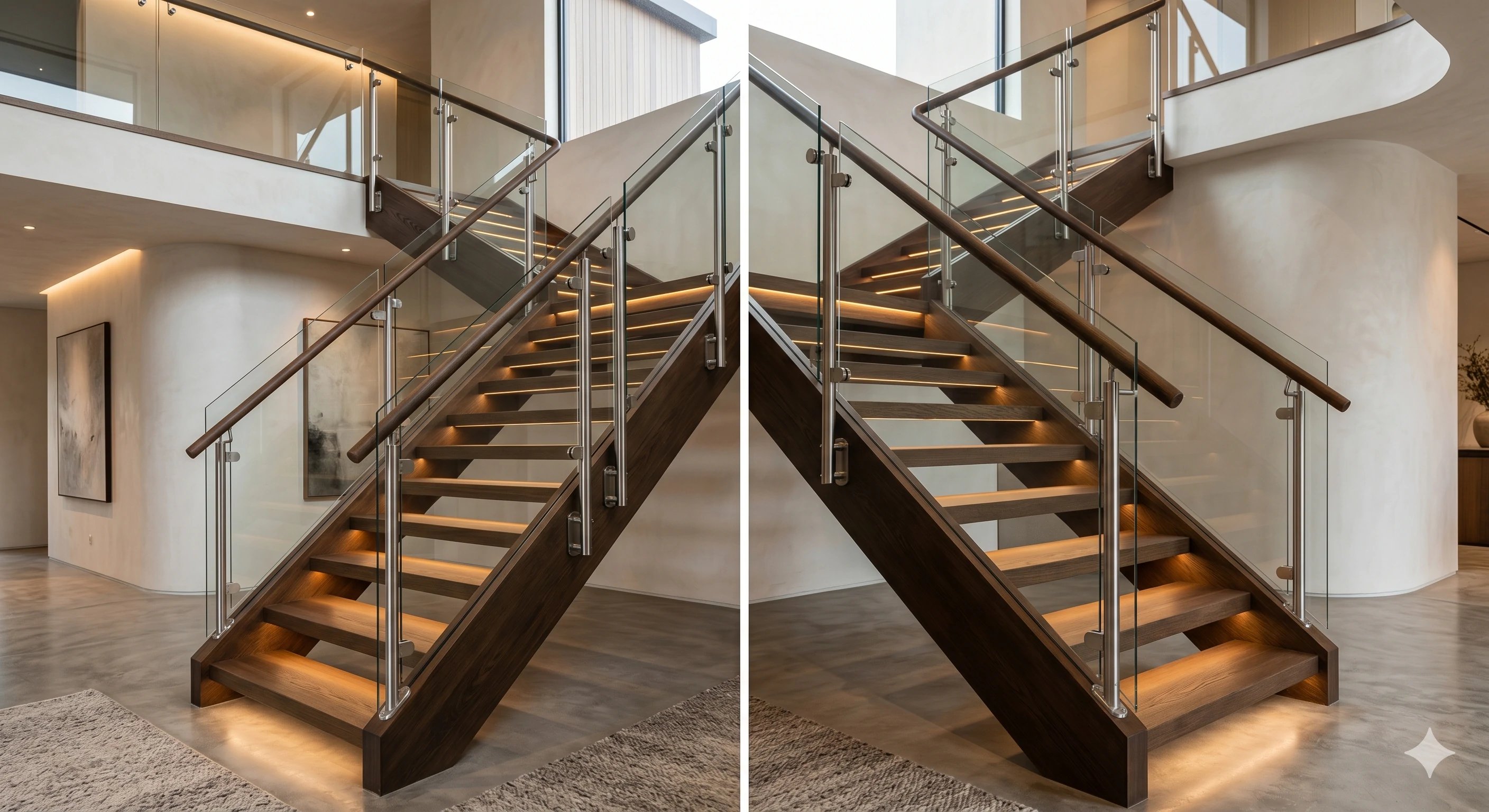
Straight runs are the easy case. The harder problem — the one where cheaper systems fail — is staircases and angled terrain, where each glass panel sits at a different pitch from its neighbours. Fixed-angle clamps simply cannot accommodate this without custom-cut hardware or creative site modifications that usually look exactly as bad as they sound.
This is where adjustable clamps and Z-type brackets earn their price. An adjustable glass clamp has a pivoting internal mechanism that allows the clamp face to hinge through a range of angles — typically ±30° or more — while maintaining full compressive grip on the glass. The installer mounts the bracket to the post, drops the glass in, and adjusts the angle to match the stair pitch before final tightening. One bracket covers any reasonable stair rise-to-run ratio.
Z-brackets offer a similar solution for more complex geometries, particularly where the glass needs to sit offset from the post line or where a stair meets a landing at an awkward transition. For contractors, the practical upshot is simple: a single inventory of adjustable hardware covers straight runs, stairs, and most edge cases without special orders.
Posts carry the load, clamps resist the pressure
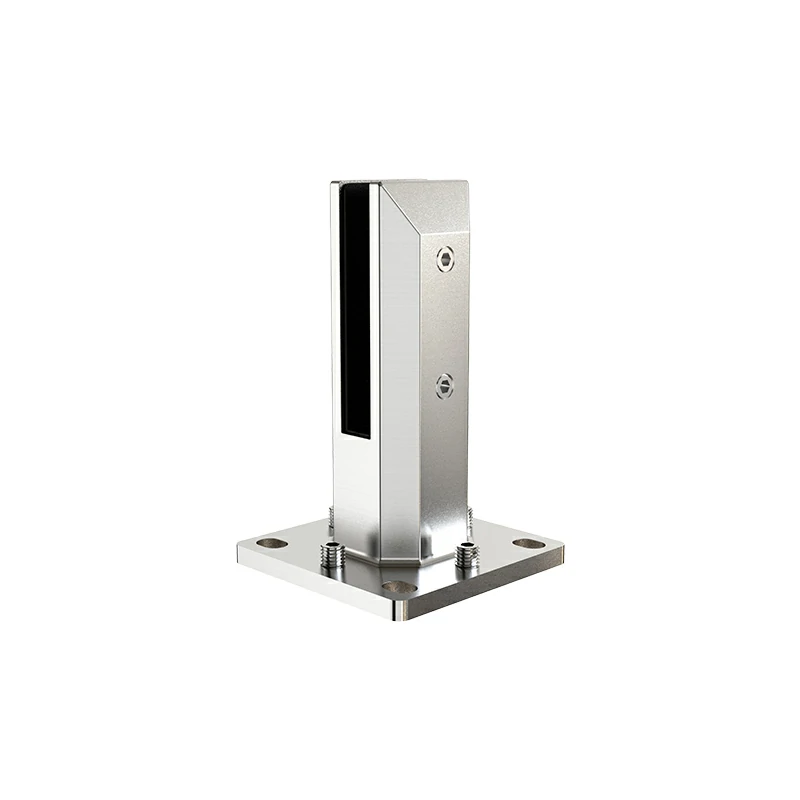
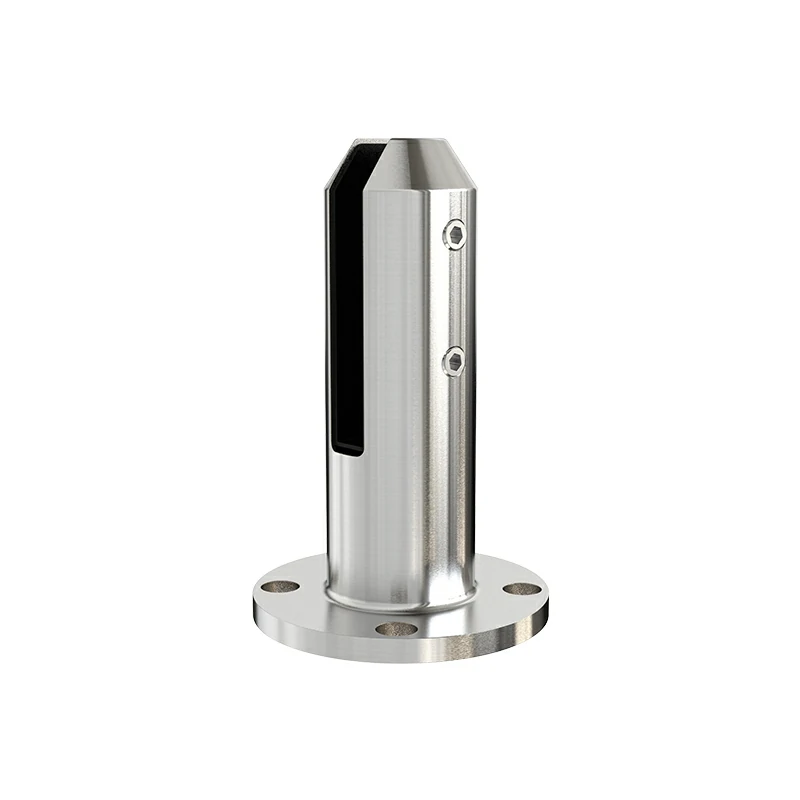
It helps to think of a semi-frameless system as two structural systems working together. The stainless steel posts — usually 42.4mm or 50.8mm diameter for round, or 40mm × 40mm for square — are bolted to the substrate and carry the plus any imposed live load from someone leaning on the rail. They're the structural backbone.
The clamps have a different job. Their role is to transfer lateral loads — primarily wind pressure on outdoor balconies, but also point loads from impacts — from the glass panel into the posts. Because the clamps are positioned near the top and bottom of each panel (typically two clamps per side, four per panel), they act as distributing force into the stiffest part of the system.
This division of labour is why semi-frameless systems can use thinner glass: the panel itself isn't carrying structural load the way a frameless pane has to. It's an infill, supported at four points, and loaded primarily in compression and shear rather than bending.
Specifying the Right Bracket for the Job
Once a contractor is convinced on the concept, the conversation shifts to hardware specification — and this is where decisions start to matter for long-term performance. The wrong clamp shape can undermine the aesthetic intent. The wrong stainless grade leads to rust callbacks within a few years. The wrong gasket leads to rattling panels that show up in the client's first winter.
D-clamp or square clamp: choosing by architectural language
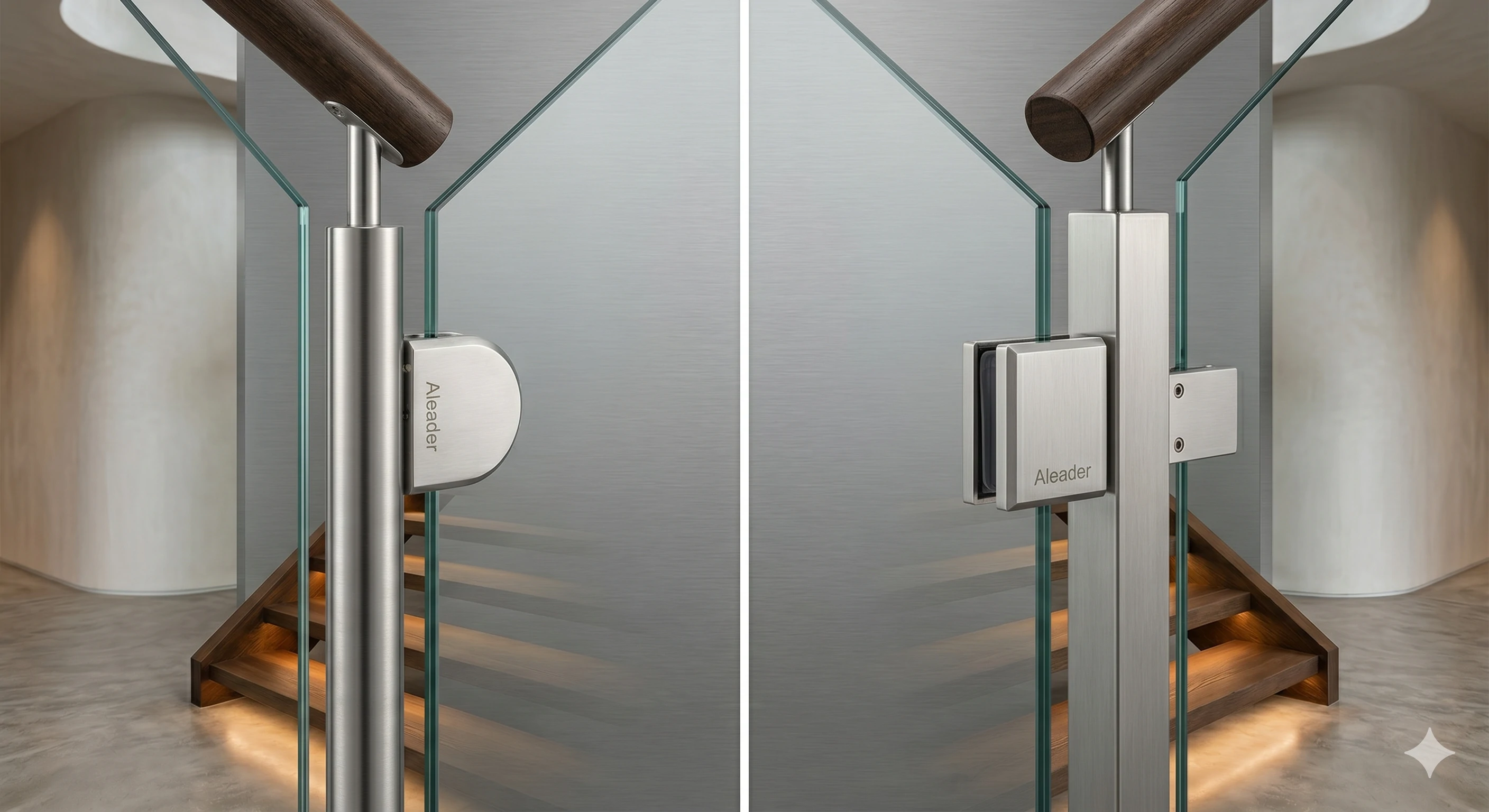
The mechanical performance of D-clamps and square clamps is essentially equivalent when both are specified to the same load rating. The choice comes down to design language:
D-clamps have a rounded, softened profile that echoes the form of cylindrical posts. They're the natural choice for systems built on 42.4mm round stainless posts, particularly in residential, hospitality, or coastal applications where the overall aesthetic leans toward elegance and approachability. The curved silhouette also reads as slightly smaller visually, which helps when clients want the hardware to recede and the glass to dominate.
Square clamps deliver sharper, more architectural lines. They pair naturally with square-section posts and suit commercial, industrial, or strongly contemporary projects where the visual vocabulary is already rectilinear. On a modernist concrete-and-glass building, a D-clamp can look slightly out of place; a square clamp reinforces the geometry.
A practical tip: whichever shape you specify, keep it consistent with the post profile. Mixing round clamps on square posts (or vice versa) is a specification mistake that every architect eventually spots and nobody can un-see.
304 vs. 316 stainless: the single most important material decision
This is the specification choice that most directly affects callback risk, and it's the one that gets compromised most often for budget reasons. The distinction matters:
304 stainless steel is the standard grade for general-purpose applications. It's corrosion-resistant in dry interior environments and performs well where moisture exposure is occasional. For an indoor staircase, mezzanine, or dry-interior railing, 304 is entirely adequate and the right economic choice.
316 stainless steel — sometimes called marine-grade — contains added molybdenum that dramatically improves resistance to chloride-induced pitting corrosion. This is the specification standard for anything outdoors, anything near water, and anything exposed to de-icing salt. The price premium over 304 is modest; the performance difference in real-world outdoor service is enormous.
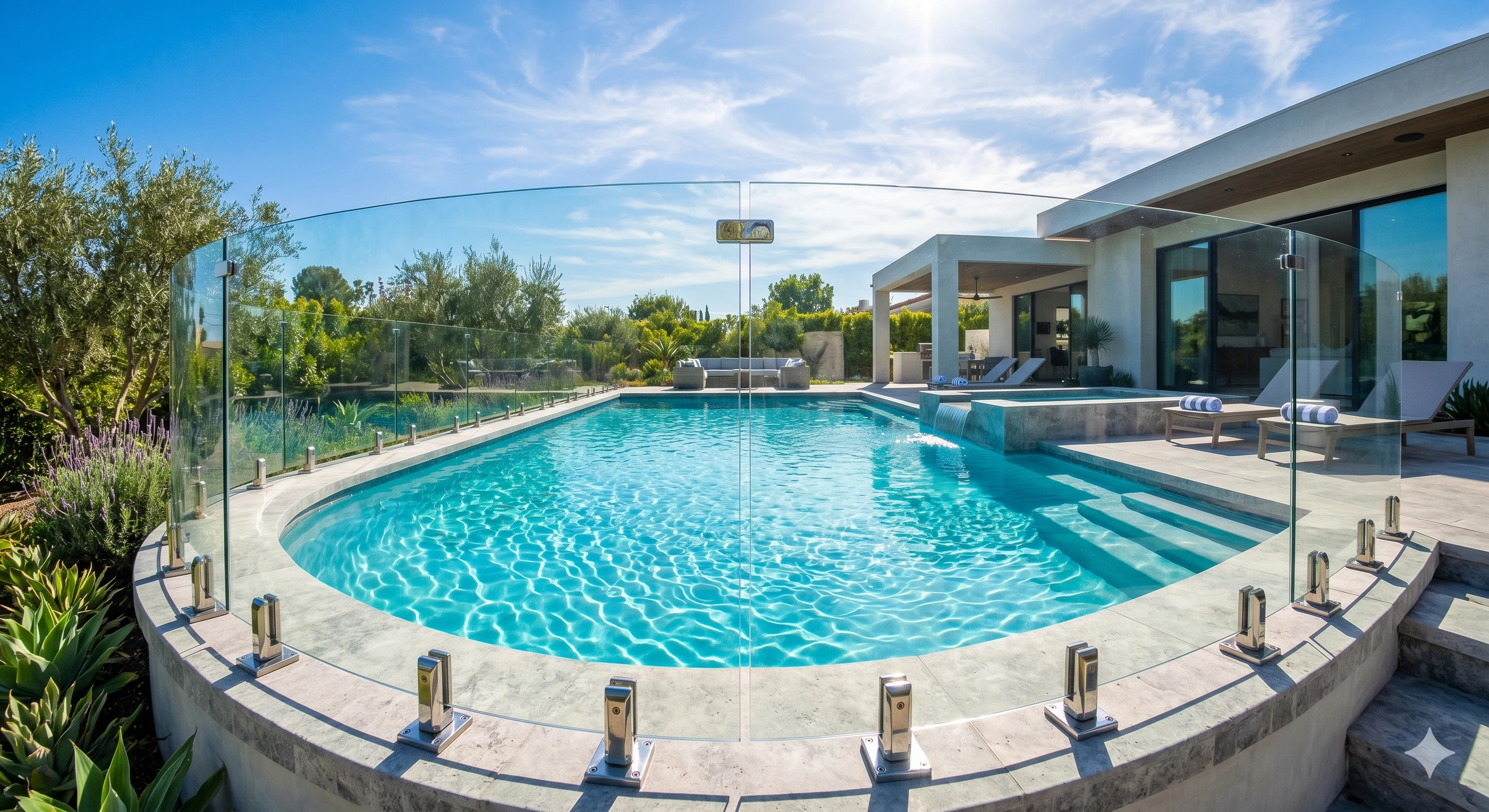
The common mistake is assuming that "near the coast" is the only condition that requires 316. It isn't. Rainwater itself carries airborne chlorides in most urban environments. Pool surrounds see chlorinated humidity. Lakeside installations experience enough seasonal moisture and temperature cycling to cause 304 hardware to develop tea-staining within two to three years. For any outdoor application — balcony, terrace, pool, stair, deck — 316 should be treated as the non-negotiable baseline. The callback cost of replacing pitted hardware five years in is many multiples of the original specification premium.
The rattle problem, and why gaskets solve it
Ask any contractor who's installed budget glass railings what their most frequent callback is, and the answer will usually be: the glass rattles. Wind gusts, heavy footsteps on the adjacent deck, or even a slammed door can set a loosely-clamped panel vibrating against its hardware, producing an intermittent ticking or buzzing that's impossible to ignore.
The root cause is almost always the gasket. Cheap clamps use undersized, low-durometer rubber that compresses adequately on day one but loses clamping force as the material takes a set. Six months later, there's enough play in the assembly for the glass to move under dynamic loading — and once it starts moving, it wears the gasket further, and the problem compounds.
Quality clamps specify gaskets that do two jobs simultaneously. They provide the frictional grip that holds the glass, and they act as that absorb vibration before it can propagate through the system. A properly gasketed panel feels solid — you can push on it firmly and get zero perceptible movement. That mechanical silence is what clients remember, and what contractors avoid re-visiting.
The Bottom Line
Semi-frameless glass balustrades occupy the most commercially sensible point in the modern railing market. They deliver the transparency and architectural presence that clients want, at a material and labour cost that lets projects actually hit budget, with an installation process that doesn't require specialist trades or custom glass fabrication. For most residential and commercial applications, they're not a compromise — they're the right answer.

Getting the specification right is the difference between a project that looks great on handover and one that still looks great in ten years. Drill-free clamps eliminate the fabrication risk in the glass itself. Adjustable hardware handles stairs and sloped terrain without custom parts. 316 stainless protects against the corrosion that destroys lesser installations. And quality gaskets silence the rattles and vibrations that turn clients into repeat callers.

Ready to spec your next project?
Browse our full catalogue of 316 marine-grade stainless steel D-clamps, square brackets, and adjustable staircase hardware — all engineered for drill-free installation and backed by full specification sheets for architect sign-off. Contact our architectural sales team today for trade pricing, CAD files, and project-specific engineering support.
View Glass Brackets
View Glass Clamps
Footnotes
1. Overview of structural engineering principles for buildings and infrastructure.
2. Learn about the properties and general applications of stainless steel.
3. Explanation of cantilever mechanics and load distribution in architecture.
4. Details on the manufacturing and strengthening processes of tempered glass.
5. Guide to understanding friction coefficients and surface interactions.
6. Technical breakdown of how mechanical couplings transfer force effectively.
7. Properties of EPDM rubber and its resistance to outdoor weathering.
8. Definition of dead loads and their impact on structural design.
9. How shear forces operate and are managed in structural systems.