Table of Contents
Introduction: Why Alloy Selection Defines Investment Cast Performance
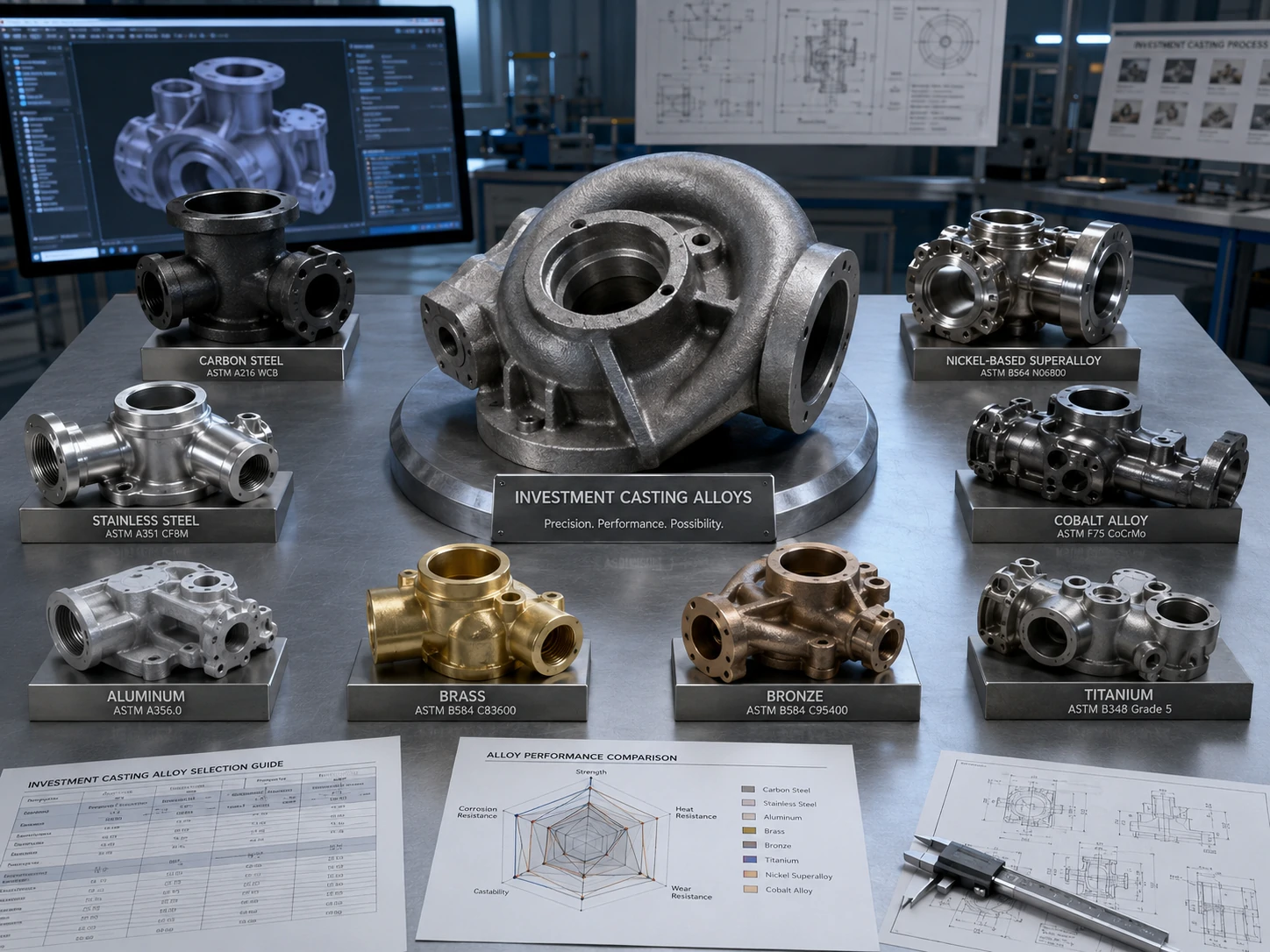
Investment casting, also known as , stands apart from other forming methods due to its unmatched compatibility with nearly every castable metal alloy. Unlike die casting limited to low-melting non-ferrous materials, ceramic shell molds withstand extreme melting temperatures, enabling production of intricate components from basic carbon steel to premium aerospace superalloys.
The alloy you specify directly impacts tensile strength, corrosion resistance, weight, surface finish, post-processing cost, and long service life. Many OEM engineers, architects and industrial designers waste budget or face component failure by selecting the wrong metal without evaluating operating environment and load requirements.
This exhaustive guide breaks down every widely used investment casting alloy, covering core metallurgical properties, casting behavior, real-world industrial use cases, and critical process considerations for North American and European manufacturing standards.
Core Classification: Ferrous vs Non-Ferrous Investment Cast Alloys
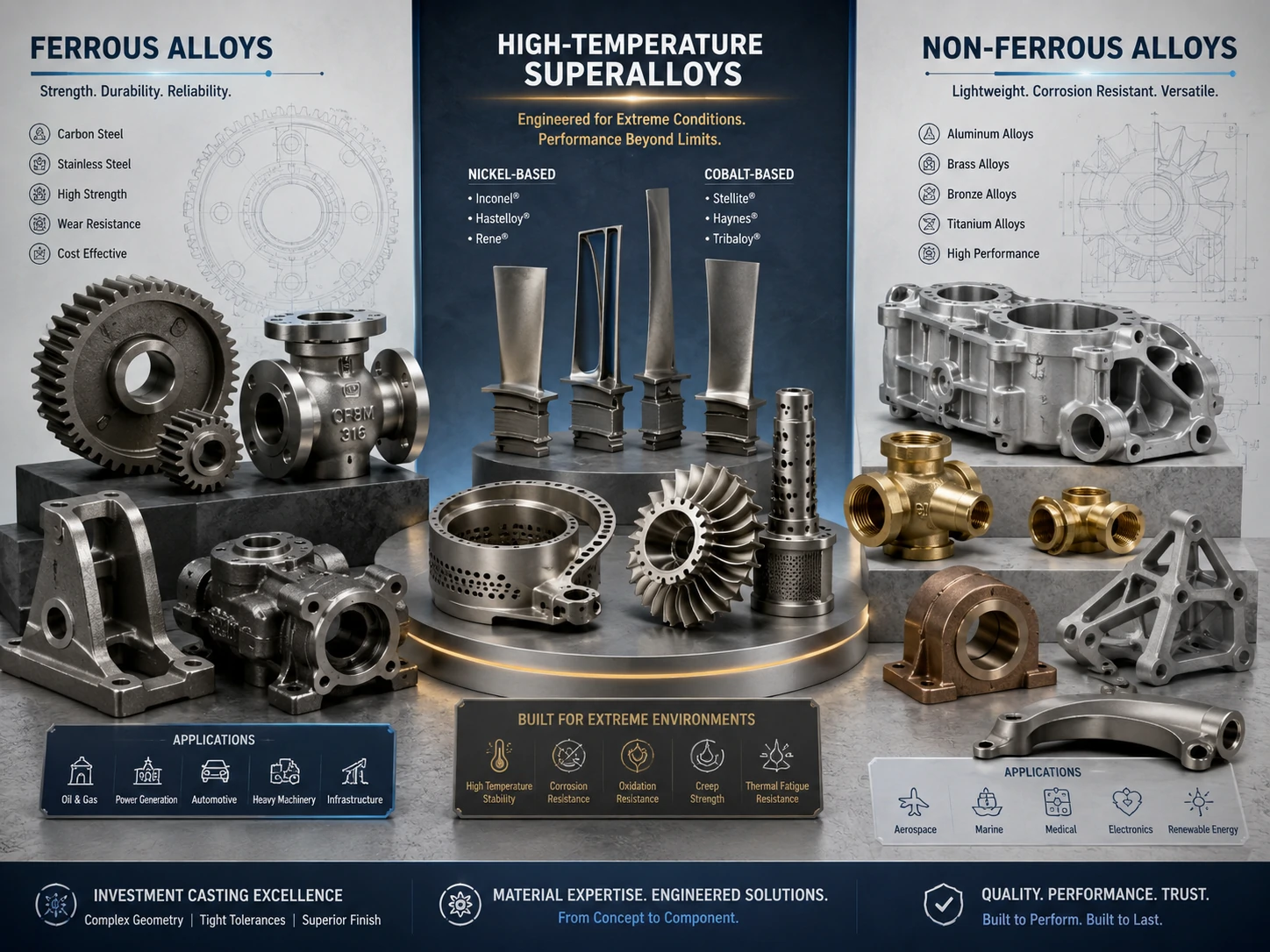
All investment casting alloys split into two primary groups, separated by iron content, melting characteristics and core functionality.
-
Ferrous Alloys: Iron-base materials including carbon steel, alloy steel and stainless steel. Higher tensile strength, magnetic properties, wide heat treatment options, higher melting points (1370°C+). Ideal for load-bearing, high-pressure industrial parts.
-
Non-Ferrous Alloys: No primary iron content (aluminum, copper, titanium). Lighter weight, superior corrosion resistance in mild environments, lower melting temperatures, excellent fluidity for ultra-thin wall castings. Used for lightweight, decorative and sanitary components. A third premium tier exists: high-temperature superalloys, engineered for extreme heat, creep and wear resistance in power and aerospace hardware.
Ferrous Investment Cast Alloys (Steel Family)
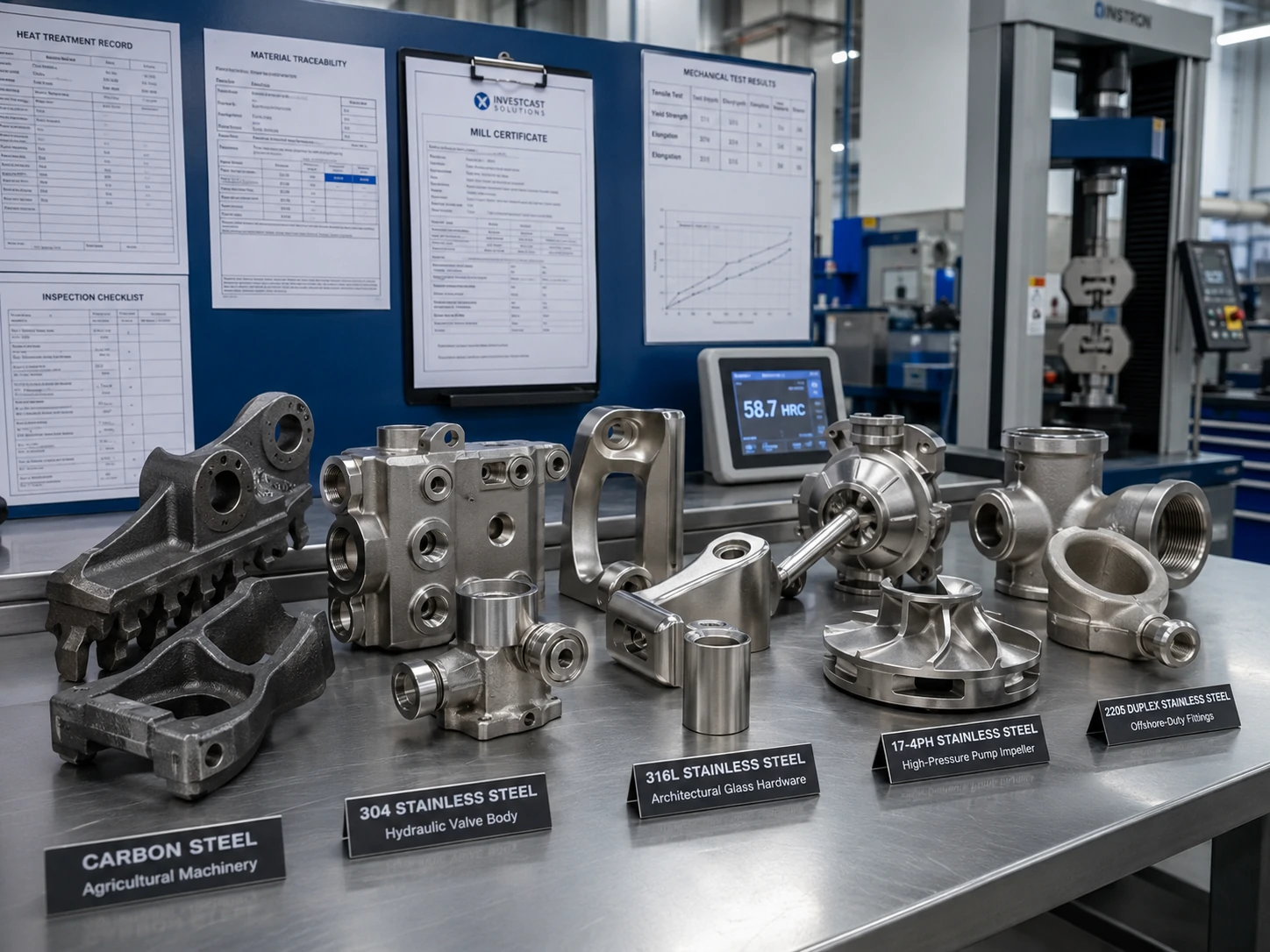
Ferrous alloys dominate industrial investment casting production for structural, valve and machinery components due to predictable mechanical performance after heat treatment.
3.1 Carbon & Low Alloy Steels
Carbon steel is the most cost-effective ferrous option for non-corrosive, moderate-load environments. Standard grades include 1018, 4130 and 8620 low alloy steel.
Key Properties
-
High tensile and impact toughness after quenching & tempering
-
Excellent weldability for assembly fabrication
-
Affordable raw material compared to stainless variants
-
Limited corrosion resistance without paint or plating coatings
Ideal Applications
Agricultural machinery parts, gear housings, hydraulic valve bodies, construction hardware, oil pipeline fittings for non-salty inland environments.
Casting Notes
Carbon steel exhibits moderate shrinkage during solidification; foundries add engineered risers to eliminate internal porosity for pressure-rated parts.
3.2 Standard Austenitic Stainless Steel (304 / 316L)
are the most specified stainless investment casting alloys for sanitary and mildly corrosive environments, widely adopted across Europe and North America building codes.
304 Stainless Steel
-
Balanced chromium-nickel composition resists freshwater, humidity and mild chemical exposure
-
Cost-effective for indoor bathrooms, food processing equipment, architectural glass hardware
-
Poor performance in coastal salt or chlorinated water (risk of pitting corrosion)
316L Stainless Steel
-
Molybdenum additive blocks chloride-induced rust, the gold standard for coastal and plumbing hardware
-
Low carbon grade prevents intergranular corrosion after welding or high-temperature processing
-
Certified for potable water systems, marine balustrade spigots, shower door clamps
Casting Notes
Both grades deliver smooth as-cast Ra 3.2μm surfaces with proper ceramic shell control; vacuum melting eliminates carbon contamination for food-grade compliance.
3.3 Precipitation Hardening Stainless Steel (17-4PH)
fills the gap between standard stainless and superalloys, offering ultra-high tensile strength after low-temperature aging heat treatment (up to 1380MPa ultimate tensile strength).
Key Advantages
-
Retains stainless corrosion resistance while reaching high hardness HRC 38-44
-
No distortion during aging treatment, perfect for precision threaded aerospace fasteners
-
Excellent fatigue resistance under cyclic load
Common Uses
Aerospace brackets, high-pressure pump impellers, surgical instrument frames, firearm components.
3.4 Duplex Stainless Steel (2205)
combines austenite and ferrite microstructures, outperforming 316L in both mechanical strength and chloride corrosion resistance at a lower superalloy price point.
Core Benefits
-
Double the yield strength of 316L stainless steel
-
Resists saltwater, industrial wastewater and acid cleaning cycles
-
Preferred alloy for offshore marine balustrades, pool fence fittings, desalination valve bodies
Limitation
Requires strict controlled cooling post-cast to avoid brittle phase formation; only specialized foundries process duplex investment castings.
Non-Ferrous Investment Cast Alloys
Non-ferrous alloys prioritize lightweight performance, thermal conductivity and decorative finish for consumer, architectural and lightweight aerospace OEM projects.
4.1 Aluminum Cast Alloys (A356-T6 as Industry Standard)
is the most widely used non-ferrous investment casting metal globally. The T6 full heat treatment cycle transforms soft as-cast aluminum into a rigid, high strength-to-weight material.
Standout Properties
-
66% lighter density than steel, drastically lowering component shipping and assembly weight
-
Exceptional molten fluidity, enabling consistent casting of 0.5mm ultra-thin walls
-
Natural passive oxide layer provides mild corrosion resistance; anodizing boosts longevity outdoors
-
Superior thermal conductivity for heat sink and cooling housing parts
Primary Applications
Drone structural frames, automotive turbo housings, electronic heat sinks, lightweight architectural trim, aerospace interior brackets.
Casting Consideration
Uncontrolled pouring speed creates trapped air and porosity; automated bottom gating systems are mandatory for high-volume aluminum investment casting runs.
4.2 Brass & Bronze Copper Alloys
Copper-based alloys excel at friction reduction, thermal transfer and decorative polished finishes, a staple for plumbing and luxury hardware manufacturers.
Yellow Brass (C85700 / C84400)
Copper-zinc blend with unmatched machinability and mirror polish potential. Resists freshwater scaling, ideal for shower hinges, glass spigots and plumbing fittings. Dezincification resistant (DZR) brass variants eliminate zinc leaching in chlorinated municipal water supplies.
Tin Bronze (C90700)
Low friction self-lubricating microstructure minimizes wear on moving sliding parts such as pump bearings and gear sleeves. Excellent seawater corrosion resistance for small marine hardware.
Aluminum Bronze
Superior saltwater performance over brass, specified for large propellers, offshore valve bodies exposed to constant ocean spray.
4.3 Titanium Alloys (Medical & Aerospace Grade)
Titanium Ti-6Al-4V and medical grade represent the premium lightweight corrosion-resistant non-ferrous category, with full biocompatibility for human implant hardware.
Critical Advantages
-
Strength comparable to steel at 40% lower weight
-
Zero reactivity with human tissue, FDA compliant for orthopedic implants and dental frames
-
Immune to saltwater, acid and chemical corrosion without protective coatings
Process Challenges
Extremely high melting point (1668°C) requires vacuum melting and yttria-stabilized ceramic shells to prevent shell-metal contamination, raising production cost significantly.
Use Cases
Aircraft turbine structural parts, artificial joint frames, marine lightweight fasteners, luxury medical device housings.
High-Performance Superalloys (Nickel & Cobalt Base)
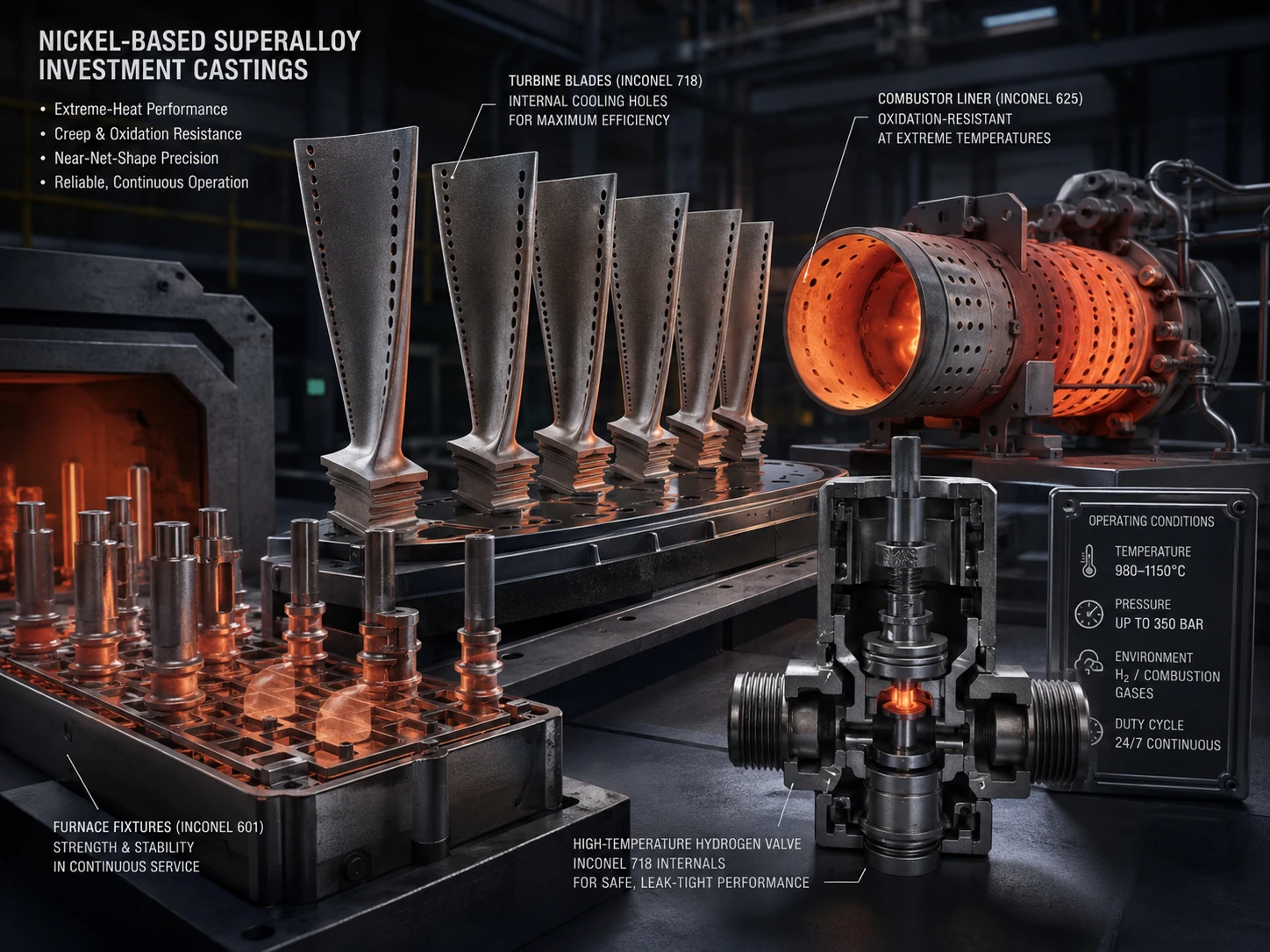
Superalloys serve extreme operating environments where standard steel or aluminum alloys lose strength at elevated temperatures above 600°C. Investment casting's near-net-shape capability eliminates costly CNC removal from solid superalloy billets.
5.1 Nickel-Based Superalloys (Inconel 713, 718)
retain tensile strength and creep resistance at continuous operating temperatures up to 1000°C. Gamma prime precipitates lock microstructure against thermal fatigue and oxidation.
Industrial Deployment
Gas turbine blades, jet engine combustor components, high-temperature furnace fixtures, hydrogen energy valve internals.
5.2 Cobalt-Based Wear Resistant Alloys (Stellite 6 / Stellite 12)
prioritize abrasion and hot corrosion resistance over high tensile strength. Hard carbide phases deliver consistent HRC 50+ hardness without heat treatment.
Key Applications
Turbine sealing rings, industrial cutting inserts, valve trim exposed to abrasive process media, mining machinery wear components. Service life extends 4-7x longer than stainless steel equivalents under abrasive cyclic contact.
How To Pick The Right Alloy For Your Project
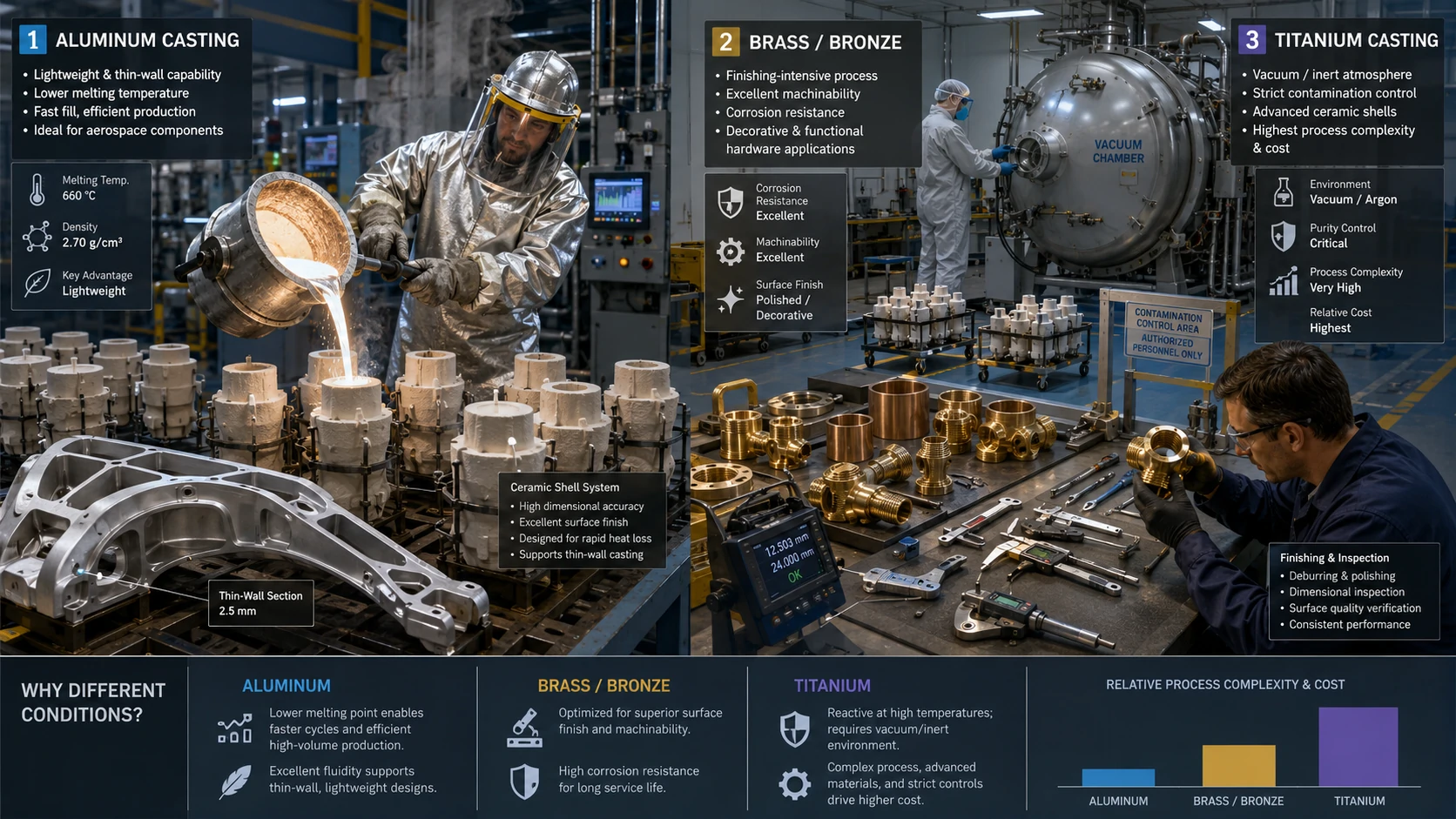
Use this four-step framework to eliminate costly alloy specification errors:
-
Define operating environment: Indoor freshwater / coastal salt spray / high-temperature gas / medical biocompatible contact
-
Calculate mechanical requirements: Load bearing tensile strength, cyclic fatigue, sliding wear or impact resistance
-
Establish weight targets: Prioritize aluminum/titanium for lightweight mobility or steel for low-cost structural rigidity
-
Evaluate post-processing budget: Alloys with superior as-cast finish (brass, A356) cut grinding and polishing labor costs
Example Scenarios:
-
Residential frameless shower hardware → 316L stainless steel
-
50-story high-rise water pump impeller → 2205 duplex stainless
-
Lightweight drone chassis → A356-T6 aluminum
-
Aircraft high-pressure turbine blade → Inconel nickel superalloy
-
Orthopedic implant frame → Ti-6Al-4V ELI medical titanium
Investment Cast Alloy Cost & Machinability Comparison
Cost ranking (lowest to highest): Carbon steel → 304 stainless → A356 aluminum → 316L stainless → Brass → 2205 duplex → 17-4PH → Bronze → Titanium → Nickel/Cobalt superalloys Machinability ranking (easiest to hardest): Brass > A356 Aluminum > Carbon Steel > 304 Stainless > 316L > Duplex 2205 > 17-4PH > Titanium > Superalloys Key cost note: While raw superalloy stock carries premium pricing, investment casting's cuts total finished part expense by 30-60% versus full CNC machining from solid billet.
Common Alloy Selection Mistakes Engineers Make
-
Specifying 304 stainless for coastal outdoor hardware: Rapid chloride pitting creates unsafe loose balustrade fittings within 2-3 years; upgrade to 316L or 2205 duplex.
-
Skipping T6 heat treatment for A356 aluminum castings: Soft untreated aluminum deforms under moderate dynamic load, ruining precision dimensional tolerances.
-
Choosing brass for high-temperature industrial valves: Zinc vaporization creates internal porosity under sustained heat, triggering pressure leaks.
-
Over-specifying superalloys for room-temperature low-load parts: Unnecessary 2-5x material cost increase with zero performance benefit.
-
Ignoring dezincification risks for municipal water brass fittings: Non-DZR brass corrodes internally in chlorinated tap water systems.
Frequently Asked Questions
Q: What is the most versatile investment casting alloy for general OEM hardware?
A: 316L stainless steel balances corrosion resistance, machinability and moderate cost for 80% of indoor and coastal commercial components including railings, valves and shower hardware.
Q: Can investment casting produce titanium parts with complex hollow internal channels?
A: Yes. Soluble wax cores create precise hollow geometries in vacuum-melted titanium castings, ideal for lightweight aerospace fluid components.
Q: Are superalloys only used for aerospace applications?
A: No. Nickel and cobalt superalloys are widely specified for power generation gas turbines, industrial furnace hardware and abrasive mining equipment worldwide.
Q: Does aluminum investment casting require secondary finishing?
A: A356-T6 delivers smooth as-cast surfaces; light polishing or is the only secondary work needed for consumer-facing aluminum components.
Q: What alloy resists both saltwater and heavy structural load?
A: 2205 duplex stainless steel offers twice the yield strength of 316L plus superior chloride corrosion resistance for offshore marine structural castings.
Conclusion & Custom Alloy Consultation CTA
The wide spectrum of investment casting alloys is one of the process's greatest competitive advantages, yet misselection leads to premature component failure, inflated machining expenses and compliance delays. Every alloy family-ferrous steel, lightweight non-ferrous copper/aluminum/titanium, and extreme-performance superalloys-has a targeted industrial niche optimized for distinct environmental and mechanical demands.
When finalizing your part design, prioritize operating conditions, weight limits and total production budget over raw material sticker price. Premium corrosion-resistant alloys like 316L and 2205 drastically reduce long-term replacement and maintenance costs for outdoor and fluid control OEM equipment.
Our metallurgical engineering team provides free alloy specification reviews for investment casting projects across architectural, fluid control, aerospace and medical industries. Send your CAD drawings and performance requirements today to receive a tailored alloy recommendation and full production cost quotation.
Footnotes
1. Explains the dewax and burnout stage in investment casting.
2. Reviews major austenitic stainless steel grades and corrosion characteristics.
3. Provides official 17-4PH alloy properties, heat treatment, and corrosion data.
4. Details SAF 2205 duplex strength and chloride corrosion resistance.
5. Lists mechanical property limits for common aluminum casting alloys.
6. Provides official Ti-6Al-4V ELI Grade 23 technical data.
7. Covers Inconel 718 strength, temperature range, fabrication, and applications.
8. Provides official Stellite wear protection catalogs and technical resources.
9. Explains near-net-shape casting and documented cost-reduction examples.
10. Explains anodizing and its durable corrosion-resistant aluminum oxide finish.