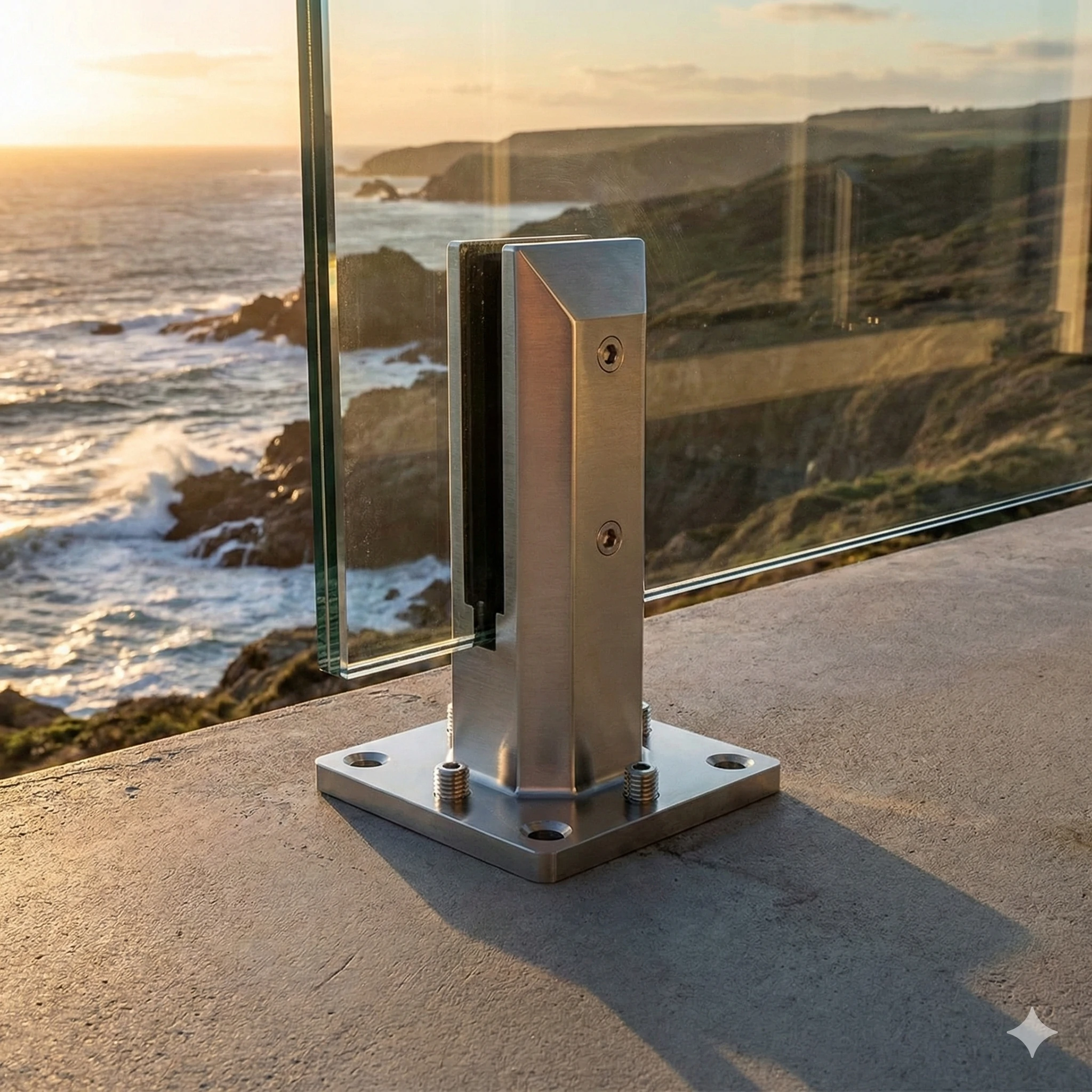
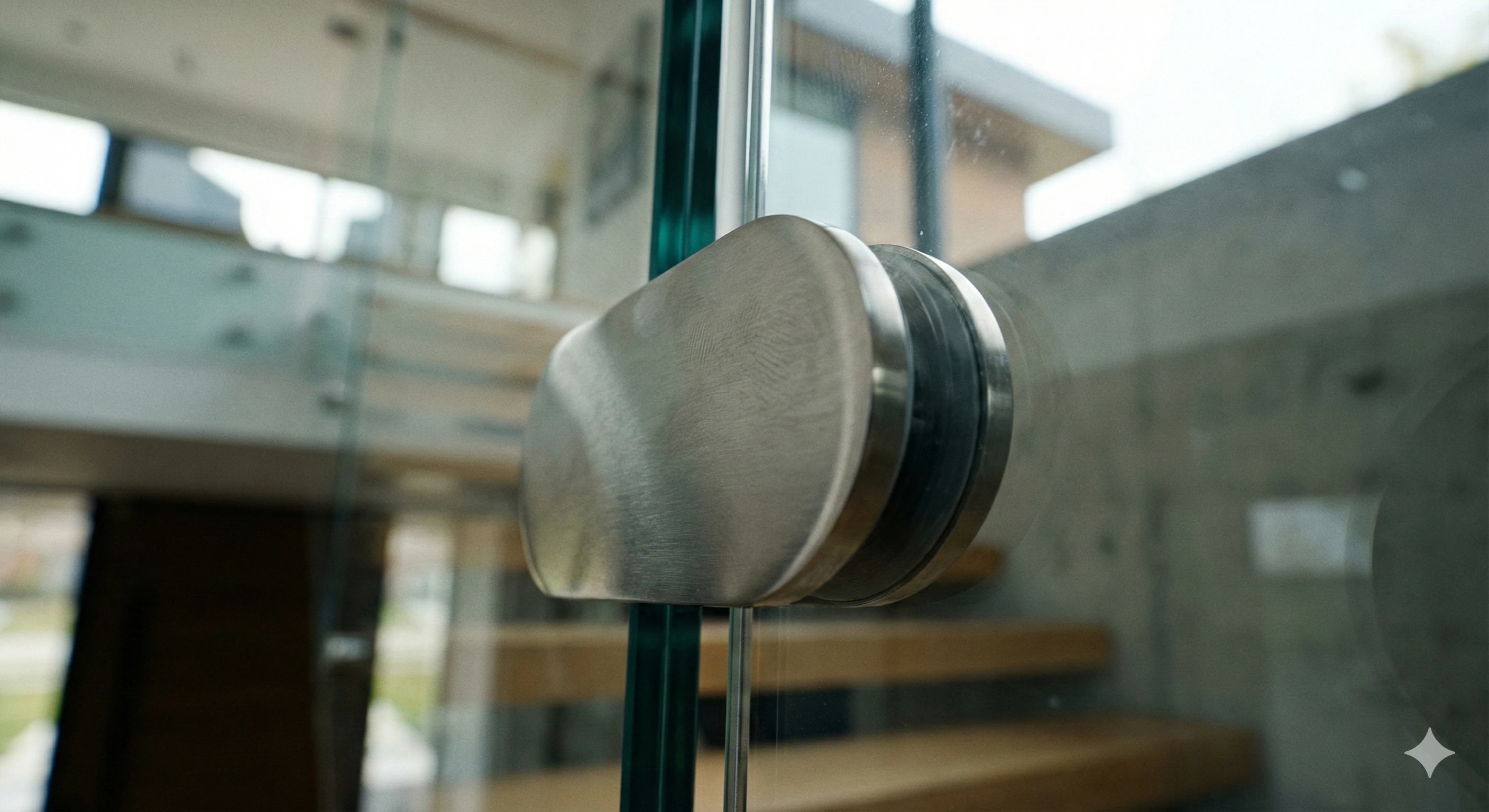
Take a close look at any modern glass railing or frameless shower enclosure. You’ll notice something interesting: a few slim metal clamps, often no bigger than the size of your hand, are securely holding large glass panels that can weigh over 20 kilograms. There are no bulky frames and no visible supports—just minimal hardware quietly doing all the work.
So how is this even possible? How can such small components hold heavy glass in place without the panels slipping or cracking under pressure?
A glass clamp—sometimes referred to as a glass clip or glass holder—is a precision-engineered piece of structural hardware designed to fix glass panels to posts, walls, or floors. But calling it “just a clamp” doesn’t really capture what’s happening. Behind this simple appearance is a carefully balanced combination of physics, material science, and safety design.
In this guide, we’ll walk through how glass clamps actually work, explain the friction-based gripping mechanism, and break down the built-in safety features that stop minor issues from turning into serious failures.
The Core Mechanism: The “Sandwich” Effect (Friction Grip)
At their core, glass clamps rely on two basic principles: compression and friction. The easiest way to picture this is like a sandwich press, with the glass acting as the filling between two firm, precisely shaped plates.
Here’s what happens in practice.
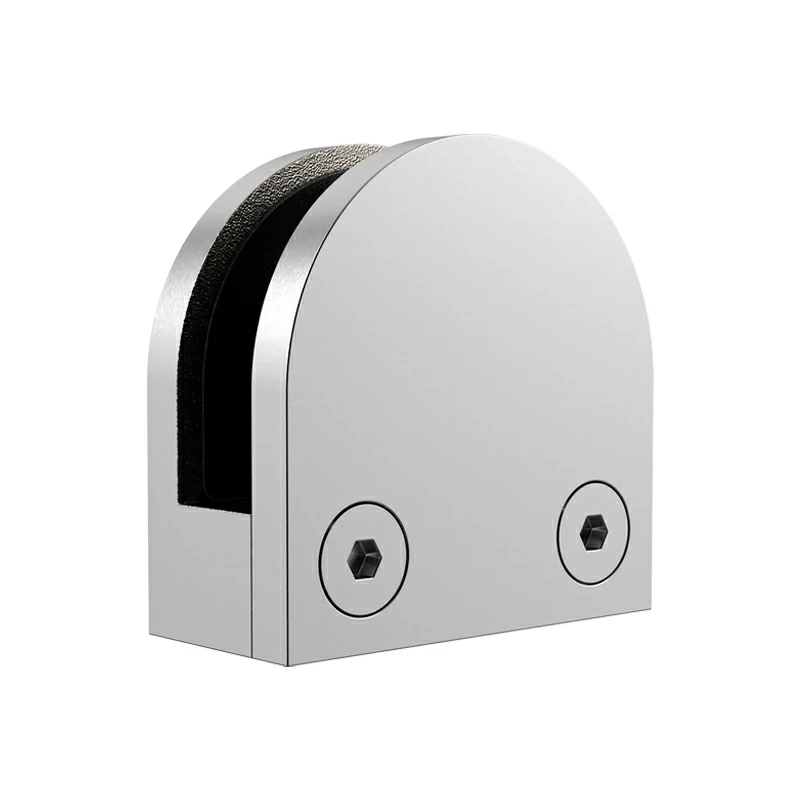
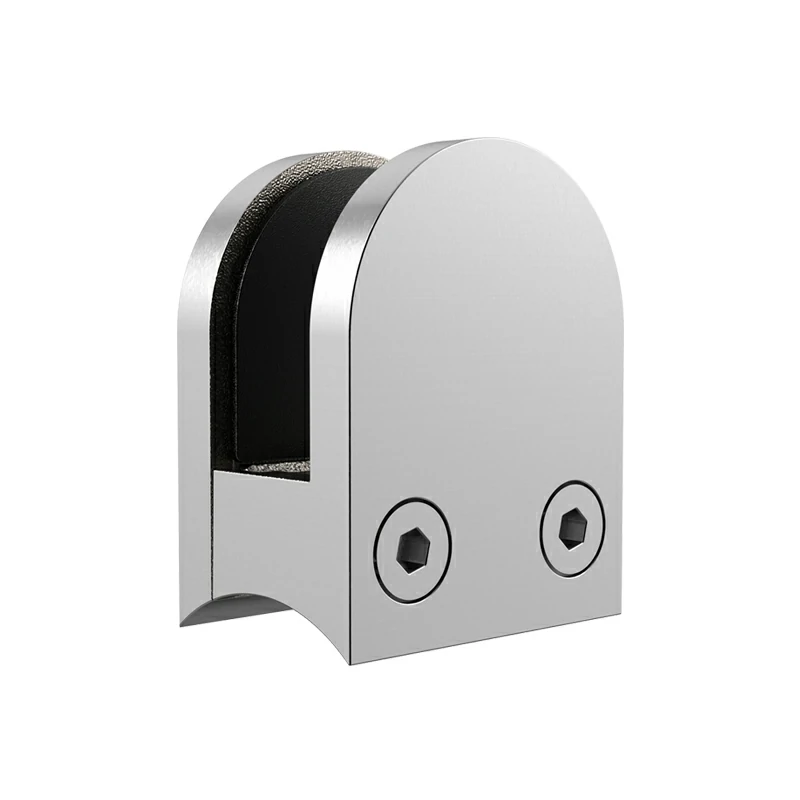
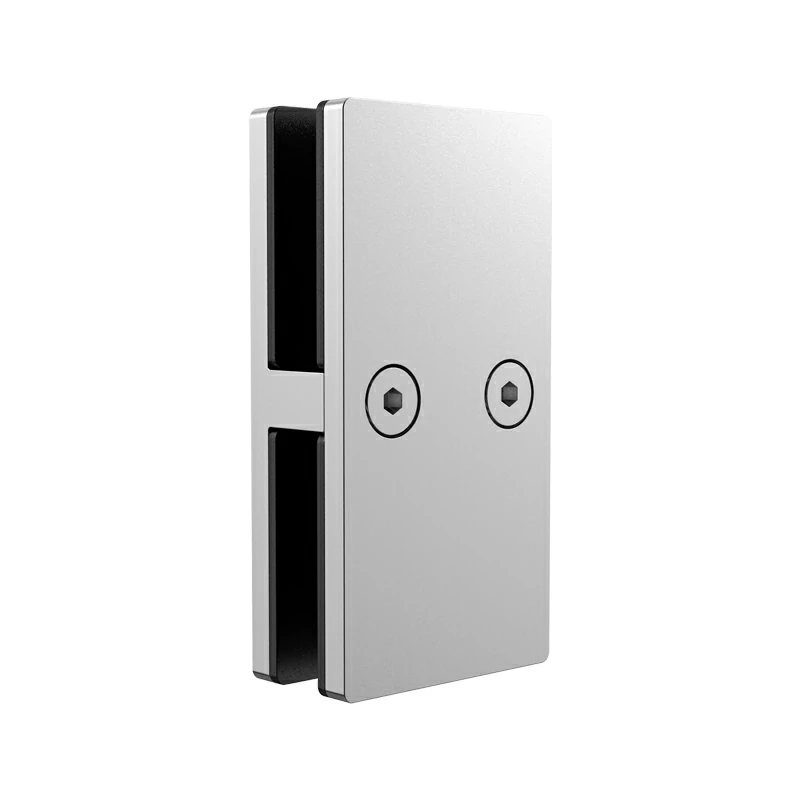
A typical glass clamp is made up of two main parts: a fixed back plate that attaches to a post or wall, and a removable front plate. When the glass panel is placed between them and the side screws are tightened—usually with an Allen key—you’re doing more than just closing the clamp. You’re applying a controlled clamping force.
As the screws are tightened, the front and back plates are pulled together, pressing evenly against the glass. This pressure generates friction on both sides of the panel. That friction counteracts gravity and keeps the glass from sliding down. Heavier glass simply requires more friction, which is why correct tightening torque is so important.
One crucial detail is often overlooked: the metal parts of the clamp never touch the glass directly. If they did, the glass would be extremely likely to crack due to concentrated pressure and vibration. This is where one of the most important components comes into play.
The Unsung Hero: Rubber Gaskets (EPDM)
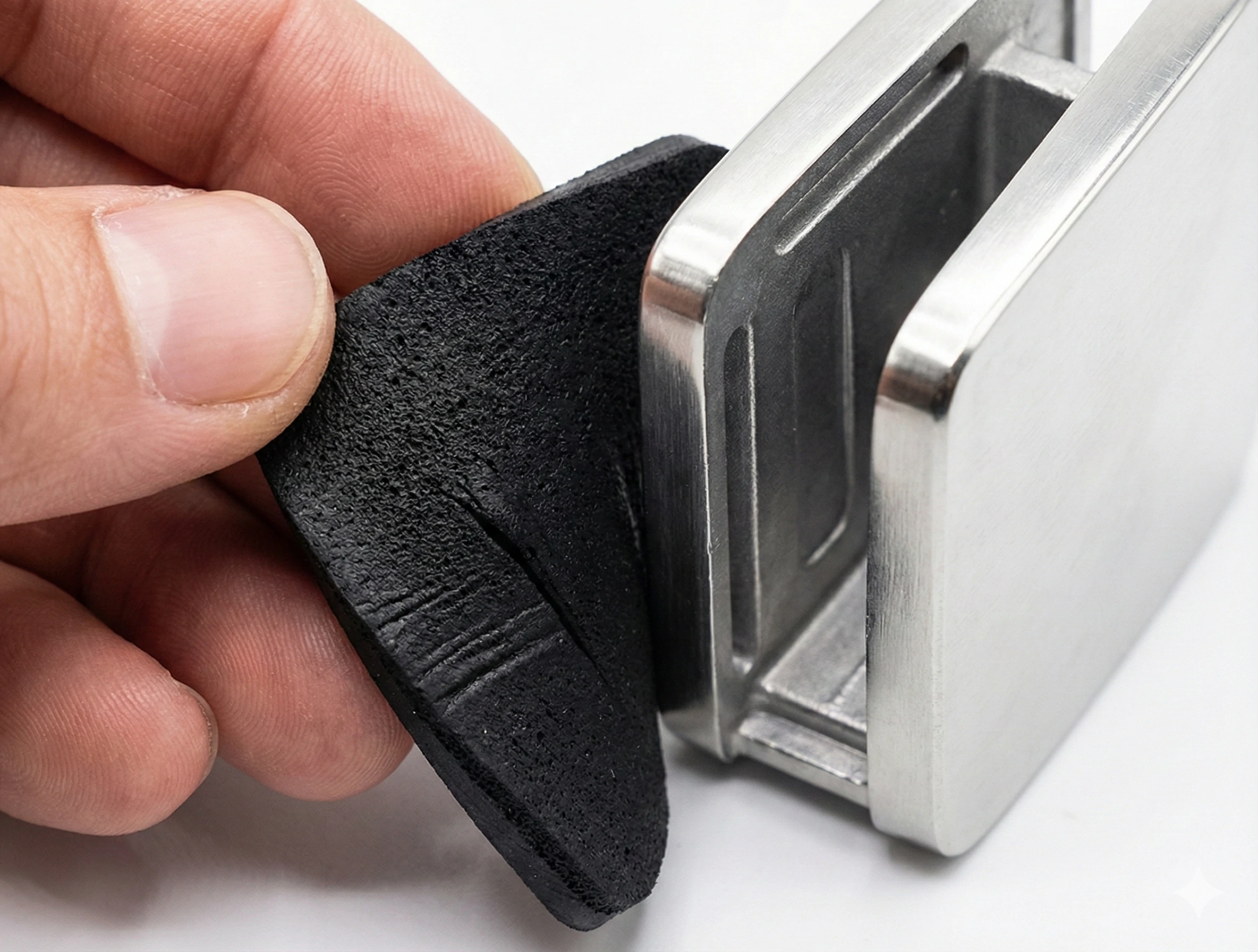
Those black rubber inserts inside a quality glass clamp are not optional accessories. They are essential to how the entire system works.
These inserts are usually made from EPDM rubber (Ethylene Propylene Diene Monomer) and serve two critical purposes.
Function 1: Maximum Grip
Rubber has a much higher coefficient of friction against glass than metal does. Polished stainless steel sliding on glass offers almost no resistance. Rubber, on the other hand, creates strong traction—similar to how tires grip the road. At a microscopic level, the rubber slightly conforms to the glass surface, creating countless small contact points that resist movement.
Function 2: Impact Protection
Glass performs well under uniform compression, but it is very sensitive to point loads and vibration. The rubber gaskets act as a buffer, absorbing minor movement, temperature-related expansion, and vibrations from wind or foot traffic. Without this cushioning layer, metal pressure alone would quickly lead to stress cracks that can spread across the panel.
The "Fit" Issue: Why Gasket Size Matters
This is where many DIY installations go wrong.
Glass clamp gaskets are manufactured for specific glass thicknesses—commonly 6mm, 8mm, 10mm, and 12mm. These sizes are not flexible guidelines; they are precise requirements.
If you install 8mm glass into a clamp fitted with 10mm gaskets, there will be roughly 2mm of unused space. The gasket won’t compress properly, friction drops dramatically, and the glass can slip. On the other hand, forcing thicker glass into a clamp designed for thinner panels can prevent the clamp from closing fully, reducing the available clamping force.
Always confirm that the glass thickness matches the gasket size specified by the clamp manufacturer. This single detail often separates a secure installation from a dangerous one.
The Safety Pin / Security Plate (Mechanical Support)
A reasonable concern is what happens over time. Screws can loosen slightly. Gaskets can age. Temperature changes and vibration can reduce friction.
So what prevents the glass from falling if the friction grip weakens?
That’s the role of the safety pin, also known as a security pin.
How the Safety Pin Works
The safety pin introduces a second, completely independent form of support.
During glass fabrication, a small hole—typically between 10 and 14mm—is drilled through the panel. Inside the clamp body, a steel pin aligns with this hole. Once installed, the glass physically rests on the pin.
Even if friction were to fail entirely—because of gasket wear, loose screws, or even removal of the front plate—the glass panel cannot drop. Gravity keeps it seated on the pin, and the panel would need to be lifted upward to disengage, which simply won’t happen on its own.
This highlights the key difference between friction-based retention and mechanical retention. Friction can change over time. Mechanical support is absolute.
The Alternative: Security Shelf Systems
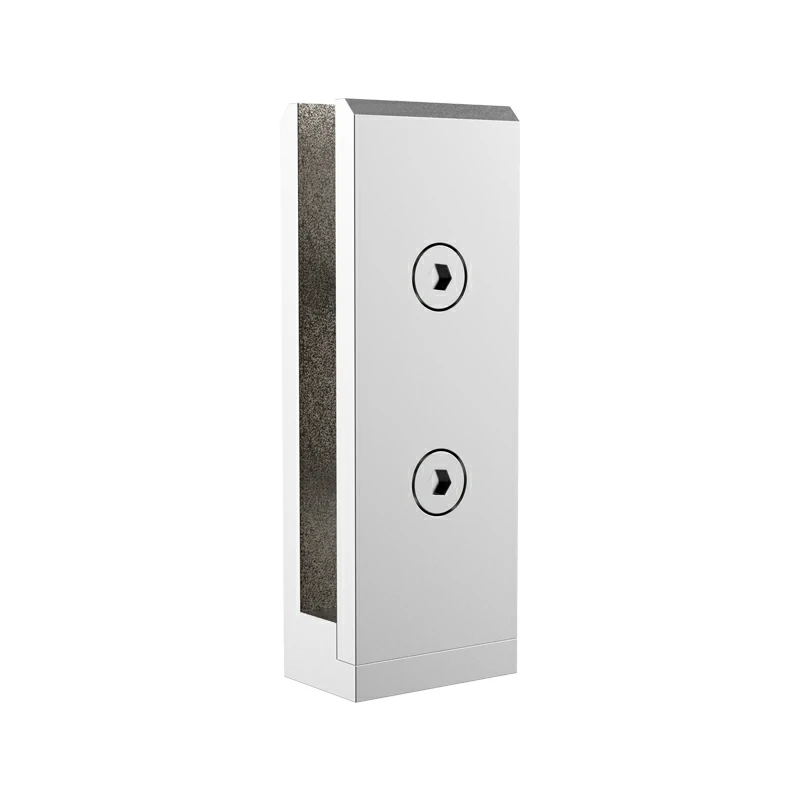
In some cases, drilling the glass isn’t possible. Tempered glass, for example, must be drilled before tempering. For these situations, some heavy-duty clamps include a built-in security shelf—a small ledge that supports the glass from below.
While this does provide mechanical support, it is generally considered less secure than a pin-through system, especially for vertical applications like railings and balustrades where a failure could cause serious injury.
For any application involving people’s safety, clamps with safety pins and professionally drilled glass are strongly recommended.
Mounting Interfaces: Flat Back vs. Round Back

Glass clamps don’t work in isolation—they must attach to posts, walls, or floor structures. The shape of the clamp’s back plate is designed to match the mounting surface.
Flat Back Clamps are intended for square or rectangular posts and flat walls. They typically fasten with countersunk screws or through-bolts into the supporting structure.
Round Back Clamps feature a curved mounting surface designed to fit cylindrical posts. Common sizes match standard pipe diameters, such as 42.4mm or 48.3mm. This curved interface helps distribute load evenly and prevents the clamp from twisting around the post.
Using the wrong back plate shape means the clamp won’t sit flush, which affects both appearance and structural reliability. Always confirm the post shape and size before selecting clamps.
Why Do Glass Clamps Sometimes Fail?
Understanding why failures happen is the best way to avoid them. Most issues come down to a few common mistakes.
Reason 1: Overtightening
Tightening a clamp harder does not make it safer. Excessive torque can crack the glass near the clamp line or drilled holes, or permanently crush the rubber gaskets. Once EPDM gaskets lose their elasticity, they no longer provide effective friction.
In most cases, the correct approach is hand-tightening with an Allen key, followed by about a quarter turn. You should feel firm resistance, but the clamp should not visibly bend or deform.
Reason 2: Wrong Gasket Size
This is one of the most frequent installation errors. A mismatch of even 2mm significantly reduces friction. Always match glass thickness and gasket size within a tolerance of about 0.5mm.
Reason 3: Material Choice and Corrosion
Not all clamps are made from the same materials. Indoor clamps are often produced from Zamak (zinc alloy), which performs well indoors but corrodes quickly outdoors. Over time, corrosion compromises strength and can lead to sudden failure.
For outdoor use—balconies, pool fencing, stairs, or coastal environments—316 marine-grade stainless steel is essential. The added molybdenum content dramatically improves resistance to corrosion and makes it suitable for safety-critical applications.
Conclusion
Glass clamps may look simple, but they rely on carefully engineered interactions between friction, compression, and mechanical backup systems.
The key points to remember:
Compression and rubber friction provide the main holding force
EPDM gaskets must match glass thickness precisely
Safety pins offer fail-safe mechanical support
Material selection matters—316 stainless is critical outdoors
Correct torque avoids both slipping and glass damage
Avoid mixing incompatible parts from different suppliers. Make sure your glass thickness, gasket size, and clamp specifications all align. When safety is involved, professional advice is always worth it—glass railings may look light, but they are structural elements.
Need help selecting the right clamps for your glass thickness? Explore our range of 316 stainless steel glass clamps, supplied with correctly sized EPDM gaskets and available in both flat-back and round-back options.
Frequently Asked Questions
Do I need to drill holes in the glass for clamps?
For railings and balustrades, drilling is strongly recommended. While some friction-only systems can work with security shelves, pin-through designs provide a much higher level of mechanical safety.
How tight should glass clamps be?
Tighten until the gasket is firmly compressed and resistance is clear, then add roughly a quarter turn. If tightening feels unusually easy or requires excessive force, recheck glass and gasket sizing.
Can I use indoor glass clamps outside?
No. Indoor clamps are commonly made from zinc alloys that corrode outdoors. For any exterior installation, 316 marine-grade stainless steel is required to ensure long-term structural safety.