 If you are planning a frameless glass railing, a sleek shower enclosure, or a modern office partition, the success of your project hinges on one small but critical piece of hardware: the glass clamp. These compact metal fittings hold glass panels securely in place without drilling holes through the glass itself, preserving both the structural integrity and the clean, modern aesthetic that makes glass installations so appealing.
This guide covers everything you need to know — what glass clamps are, the different types and sizes available, how to choose the right one, and how to install them properly. Whether you are a homeowner tackling a DIY project or a contractor specifying hardware for a commercial build, you will find practical, actionable information here.
Table of Contents
What Is a Glass Clamp?
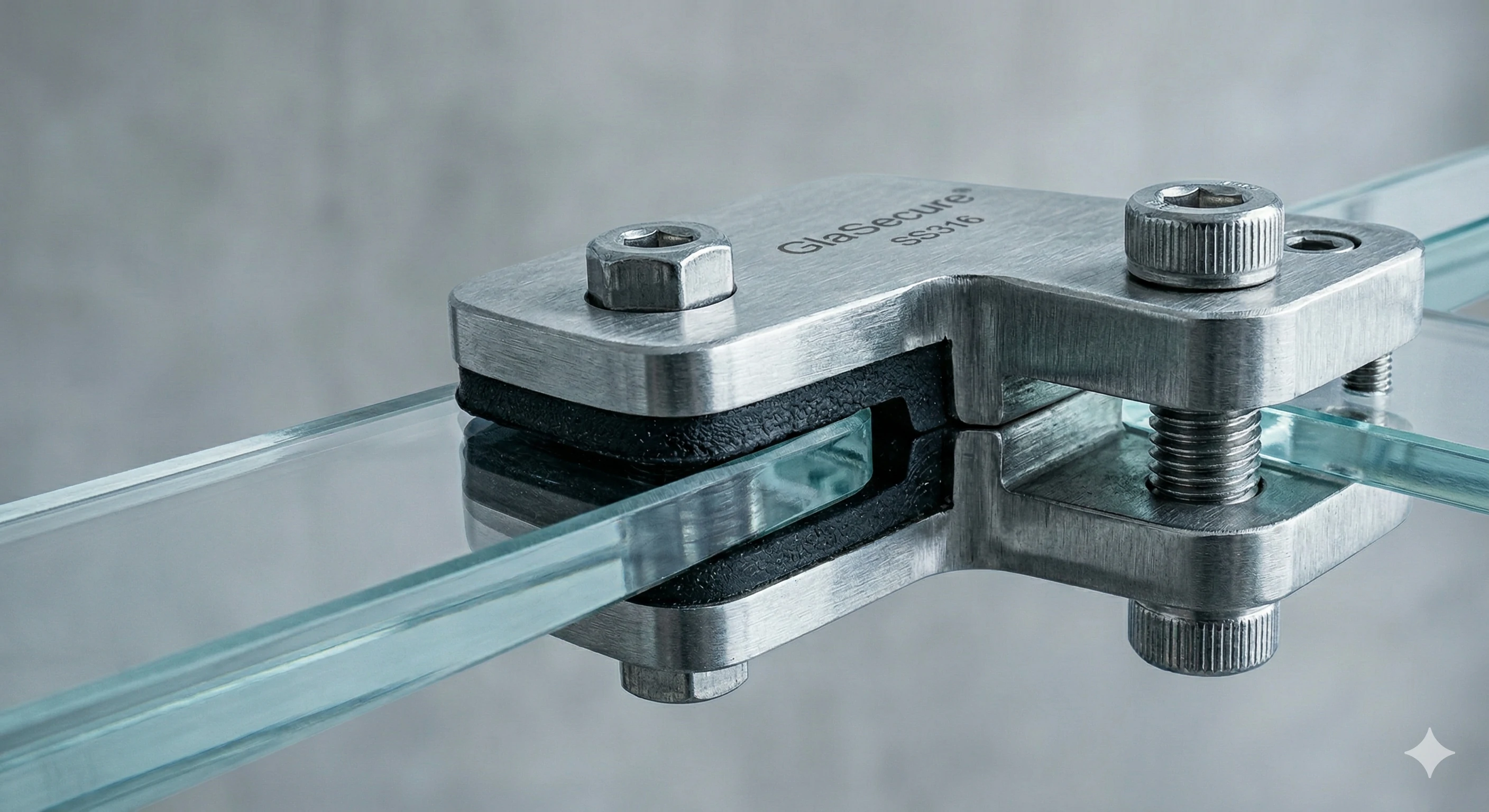
A glass clamp is a small but robust piece of hardware designed to secure glass panels to a support structure — such as a wall, post, floor, or another glass panel — without requiring holes to be drilled through the glass. The clamp grips the edge of the glass between two plates, using rubber or silicone gaskets to create a firm hold while protecting the glass surface from scratching or cracking under pressure.
Glass clamps are a core component in frameless and semi-frameless glass systems. You will find them on staircase railings, balcony balustrades, shower enclosures, office dividers, pool fences, and retail display cases. Their purpose is simple: hold the glass firmly and safely in position while remaining as visually unobtrusive as possible.
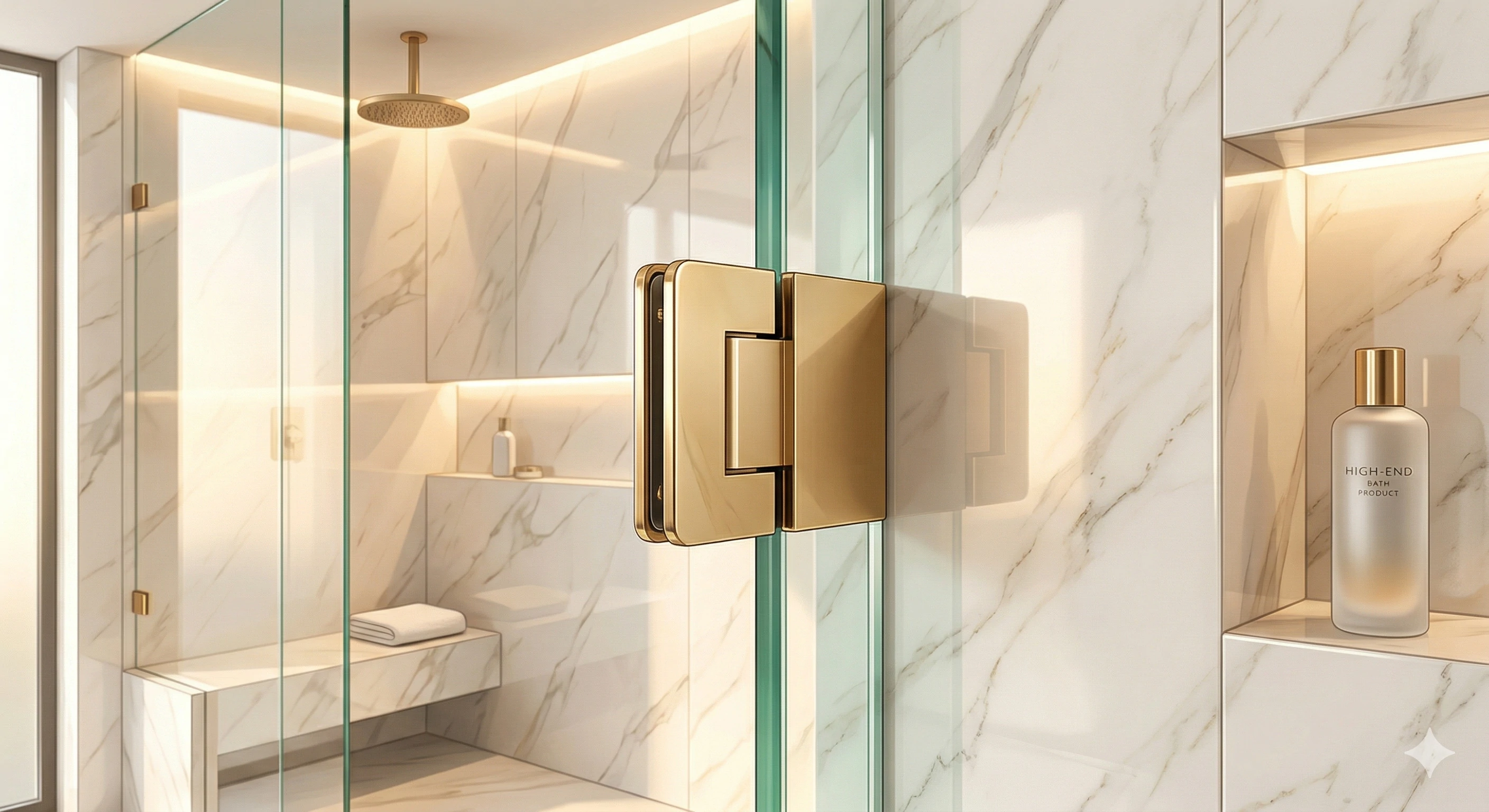
Unlike traditional framing systems that surround the entire perimeter of a glass panel, clamps attach only at specific points along the edge. This preserves the transparent, open look that makes glass such a popular choice in and interior design.
How Glass Clamps Work
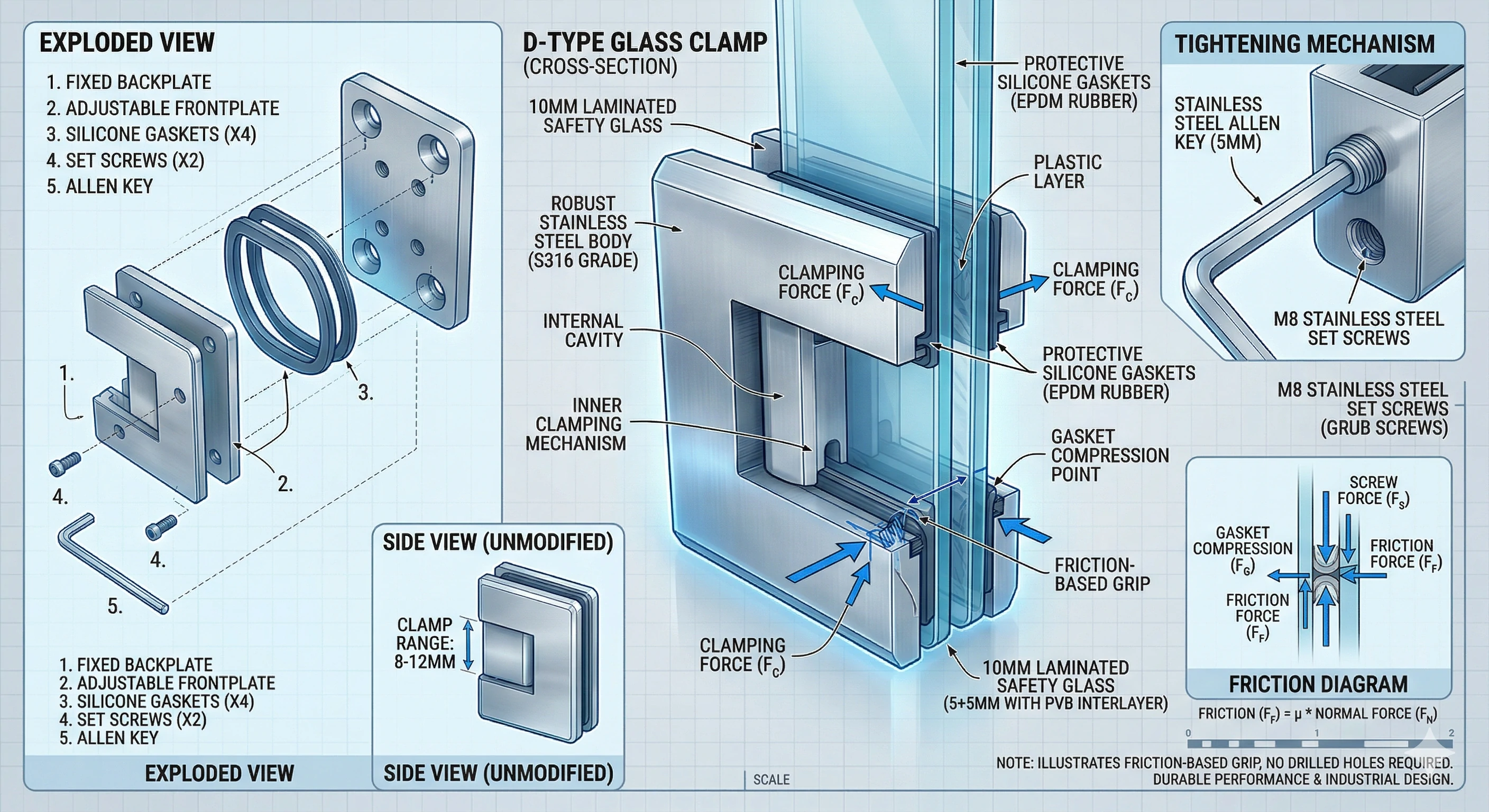
The operating principle behind a glass clamp is compression. Each clamp consists of a metal body — typically stainless steel, brass, or zinc alloy — with an internal cavity sized to accept a glass panel of a specific thickness. Inside that cavity, rubber or silicone gaskets line both sides. When you slide the glass into the clamp and tighten the set screws, the gaskets press against the glass surfaces, creating a snug, friction-based grip.
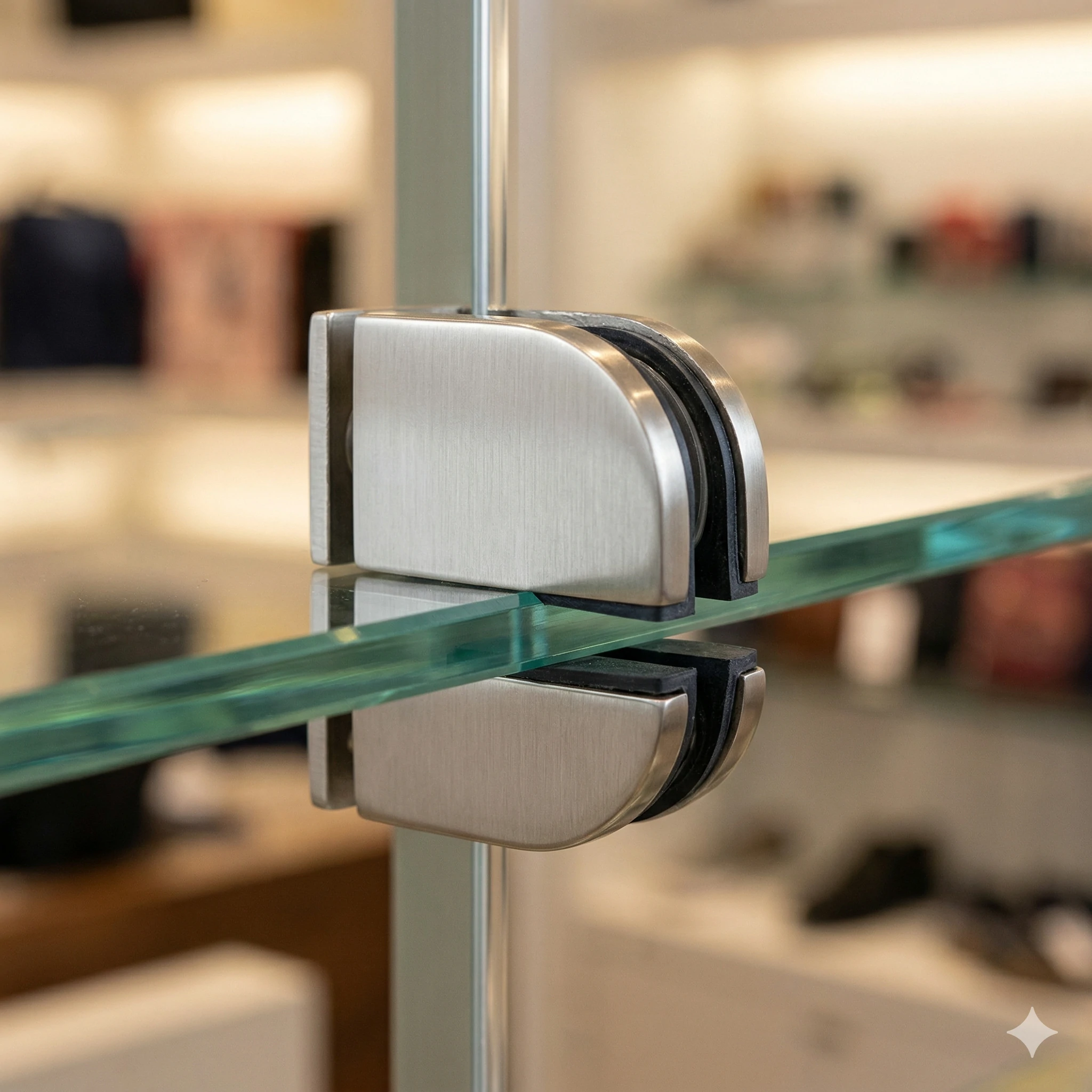
This design achieves two things simultaneously. First, the rubber gaskets distribute clamping pressure evenly, preventing the kind of concentrated stress points that could crack or chip the glass. Second, they create enough friction to hold the panel firmly against gravity, wind loads, and the lateral forces that people exert when they lean against a railing or push a door.
Because the glass is gripped rather than pierced, retains its full structural integrity. This is important because drilling holes in tempered glass after it has been heat-treated will cause it to shatter.
The Three Main Types of Glass Clamps
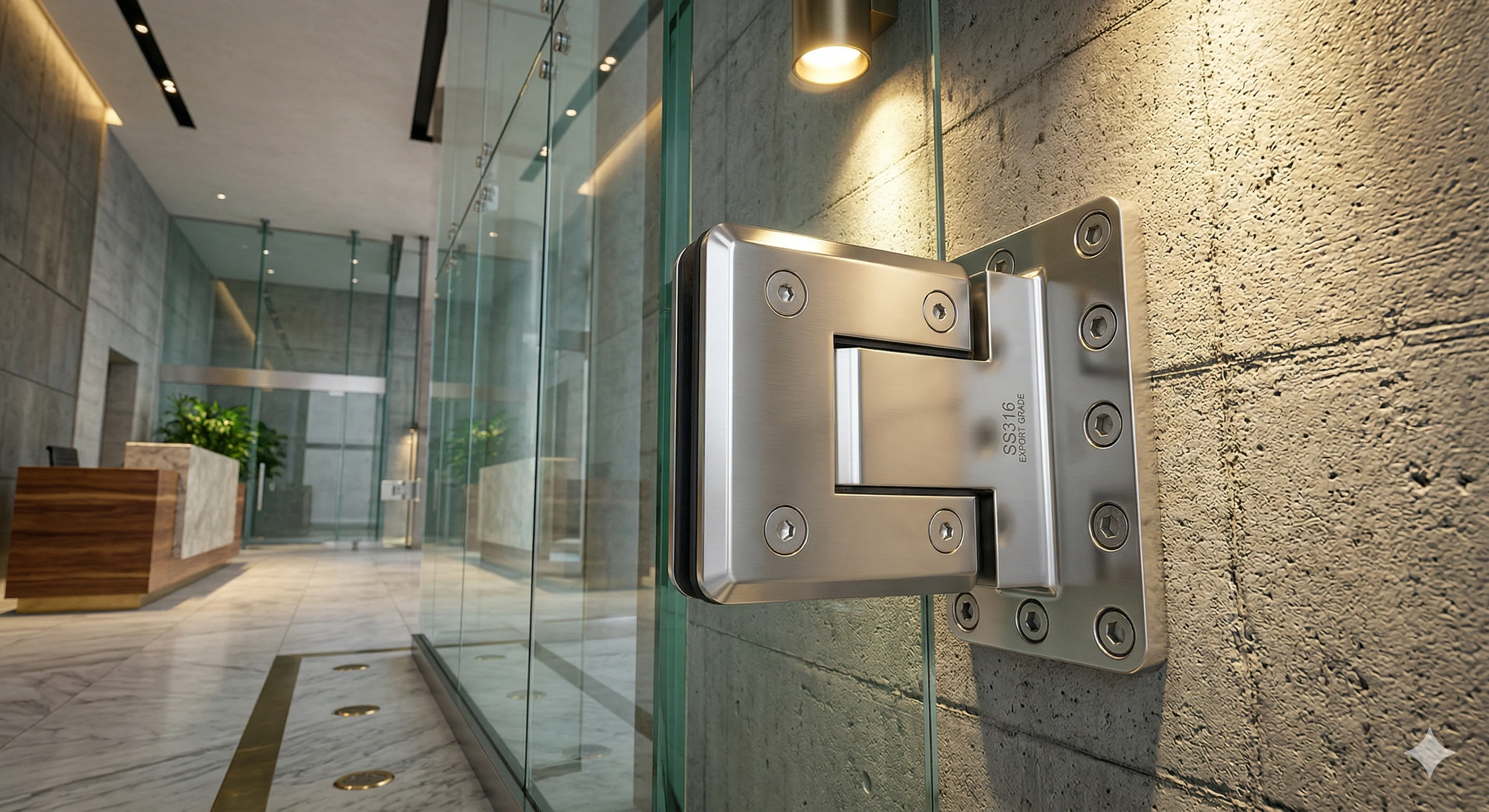
When people ask "what are the three types of clamps?" in the context of glass hardware, the answer refers to the three primary mounting configurations.
1. Glass-to-Wall Clamps
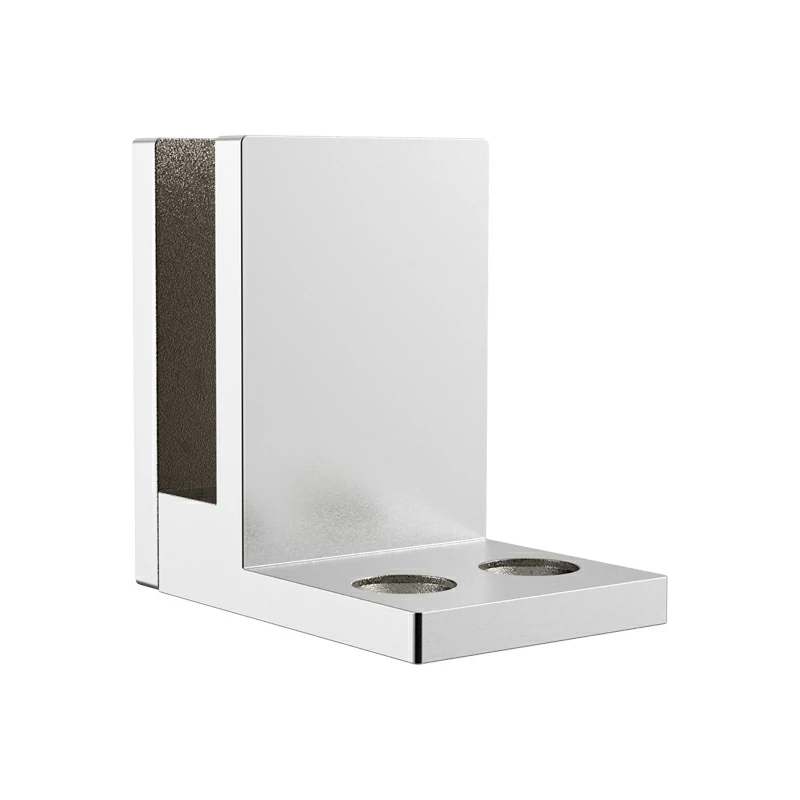
Glass-to-wall clamps connect one edge of a glass panel to a wall or other solid vertical surface. One side of the clamp is a flat plate that fastens to the wall with screws and anchors, and the other side grips the glass. These clamps are the most common choice for shower enclosures, bathroom partitions, and fixed glass panels adjacent to walls.
They provide a strong anchor point while keeping the visual profile minimal. You typically need two to four glass-to-wall clamps per panel, depending on the panel's size and weight.
2. Glass-to-Glass Clamps
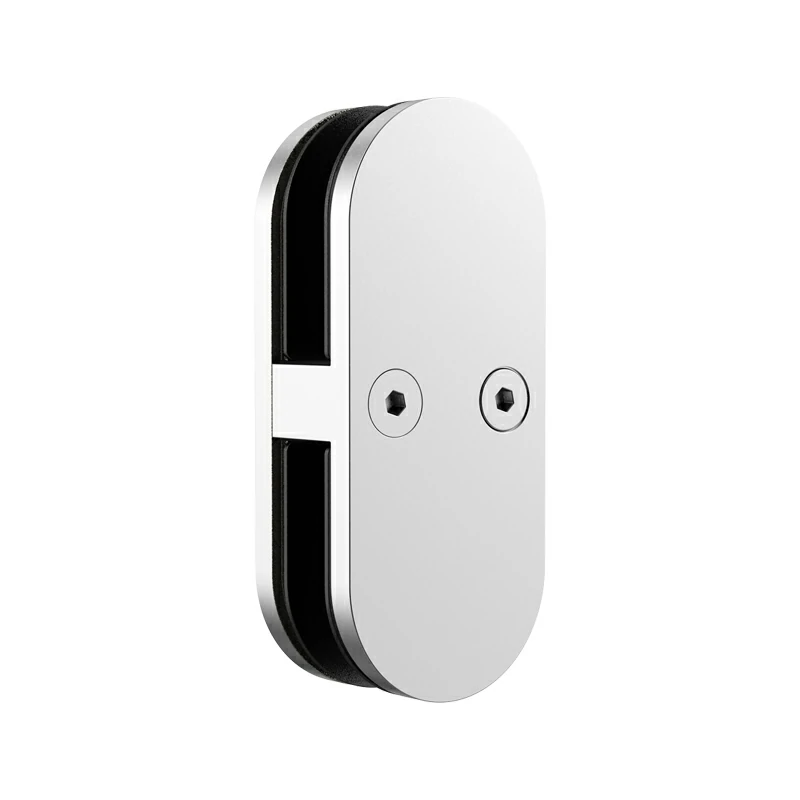
Glass-to-glass clamps join two glass panels directly to each other, eliminating the need for a metal post or support between them. Both sides of the clamp grip glass, creating a seamless, nearly invisible connection. They are available in 90-degree, 135-degree, and 180-degree configurations to accommodate corners, angled joins, and straight inline connections.
These clamps are widely used in where a fixed panel meets a door panel, in office partition walls, and in retail display cases. The 180-degree version creates a continuous glass wall effect that is especially popular in modern commercial interiors.
3. Glass-to-Floor (Base) Clamps
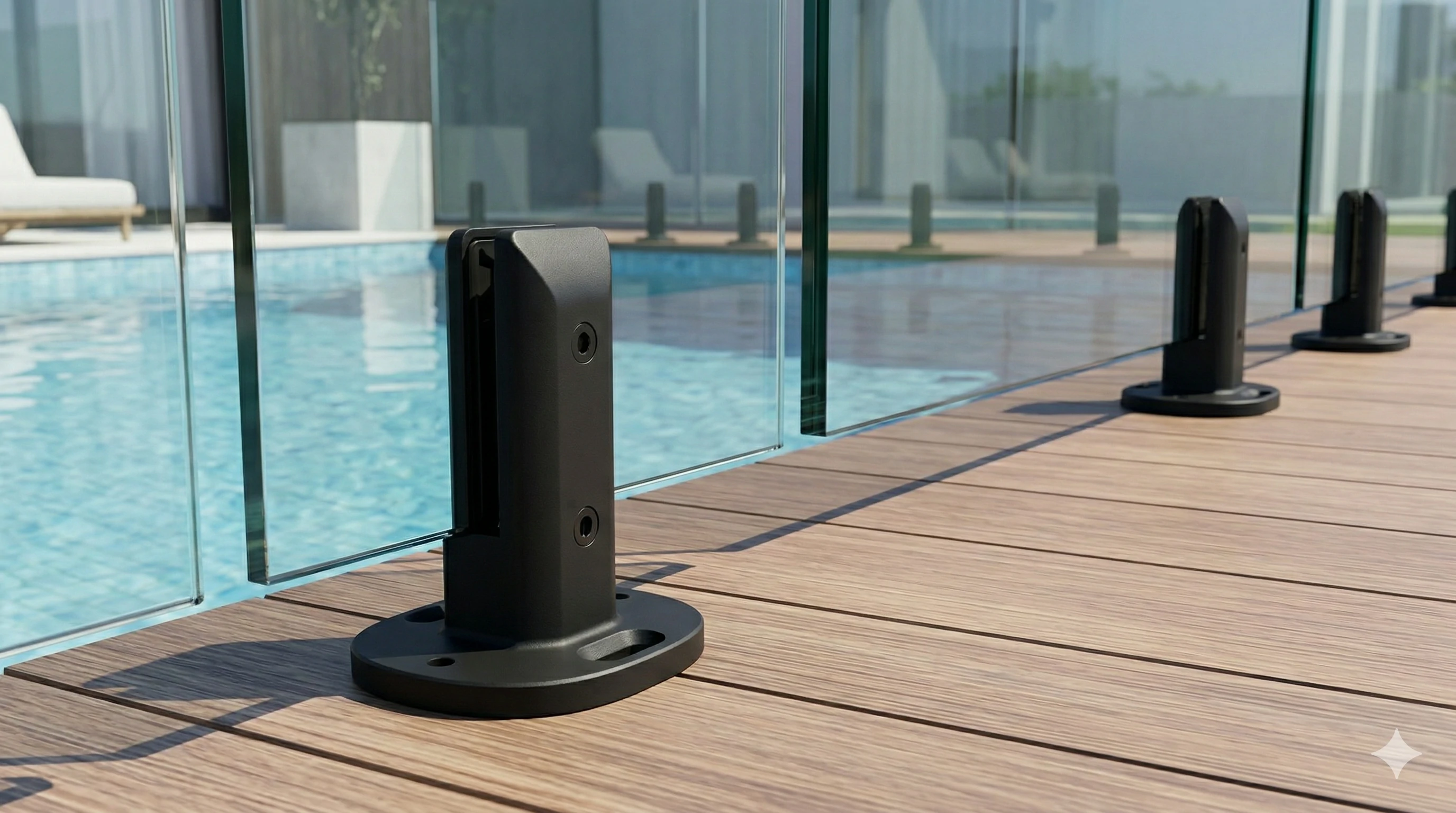
Base clamps secure the bottom edge of a glass panel to the floor, a deck surface, or a structural base. They provide the foundational support that prevents the panel from tipping or shifting laterally. Base clamps are critical in glass balustrade and railing systems where the glass panel acts as the primary barrier.
These clamps typically feature a wider footprint and heavier construction than wall or glass-to-glass clamps because they bear the full weight of the panel and must resist the horizontal loads specified by .
Glass Clamp Shapes and Styles
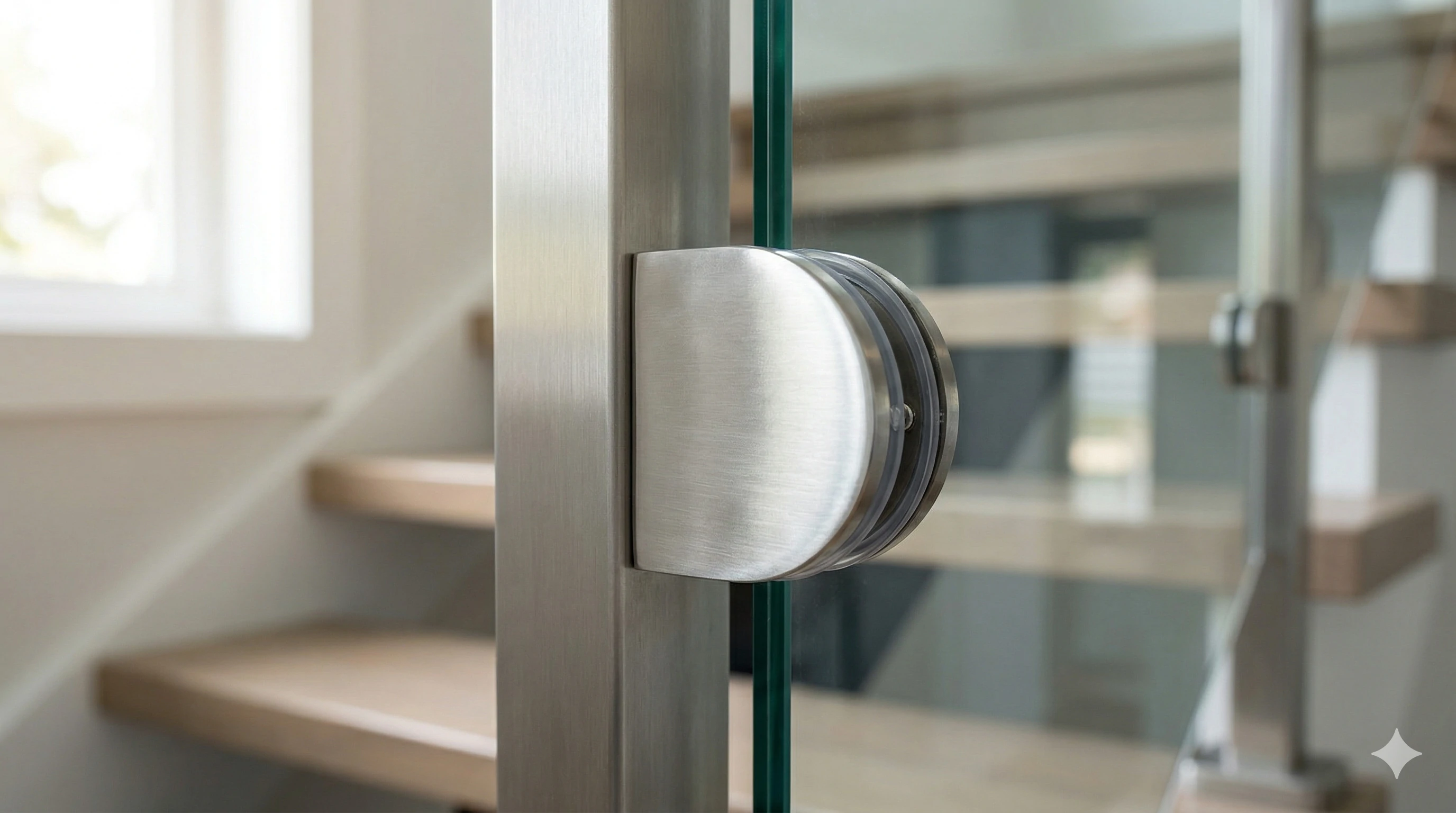
Beyond the three mounting types, glass clamps come in several distinct shapes, each offering a different aesthetic.

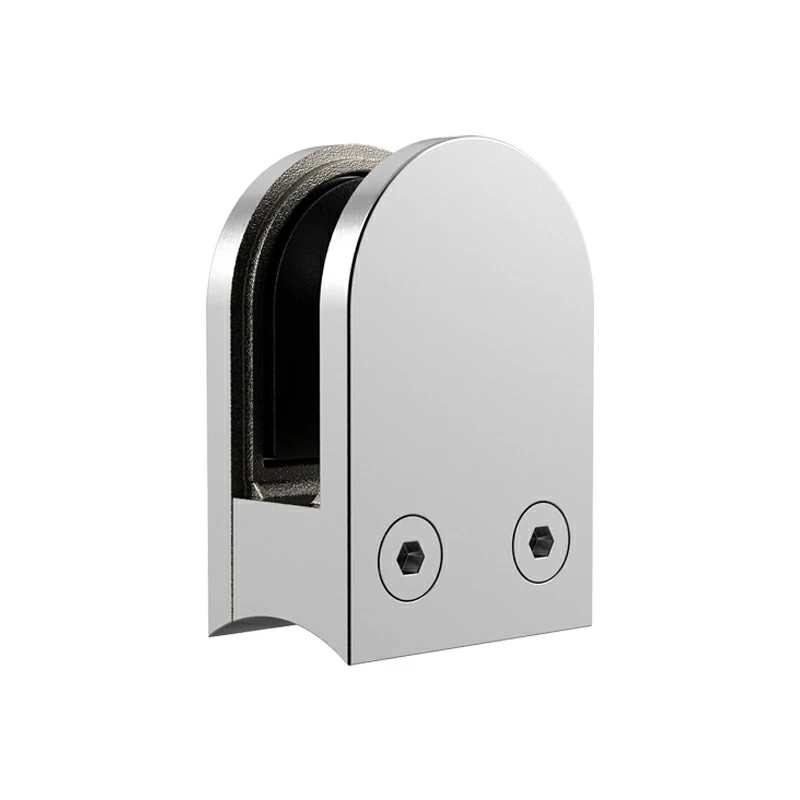
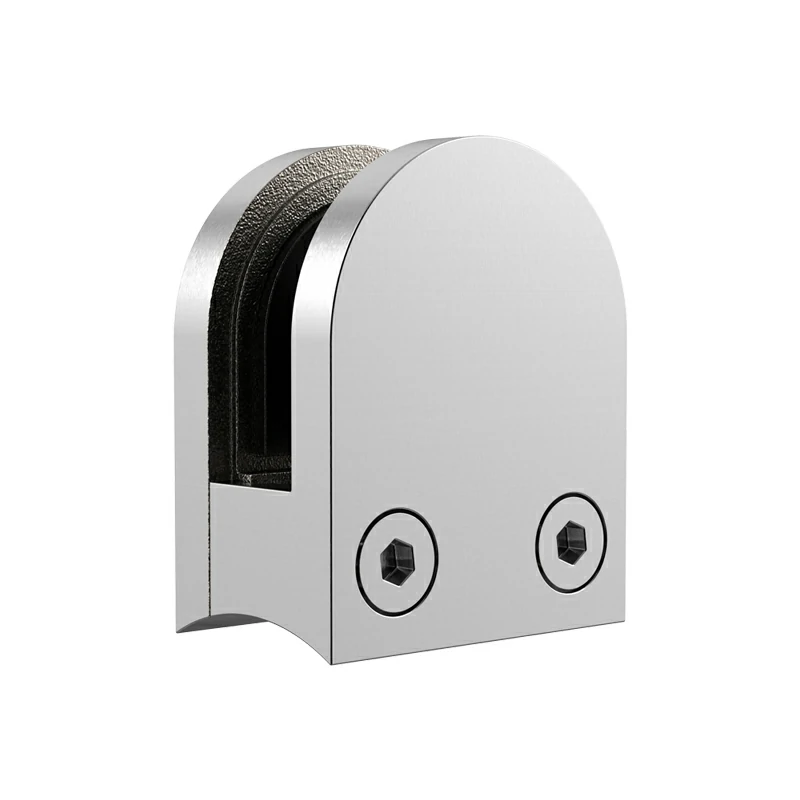
D-Shaped Clamps — The most popular style. They feature a flat back for mounting against a square post or wall and a curved front that creates a soft, modern silhouette. D-clamps are versatile enough for railings, balustrades, and shower enclosures alike.
Square Clamps — These have a boxy, geometric profile that suits contemporary and industrial design themes. They pair well with square-profile stainless steel posts and are a popular choice for glass partitions and retail displays.
Round Clamps — Featuring a fully circular profile, round clamps complement cylindrical posts and curved design elements. They are often used in high-end residential projects where a softer visual language is desired.
Adjustable Clamps — These clamps include a pivot or hinge mechanism that allows you to change the angle at which the glass sits. They are invaluable on sloped surfaces, custom-angle installations, and DIY projects where surfaces may not be perfectly level.
Corner Clamps — Purpose-built for joining glass panels at 90-degree or other angles, corner clamps are essential hardware for L-shaped or U-shaped railing layouts, corner shower stalls, and display cases.
Glass Clamp Sizes by Glass Thickness
One of the most critical factors when selecting a glass clamp is ensuring it matches the thickness of your glass panel. Using the wrong size will result in either a loose, unsafe grip or excessive pressure that could damage the glass. Most manufacturers offer clamps in three standard sizes corresponding to common glass thicknesses used in architectural applications.
Glass Clamps for 1/4" Glass (6mm)
Quarter-inch glass is the thinnest option commonly used in clamp-mounted applications. It is typically found in lightweight interior projects such as cabinet doors, display shelving, small decorative panels, and some interior partition panels that do not bear structural loads. Clamps for 1/4" glass are compact and lightweight, reflecting the lower weight and stress demands of thin glass installations.
Glass Clamps for 3/8" Glass (10mm)
Three-eighths-inch glass represents a middle ground between weight, cost, and strength. It is a popular choice for frameless shower enclosures, interior glass doors, office partitions, and low-height railings. Clamps designed for 3/8" glass are the most widely stocked size at hardware retailers and glass supply companies, and they come in the broadest variety of shapes and finishes.
Glass Clamps for 1/2" Glass (12mm)
Half-inch glass is the standard for structural applications including balcony railings, staircase balustrades, pool fences, and exterior barriers. Building codes in most jurisdictions require at least 1/2" tempered or laminated glass for any railing system that serves as a fall-protection barrier. Clamps for 1/2" glass are the most robust in the range, engineered to handle heavier panels and higher load requirements.
Some manufacturers also produce clamps that accommodate 5/8" (16mm) and 3/4" (19mm) glass for specialized heavy-duty or commercial applications. Additionally, adjustable clamps with interchangeable gaskets can accommodate a range of thicknesses, which is helpful when you are working across multiple glass sizes on the same project.
Materials and Finishes
The material and finish of your glass clamps affect durability, corrosion resistance, load capacity, and visual integration with your overall design.
Materials
Stainless Steel (Grade 304) — The standard choice for most indoor installations and sheltered outdoor use. Grade 304 offers excellent and strength at a reasonable price. It handles humidity well, making it suitable for bathroom and kitchen environments.
Stainless Steel (Grade 316) — The premium choice for outdoor, coastal, and marine environments. Grade 316 contains , which gives it superior resistance to salt spray and chlorine. If your installation is near the ocean, beside a pool, or fully exposed to weather, 316 stainless is the right material.
Brass — Prized for its warm, golden tone and excellent resistance to corrosion in wet environments. Brass clamps are common in high-end shower hardware and traditional or transitional design schemes. They are more expensive than stainless steel but offer a distinctive aesthetic.
Zinc Alloy — The most budget-friendly option. Zinc alloy clamps are lighter and less strong than stainless steel, but they accept very well and work fine for light-duty indoor applications like display cases and cabinet hardware. They are not recommended for structural or wet-area use.
Finishes
The most common finishes include polished chrome (bright and reflective), brushed or satin nickel (subtle and modern), matte black (bold and contemporary), polished brass (classic and warm), and satin brushed stainless (industrial and understated). When selecting a finish, match it to the other hardware in the space — door handles, faucets, towel bars, and light fixtures — for a cohesive look.
Common Applications
Glass clamps are used across a wide spectrum of residential and commercial projects. Here are the most common applications, along with the clamp types and glass thicknesses typically used for each.
Glass Balustrades and Railings — Staircase railings, balcony barriers, mezzanine guards, and deck railings. These typically require base clamps and/or post-mounted D-clamps with 1/2" tempered or laminated glass to meet building code requirements for fall protection.
Frameless Shower Enclosures — Fixed panels, doors, and return panels in walk-in showers, tub surrounds, and wet rooms. Shower installations commonly use glass-to-wall and glass-to-glass clamps with 3/8" or 1/2" tempered glass. Corrosion-resistant materials like 316 stainless steel or brass are essential in wet environments.
Frameless Shower Door Installation Guide
Office Partitions and Room Dividers — Floor-to-ceiling glass walls, meeting room enclosures, and open-plan dividers in commercial offices. These use a combination of base clamps, wall clamps, and glass-to-glass clamps, often with 3/8" or 1/2" tempered glass depending on panel height.
Pool Fencing — Glass pool fences are required by code in many regions. They use base-mounted or post-mounted clamps with 1/2" tempered glass and 316 stainless steel hardware to withstand chlorine exposure, UV radiation, and weather.
Retail Display Cases — Glass shelving, jewelry cases, and product showcases use smaller clamps — often for 1/4" or 3/8" glass — where the aesthetic needs to be as minimal and unobtrusive as possible.
Canopies and Awnings — Glass canopies over entrances and walkways use heavy-duty clamps and thick laminated glass engineered to handle snow loads and wind forces.
How to Choose the Right Glass Clamp
Selecting the correct glass clamp comes down to five key decisions.
1. Determine the mounting configuration. Are you attaching glass to a wall, to a post, to the floor, or to another piece of glass? This determines whether you need glass-to-wall, glass-to-glass, or base clamps.
2. Match the glass thickness. Verify the thickness of your glass panel and select clamps rated for that exact dimension. Never force glass into a clamp that is too small, and never use a clamp that is too large — the gaskets will not make proper contact and the panel will be insecure.
3. Choose the right material for the environment. Use 316 stainless steel for any outdoor, poolside, or coastal installation. Use 304 stainless steel or brass for bathrooms and kitchens. Reserve zinc alloy for dry, indoor, non-structural applications only.
4. Calculate the number of clamps needed. As a general rule, use a minimum of two clamps per unsupported edge of a glass panel. For taller panels (over 900mm), add additional clamps to distribute weight evenly. For heavier 1/2" glass, use more clamps than you would for thinner panels. Always consult the clamp manufacturer's load ratings and spacing recommendations.
5. Select a style and finish that fits the design. D-clamps are the safest all-around choice. Square clamps suit modern and industrial interiors. Choose a finish that complements existing hardware in the space.
How to Install Glass Clamps
Installing glass clamps requires precision, the right tools, and careful attention to torque. Overtightening is one of the most common mistakes and can crack the glass. Here is a step-by-step process.
Step 1: Plan and Measure. Determine the exact placement of each clamp based on the glass panel dimensions and the manufacturer's recommended spacing. Mark the mounting positions on the wall, post, or floor using a pencil and a . Double-check that all marks are level and evenly spaced.
Step 2: Drill and Anchor. Drill pilot holes at each marked location. Use anchors appropriate for the substrate — , concrete anchors for masonry, or direct screws into wood framing or steel posts. The anchor must be rated for the combined weight of the glass panel and the anticipated lateral load.
Step 3: Mount the Clamp Bodies. Secure each clamp body to the wall, post, or floor using the provided screws. Ensure each clamp is level and aligned with the others. At this stage, do not fully tighten the set screws — leave them loose enough to slide the glass in.
Step 4: Insert the Gaskets. Place the rubber or silicone gaskets into the clamp cavity. Most clamps come with gaskets pre-sized for a specific glass thickness. Confirm that the gaskets are seated properly and centered.
Step 5: Insert the Glass. With a helper, carefully lift the glass panel and slide it into the clamp cavities. Ensure the glass is seated fully and evenly in all clamps before tightening. Use a level to verify the glass is plumb and straight.
Step 6: Tighten the Set Screws. Using an Allen key or screwdriver, tighten the set screws gradually and evenly across all clamps. Work in a alternating pattern (similar to tightening lug nuts on a wheel) to apply pressure uniformly. Tighten until the glass is snug and cannot shift, but do not overtighten. The glass should not flex or creak under pressure.
Step 7: Final Inspection. Check that every clamp is secure, every gasket is properly seated, and the glass panel is level and stable. Gently test the panel by applying moderate hand pressure to confirm it does not move.
How to Mount a Piece of Glass
Mounting glass is not limited to clamps alone. Depending on the application, there are several methods available, and understanding your options helps you choose the right approach.
Glass Clamps — The most common method for structural and semi-structural glass installations. Clamps grip the glass edge without drilling, preserving the panel's integrity. Best for railings, shower enclosures, and partitions.
U-Channels and J-Channels — Metal channels that run along the top and/or bottom edge of the glass, holding it in a continuous track. U-channels create a flush-mount appearance against a wall or ceiling. J-channels provide a slimmer profile. Both are popular for glass walls and room dividers.
Standoff Mounts — Cylindrical metal hardware that attaches through holes drilled in the glass, spacing the panel approximately one inch off the wall. Standoffs create a floating effect with visible dimensionality. They require pre-drilled tempered glass and are common for signage, glass art, and decorative wall panels.
CRL Architectural Standoff Hardware
Z-Clips — Concealed mounting brackets that allow the glass to sit flush against a wall with no visible hardware. The clip attaches to the wall, and a mating clip adheres to the back of the glass panel. Z-clips work well for back-painted glass wall cladding and decorative panels.
Mirror Mastic and Adhesive — For lightweight, non-structural applications like mirrors and decorative glass panels, specialized adhesive can bond the glass directly to the wall. This method provides a completely hardware-free appearance but is not suitable for panels that need to be removed or repositioned.
Edge Grip Hardware — Similar to standoffs but gripping the edge of the glass instead of passing through it. Edge grips require no holes and create a floating, frameless look. They are well suited for glass art, signage, and shelving.
For structural installations such as railings and barriers, clamps or base shoes are almost always required to meet building code load requirements. Adhesive-only mounting is never acceptable for fall-protection applications.
What Is a Glass Balustrade?
A glass balustrade is a protective barrier made from glass panels, used to prevent falls from elevated areas such as balconies, staircases, mezzanines, decks, and terraces. The term "balustrade" refers to any railing system that guards an open edge where there is a change in level. When glass is used as the primary barrier material instead of traditional wood, metal, or stone balusters, the result is an unobstructed, transparent barrier that allows light to pass through and preserves views.
Glass balustrades can be fully frameless — where the glass panels are the structural element, held in place by base shoes or clamps — or semi-frameless, where the glass sits within a minimal metal frame or is supported by stainless steel posts with clamp fittings.
Building Code Requirements
Glass balustrades are life-safety components and are subject to strict building code requirements. While codes vary by jurisdiction, the general requirements include:
Minimum height: Residential interior railings typically require a minimum height of 36 inches (914mm). Residential balconies and exterior railings usually require 42 inches (1067mm). Commercial applications generally require 42 inches (1067mm) or more.
Glass type: Most codes require tempered (toughened) safety glass as a minimum. Many jurisdictions now mandate laminated tempered glass for balustrade applications, particularly in high-rise and commercial buildings, because laminated glass holds together if a panel breaks rather than shattering and leaving an open gap in the barrier.
Load resistance: Balustrade systems must withstand specified lateral loads — typically 200 pounds of concentrated force at the top edge and 50 pounds per linear foot of uniform horizontal load under the International Building Code (IBC).
International Building Code Section 1607.8
Infill spacing: The glass panel and framing must not allow a 4-inch sphere to pass through at any point, preventing small children from slipping through gaps.
Always consult your local building authority before beginning a glass balustrade project. Code requirements can vary significantly between states, counties, and municipalities.
Top Glass Clamp Brands
Several manufacturers have established strong reputations for quality, selection, and reliability in the glass clamp market.
CRL (C.R. Laurence)
CRL is the dominant name in architectural glass hardware in North America. Their glass clamp catalog is extensive, covering every mounting type, glass thickness, shape, and finish. CRL clamps are specified by architects and contractors on projects ranging from residential bathrooms to high-rise commercial lobbies. Their product line includes the popular "Geneva" and "Pinnacle" series, and they maintain a nationwide distribution network with fast availability. If you search for "CRL glass clamp," you will find one of the widest selections available from a single manufacturer.
Inline Design
Inline Design specializes in modern stainless steel glass railing hardware. Their clamps are known for clean, minimalist profiles and are available in both 304 and 316 stainless steel. Inline Design is a popular choice for residential deck and balcony railing projects.
FHC (Frameless Hardware Company)
FHC focuses specifically on frameless shower and glass hardware. Their wall-mount and glass-to-glass clamps are designed for bathroom environments, with corrosion-resistant finishes and gaskets engineered for wet-area durability.
Portals Hardware
Portals Hardware offers a curated selection of glass-to-glass clamps and other shower and railing hardware, with an emphasis on design-forward finishes including matte black, satin brass, and polished nickel.
When choosing a brand, prioritize manufacturers who publish load ratings, provide detailed installation instructions, and offer gaskets matched to standard glass thicknesses. Avoid unbranded imports that lack documentation, as load capacity and material grade may be unreliable.
Heavy-Duty Glass Clamps
For large, thick, or tall glass panels — and for installations exposed to high wind loads, crowd pressure, or seismic forces — standard clamps may not provide sufficient holding power. Heavy-duty glass clamps are engineered with thicker body construction, larger gasket contact area, multiple set screws, and higher-grade materials to handle demanding structural requirements.
Heavy-duty clamps are the right choice when:
-
The glass panel exceeds 1/2" in thickness.
-
The panel height exceeds 1200mm (approximately 4 feet).
-
The installation is on an exterior balcony, rooftop, or high-rise building.
-
The system must comply with commercial building code load requirements.
-
The installation is in a high-traffic public area such as a stadium, transit station, or shopping center.
When specifying heavy-duty clamps, request engineering data from the manufacturer including load capacity ratings, deflection limits, and recommended spacing intervals. For high-rise and commercial projects, a should review the clamp selection and layout as part of the overall railing system design.
Commercial Glass Railing Design Guide
Maintenance and Care
Glass clamps are low-maintenance hardware, but periodic attention keeps them looking good and performing safely.
Regular cleaning: Wipe clamps with a soft cloth and mild soap and water every few weeks, or more frequently in shower and poolside environments. Avoid abrasive cleaners, steel wool, or harsh chemicals that can scratch finishes or degrade gaskets.
Inspect gaskets annually: Check rubber gaskets for signs of wear, cracking, or compression set. Gaskets that have hardened or deteriorated should be replaced to maintain a secure grip on the glass.
Check set screw torque: Vibration, thermal cycling, and settling can cause set screws to loosen over time. Periodically check that set screws are snug (not overtightened) using the appropriate Allen key.
Address corrosion promptly: Even high-grade stainless steel can develop surface staining in harsh environments. If you notice rust spots or discoloration, clean with a stainless steel-specific cleaner and address the source of the corrosion (such as contact with dissimilar metals or exposure to concentrated chemicals).
FAQ
What is a glass clamp used for?
A glass clamp is used to secure glass panels in place for installations such as railings, balustrades, shower enclosures, office partitions, pool fences, and display cases. The clamp grips the edge of the glass using compression and rubber gaskets, eliminating the need to drill holes through the glass.
What are the three types of glass clamps?
The three primary types are glass-to-wall clamps (connecting glass to a solid surface), glass-to-glass clamps (connecting two glass panels directly), and glass-to-floor or base clamps (securing the bottom of a glass panel to a floor or structural base).
How do I know what size glass clamp I need?
Measure the thickness of your glass panel. Glass clamps are manufactured for specific thicknesses — the most common are 1/4" (6mm), 3/8" (10mm), and 1/2" (12mm). Select a clamp rated for your exact glass thickness. Using the wrong size compromises safety.
How many glass clamps do I need per panel?
As a general guideline, use a minimum of two clamps per unsupported edge. For panels taller than 900mm, add additional clamps. For 1/2" glass or heavier panels, increase the number of clamps to distribute weight. Always follow the manufacturer's recommended spacing.
Can I install glass clamps myself?
For small, non-structural projects like a glass shelf or a light interior panel, DIY installation is feasible if you are comfortable with basic tools and precise measurement. For any structural application — railings, balustrades, pool fences, shower enclosures — professional installation is strongly recommended to ensure safety, code compliance, and warranty coverage.
What is a glass balustrade?
A glass balustrade is a safety barrier made from glass panels, used on staircases, balconies, decks, and mezzanines to prevent falls while maintaining open sightlines and light flow. Glass balustrades must comply with building codes for minimum height, glass type, and load resistance.
How do I mount a piece of glass to a wall?
The method depends on the application. For structural panels, use glass clamps or U-channels. For decorative panels and glass art, options include standoff mounts (through drilled holes in the glass), edge grip hardware, Z-clips for a flush look, or mirror mastic adhesive for lightweight pieces. Always choose a mounting method rated for the weight and intended use of the panel.
What is the difference between a glass clamp and a glass clip?
In practice, the terms are used interchangeably. Both refer to hardware that grips and secures a glass panel. Some manufacturers use "clip" for smaller, lighter fittings and "clamp" for more robust hardware, but there is no industry-standard distinction.
Where can I buy glass clamps?
Glass clamps are available from architectural glass hardware suppliers (such as CRL and Inline Design), shower hardware retailers, and general home improvement stores. For specialty sizes, heavy-duty clamps, or specific finishes, purchasing from a dedicated glass hardware supplier typically provides the best selection and product documentation.
Are glass clamps suitable for outdoor use?
Yes, provided you select the correct material. Grade 316 stainless steel is the recommended material for all outdoor installations due to its superior corrosion resistance. For coastal or poolside environments, 316 stainless steel is essential. Zinc alloy and some brass finishes are not suitable for sustained outdoor exposure.
Conclusion
Glass clamps may be small, but they carry enormous responsibility — holding your glass panels securely, safely, and beautifully for years to come. The right clamp depends on your mounting configuration, glass thickness, environment, and design vision. Take the time to match these variables carefully, invest in quality hardware from reputable manufacturers, and follow proper installation practices.
If you are starting a glass railing, shower, or partition project, begin by measuring your glass thickness and identifying the mounting type you need. From there, select clamps in the correct material and finish, calculate your quantities, and either follow the installation steps outlined above or hire a qualified glazier for structural work.
Your glass installation is only as strong as the hardware holding it in place. Choose wisely, install precisely, and enjoy the clean, modern result.
Shop Glass Clamps
Get Free Quote
Footnotes
1. Overview of contemporary architectural styles and their structural elements.
2. Learn about the manufacturing and properties of toughened safety glass.
3. General information regarding the design and construction of modern shower stalls.
4. The International Code Council develops model codes and standards for construction.
5. Scientific explanation of material degradation and how specific alloys prevent it.
6. Chemical element widely used to enhance the strength and resistance of steel alloys.
7. Overview of the surface covering process used to deposit metal onto conductive surfaces.
8. A tool designed to indicate whether a surface is perfectly horizontal or vertical.
9. Details on the mechanics and load capacities of hollow-wall drywall anchors.