Introduction
Your deck was supposed to be a sanctuary. A place for slow morning coffees, long dinners under string lights, and weekend gatherings that stretch into the evening. But then the wind shows up. Napkins take flight, candles refuse to stay lit, and within twenty minutes your guests are politely suggesting you move everything inside. A beautiful, sunny day — effectively cancelled by a breeze.
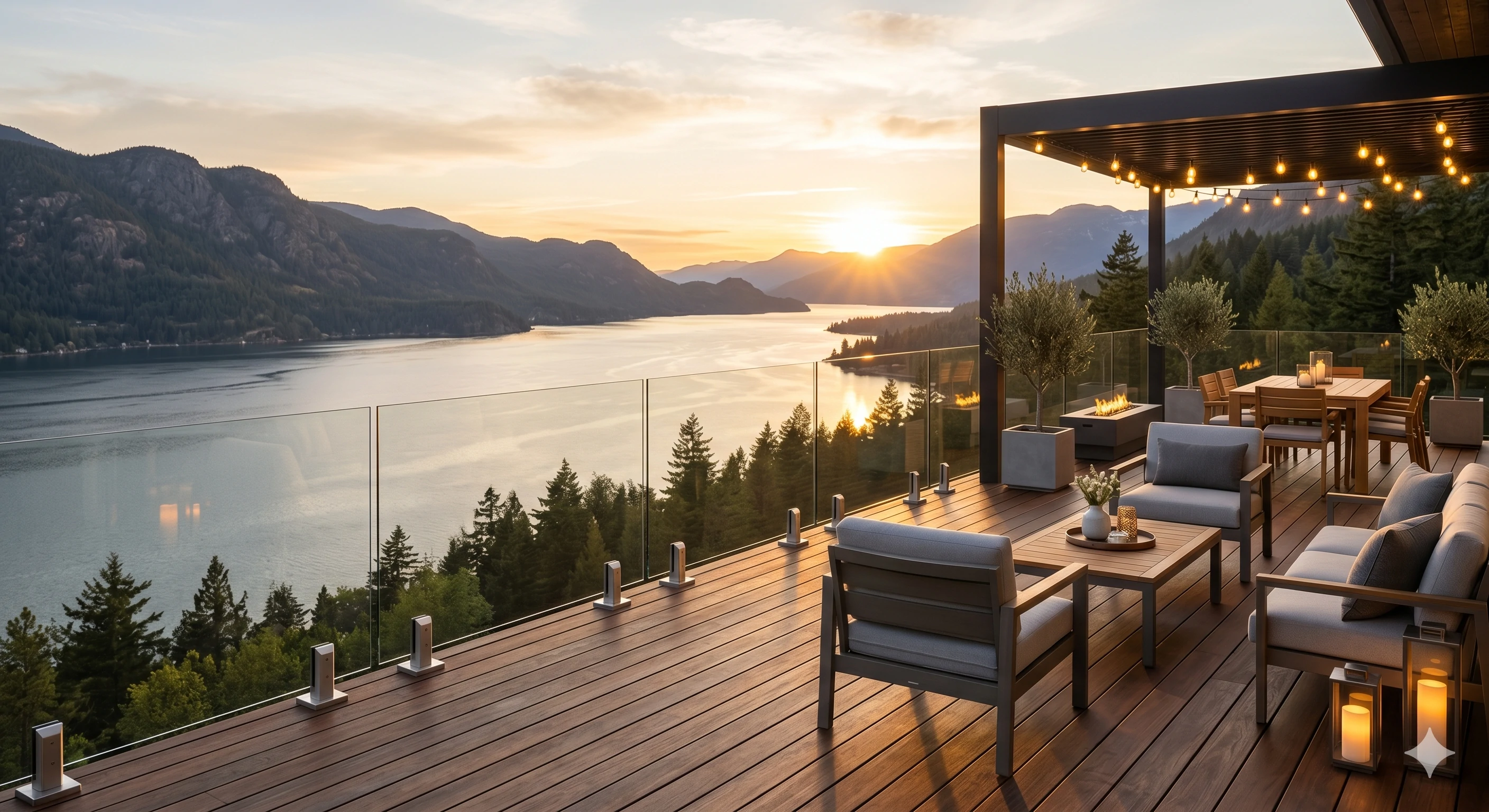
The obvious fix is to block the wind. The problem is that most ways of doing it also block everything else you love about the space. A solid privacy wall turns an airy patio into a shadowed corridor. A tall wooden fence swallows the view you paid a premium to have. Suddenly you've traded one problem (too much wind) for another (a dark, boxed-in space that feels smaller than before).
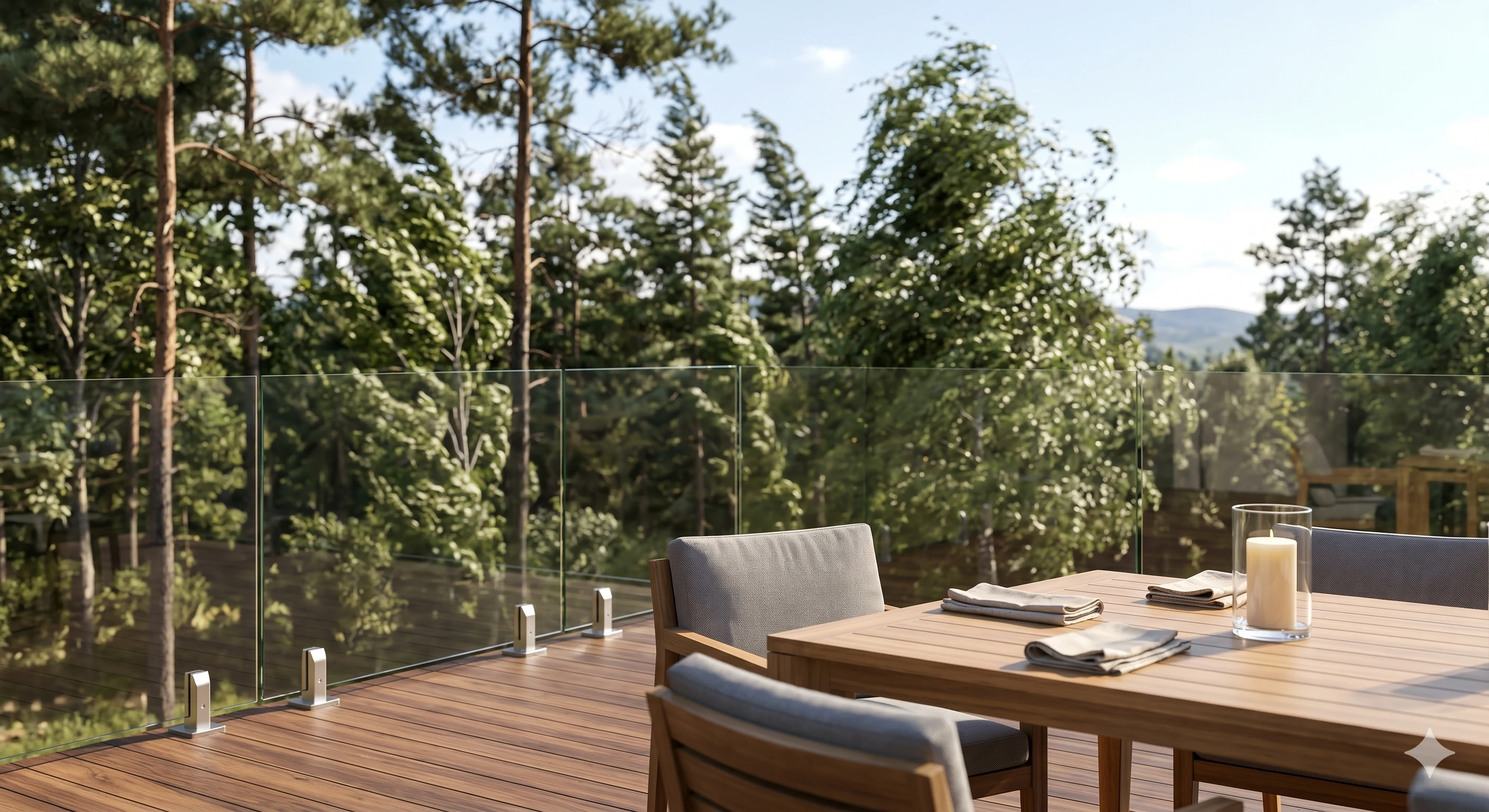
There is a better answer: a frameless glass windbreak anchored by heavy-duty glass spigots. Think of it as an invisible forcefield around your patio. It stops the chill, traps the warmth of the sun, and preserves one hundred percent of your view. No frames cutting through the landscape. No rattling panels. Just a clean sheet of glass doing the quiet work of making your outdoor space usable again.
The Problem With a Wind-Beaten Patio

If you've ever stood on your deck holding down a tablecloth with one hand and a wine glass with the other, you already understand the core frustration. The issue isn't really the wind itself — it's how much of your investment the wind is quietly taking away from you.
The Wasted Investment
Most homeowners spend serious money building out their . , custom railings, an outdoor kitchen, maybe a pergola and a fire table. And then reality sets in: the usable season is shorter than anyone wants to admit. Spring is too gusty. Fall gets cold the moment the sun dips. Even in peak summer, a steady afternoon breeze off the water or across an open yard can make dining outside a chore rather than a pleasure.
The result is a beautiful space that sits empty most of the year. You can see it from the kitchen window, and every time you notice it you feel the same small pang — "we really should be out there." But you're not, because it's not comfortable, and comfort is non-negotiable when you're trying to relax.
The "Dark Box" Effect
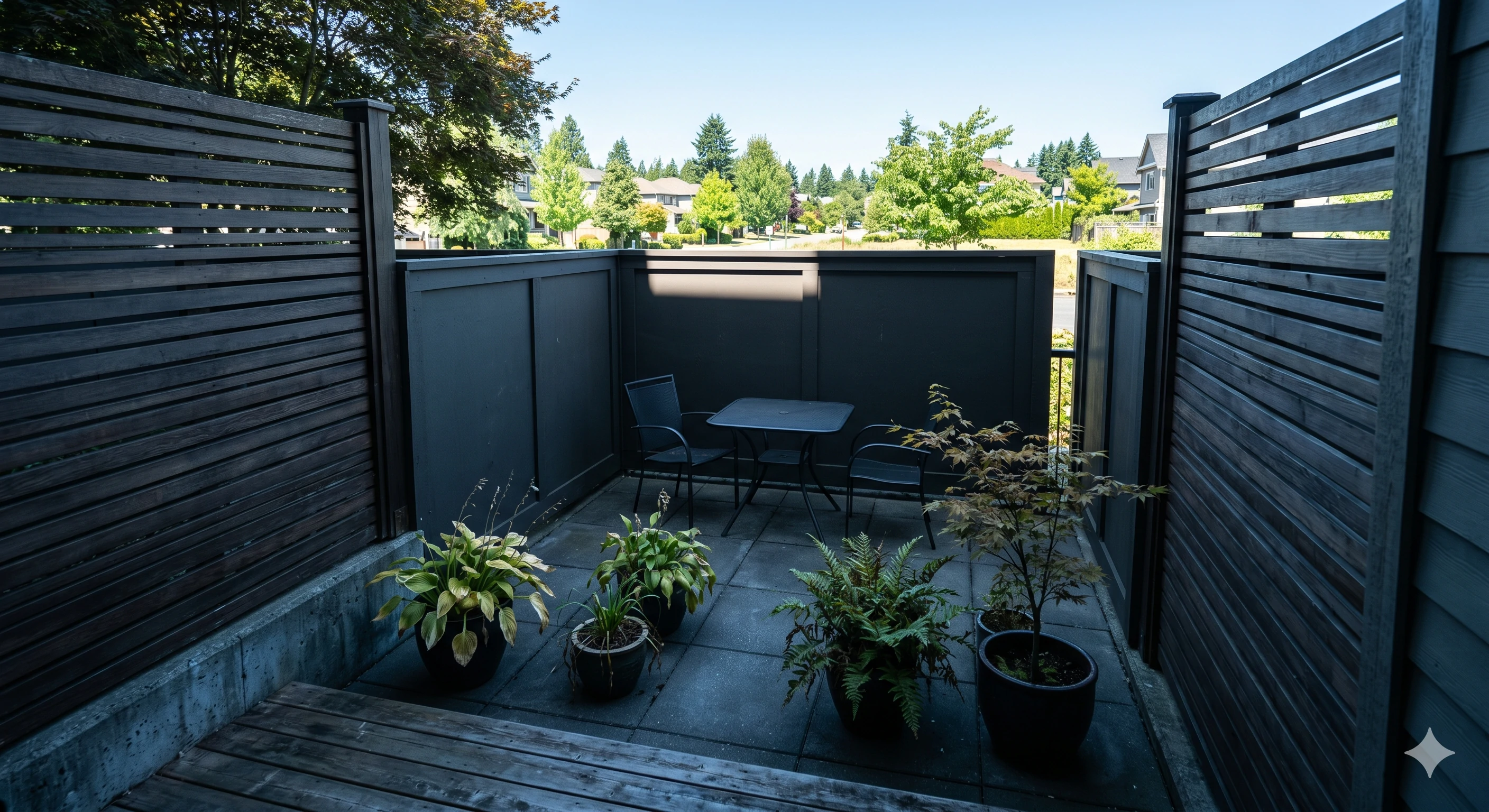
The knee-jerk solution is to build something solid. Lattice panels. Wooden slat screens. Thick aluminum privacy walls. All of them block the wind reasonably well, but they come with a hidden cost that most people only notice after the install is done: they kill the light.
A patio surrounded by opaque walls becomes a shadowed pocket. Potted plants that thrived in full sun start leaning and yellowing. The warm, open feeling that made you want an outdoor space in the first place gets replaced by something that feels closer to a tight courtyard. Even worse, these solid barriers chop the landscape into disconnected fragments. The view of the garden, the treeline, the lake — gone, or reduced to whatever you can glimpse over the top.
The Slatted Fence Illusion
There's also a common misconception worth clearing up: slatted fences with gaps do not actually protect you from wind the way people assume they do. In fact, they can make things worse.
When moving air hits a barrier with gaps, it speeds up as it squeezes through the openings — the same principle that makes a narrow alley feel windier than an open field. Instead of calming the patio, a gappy fence creates small wind tunnels that funnel drafts right where you're sitting. You get the downside of a fence (visual clutter, maintenance, blocked views) without the upside you were actually paying for (a calm, protected space).
The honest takeaway from this stage is simple: half-measures don't work. If you want a patio that's genuinely comfortable on a breezy day, you need something that fully stops the wind — without stopping the light or the view.
How Frameless Glass Actually Solves It
Once people understand that the answer needs to be a solid barrier, the next question is usually the right one: "But if I put up a big sheet of glass, isn't that basically a sail? What keeps it from ripping out of the deck in a storm?"
It's a fair concern, and the answer is all in the hardware.
Creating Your Own Micro-Climate
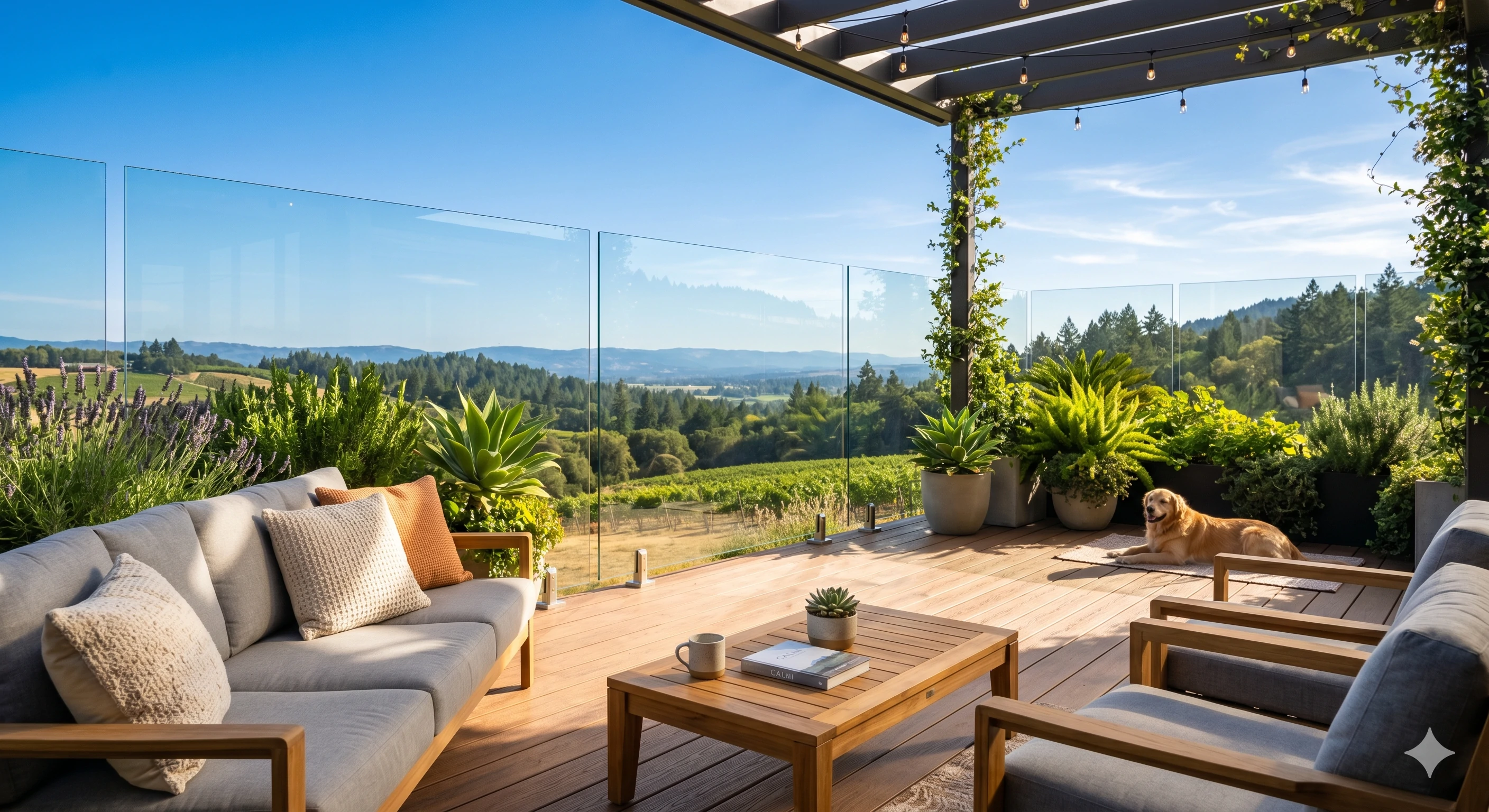
Before getting into engineering, it's worth understanding why glass works so well in the first place. A frameless glass windbreak doesn't just block air — it traps warmth. Sunlight passes straight through the panel and heats up the surfaces of your patio: the decking, the furniture, the planters, you. Because the wind can no longer carry that warmth away, the temperature inside the enclosure sits noticeably higher than the surrounding yard.
It's a mild version of the , and on a cool spring evening or a crisp fall afternoon, the difference is dramatic. You get a pocket of still, sun-warmed air that can stretch the comfortable hours of your day by two or three on each end. Delicate plants stop getting battered by windburn. Candles actually stay lit. Conversation doesn't have to compete with the rustling of everything that isn't tied down.
The Real Hero: The Glass Spigot
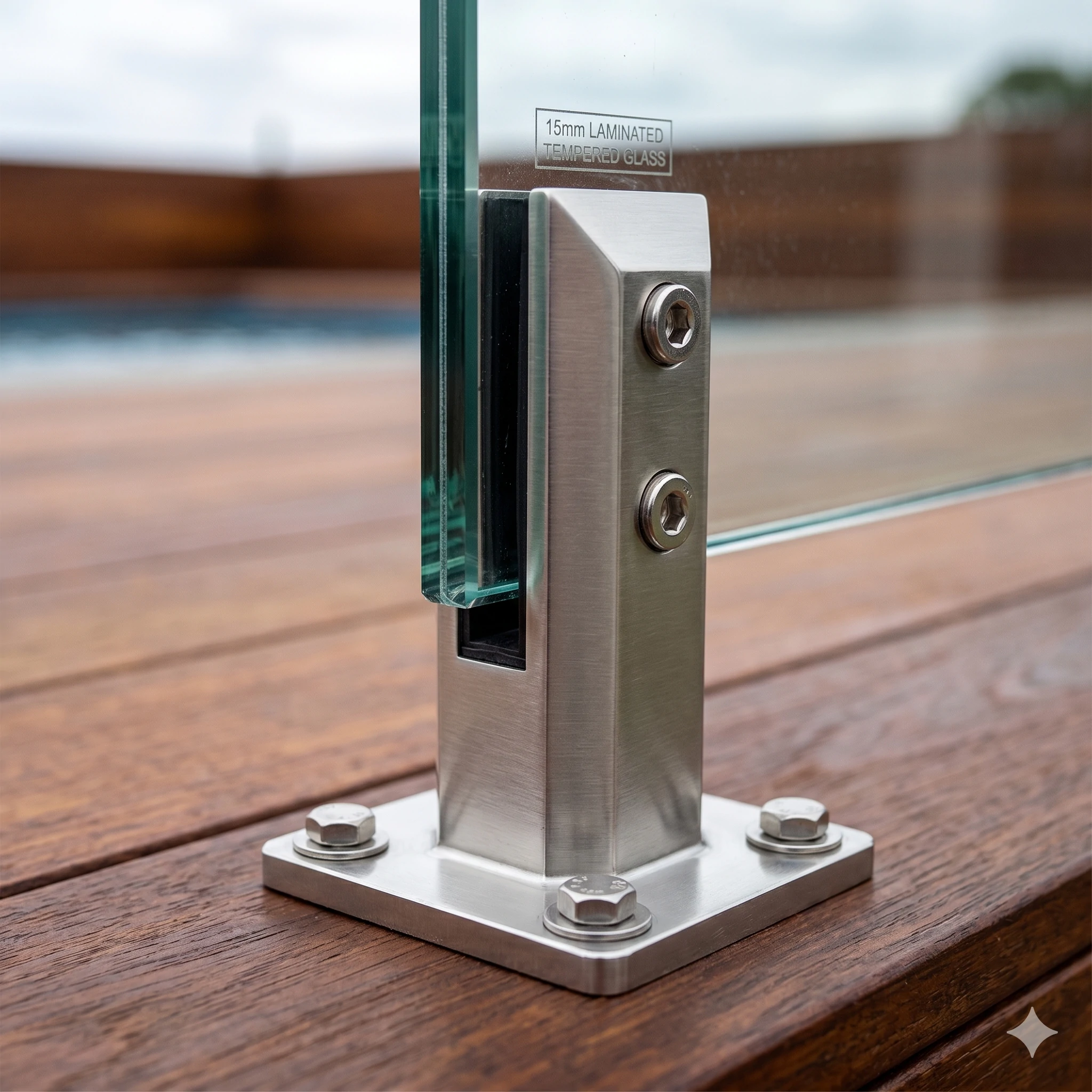
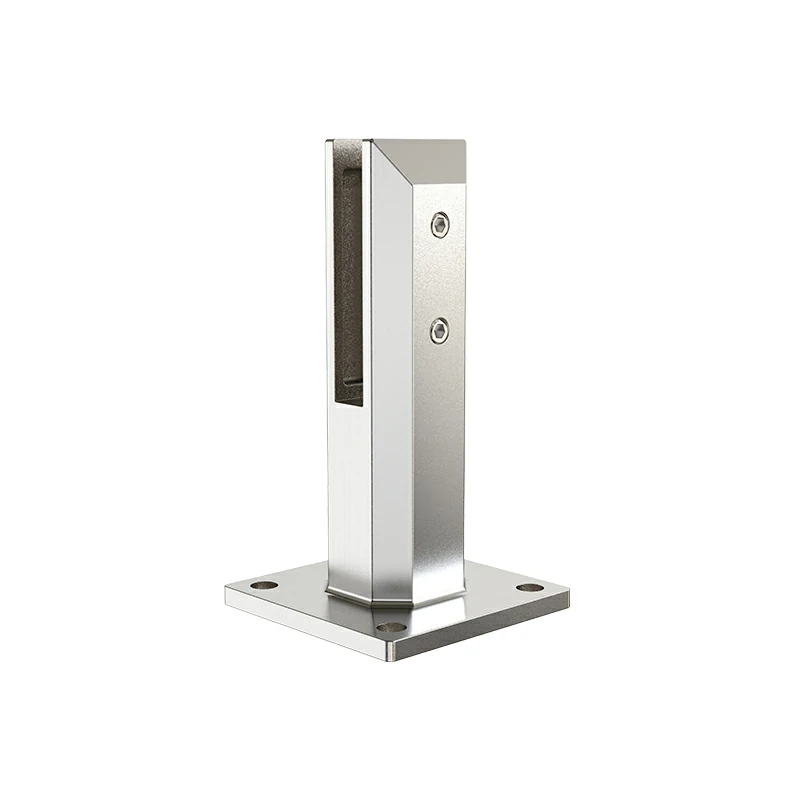
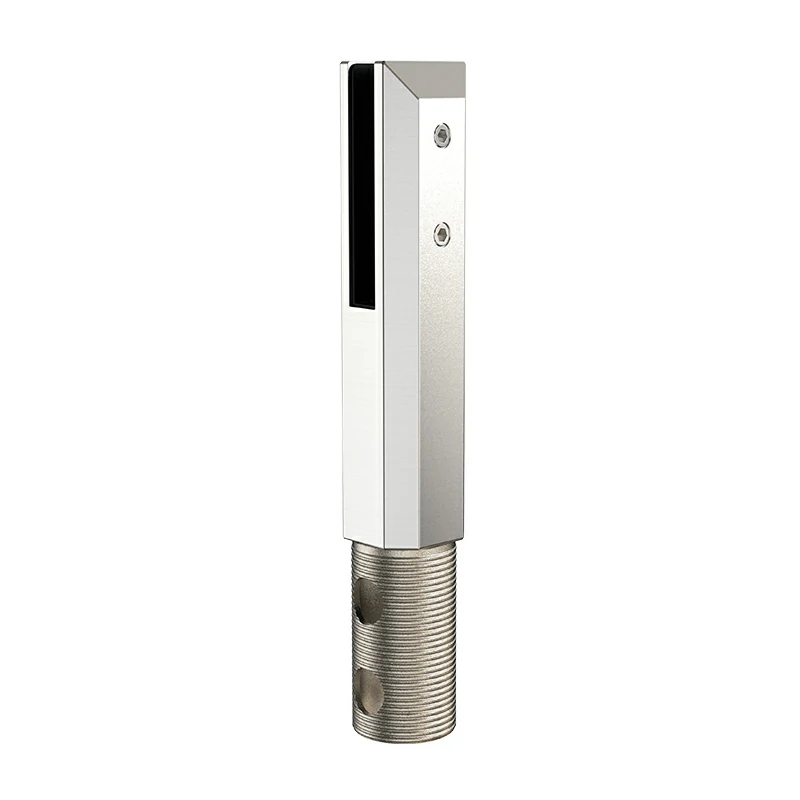
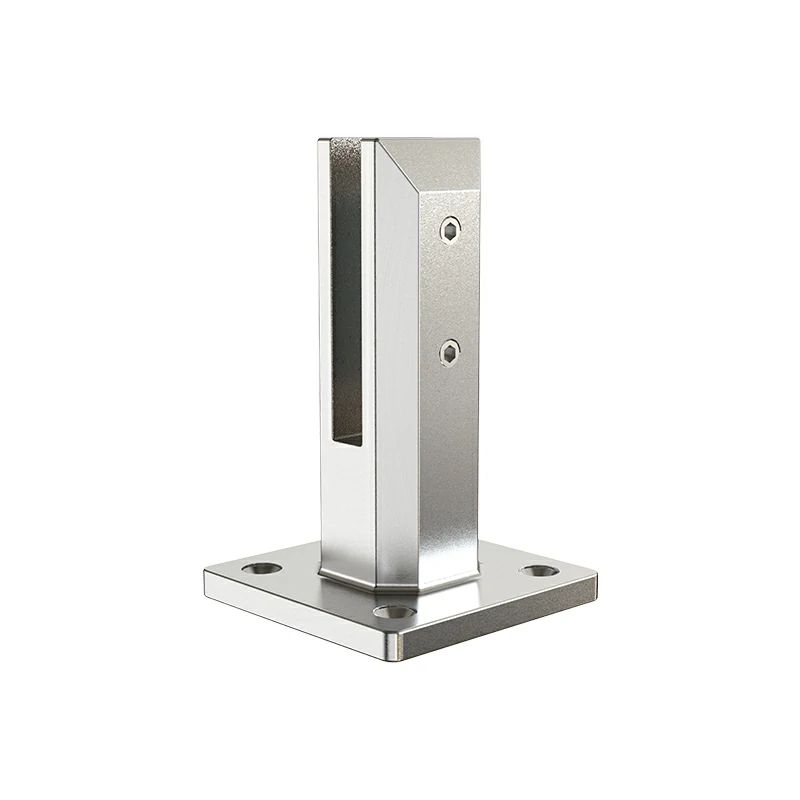
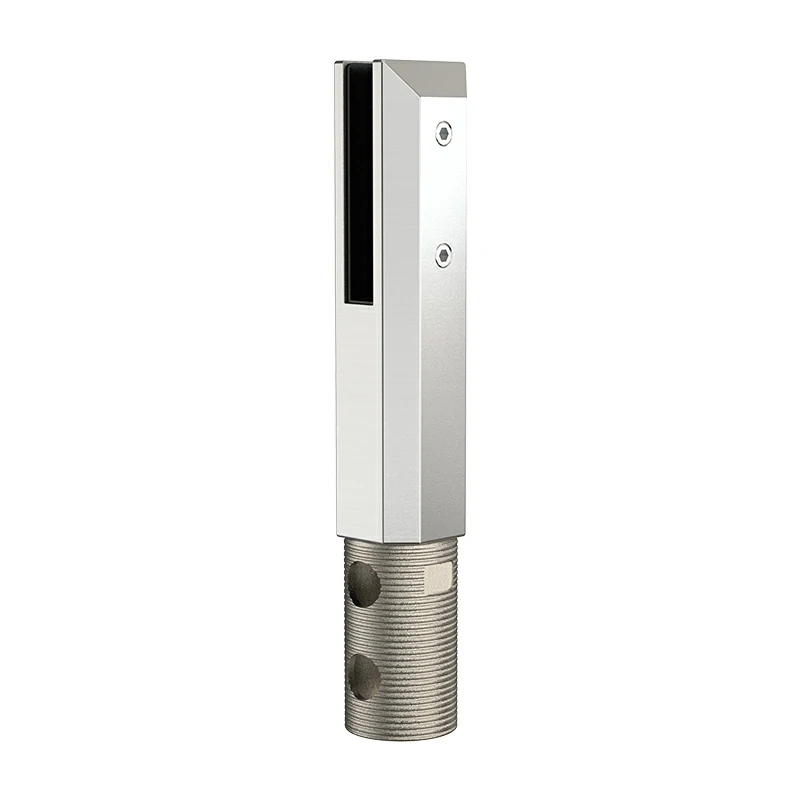
A glass spigot is a small, heavy, solid-metal clamp that bolts to your deck or patio surface and grips the bottom edge of the glass panel. A typical installation uses two spigots per panel, and that's it — no top rail, no side posts, no frame around the glass. Just clean panels rising out of low, sculptural mounts.
What makes spigots the right tool for a windbreak, specifically, is that they're engineered to absorb . When a gust hits the glass, the force doesn't stay in the panel. It transfers down through the clamp, into the spigot body, and out into the structure underneath — a joist, a ledger, or a concrete slab. Good spigots are designed with enough mass and enough internal leverage to handle serious pressure without flexing.
You've got two mounting options depending on your surface. On a wood or composite deck, spigots are surface-mounted and through-bolted into reinforced blocking beneath the decking. On a concrete patio, they're typically core-drilled and chemically anchored into the slab, which gives you an even more rigid base. Either way, the load path is direct and the engineering is predictable — which is exactly what you want when wind is the whole point of the project.
Why It Doesn't Rattle or Flex
One of the giveaways of a cheap glass enclosure is the noise. Flex in the hardware, thin glass, loose clamps — all of it adds up to a wall that hums, vibrates, and rattles whenever the weather picks up. It's the same reason a poorly installed storm window drives you crazy at two in the morning.
A properly specified frameless system avoids this for two reasons. First, the glass itself is heavy — , typically twelve to twenty-one millimeters thick, with real mass behind them. Heavy things don't flutter. Second, the spigot's grip is rigid and even, clamping the glass across a wide contact area rather than pinching it at a single point. Combined, you get a wall that sits dead-still even when the wind is working hard on it. No rattle, no hum, no vibration traveling through your deck boards.
Frameless Spigots vs. The Alternatives
Once someone is sold on the idea of glass, the next conversation is usually about budget. Drop-down vinyl cafe blinds are cheaper. Framed glass railings are cheaper. Plexiglass panels are cheaper. So why pay more for frameless spigots? The honest answer comes down to how each option actually performs over the years, not just on day one.
Spigots vs. Framed Glass vs. Vinyl
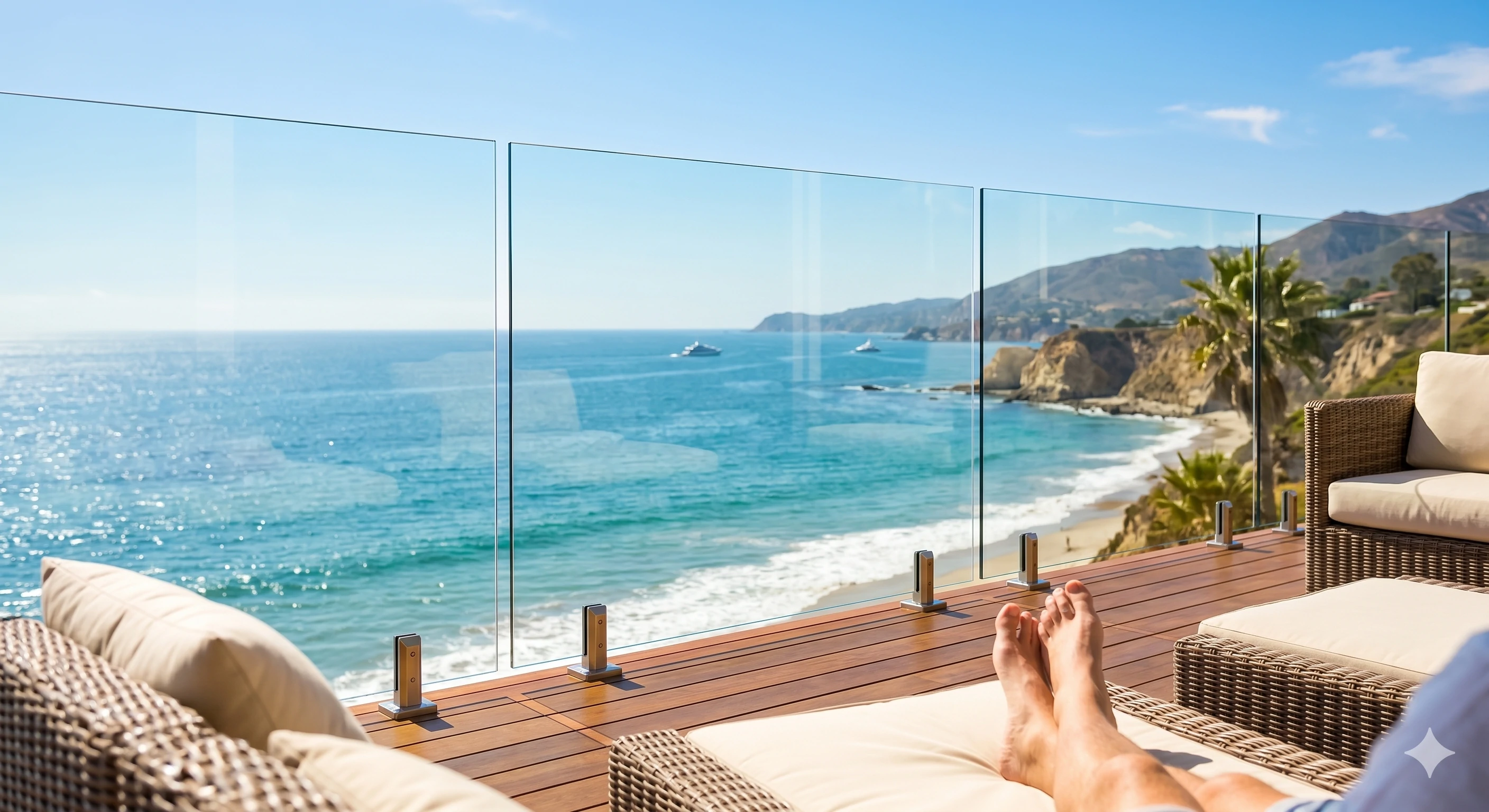
Vinyl cafe blinds are the tempting budget pick because the initial quote looks great. The problem is what happens in year two and beyond. Vinyl yellows under . It scratches easily. It flaps and slaps against its tracks in any real wind — which is exactly when you need it most. And at the end of its lifespan, which is usually shorter than anyone hopes, you're replacing the whole system rather than maintaining it.
Aluminum-framed glass is a step up, but it brings its own compromises. The frames interrupt your sightline at exactly eye level when you're seated, which is the worst possible place for a visual break. The channels collect dirt, leaves, and pollen. And the frame-to-glass junction tends to rattle as the assembly ages and the gaskets compress.
Frameless spigot systems sidestep both problems. There's nothing at eye level except glass. There are no channels to collect debris. There are no gaskets to fail. You get a silent, rigid, crystal-clear barrier that performs identically on day one and day three thousand.
Zero Maintenance, Even in Harsh Weather
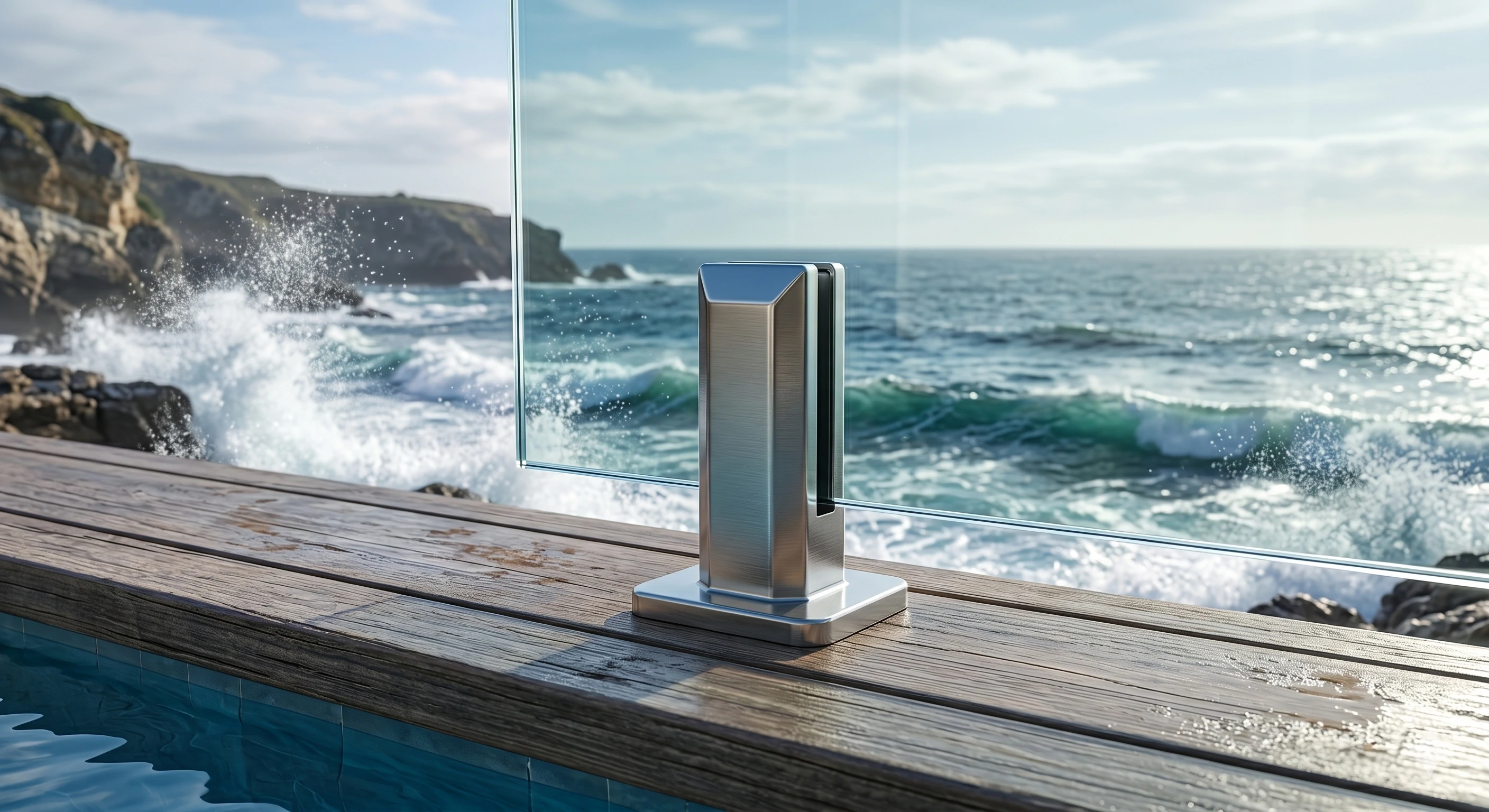
The spigots themselves are the other quiet advantage. Premium hardware is made from or, for coastal and pool-deck environments, — alloys specifically chosen because they shrug off salt spray, chlorine, rain, snow, and the people use on their decks. They won't rust. They won't pit. They won't need repainting or sealing at any point in their service life.
Compare that to a frame, which looks great for a few seasons and then starts showing chalky spots where the coating has oxidized. Or a painted steel frame, which will eventually bleed rust streaks down your decking. Stainless spigots are a true "install it and forget it" piece of hardware, and that matters more than people expect when they're weighing the price difference.
The Real ROI: Months of Extra Patio Season
Here's the framing that usually makes the decision easy. The question isn't really "how much does a frameless glass windbreak cost." It's "how much does it cost to use my patio five or six months longer every year?"
A good windbreak effectively extends your outdoor living season on both ends. You start using the space earlier in spring, because the wind that used to chase you inside no longer reaches your table. You keep using it later into fall, because the trapped solar warmth buys you an extra hour or two after sunset. On marginal-weather days that used to be a write-off, you're outside instead of inside. Over a few years, the added usable hours add up to something that looks a lot like gaining an extra room on your house — except this room has a view, a sky, and costs nothing to heat.
That's the ROI case. The hardware is premium, yes, but it's the piece that turns a seasonal amenity into a year-round one. Everything else on the patio — the furniture, the lights, the grill — gets more valuable the more you actually use it.
Conclusion
The old trade-off was simple and frustrating: you could have a comfortable, wind-free patio, or you could have a beautiful, open view. You couldn't really have both. Frameless glass windbreaks anchored by heavy-duty spigots finally retire that trade-off. You get the calm, warm, usable space you actually want to spend time in, and you keep every bit of the view that made you build the deck in the first place.
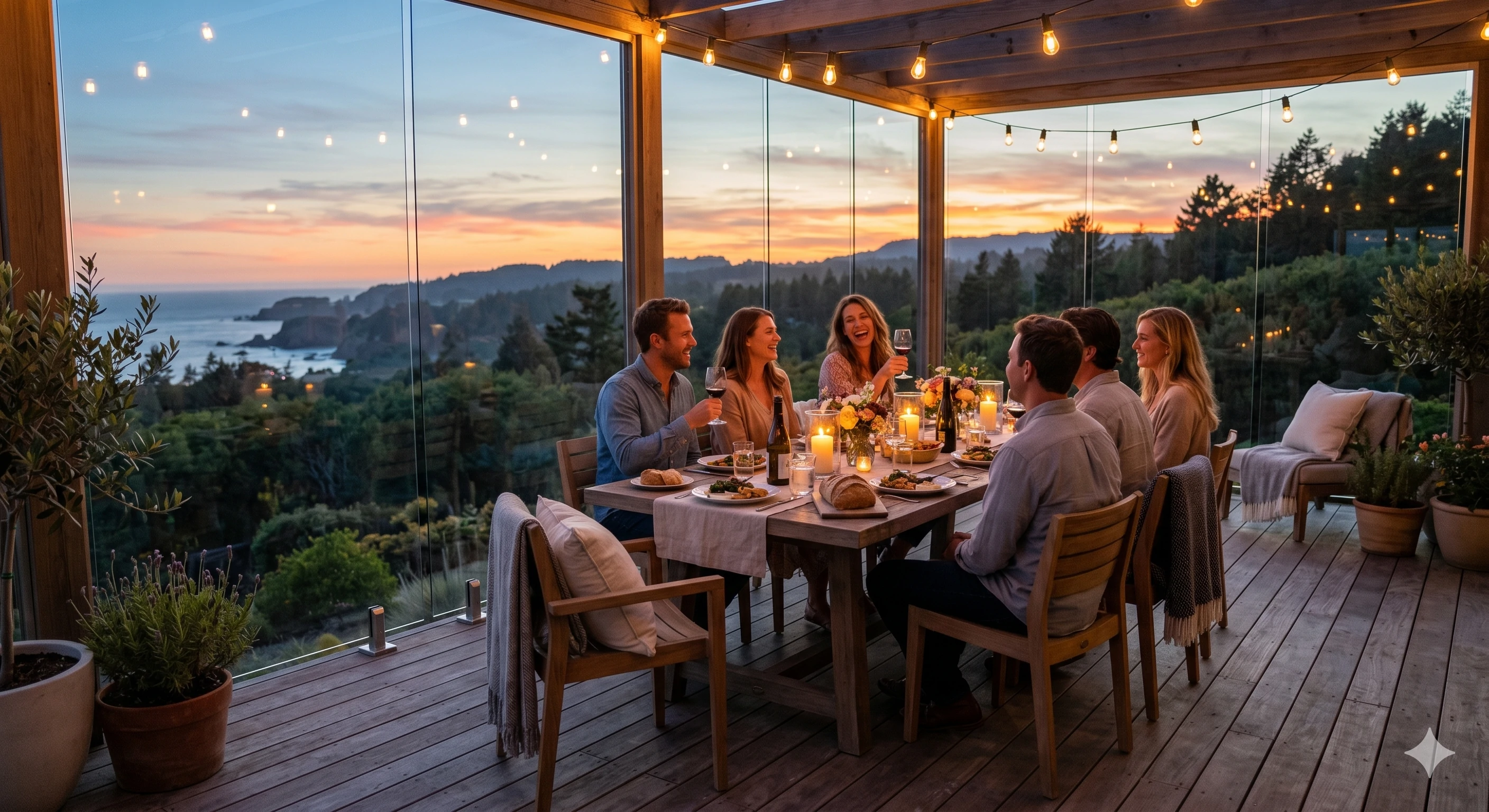
If your outdoor space has been sitting unused more often than you'd like to admit, the wind is probably the reason — and a frameless glass windbreak is probably the fix.
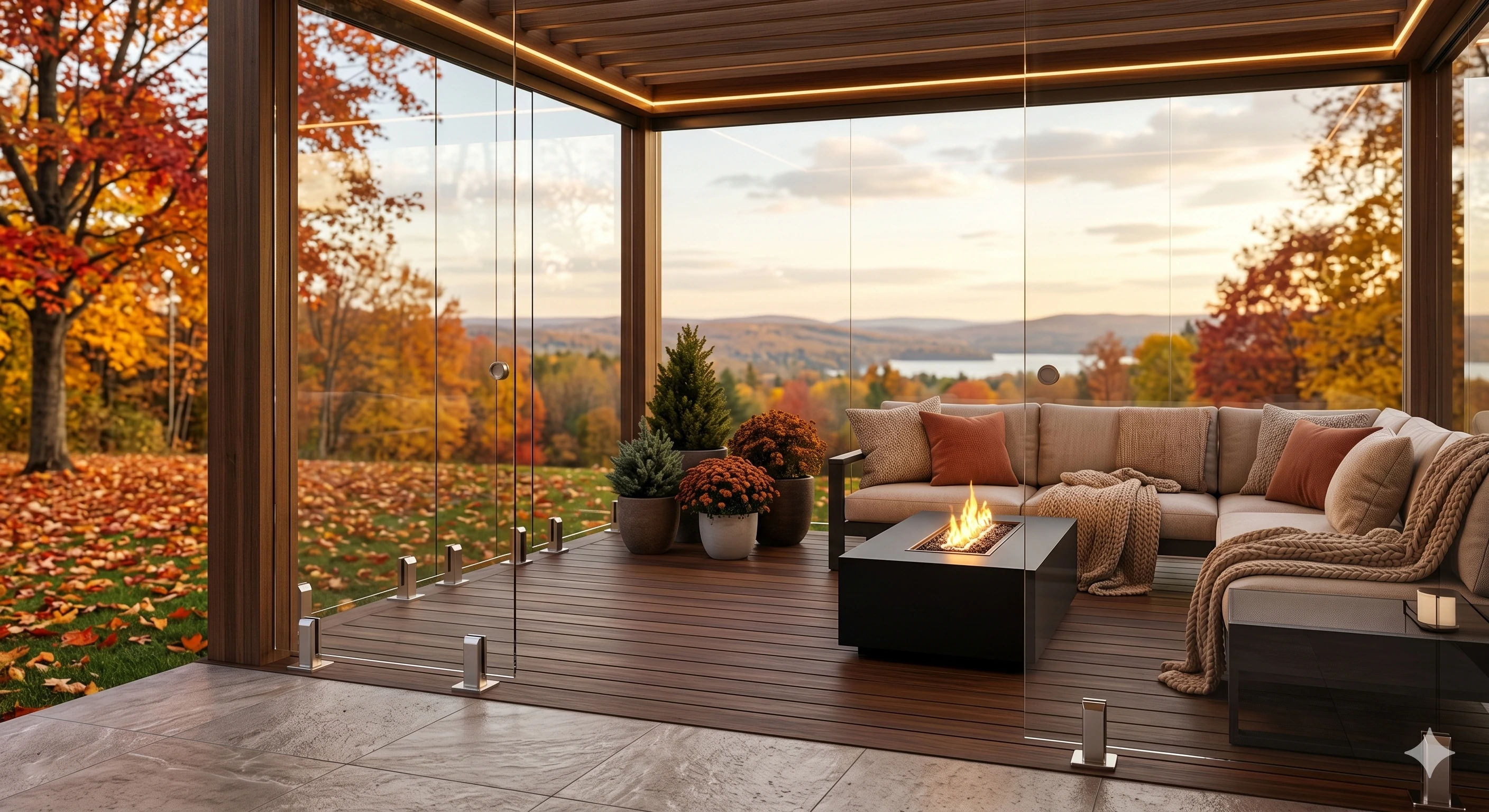
Ready to reclaim your deck and extend your outdoor living season? Browse our collection of heavy-duty, wind-resistant glass spigots, or contact our team for a structural consultation on your windbreak project today.
Footnotes
1. Learn about the design and common elements of functional outdoor patios.
2. Understand the composition, benefits, and durability of wood-plastic composites.
3. Discover how trapped thermal radiation safely increases ambient temperatures.
4. Read about how structural engineering handles moving forces and pressure.
5. Explore the safety, strength, and structural benefits of laminated glass.
6. See how ultraviolet radiation degrades various synthetic materials over time.
7. Learn why marine-grade alloys resist corrosion in demanding environments.
8. Understand the high-strength and anti-corrosive properties of duplex steel.
9. A guide to common cleaning agents and their chemical interactions.