Table of Contents
Why This Decision Matters More Than You Think
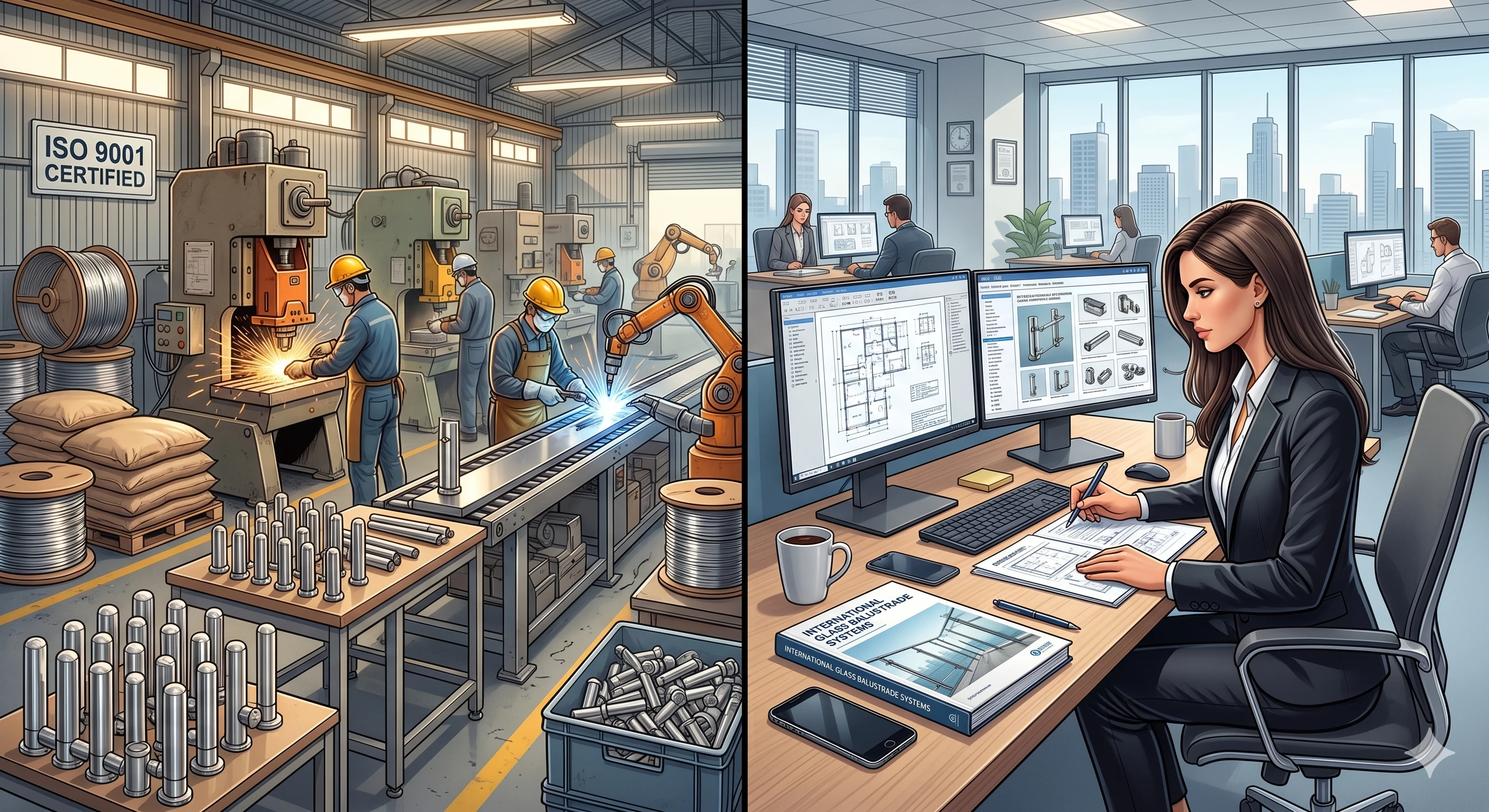
When you're importing glass spigots — whether for , pool fencing, shower enclosures, or architectural railings — this single sourcing decision can make or break your margins, your lead times, and your product quality.
Most importers assume they're buying factory-direct. Many aren't.
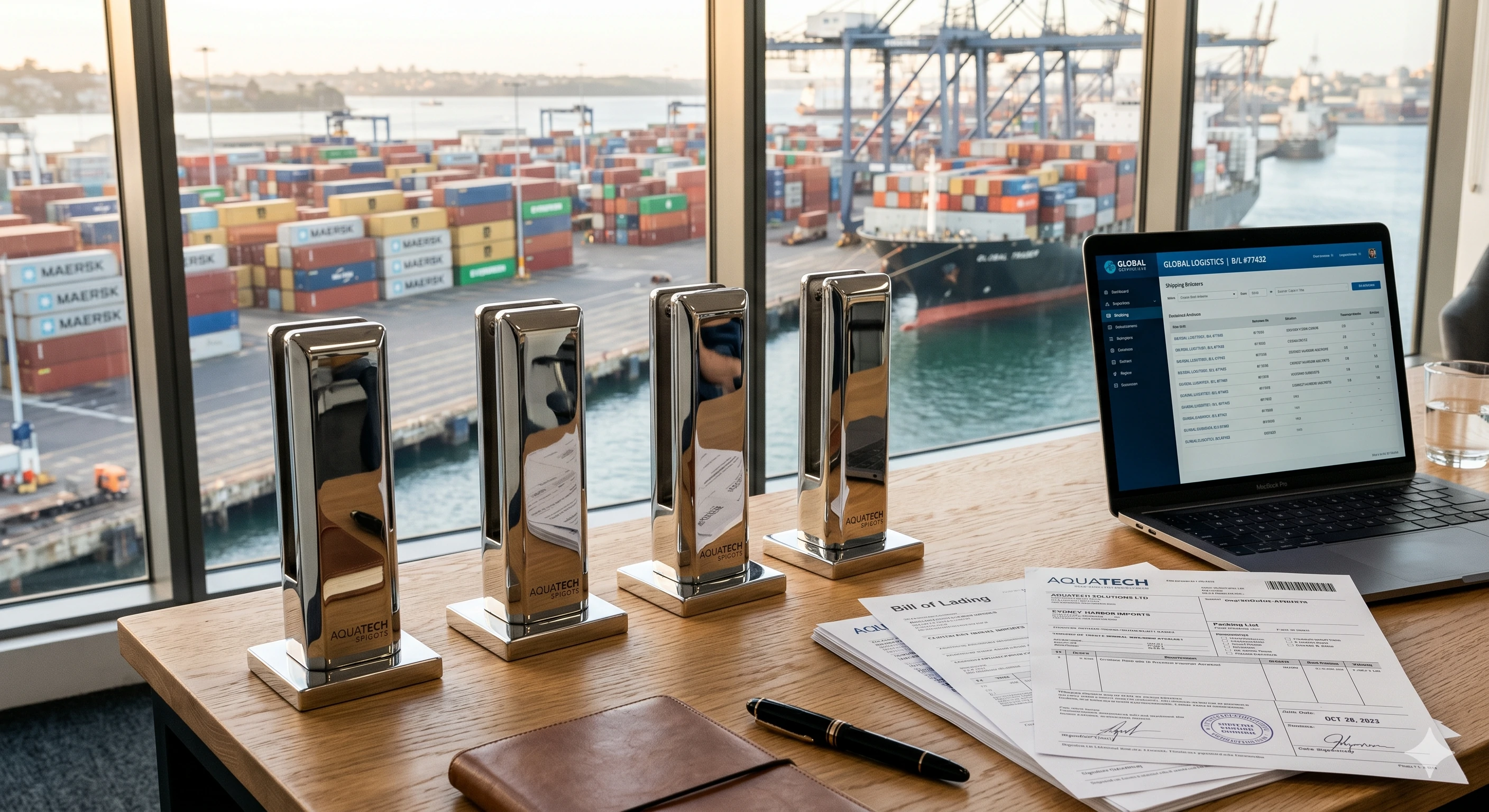
The supplier with "Factory" in their company name may in reality be a trading company. The agent who seems like a middleman might actually be running their own production line. Understanding the real structural difference between the two, especially in the context of glass hardware, is the foundation of smart importing.
What Is a Glass Spigot Factory?
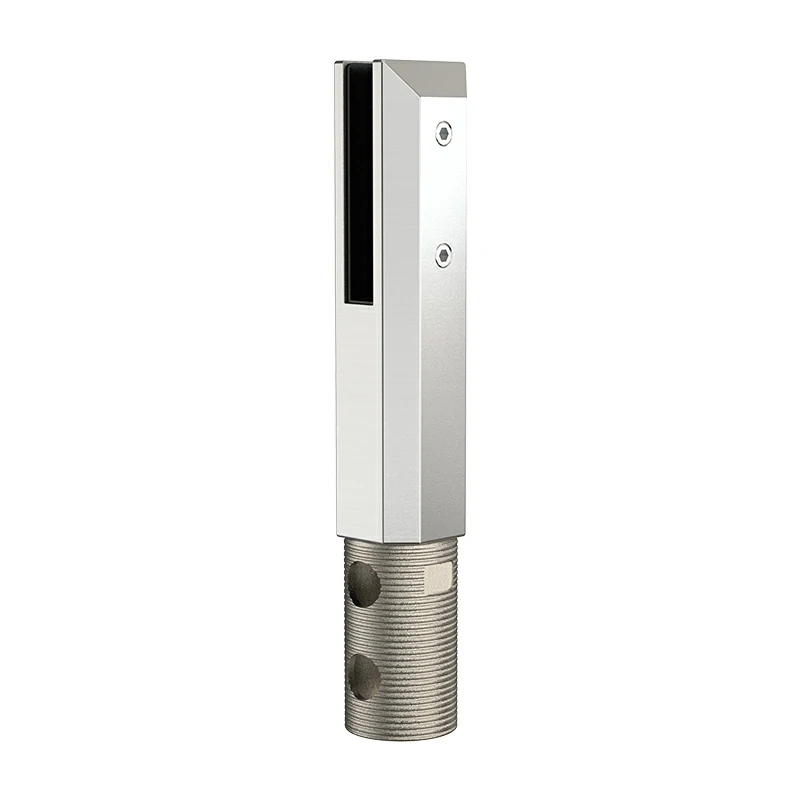
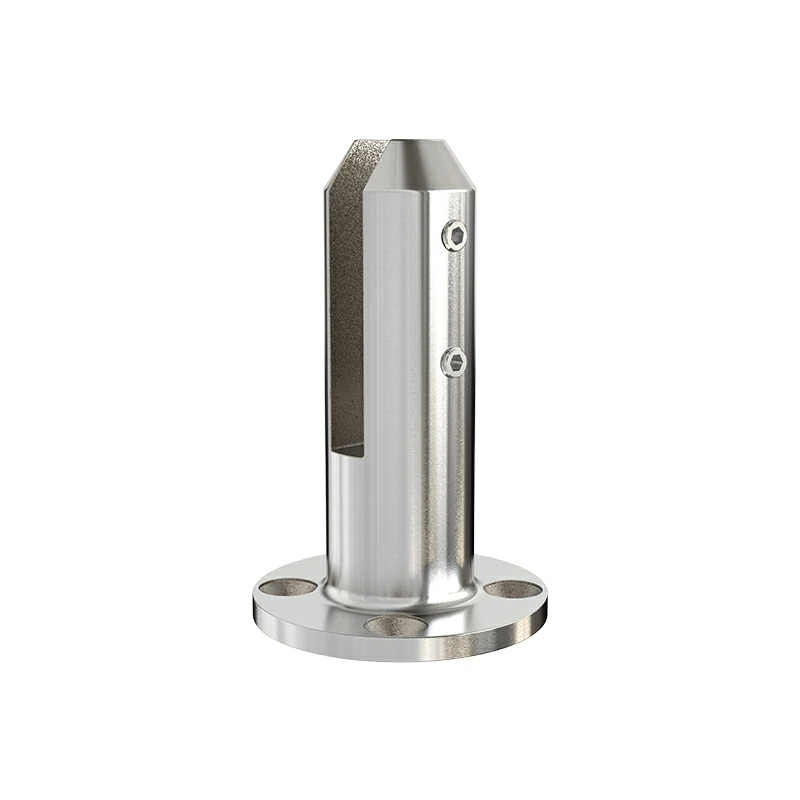
A glass spigot factory is a manufacturer that produces the physical product on-site using its own machinery, tooling, and workforce. For spigots — which are typically made from 316 , zinc alloy, or aluminum — a genuine factory will have:
-
CNC machining or casting equipment for the spigot body
-
Polishing and surface treatment lines (brushed, mirror, powder-coated)
-
In-house quality control stations
-
Export licensing and direct customs declaration capability
Factories almost always specialize in a narrow product category. A stainless steel hardware factory making spigots will rarely also manufacture the tempered glass panels themselves — those come from a separate glass plant.
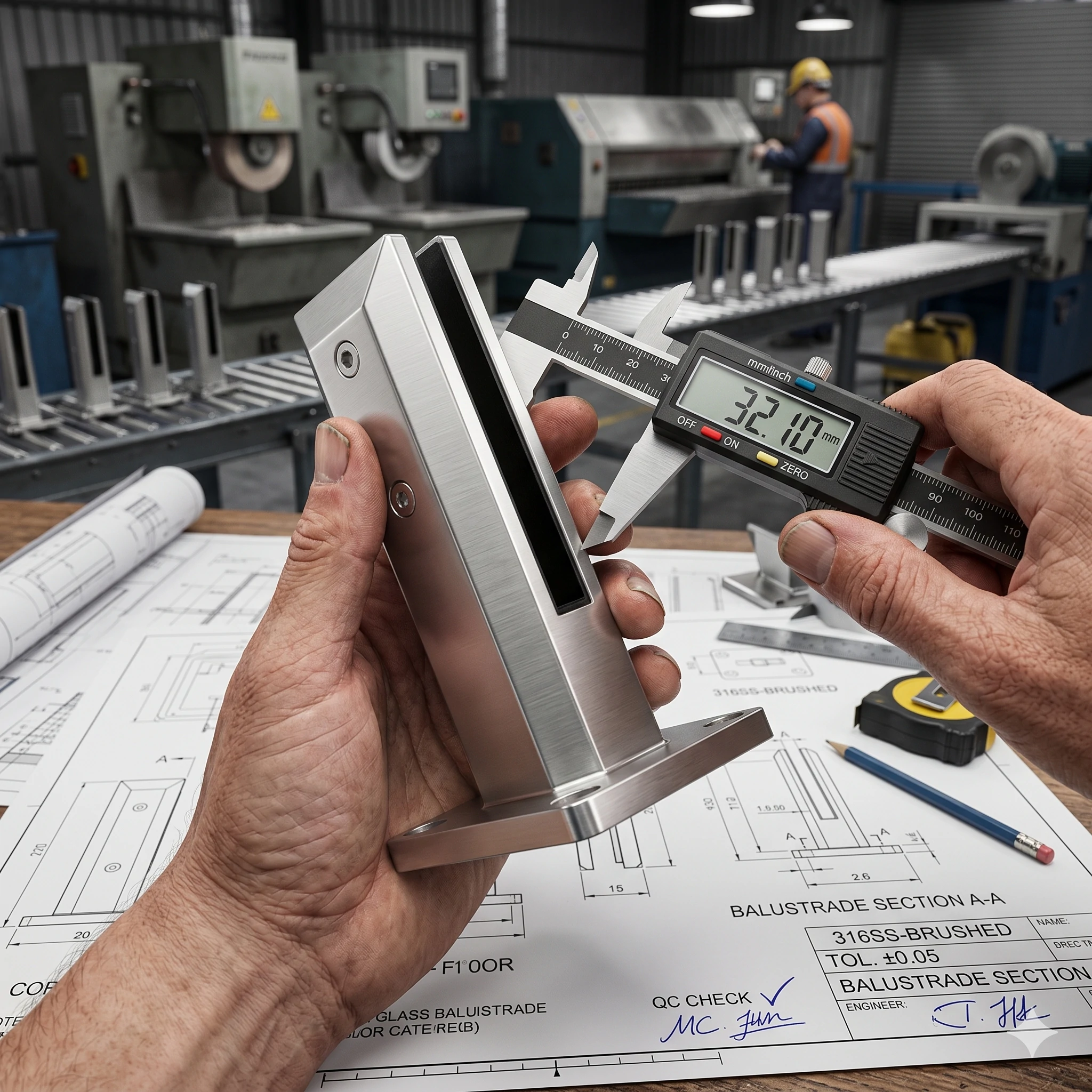
Where are they located? The main clusters for glass balustrade hardware in China are Foshan (Guangdong), Wenzhou (Zhejiang), and Zhongshan. Each hub has a deep, interconnected supply chain for raw stainless, surface treatments, and component parts.
What Is a Trading Company?

A trading company does not manufacture anything. It sources products from one or more factories, handles the export process, and sells to international buyers. Think of them as a sitting between the factory floor and your shipping container.
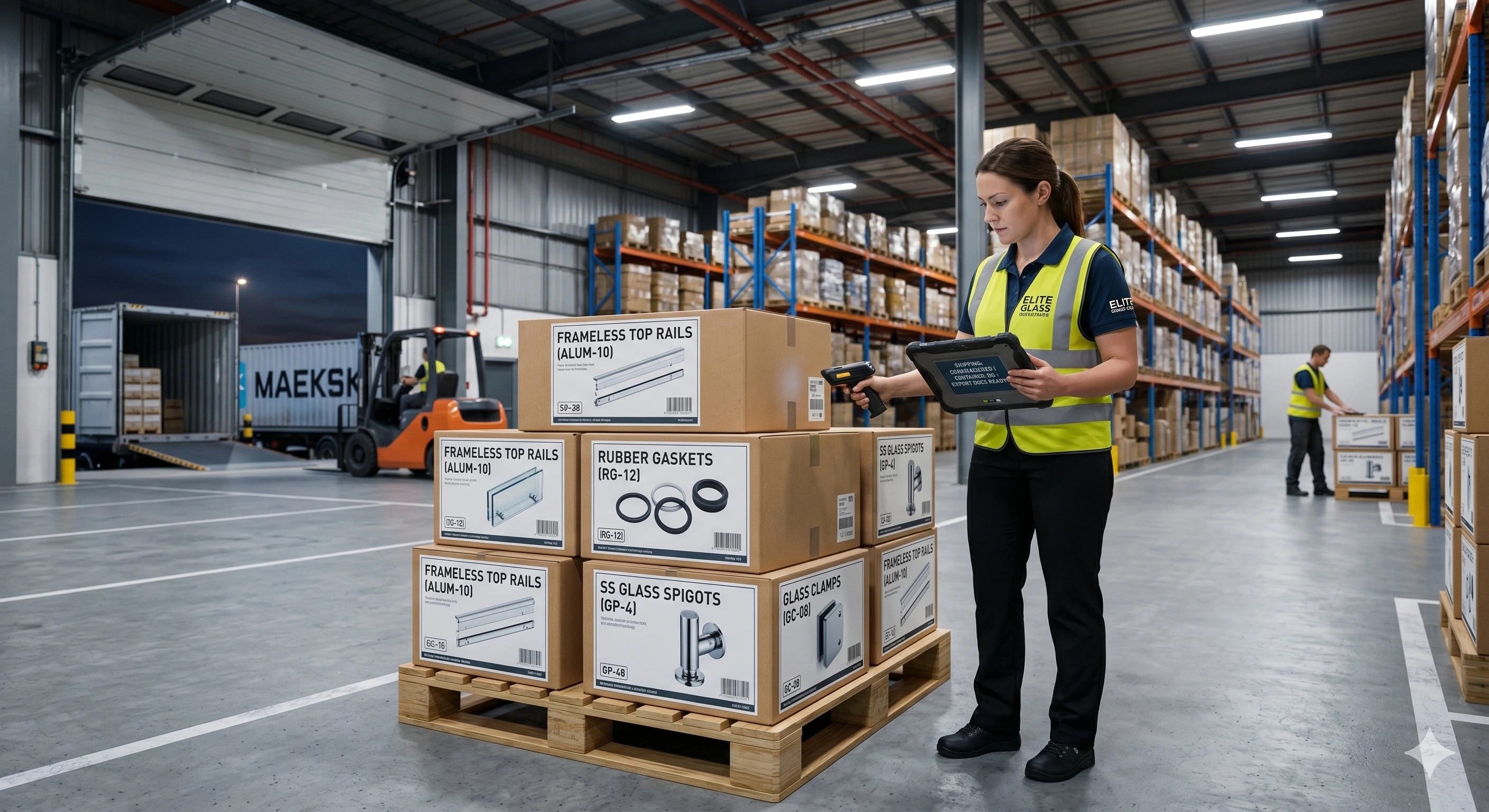
Trading companies became dominant in China in the 1990s, when internet access was limited and the price gap between Chinese goods and Western markets was enormous. Today they survive and thrive by offering services factories often can't — or won't:
-
English-speaking sales teams with strong communication skills
-
One-stop sourcing across multiple product categories (spigots, channels, brackets, glass clamps)
-
Smaller minimum order quantities (MOQ)
-
Flexible payment terms, including partial deposits and balance against B/L
-
Consolidated shipping for buyers who need mixed-product containers
Their markup over factory price is often small — sometimes as low as 0.5–5% — because they operate lean, with teams as small as four to ten people and low overhead.
Factory vs. Trading Company: Side-by-Side Comparison
| Factor | Direct Factory | Trading Company |
|---|---|---|
| Unit Price | Lower (no middleman margin) | Slightly higher (markup applied) |
| MOQ | Higher (often 200–500+ units per SKU) | Lower (can aggregate across buyers) |
| Customization | High — direct access to engineering | Medium — relayed through factory |
| Communication | Variable English, direct to production | Typically strong English skills |
| Product Range | Narrow (one category) | Wide (full balustrade system possible) |
| Payment Terms | Often rigid (50% deposit, 50% pre-shipment) | More flexible (30/70 split, LC possible) |
| Lead Time | Faster for large single-SKU orders | May be slower if consolidating multiple factories |
| Quality Control | You can influence directly | Depends on trading company's own QC |
| Traceability | Full — you know exactly who made it | Partial — factory identity sometimes hidden |
| Risk of Miscommunication | Low (direct) | Moderate (information filtered through intermediary) |
When to Go Direct with a Factory
Working directly with a glass spigot factory makes the most sense under these conditions:
You're Ordering at Scale
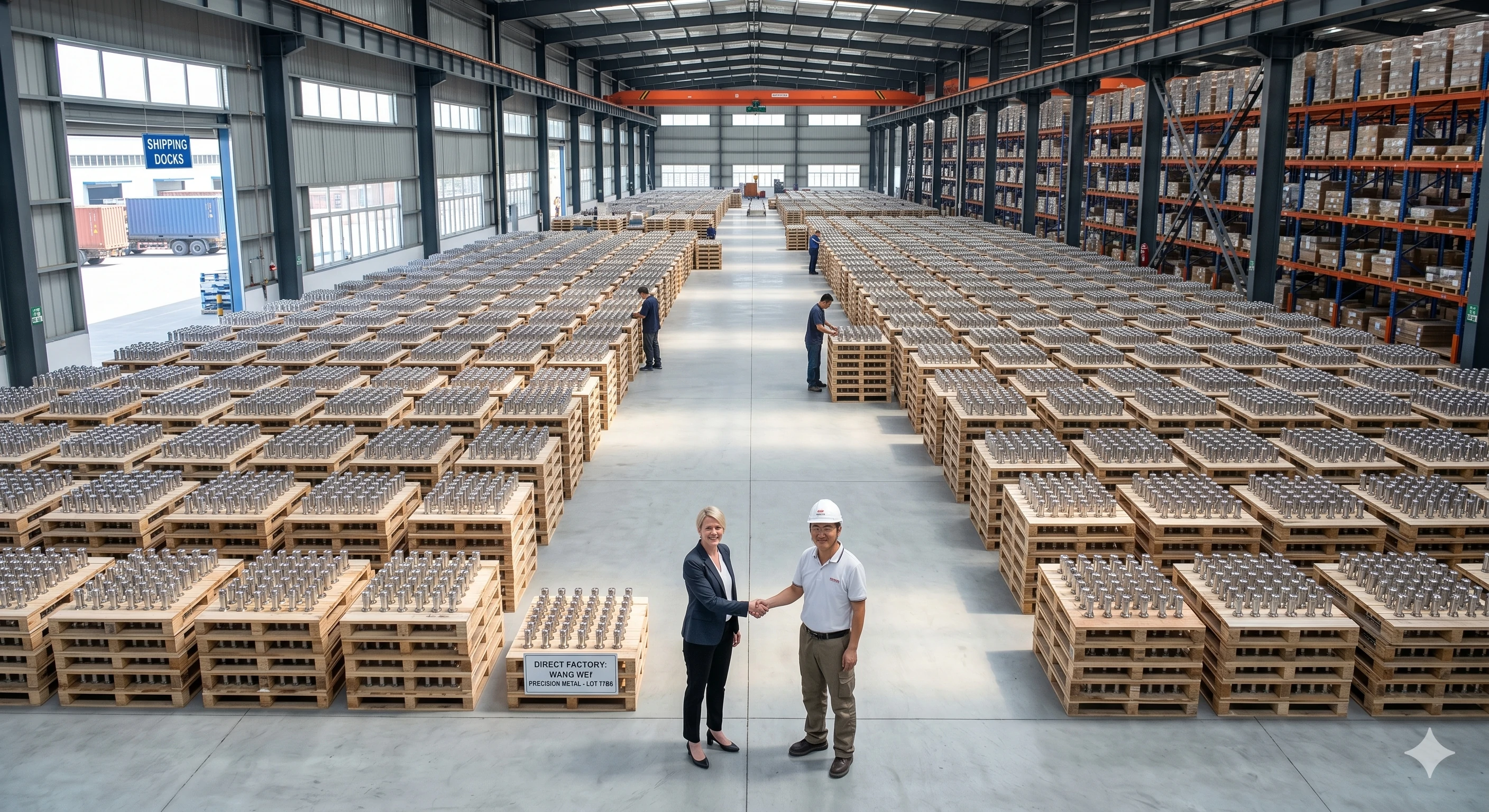
If your order is a full 20-foot container or more of a single spigot model, direct factory pricing is almost always superior. At that volume, the factory has incentive to prioritize your order and negotiate on price.
You Need Custom Specifications
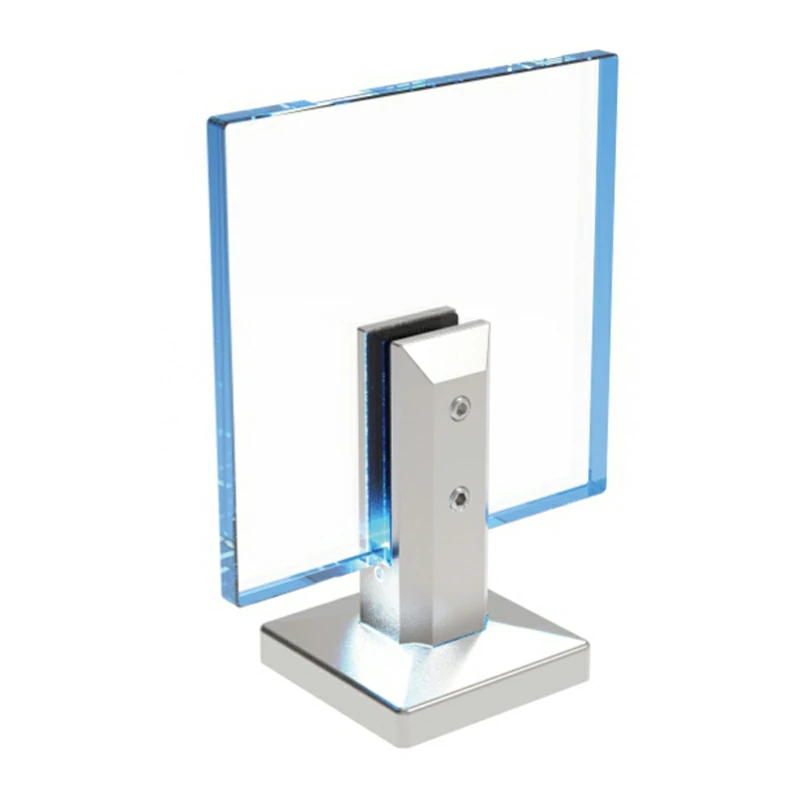
Glass spigots have tight engineering tolerances. The spigot base must accept a specific glass thickness (typically 12mm, 15mm, or 19mm tempered glass), and the clamping pressure, rubber gasket dimensions, and fixing hole pattern all need to be precise. If you're sourcing for a project with non-standard requirements — a different base plate size, a custom coating, a proprietary logo — you need to talk directly to the engineer, not a sales intermediary.
You Want Full Supply Chain Transparency
Direct factory relationships give you full traceability. You can audit the production process, request raw material certifications (e.g., mill certificates), and schedule without going through a gatekeeper.
You're Building a Long-Term Supplier Relationship
For importers who plan to reorder regularly, a direct factory relationship builds trust, priority treatment during peak seasons, and the leverage to negotiate tooling fees, packaging customization, and payment terms over time.
When a Trading Company Makes More Sense
Trading companies aren't the enemy. For many buyers, especially those newer to importing or sourcing mixed product lines, they can be the smarter choice.
You Need a Complete Balustrade System
Glass spigots are just one component. A full frameless balustrade job also requires: top rails, base channels, glass clamps, standoff brackets, and rubber gaskets. No single factory makes all of these. A trading company that has already built relationships with multiple hardware factories can consolidate everything into one shipment — saving you time, freight, and significant coordination effort.
Your Order Volumes Are Small
If you're ordering fewer than 100–200 spigots per style, most factories won't give you the time of day — or will quote you at near-retail pricing. A trading company aggregates orders across multiple buyers, giving them factory access and lower unit costs that they can partially pass on to you.
You Value Communication Reliability
Language barriers remain a genuine challenge when buying direct from Chinese factories. A good trading company provides an experienced English-speaking account manager who understands both your technical needs and the factory's production realities. This can prevent costly specification errors.
You're New to Importing Glass Hardware
Glass spigots are a safety-critical product. In most markets (Australia, the UK, Europe, the US), they must meet specific . A reputable trading company that specializes in glass balustrade hardware will already know about AS 1288, BS 6180, or ASTM F2200 compliance requirements — and can guide you toward products that have already been tested.
The Factory That Isn't
A significant number of suppliers on Alibaba and Made-in-China who present themselves as factories are actually trading companies — or hybrid operations that use a factory floor for photos but source elsewhere. This isn't always malicious, but it affects pricing transparency and your ability to influence quality.
Red flag: A supplier who can quote you on spigots, glass panels, frameless shower screens, pool fencing, and decorative balustrades simultaneously is almost certainly a trading company, not a single factory.
The Trading Company With No QC
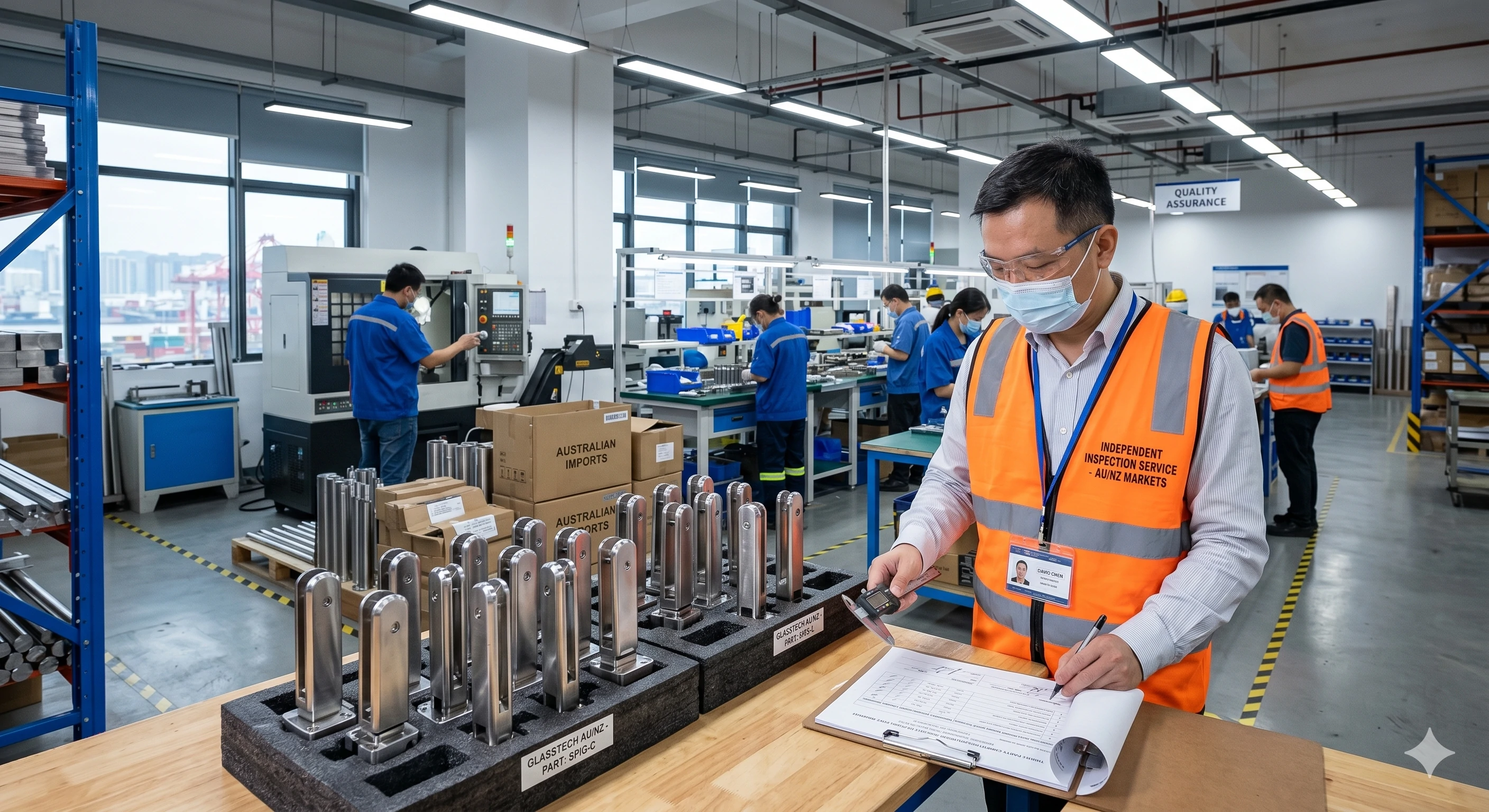
Not all trading companies add value. Some are simply order-passers — they take your order, forward it to a factory, and collect their margin without any quality verification. If the factory ships substandard product, you're left negotiating returns through a middleman with no skin in the production game.
Protection: Ask the trading company specifically what QC steps they perform before shipment. A credible one will describe pre-shipment inspection protocols, not just "we check with our factory."
MOQ Workarounds That Backfire
Some buyers pressure factories into accepting below-MOQ orders, only to find their order deprioritized, production quality drops as the factory rushes a small run, or they're quietly mixed into another buyer's order with different specifications.
Intellectual Property Exposure
If you're importing a proprietary spigot design — your own branded product with a unique aesthetic — sharing full directly with a factory carries IP risk. A trading company acting as a buffer can help contractually, but it's not a foolproof solution. Always register design trademarks in China before sharing technical files with any supplier.
How to Verify Who You're Actually Dealing With
Before placing any order, take these steps to confirm the nature of your supplier:
1. Request a Business License
Chinese companies are classified in their business license (营业执照). A manufacturer's license will list "manufacturing" (制造) in its scope. A trading company will show "trading" or "import/export" (贸易/进出口).
2. Ask for Factory Audit Access
A genuine factory will welcome a factory visit or a virtual video tour of their production floor. Ask to see the machining or casting equipment for spigot bodies specifically. If the "factory" is hesitant or shows you a warehouse instead of a production line, you're dealing with a trading company.
3. Check Export Data
Third-party tools like Import Genius, Panjiva, or Customs records can show you what a Chinese company has actually exported — including product descriptions, HS codes, and shipment volumes. A factory with no export history for stainless steel hardware is a warning sign.
4. Verify Certifications
Reputable glass hardware manufacturers hold ISO 9001 at minimum. For products destined for markets like the EU or Australia, look for compliance testing reports from recognized labs (SGS, Bureau Veritas, TÜV).
5. Get Sample Orders First
Always request production samples — not marketing samples — before committing to a full order. Evaluate the surface finish, dimensional accuracy, thread quality on fixing holes, and the rubber gasket fit. Defects at sample stage predict defects at scale.
Negotiating With Each Type of Supplier
Negotiating With a Factory
-
Lead with volume. Even if you can't guarantee large orders immediately, frame your long-term potential.
-
Ask about tooling costs upfront. Custom spigot designs often require a mold or jig fee ($300–$1,500 depending on complexity). Negotiate to have this absorbed after a certain reorder volume.
-
Push for pre-shipment inspection access. Establish this in the contract before you pay the deposit.
-
Ask for FOB pricing and arrange your own — factory FOB prices are almost always lower than their offered CIF.
Negotiating With a Trading Company
-
Ask them to reveal the factory. Established trading companies are sometimes willing to disclose their factory partners after a relationship is built, or after you've signed a non-circumvention agreement.
-
Negotiate payment terms. Trading companies have more flexibility here than factories. A 30% deposit / 70% against draft B/L structure is often achievable.
-
Leverage consolidation. Ask for a discount or free samples when ordering multiple product lines in the same container.
-
Request QC inclusion in writing. Make it a contract condition that the trading company performs or arranges a pre-shipment inspection — and bears responsibility for rectifying defects found.
Real-World Scenarios: What Buyers Typically Experience
Scenario 1: The Small Contractor Importing for the First Time
A landscaping company in Australia wants to install frameless glass pool fencing on 12 residential projects. They need 180 spigots in two styles, plus top rails and installation hardware. A direct factory won't take the mixed, low-volume order. A reputable trading company consolidates the full system, handles compliance documentation for AS 1288, and ships it in one container. Trading company wins here.
Scenario 2: The Established Importer Scaling Up
A glass balustrade distributor in the UK has been importing for three years and now turns over 800 spigots a month in a single SKU. They've outgrown their trading company and want better margins and the ability to custom-brand. They identify a factory in Foshan through an audit, negotiate a direct relationship, and reduce unit cost by 18%. Factory wins here.
Scenario 3: The Architect Specifying a Custom Design
A commercial architecture firm specifies a bespoke spigot profile with a wider base plate and a recessed logo for a hotel project. This requires a custom mold and direct communication with production engineers. Only a factory relationship gives the control and traceability needed. Factory is the only viable option here.
FAQ
Q: Can I tell from Alibaba whether a supplier is a factory or trading company?
A: Alibaba shows a "Manufacturer" or "Trading Company" badge based on supplier self-declaration. These are not always accurate. Always cross-reference with a business license check and factory visit request.
Q: Will a factory give me better prices than a trading company?
A: Usually, yes — but only if your order volume justifies their MOQ. At low volumes, a trading company can actually achieve competitive pricing by pooling orders.
Q: Are glass spigots from trading companies lower quality?
A: Not inherently. Quality depends on which factory the trading company uses and whether they perform QC. A trading company using a certified, reputable factory can deliver identical quality to buying direct.
Q: How do I know if a glass spigot is genuinely 316 stainless steel?
A: Request a mill certificate for the raw material. You can also use a third-party lab to conduct XRF ( ) testing on samples — this confirms alloy composition. Don't accept verbal assurances or spec sheets alone.
Q: What's a reasonable MOQ when buying direct from a glass spigot factory?
A: Most factories in Foshan and Wenzhou will have an MOQ of 100–500 pieces per SKU, depending on whether custom specifications are involved. Standard off-the-shelf designs have lower MOQs; custom molds require higher commitments.
Q: Should I use a sourcing agent instead?
A: A professional sourcing agent (a third-party who works on your behalf) can be a strong alternative to both. They access factory pricing while providing the communication support and QC oversight of a good trading company — for a fee of typically 5–10% of order value.
Q: How do I protect my design if I'm going factory-direct?
A: Register your design trademark in China before sharing any files. Use NDAs and non-compete clauses in your supply contract, written in both English and Mandarin. China IP registration via CNIPA
Q: What certifications should glass spigots have for the Australian market?
A: Products must comply with AS 1288 (glass in buildings) and NCC (National Construction Code) requirements. Look for suppliers with testing reports from NATA-accredited labs or internationally recognized equivalents.
Conclusion
There's no universal answer to whether factories or trading companies are better for importing glass spigots — but there is always a right answer for your specific situation.
Go direct with a factory if you're ordering at scale, need custom specifications, want full supply chain transparency, or are building a long-term branded product line.
Work with a trading company if you need a complete hardware system in small-to-medium volumes, value strong English communication and consolidated logistics, or are still learning the landscape.
The biggest mistake isn't choosing one over the other. It's assuming you know which one you're dealing with — without verifying. Always audit, always sample, and always confirm certifications before your container leaves the port.
Ready to evaluate your current suppliers — or find new ones? sourcing glass balustrade hardware from China
Footnotes
Overview of balustrades and architectural safety elements.
Details on the corrosion resistance of marine-grade metals.
Understanding the principles of procurement and supply chain.
Properties and specifications of 316 grade stainless steel.
Learn how quality control processes verify product standards.
Importance of structural loads in construction safety.
Uses of computer-aided design in manufacturing.
Information on the ISO 9000 family of quality management systems.
Guide on the role of freight forwarders in shipping logistics.
Learn how X-ray fluorescence determines material composition.