
When we develop bathroom hardware, we often see one problem: two towels need space, but the wall fits one fixture. Choosing by color alone can lead to overlap, unexpected aging, or loose mounts. A well-specified double bar solves the capacity problem without creating new ones.
A double towel bar brass fixture is a wall-mounted bathroom accessory with two parallel rails and either a brass body or a brass-colored finish. It holds two towels within one mounting footprint, saves wall space, and adds a warm metal accent. Buyers should verify material, rail spacing, size, finish care, and mounting method before ordering.
The best choice comes from looking beyond the product photo. The following sections explain the details that affect appearance, daily use, installation, and long-term value.
Why Choose a Brass Double Towel Bar?
In our bathroom-hardware work, we meet buyers who want more hanging capacity but do not want another rack taking up floor or wall space. A single rail can leave a second towel folded over a door or hook, where it becomes untidy. A double rail creates a cleaner storage point in the same general wall area.
A brass double towel bar increases hanging capacity while keeping the bathroom wall organized. Its two rails can hold separate bath towels or a mix of bath and hand towels, while brass adds a warm, premium look. The best design also provides enough rail separation for easy access and better airflow around each towel.

Two rails in one mounting area
A double towel bar uses front and rear rails supported by one set of wall brackets. It can serve a couple or keep bath and hand towels together. It also avoids the floor space needed by a freestanding rack, which helps in compact bathrooms and guest suites.
However, two rails do not guarantee good towel separation. Closely spaced rails can make thick towels overlap and hide the rear towel. Depth and clear space between the rails therefore deserve the same attention as width.
| Fixture type | Main benefit | Main limitation | Suitable use |
|---|---|---|---|
| Single towel bar | Simple and shallow | Holds less | One towel or a narrow wall |
| Double towel bar | More capacity in one footprint | Needs enough rail separation | Shared or compact bathrooms |
| Freestanding rack | No wall drilling | Uses floor space | Rental or flexible layouts |
| Hooks | Very compact | Towels may bunch | Robes and occasional towels |
Look at usable space, not only capacity
Before ordering, check the projection, rail gap, and nearby cabinet or shower-screen movement. A deep bar can obstruct a narrow passage, while a shallow model can compress bulky towels. The right product balances capacity, access, and room circulation.
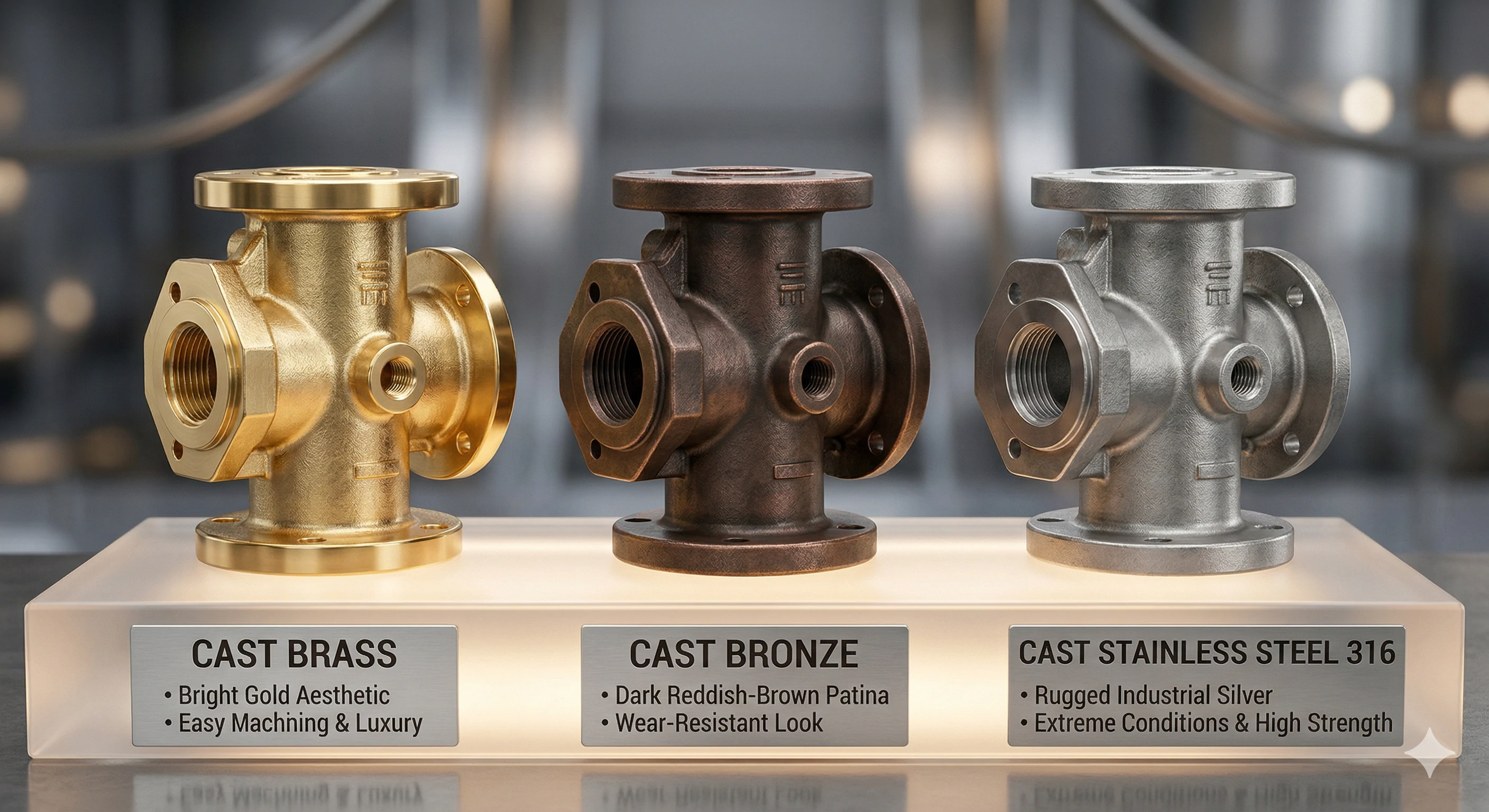
Solid Brass vs. Brass Finish Double Towel Bars
When our team reviews a bathroom accessory specification, we separate the base material from the surface finish. Buyers can face early corrosion, color loss, or pricing disputes when a listing uses “brass” without saying what it describes. A clear material statement removes that uncertainty before sampling or production.
A solid brass double towel bar uses brass as its base metal, while a brass-finish model uses another material beneath a brass-colored coating. Solid brass usually supports stronger premium positioning, but the specification must identify both substrate and finish because a gold or brass appearance alone does not prove solid-brass construction.

Base material and finish are different specifications
“Solid brass” describes the main material of the bar, brackets, or both. “Polished brass” and “satin brass” usually describe appearance. A brass-finish product can therefore use another base metal, and its rail, mounting plate, screws, and decorative cover may use different materials.
According to the Allied Brass product catalog 1, solid-brass construction and decorative finish are separate product features. A commercial specification should follow the same logic: state each component material, then the finish and coating process.
| Specification | Solid-brass model | Brass-finish model | Question to ask the supplier |
|---|---|---|---|
| Base material | Brass is the structural substrate | May be stainless steel, zinc alloy, or another metal | What is each visible and hidden component made from? |
| Surface | Raw, polished, brushed, plated, lacquered, or otherwise treated | Brass-colored coating or plating | What process creates the color? |
| Positioning | Often premium | Can suit value-focused ranges | What test reports or material records are available? |
| Repair or aging | Depends on the exact finish | Depends on coating adhesion and care | Can replacement parts match the original batch? |
Request a component-level specification
For a retail or project order, request a component table covering rails, brackets, backplates, set screws, anchors, and caps. Check physical finish samples under the intended lighting. For repeat orders, approve a color range instead of relying on a screen image.
Solid brass is widely selected for premium bathroom hardware. Still, construction, surface preparation, coating, cleaning, and installation all affect service life. A material name cannot replace a complete quality plan.
Brass Finishes for a Double Towel Bar
When we prepare finish samples, we know that two products described as “brass” can look unrelated under the same light. If the tone clashes with faucets or changes more than the buyer expected, the whole bathroom can feel inconsistent. Choosing the finish by sample and care requirement prevents that surprise.
The best brass finish for a double towel bar depends on the desired color, gloss, maintenance level, and aging pattern. Polished brass looks bright, satin brass is softer, antique or burnished brass appears aged, and unlacquered brass changes naturally. Protected finishes suit buyers who want a more consistent appearance over time.
Compare sheen and expected aging
Finish names are not universal color standards. One supplier’s satin brass may be warmer than another supplier’s brushed brass. Compare physical samples with the faucets, shower hardware, hinges, and cabinet pulls used in the room.
According to the Waterworks metal-finish guide 2, brass develops patina and color variation over time, while burnished and vintage versions start with different tones and continue to evolve. Aging is therefore part of the design choice.
| Finish style | Typical appearance | Aging expectation | Practical buying note |
|---|---|---|---|
| Polished brass | Bright and reflective | Depends on protective treatment | Ask whether it is lacquered, plated, or PVD-coated |
| Satin or brushed brass | Soft sheen with visible direction | Wear can show differently across the grain | Approve texture as well as color |
| Antique or burnished brass | Darker and intentionally aged | Variation may be part of the look | Set an acceptable color range |
| Unlacquered brass | Natural, warm metal surface | Patina and touch marks are expected | Choose only if evolving color is welcome |
Coordinate the full hardware set
Do not match products by the word “brass” alone. Compare samples under warm and cool light. Check gloss, hue, brush direction, and backplate shape. If several suppliers share a project, give each the same approved reference.
Ask which cleaners are allowed and whether the surface needs special care. Clear instructions help distributors and contractors set the right expectation for the end user.
How to Choose the Right Towel Bar Size and Rail Spacing?
When our engineers review a layout, we see costly fit problems caused by a familiar shortcut: the buyer selects a “24-inch” model without checking what that number measures. The fixture then collides with trim or provides less usable bar length than expected. A dimensioned drawing makes the choice much safer.
The right towel bar size and rail spacing depend on towel width, available wall space, usable rail length, and overall fixture width. A 24-inch format is common, while 18-, 20-, 30-, and 36-inch options may suit different layouts. Measure the mounting area and confirm center-to-center, overall, and projection dimensions.

Understand the dimension labels
A nominal length may refer to the rail, mounting centers, or a rounded size. Overall width can be greater because the brackets extend beyond the rail. Projection shows how far the front edge reaches into the room, while center-to-center distance guides drilling.
Portals Hardware 3 lists double towel bars with 18-, 20-, and 24-inch center-to-center filters. Other collections may offer longer formats. Because measuring conventions vary, use the model drawing instead of assuming every “24-inch” product has the same overall width.
| Dimension | What it means | Why it matters |
|---|---|---|
| Usable rail length | Clear space available for the towel | Determines whether a towel hangs flat |
| Center-to-center | Distance between mounting points | Guides drilling and replacement fit |
| Overall width | Full outside width of the fixture | Prevents contact with walls, trim, or cabinets |
| Projection | Distance from wall to front edge | Protects walking space and door clearance |
| Rail separation | Clear gap between front and rear towels | Affects access, overlap, and airflow |
Measure with the towels in mind
Measure the open wall area and check nearby switches, tile joints, doors, shower glass, and vanity edges. Test the space with the towels you plan to use. Thick bath sheets need more clearance than light hand towels.
Users should reach both rails without stretching, and towels should clear the floor, vanity, and toilet. For a replacement, measure the existing hole spacing before selecting a model to reduce tile repair and extra drilling.
How Should a Brass Double Towel Bar Be Installed?
When our engineers review mounting complaints, the visible brass parts are rarely the only issue. Two damp towels create repeated pull on the brackets, and weak anchors can slowly move in the wall. Matching the fastener to the wall structure keeps a good-looking fixture from becoming loose or unsafe.
A brass double towel bar should be mounted level with fasteners matched to the wall structure and the maker’s installation instructions. Fastening into studs or prepared blocking gives the most dependable support. Where that is impossible, use anchors rated for the exact wall material and the expected repeated load.

Match the mounting method to the wall
Use the supplied template or drawing. Mark both bracket centers, confirm level, and check for pipes or cables before drilling. Tile needs a suitable bit, but the fastener still requires sound support behind the finished surface.
| Wall condition | Preferred approach | Point to confirm |
|---|---|---|
| Stud or timber blocking | Fasten into the structural member | Screw length and corrosion resistance |
| Drywall without a stud | Use a suitable rated hollow-wall anchor | Wall thickness and anchor load rating |
| Tile over backing | Drill the tile correctly and anchor into backing | Tile type, backing, and hole sealing |
| Masonry | Use the specified masonry plug or anchor | Drill diameter and embedment depth |
Concealed-fastener designs hide screws behind covers or backplates. The mounting plate must still sit flat and tight. Follow the stated screw sequence, recheck set screws, and never substitute an anchor that is unsuitable for the wall.
A towel bar is not a grab bar
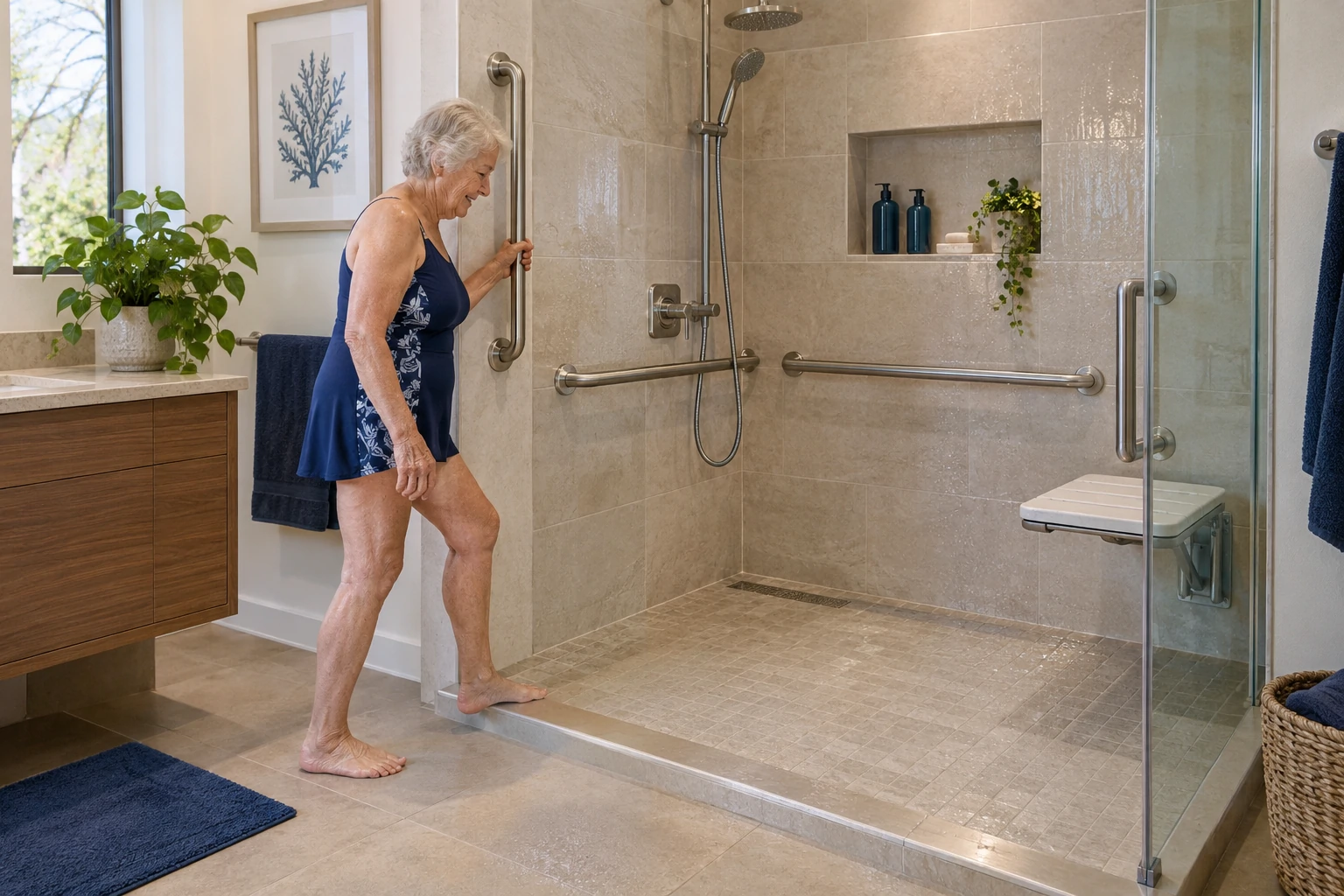
A decorative double towel bar must not be sold as a safety support unless it was designed, tested, and documented for that use. Under 2010 ADA Standards §609.8 4, a grab bar, its fasteners, mounting devices, and supporting structure must withstand a 250-pound force applied at any point without exceeding allowable stresses.
That requirement applies to grab-bar assemblies, not ordinary towel bars. Where balance or accessibility support is needed, specify an appropriate grab bar and suitable wall reinforcement. Similar color or shape does not make the products interchangeable.
Conclusion
A good double towel bar brass product combines useful capacity with honest material labeling, suitable rail spacing, a defined finish, accurate dimensions, and reliable mounting. Compare samples and drawings, confirm finish aging, and keep towel bars separate from tested safety hardware. For a retail range or project, request a quote, download our bathroom-hardware specifications, or explore our shower hardware range to discuss sizes, finishes, packaging, and OEM options.
Footnotes
1. Allied Brass presents solid-brass construction and decorative finishes as separate product characteristics. ↩︎
2. Waterworks explains that brass and burnished brass develop patina and deeper tones over time. ↩︎
3. Portals lists double towel bars in 18-, 20-, and 24-inch center-to-center sizes. ↩︎
4. ADA §609.8 specifies a 250-pound structural-strength requirement for grab-bar assemblies. ↩︎