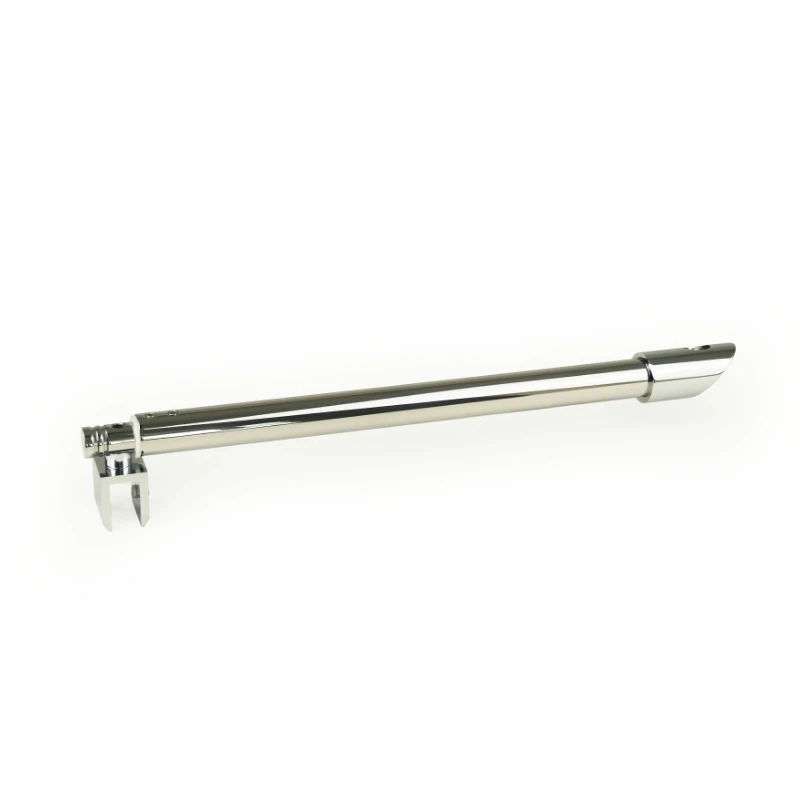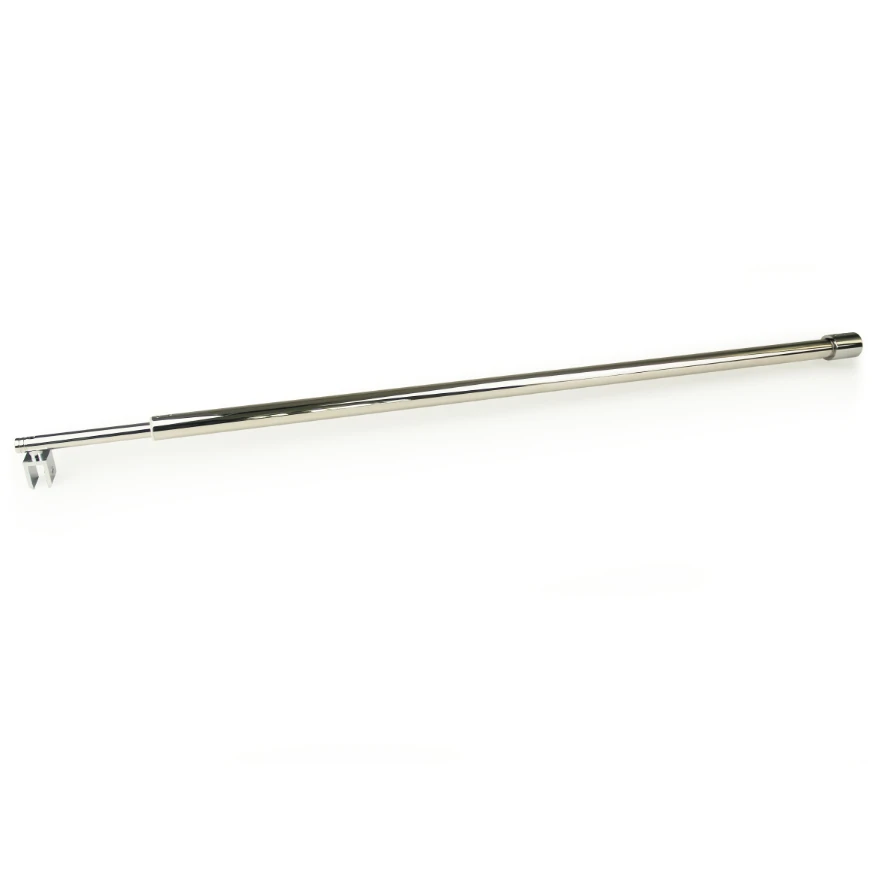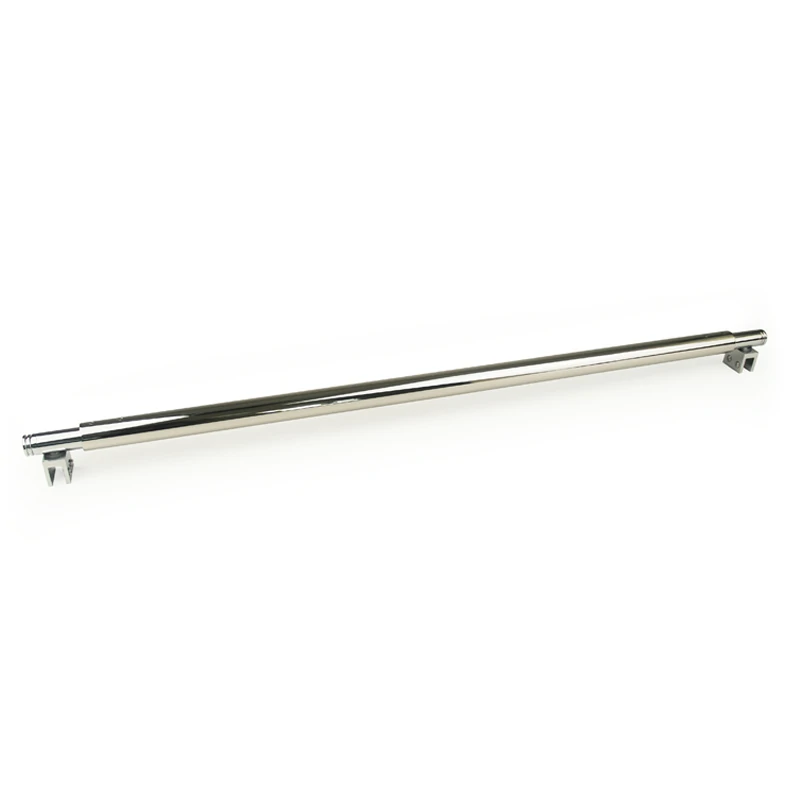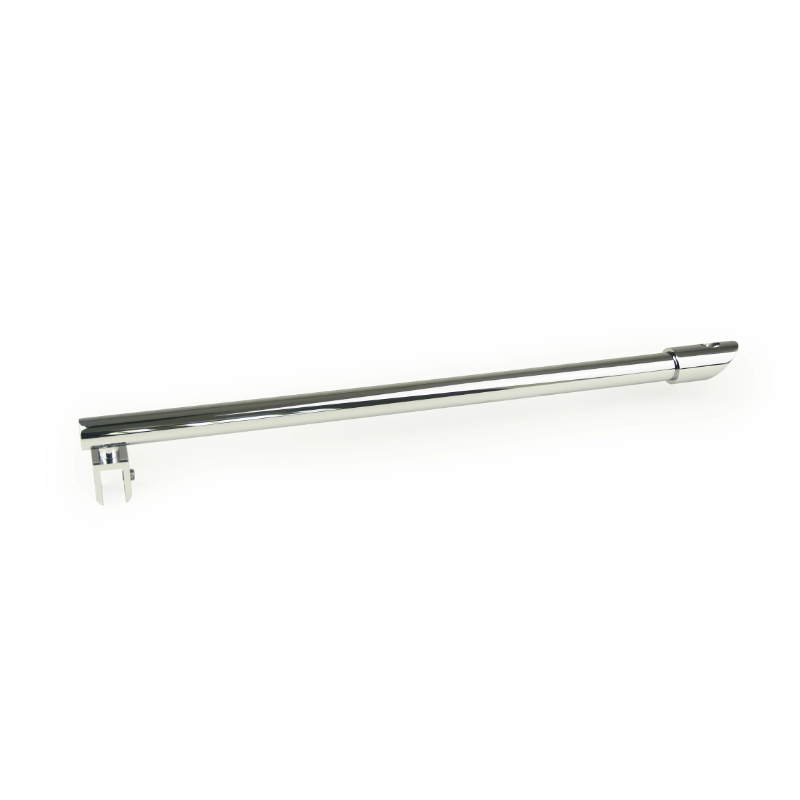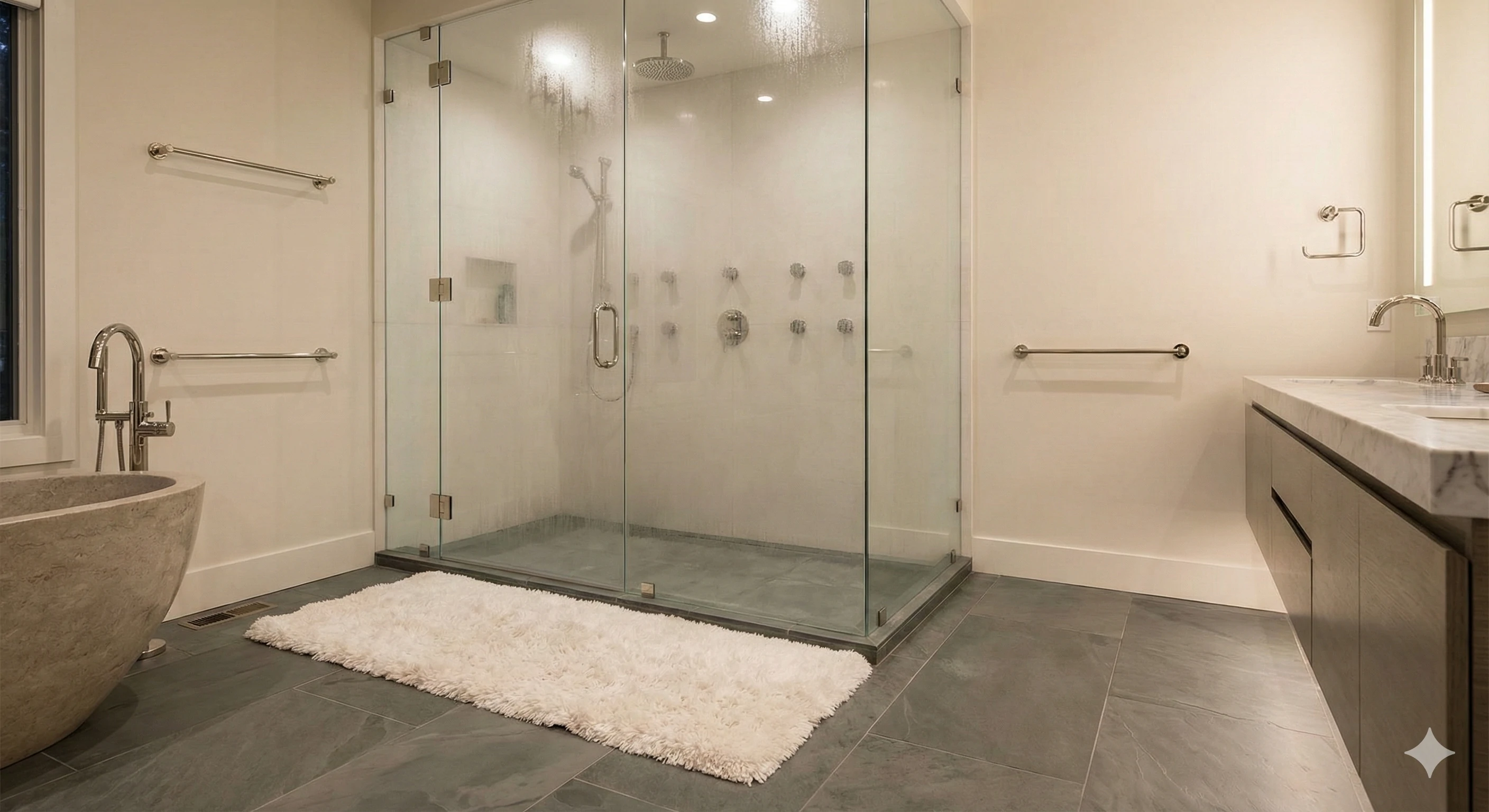
When our engineers develop shower hardware for aging-in-placeény projectsstyles, one problem appears again and again: a bathroom can look safe while offering nothing reliable to hold. Wet tile, a raised threshold, and a loose draußen towel Schlag looks rail can turn one small loss of balance into a serious fall. voo A allocator Loch/prependchips Grab-barանիշ system removes this weak point before it causes harm.
Shower handles for elderly adults should bezech purpose multiline-built, firmly_nf mounted grab bars placed wherever the user enters, stands, turns, sits, or rises. The best setup usesüss corrosion-resistant bars with a secure wet-hand grip, rounded edges, and a rated mounting system fixed to sound structure. Placement should suit the user’s actual movements.
A safe choice is not just a bar with a high capacity label. It is a complete support path that combines the rightjeb configuration, position, grip, reminders eyebolf wallKir fixing, and multiline visibility. The following guide explains how to evaluate each part.
What Shower Handles Are Best for Elderly Adults?
In our work with glass-hardwarecodes distributors and project contractors, we often see buyers choose a handle by finish or length alone. That leaves a dangerous gap because an older person reaches for support by instinct, not by product category. The safer solution is a purpose-built grab bar matched to the movement it must support.
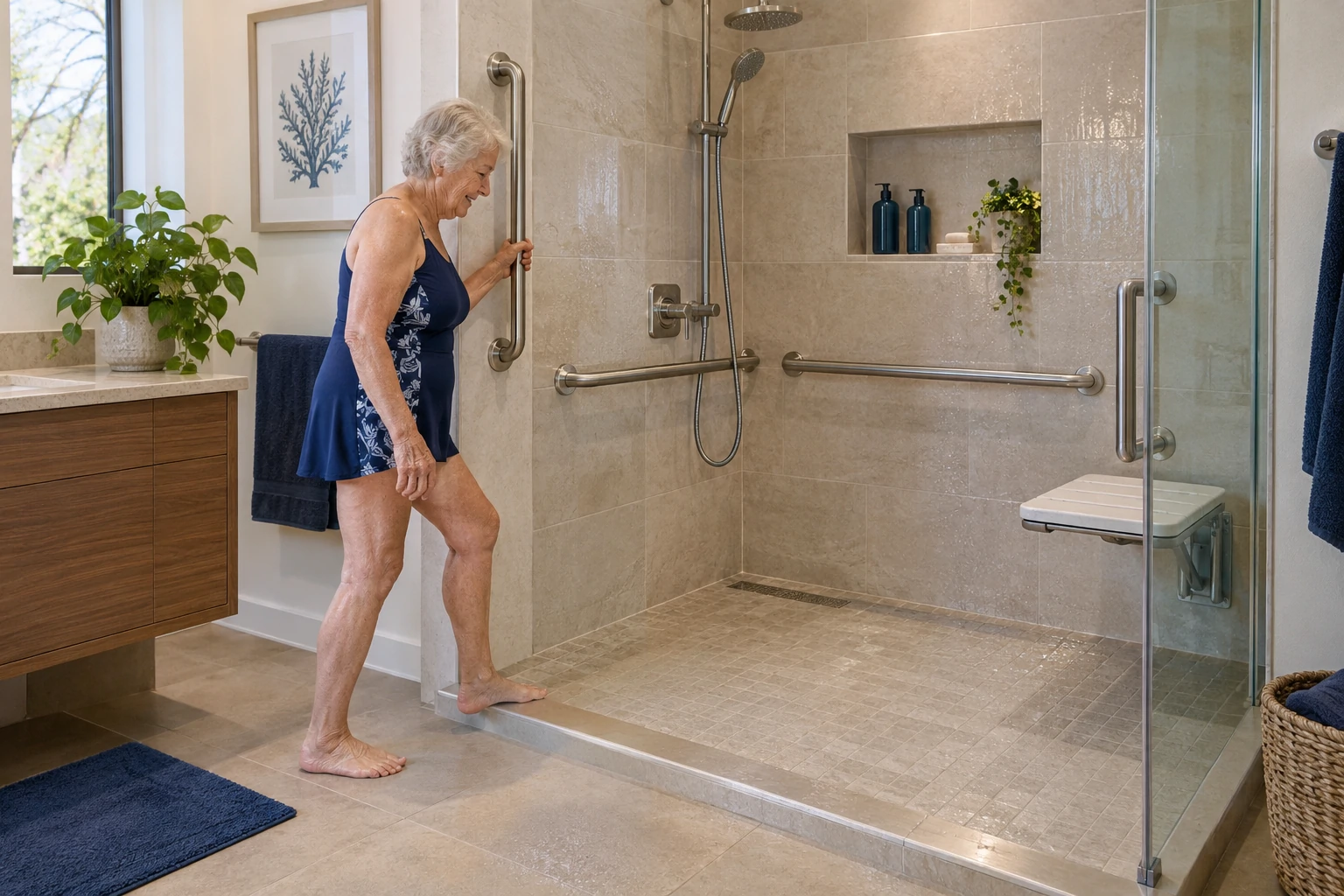
The best shower handles for elderly adults are permanently mounted grab bars matched to each movement in the bathing routine. A vertical bar supports entry, a horizontal bar offers steady support while standing, and an angled or L-shaped bar can help with lowering, rising, or changing direction.

Match the Bar to the Movement
Start by watching how the person approaches the shower on a dry floor. Note which foot crosses first, where the person turns, whether they sit, and which hand is stronger. One standard position will not suit every user.
| Configuration | Typical role | Common location |
|---|---|---|
| Vertical | Offers several grasp heights during entry and exit | At the shower entrance |
| Horizontal | Gives continuous standing or sideways support | Along the main wall |
| Angled | Follows a lowering or rising hand path | Near a seat or tub transition |
| L-shaped | Combines standing and transfer support | Beside a seat or in a larger shower |
According to the multiline CDC STEADI home safety checklist 1, people who need support should have grab bars next to and inside the tub. The entrance is not the only risk point. Support may also be needed while reaching for controls, washing, turning, or standing from a seat.
Build a Continuous Support Path
Treat the bars as links in one chain. Support should begin on the dry bathroom floor, continue across the threshold, reach the bathing position, and remain available during exit. A gap can force the user to let go at the hardest moment.
Mark possible locations with painter’s tape. Let the user rehearse the routine while the area is dry and another adult is present. If mobility is changing, an occupational therapist can assess the transfer pattern. Never treat a shower-door frame, towel rail, shelf, or shower-head slider rail as body support unless its complete assembly is specifically rated and installed for that purpose.
Where Should Shower Grab Bars Be Installed?
When we review shower-hardware drawings, the most expensive mistake is often a bar fitted neatly in the wrong place. A few inches can decide whether the user reaches naturally or must lean across wet tile. Good placement starts with the person’s movement and then checks that the chosen wall location can carry the load.
Shower grab bars should be installed along a continuous support path: outside the shower, at the entrance, beside the standing area, and near any seat or control point. The exact height and angle should fit the user, shower layout, wall structure, and applicable local accessibility rules.

Map the High-Risk Movements
Walk through the bathing routine and mark each point where the user changes level, direction, or footing. An entrance often benefits from a vertical bar because it offers several grasp heights. The main wall may need a horizontal bar for continuous balance. A seat needs support for controlled lowering and rising.
| Movement | Possible bar position | What to verify |
|---|---|---|
| Approach | Dry-side wall | Reachable before stepping onto a wet surface |
| Cross threshold | Vertical entrance bar | Does not conflict with the door or screen |
| Stand and turn | Side or back wall | Reachable without leaning or twisting |
| Use a seat | Bar beside the seat | Supports both sitting and rising |
| Exit | Entrance and outside bars | No unsupported gap during the final step |
Use ADA Dimensions as Benchmarks
Under the 2010 ADA Standards 2, required horizontal grab bars are generally positioned with the top of the gripping surface 33 to 36 inches above the finished floor. The standards also give layouts for different accessible shower types. These are useful benchmarks for covered facilities, but they are not a universal formula for every private home.
Residential placement should reflect the user’s height, reach, stronger side, seat, threshold, and local requirements. Test taped locations before drilling. Also check conflicts. A bar should not trap the hand against a control, clash with a folding seat, block the door, or force the user to reach through hot water. Coordinate the bars, controls, seat, screen, and handheld shower as one system.
Size, Grip, Material, and Mounting for Senior Shower Handles
At our factory, two bars can look equally solid after polishing but perform very differently in a wet hand or on a weak wall. An uncomfortable diameter, slippery finish, or poor anchor can defeat a strong metal tube. The safer specification covers the user’s grip and the complete structural load path.
A suitable senior shower handle has a comfortable diameter, a secure wet-hand surface, rounded edges, corrosion-resistant materials, nonrotating fittings, and a mounting system compatible with the wall. Its verified rating should cover the bar, fasteners, mounts, anchors, and supporting structure—not the metal tube alone.
Check the Grip and Visibility
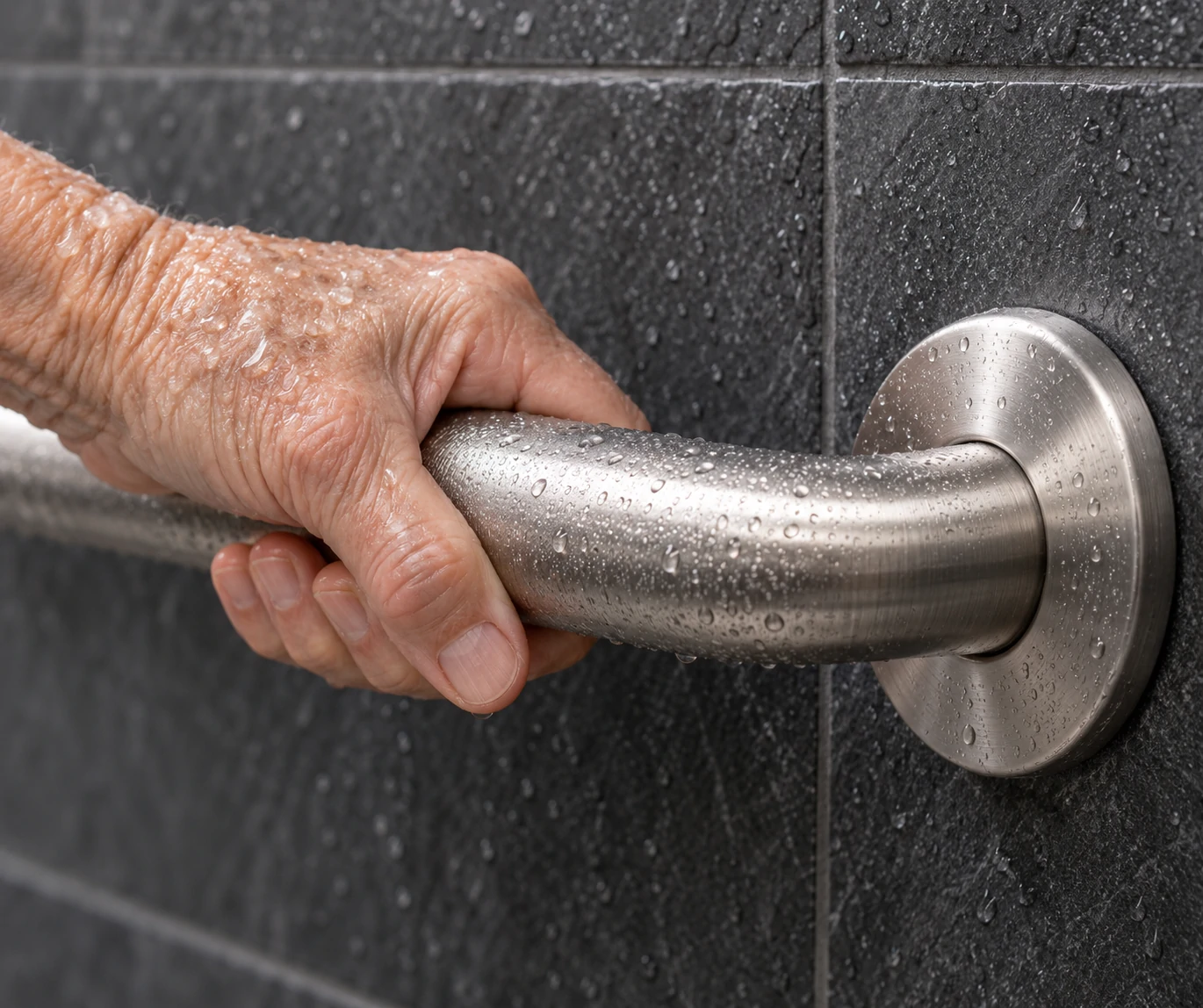
Under the 2010 ADA Standards, a circular grab bar 3 has an outside diameter of 1 1/4 to 2 inches, with 1 1/2 inches between the wall and bar. The standards also call for rounded edges, surfaces without sharp or abrasive elements, and bars that do not rotate in their fittings.
For arthritis or reduced hand strength, ask the user to hold sample diameters and textures with a damp hand. The fingers should close without strain. Avoid a surface that becomes slick when soapy or is so rough that it irritates the skin. Choose a finish that contrasts with the tile. According to CDC vision guidance 4, good lighting and bathroom grab bars are both useful parts of home fall prevention.
| Feature | What to check | Why it matters |
|---|---|---|
| Grip | Comfortable profile and wet-hand texture | Supports a quick, secure grasp |
| Surface | Rounded edges and no sharp areas | Reduces contact hazards |
| Material | Corrosion-resistant system for wet use | Supports long-term function |
| Visibility | Contrast with tile and good lighting | Makes the bar easier to locate |
| Assembly | Rating includes mounts and support | Reflects the real load path |
Mount the Complete System to Sound Structure
Identify whether the wall is framed, masonry, tiled backer board, acrylic, or another assembly. Fasten the rated system to structural blocking, studs, or a substrate-compatible rated anchor. Locate hidden pipes and cables, follow the specified hole pattern and fasteners, and seal every penetration. If the wall is unknown, hollow, tiled, or damaged, use a qualified installer.
Section 609.8 of the 2010 ADA Standards 5 uses a 250-pound force applied vertically or horizontally to evaluate the bar and its whole load path, including fasteners, mounts, and supporting structure. This is an assembly performance criterion, not a simple statement of maximum user weight.
After installation, check for rotation, flex, loose flanges, cracked tile, or gaps in sealant. Stop using the bar if any part moves or the wall shows damage. For public, commercial, or care projects, confirm the applicable accessibility and building rules with the responsible local professional.
Fixed Grab Bars vs. Suction Shower Handles
When buyers ask us for a no-drill option, the attraction is easy to understand. Suction handles are quick to place and do not damage tile, but that convenience can create false confidence during a difficult transfer. Primary body support needs a mounting method that remains dependable under wet, changing conditions.
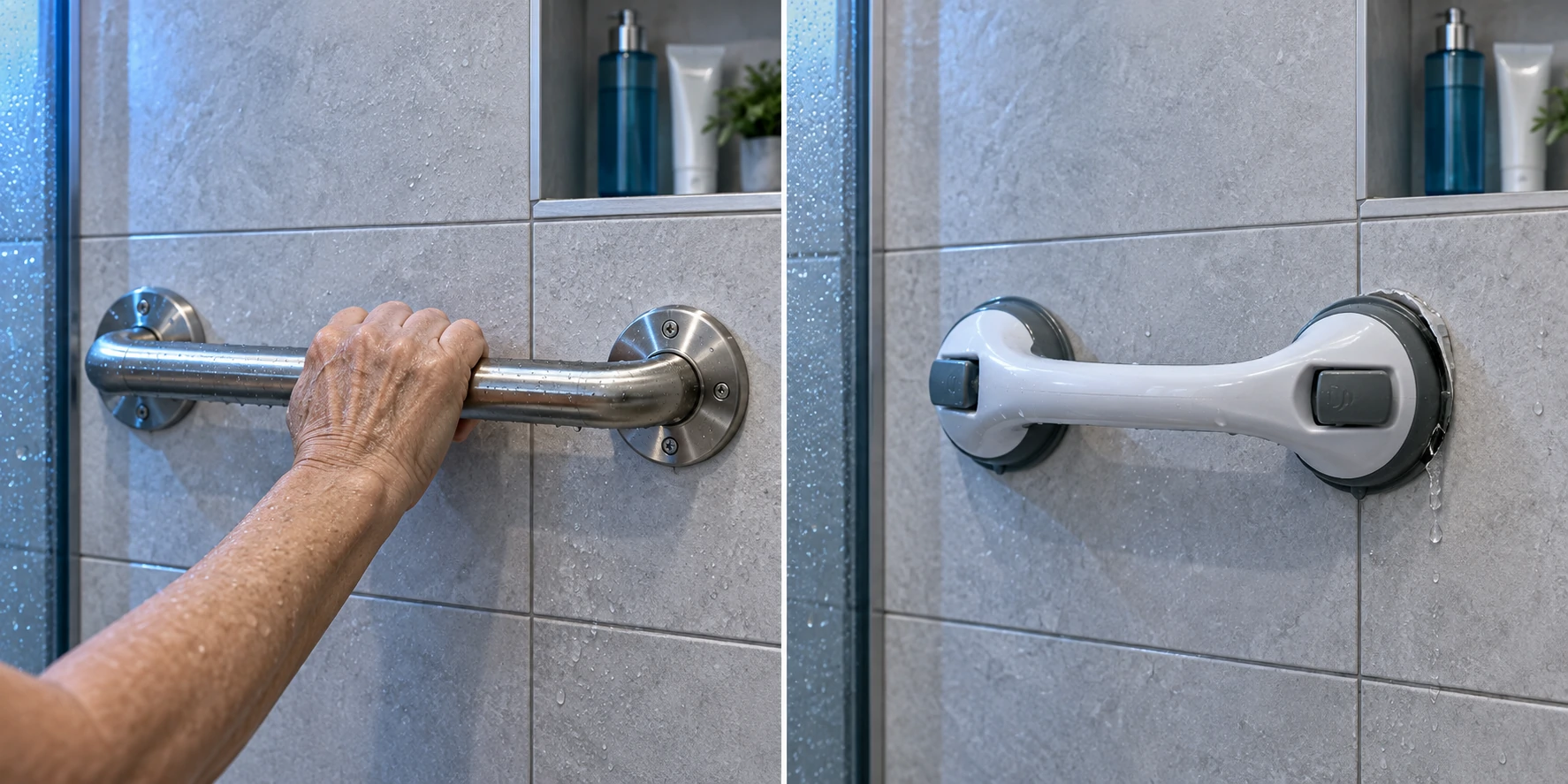
Fixed grab bars are the safer primary choice for routine weight-bearing, while suction shower handles should not be treated as dependable transfer supports. Suction performance can change with tile texture, grout lines, moisture, temperature, cleaning residue, and installation, so a handle that feels secure today may later move or release.
Why Suction Performance Can Change
A suction cup needs a clean, smooth, nonporous surface and an intact seal. Grout joints, small tiles, textured finishes, soap film, moisture, and temperature changes can interfere with adhesion. The user may not notice a gradual loss of grip before the handle slides or releases.
A 2025 peer-reviewed laboratory study 6 in the Journal of Rehabilitation and Assistive Technologies Engineering tested suction-cup handholds under typical bathing conditions and wall materials. The researchers reported poor overall efficacy and observed sliding or detachment. This supports treating suction models as temporary aids with important limits, not as substitutes for structurally mounted transfer bars.
| Product or fixture | Primary transfer support? | Main concern |
|---|---|---|
| Permanently mounted, rated grab bar | Yes, when correctly installed | Wall support and installation must be verified |
| Suction-cup handle | No | Adhesion depends on changing conditions |
| Towel rail | No, unless expressly rated | Typical mounts may carry towels only |
| Shower-door frame or handle | No, unless expressly rated | Components may move or carry load poorly |
| Shower slider rail | No, unless expressly rated as a grab bar | Similar appearance does not prove strength |
When Permanent Installation Is Difficult
Rental rules, finished tile, or unknown wall construction can make drilling difficult. Ask the property owner about an approved accessibility modification. A qualified installer may identify a rated fixing method for the existing substrate.
If a clinician recommends a temporary device for a specific situation, follow that advice and the product instructions. Keep its use within the manufacturer’s stated limits. Test it before every use, but remember that a successful pull test does not turn it into a permanently anchored grab bar.
Conclusion
Shower handles for elderly adults work best as a planned system. Choose purpose-built, permanently mounted grab bars and match their configuration to the user’s movements. Check wet-hand grip, visibility, corrosion resistance, assembly strength, wall structure, and local requirements. Do not rely on towel rails, shower frames, slider rails, or suction handles as primary body-weight supports unless the complete product and mounting method are expressly designed and rated for that purpose.
If you are sourcing grab bars or other shower hardware for residential, senior-living, hospitality, or distribution projects, share your wall structure, layout, finish, target market, and required standard with our team. You can request a quotation, download our shower hardware catalog and specifications, or review our related shower hardware products to compare suitable configurations.
Footnotes
1. CDC recommends grab bars next to and inside tubs for people who need support. ↩︎
2. DOJ publication of the 2010 ADA Standards for accessible bathing facilities. ↩︎
3. U.S. Access Board specifications cover grab-bar diameter, spacing, edges, fittings, and installation. ↩︎
4. CDC recommends good lighting and bathroom or shower grab bars to reduce fall risk. ↩︎
5. Section 609.8 applies a 250-pound force to the bar and its full mounting path. ↩︎
6. Laboratory testing found sliding or detachment under typical bathing conditions and wall materials. ↩︎