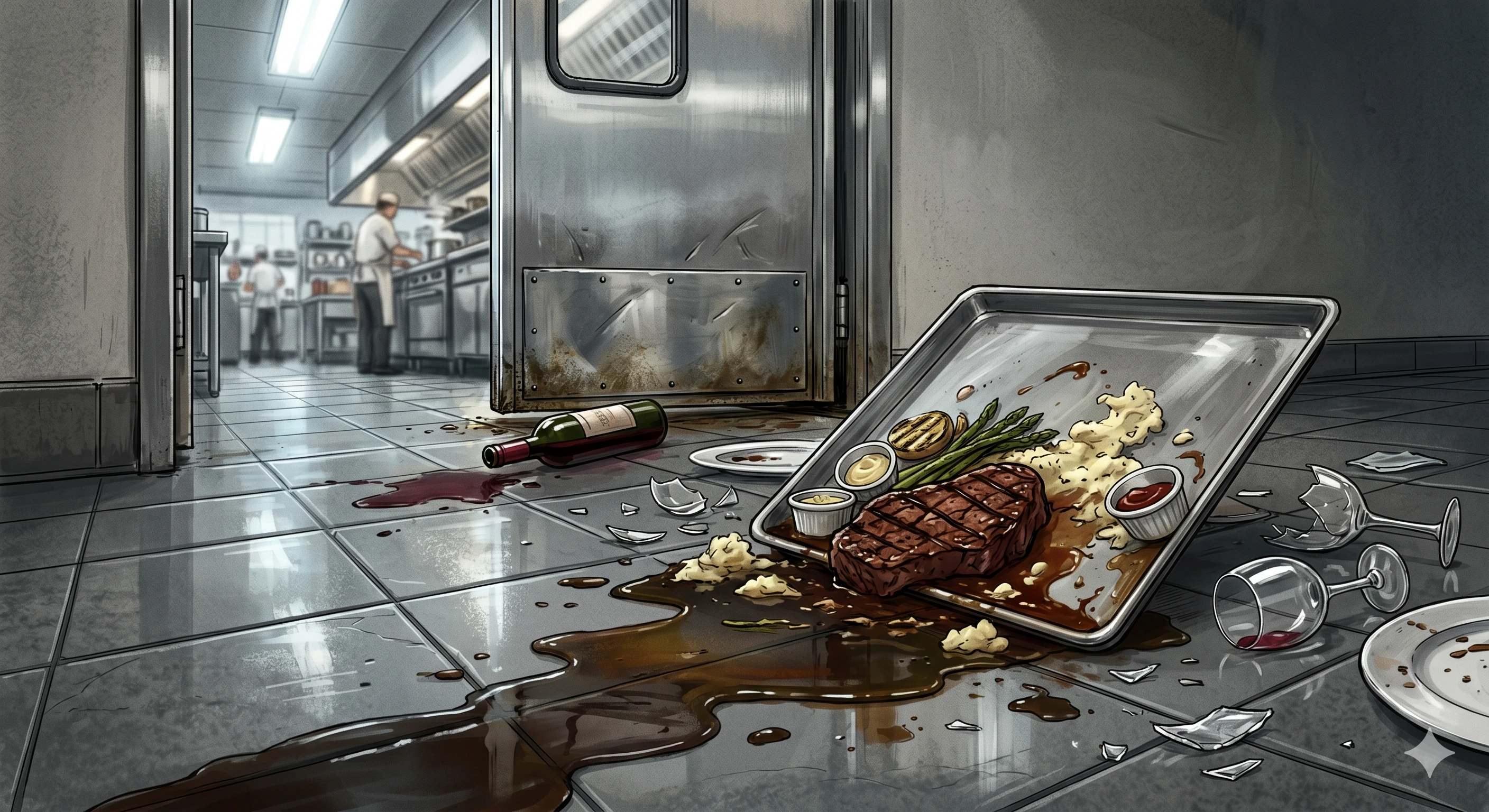
It is 7:45 on a Friday night. The kitchen is firing on all cylinders. Tickets are streaming in, pans are clanging, and your line cooks are shouting confirmations across the pass. Your best server grabs two searing-hot entrees, pivots toward the dining room, and then stops dead — because someone is pushing through the door from the other side. Plates wobble. Sauce spills. A twelve-dollar steak hits the floor.
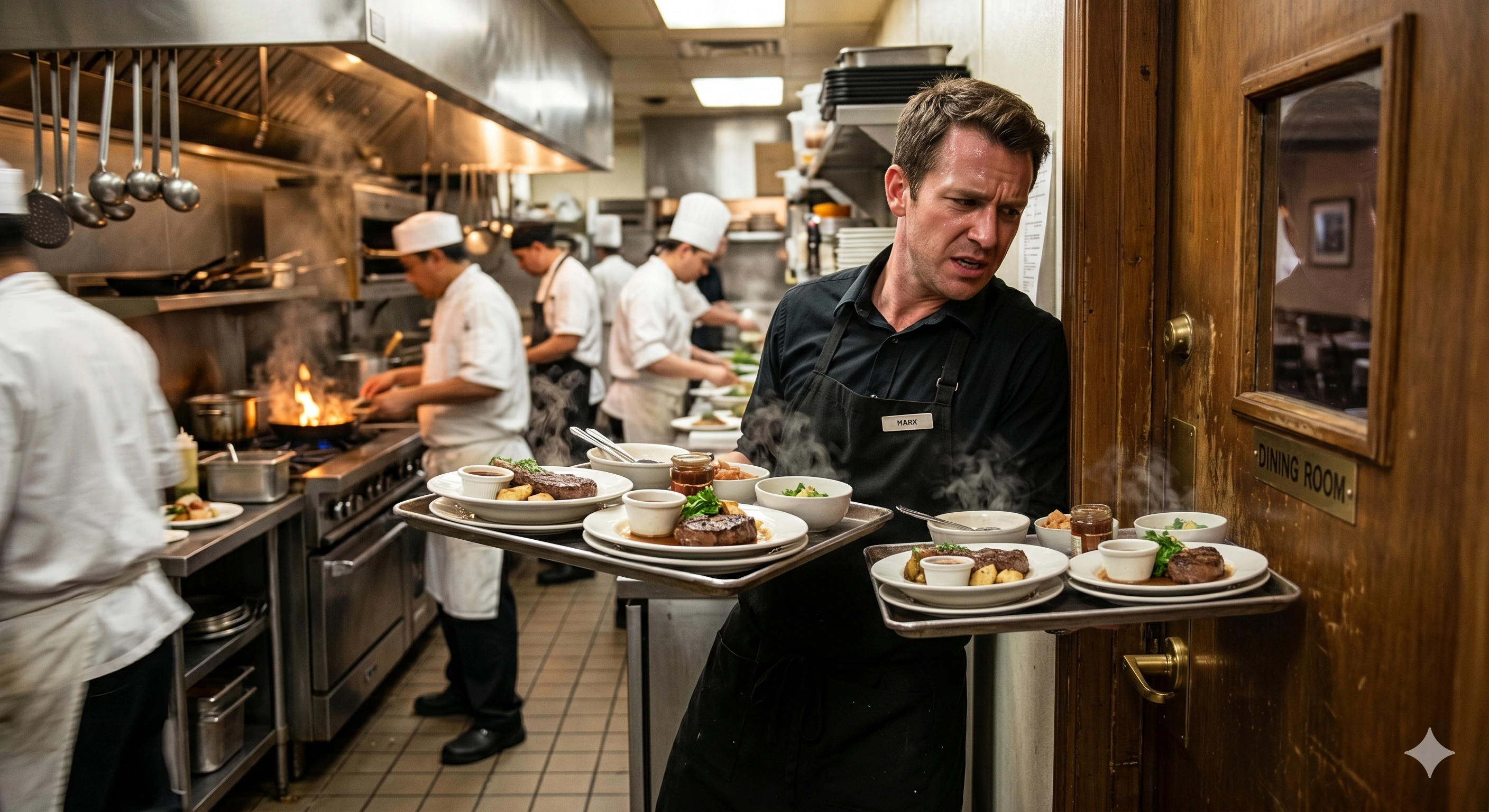
This is not a freak accident. In busy restaurants, it happens every single night. And in most cases, the real culprit is not the staff. It is the door.
Standard kitchen doors — the kind that swing one way and latch shut — were never designed for the controlled chaos of . They force servers to stop, shift their grip, pull a handle, and shuffle through sideways, all while balancing trays loaded with hot food, glassware, or sharp cutlery. Prop the door open to avoid the hassle, and a different problem takes over: a wall of kitchen heat, grease-laden air, and shouted orders rolls straight into the dining room, landing on your guests like an uninvited course.
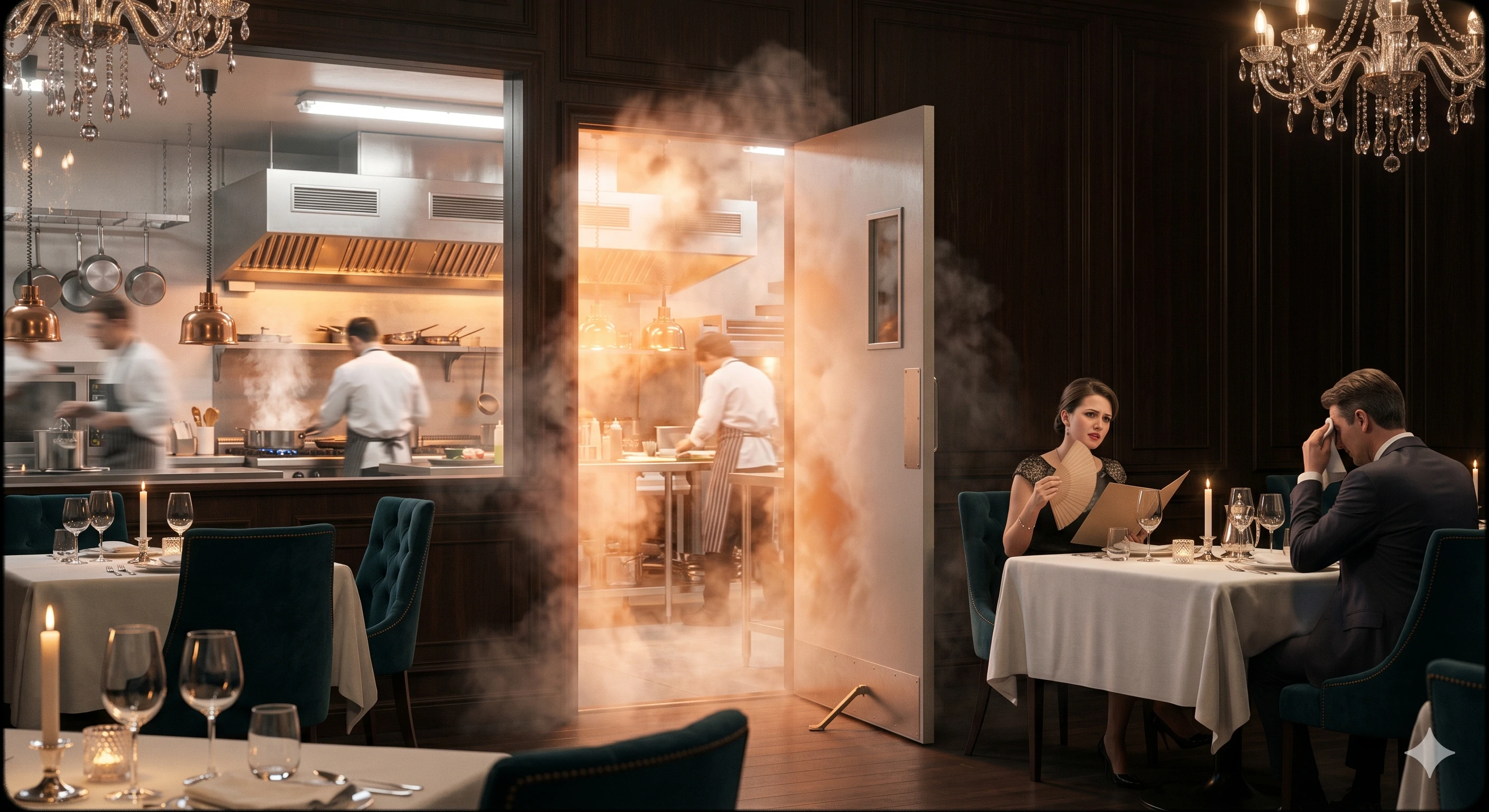
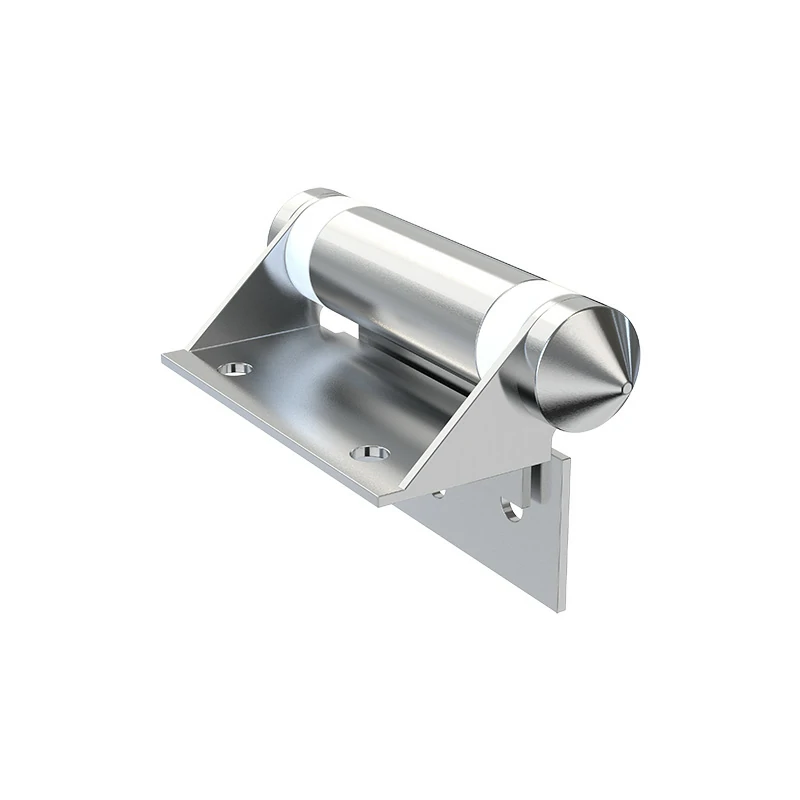
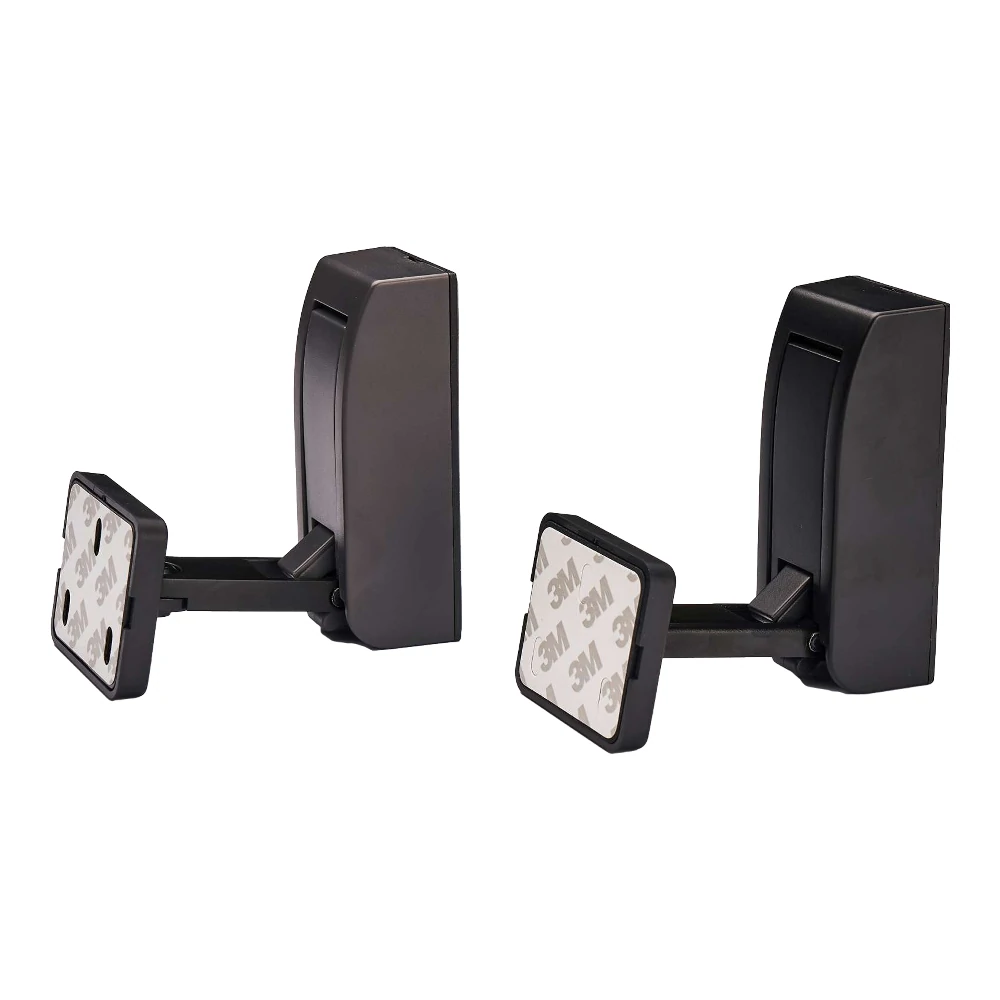
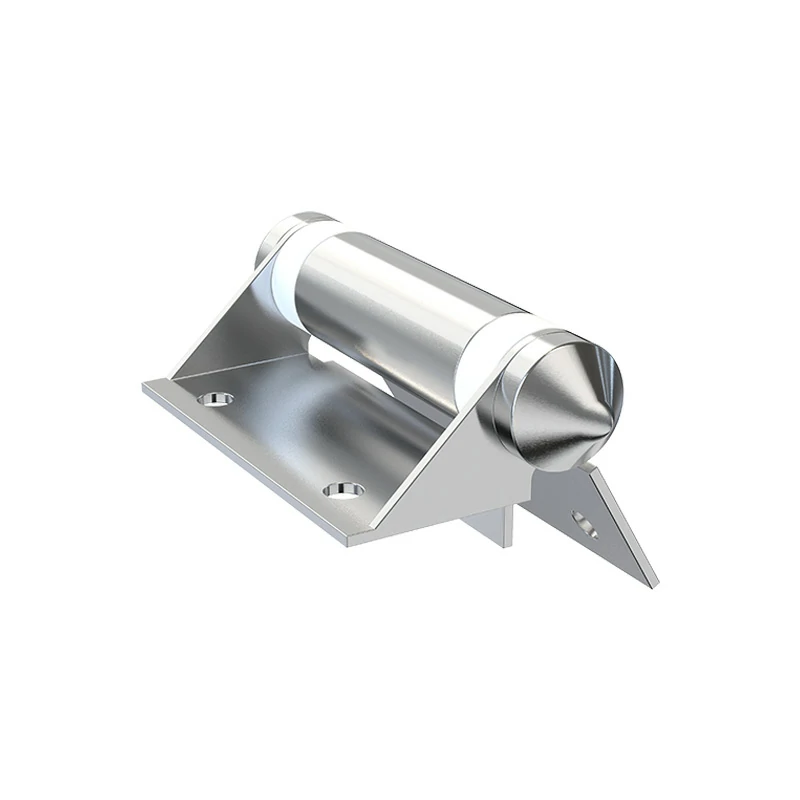
There is a better way, and it has been hiding in plain sight for over a century. The double action spring hinge — sometimes called a saloon door hinge — is a small, unglamorous piece of hardware that quietly solves one of the biggest operational headaches in the restaurant industry. It lets doors swing freely in both directions, then pulls them back to center on their own, sealing the kitchen off from the dining room without anyone lifting a finger.
This guide breaks down exactly how these hinges work, why they matter for your bottom line, and how to choose the right ones for your operation.
The Hidden Cost of a Bad Kitchen Door
Before diving into hardware specs, it is worth pausing on the problems that bring restaurant owners to this topic in the first place. Because the pain is real — and it is more expensive than most operators realize.
The "Full Hands" Dilemma
Picture the typical path from kitchen to table. A server picks up two or three plated entrees, balances them across both forearms, and heads for the door. Now what? Their hands are completely occupied. Grabbing a door handle means setting something down — or worse, attempting a dangerous one-handed juggle with scalding-hot porcelain.
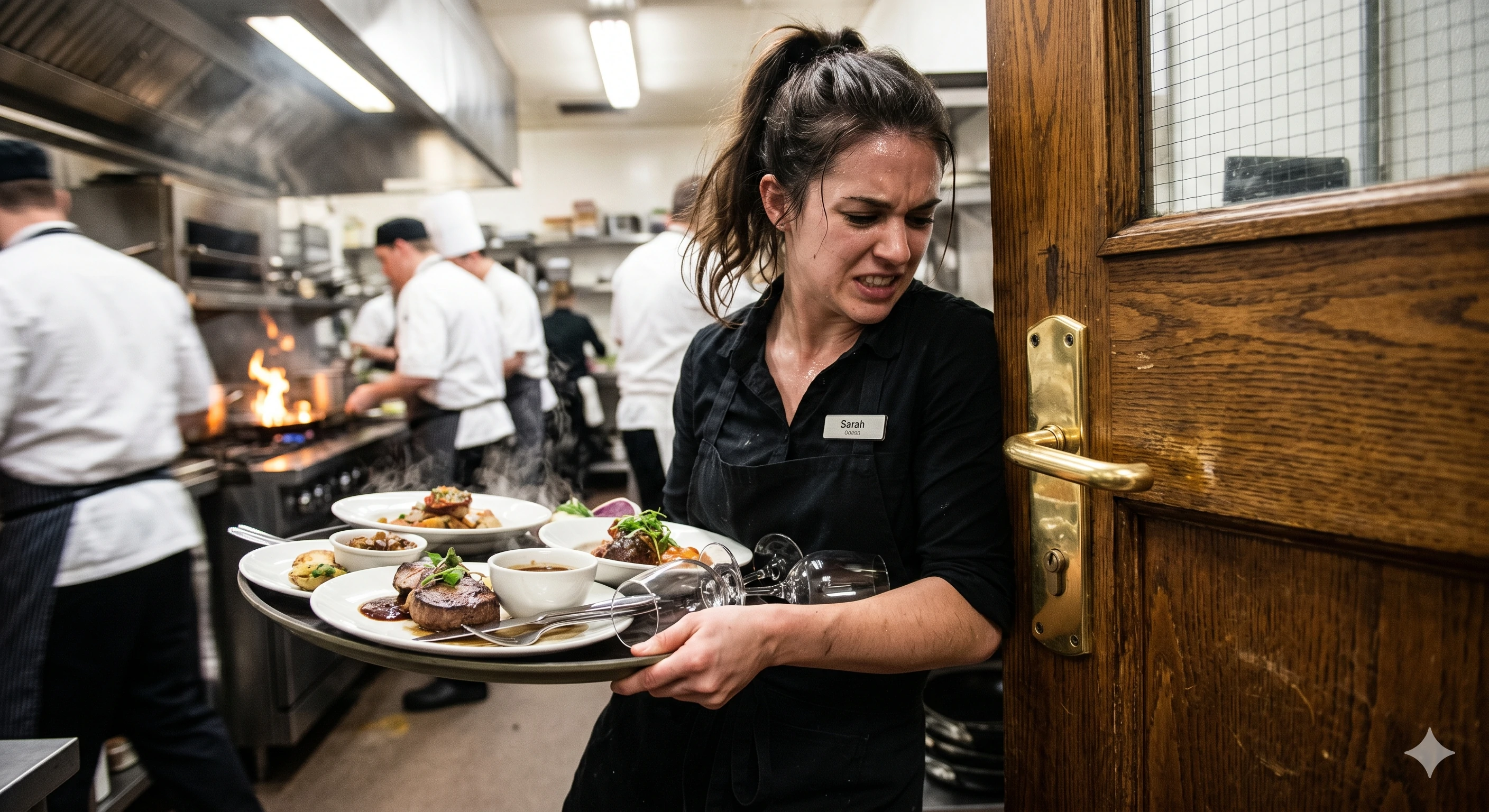
Some servers learn to bump the door open with a hip or shoulder. Others back through it. A few resort to kicking. Every one of these workarounds is an injury waiting to happen: burns from shifting plates, strained backs from awkward body mechanics, and slip-and-fall risks when footwork gets creative on a greasy floor. According to the , slips, trips, and falls are among the most common , and an obstructive door directly contributes to that statistic.
Every dropped plate is not just wasted food. It is wasted labor, a delayed table, a disappointed guest, and a hit to your . Over the course of a busy month, even a few incidents add up to hundreds — sometimes thousands — of dollars in losses.
The Ambiance Killer
When the solution to the door problem is to simply prop it open, the kitchen invades the dining room. Guests seated near the kitchen entrance are hit with blasts of heat from commercial ovens running at 500 degrees. They smell fryer oil instead of their wine. They hear the unfiltered soundtrack of a working kitchen — metal on metal, shouted orders, the relentless hum of exhaust fans.
For a , this might be tolerable. For any restaurant trying to create a comfortable dining atmosphere, it is a dealbreaker. Negative reviews citing noise, heat, or kitchen smells near certain tables are a recurring theme on platforms like Yelp and Google, and they directly influence whether new customers walk through the front door.
A kitchen door is supposed to be a barrier — a clear line between the controlled presentation of the dining room and the productive chaos behind it. When that barrier fails, the guest experience suffers, and so do your reviews.
The Bottleneck Collision
In a restaurant with a single standard-swing kitchen door, traffic moves in one direction at a time. Servers heading out with food and bussers heading in with dirty dishes are forced to share the same narrow opening, often at a near-run during peak service. The result is predictable: collisions at the door, near-misses with hot liquids, shattered glassware, and a constant, stressful game of "who goes first" that slows everything down.
This bottleneck does not just waste food. It wastes time. Every second a server spends waiting at the door or recovering from a near-collision is a second they are not attending to guests. Multiply that across an entire service, and table turnover rates drop, ticket times climb, and revenue per seat quietly erodes.
How Double Action Spring Hinges Solve the Problem
So what exactly is a , and why does it work so well in this environment?
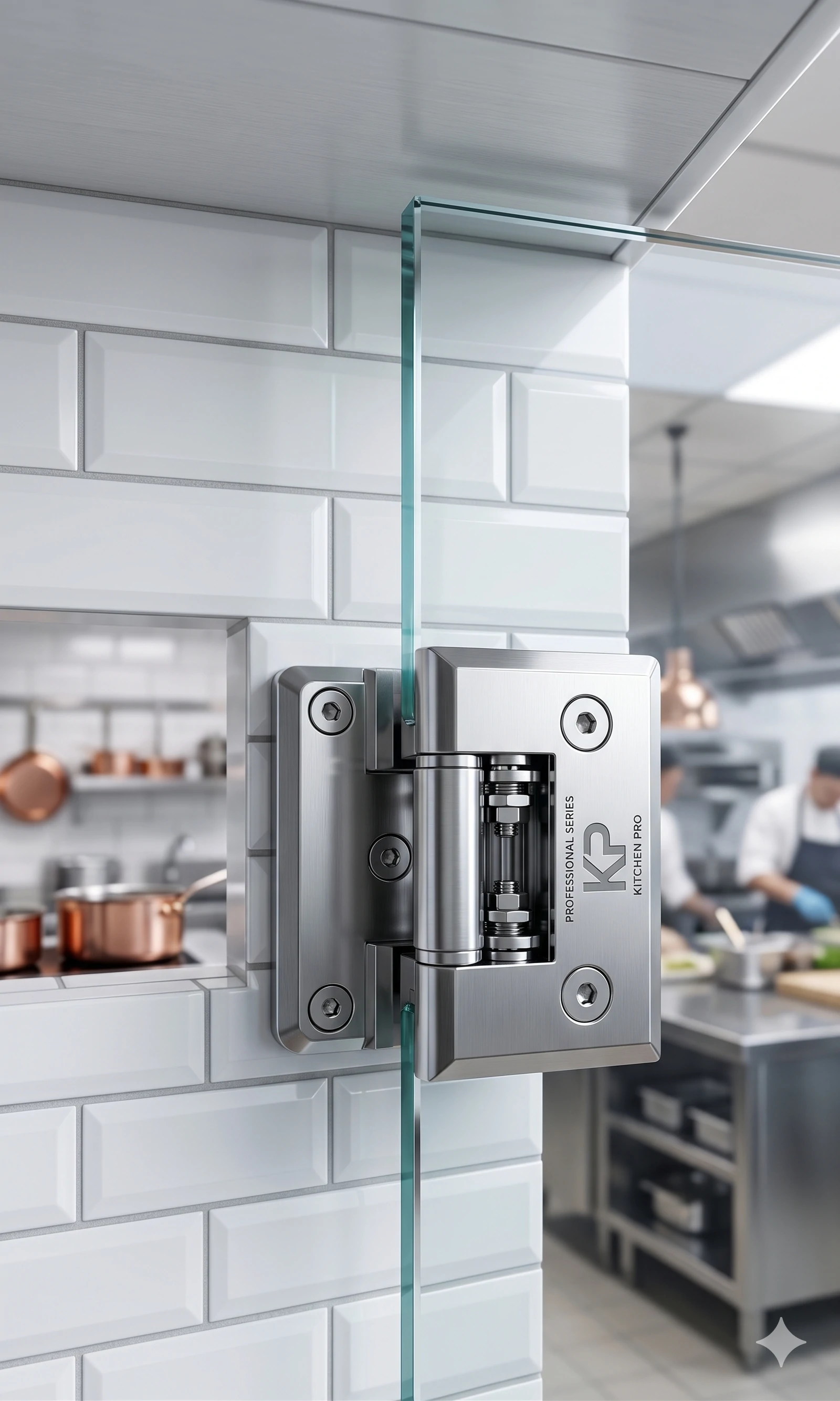
At its core, the concept is beautifully simple. Unlike a standard hinge that allows a door to swing in only one direction, a double action spring hinge permits a full 180 degrees of movement — 90 degrees in each direction from center. Push the door away from you, and it swings open. Push it from the other side, and it swings the opposite way just as easily. Release it, and a built-in spring mechanism pulls it smoothly back to dead center, fully closed.
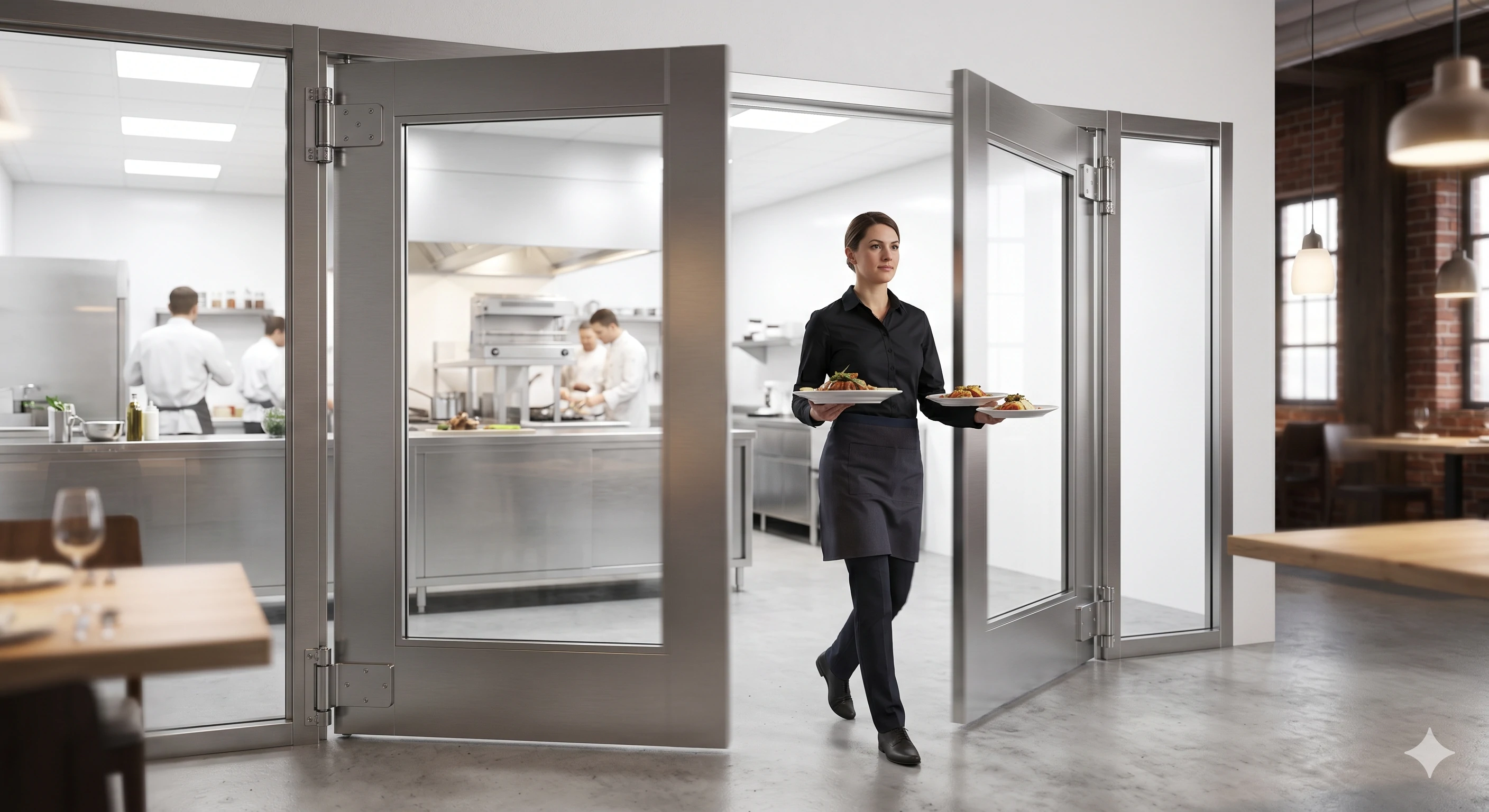
No handles. No latches. No waiting. A server walks up with both hands full, bumps the door with a forearm or shoulder, walks through, and the door quietly returns to its closed position behind them. The entire interaction takes less than two seconds.
Here is what makes these hinges so effective in a commercial kitchen setting.
Hands-Free, Two-Way Access
The defining feature of a double action hinge is . Staff can push through the door from either side — kitchen to dining room, or dining room to kitchen — without stopping, turning, or setting anything down. This transforms the kitchen entrance from a chokepoint into a fluid throughway.
In operations that install a pair of swinging doors side by side, managers can designate one door as "In" and the other as "Out," creating dedicated traffic lanes. This simple layout change can eliminate staff collisions almost entirely, dramatically reducing accidents and speeding up the flow of service.
Adjustable Spring Tension for Controlled Closing
One of the most common concerns about swinging doors is safety: will the door fly back and strike the next person walking through? With a quality commercial spring hinge, the answer is no — because the closing speed is adjustable.
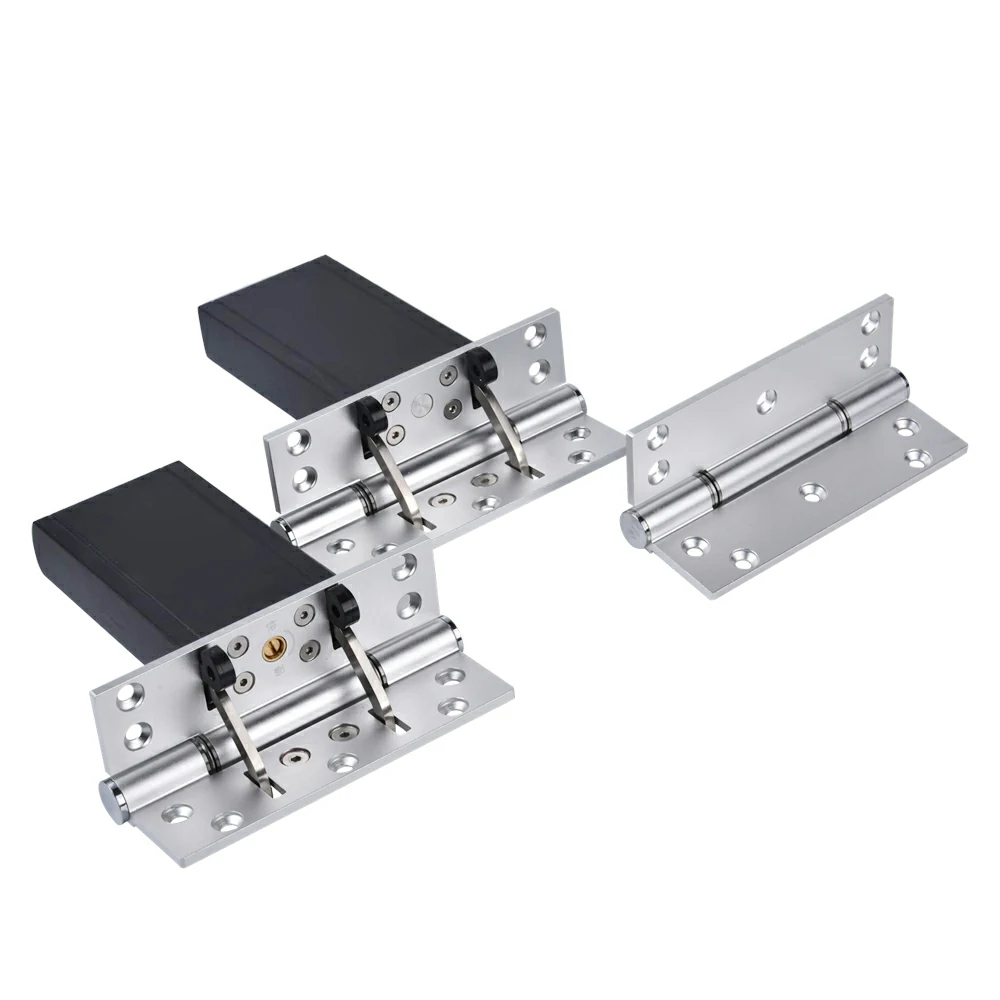
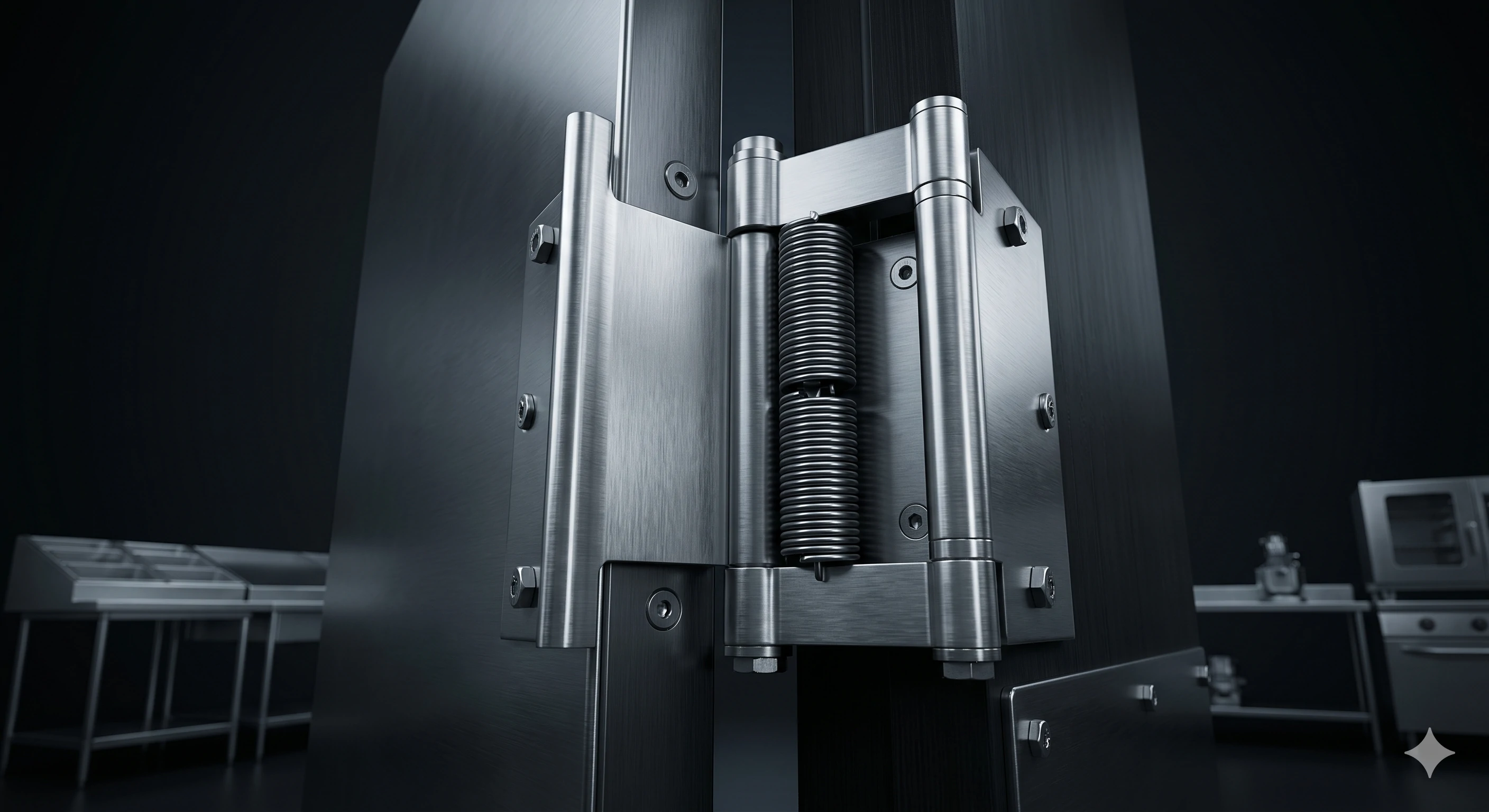
Most double action spring hinges feature a tension adjustment mechanism, typically a hex bolt or similar fitting at the top or bottom of the hinge barrel. By tightening or loosening this adjustment, a manager can dial in exactly how fast or slow the door returns to center. A heavier door in a high-traffic area might need a firmer spring to close decisively. A lighter door near a server station might benefit from a gentler, slower return. The point is control: the door closes itself every time, at a speed that keeps everyone safe.
Automatic Self-Centering: The Invisible Seal
Beyond the convenience of hands-free operation, the self-centering action of a spring hinge serves a critical environmental function. Every time someone walks through and releases the door, the spring pulls it back to an exact center position — fully closed, flush in the frame.
This matters because a kitchen door is not just a traffic device. It is an environmental barrier. When it closes properly, it contains heat so the dining room stays comfortable. It blocks airborne grease and cooking odors from reaching guests. It dampens the noise of a working kitchen — the clatter, the callouts, the exhaust fans — keeping the dining room atmosphere intact.
A door that stays open even a few inches defeats the purpose. The self-centering spring ensures that the seal is restored automatically, every single time, without relying on any staff member to remember to close it.
Why Commercial-Grade Hardware Matters
Understanding how double action spring hinges work is one thing. Choosing the right ones is another. And this is where many restaurant owners make a costly mistake: they underestimate the abuse their kitchen doors endure, and they buy hardware that is not built to survive it.
Commercial Hinges vs. Residential Hinges
Walk into any hardware store and you will find double action spring hinges on the shelf. They are marketed for café doors, pantry doors, and decorative saloon-style entries in homes. They are also, for the most part, completely unsuitable for a commercial kitchen.
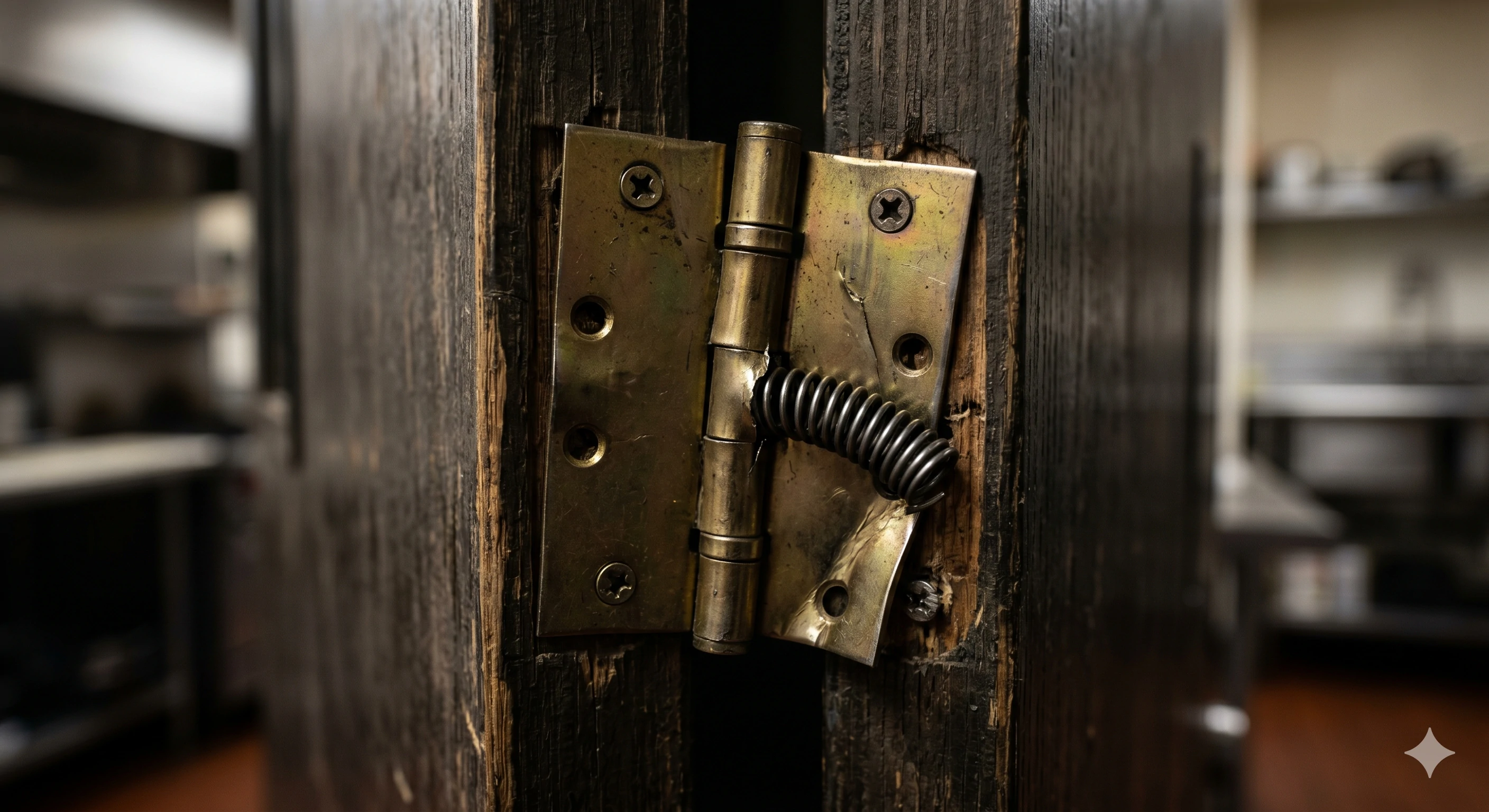
The difference comes down to construction and duty cycle. A residential spring hinge is designed to handle a few dozen gentle pushes per day from a single household. A commercial kitchen door gets hit hundreds of times per shift — kicked open by servers in a hurry, shoved with rolling carts, and slammed by the sheer momentum of a busy line. Lightweight residential hinges, often made from thin-gauge steel or zinc alloy, will fatigue, sag, or snap under this kind of punishment within days.
Commercial-grade double action spring hinges are built from or stainless steel. Their internal springs are rated for tens of thousands of cycles. Their pivot points are precision-machined to resist wobble and misalignment over years of hard use. They cost more upfront, but they last — and in a restaurant, reliability is not optional.
Spring Hinges vs. Electronic
Some operators, especially those designing new buildouts, consider with motion sensors. On paper, it sounds ideal: the door opens when someone approaches and closes behind them, no contact required.
In practice, electronic doors are a poor fit for most commercial kitchens. The upfront cost is dramatically higher — often thousands of dollars for the door, sensor system, and installation, compared to a few hundred for a pair of commercial spring hinges and compatible swing doors. The sensors themselves are vulnerable to the kitchen environment; grease buildup, steam, and temperature fluctuations cause false triggers and failures. And when an electronic door breaks during a Friday night rush, you have a serious operational problem that requires a specialized technician to fix.
Spring hinges, by contrast, are purely mechanical. There are no sensors to fog up, no motors to burn out, no circuit boards to short-circuit. If a spring ever does weaken after years of service, replacing a hinge is a straightforward job that takes minutes with basic hand tools. The total cost of ownership over a five- or ten-year period is a fraction of what an electronic system demands.
The ROI of Smoother Traffic Flow
It is easy to dismiss door hardware as a minor detail. But when you calculate the downstream effects, the return on investment becomes difficult to ignore.
Fewer collisions and dropped plates mean lower food waste and fewer remakes, directly improving food cost. Faster, smoother traffic through the kitchen entrance means shorter ticket times, which means higher table turnover during peak hours — the single biggest lever for increasing revenue in a capacity-constrained restaurant. A properly sealed kitchen door preserves the dining room environment, reducing noise and odor complaints that drive negative reviews and lost repeat business.
And then there is the safety dimension. Reducing slip-and-fall incidents and burns from awkward door maneuvers means fewer , less staff downtime, and lower insurance costs over time.
All of this from a piece of hardware that costs a fraction of what most restaurants spend on a single night's food order.
Conclusion
A restaurant's service is only as fast as its slowest bottleneck. For too many operations, that bottleneck is the kitchen door — a problem so familiar that most teams have stopped seeing it as a problem at all. They have simply adapted, absorbing the collisions, the dropped plates, the noise complaints, and the wasted seconds as unavoidable costs of doing business.
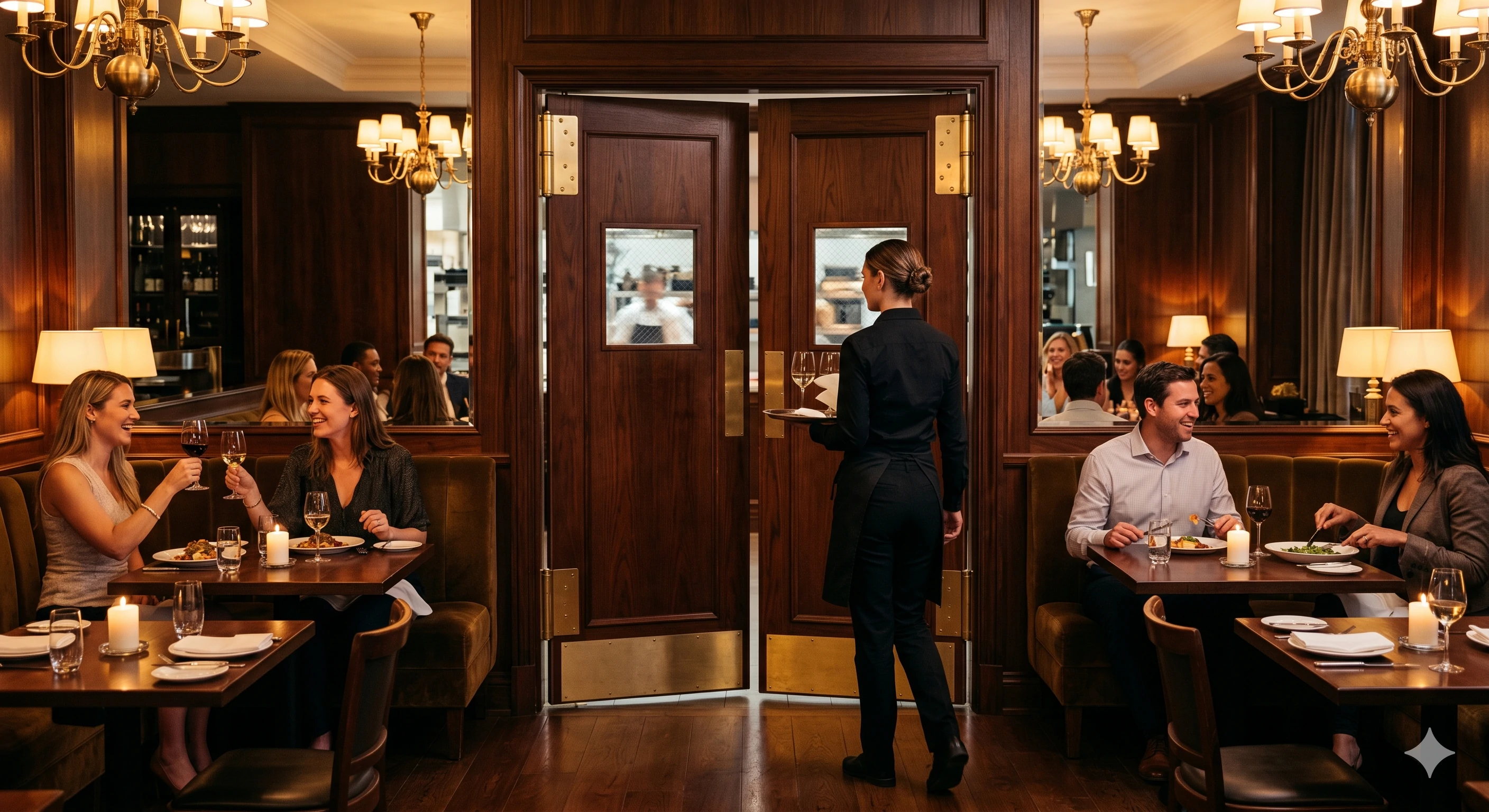
They are not unavoidable. Double action spring hinges are a proven, low-cost, low-maintenance solution that transforms the kitchen entrance from a daily hazard into a seamless, hands-free throughway. They keep staff moving safely, food arriving hot, and the dining room atmosphere exactly where it should be — undisturbed.
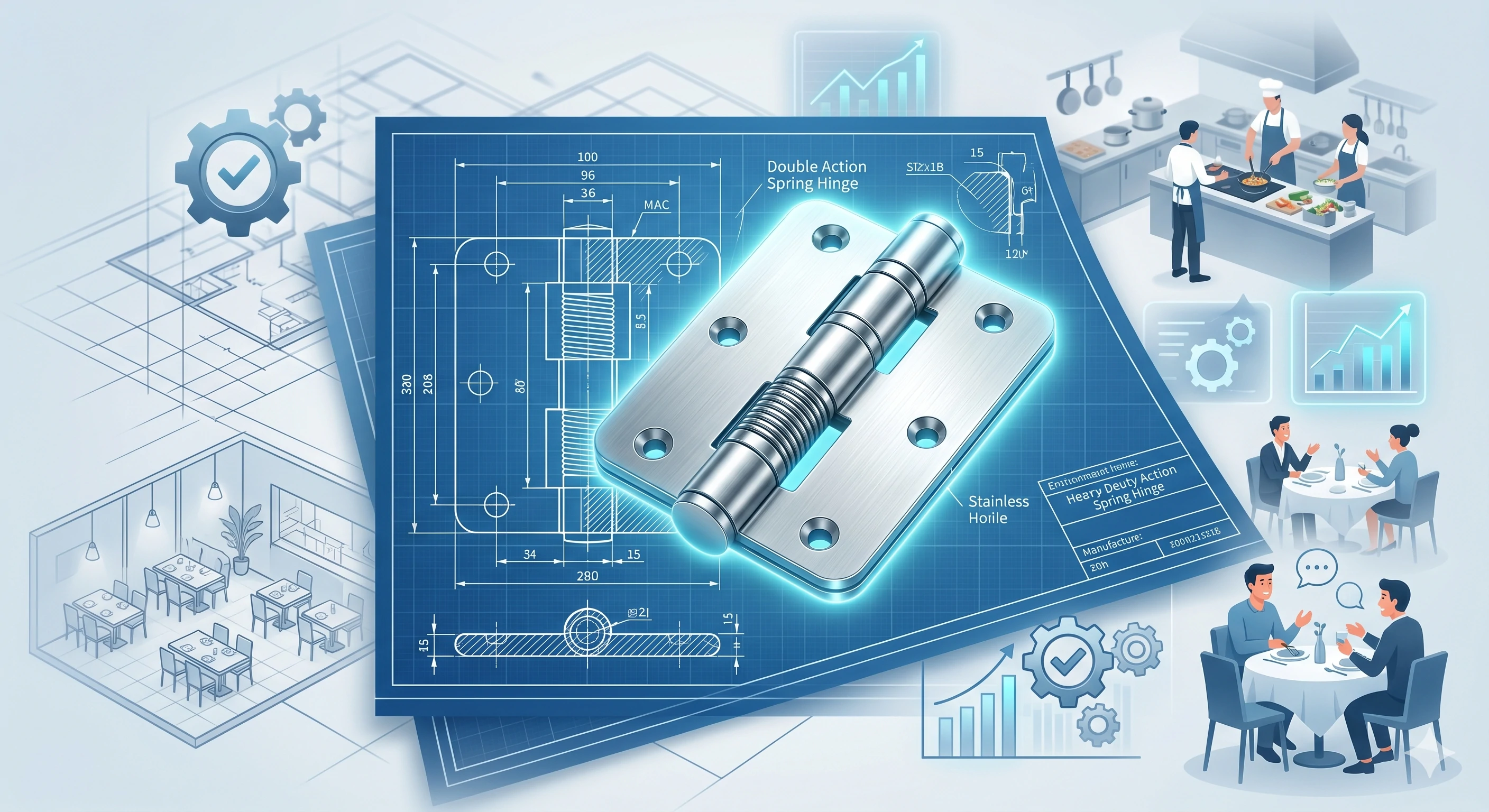
Stop letting bad doors slow down your dinner service. Upgrade your restaurant's flow today with premium heavy-duty double action spring hinges. Contact our hardware team for sizing, specifications, and bulk pricing.
Footnotes
1. Learn about the commercial foodservice industry and its distinct operational demands.
2. Official resources and advocacy information from the leading restaurant industry organization.
3. OSHA safety guidelines and statistics regarding hazards in restaurant environments.
4. Understand how food pricing and costs are calculated in the hospitality sector.
5. Definition and defining characteristics of fast-casual dining establishments.
6. Detailed breakdown of hinge mechanisms and their historical applications.
7. Meaning and mechanical application of bidirectional operational movement.
8. Information on sheet metal gauges, thickness, and durability standards.
9. How automatic doors operate and their common uses in commercial spaces.