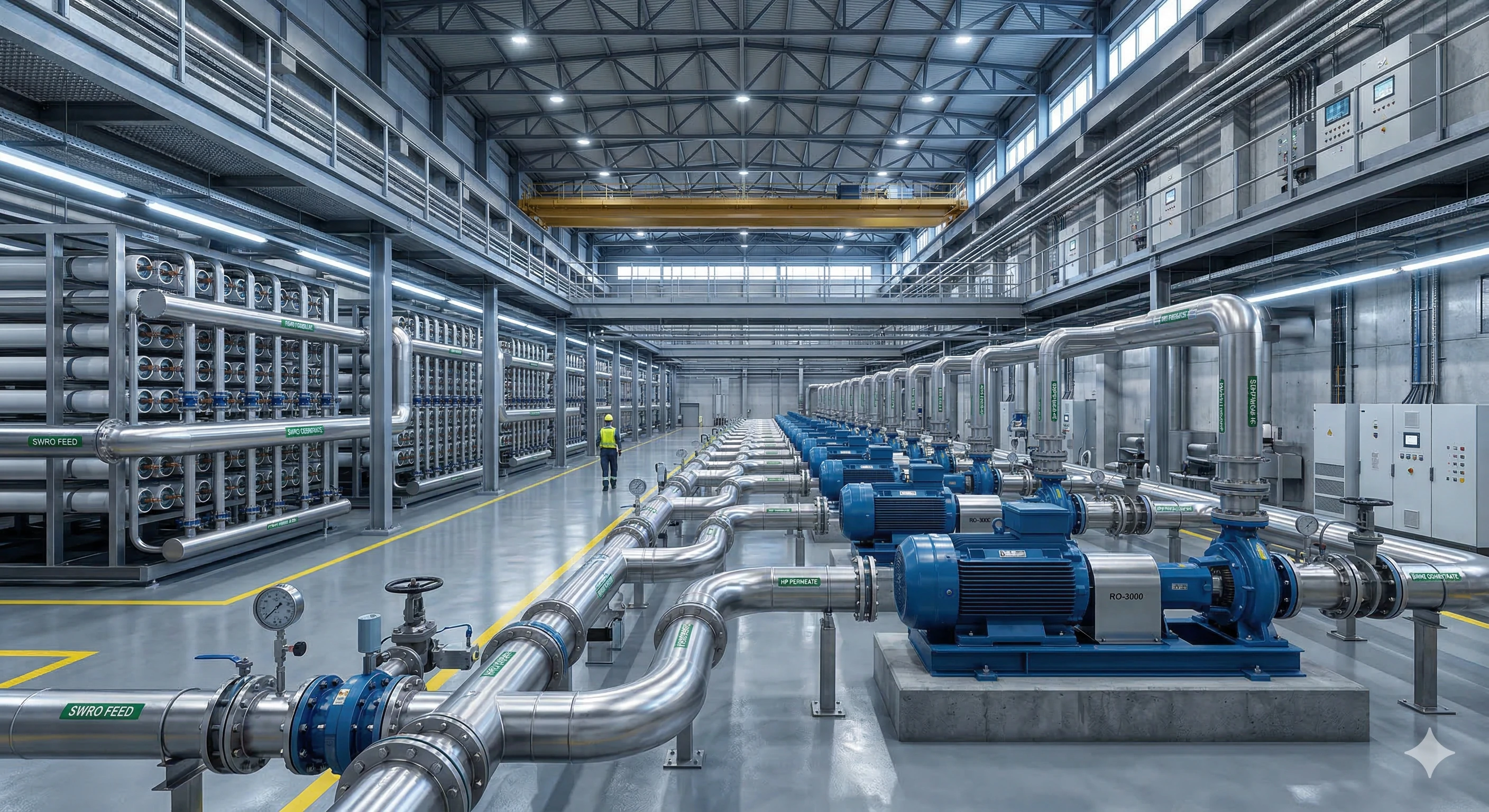
Clean water is never an accident. Behind every lies an extensive network of high-pressure pumps, valves, and fluid control components—the invisible infrastructure powering water purification. These critical parts endure constant assault from chlorides, acidic chemicals, extreme pressure, and cavitation, the abrasive damage caused by . For water treatment OEMs, only precision investment casting can deliver the structural integrity and corrosion resistance needed to withstand these harsh conditions. This guide explains why investment casting is the gold standard for manufacturing water treatment hardware, and how strategic alloy selection prevents catastrophic facility downtime and ensures long-term operational reliability.
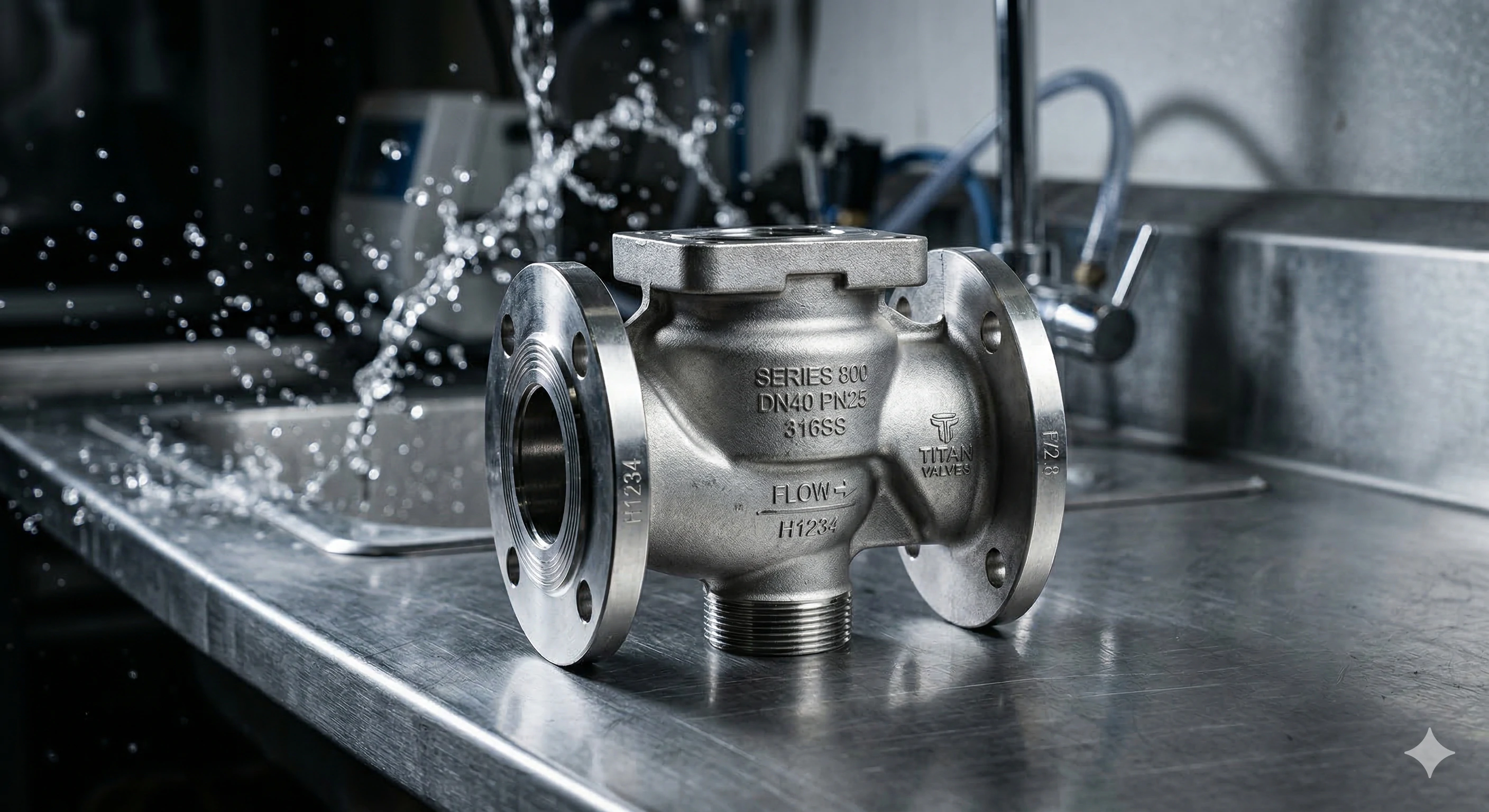
The 3 Core Enemies of Water Treatment Hardware
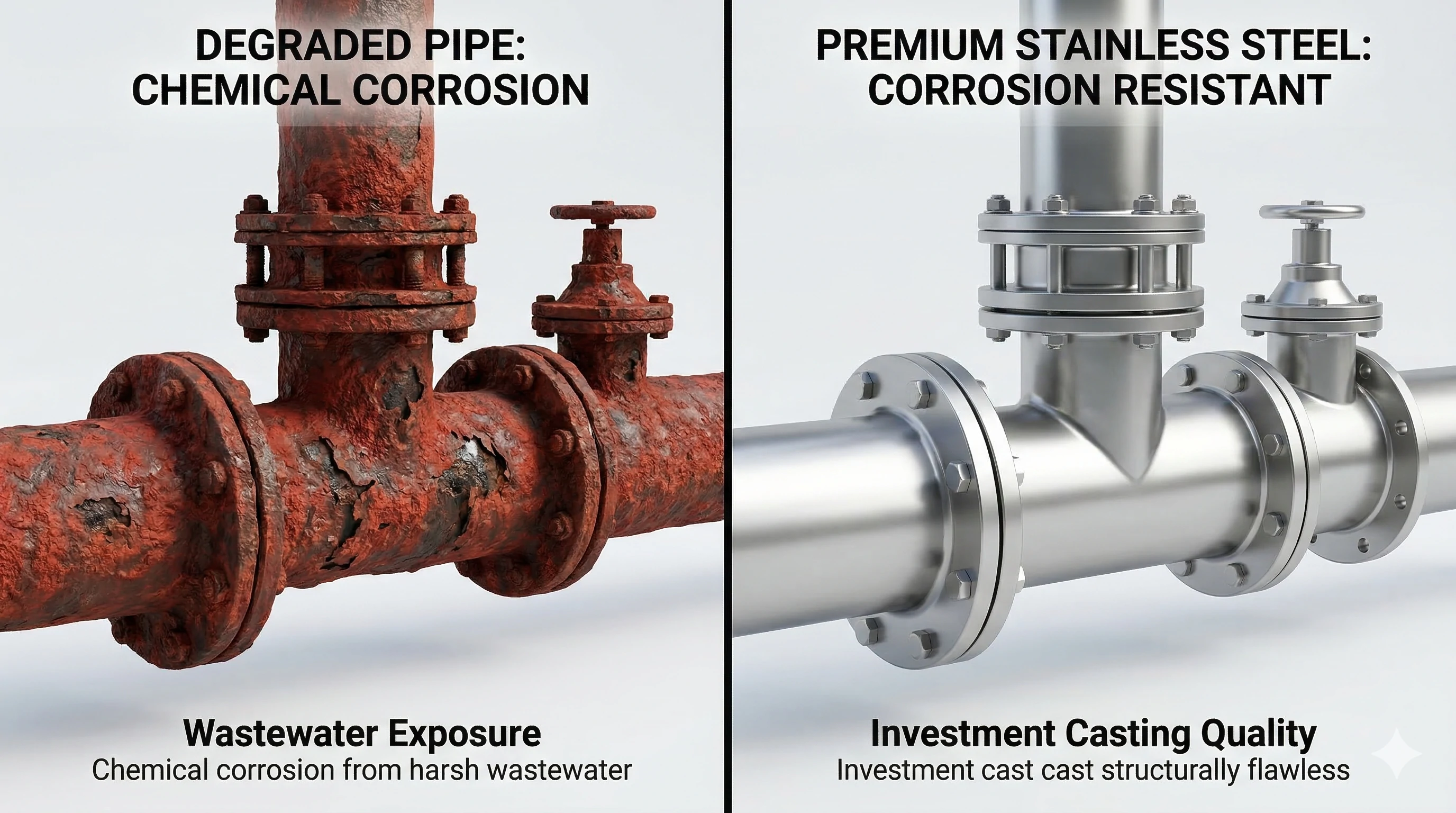
Water treatment fluid components fail almost exclusively due to three relentless operational challenges—ones that demand far higher material and manufacturing standards than ordinary industrial parts.
1. Chemical Corrosion
use chlorine for disinfection, while industrial wastewater contains aggressive acidic and alkaline chemicals that react continuously with metal. Standard carbon steel or low-grade cast iron corrodes rapidly in these environments, contaminating the water supply and eventually cracking or bursting—leading to unplanned system shutdowns and costly repairs.
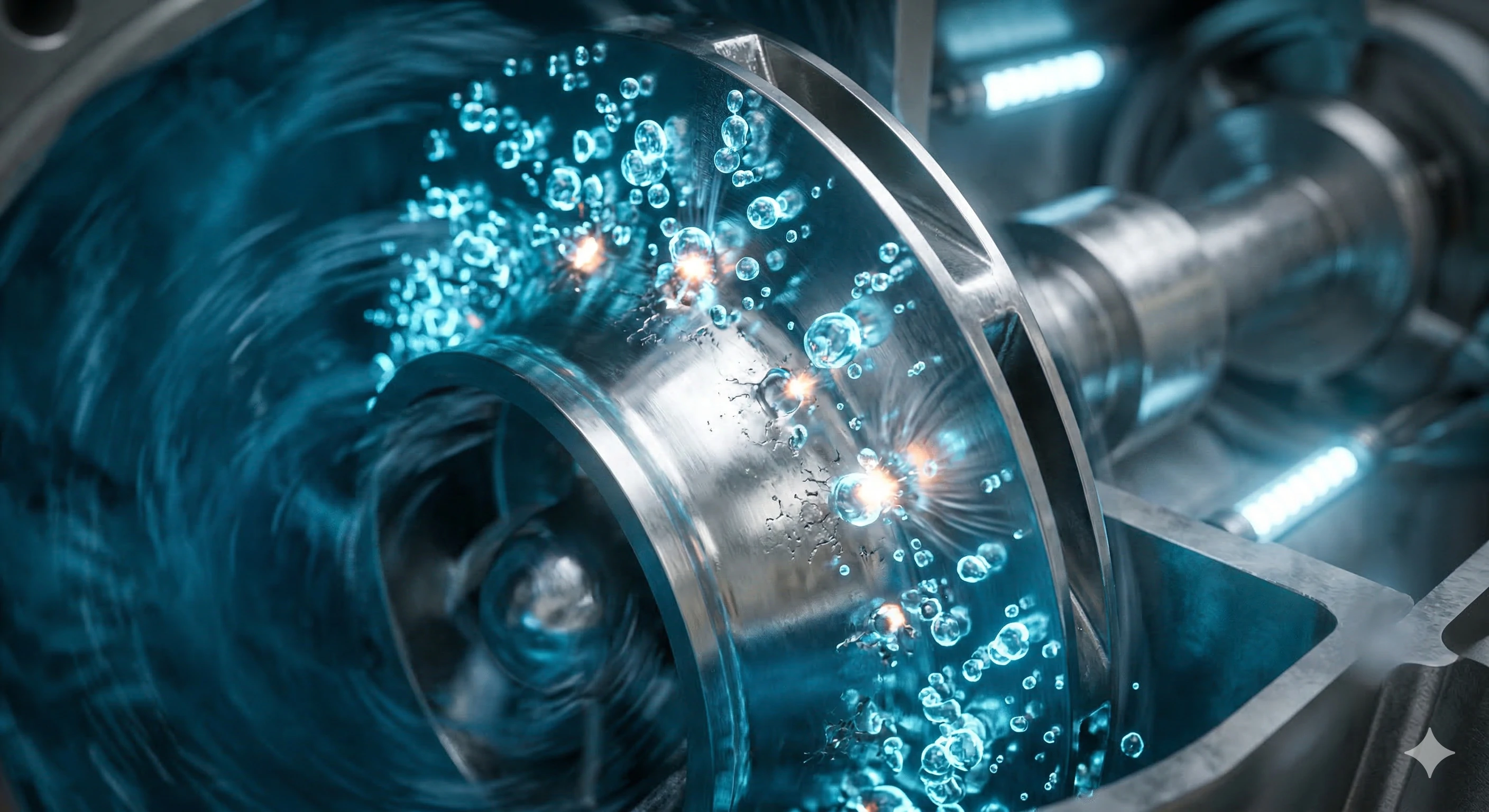
2. Cavitation & Erosion
High-velocity water, especially when mixed with grit, sand, or other particulates, acts like liquid sandpaper, scouring metal surfaces over time. Cavitation inflicts even more severe damage: the instantaneous pressure shock from collapsing fluid bubbles gradually erodes pump impeller blades, creating pitting and wear that degrades hydraulic efficiency and ultimately renders the impeller useless.
3. Pressure Leaks (Porosity)
High-pressure require absolute structural density. Microscopic internal air pockets (porosity) in cast valve bodies create weak points where high-pressure water forces its way out, causing dangerous leaks. These leaks not only reduce system efficiency but also pose significant safety hazards for plant operators.
Key Water Treatment Components We Precision Cast
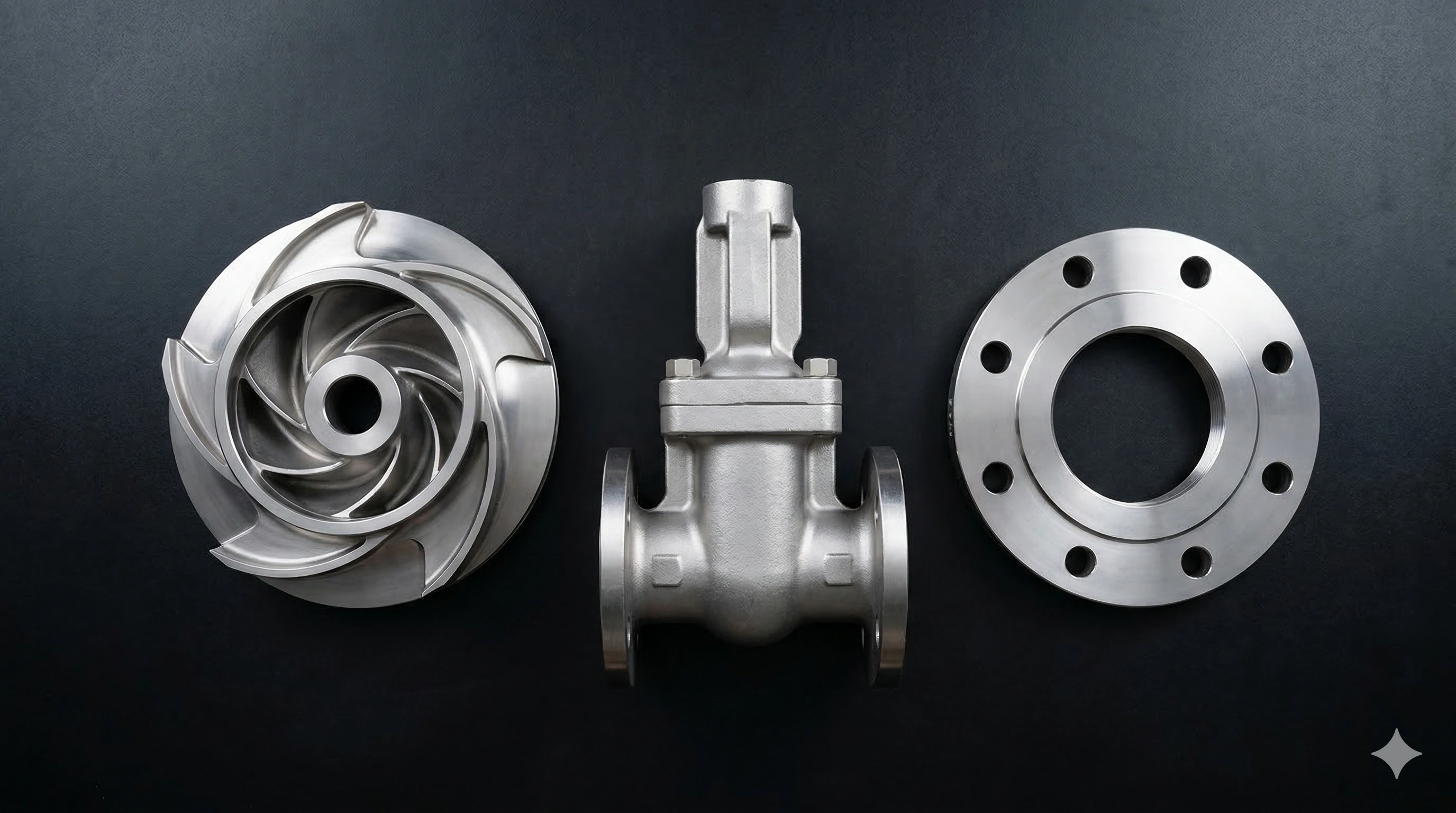
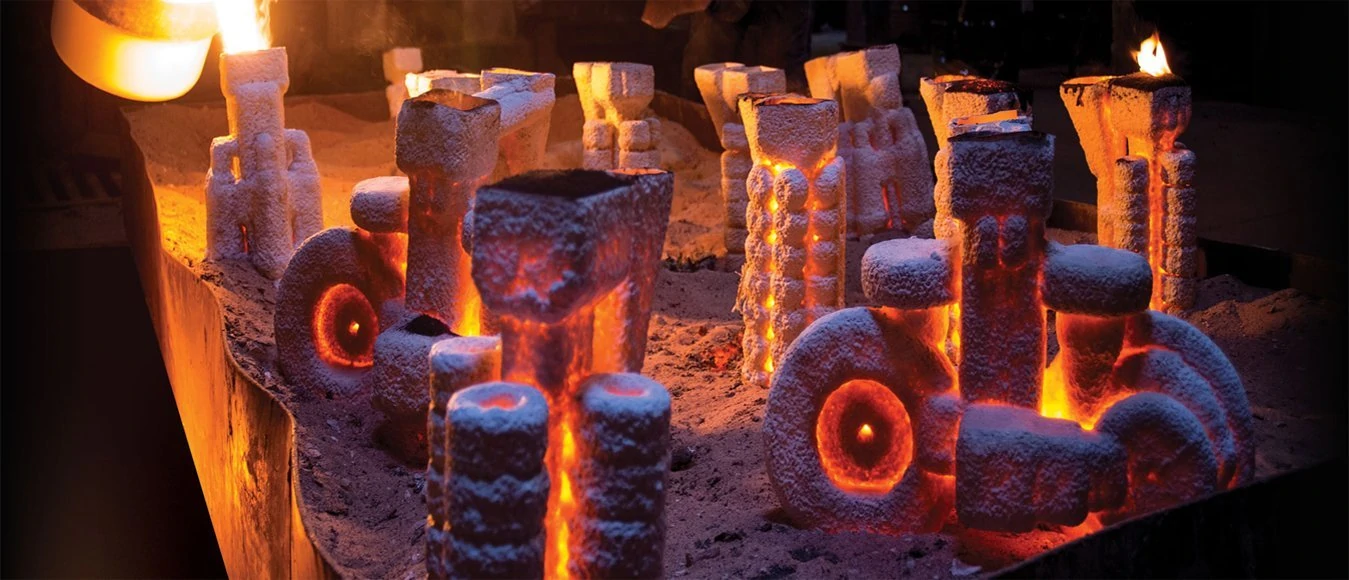
Leveraging the technical advantages of investment casting, we manufacture a full range of core fluid components for water treatment systems—from pumps and valves to pipe fittings—all produced to near-net-shape specifications to minimize expensive secondary CNC machining and reduce lead times.
Pump Impellers
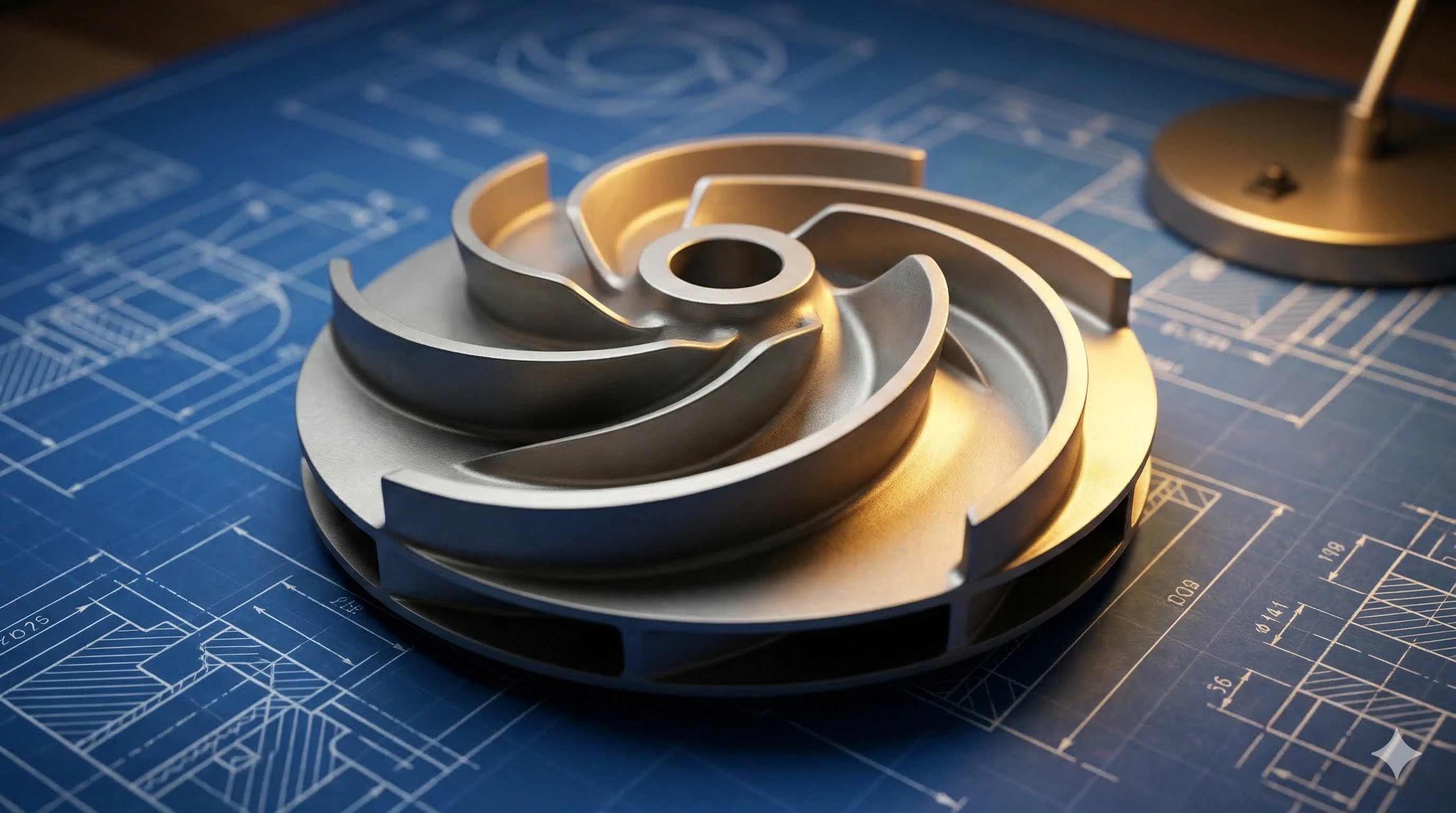
We cast closed, semi-open, and open impellers for all water treatment pump types. Investment casting excels at replicating the complex, curved internal vanes and critical to maximizing pump efficiency, ensuring optimal performance across varying flow rates and pressure requirements.
Valve Bodies & Components
Our casting capabilities cover gate valve bodies, butterfly valve discs, check valves, and hydraulic manifolds—from complete valve housings to precision internal cores. All valve components are cast as a single piece for superior structural integrity, with tight dimensional accuracy that meets the extreme pressure demands of water treatment systems.
Pipe Fittings & Flanges
We manufacture heavy-duty pipe connectors and flanges with exacting precision for bolt circle diameters (BCD) and sealing surfaces. This ensures a perfect watertight seal when bolted together, eliminating leaks at pipe joints and supporting high-pressure, large-diameter water treatment piping networks.
Material Selection: The Secret to Long-Lasting Water Treatment Castings
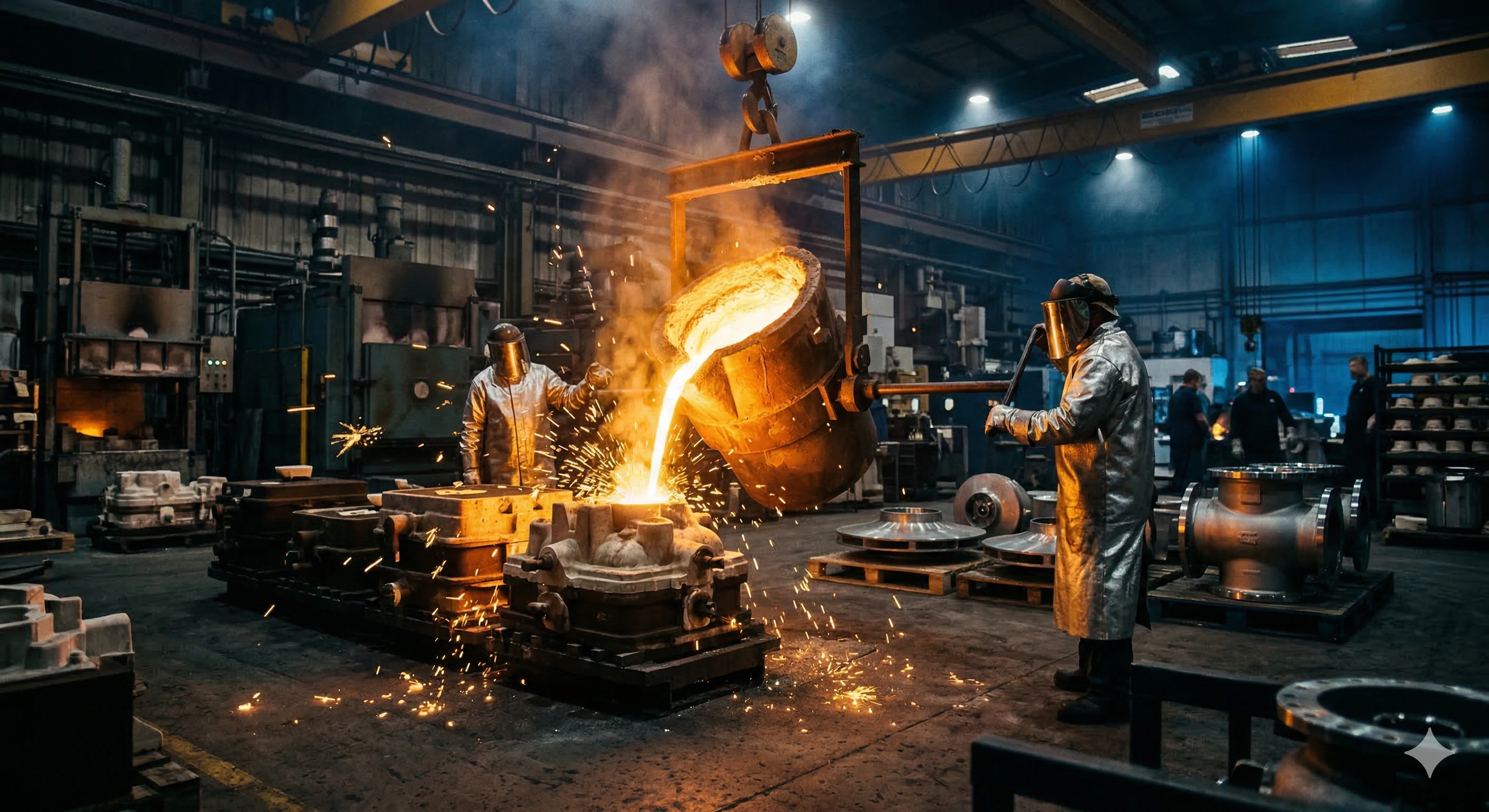
Selecting the right alloy for the specific water treatment application is the single most important factor in determining component lifespan. Drawing on our deep metallurgical expertise, we offer tailored material solutions for every corrosion and pressure challenge, matching alloys to operational conditions for unbeatable reliability.
Stainless Steel 304
Boasts basic corrosion resistance and exceptional cost-effectiveness. Ideal for fresh water treatment systems and light-duty municipal fluid transfer lines—applications with low chloride and chemical exposure, where corrosion risk is minimal.
Stainless Steel 316 / 316L
Alloyed with molybdenum for superior resistance to . The universal workhorse of water treatment, it is the perfect choice for standard wastewater treatment plants, chemical dosing pumps, and medium-pressure municipal fluid components.
Duplex Stainless Steel 2205
Features a dual austenitic-ferritic microstructure that delivers unmatched strength and extreme resistance to . The premium choice for the harshest environments, it is engineered for seawater desalination (RO) systems, high-concentration industrial effluent treatment, and fluid components exposed to aggressive chemical media.
Why Investment Casting Outperforms Sand Casting for Fluid Dynamics
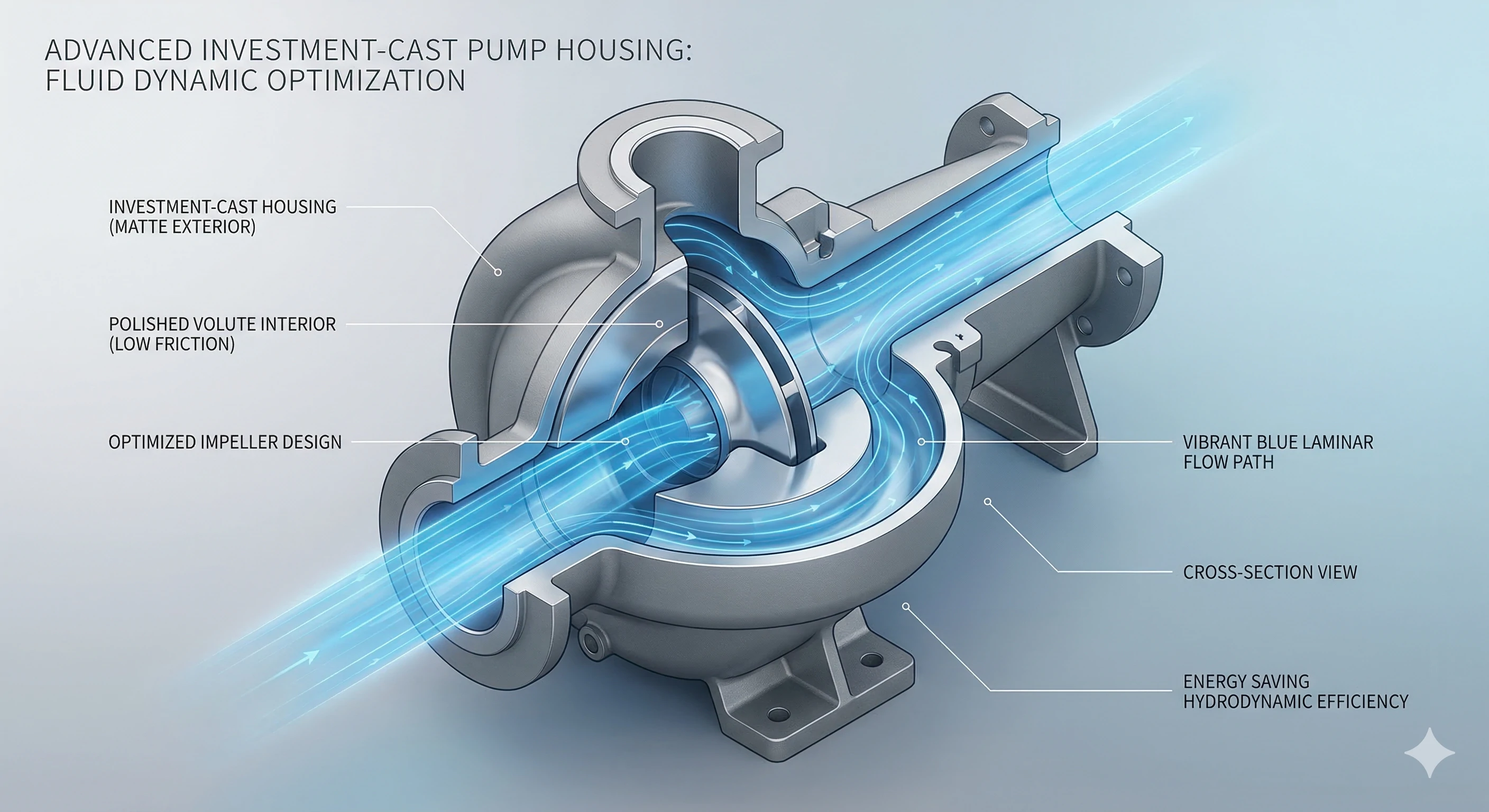
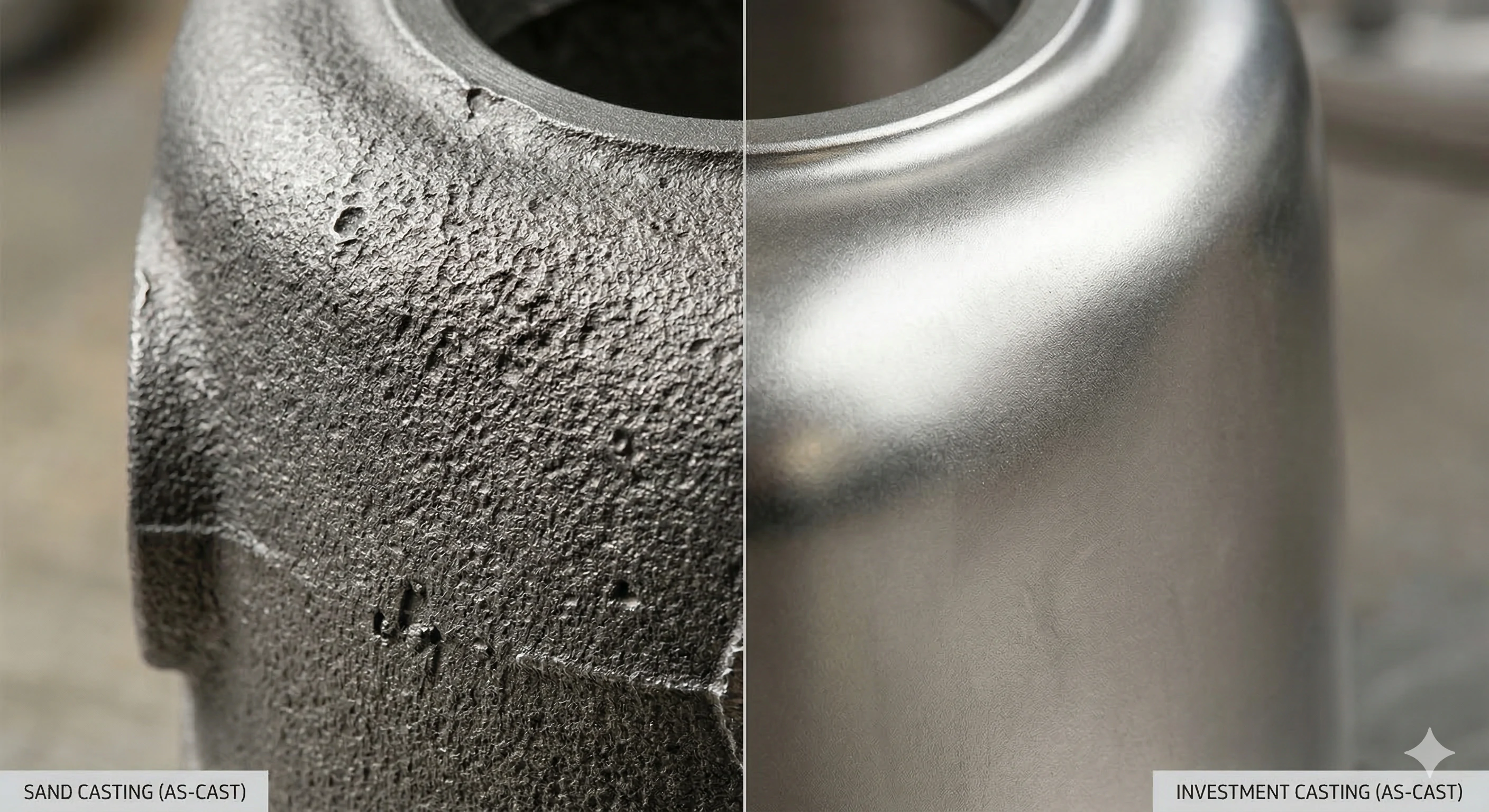
Water treatment pumps, valves, and fluid components demand ultra-smooth internal surfaces to optimize hydraulic performance— a requirement sand casting simply cannot meet. Investment casting is the only manufacturing process that delivers the surface finish and dimensional precision critical to efficient, long-lasting fluid dynamics.
The Critical Flaws of Sand Casting
Sand casting produces rough, pitted surface finishes with irregular textures. Inside pump housings and valve bodies, this roughness disrupts smooth water flow, creating destructive fluid turbulence. This turbulence not only drastically reduces hydraulic efficiency and increases energy consumption but also provides a breeding ground for —causing secondary water contamination and accelerating cavitation and erosion damage.
The Unmatched Advantages of Investment Casting
produces an incredibly smooth internal surface finish, typically achieving Ra 3.2 μm or better, with precise replication of complex curved flow paths. Near-net-shape casting also eliminates the need for extensive post-casting machining, preserving the integrity of the fluid dynamic design.
The Real-World Performance Result
Smooth metal surfaces allow water to flow with minimal resistance, drastically boosting hydraulic efficiency and reducing the workload on pump motors. This translates to massive energy savings over the lifespan of a water treatment plant. Additionally, smooth flow minimizes bubble formation and collapse, mitigating cavitation damage and extending component service life by years.
Quality Control: Guaranteeing Leak-Proof, Defect-Free Castings
The high-pressure and corrosive conditions of water treatment leave no room for defective castings. We have implemented a rigorous, end-to-end quality control system that verifies every aspect of production—from raw material to finished component—ensuring 100% structural integrity and leak-proof performance for our OEM partners.
Optical Emission Spectroscopy (OES)
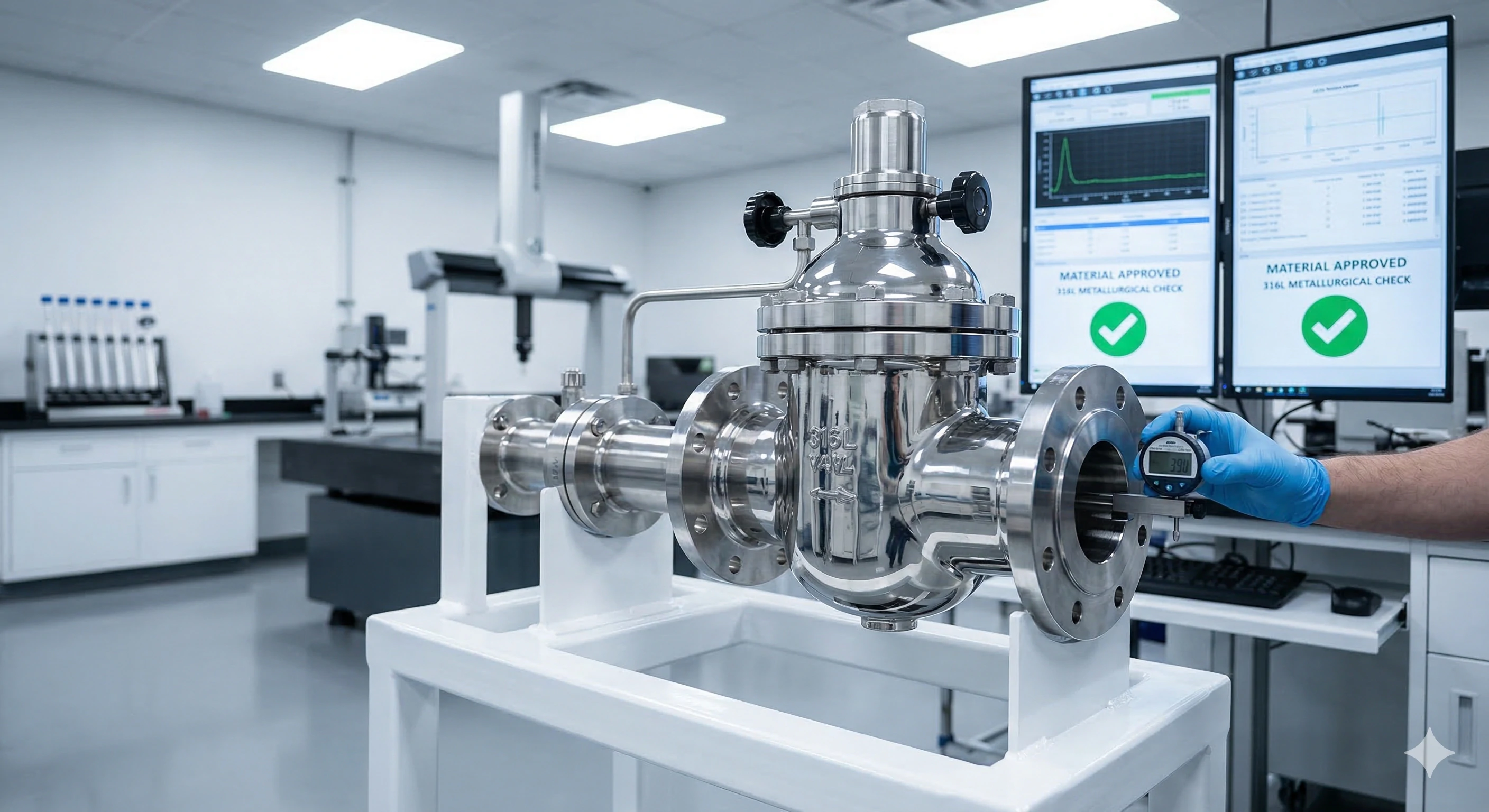
Before pouring, we perform real-time to verify that alloy compositions meet the exact specifications for 316L stainless steel, Duplex 2205, and other water treatment grades. This eliminates material inconsistencies and ensures corrosion resistance is built in from the start.
Non-Destructive Testing (NDT)
All castings undergo X-ray and liquid penetrant testing to detect and eliminate microscopic internal defects—including shrinkage, porosity, and cracks. This NDT verification guarantees that every casting is 100% dense, with no hidden weak points that could lead to pressure leaks or failure.
Hydrostatic Pressure Testing
After CNC machining, all valve bodies and pressure-containing components are tested under extreme water pressure—exceeding their rated operational pressure. This simulates the harshest real-world conditions and validates a perfect, leak-proof seal, giving our OEM partners complete confidence in field performance.
Frequently Asked Questions (FAQ)
Why is Duplex 2205 used exclusively in desalination plants?
Desalination plants process highly concentrated seawater (brine) under extreme pressure, creating an environment where standard 316 stainless steel is prone to chloride stress corrosion cracking. Duplex 2205’s unique dual austenitic-ferritic microstructure provides exceptional mechanical strength and makes it nearly immune to saltwater corrosion—an essential property for withstanding the brutal conditions of seawater desalination.
What is a closed pump impeller, and why is it so difficult to cast?
A closed pump impeller features metal shrouds on both the top and bottom of its curved blades, creating enclosed internal "flow tunnels" for water. This design delivers far higher hydraulic efficiency than open or semi-open impellers but is extremely challenging to cast. The internal hollow flow paths require complex soluble wax cores during the investment casting process; the precision of these wax cores directly determines the accuracy and smoothness of the impeller’s flow paths, demanding the highest level of casting expertise.
How does surface finish impact water pump performance?
The internal surface finish of a pump directly determines hydraulic friction resistance. A smoother surface reduces friction significantly, meaning the pump motor expends far less energy to move water. This results in substantial electricity savings over the decades-long lifespan of a water treatment plant—savings that add up to millions of dollars. Investment casting naturally delivers this superior smooth finish, with no additional grinding or polishing required to meet hydraulic performance standards.
Conclusion
Manufacturing castings for the water treatment industry is an unforgiving discipline that demands perfection in every aspect—from fluid-dynamic geometry and ultra-smooth internal surfaces to high-grade corrosion-resistant alloys. Precision investment casting is the only process that integrates all three critical elements, delivering the leak-proof, durable, and efficient components water treatment OEMs need to build reliable systems.
If you are an OEM engineer developing the next generation of pumps, valves, or fluid control components for water treatment and desalination, we specialize in high-precision investment castings in 316 stainless steel and Duplex 2205—engineered for the harshest environments and guaranteed leak-proof. Our team of metallurgical and casting experts will review your design for manufacturability and performance, ensuring your components meet and exceed industry standards.
Footnotes
1. Learn about the processes and technologies behind large-scale desalination and water purification.
2. Understand the physics of cavitation and its destructive effects on fluid machinery.
3. Information on public water system regulations, safety standards, and operations.
4. An overview of reverse osmosis technology and its applications in fluid purification.
5. Explore the principles of fluid dynamics and their impact on system design.
6. Detailed explanation of localized corrosion mechanisms in metal alloys.
7. Learn how tensile stress and corrosive environments combine to cause material failure.
8. Examine the causes and consequences of biological fouling in industrial water systems.
9. A comprehensive guide to the investment casting manufacturing process and its advantages.