Table of Contents
Introduction: The Big Shower Door Remodel Decision
Upgrading your shower door is one of the highest-impact upgrades you can make during a . It shapes daily usability, defines your bathroom's aesthetic, and impacts long-term cleaning routines for years to come.
Nearly every homeowner hits the same crossroads: should you install a hinged swinging door, or opt for a space-saving sliding glass system? Each style delivers distinct advantages, but one wrong choice can leave you stuck with cramped access, constant mold buildup, or doors that collide with vanities and toilets every time you open them.
This unbiased, in-depth guide breaks down layout requirements, maintenance demands, hardware longevity, total installation costs, and design trends for both styles. By the end, you will have all the data needed to pick the perfect shower door for your unique bathroom.
Step 1: Measure & Assess Your Bathroom Layout Constraints
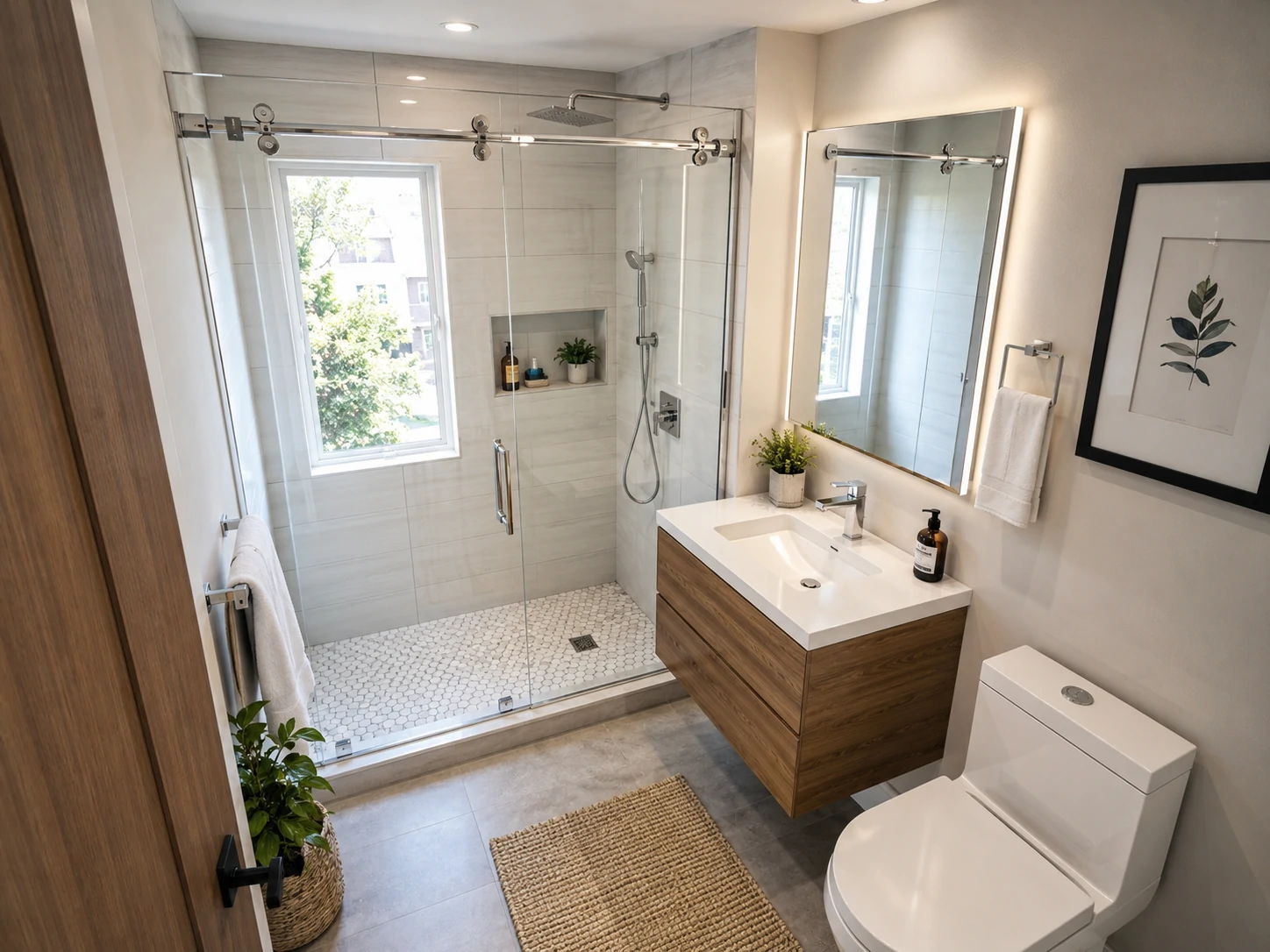
Before comparing door styles, map out your available floor clearance to rule out incompatible options entirely. This simple pre-check eliminates costly ordering mistakes and remodel delays.
Start by measuring your shower opening width, then calculate unobstructed floor space outside the shower. Hinged doors require a full swing radius free of all fixtures, including toilets, sink vanities, towel bars, and built-in cabinetry. A standard 32-inch hinged glass door needs at least 30 inches of clear outward space to swing open fully without collision.
Sliding bypass doors operate entirely within the shower enclosure footprint, requiring zero external swing room. They are the only viable solution for compact bathrooms, narrow alcove showers, and with tight surrounding fixtures.
Also note your shower base type. pair seamlessly with both designs, while low-profile curbs demand careful sealing for hinged swinging doors to prevent water runoff onto bathroom flooring.
Are Sliding Glass Shower Doors Outdated? Modern Design Upgrades
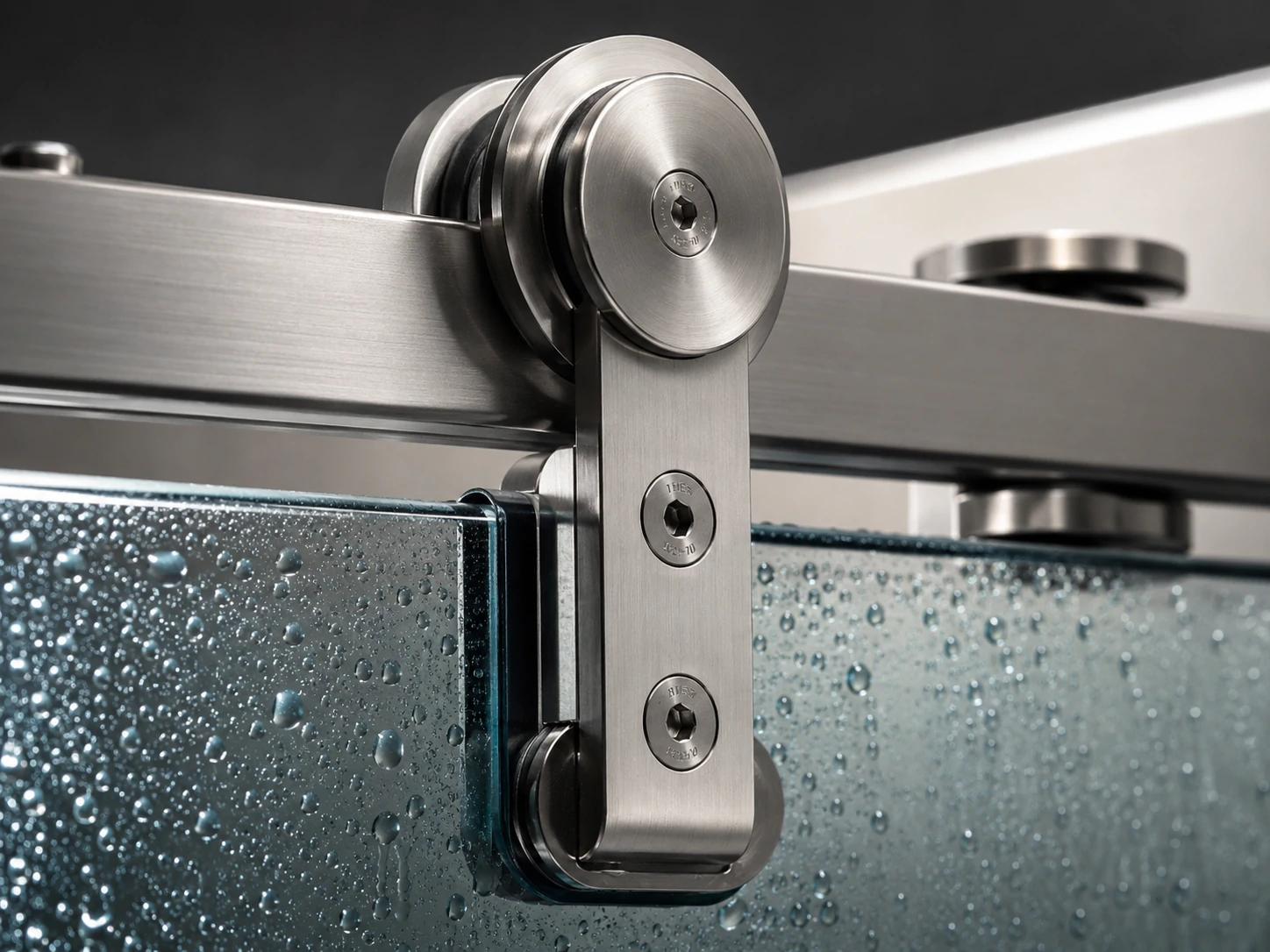
A widespread misconception claims sliding shower doors feel clunky, dated, and stuck in 1990s bathroom design. This myth only applies to old framed models with bulky aluminum bottom tracks.
Today's sliding systems have undergone major modern overhauls that erase old aesthetic flaws:
-
Frameless sliding panels with minimal slim top headers eliminate thick metal framing
-
Trackless barn-style sliding designs remove mold-prone bottom tracks entirely, suspended by heavy-duty top roller hardware
-
Matte black, brushed nickel, and polished chrome roller finishes match luxury bathroom hardware palettes
-
Soft-close roller mechanisms eliminate loud slamming and reduce long-term hardware wear
Modern frameless sliding doors deliver the same minimalist, unobstructed sightlines as hinged doors, while retaining their signature space-saving functionality. They remain a top contemporary pick for , small townhome bathrooms, and wide tub enclosures across North America.
Hinged Shower Doors: Full Pros, Cons & Core Mechanics
What Is a Hinged Shower Door?
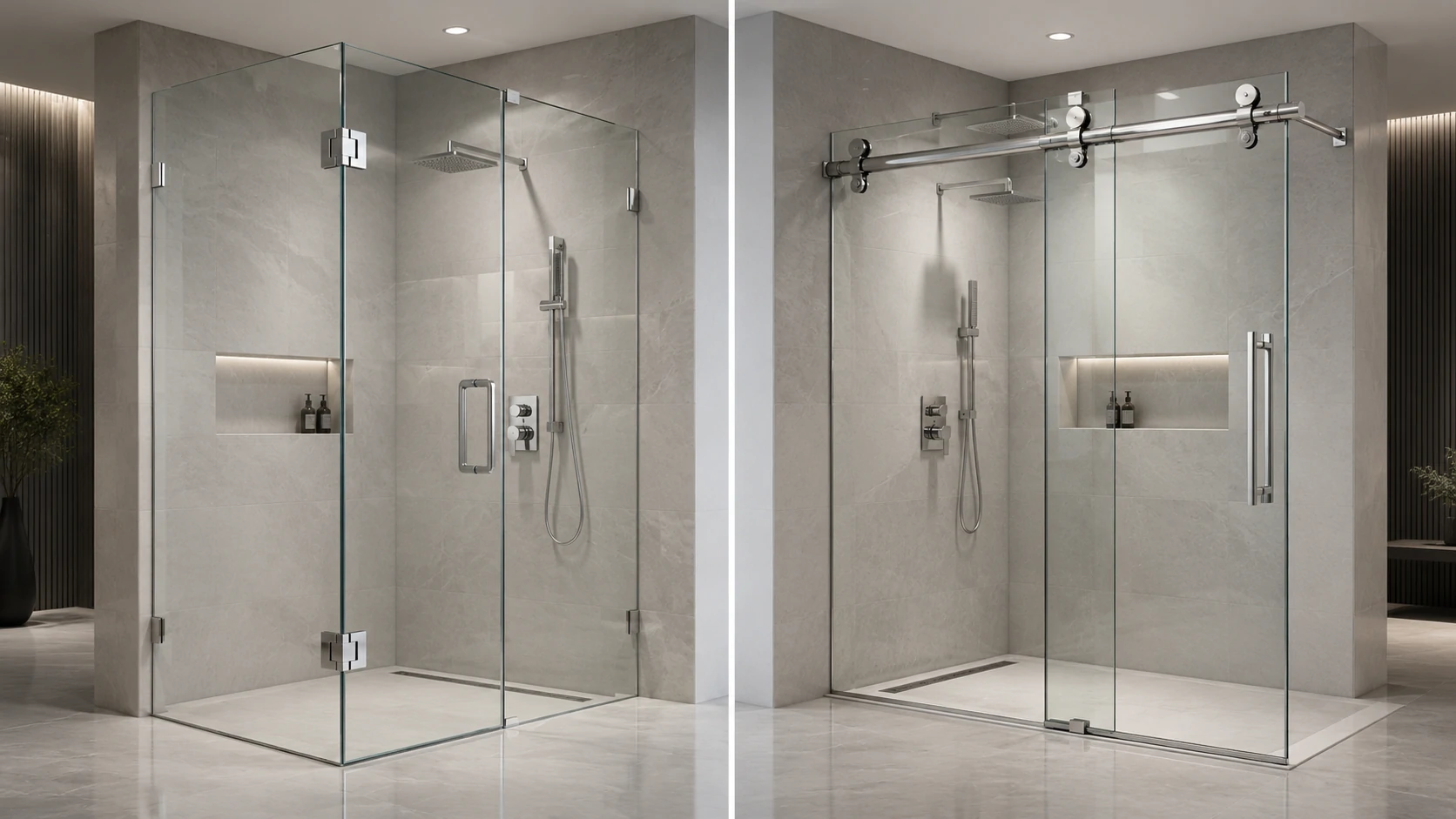
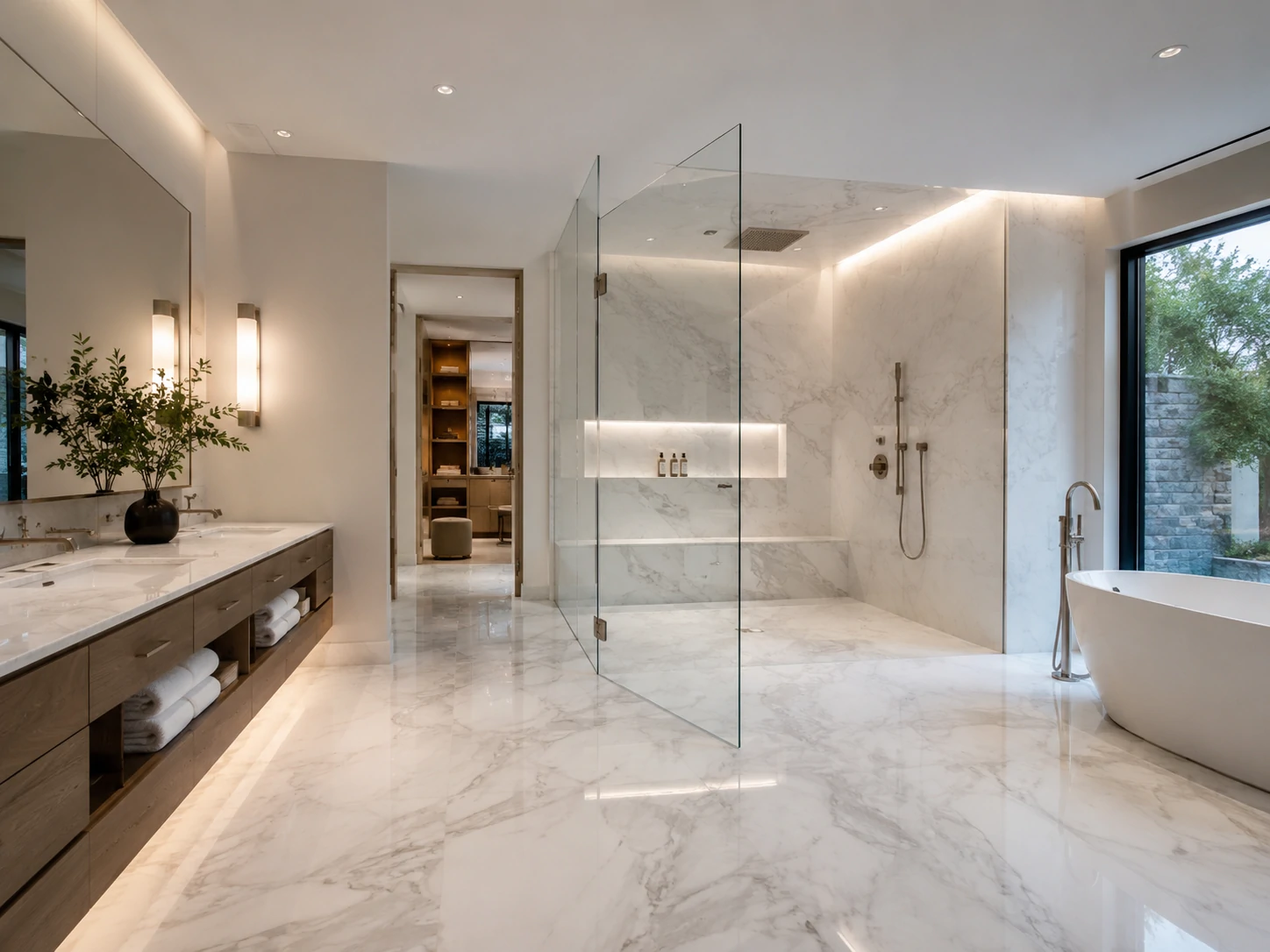
A hinged shower door attaches to fixed side glass or bathroom walls via heavy-duty pivot or glass-to-glass hinges. The panel swings fully inward or outward on a fixed axis, creating an unobstructed single opening across the full shower width. Most luxury remodel projects use frameless hinged systems with minimal visible metal hardware.
Key Advantages of Hinged Shower Doors
-
Maximum Unrestricted Access
The full-width opening makes shower cleaning, bathing children, and moving large shower accessories far simpler. There is no overlapping glass panel blocking half the entryway like sliding alternatives.
-
Minimal Mold & Grime Build-Up
Standard hinged designs eliminate bottom tracks entirely-the number one trap for soap scum, hair, mildew, and mineral deposits in sliding door systems. Weekly surface wiping is all that is required to maintain clean glass and hardware.
-
Premium Frameless Aesthetic
Hinged doors rely only on discrete stainless steel hinges and thin bottom sweep seals. Continuous unbroken glass creates a seamless, high-end luxury look popular in spa-style master bathrooms.
-
Fewer Wear-Prone Moving Parts
High-quality hinge assemblies contain far fewer moving components than sliding roller tracks, cutting down on long-term replacement and repair needs. Premium 316 stainless hinges hold 40-80lb glass panels reliably for 8+ years with basic maintenance.
Disadvantages of Hinged Shower Doors
-
Mandatory Outward Swing Clearance
Without adequate empty floor space outside the shower, the door will bang into vanities, toilets, or towel racks every time you open it, causing glass stress and hardware loosening over time.
-
Risk of External Water Dripping
Outward-swinging hinged doors carry a small risk of water dripping onto bathroom flooring during showers, especially if the bottom rubber sweep seal wears down or is misaligned during installation.
-
Higher Custom Hardware Costs
Glass-to-glass pivot hinges and adjustable wall mounts carry a higher upfront hardware price tag compared to basic sliding roller kits for budget remodels.
Sliding Shower Doors: Types, Strengths & Common Pain Points
Single vs Double Bypass Sliding Doors
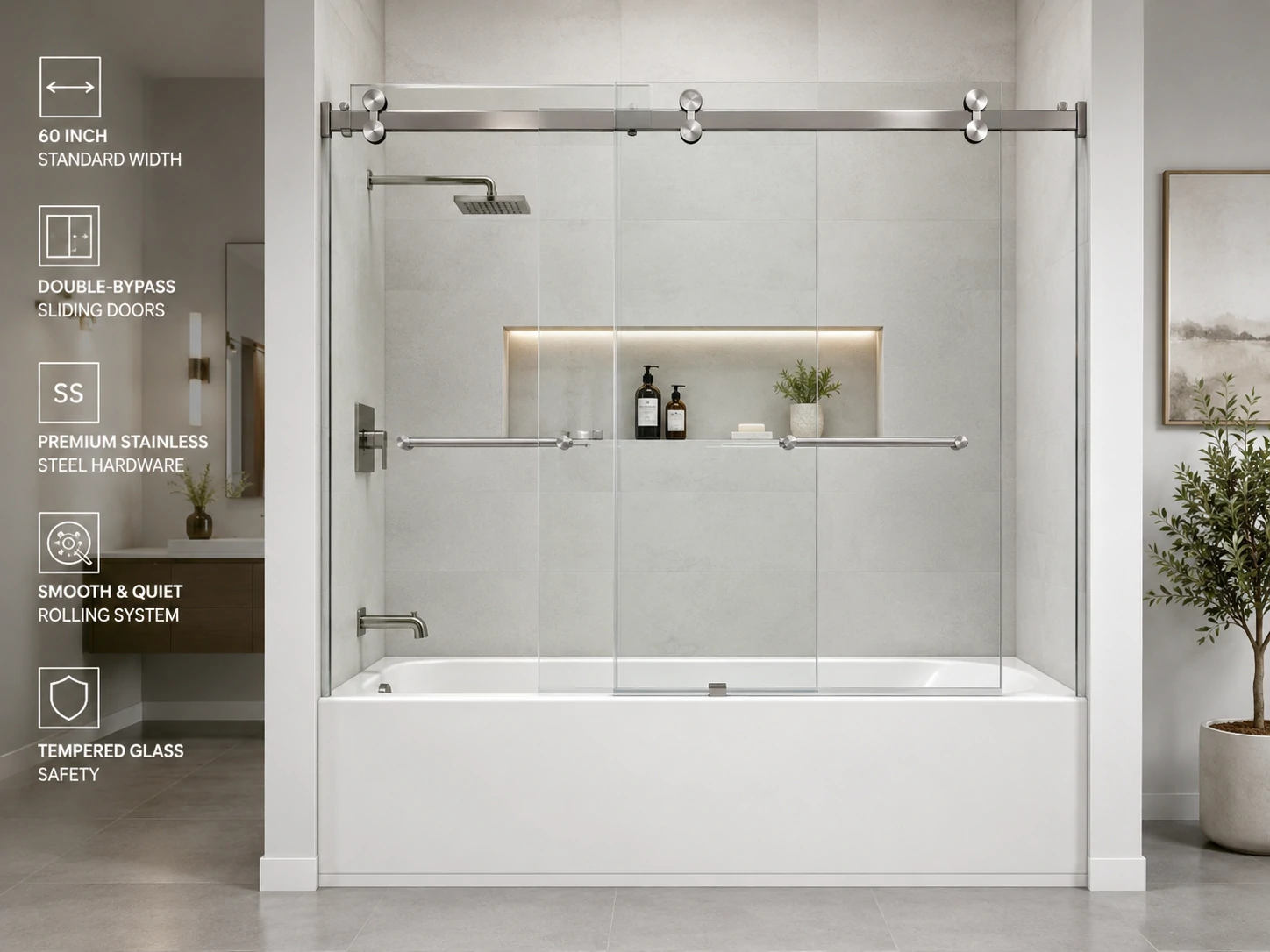
Sliding shower doors rely on overlapping glass panels that glide horizontally along a track system. Double bypass systems feature two movable glass panels that slide past one another, and shower openings. Single sliding doors pair one movable panel with a stationary fixed glass side for narrower alcove showers. Modern trackless barn sliding variants eliminate bottom tracks by suspending all weight on reinforced top rails.
Core Advantages of Sliding Shower Doors
-
Zero External Swing Footprint
The biggest selling point for compact bathrooms. All sliding motion stays within the shower boundary, making them ideal for small 5x7 ft bathrooms where a hinged door would collide with nearby fixtures.
-
Perfect For Wide Shower & Tub Openings
60-inch standard bathtub enclosures almost exclusively use sliding systems, as hinged doors would require an impractical 55+ inches of clear swing space outside the tub.
-
Dual-Sided Entry Flexibility
Double bypass sliding doors open from either left or right side, offering versatile access for households with multiple users or irregular bathroom layouts.
The Most Common Sliding Door Problem: Track Maintenance
The primary drawback of traditional sliding doors is the bottom track, which acts as a catchall for hair, soap residue, , and mildew. Deep track grooves require frequent scrubbing to prevent stuck rollers, discolored metal, and mold growth beneath the glass.
Even with regular cleaning, plastic roller wheels degrade over 3-5 years, leading to sticky, uneven gliding that requires full roller hardware replacement. Trackless top-hung sliding barn doors resolve this maintenance flaw but demand reinforced ceiling or wall header support during installation.
Sliding vs Hinged Shower Door Full Cost Breakdown
Total project pricing splits into three categories: glass panel material, specialty hardware, and professional labor fees. All price ranges reflect standard North American residential remodel rates.
Upfront Material Costs
-
Basic Framed Sliding Door: 900 (aluminum framing, lightweight plastic rollers)
-
Frameless Trackless Sliding Barn Door: 2,500 (marine-grade stainless top roller hardware, thick 10mm tempered glass)
-
Standard Framed Hinged Door: 800 (basic zinc alloy hinges, thin glass)
-
Luxury Frameless Hinged Door: 3,500 (316 stainless glass-to-glass clamps, adjustable pivot hinges, laminated safety glass)
Professional Installation Labor
Sliding door installation averages 700, with simpler track systems requiring less alignment precision.
Hinged frameless installation runs 900; installers must level and to avoid glass cracking or uneven swinging. Trackless sliding barn door labor sits at the high end of sliding pricing due to structural header reinforcement work.
Long-Term Lifetime Expenses
Sliding doors accumulate recurring small costs: roller wheel replacement every 3-5 years, track deep cleaning supplies, and periodic track sealing to stop rust.
Hinged doors only require on pivot points and rubber sweep seal replacement every 6-7 years, with far fewer scheduled hardware swaps.
Why Hardware Quality Makes Or Breaks Long-Term Durability
Many homeowners focus solely on glass thickness and overlook shower door hardware, yet hinges, rollers, and glass clamps determine how many years your door operates without failure.
Hinged Door Hardware Priorities
Always select 304 or 316 glass-to-glass hinges and wall mounts. Budget zinc alloy or plated steel hinges corrode rapidly in humid bathroom air, developing rust spots within 2-3 years and risking loose glass panels. Look for adjustable tension screws to realign sagging doors without full hardware removal, plus built-in EPDM rubber gaskets to prevent glass chipping from metal contact.
Sliding Door Hardware Priorities
Avoid cheap plastic roller wheels that crack under glass weight. Premium sliding systems use stainless steel ball-bearing rollers that glide smoothly for years. For trackless barn sliding doors, confirm top rail headers are engineered to support 100lb+ glass panels without wall warping or sagging over time.
Low-cost hardware cuts upfront spending by 10-15% but doubles long-term repair and replacement costs within a decade of installation. Investing in corrosion-resistant stainless hardware delivers better ROI for all bathroom remodels.
Final Verdict: Which Shower Door Should You Choose?
Choose a Hinged Frameless Shower Door If:
-
Your bathroom has ample clear floor space free of toilets and vanities
-
You prioritize low weekly cleaning and want to avoid mold-prone bottom tracks
-
You prefer a luxury, seamless spa-style minimalist aesthetic
-
You own a walk-in curbless shower with a wide opening
-
You want minimal recurring hardware repairs and replacements
Choose a Sliding Shower Door If:
-
Your bathroom layout is compact with limited external swing clearance
-
You are remodeling a standard 60-inch bathtub-to-shower enclosure
-
Fixtures like sinks and toilets sit directly adjacent to the shower opening
-
You prefer flexible dual-sided entry for multi-person households
-
You opt for trackless top-hung barn sliding models to eliminate track maintenance
Frequently Asked Questions
Q: What are the main disadvantages of sliding shower doors?
Traditional bottom-track sliding doors trap hair, soap scum, and mildew inside hard-to-clean track grooves. Plastic roller wheels wear out frequently, and overlapping glass creates a narrower entry opening compared to full-width hinged doors. Trackless barn sliding designs remove track issues but carry higher upfront material and installation costs.
Q: Is a trackless sliding shower door better than standard sliding models?
Yes for long-term maintenance and aesthetics. Trackless top-hung barn sliding systems eliminate mold-prone bottom tracks entirely, deliver a cleaner frameless look, and reduce weekly scrubbing chores. The only tradeoff is higher hardware pricing and the need for structural wall header reinforcement during installation.
Q: Can I install a frameless hinged door on a fiberglass shower tub?
Yes, but the fiberglass surround requires solid backing support behind mounting points. Installers add plywood reinforcement to thin fiberglass to prevent wall bowing under the weight of heavy glass and stainless hinge hardware. Unreinforced fiberglass will warp, loosening hinges and creating unsafe glass wobble over time.
Q: Do hinged shower doors leak more than sliding doors?
No, when installed with high-quality rubber bottom sweep seals and properly leveled hinges, hinged doors contain water just as effectively as sliding systems. Outward-swing hinged models carry minor drip risk only when sweep seals become worn or misaligned.
Q: How often do I need to replace shower door hardware?
316 stainless steel hinged hardware lasts 7-10 years with monthly cleaning and annual silicone lubrication. Standard sliding plastic rollers require replacement every 3-5 years, while stainless steel sliding roller assemblies extend service life to 6+ years.
Conclusion & Next Steps For Your Bathroom Renovation
Selecting between sliding and hinged shower doors ultimately hinges on two core factors: your available bathroom floor clearance and your long-term maintenance preferences. Neither style is universally superior-each solves distinct remodel pain points for different space sizes and design goals.
Hinged frameless systems deliver luxury aesthetics and low upkeep for spacious master bathrooms, while sliding doors remain the space-saving workhorse for compact urban bathrooms and standard bathtub enclosures. Upgrading to trackless barn sliding hardware eliminates the biggest sliding door downside (dirty bottom tracks) for homeowners willing to invest extra upfront.
Before finalizing your order, measure your shower opening and swing clearance, and consult a professional glass hardware specialist to match tempered glass thickness with load-rated hinges or sliding rollers for safe, long-lasting performance.
Ready to design your ideal shower enclosure? Reach out to our hardware team to view our full catalog of frameless hinged pivots, trackless sliding roller kits, and corrosion-resistant glass clamps customized for residential bathroom remodels.
Footnotes
Explore trending ideas and essential steps for planning a successful bathroom renovation.
Review cost breakdowns and layout considerations for removing a tub.
Learn about wet rooms and seamless shower transitions.
Understand common multi-unit property layouts and space constraints.
Learn how thermal treatments increase safety glass durability.
Overview of standard residential bathtub dimensions and configurations.
Discover how high mineral content in water causes surface scaling.
Understand how applying rotational force properly prevents mechanical stress.
See how synthetic lubricants extend the lifespan of metal hardware.
Why molybdenum addition creates superior corrosion resistance in humid environments.