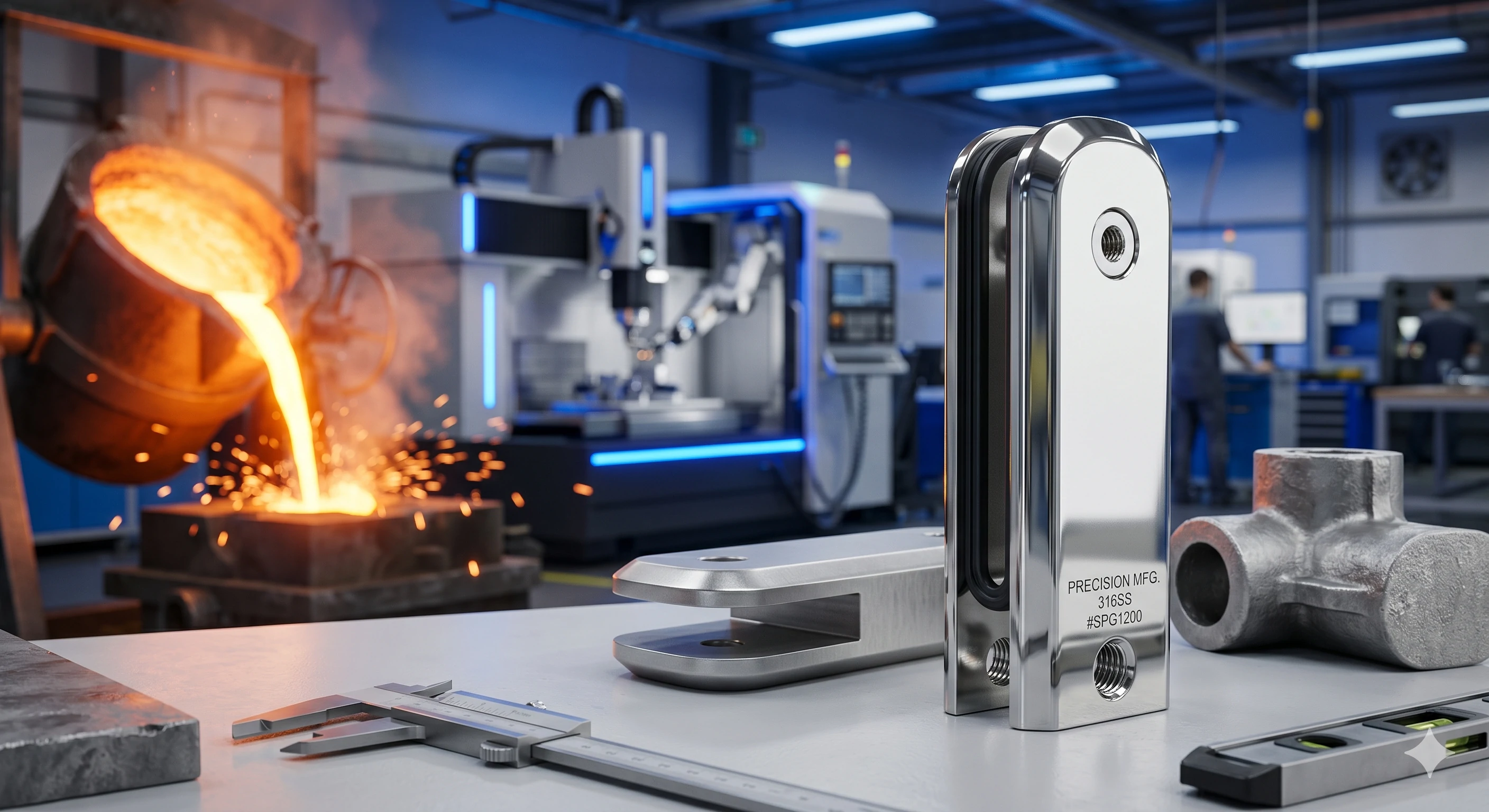
If your part needs tighter tolerances than sand casting can deliver but you don't want the machining bill of cutting it from billet, you're in precision casting territory. The challenge: "precision casting" isn't one method. It's a family of seven distinct techniques, each with its own sweet spot for material, geometry, volume, and budget.
This guide walks you through every major precision casting method, how they compare on tolerance and cost, and how to pick the right one. We'll answer the questions buyers actually ask, including the differences between PDC and GDC, the four main casting families, and just how ancient the lost-wax technique really is.
Table of Contents
What Is Precision Casting?
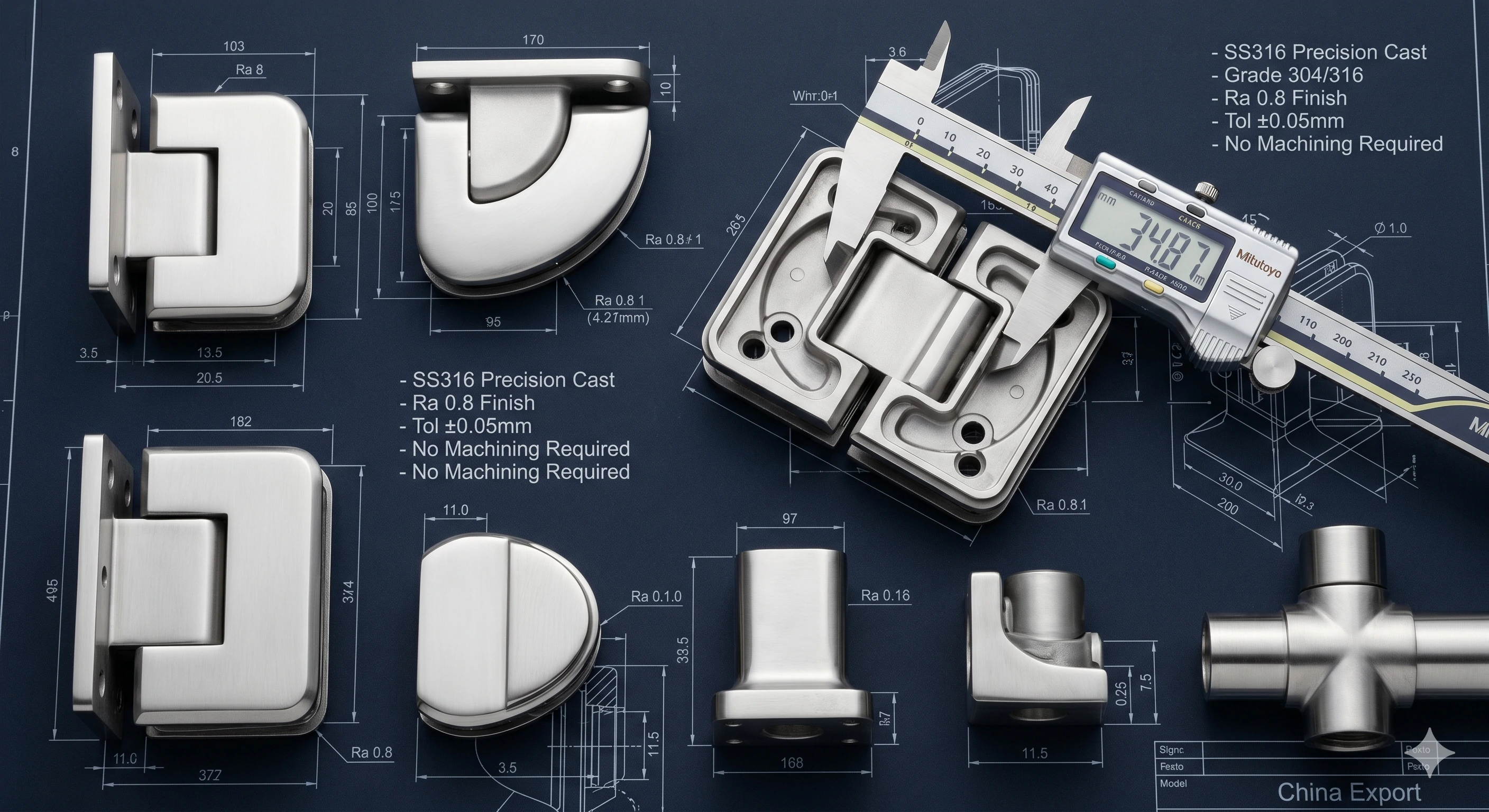
Precision casting is a family of near-net-shape metal forming processes that produce parts with tight (typically ±0.05 mm to ±0.13 mm), excellent surface finishes (1.6–3.2 μm Ra), and complex geometries that would be expensive or impossible to machine from solid stock.
The defining trait: the mold or pattern is sacrificed during demolding, which allows the cast to faithfully reproduce undercuts, thin walls, and intricate internal features.
Why "Precision"?
Compared with traditional sand casting, precision-cast parts can hold tolerance classes IT5–IT7, often skipping secondary machining entirely. That makes precision casting attractive for industries where post-processing costs would otherwise exceed 40% of the finished part value, such as aerospace, medical implants, and energy turbomachinery.
Where Precision Casting Fits in the User Journey
Engineers usually arrive at precision casting through one of three doors:
-
Discovery — "My current process leaves too much machining stock." Precision casting reduces material waste and finishing labor.
-
Solution — "I need to produce a complex, thin-walled stainless part." Investment or vacuum casting will do what sand casting can't.
-
Comparison — "Should I die-cast or invest-cast?" The answer depends on volume, alloy, and geometry. We'll get to that.
The 7 Main Precision Casting Methods
Precision casting is an umbrella term. Underneath it sit seven distinct techniques. Each one trades off cost, complexity, tolerance, and material compatibility differently.
1. Investment Casting (Lost-Wax Casting)
Investment casting is the most established precision method and is often used interchangeably with the term "precision casting" itself. A wax pattern is coated in ceramic slurry, the wax is melted out, and molten metal fills the resulting cavity.
-
Tolerance: ±0.13 mm
-
Surface finish: 1.6–3.2 μm Ra
-
Materials: Stainless steel, carbon steel, alloy steel, , aluminum, bronze
-
Part weight range: 0.1 kg – 50 kg
-
Best for: Turbine blades, medical implants, firearm components, valve bodies
Investment casting handles undercuts and internal passages that no other precision method can match. The trade-off is cycle time (each batch can take 1–2 days) and per-part cost on small runs.
2. Lost-Foam Casting
A polystyrene foam pattern is coated with a refractory wash and buried in unbonded sand. Molten metal vaporizes the foam on contact and takes its place.
-
Tolerance: ±0.25 mm
-
Surface finish: 6.3–12.5 μm Ra
-
Materials: Aluminum, gray iron, steel
-
Best for: , cylinder heads, intake manifolds
Lost-foam shines on complex, integrated automotive castings because the foam pattern can include features (cores, ribs, ports) that would require multiple sand cores in a conventional process.
3. Ceramic Mold Casting (Shaw Process)
A reusable wood, plastic, or metal pattern is coated with a thin ceramic slurry that hardens into a one-shot mold. Unlike investment casting, the pattern is not destroyed.
-
Tolerance: ±0.2 mm
-
Surface finish: 3.2–6.3 μm Ra
-
Materials: Steel, stainless steel, tool steel
-
Best for: Forging dies, , large impellers
Ceramic mold casting bridges investment casting and sand casting. It handles much larger parts than investment casting (up to several thousand kilograms) while still holding decent tolerances.
4. Vacuum Casting (V-Process)
A thin plastic film is vacuum-formed over a pattern, then dry sand is packed around it and held in place by vacuum pressure. Molten metal is poured into the cavity once the pattern is removed.
-
Tolerance: ±0.08 mm (among the tightest of any casting method)
-
Surface finish: 0.8–1.6 μm Ra
-
Materials: Titanium, stainless steel, aluminum
-
Best for: Orthopedic implants, dental prosthetics, fine art
Vacuum casting is the precision casting method of choice when are involved. The vacuum prevents oxidation and porosity, producing castings that rival forged parts in microstructure.
5. Centrifugal Casting
A permanent or expendable mold spins at high RPM while molten metal is poured in. pushes the metal outward, producing dense, defect-free walls.
-
Tolerance: ±0.05 mm (on diameter)
-
Surface finish: 3.2–6.3 μm Ra
-
Materials: Stainless steel, carbon steel, copper alloys, ductile iron
-
Best for: Pipes, bushings, railway wheel hubs, gun barrels
Centrifugal casting is restricted to symmetrical, cylindrical parts, but for that geometry it produces the densest castings of any method. Impurities migrate inward and can be machined away from the bore.
6. High-Pressure Die Casting (HPDC / PDC)
(HPDC / PDC) involves injecting molten metal (typically a low-melting-point alloy) into a hardened steel die at pressures between 1,500 and 25,400 psi. Cycle times are measured in seconds.
-
Tolerance: ±0.15 mm
-
Surface finish: 1.6 μm Ra
-
Materials: Aluminum, zinc, magnesium (non-ferrous only)
-
Best for: Engine blocks, transmission housings, electronics enclosures, consumer hardware
HPDC is the highest-volume precision casting method available. Tooling costs are steep ($50K–$200K), but per-part cost at scale is the lowest in the precision family.
7. Low-Pressure / Gravity Die Casting (LPDC / GDC)
Molten metal enters a permanent metal mold either by gravity (GDC) or by gentle inert-gas pressure from below (LPDC, typically 2–15 psi). Both yield denser, stronger parts than HPDC, with lower porosity.
-
Tolerance: ±0.15–0.25 mm
-
Surface finish: 3.2 μm Ra
-
Materials: Aluminum, copper alloys, zinc
-
Best for: Automotive wheels, structural aerospace parts, cookware
GDC parts can be heat-treated (a step that's usually impossible with HPDC) and offer better for safety-critical applications.
ASM Handbook, Volume 15: Casting
The Precision Casting Process: Step by Step
While the seven methods differ in detail, most precision casting workflows follow the same backbone. Here's how a typical investment casting cycle runs:
-
Mold (Tool) Design. An engineer designs a steel die that will produce the wax pattern, accounting for shrinkage of both the wax and the final alloy.
-
Wax Injection. Wax is injected into the die to form a pattern identical to the finished part.
-
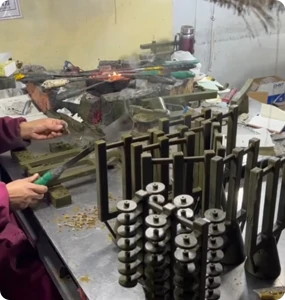
Pattern Assembly (Tree Building). Multiple wax patterns are attached to a central sprue, forming a "tree" that allows several parts to be cast in one pour.
-
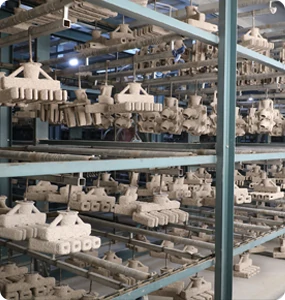
Shell Building. The tree is repeatedly dipped in ceramic slurry and coated with fine refractory sand. Up to six layers are built, drying between coats.
-
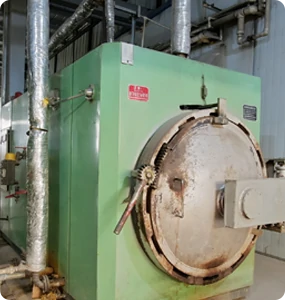
Dewaxing. The dried shell is heated in an autoclave or flash-fire furnace, melting and burning out the wax.
-
Shell Preheating. The empty shell is fired at 950–1100 °C, which strengthens the ceramic and prevents thermal shock during pouring.
-
Pouring. Molten metal is poured into the preheated shell by gravity, vacuum assist, or low pressure.

-
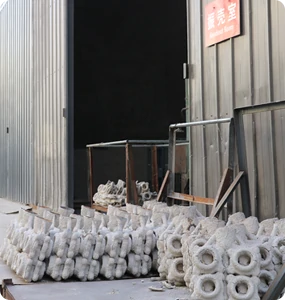
Knockout. Once the metal solidifies, the ceramic shell is broken away by vibration, water jet, or chemical leaching.
-
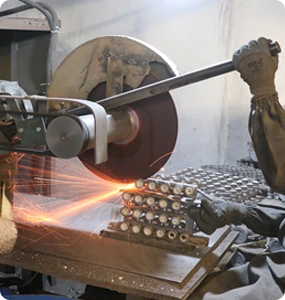
Cut-Off and Grinding. Individual parts are cut from the sprue and gate marks are ground flush.
-
Heat Treatment and Surface Finishing. Parts are heat-treated, shot-peened, polished, or coated as specified.
-
Inspection and Shipment. Dimensional inspection (CMM, X-ray, dye penetrant) confirms each part meets drawing requirements.
A complete investment casting cycle typically takes 5–10 working days from wax to finished part.
Precision Casting vs. the 4 Traditional Casting Types
When buyers ask about "the four types of casting," they're usually referring to the four broadest families used in modern manufacturing. Here's how precision casting compares to each.
| Casting Type | Tolerance | Tooling Cost | Cycle Time | Best Volume | Typical Use |
|---|---|---|---|---|---|
| Sand Casting | ±0.3 mm | $1K–$5K | 2–5 days | Low–medium | Engine blocks, manifolds, large iron parts |
| Die Casting (HPDC) | ±0.15 mm | $50K–$200K | 2–5 minutes | High (10K+) | Electronics housings, automotive components |
| Investment Casting | ±0.08 mm | $10K–$30K | 1–2 days | Low–medium | Turbine blades, surgical instruments |
| Centrifugal Casting | ±0.05 mm | $20K–$80K | 30–60 minutes | Medium | Pipes, bushings, cylinder liners |
Precision casting techniques (investment, centrifugal, vacuum, ceramic mold) deliver tighter tolerances and better finishes than sand casting, but they don't replace it. Sand casting still wins on cost for large, low-volume parts where dimensional precision isn't critical.
The four-type breakdown is a useful mental model, but reality is more nuanced. Modern foundries often combine methods—using a sand-cast core inside an investment-cast shell, for example, or finishing a die cast with CNC machining.
NADCA (North American Die Casting Association) — Process Comparison
PDC vs. GDC: What's the Difference?
This question comes up constantly, especially among aluminum buyers. Both PDC and GDC use a permanent metal mold. The only fundamental difference is how the molten metal gets inside.
| Factor | Pressure Die Casting (PDC) | Gravity Die Casting (GDC) |
|---|---|---|
| Fill mechanism | Injected under 1,500–25,400 psi | Poured under gravity alone |
| Cycle time | Seconds | Minutes |
| Wall thickness | Down to 0.5 mm | Typically 3 mm minimum |
| Porosity | Higher (trapped gas) | Lower (laminar fill) |
| Heat treatable? | Rarely (T5 temper only) | Yes (full T6 cycle) |
| Mechanical strength | Lower elongation | Higher elongation |
| Tooling cost | $50K–$200K | $20K–$60K |
| Ideal volume | 10,000+ parts | 500–10,000 parts |
| Surface finish | 1.6 μm Ra | 3.2 μm Ra |
Bottom line: If you need thousands of thin-walled, dimensionally consistent parts and post-cast strength is secondary, PDC wins. If you need fewer, denser, heat-treatable parts (like a structural aluminum wheel hub), GDC is the better choice.
A third option, Low-Pressure Die Casting (LPDC), splits the difference: it fills the mold from below at 2–15 psi, delivering near-GDC density at faster cycle times. LPDC is the dominant process for worldwide.
How to Choose the Right Precision Casting Method
There's no universal "best" method. Senior solutions engineers typically run through four screening questions:
-
What alloy? Reactive metals like titanium force you toward vacuum casting. Ferrous alloys rule out die casting. Aluminum opens nearly every door.
-
What volume? Under 500 parts: investment or ceramic mold. 500–10,000: GDC or LPDC. Over 10,000: HPDC.
-
What part size? Under 5 kg: investment, vacuum, or HPDC. Over 50 kg: ceramic mold, sand-shell hybrid, or centrifugal.
-
What's the tooling budget? Tight budget ($5K–$15K): investment casting. Generous budget: any die-based method.
Add a fifth question if your part has critical mechanical demands: Does the part need to be heat-treatable? If yes, eliminate HPDC.
Real-World Applications by Industry
Precision casting underwrites entire industries. A few representative examples:
-
Aerospace: Single-crystal nickel-superalloy turbine blades for jet engines (investment casting); titanium structural brackets (vacuum casting).
-
Medical: Cobalt-chrome hip stems and knee implants (investment + vacuum); surgical instrument handles (investment).
-
Automotive: Aluminum engine blocks (lost-foam, LPDC); transmission housings (HPDC); cast wheels (LPDC).
-
Energy: Stainless steel pump impellers (investment); centrifugally cast pipes for offshore rigs.
-
Firearms and Defense: Stainless triggers, hammers, and frames (investment casting).
-
Food and Pharma: 316L stainless valve bodies and pump components with sanitary finishes (investment).
-
Consumer Hardware: Brass door handles, faucets, and fittings (investment, GDC).
Industry analysts at Grand View Research valued the at roughly USD 18.9 billion in 2024, with aerospace and automotive jointly driving more than half of demand. Grand View Research — Investment Casting Market Report
Frequently Asked Questions
What are the different types of precision casting?
The main types of precision casting are investment casting (lost-wax), lost-foam casting, ceramic mold casting (Shaw process), vacuum casting, centrifugal casting, high-pressure die casting (HPDC), and low-pressure/gravity die casting (LPDC/GDC). Each method differs in mold material, fill mechanism, and the alloys it can handle, but all deliver tighter tolerances and better surface finishes than conventional sand casting.
What is the difference between PDC and GDC?
PDC (Pressure Die Casting) injects molten metal into a permanent steel die under high pressure (1,500–25,400 psi), enabling fast cycle times and thin walls but introducing some gas porosity. GDC (Gravity Die Casting) pours metal into a similar permanent mold using only gravity, producing slower but denser, heat-treatable castings with better mechanical properties. PDC suits high-volume thin-walled parts; GDC suits structural parts where strength matters more than throughput.
What are the four types of casting?
The four most common casting families are sand casting (the most widely used and most economical for large parts), die casting (for high-volume non-ferrous parts), investment casting (for complex, high-precision parts), and centrifugal casting (for symmetrical cylindrical components). Precision casting falls primarily under the investment and centrifugal categories, though precision-grade die casting also qualifies.
How old is the lost-wax technique?
Lost-wax casting is approximately 6,500 years old. The oldest known artifacts produced by the method are gold ornaments from Bulgaria's Varna Necropolis, dating to roughly 4550–4450 BC. A copper amulet from Mehrgarh in the Indus Valley dates to about 4000 BC, and additional Chalcolithic-period copper objects from Israel's Nahal Mishmar hoard date to around 3500 BC. The fundamental process used today by aerospace foundries is recognizably the same one used by Bronze Age metalworkers.
Is precision casting the same as investment casting?
No—but they're often confused. All investment casting is precision casting, but precision casting is a broader category that also includes lost-foam, ceramic mold, vacuum, centrifugal, and precision die casting methods. Investment casting is simply the most common and widely recognized precision casting technique.
What is the typical tolerance of precision casting?
Standard precision casting holds linear tolerances between ±0.05 mm and ±0.25 mm depending on the method. Investment casting typically achieves ±0.08–0.13 mm. Vacuum casting can reach ±0.08 mm. Centrifugal casting holds ±0.05 mm on diameters. By comparison, sand casting tolerances are usually ±0.3 mm or worse.
Which metals can be precision cast?
Almost any castable metal can be precision cast, including carbon steel, stainless steel (300- and 400-series), tool steel, alloy steel, ductile iron, aluminum alloys, copper-based alloys (bronze, brass), nickel and cobalt superalloys, and titanium. The specific method constrains the material—HPDC is limited to low-melting-point non-ferrous alloys, while investment casting handles nearly anything.
How much does precision casting cost?
Precision casting cost depends on alloy, part weight, complexity, volume, and method. As a rough guide: investment casting tooling runs $10,000–$30,000, with per-part costs from $5 to several hundred dollars. HPDC tooling can exceed $200,000 but per-part cost drops below $1 at high volumes. For one-off prototypes, 3D-printed wax patterns can bypass tooling costs entirely.
Conclusion
Precision casting isn't a single process. It's a toolkit of seven techniques, each tuned to a different combination of alloy, volume, geometry, and budget. Investment casting remains the workhorse for complex, low-to-medium-volume parts in any alloy. HPDC dominates high-volume non-ferrous production. Vacuum casting owns reactive metals. Centrifugal casting owns cylinders.
The "best" method is the one that matches your specific part. Start with the four screening questions—alloy, volume, size, budget—and the field narrows quickly.
If you're scoping a precision casting project, the fastest path to clarity is sharing a drawing and an annual volume estimate with a foundry that handles multiple methods. A good casting engineer will tell you within an hour which two or three processes are worth quoting.
Ready to get a precision casting quote? Request a Quote Share your CAD file and target quantity, and we'll come back with a method recommendation, lead time, and per-part pricing within 24 hours.
Footnotes
Standard definition and measurement guidelines for engineering tolerances.
Research on high-temperature properties and applications of superalloys.
Overview of metal casting methods used in modern automotive manufacturing.
Technical resources and industry news regarding plastic injection molding tools.
Technical data on processing titanium and other reactive metals.
Scientific explanation of centrifugal force principles in industrial mechanics.
Comprehensive guide to design and technical standards for high-pressure die casting.
Material property database for evaluating engineering alloys and metals.
Engineering standards and papers on automotive wheel manufacturing.
Market analysis report covering global growth trends in investment casting.