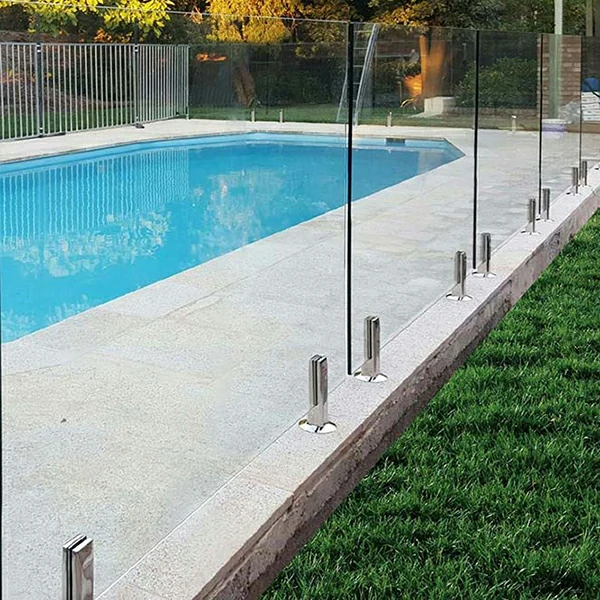
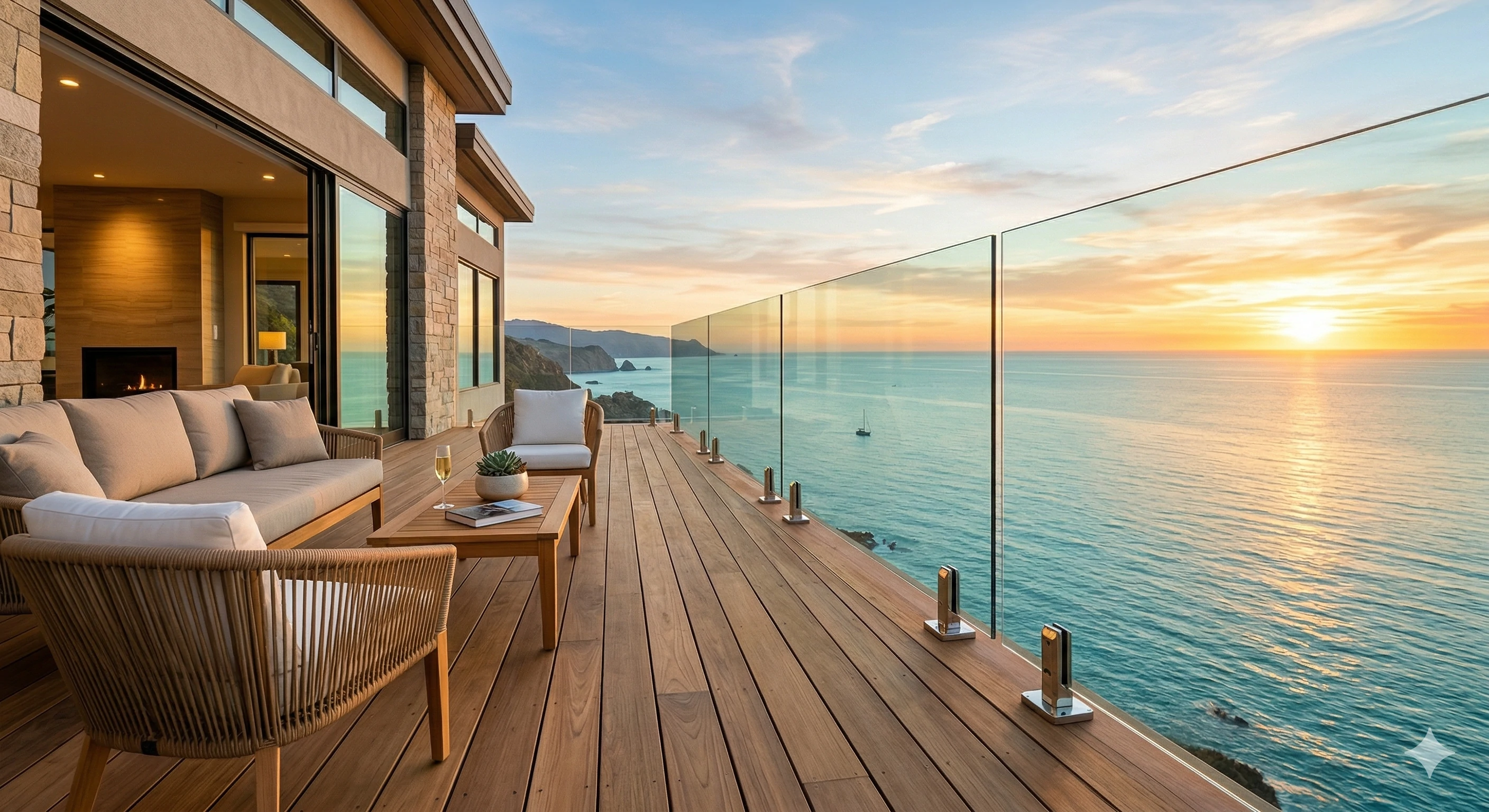
Owning a home on the coast is owning a paradox. Every morning, you wake up to a million-dollar ocean view — and every afternoon, that same ocean is quietly trying to destroy your house. Salt spray, , pounding UV, and storm-force gusts don't take days off. They go to work on anything bolted to your deck the moment it's installed.
So here's the conflict every coastal homeowner eventually runs into: you want an invisible barrier that doesn't slice your horizon in half, but every "standard" railing on the market rusts, rots, warps, or fails the first time a real squall rolls in off the water.
The answer — the one luxury builders and coastal architects have quietly standardized on — is frameless glass railings anchored by marine-grade glass spigots. Done right, this system delivers marine-grade toughness to protect an unobstructed, million-dollar ocean view, and it does it for decades with almost no maintenance.
This is the guide that walks you through why the old railings fail, how frameless glass survives where steel and wood can't, and how to tell a premium spigot system from a cheap one dressed up to look like one.
The Coastal Railing Problem Nobody Warns You About
If you've owned a beachfront property for more than a season or two, you already know the pattern. If you're building one now, here's what the brochure didn't tell you.
The Rust-and-Rot Nightmare
Sea air is not just "humid air near water." It's a that settles on every surface within a mile of the shoreline. Chlorides are catalysts — they punch through the that normally protects steel, and once that layer is compromised, corrosion accelerates fast.
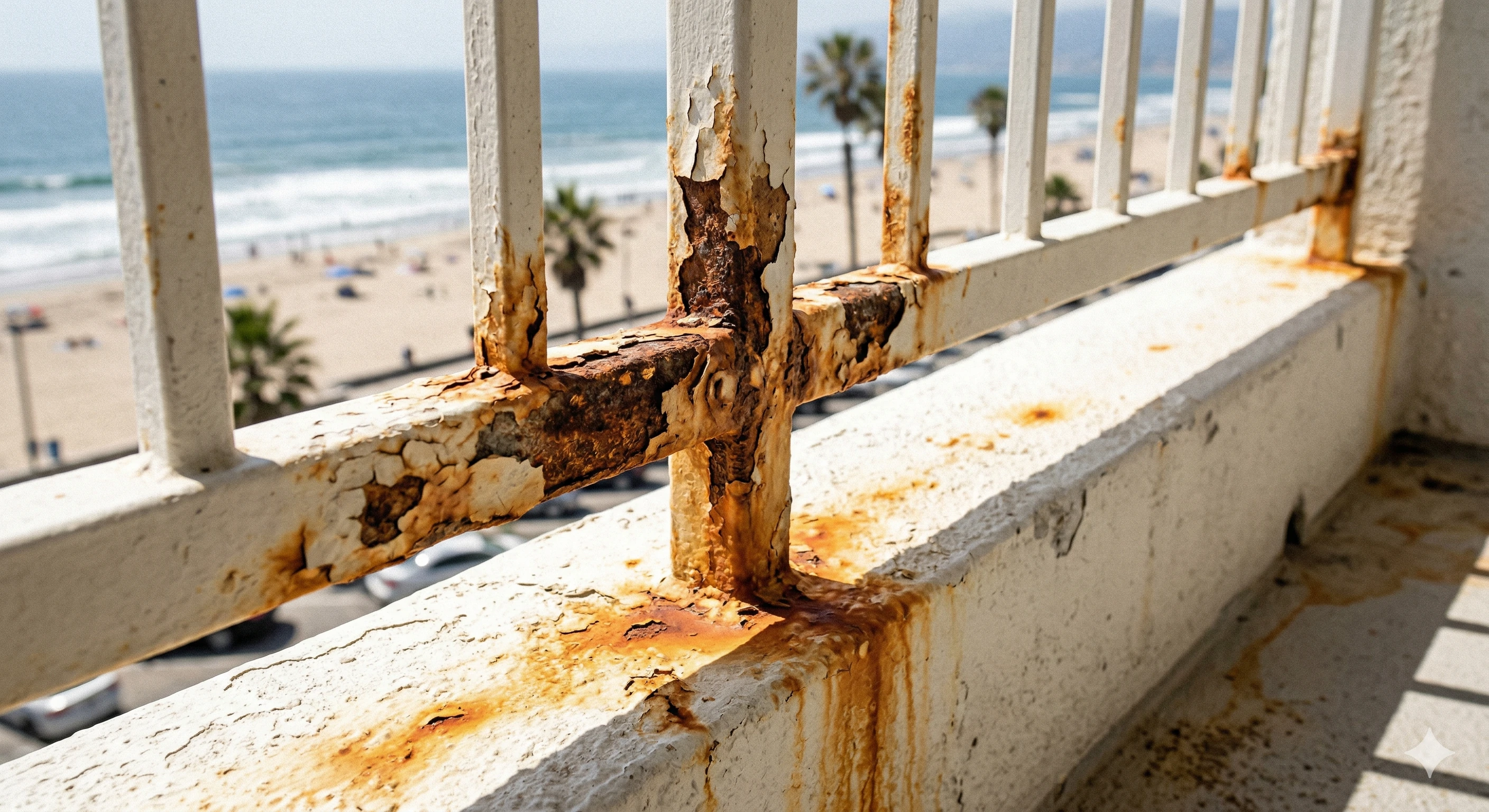
can show surface rust within weeks. Powder-coated aluminum fails at the seams. Wrought iron, no matter how thickly painted, starts bleeding orange down your stucco by the end of the first summer. Even treated wood balusters swell, crack, and split as salt draws moisture in and out of the grain. The annual ritual of sanding, priming, repainting, and replacing becomes a second mortgage paid in weekends.
The Million-Dollar View, Cut in Half
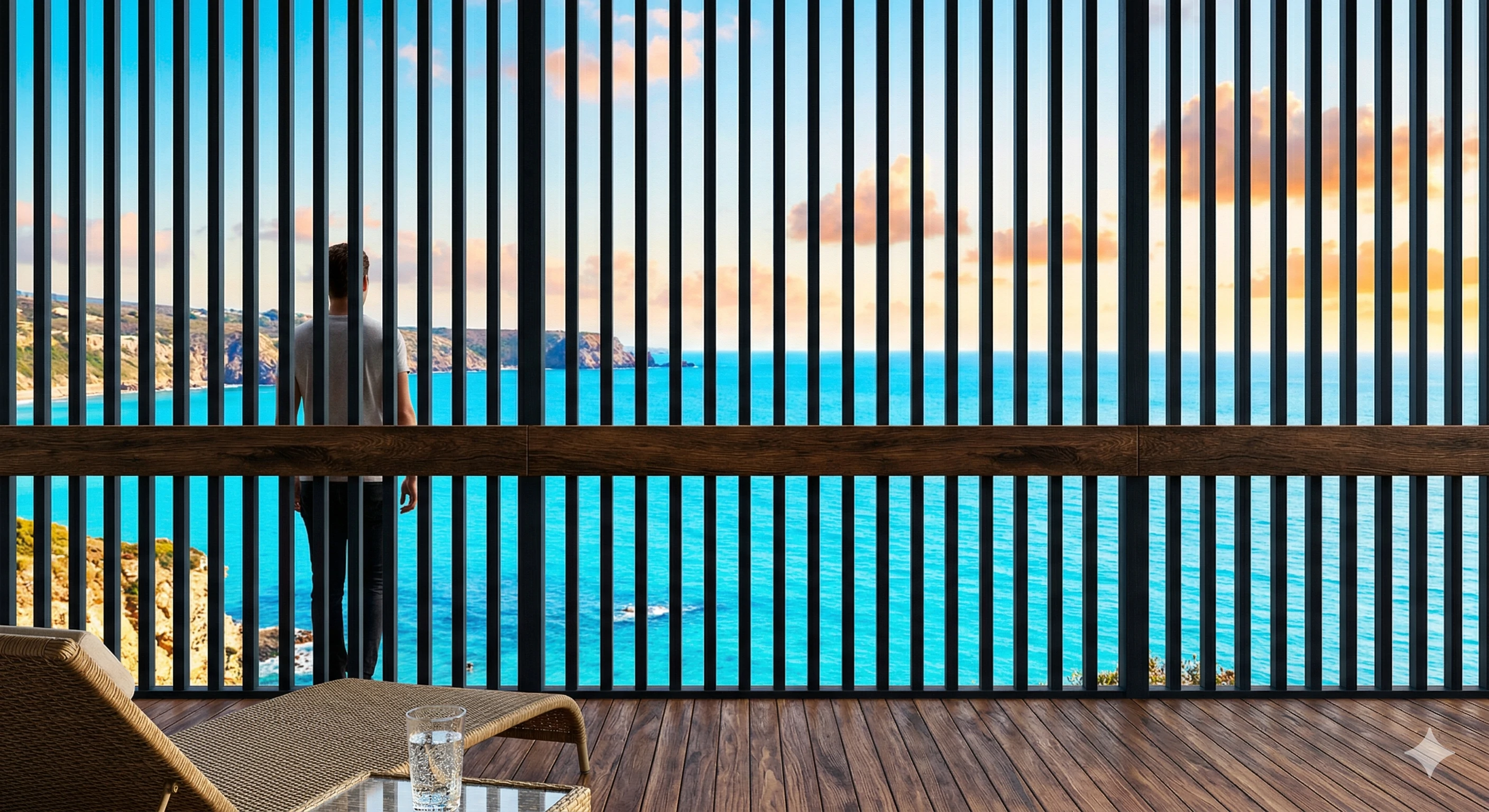
Then there's the aesthetic tragedy. You paid a premium — possibly a massive one — for that ocean view. And what's directly in your sightline when you stand on the deck? A top rail at eye level. A chopping the horizon into vertical stripes. Bulky newel posts exactly where the sunset should be.
A railing that was acceptable on a suburban porch becomes an insult on a coastal balcony. You're not paying for a barrier. You're paying for a frame around the ocean, and the wrong hardware frames it badly.
Coastal Wind Anxiety
Finally, there's the fear that doesn't go away: what happens when the wind actually picks up? Coastal structures don't just deal with steady breezes — they deal with gusts, itself, and, in hurricane zones, sustained loads that can peel siding off walls. A flimsy railing isn't just ugly. It's a liability. Homeowners in these zones lie awake during storms wondering if the thing between their kids and a three-story drop is actually up to the job.
How Frameless Glass Actually Survives on a Beach
At first glance, frameless glass railings sound like exactly the wrong answer for a hostile environment. No top rail, no visible frame, just sheets of glass standing on edge? How does that survive a nor'easter?
The answer is in the hardware nobody talks about: the spigot.
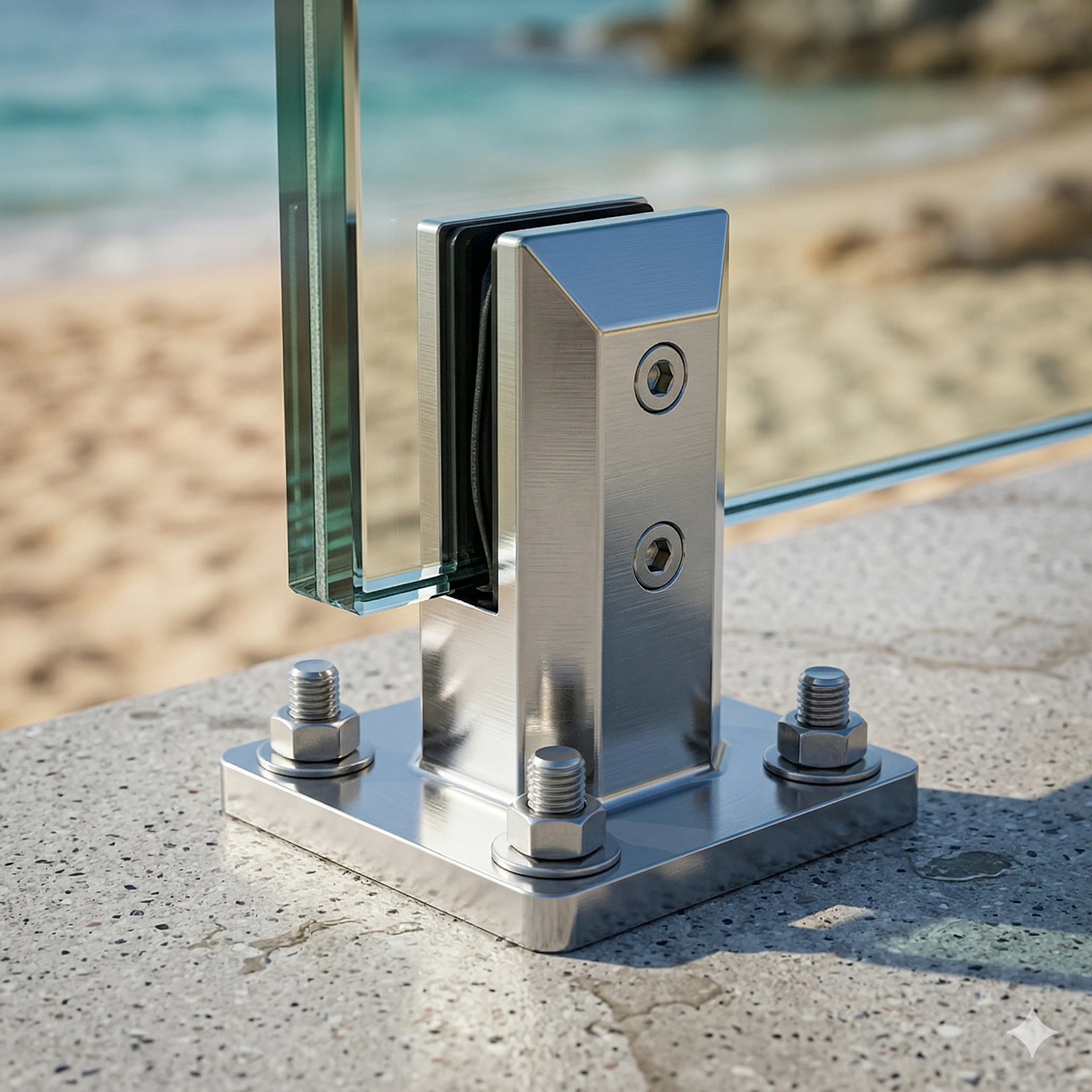
What a Glass Spigot Actually Does
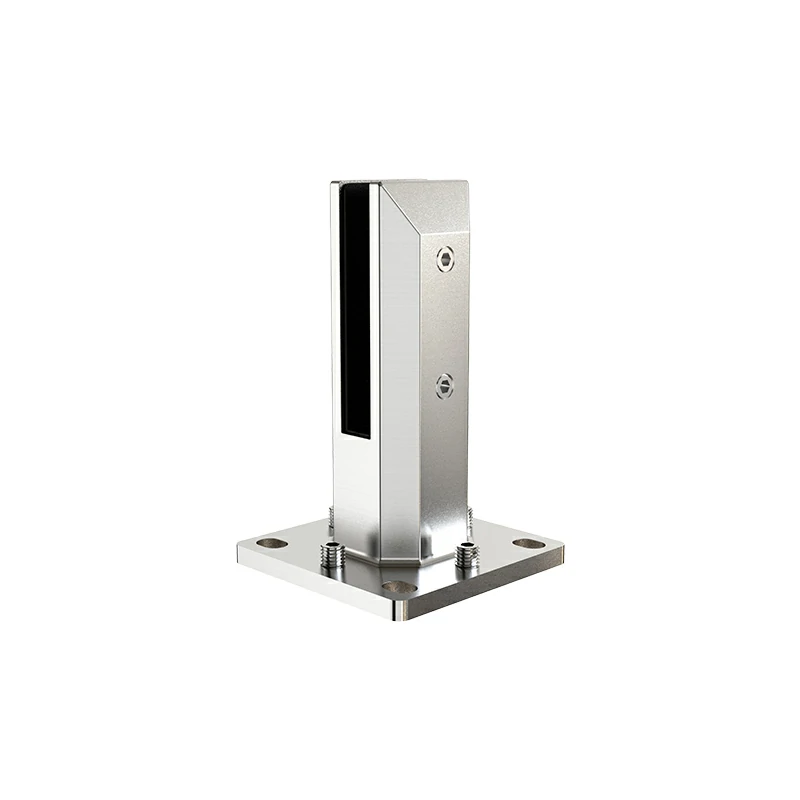
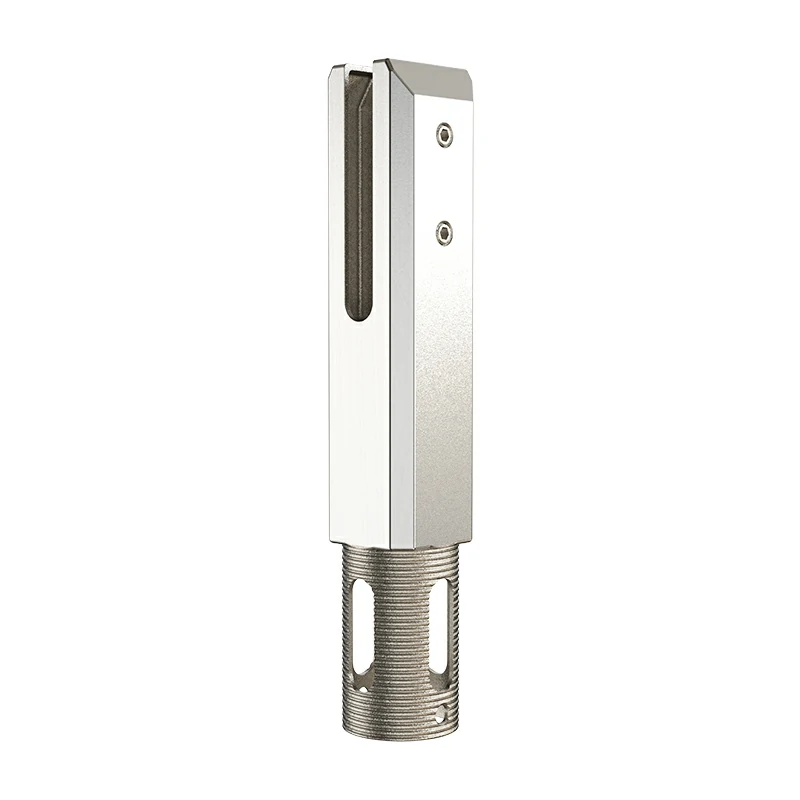
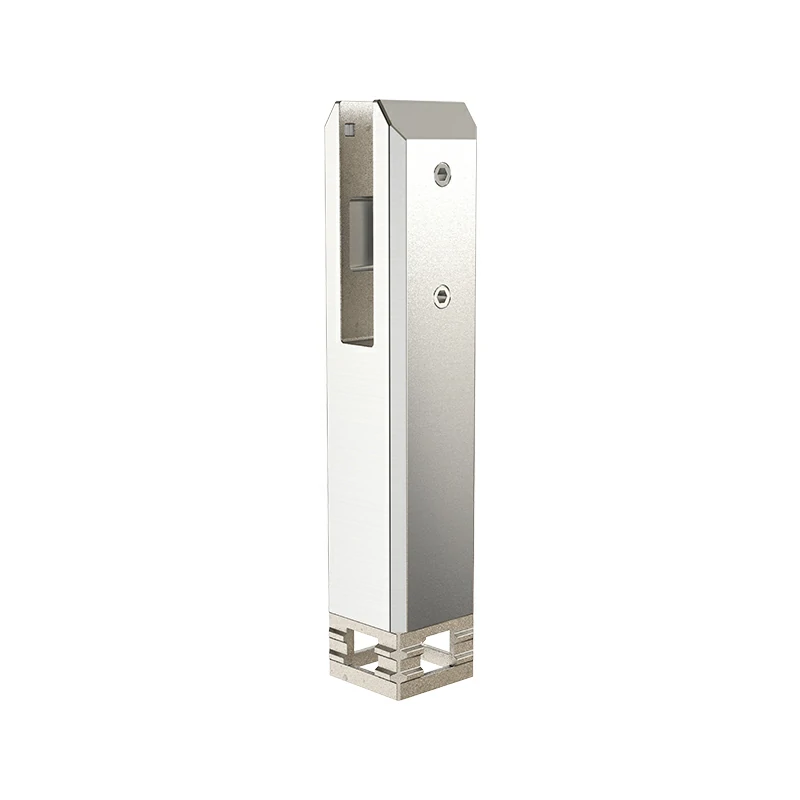
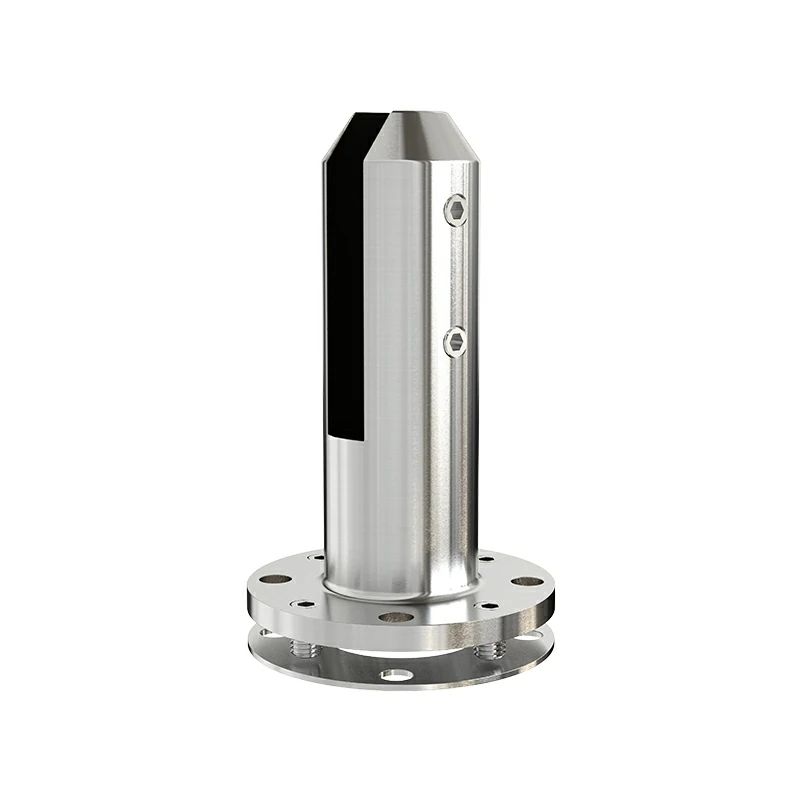
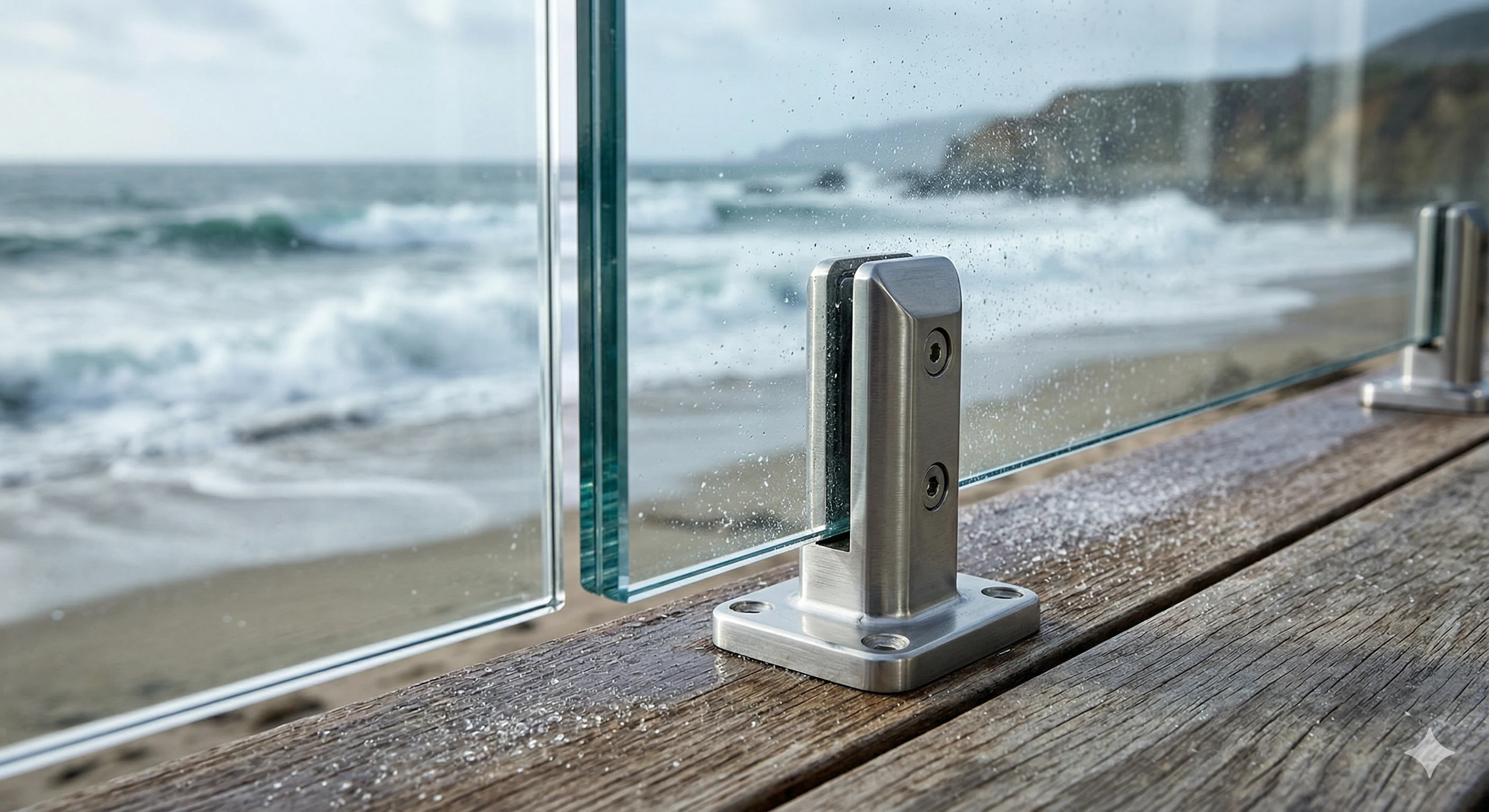
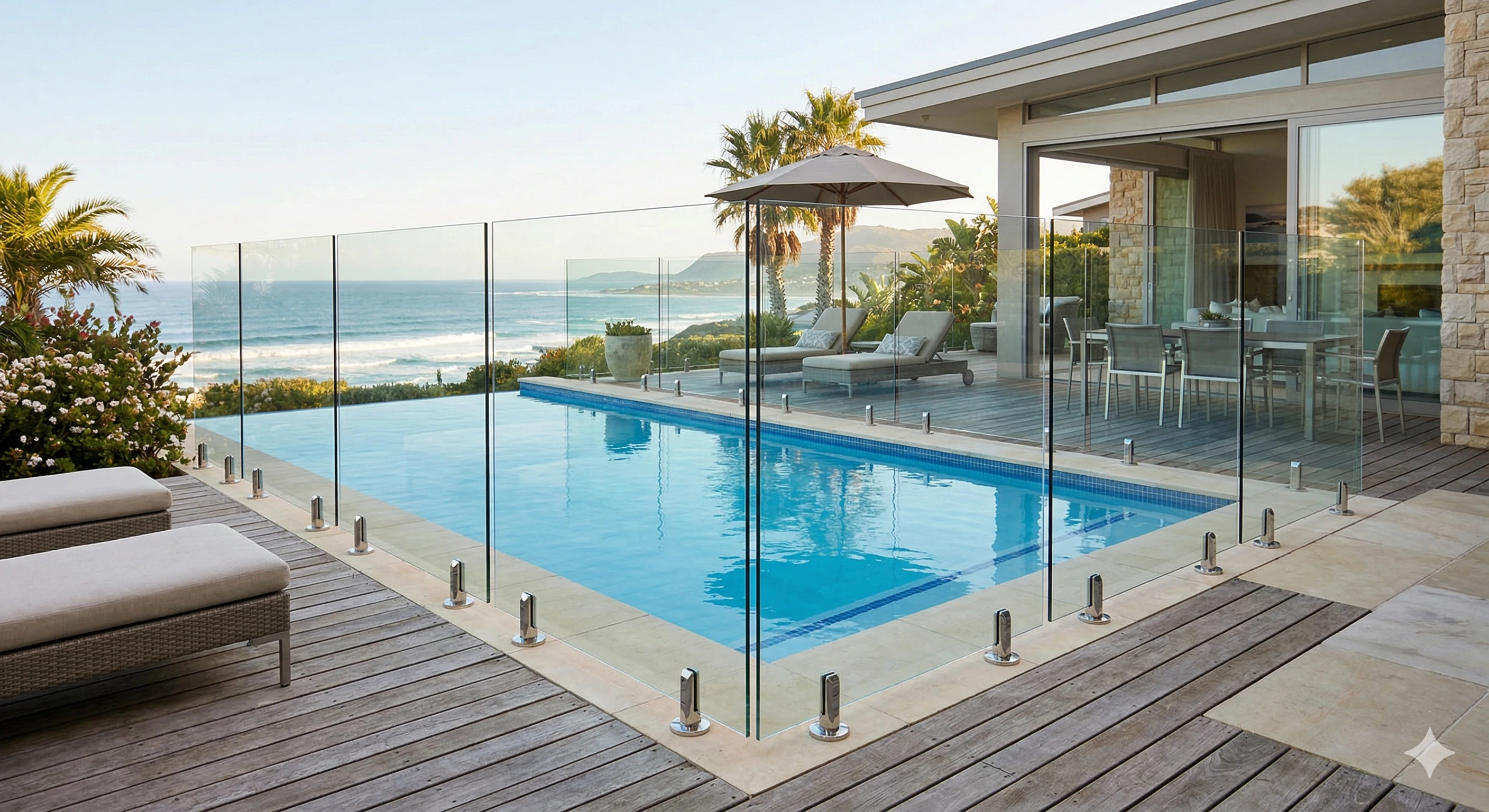
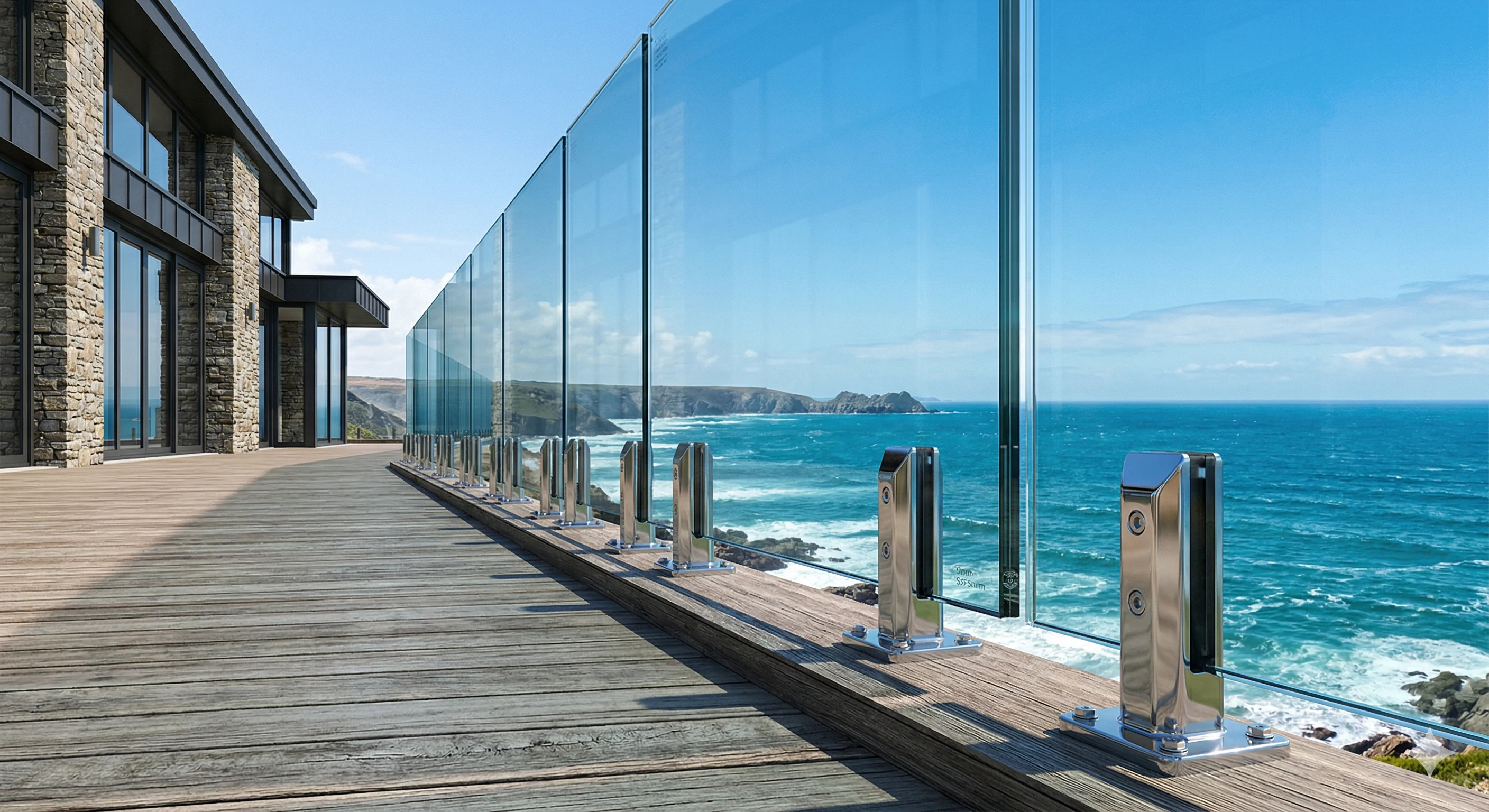
A glass spigot is a heavy, — usually square or round, a few inches tall — that bolts down through your deck, concrete, or structural substrate and grips the bottom edge of a thick glass panel with enormous clamping force. Two or three spigots hold one panel. There is no top rail, no side posts, no frame around the glass. The load path runs straight down through the glass edge, into the spigot body, into the bolts, and into the structure below.
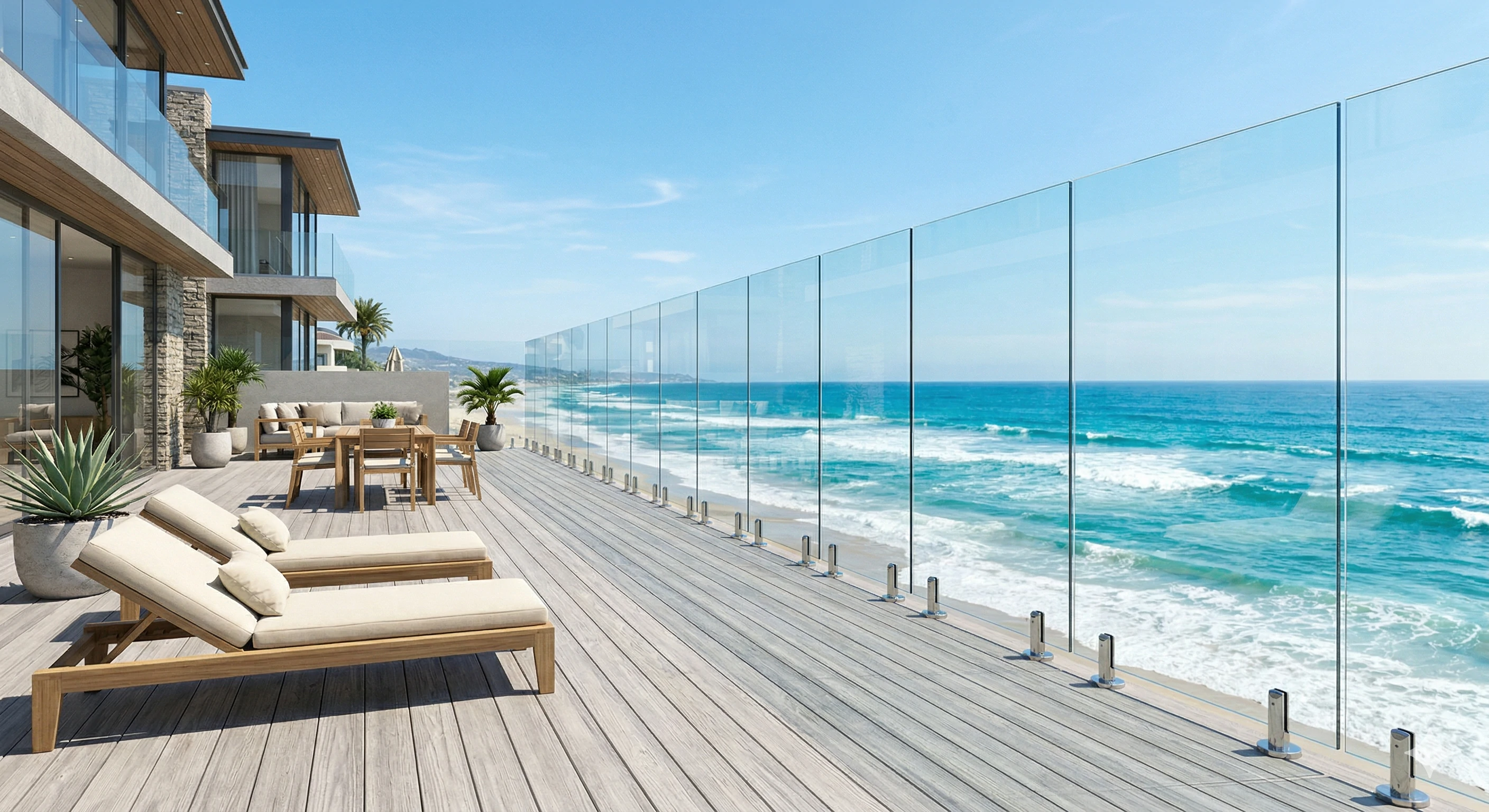
The result is a railing that looks like it isn't there. Your horizon is uninterrupted from the deck surface all the way up. But under that invisible aesthetic is a base connection engineered to take loads most traditional railings can't dream of.
The Marine-Grade Secret: It's All in the Metallurgy
Here's where most coastal railing projects quietly go wrong. A contractor orders "stainless steel spigots," the box shows up, they look shiny and professional, and within 18 months they're weeping rust stains down the concrete. What happened?
Stainless steel is not one material. It's a family, and the family members behave very differently in salt air.
304 stainless steel is the cheap default — fine for kitchen sinks and indoor handrails, useless within sight of the ocean. It lacks the alloying elements needed to resist chloride pitting, and on the coast it fails visually (and eventually structurally) within a year or two.
316 marine-grade stainless steel is the real starting point. The key difference is the addition of molybdenum (typically 2–3%), which dramatically improves resistance to chloride-induced pitting and crevice corrosion. This is the minimum spec you should accept for any coastal glass railing project. "316L" is the low-carbon variant, preferred for welded components because it resists sensitization at the weld zones.
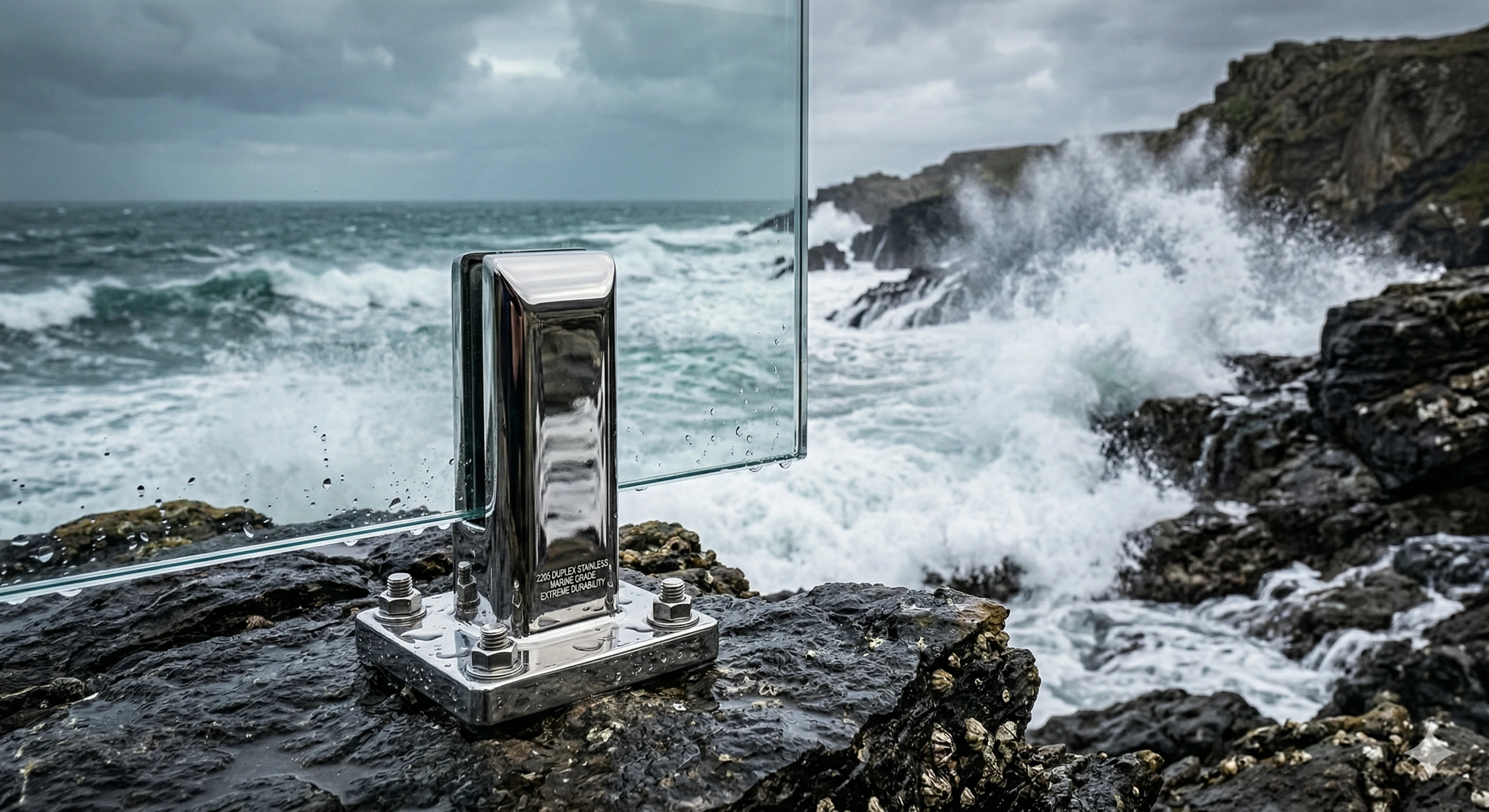
2205 duplex stainless steel is the premium tier. It has a mixed ferritic-austenitic microstructure, roughly twice the yield strength of 316, and even better chloride resistance. For properties directly on the shoreline — the ones getting constant salt spray, not just coastal humidity — 2205 is the "install it and forget it" choice. It's what you spec when you don't want to think about the railing again for thirty years.
The metallurgy isn't marketing. It's the entire reason the system works.
Hurricane-Ready by Design
Pair a properly cored and bolted marine-grade spigot with the right glass — typically 1/2" to 3/4" — and you get a railing system engineered to flex and absorb dynamic wind loads rather than shatter or rip free. Tempered laminated glass is the same general family as automotive windshields: if it does break under extreme impact, the interlayer holds the fragments in place rather than raining shards onto the deck below. Combined with core-drilled, structurally anchored spigots, the assembly routinely passes the wind-load requirements of Florida, Gulf Coast, and Pacific Northwest building codes.
That's how an "invisible" railing becomes a storm-rated one.
Choosing the Right System (and Why the Cheap Option Costs More)
By this point most homeowners are sold on the concept. The question becomes: which version do I actually buy? Contractors will offer cheaper alternatives, and the numbers on the quote can be meaningfully different. Here's how to think about it.
304 vs. 316 vs. 2205: The Material Showdown
If you remember nothing else from this guide, remember this comparison.
304 stainless is a non-starter on the coast. Don't let a contractor talk you into it because it's "still stainless." It will rust, and the rust stains on your deck and stucco will outlast the railing itself.
316 / 316L is genuinely good. For coastal homes that are a few blocks back from the waterline, or in sheltered coves without heavy spray exposure, 316 spigots with proper surface finishing will perform beautifully for decades. This is the mainstream premium choice.
2205 duplex is the right call when the property is directly on the beach, on an exposed headland, or in a hurricane-prone zone. The upfront cost is higher — typically 20–40% more than 316 — but the strength advantage lets you use smaller, cleaner spigots for the same load rating, and the corrosion margin is so generous that tea-staining becomes a non-issue in most installations. For an oceanfront home, the math almost always favors 2205 over the lifetime of the railing.
The wrong way to compare is to look only at the material line item. The right way is to compare total cost of ownership: premium upfront once, versus repeated refinishing, replacement, and deck repair every few years on a cheaper system.
The Truth About Tea-Staining
Even 316 can develop "tea-staining" in aggressive coastal environments — a that is cosmetic rather than structural. It's not active rust eating the metal; it's surface deposits from salt interacting with trace iron in the passive layer. It won't weaken the spigot, but it does look bad on a $200,000 deck.
Premium spigot manufacturers address this two ways. First, with finish: a mirror-polished surface has fewer microscopic pockets for salt to cling to, so there's less for deposits to grab onto. Second, with optional surface treatments — certain and proprietary coatings (including Teflon-family treatments) that further reduce salt adhesion and make routine cleaning as simple as a freshwater rinse every few weeks. If you're in a heavy-spray location, ask specifically about the spigot's surface treatment before you buy.
Compliance and Resale Value
A final consideration that surprises a lot of homeowners: frameless glass systems with marine-grade spigots tend to sail through the strictest coastal code reviews. Pool fencing requirements, balcony fall-protection loads, hurricane zone wind ratings — a properly specified system hits them all, and hits them with documentation.
And on the resale side, the aesthetic is now firmly associated with luxury coastal construction. Listings photograph dramatically better without a railing cutting across the horizon in every shot. For beachfront properties in the luxury market, frameless glass has moved from "nice upgrade" to "expected feature," and buyers notice its absence.
The Bottom Line
Living on the coast means you cannot compromise on materials. The ocean is patient, it's relentless, and it will find every shortcut a contractor took the moment your back is turned. Standard railings don't just fail aesthetically on the coast — they fail expensively, repeatedly, and sometimes dangerously.

Frameless glass railings supported by 316L or 2205 marine-grade spigots are the one system designed from the metallurgy up to survive that environment without asking you to repaint, replace, or refinish anything. They protect your family, they pass the strictest coastal codes, and they preserve the one thing you actually bought the property for: the view.
Don't let salt and rust ruin your coastal paradise. Browse our selection of 2205 duplex marine-grade glass spigots, or contact our hardware experts for a storm-ready project quote today.
Footnotes
1. Understand the corrosive properties of sea spray and coastal mist environments.
2. Learn how chloride ions act as catalysts in accelerating metal corrosion.
3. Discover how chemical passivation protects metals by forming an oxide layer.
4. Overview of carbon steel properties and its high susceptibility to rust.
5. Read about architectural balusters and their visual impact on railing designs.
6. Explore fluid dynamics and how vortex shedding affects structural load stress.
7. Details on how mechanical clamps effectively secure heavy materials like glass.
8. Information on the structural strength and safety features of laminated glass.
9. Explanation of surface rust and iron oxide formation on treated metals.