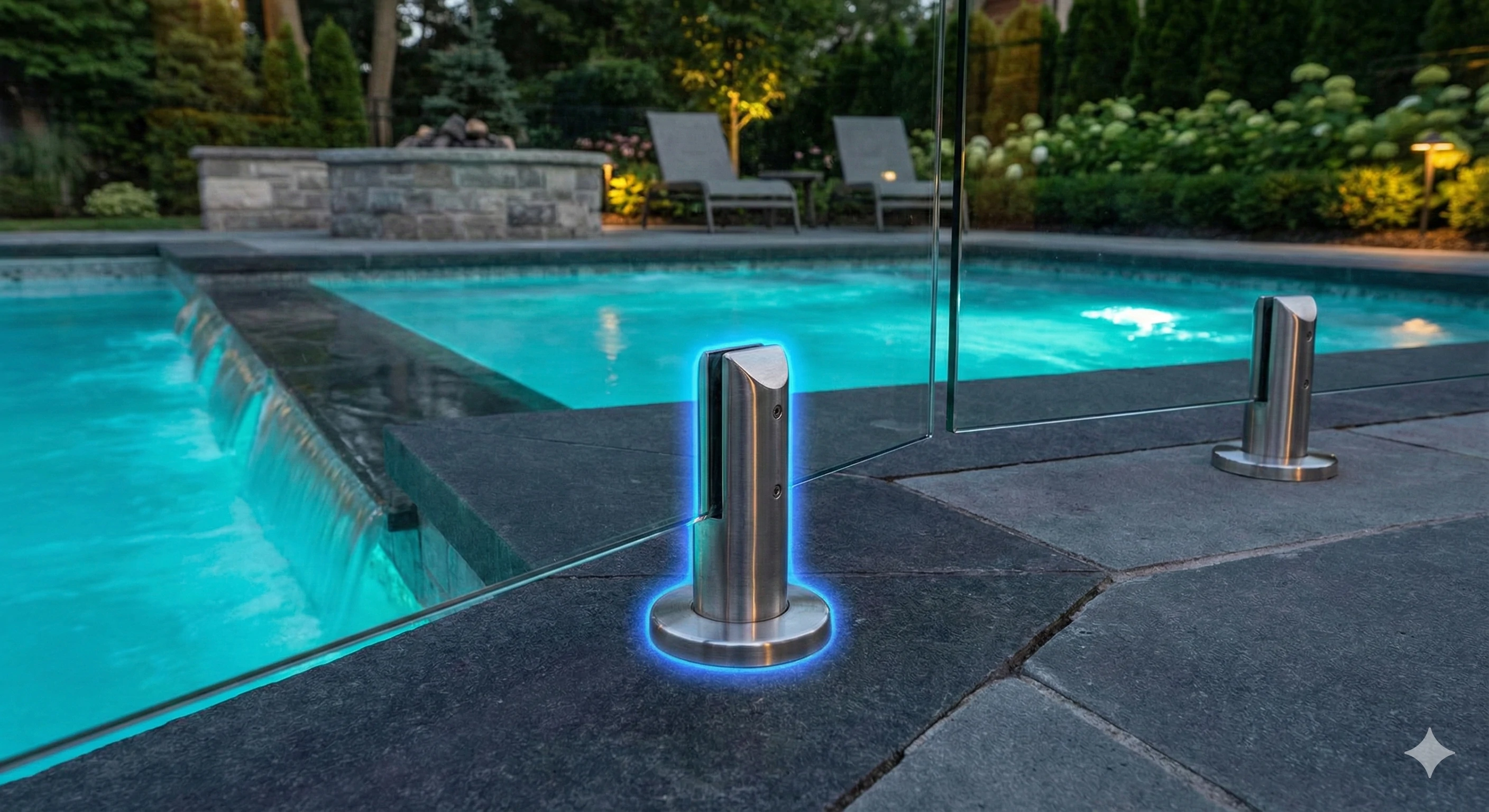
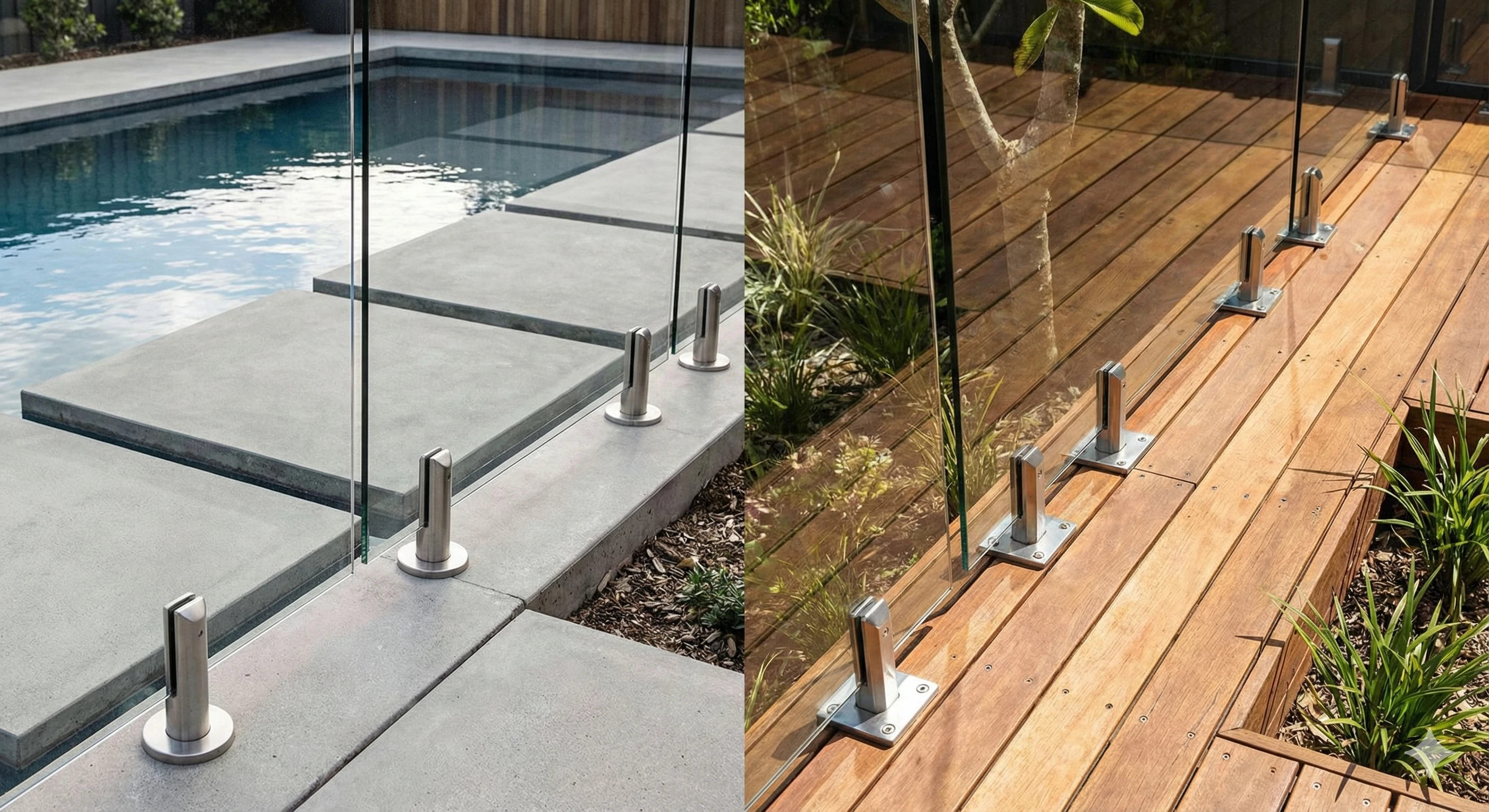
If you’ve ever stood next to a stack of glass panels wondering whether core drill or base plate spigots really make a difference, you’re not alone. On paper, both options hold glass securely. In real installations, however, choosing the wrong one can create serious problems.
We’ve seen it happen more than once: core drill spigots ordered for a timber balcony, or base plate spigots installed on a concrete pool deck where a cleaner, flush finish was expected. The result is usually wasted time, extra cost, and a finished look that doesn’t match the original design intent.
This guide breaks down the practical differences between core drill and base plate spigots, focusing on three things that matter most on site:
the surface you’re fixing into, how the finished railing looks, and how complex the installation really is. By the end, you’ll know exactly which option makes sense for your project—whether it’s a glass pool fence on concrete or a frameless railing on a timber deck.
What is a Base Plate Spigot? (Surface Mounted)

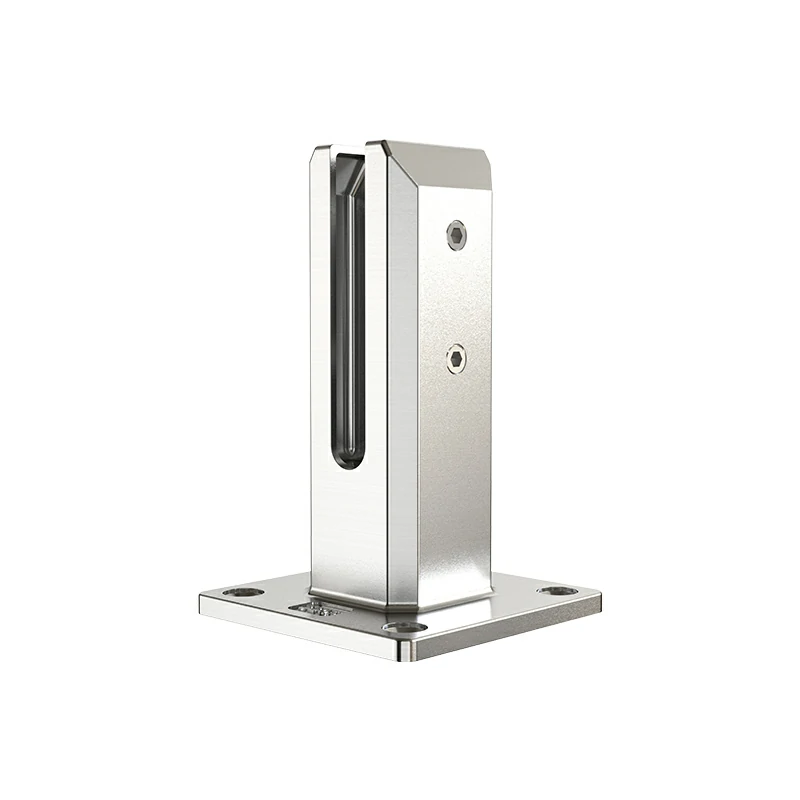
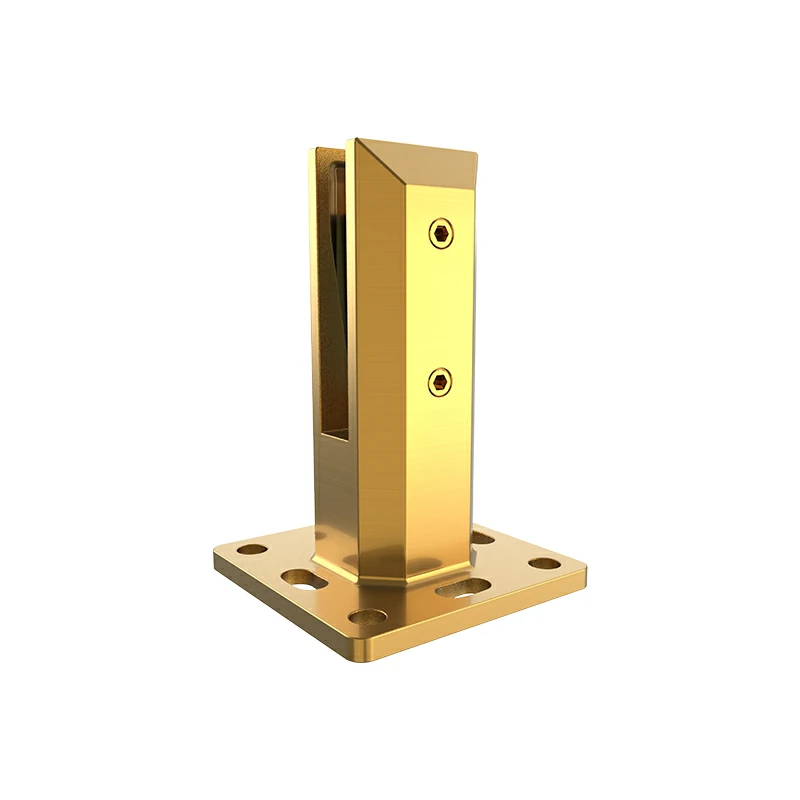
A base plate spigot, often called a surface mount spigot, is fixed directly onto the surface using anchors or lag screws. It features a flat base with four fixing points, transferring load through the fasteners rather than into the slab itself.
Best suited for: wood decking, composite decking, and situations where drilling deep into the substrate isn’t possible.
Wood moves. It expands, contracts, and flexes with temperature and humidity changes. Base plate glass spigots are designed to work with that movement instead of fighting against it.
Most quality systems also include a stainless steel cover plate that hides the fixings. Once installed, the result is clean and professional, without exposed bolts or washers.
Advantages of base plate spigots
Easier leveling using shims on uneven surfaces
Faster installation with standard tools
The only safe solution for timber and composite decks
Works on a wide range of substrates with the correct anchors
Limitations
A slightly larger visual footprint at floor level
Overall strength depends on anchor quality and installation accuracy
Requires proper sealing outdoors to prevent water pooling around the base
What Is a Core Drill Spigot? (Embedded Mount)
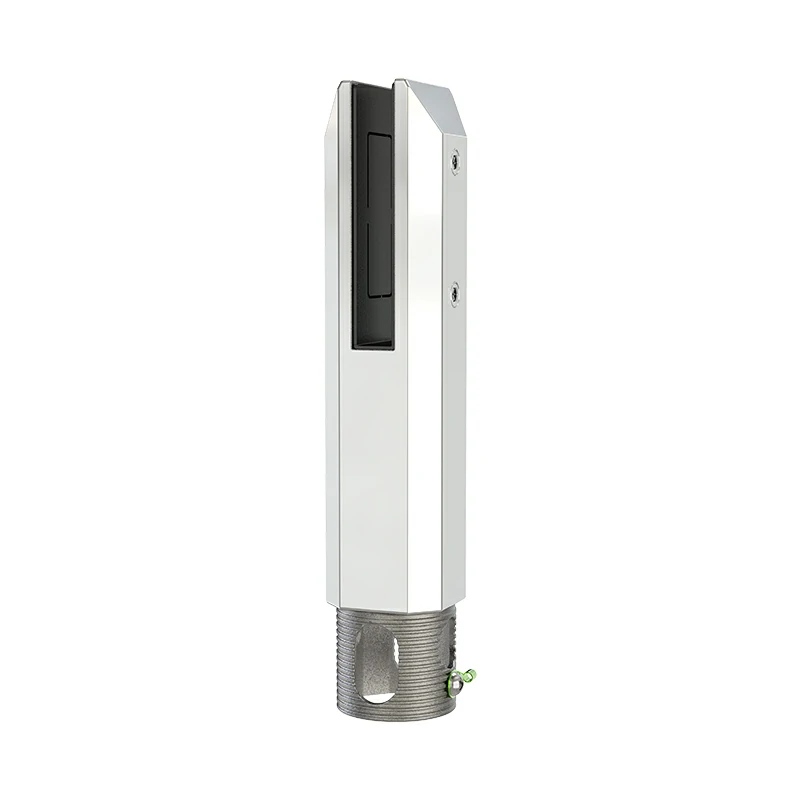
Core drill spigots are designed to be set into concrete or stone. Instead of sitting on top of the surface, a long stem is drilled into the slab and fixed in place using non-shrink grout or hydraulic cement.
Best suited for: concrete pool decks, stone patios, and pavers installed over concrete.
Once installed, the spigot effectively becomes part of the slab. The grout bonds with the surrounding concrete, creating a very rigid and durable fixing point. This is why core drill installations are often preferred for high-end residential and architectural projects.
Advantages of core drill spigots
Clean, minimalist appearance with no visible base plate
Excellent strength in concrete applications
Ideal for installations through pavers into a concrete slab
No risk of bolts loosening over time
Limitations
Requires wet core drilling equipment
Installation is more time-consuming and messier
Position and level must be perfect before the grout sets
Not suitable for thin slabs or unknown concrete conditions
How to Choose: Real-World Scenarios
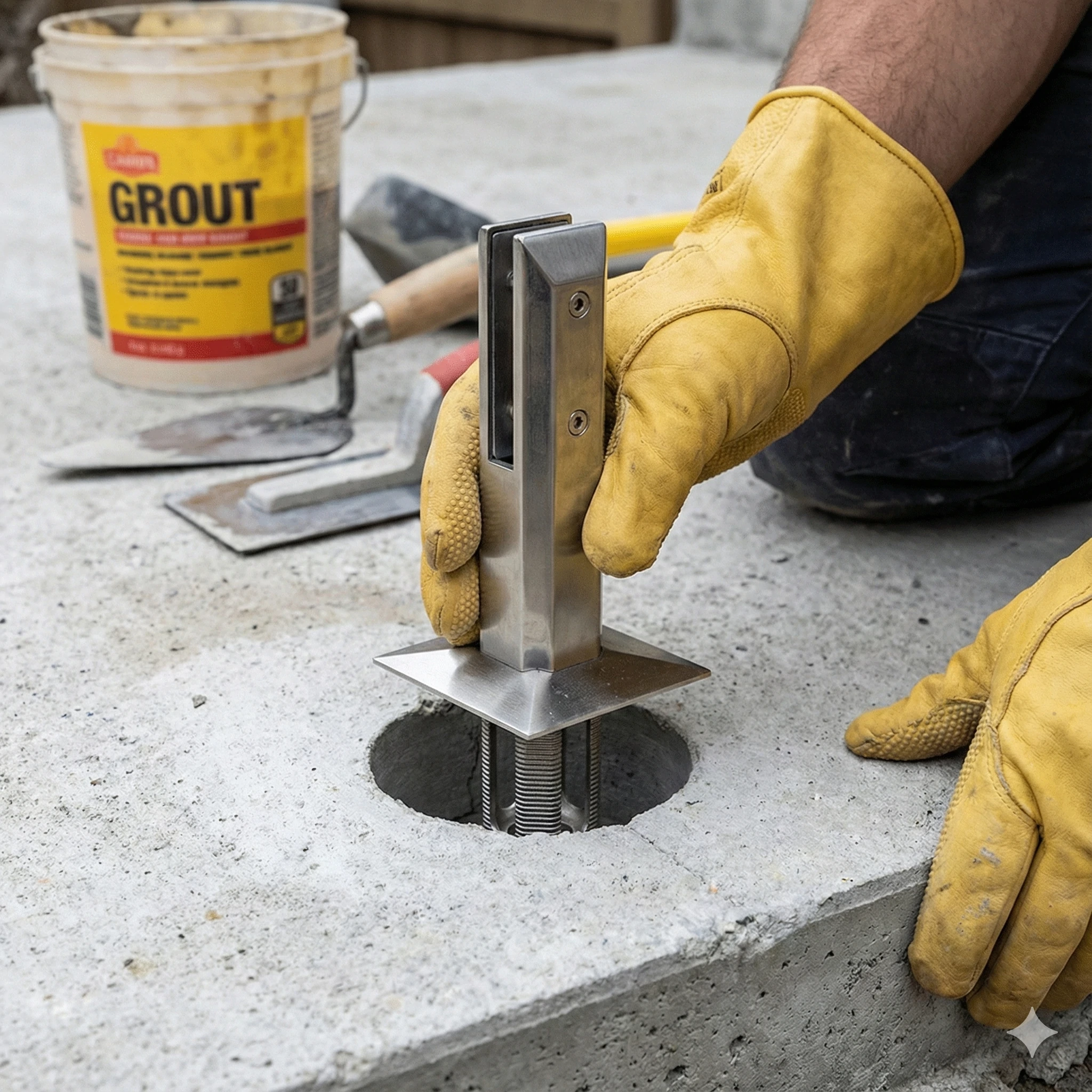
Concrete or stone surfaces
Core drill spigots are usually the best option. They provide a cleaner finish and excellent structural performance, especially around pools and patios.
If the slab is thinner than 4 inches, cracked, or contains post-tension cables, a base plate spigot with heavy-duty concrete anchors is the safer alternative.
Wood or composite decking
Base plate spigots are mandatory. Embedding a spigot into timber will eventually fail as the wood moves and the grout cracks.
Proper blocking beneath the deck is essential. The load must be transferred into the framing, not just the deck boards.
Second-story balconies
In most cases, base plate spigots are the practical choice. Core drilling risks damaging waterproof membranes and encountering unknown rebar layouts. Surface mounting avoids these issues and allows for safer, code-compliant installation.
Installation Differences at a Glance
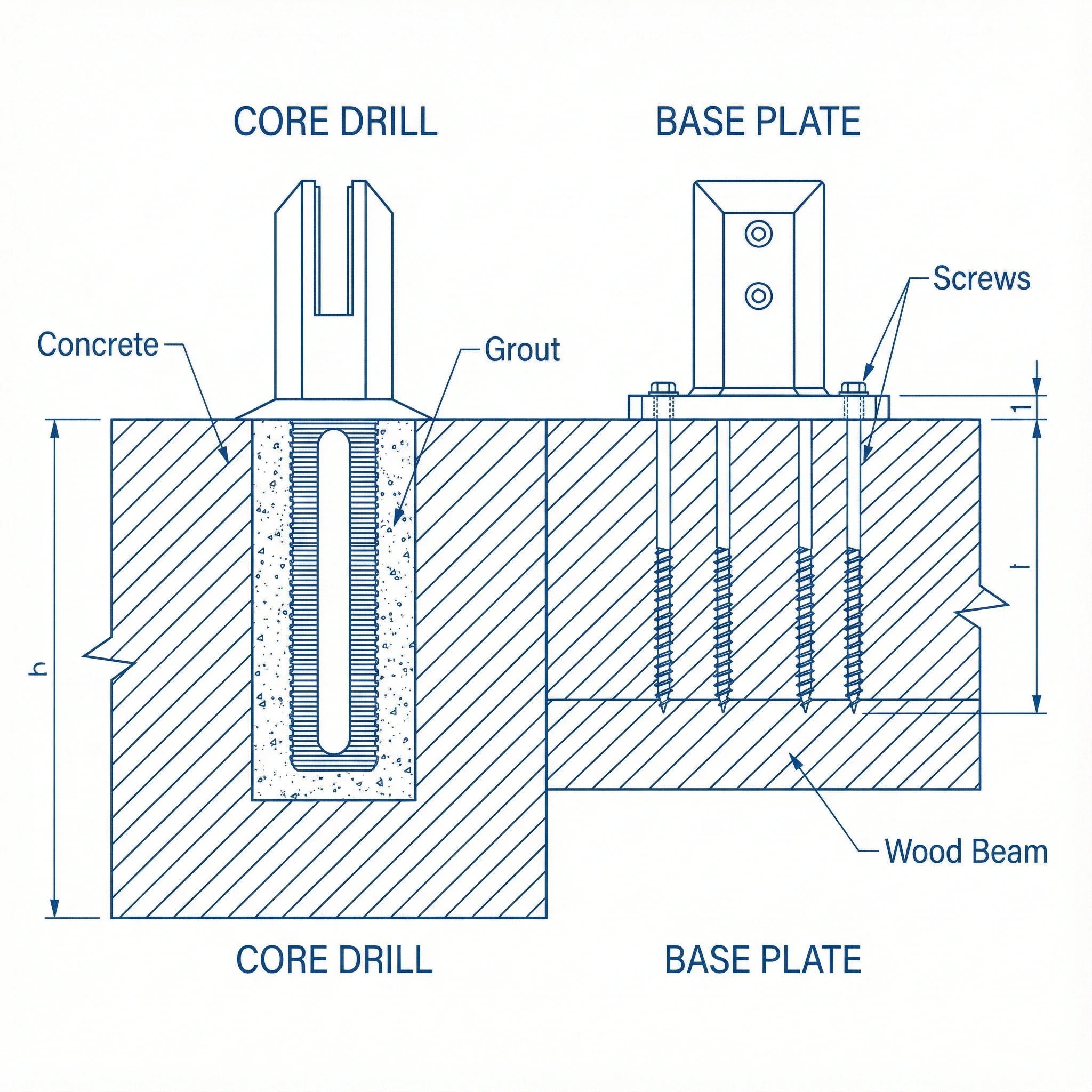
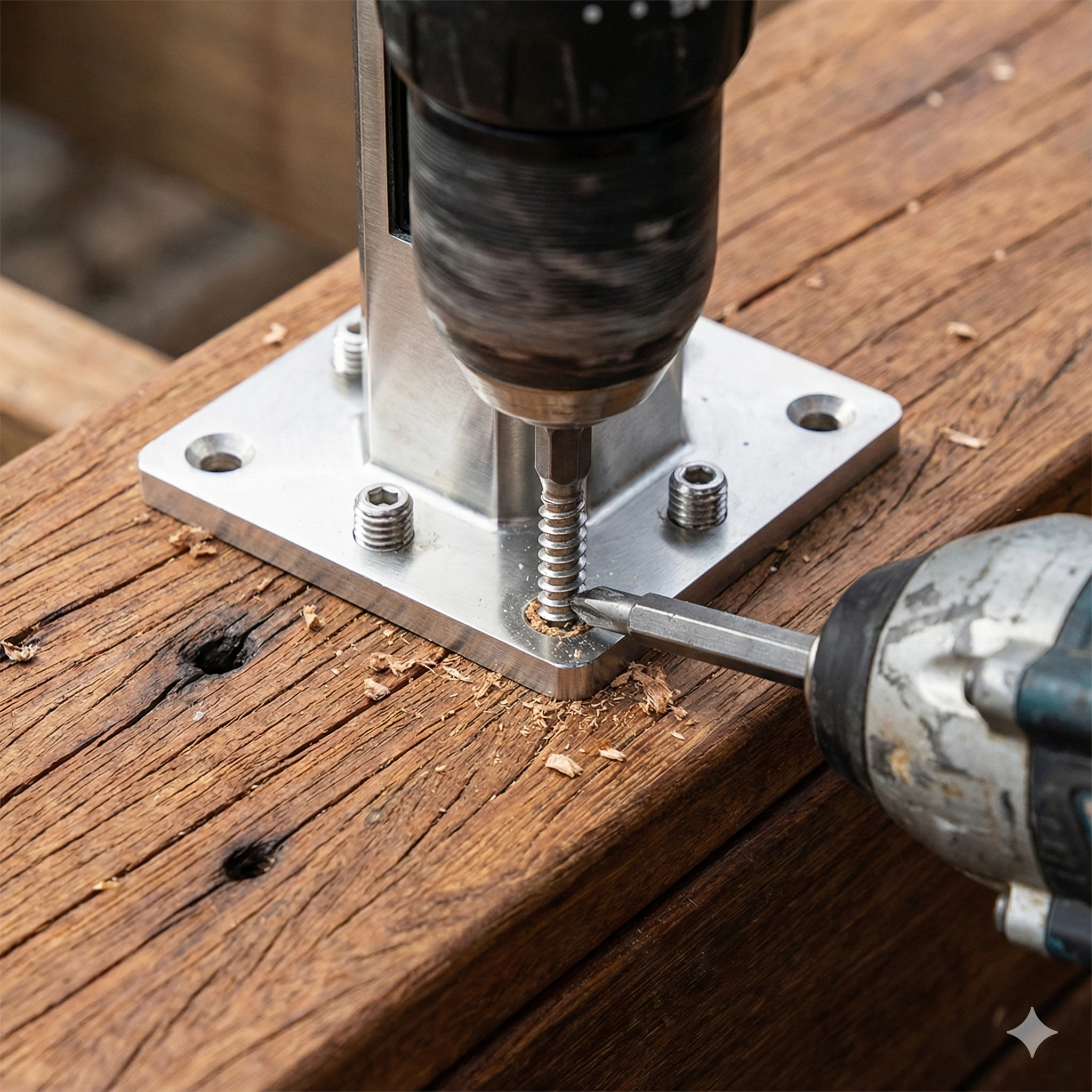
Base plate installations rely on accurate drilling, correct anchors, and proper torque settings. Core drill installations depend on precise drilling depth, thorough hole cleaning, and careful leveling before grouting. Neither method is “better” by default—the surface conditions determine the right choice.
Final Takeaway
Timber or composite decking: Base plate spigots
Concrete or stone surfaces: Core drill spigots for the cleanest look
Thin slabs or balconies: Base plate spigots with rated anchors
Choosing the right spigot isn’t about preference—it’s about matching the fixing method to the substrate. When that match is right, installation is smoother, the railing looks better, and long-term safety isn’t compromised.
If you’re still unsure, sharing a photo of the installation surface usually makes the decision clear in minutes.
Frequently Asked Questions
Can I use core drill spigots on a wood deck?
No. Wood naturally expands and contracts with humidity and temperature changes, which will crack the grout around an embedded spigot. This creates a loose, unsafe installation. Always use base plate spigots with lag screws for timber or composite decking.
How deep do I need to drill for core drill spigots?
Typically 3 to 4 inches (70-100mm), depending on your spigot's stem length and the manufacturer's specifications. Your concrete slab should be at least 4 inches thick to safely accommodate core drilling without breaking through to the substrate below.
Which spigot is stronger?
Both mounting methods provide adequate strength when installed correctly according to engineering specifications. However, core drill spigots have a slight structural advantage in concrete applications because they're embedded within the slab itself, creating a monolithic connection. Base plate strength depends entirely on your anchor quality and proper torque settings.
Do I need special tools for base plate installation?
For basic installations, you'll need: a hammer drill, appropriate drill bits, a torque wrench, and a level. For wood decks, add a stud finder to locate joists. These are common tools most contractors already own, making base plate installations accessible for both professionals and advanced DIYers.
Can I install core drill spigots myself, or do I need a professional?
While technically possible for experienced DIYers, core drilling requires specialized equipment (wet core drill, diamond bits), proper technique to avoid cracking concrete, and precise leveling during the grouting phase. Most homeowners find it more cost-effective to hire a professional installer or rent commercial-grade equipment. Mistakes during core drilling can result in broken slabs or permanently misaligned spigots.