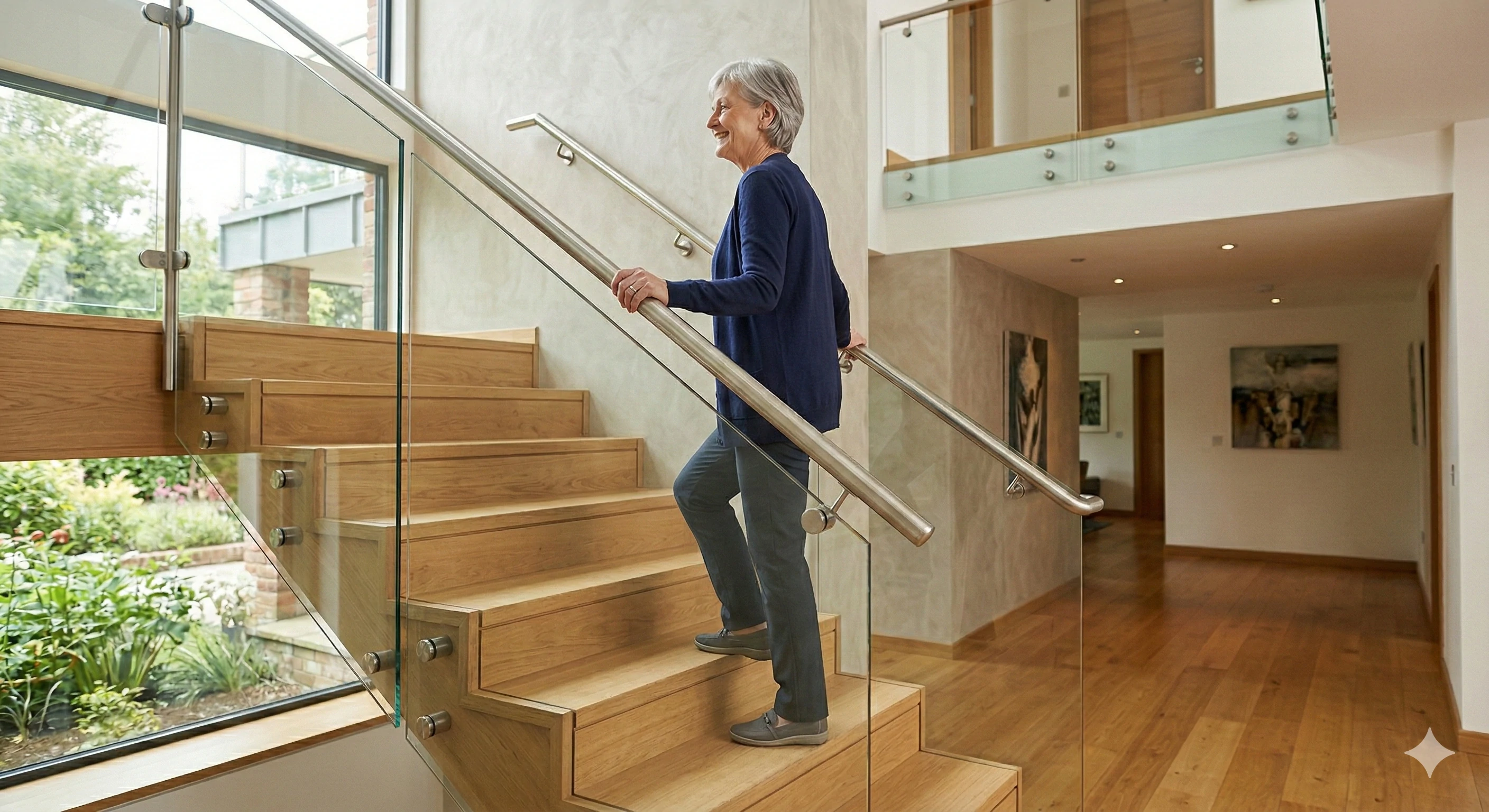
For older adults, the stairs are often the most dangerous part of the home. Most people think standard builder-grade handrails are "good enough" for everyday use. However, the concept of requires modifying the environment to prevent falls entirely. When our engineers design architectural hardware, we know that seniors rely on handrails to pull their full body weight up, not just for a light balance touch. We constantly see homeowners and contractors overlooking the critical details of ergonomic safety. You need a secure setup to truly protect your loved ones.
The best stair rail height for older adults is between 36 and 38 inches vertically from the stair tread nose. This specific range allows seniors to safely pull their body weight upward without hunching forward, drastically reducing the risk of dangerous falls on staircases.
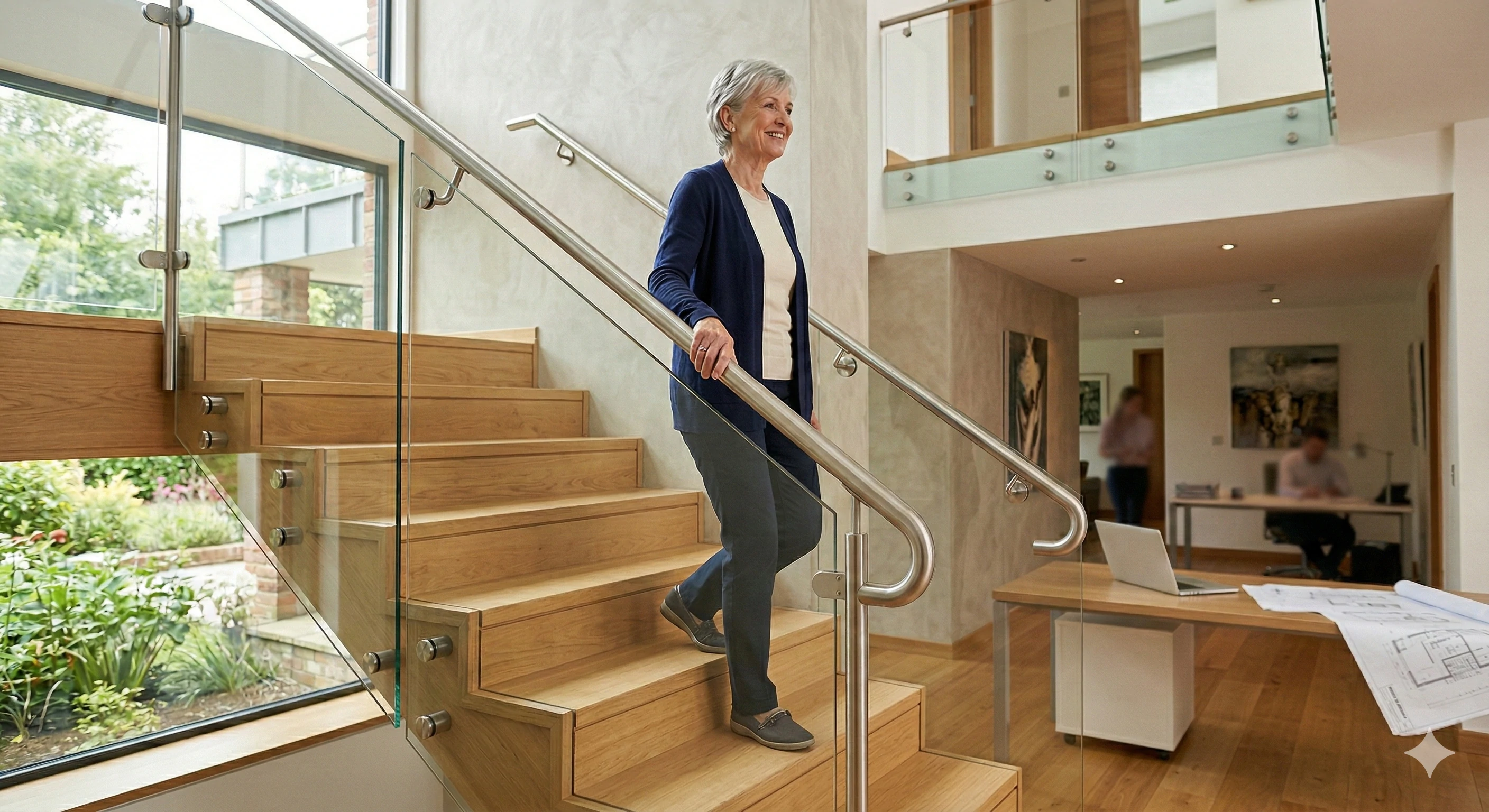
This guide provides the exact ergonomic height requirements, ADA guidelines, and the critical hardware upgrades necessary to make a staircase truly safe for seniors. Let us explore the standards and modifications you need.
What Is the Standard Height for Code vs. Comfort?
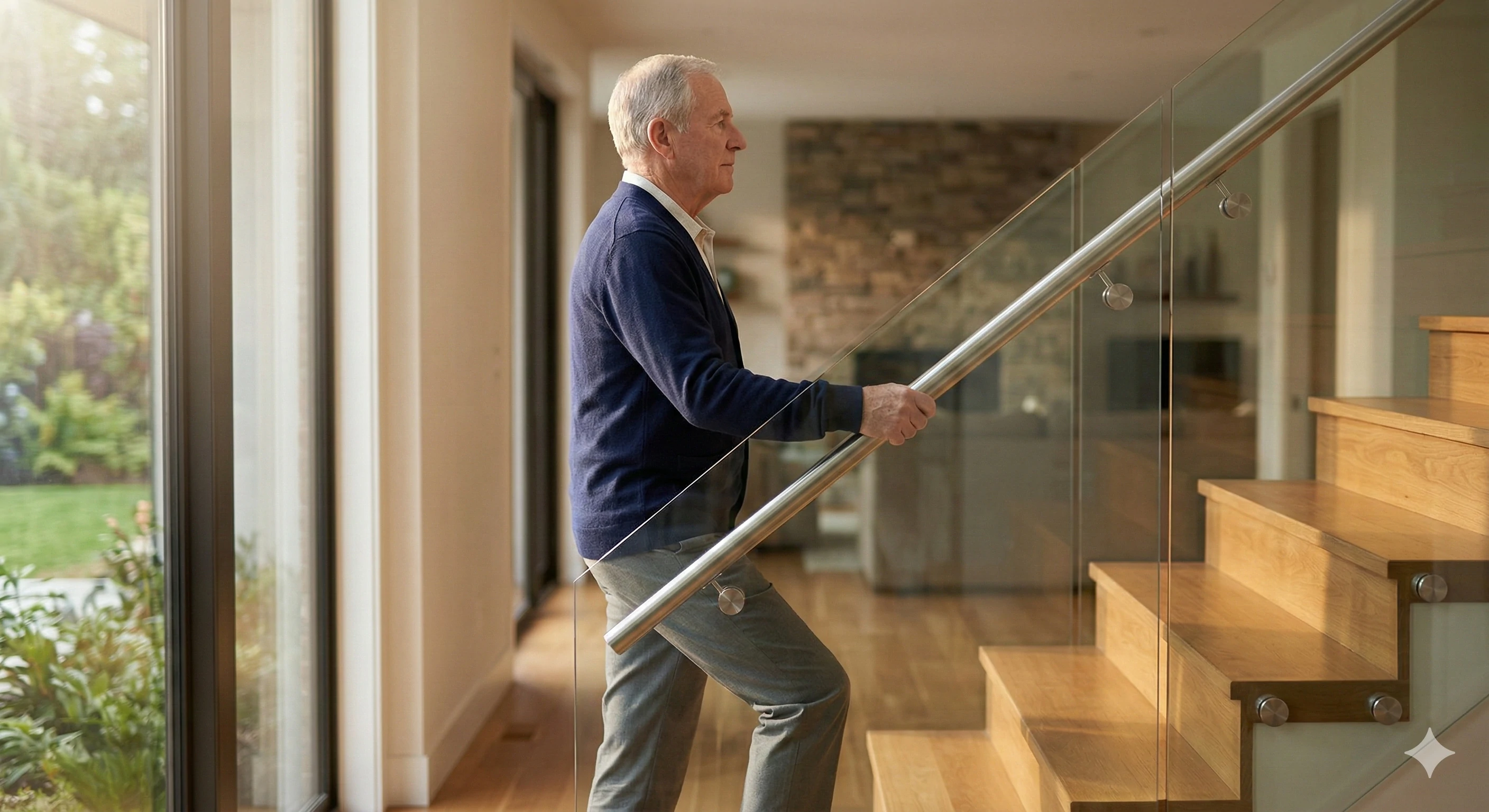
When we consult with overseas distributors regarding building regulations, we frequently notice confusion between minimum legal codes and actual ergonomic comfort. A railing that merely passes an inspection might still be incredibly dangerous for an elderly person with limited mobility. The right height makes all the difference in preventing a tragedy.
The standard International Building Code dictates that handrails must be placed between 34 and 38 inches high. However, for maximum comfort and safety for older adults, the ideal sweet spot is strictly between 36 and 38 inches to prevent forward pitching.
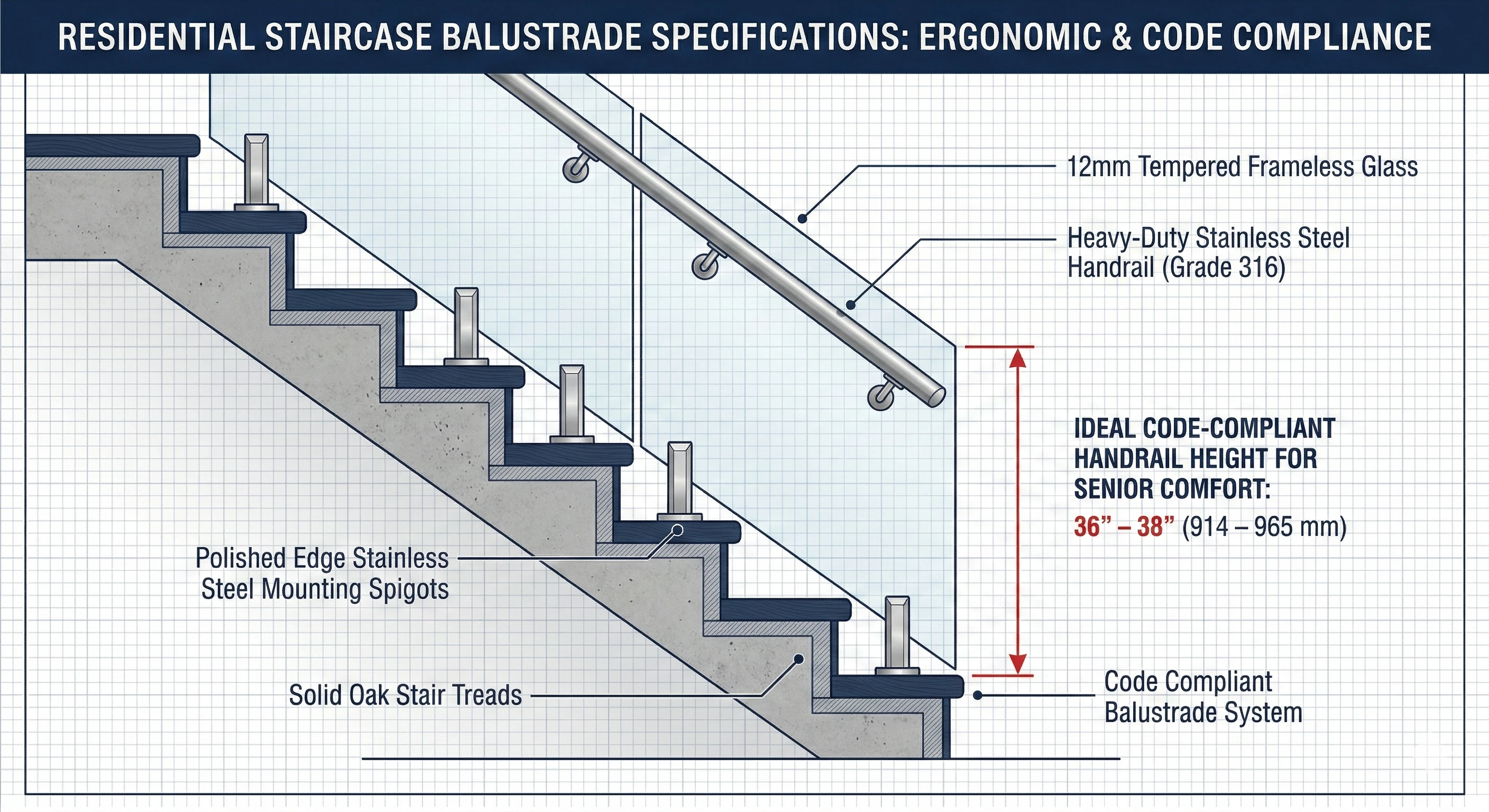
The states handrails must be placed between 34 inches and 38 inches vertically from the nose of the stair tread. However, simply meeting the minimum code is not always the best choice for aging bodies. For older adults, placing the rail on the higher end of the spectrum (closer to 36 or 38 inches) is generally safer.
Understanding Center of Gravity and Fall Prevention
Why is the higher measurement better? A lower rail (34 inches) forces a senior to hunch or lean forward to grip it. This unnatural posture shifts their over the empty stairwell, which increases the risk of pitching forward and falling. A higher rail allows the person to stand upright. They can use their arm and shoulder strength more effectively.
How Much Weight Must a Handrail Support?
Many people wonder about weight capacities. How much weight should a handrail be able to hold? Building codes typically require a handrail to withstand a concentrated load of at least 200 lbs applied in any direction. However, for senior safety, using heavy-duty stainless steel brackets anchored into wall studs can push this capacity much higher. This provides peace of mind against sudden fall impacts.
Table: Code Minimums vs. Senior Safety Comfort
| Measurement Type | Height Range | Impact on Older Adults | Safety Rating |
|---|---|---|---|
| IBC Minimum Code | 34 inches | Forces hunching, shifts center of gravity | Low |
| General Average | 35 inches | Adequate for young adults, poor for seniors | Medium |
| Senior "Sweet Spot" | 36 - 38 inches | Keeps posture upright, prevents pitching | High |
What Are the 3 Rules of Handrail Safety for Older Adults?
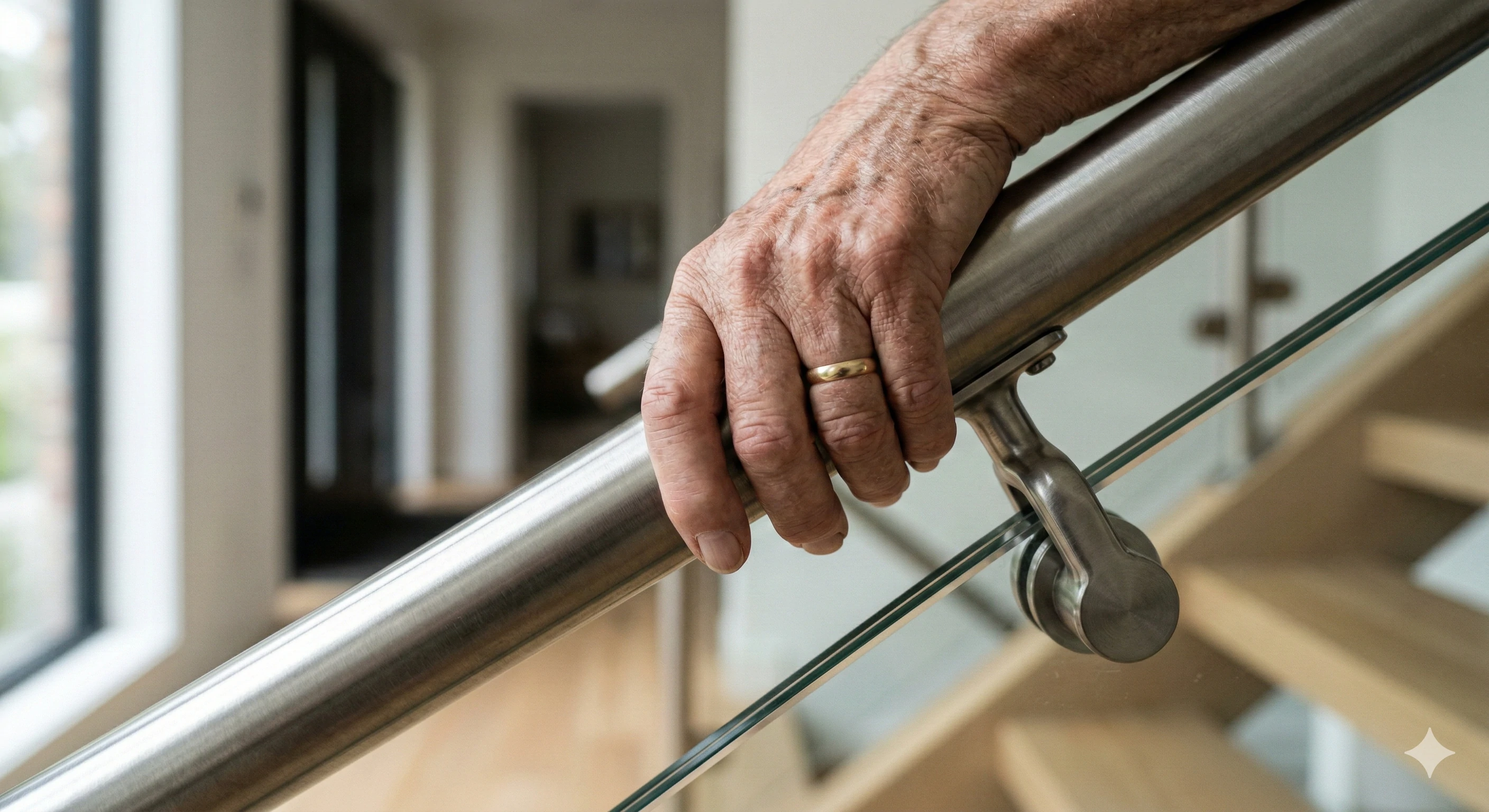
In our experience engineering custom product features, a beautiful handrail is useless if it does not fit the human hand properly. Aging hands lose grip strength. Users need specific physical dimensions to maintain control. Ignoring these basic ergonomic rules is a common mistake that leads to severe injuries.
The three critical rules for older adult handrail safety are ensuring bilateral support with rails on both sides, providing continuous graspability without any breaks, and maintaining a proper grip diameter of 1.25 to 2 inches for a secure lock-grip.
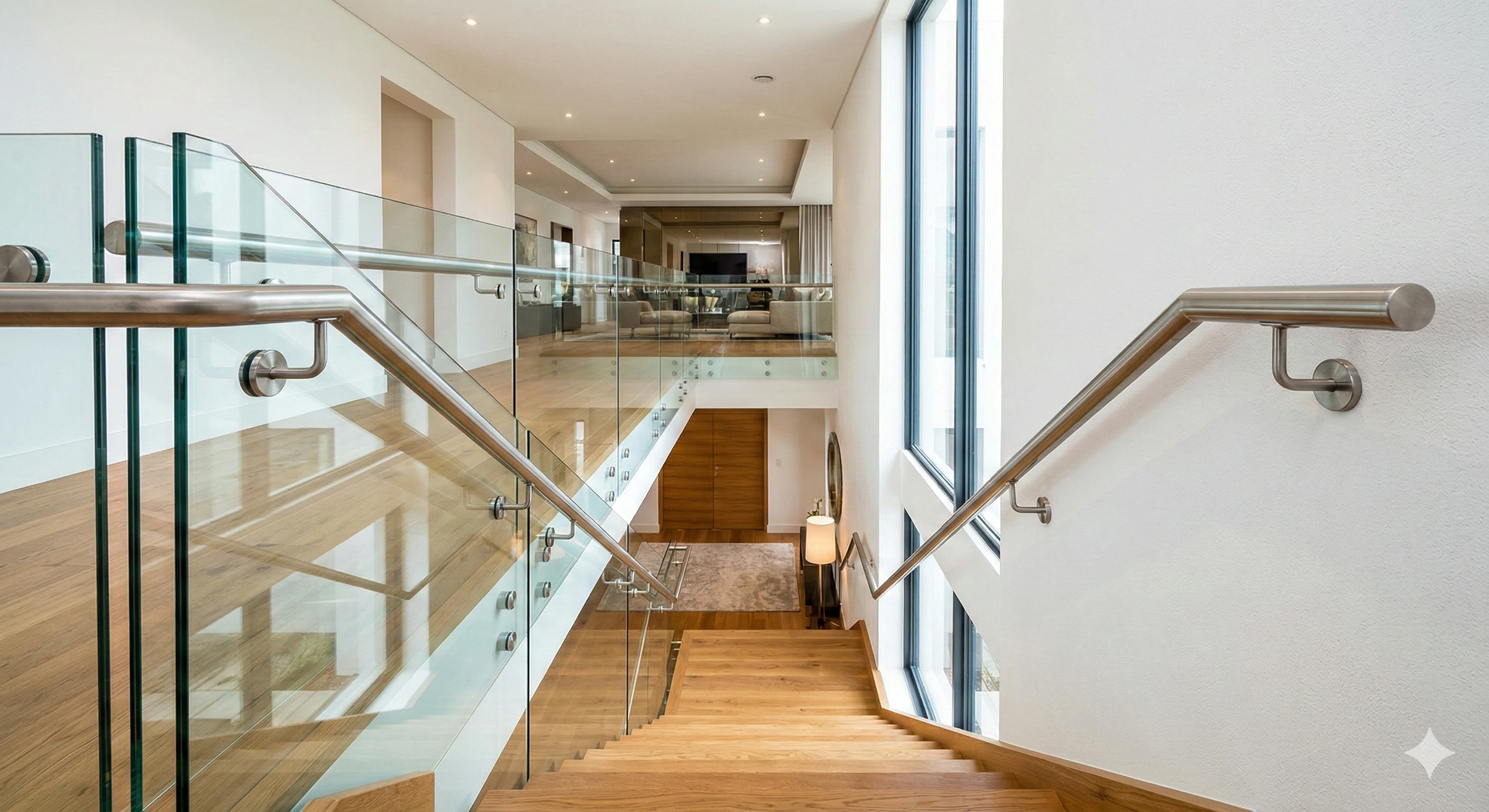
Physical capabilities change as people age. Older adults often have a "dominant" or stronger side, or may suffer from stroke recovery or arthritis. Therefore, you must follow three essential rules to guarantee their safety on the stairs.
Rule 1: Bilateral Support is Essential
You should never rely on just one handrail. Having a rail on both the left and right walls is the #1 recommendation by . This bilateral support allows seniors to use their stronger arm whether they are going up or down. It also provides a secondary backup if one hand slips.
Rule 2: Continuous Graspability
The handrail should never break. A senior should not have to take their hand off the rail to navigate a landing or a corner. Every interruption in the rail is a moment of vulnerability. Continuous rails ensure constant physical contact and balance.
Rule 3: Proper Grip Diameter
A massive, blocky piece of wood is dangerous. The require a circular cross-section of 1.25 to 2 inches. An aging hand must be able to wrap completely around the rail to secure a lock-grip.
What is the best shape for a handrail? A round tube (1.5 inches in diameter) is universally considered the safest shape. It allows the fingers to curl entirely under the rail, creating a "power grip" that prevents the hand from slipping off if the person loses their footing.
Table: Handrail Grip and Support Checklist
| Safety Feature | Recommendation | Reason |
|---|---|---|
| Bilateral Support | Rails on both sides | Accommodates dominant hands and arthritis |
| Graspability | 100% Continuous | Prevents releasing grip at corners |
| Grip Diameter | 1.25 to 2 inches | Ensures a full wrap-around lock-grip |
| Shape | Round Tube | Creates a secure power grip |
Why Are Wobbly Handrails and Bracket Failures a Silent Hazard?
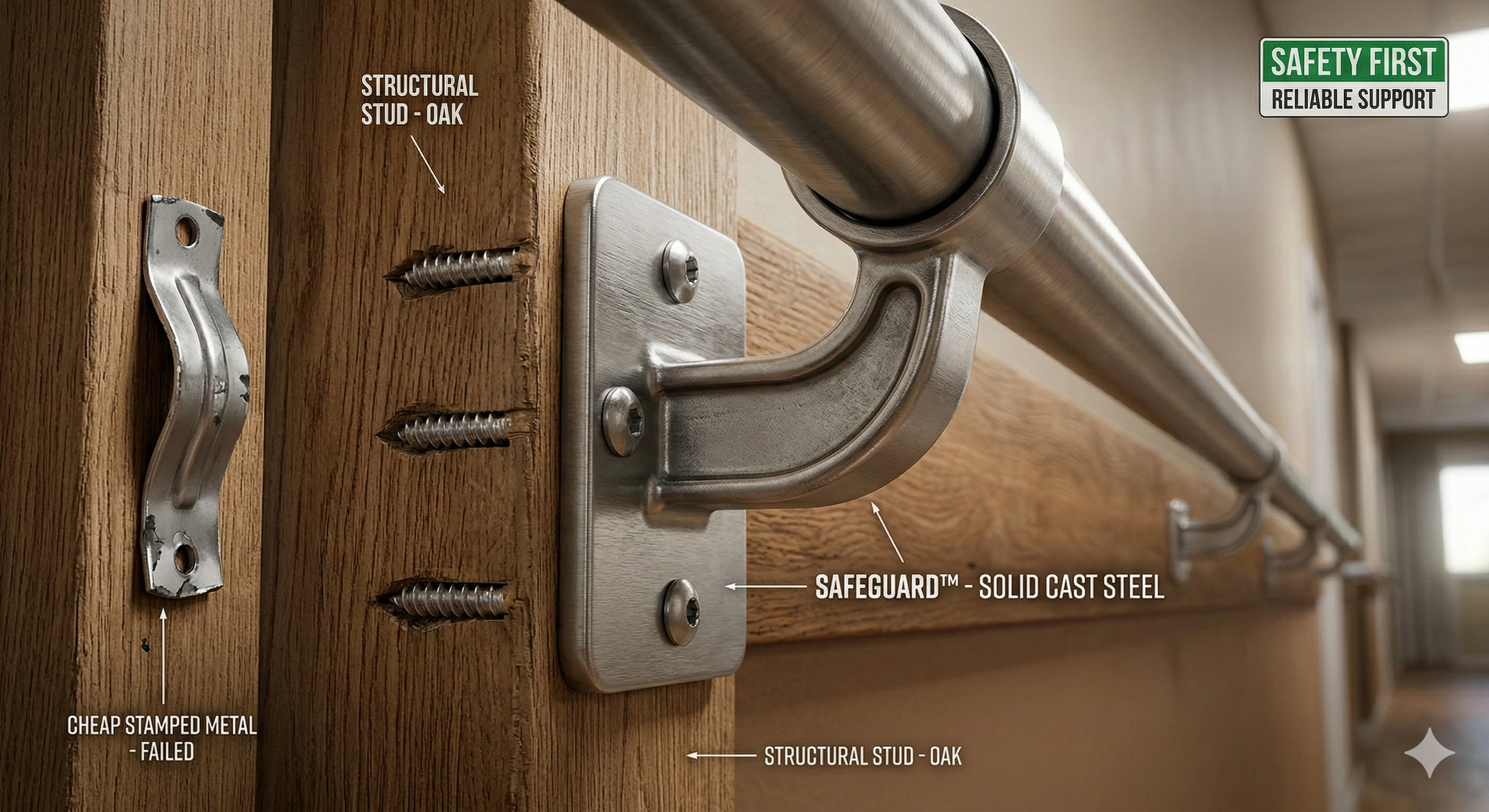
When we inspect failed hardware components returned from the market, the root cause is almost always cheap materials. A beautiful wooden rail means nothing if the metal joints supporting it are weak. You must build your safety system on a foundation of unyielding strength, or the system will fail when you need it most.
Wobbly handrails are a severe hazard because cheap hollow brackets can suddenly snap under the 150-pound shock load of a falling adult. To guarantee safety, handrails must use solid investment-cast stainless steel brackets anchored directly into wooden wall studs.
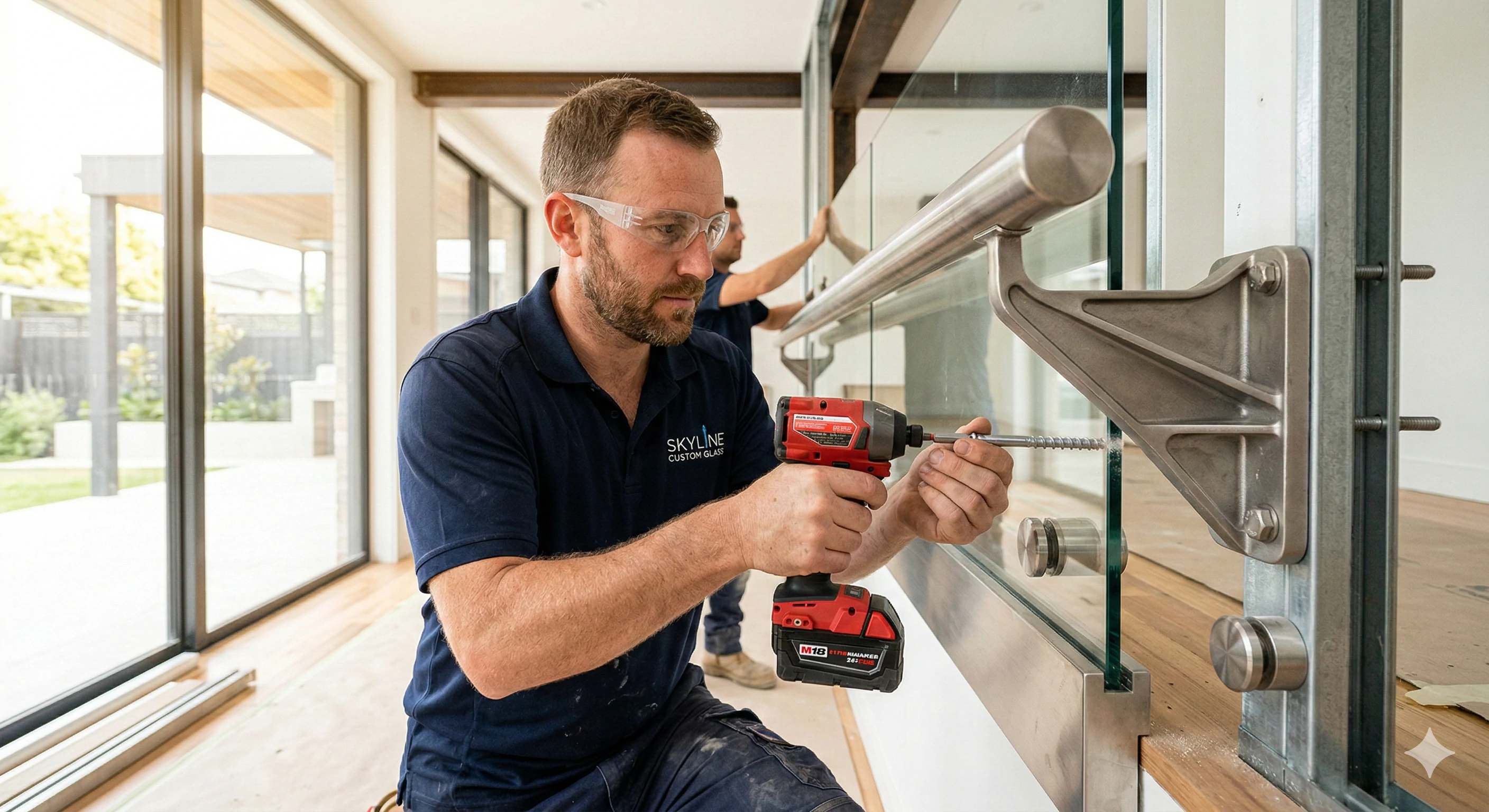
The rail is only as strong as the hardware holding it to the wall. Many homeowners install handrails focusing only on the wood or metal tube, completely ignoring the mounting brackets. This is a fatal mistake.
The Threat of Sudden Shock Loads
A senior slips. They grab the rail with 150+ lbs of sudden, jerking force. This creates a massive shock load. If the rail is held by cheap, hollow zinc brackets screwed into drywall, the bracket will snap or pull out, resulting in a catastrophic fall. Drywall has no . It will crumble instantly under panic-induced weight.
The Stainless Steel Upgrade
The ultimate solution is a hardware upgrade. You must use solid handrail brackets. Unlike cheap zinc alloys, solid stainless steel components will not bend, fatigue, or snap under sudden shock loads. Furthermore, they must be anchored directly into the wooden wall studs, never just the drywall. Proper installation into studs ensures the bracket transfers the weight into the structural frame of the house.
Table: Bracket Material and Mounting Comparison
| Bracket Material | Mounting Surface | Shock Load Resistance | Safety Verdict |
|---|---|---|---|
| Hollow Zinc Alloy | Drywall only | Very Low (Snaps easily) | Dangerous |
| Hollow Zinc Alloy | Wood Studs | Medium (May bend/fatigue) | Unreliable |
| Solid Stainless Steel | Drywall only | Low (Wall pulls out) | Unsafe |
| Solid Stainless Steel | Wood Studs | Extremely High | Safest Choice |
Why Are Handrail Extensions Important for the Run-Out?
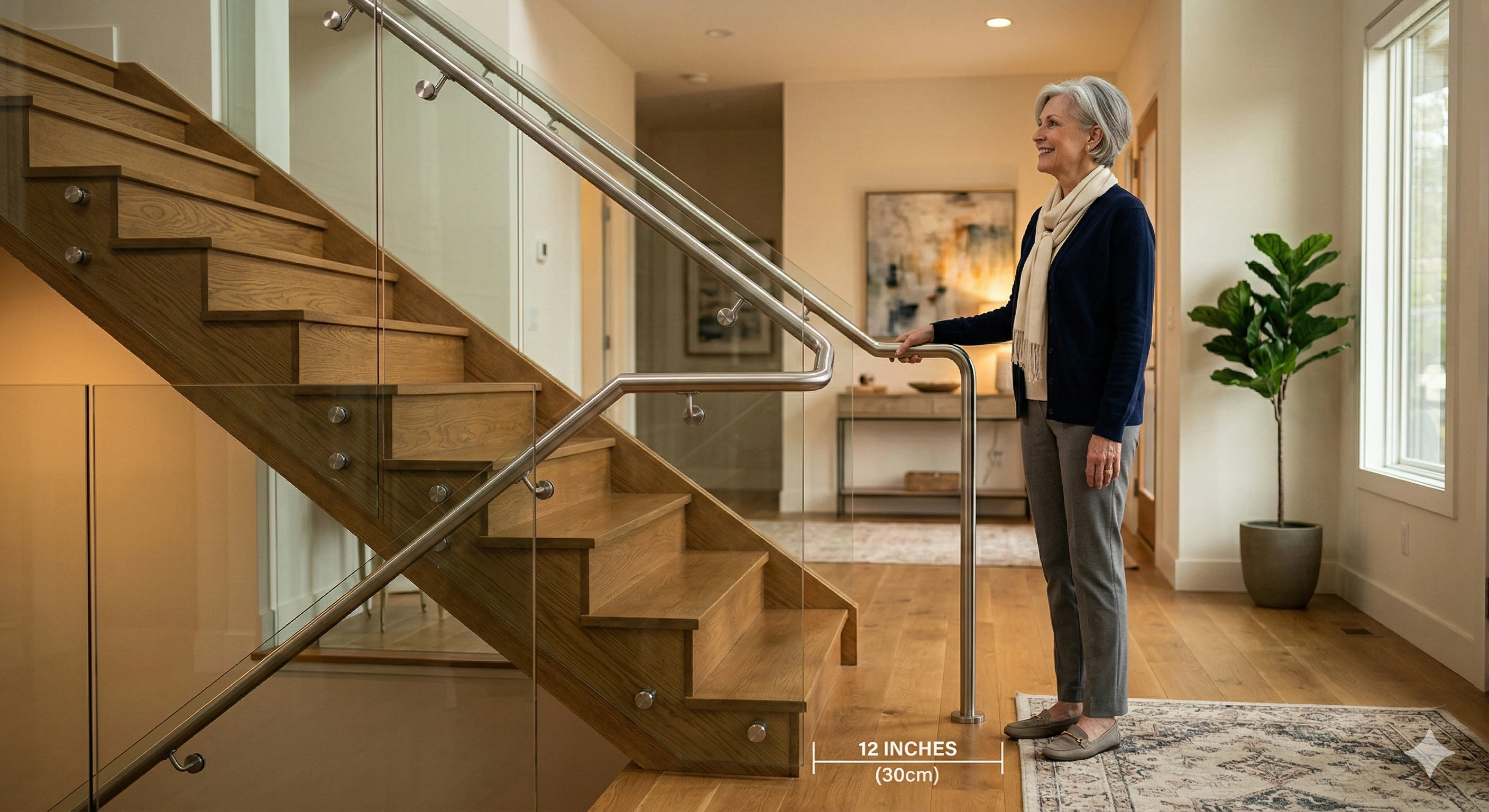
Our design team frequently reviews architectural plans, and we consistently see staircases that end abruptly at the final step. This abrupt ending strips the user of support exactly when their balance is most vulnerable. Adding an extension at the top and bottom of the stairs is a simple modification that dramatically reduces accident rates.
Handrail extensions are crucial because most falls occur on the first or last step when seniors misjudge floor levels. Extending the rail 12 inches past the stairs allows older adults to safely stabilize their bodies on flat ground.
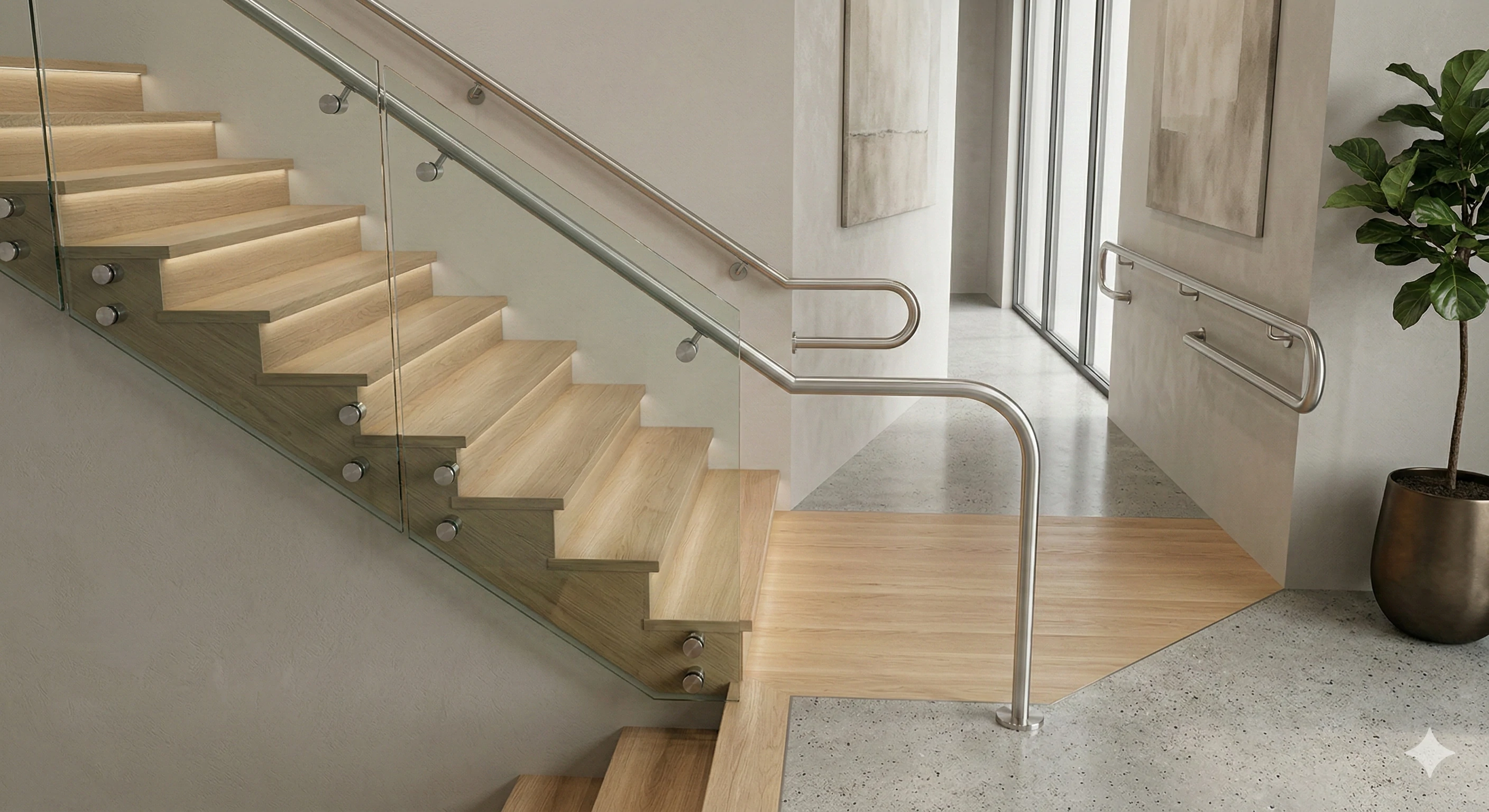
For commercial spaces and highly recommended for residential senior safety, the handrail should extend 12 inches past the top and bottom stairs. This extension is commonly referred to as the "run-out."
Stabilizing on Flat Ground
Why does the run-out matter so much? Most falls happen on the very first or very last step when a senior misjudges the floor level. Natural issues make the transition from a sloped staircase to a flat landing very tricky. The extension allows them to stabilize themselves on flat ground before letting go of the rail. It acts as a physical cue that the stairs have ended.
Navigating Landings and Corners
Does a handrail have to be continuous on a landing? For maximum safety and ADA compliance, yes. The handrail should connect smoothly around corners and across landings so a person with visual impairments or mobility issues never has to release their grip while navigating the stairs. A smooth transition keeps the senior anchored at all times.
Can We Use Glass Railings in Senior Living?
Many clients ask us if prioritizing safety means their home must look like a hospital ward. In our factory, we manufacture sleek glass railing fittings that prove safety and high-end design can coexist. You do not have to compromise on aesthetics to protect your elderly family members from falls.
Yes, you can absolutely use glass railings in senior living to modernize safety without sacrificing aesthetics. By utilizing secure glass-mounted handrail brackets, you can attach an ADA-compliant stainless steel grab tube directly through beautiful frameless glass balustrades.
Modern and modern homes don't have to look like hospitals. Many homeowners resist adding necessary safety rails because they fear ruining their interior design. They want to avoid the "nursing home" aesthetic.
Engineering Secure Glass Balustrades
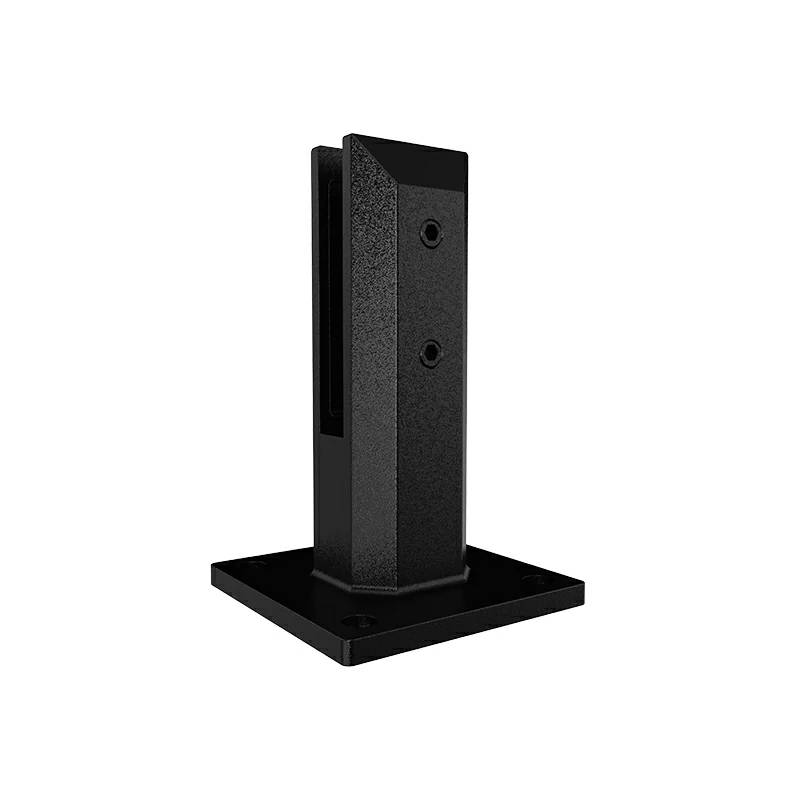
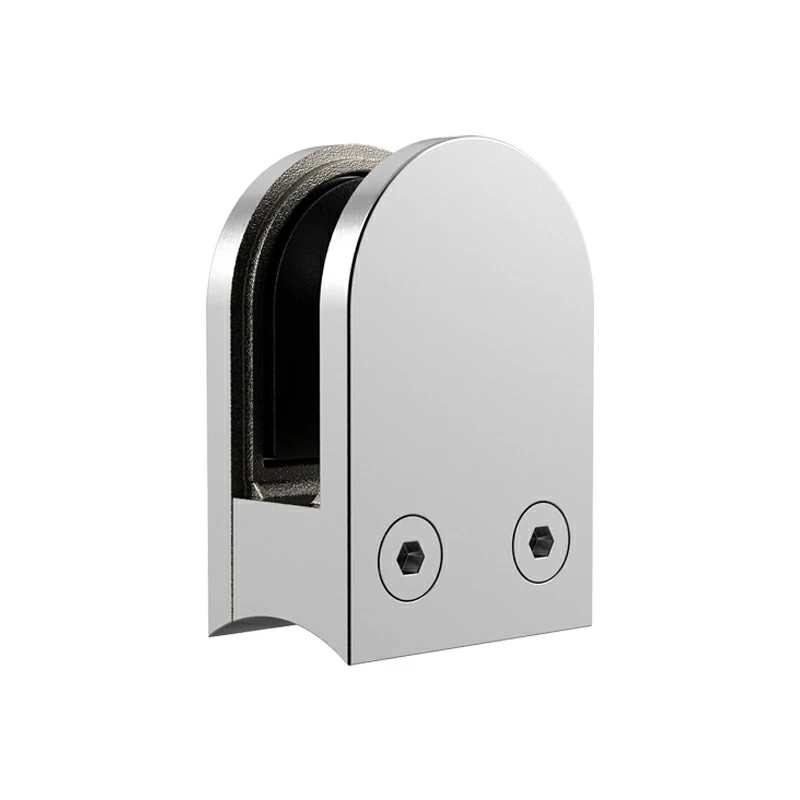
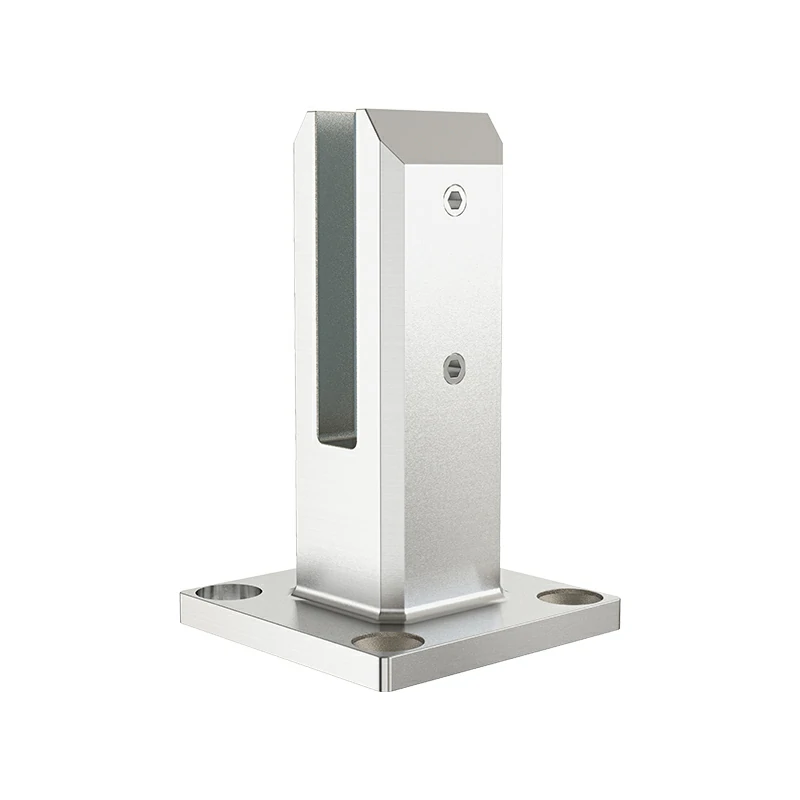
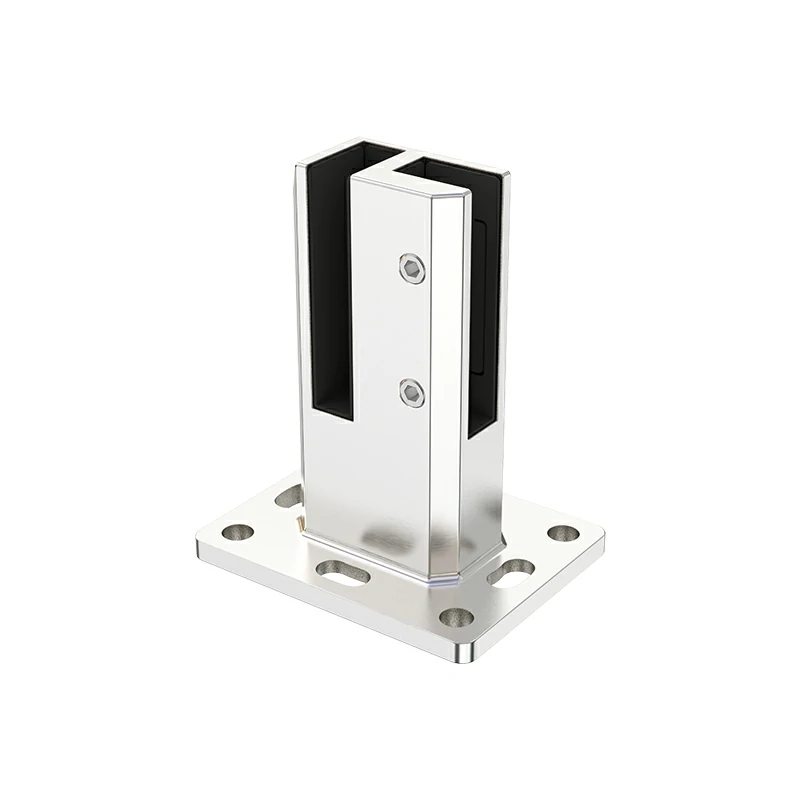
Fortunately, modern architectural hardware offers stunning alternatives. You can use a beautiful to open up the space, and use Glass-Mounted Handrail Brackets to bolt a secure, ADA-compliant stainless steel grab tube directly through the glass panel.
Erasing the Hospital Stigma
This combination allows light to flow freely through the home while providing an unyielding grip surface. Stainless steel brackets paired with a nice oak rail or a glass balustrade look like a luxury hotel, not a nursing home. By choosing high-quality, polished materials, you can create a secure environment that feels sophisticated and modern. Safety does not require an ugly home.
Conclusion
The best stair rail height for older adults is between 36 and 38 inches, but height means nothing without secure graspability and unyielding wall anchors. Protecting older adults requires attention to ergonomic details like continuous bilateral support, a 1.5-inch round grip diameter, and 12-inch run-out extensions. Most importantly, the structural integrity of the installation dictates whether a rail will save a life or cause a fall.
Don't compromise on stair safety with cheap hardware. We manufacture heavy-duty, ADA-compliant Stainless Steel Handrail Brackets engineered to withstand massive shock loads and provide lifelong stability. Upgrade your handrail hardware today.
Footnotes
1. National Institute on Aging guide on safe home modifications for seniors.
2. Official building safety standards and minimum structural requirements.
3. Medical research on biomechanics, balance, and fall prevention in elderly populations.
4. Overview of the physical therapy profession and mobility rehabilitation.
5. The official 2010 ADA Standards for Accessible Design requirements.
6. Explanation of how structures prevent catastrophic failure under heavy loads.
7. The industrial manufacturing process used for high-strength metal components.
8. American Academy of Ophthalmology overview of age-related vision changes.
9. Resources and standards for senior care and modern assisted living environments.
10. Architectural definition and structural applications of glass balustrades.