You have a new CAD design ready for CNC machining, but you need to specify the exact material. Choosing the wrong aluminum alloy can lead to structural failures, delayed shipments, or blown budgets, effectively ruining your OEM project. On our factory floor, we process thousands of aluminum parts daily for glass railing hardware, and we understand that deciding between the two most popular choices, 6061 and 7075, requires a deep understanding of your project's unique demands.
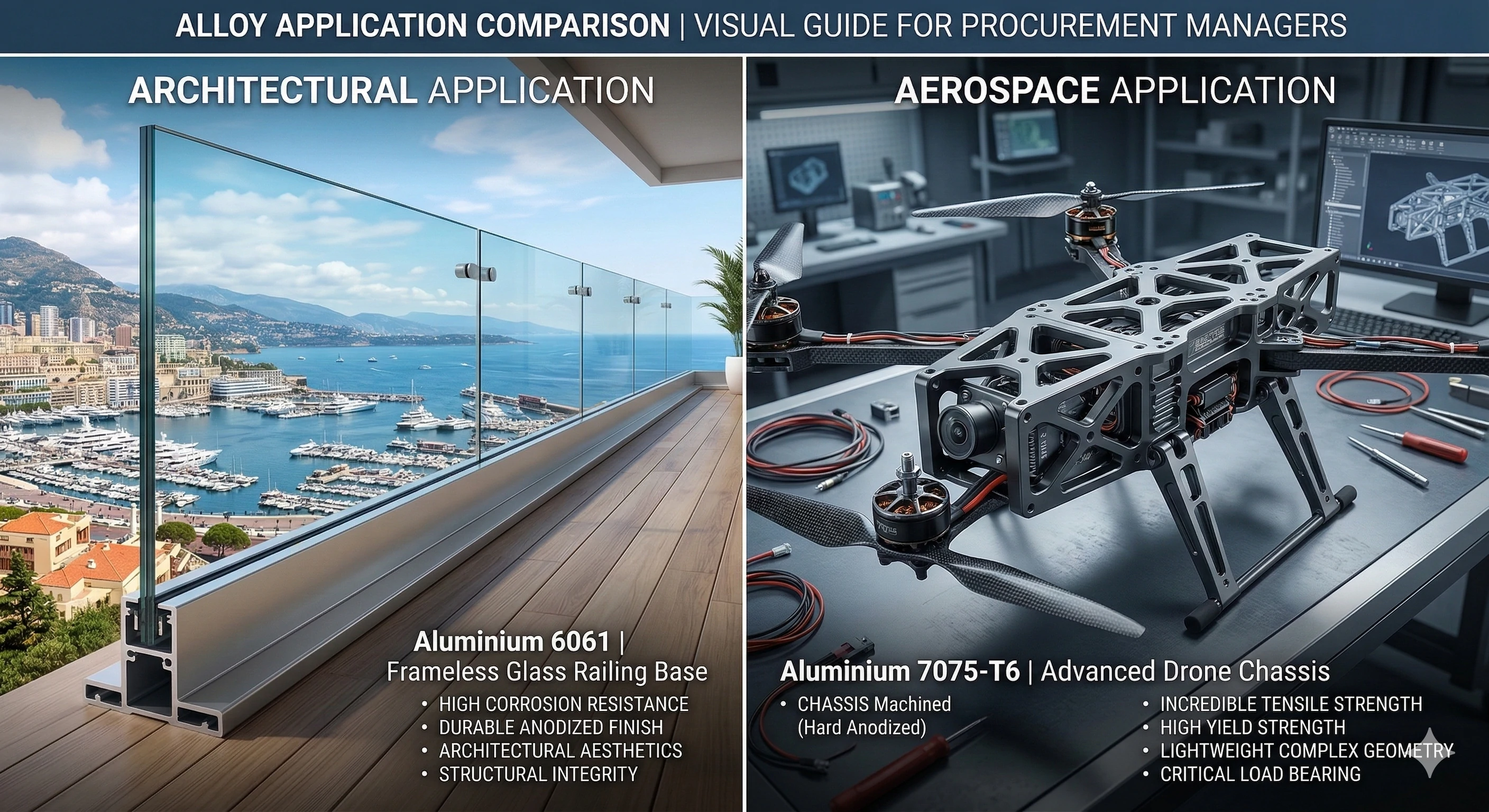
Choosing the right alloy depends on your project needs. Aluminium 6061 offers excellent weldability and corrosion resistance for general architectural use. Meanwhile, aluminium 7075 provides incredible tensile strength suited for high-stress aerospace applications, but it cannot be easily welded.

Let us break down the chemical, mechanical, and practical differences between these two heavyweight alloys to help you select the perfect metal for your custom parts.
Is Aluminium 6061 the Best Versatile Workhorse for Your Project
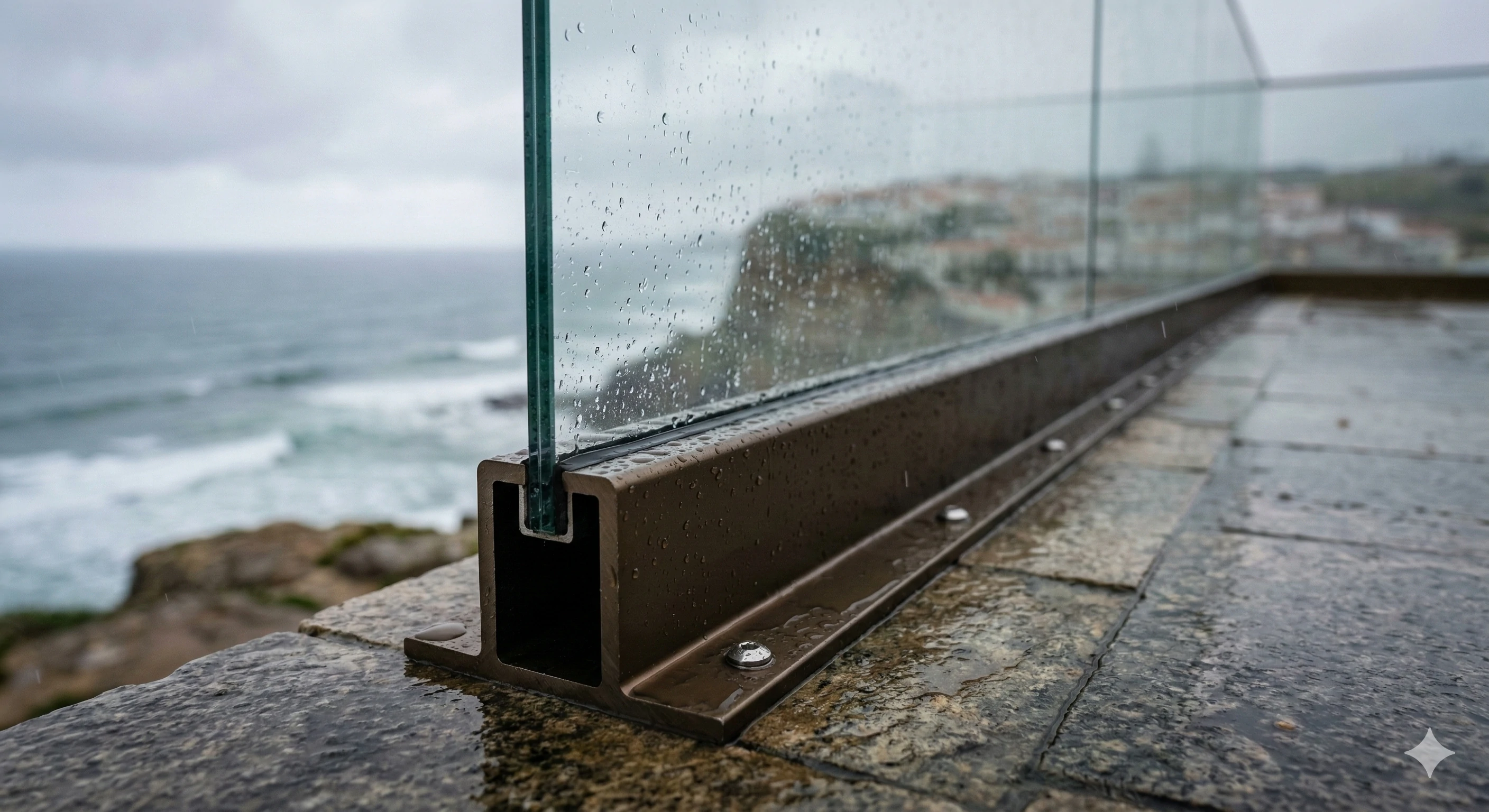
Many procurement managers struggle with part failures when using unverified materials for outdoor installations. If your glass railing base corrodes after just one season in the rain, your brand reputation suffers immediately. We frequently recommend aluminium 6061 for our clients' architectural hardware because its reliable performance completely eliminates these costly outdoor maintenance headaches.
Aluminium 6061 is the ultimate versatile workhorse due to its excellent formability, superb corrosion resistance, and outstanding weldability. Alloyed primarily with magnesium and silicon, it serves as the most common extrusion and machining aluminum worldwide for architectural and general-purpose applications.
The Chemical Profile and Core Strengths
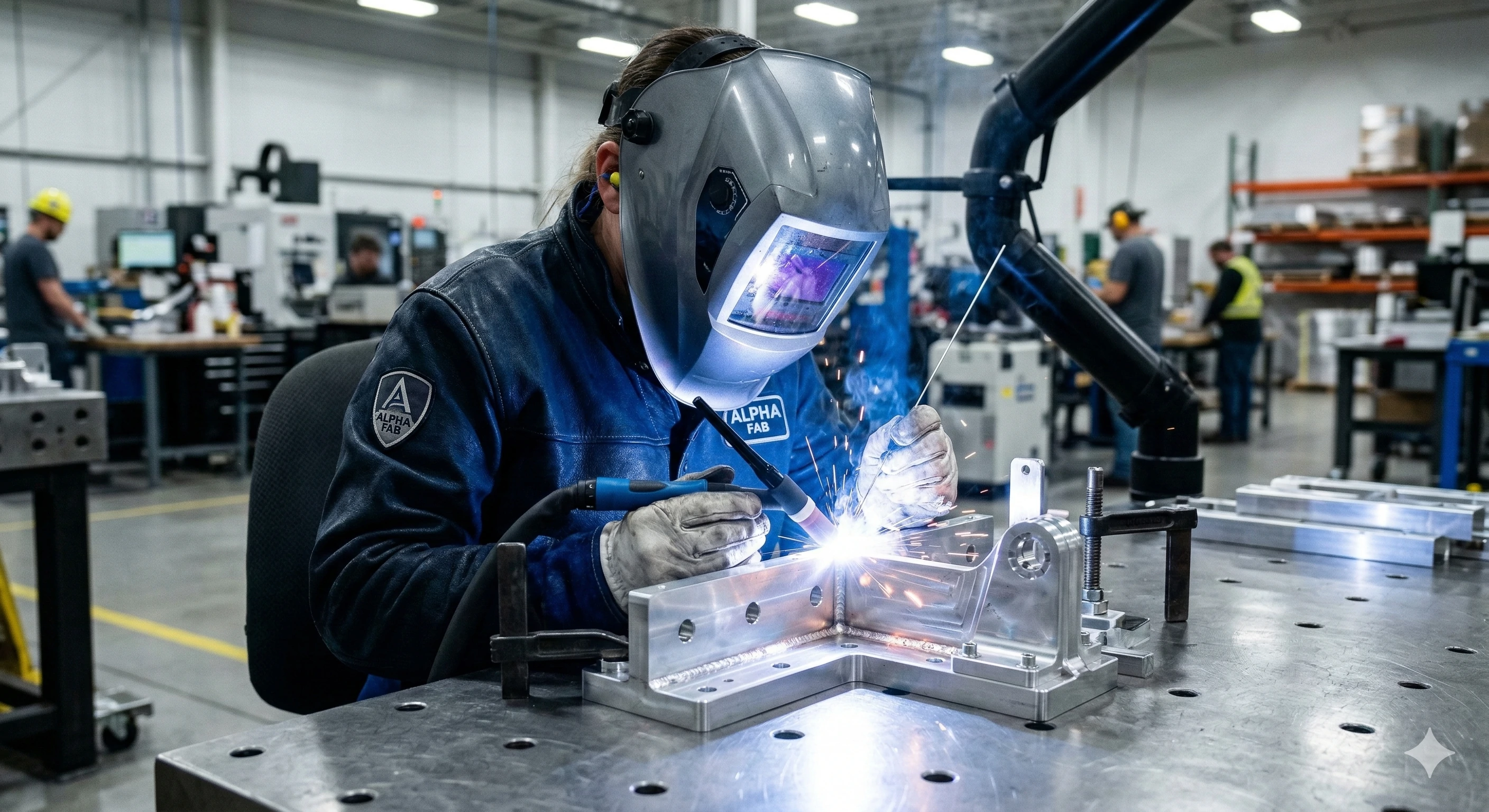
When we review material specifications for outdoor hardware, the chemical makeup of the alloy is our first concern. Aluminium 6061 is alloyed primarily with . This specific chemical blend gives it highly desirable characteristics for a wide range of manufacturing processes. It is highly resistant to moisture and atmospheric conditions, making it an incredibly safe bet for outdoor environments. Furthermore, it boasts excellent weldability. Our fabrication teams can easily 6061 components without worrying about the metal cracking under thermal stress.
Why We Use 6061 for Architectural Hardware
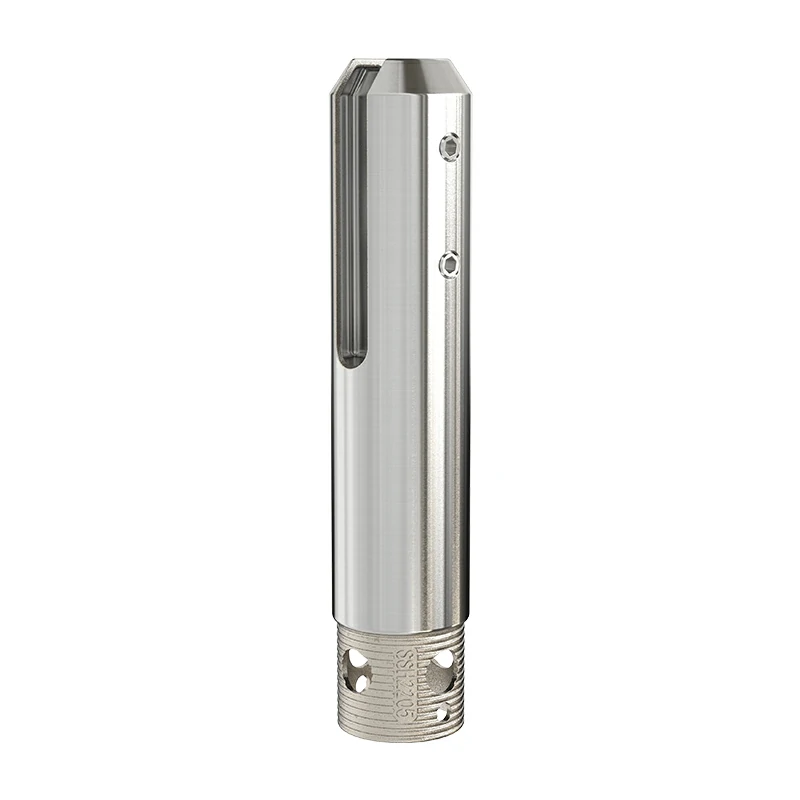
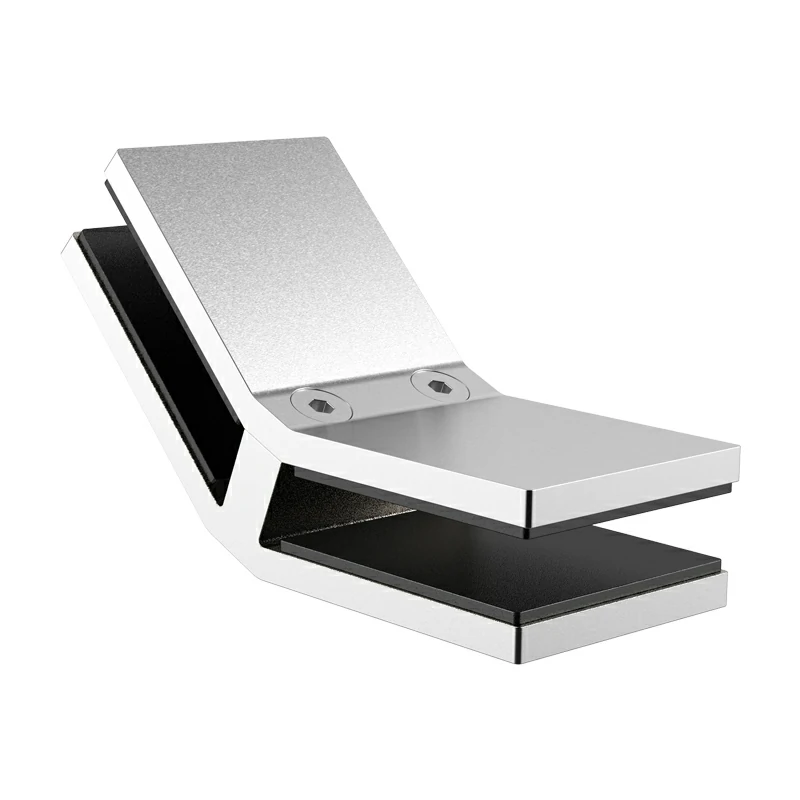
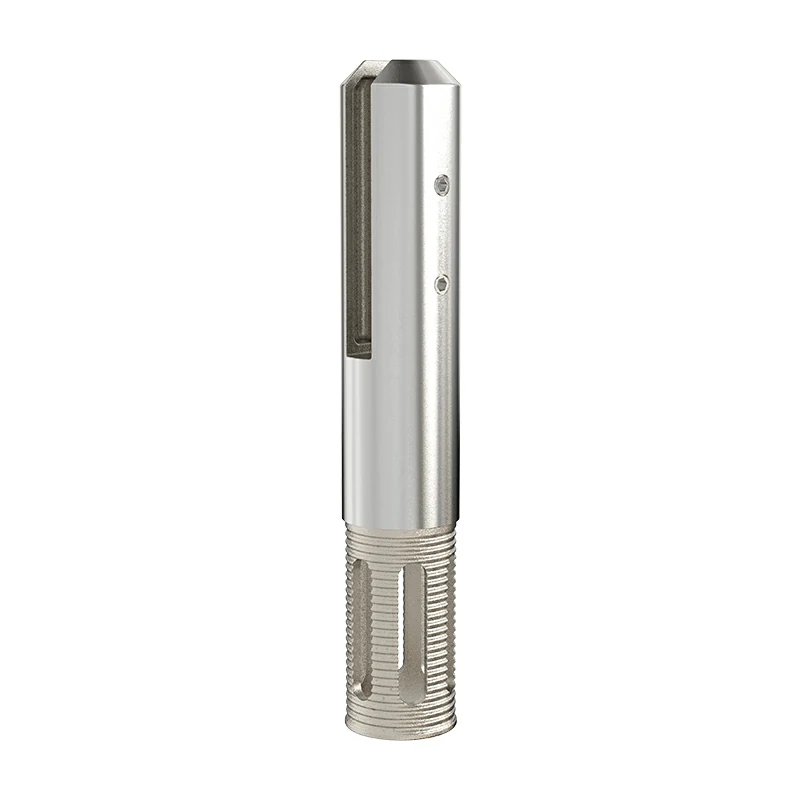
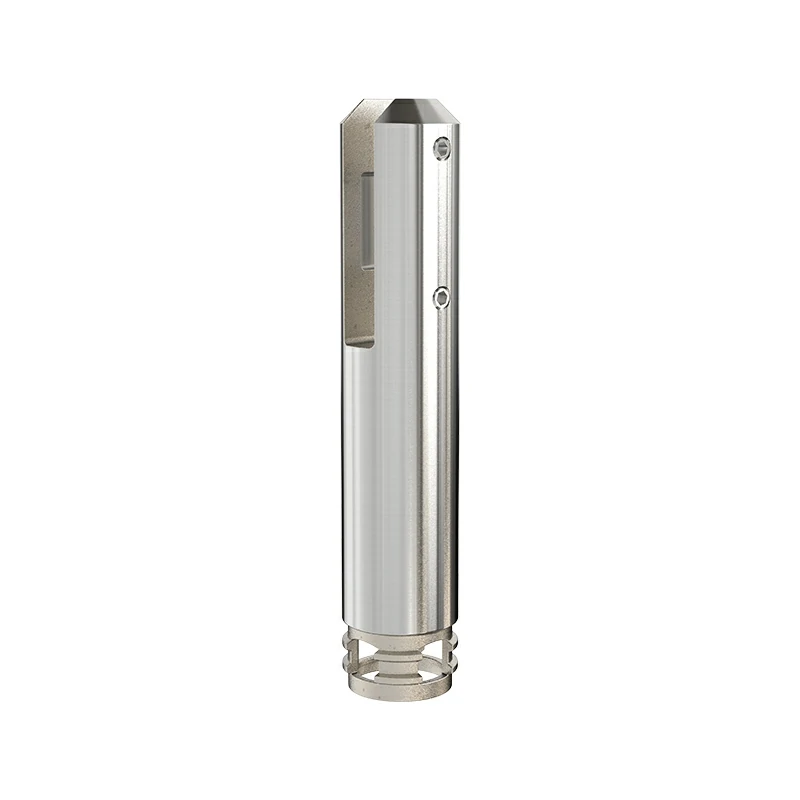
In our experience exporting to the United States and Europe, structural integrity and corrosion resistance go hand-in-hand. Aluminium 6061 has fantastic formability, meaning it can be extruded into complex shapes easily. This makes it absolutely perfect for architectural hardware. We rely heavily on 6061 to manufacture heavy-duty U-channels for frameless glass systems, sturdy marine fittings, and general-purpose CNC brackets.
| Property Category | Aluminium 6061 Performance Level | Practical Application Benefit |
|---|---|---|
| Weldability | Excellent (TIG & MIG) | Ideal for joining custom brackets and frames. |
| Corrosion Resistance | High | Survives rain, humidity, and atmospheric moisture. |
| Formability | Excellent | Easily extruded into custom profiles like U-channels. |
Understanding the T6 Temper
Many clients ask us: What does the "T6" mean in 6061-T6? The "T6" refers to the temper, or heat treatment, of the metal. It means the aluminum has been and then artificially aged. This controlled thermal process fundamentally changes the metal's molecular structure. As a result, the metal becomes significantly harder and much stronger than its raw, untreated state, which is known as T0. This heat treatment ensures our architectural hardware can withstand substantial mechanical loads safely.
Why is Aluminium 7075 Considered the Aerospace Heavyweight
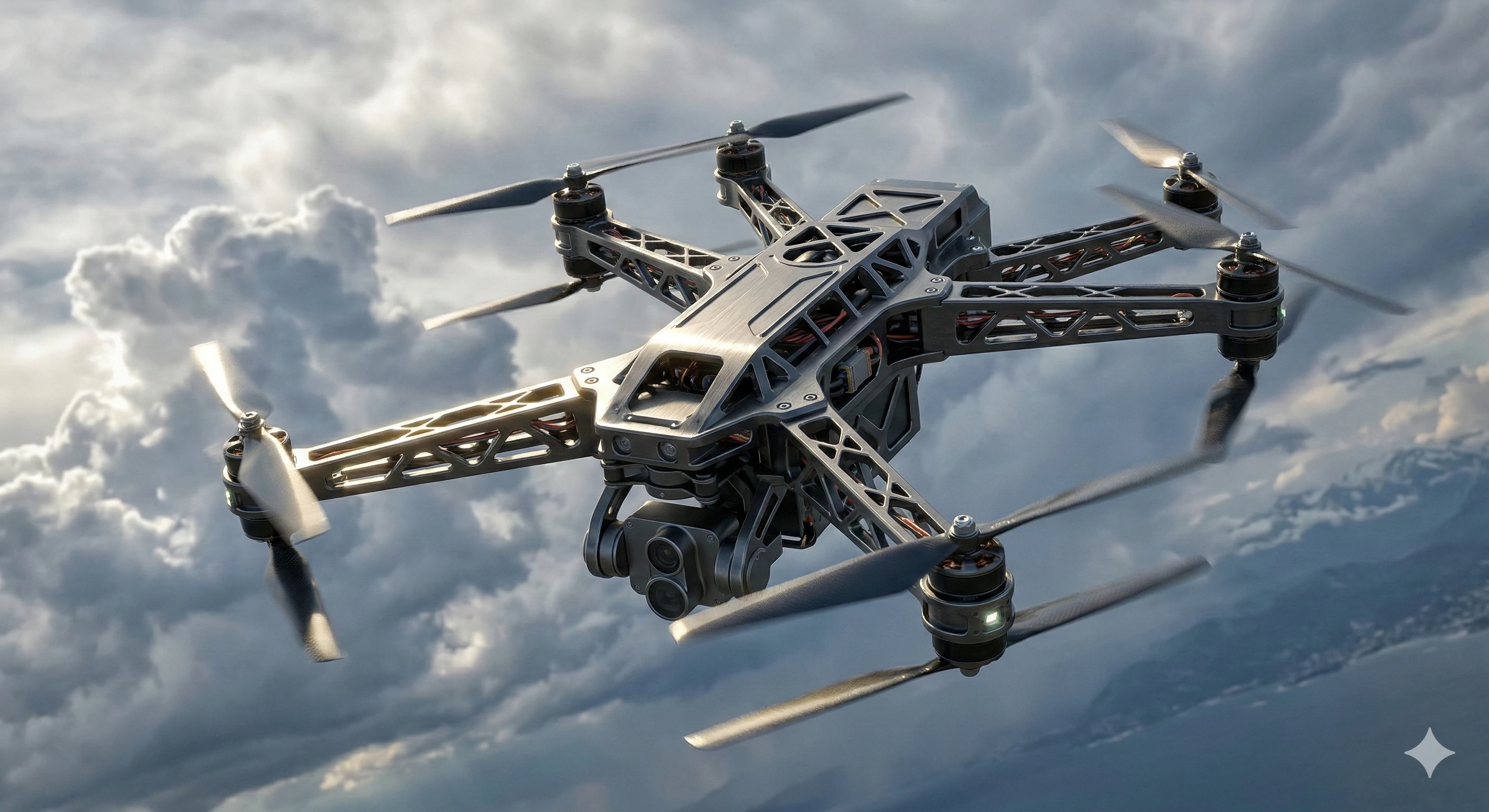
Engineers often face a difficult dilemma when designing load-bearing components where weight reduction is absolutely critical. Specifying a weak metal in these situations leads to catastrophic mechanical failures under high stress. When our engineering team reviews CAD files for high-stress OEM parts, we immediately look at aluminium 7075 to solve these extreme load challenges and guarantee long-term product safety.
Aluminium 7075 is an aerospace heavyweight because it is alloyed primarily with zinc, delivering incredible tensile strength nearly double that of 6061. This makes it ideal for high-stress OEM parts, drone chassis, and tactical equipment, despite its poor weldability.
Incredible Strength and High Stress Tolerance
Many designers automatically pick 7075 simply because it is considered "stronger". They are not wrong about the strength. Aluminium 7075 is alloyed primarily with zinc, and it was literally invented for the demanding requirements of the aerospace industry. Its is nearly double that of 6061. In fact, engineers often compare its structural performance to structural steel, but it achieves this at a mere fraction of the weight. It offers excellent , providing incredibly high stress tolerance for demanding environments.
The Drawbacks: Welding and Corrosion
However, strength is only one variable in the manufacturing equation. When we evaluate 7075 for a client's project, we must also address its significant weaknesses. You generally cannot weld 7075. If you attempt to weld it, the metal will crack and lose its temper, ruining the component. Additionally, the high zinc content makes this alloy far more . Unless it is heavily anodized, it will degrade faster than 6061 in wet environments.
| Feature | Aluminium 7075 Characteristics | Manufacturing Impact |
|---|---|---|
| Primary Alloy | Zinc | Provides massive strength gains. |
| Strength Comparison | Nearly double 6061 | Replaces steel in weight-sensitive designs. |
| Weldability | Non-Weldable | Cracks and loses temper under welding heat. |
| Corrosion | Susceptible | Requires heavy anodizing for protection. |
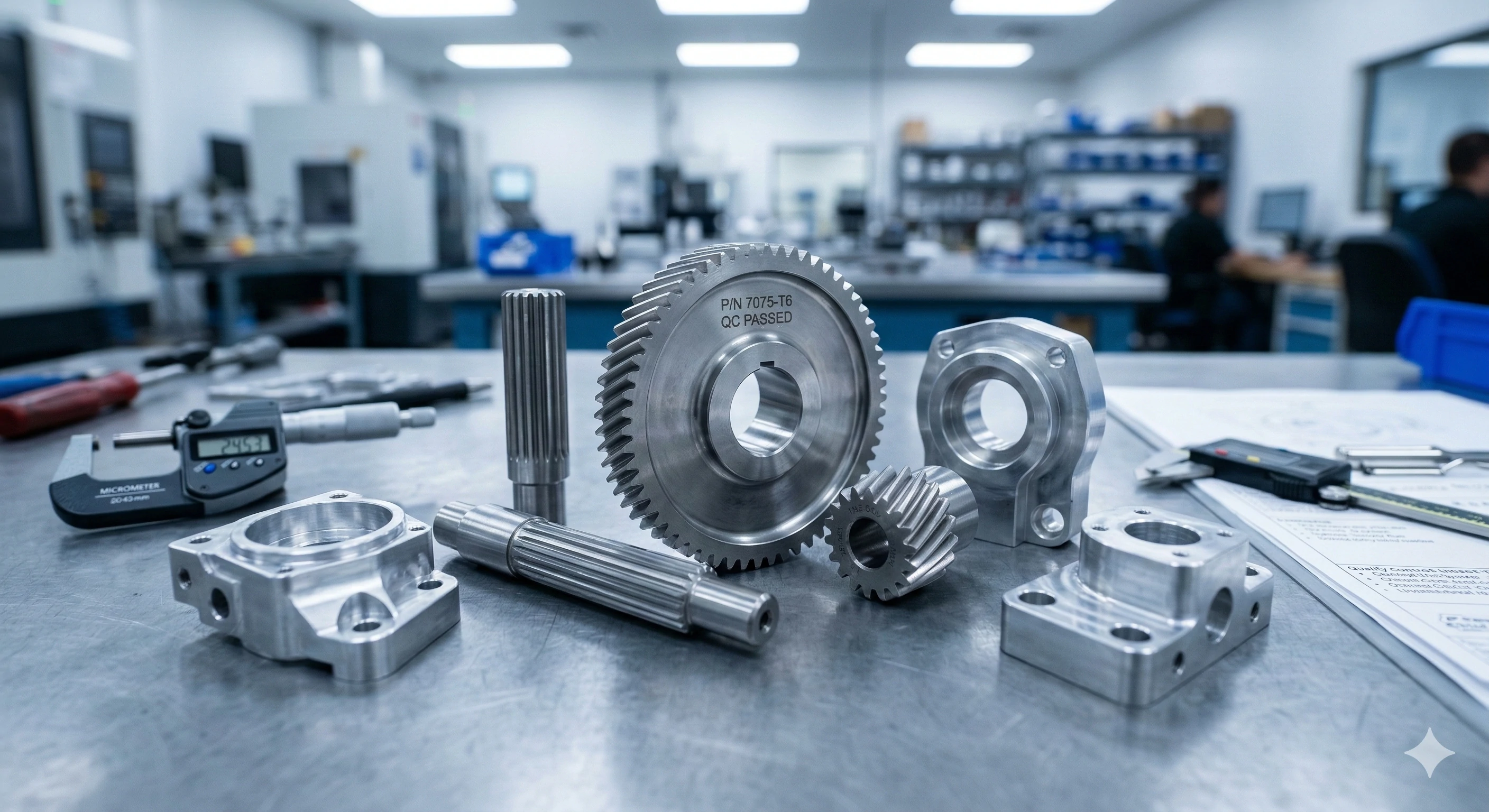
We strictly reserve 7075 for applications that truly demand it. These include high-stress OEM parts, precision aerospace gears, lightweight drone chassis, and specialized tactical equipment.
How Do Aluminium 6061 and 7075 Compare in a Head-to-Head Matrix?
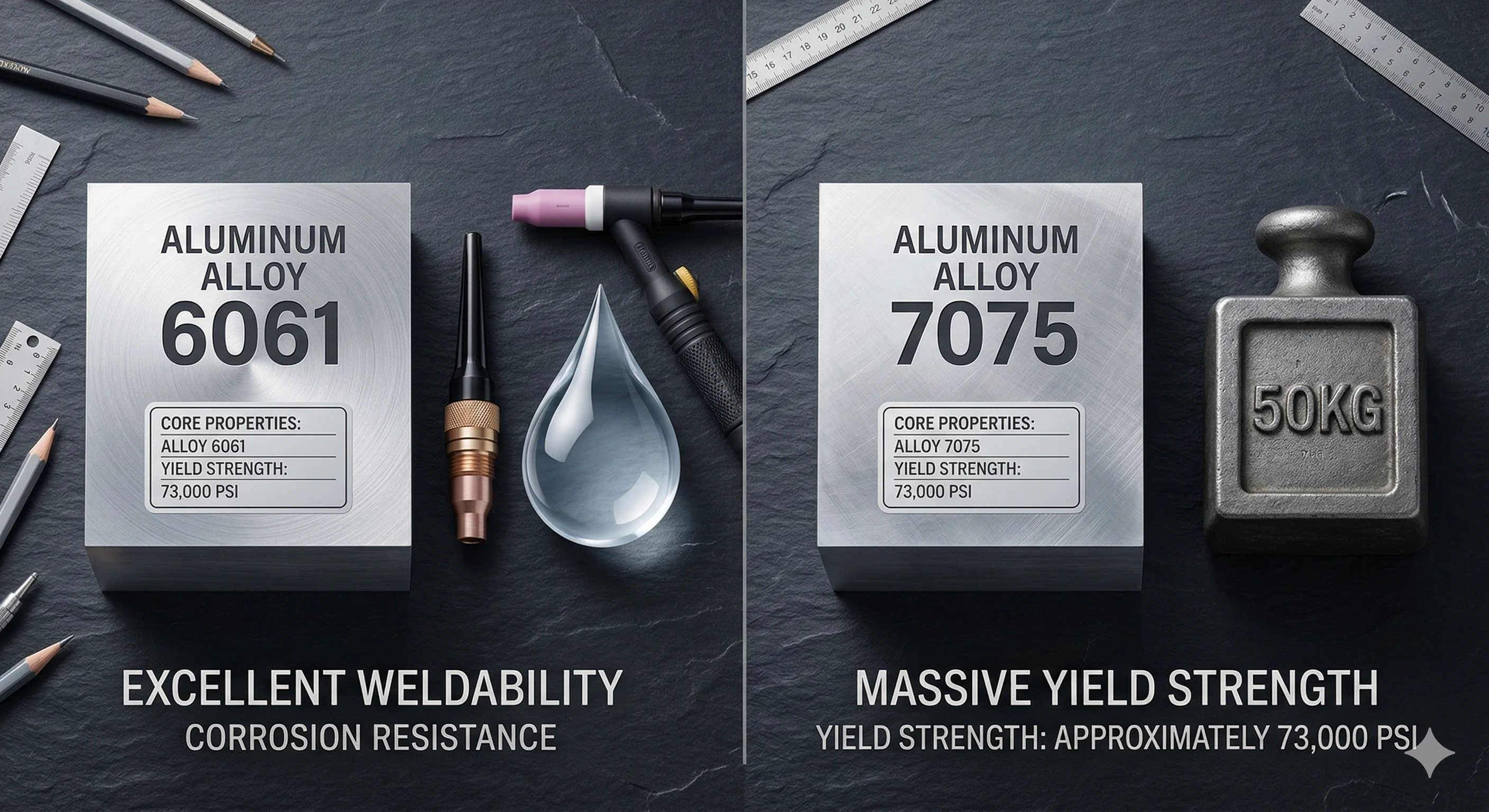
Comparing complex material data sheets can be overwhelming and confusing for busy procurement managers. Making a critical purchasing decision based on incomplete or misunderstood data risks both product durability and severe budget overruns. We have simplified this evaluation process by comparing the critical metrics of both alloys side-by-side to streamline your supply chain decisions.
In a head-to-head comparison, 6061 wins in weldability, corrosion resistance, and lower cost, making it ideal for outdoor use. Conversely, 7075 dominates in yield strength and machinability, making it the top choice for high-stress, precision-engineered mechanical components.

Analyzing the Engineering Data
To make an informed decision, you must view the core properties of both alloys objectively. Weldability, corrosion resistance, and budget often dictate a different path than simply choosing the strongest material available. Our engineering team frequently references the core data below to guide our clients toward the most cost-effective and reliable solution.
| Feature | Aluminium 6061-T6 | Aluminium 7075-T6 |
|---|---|---|
| Primary Alloying Element | Magnesium & Silicon | Zinc |
| Yield Strength | ~40,000 psi | ~73,000 psi (Winner) |
| Weldability | Excellent (Winner) | Poor / Not Recommended |
| Corrosion Resistance | Excellent (Winner) | Average (Requires Anodizing) |
| Machinability | Good | Excellent (Chips beautifully) |
| Cost | Lower ($) | Higher ($$) |
Addressing the Weight Misconception
We often receive a common question from our buyers: Is 7075 aluminum heavier than 6061? Practically speaking, the answer is no. The density of 7075 is 2.81 g/cm³, while the density of 6061 is 2.70 g/cm³. The physical difference in weight is entirely negligible for most applications, but the difference in overall strength is massive. You are paying a higher price for the immense of 7075, not for a heavier block of metal.
What is the CNC Machinability Perspective for 6061 and 7075?
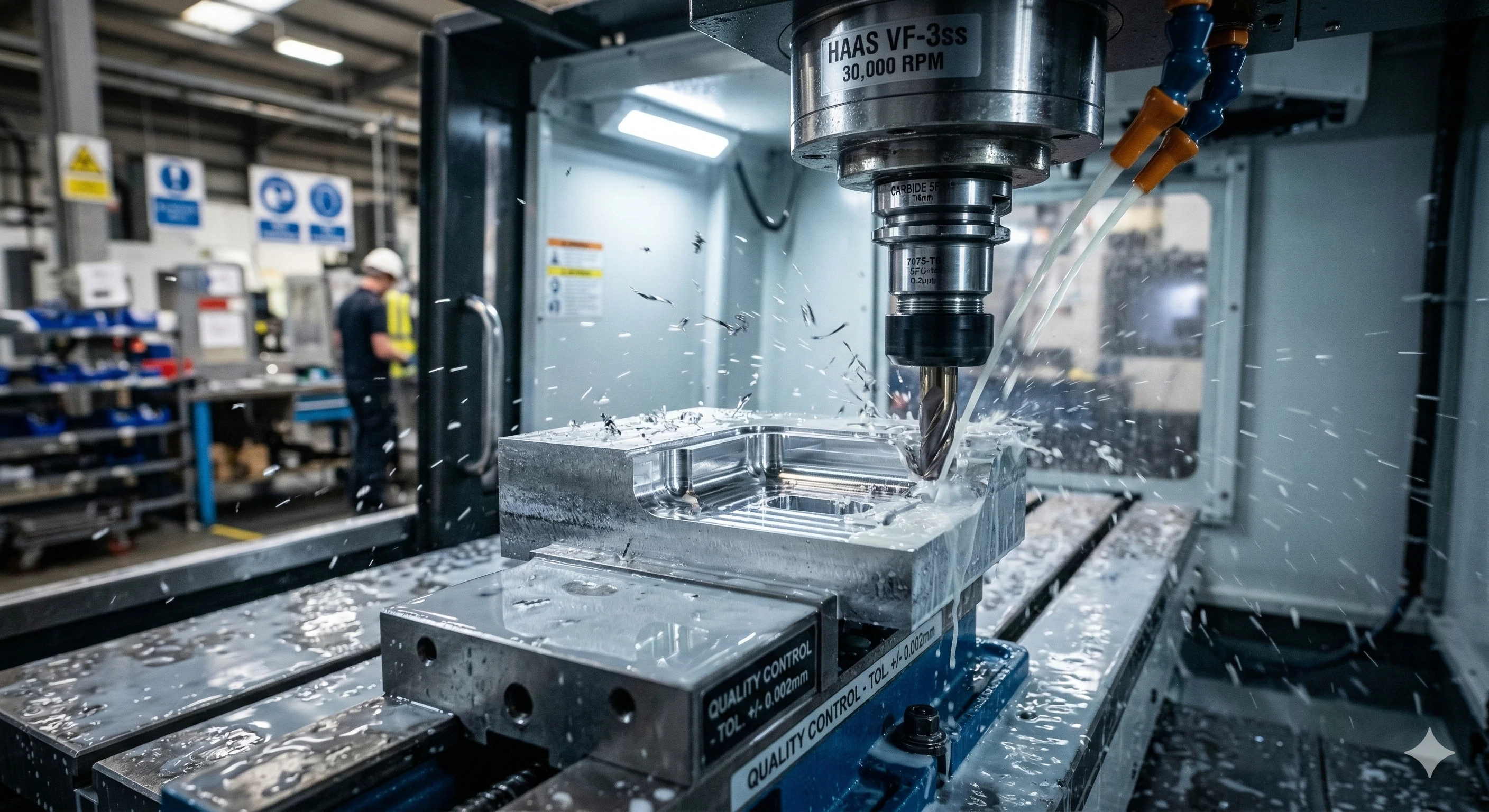
and tool breakages are a constant nightmare during high-volume production runs. Poor machinability causes unexpected delivery delays and significantly increases your per-unit manufacturing cost. When we calibrate our CNC mills for custom hardware, we adjust our tooling strategies specifically for the distinct cutting behaviors of 6061 and 7075.
From a CNC perspective, 7075 machines beautifully due to its hardness, producing clean chips and a brilliant mirror-like surface finish. While 6061 is also excellent for machining, its softer nature requires precise speed and tooling to prevent gummy buildup.
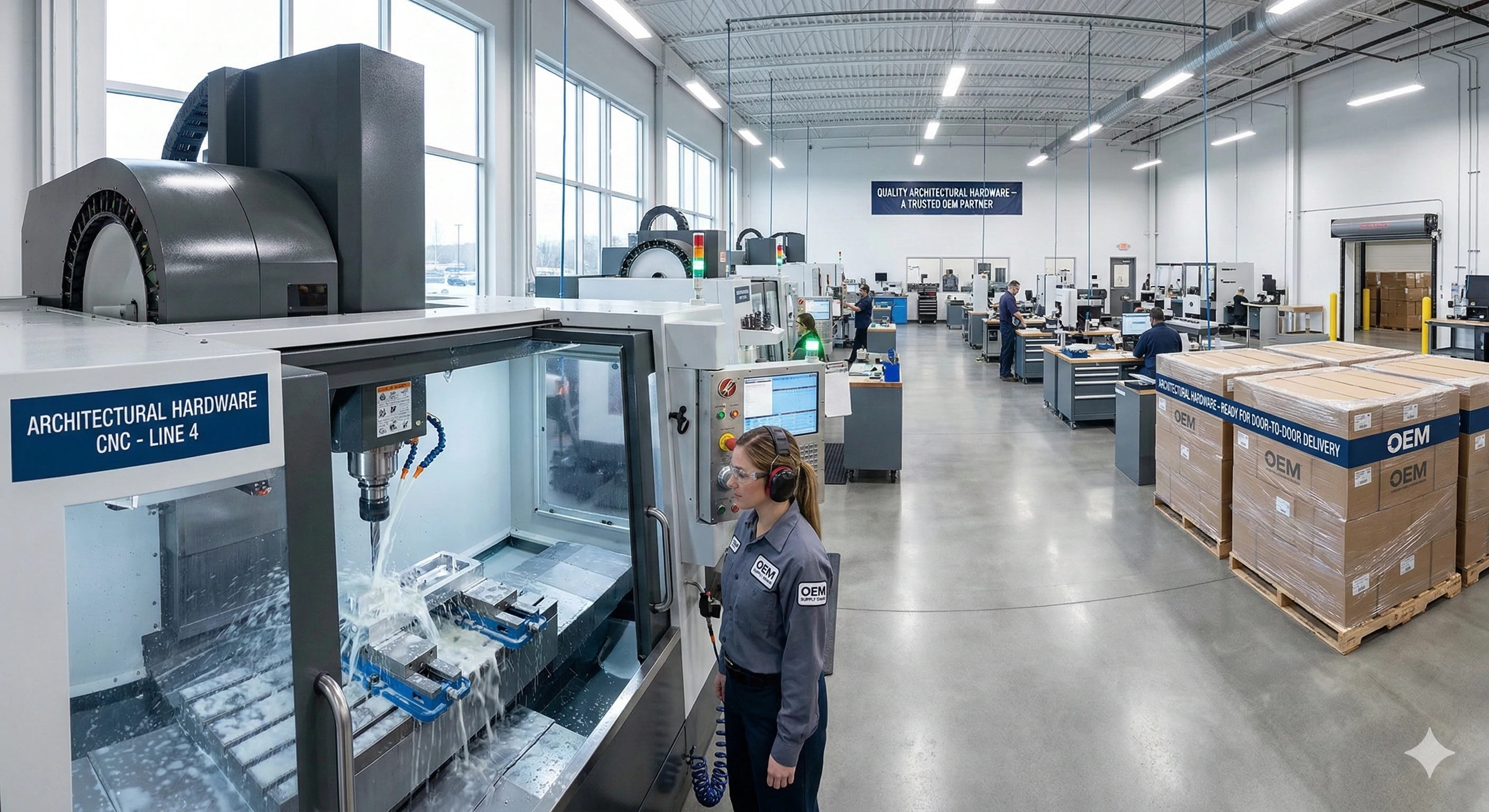
Cutting 6061 on the Factory Floor
We machine vast quantities of 6061 for glass railing fittings every single day. Aluminium 6061 is relatively soft. This softness presents a unique challenge on the mill. If it is not machined with the exact right and exceptionally sharp tools, the metal can quickly become "gummy" and stick to the end mill. Our operators must constantly monitor coolant flow and feed rates to ensure a clean cut and prevent material buildup on the cutting tools.
The Brilliant Finish of 7075
In stark contrast, cutting 7075 is an entirely different experience. Because it is much harder, it actually machines beautifully. As the end mill passes through the material, it produces very small, clean chips. This prevents tool clogging and leaves a brilliant, mirror-like surface finish right off the CNC mill without requiring extensive secondary polishing.
| CNC Machining Aspect | Aluminium 6061 Behavior | Aluminium 7075 Behavior |
|---|---|---|
| Material Hardness | Relatively soft | Much harder |
| Chip Formation | Can become gummy and stick to tools | Produces small, clean chips |
| Surface Finish | Good, requires sharp tools | Brilliant, mirror-like finish |
| Tolerance Holding | Excellent | Incredibly tight over long runs |
The final verdict on the factory floor is clear. Both materials are excellent choices for CNC machining, but 7075 holds incredibly tight tolerances slightly better over long, demanding production runs.
How to Choose the Right Alloy for Your Project?
Selecting the wrong alloy leads to expensive product redesigns and seriously compromised safety standards. You absolutely cannot afford to under-spec a load-bearing drone chassis or overpay for a simple welded mounting bracket. We rigorously guide our clients through a strict evaluation process to precisely match the aluminum alloy to their specific environmental and mechanical needs.
To choose the right alloy, use 6061 if your part requires welding or faces outdoor environments like rain and humidity. Upgrade to 7075 if your component replaces steel to save weight and must endure extreme mechanical friction or high-load stress.
The Three Rules of Alloy Selection
We have developed a straightforward framework to help our clients choose the correct material. First, does the part need to be welded? If you are machining a bracket that will later be welded to a larger frame, you must choose 6061. Second, is it an outdoor architectural element? If the part is exposed to rain, salt, or humidity, much like an outdoor railing base, 6061 is undeniably the safer, more corrosion-resistant bet. Third, is it replacing a steel part to save weight? If the part is subjected to extreme mechanical friction or high-load stress, you need to upgrade to 7075.
Anodizing and Surface Treatments
Customers frequently ask if they can anodize both 6061 and 7075 aluminum. Yes, both alloys take exceptionally well to the anodizing process. Aluminium 6061 produces a very consistent, bright color when dyed, which is perfect for aesthetic architectural hardware. Meanwhile, 7075 can be . This specific treatment significantly improves its surface corrosion resistance, making it suitable and durable for harsher operating environments.
| Decision Factor | Recommend 6061 | Recommend 7075 |
|---|---|---|
| Welding Required | Yes | No |
| Outdoor Weather Exposure | Yes | No (unless hard-coat anodized) |
| Replacing Heavy Steel | No | Yes |
| High Load Stress | No | Yes |
Conclusion
When sourcing custom metal components, matching the alloy to the environment is the most critical step for success. Do not overpay for 7075 if your part needs to be welded or live outside in the rain. Conversely, do not under-spec with 6061 if your part is holding the landing gear of a drone and facing extreme stress. Not sure which aluminum alloy is right for your OEM components? Our engineering team can help you balance strength, corrosion resistance, and cost. Submit your CAD files today for a comprehensive CNC machining review.
Footnotes
1. Chemical composition of wrought aluminum alloys.
2. Overview of arc welding processes for joining metals.
3. How thermal processes alter metal molecular structures.
4. Measuring maximum stress tolerance in materials.
5. Material failure caused by cyclic structural loading.
6. Mechanisms of metal degradation and oxidation.
7. Engineering overview of plastic deformation points.
8. Guide to measuring and achieving proper surface textures.
9. Optimal speeds and feeds for CNC machining processes.