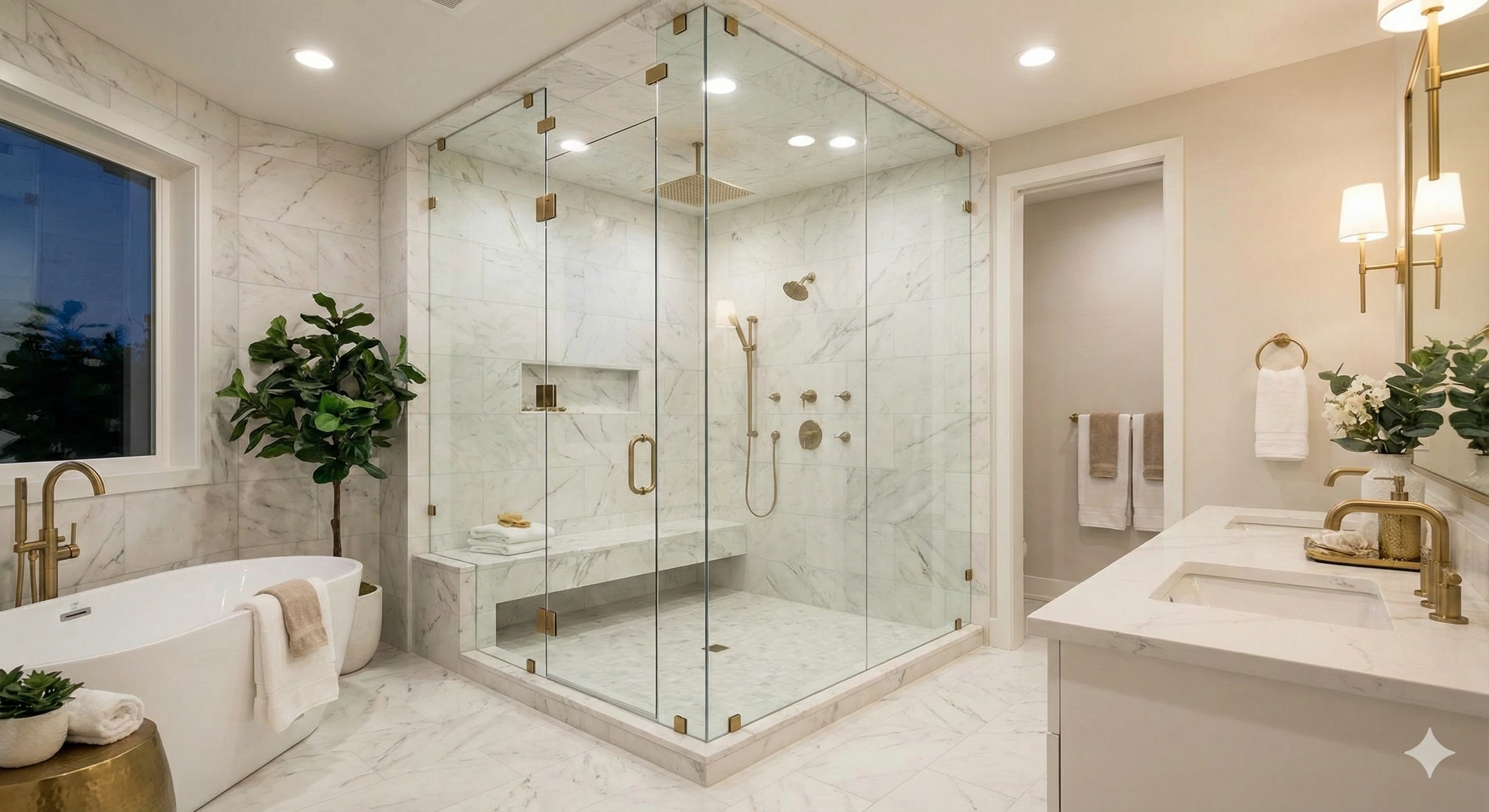
Frameless glass showers have become one of the most popular upgrades in modern bathrooms—and the appeal is easy to understand. They open up visual space, allow natural light to flow freely, and create the clean, upscale look often associated with high-end hotels.
What many people don’t realize is that, in a frameless shower, the glass isn’t the star. The hardware is. With no frame to hide behind, every hinge, handle, and support bar becomes part of the design.
When the right hardware is used, the result is a shower that looks refined, feels solid, and performs reliably for years. When corners are cut, problems show up quickly—doors that don’t close properly, water leaking onto the floor, or hardware that loosens and corrodes. This guide walks through the essential components required to build a frameless shower that is safe, functional, and visually impressive.
The Essentials: 1. Shower Hinges (The Movers)
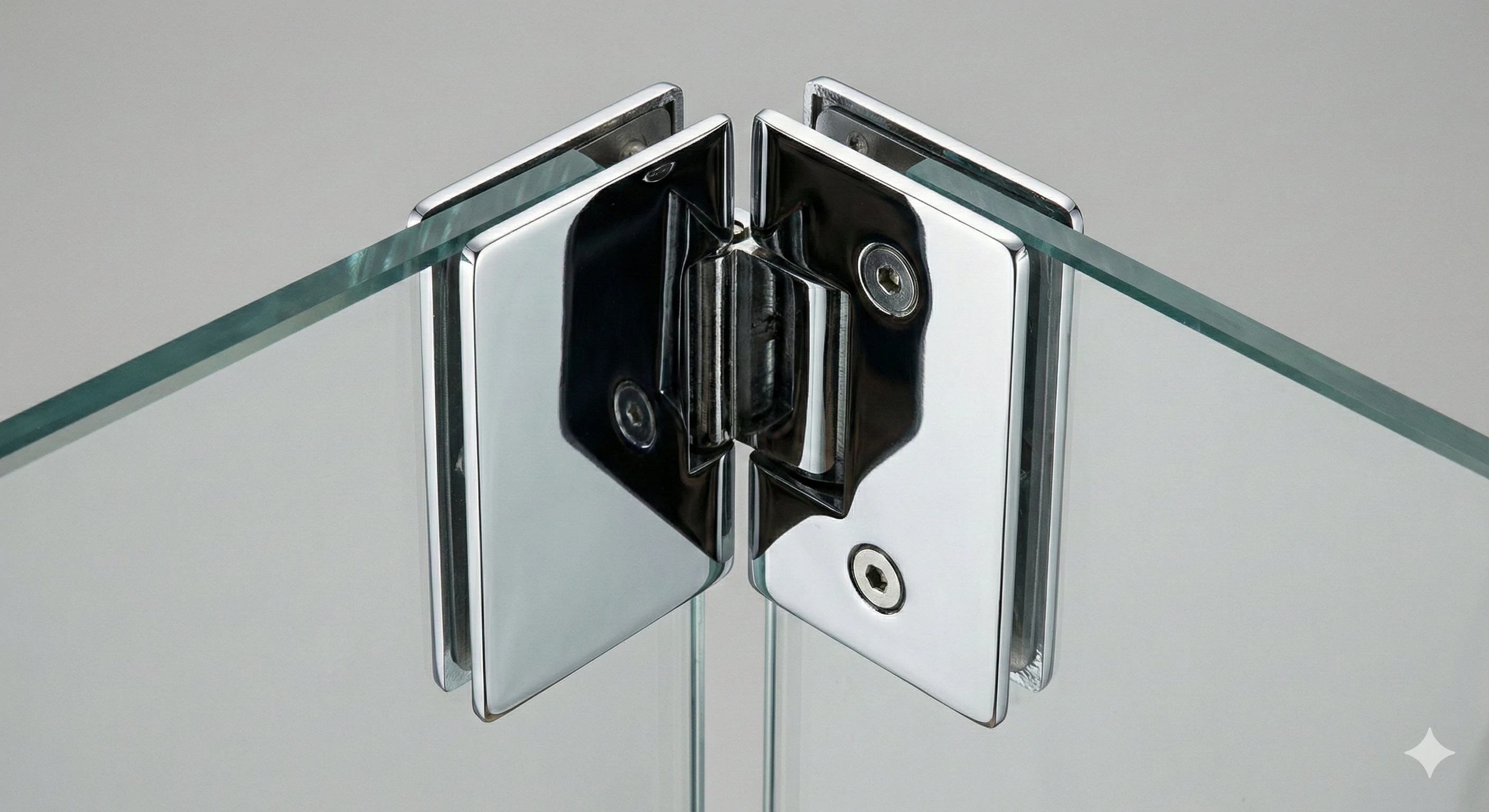
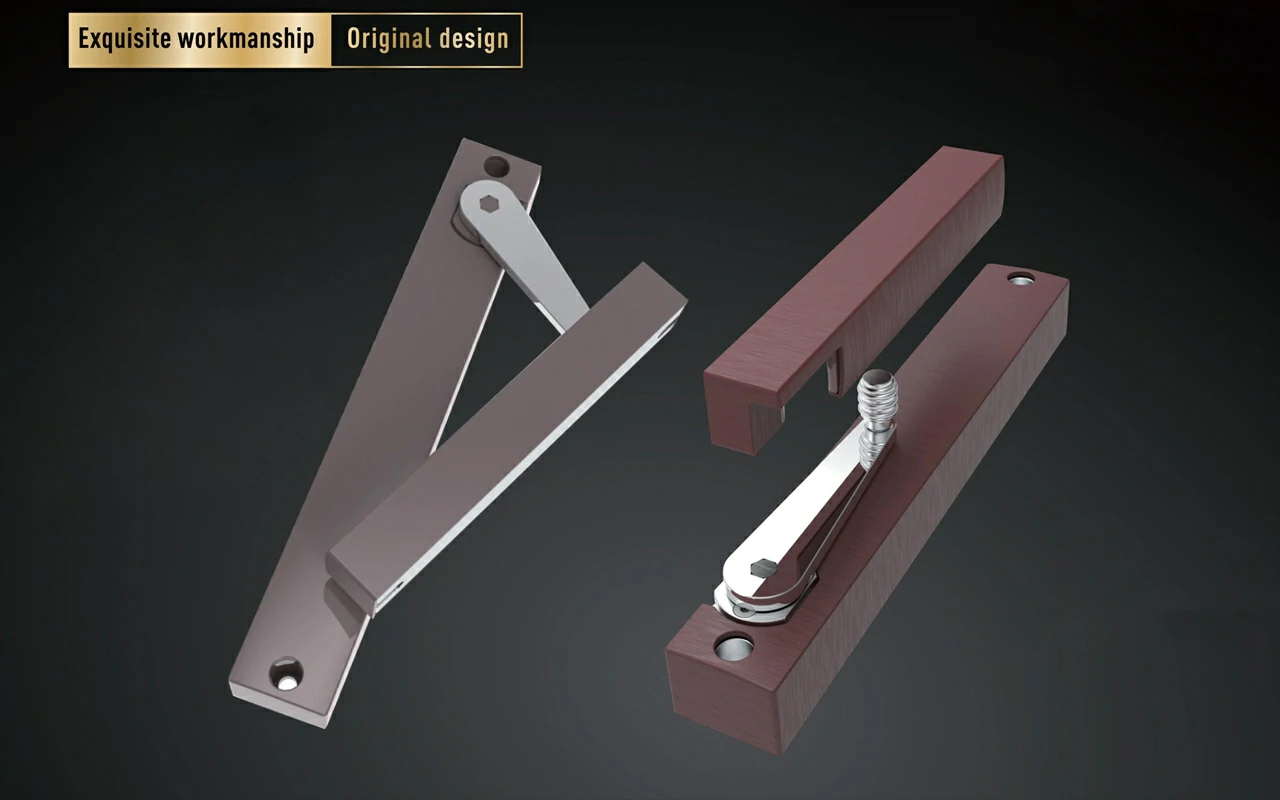
Shower hinges do more work than any other component in a frameless enclosure. They are responsible for supporting the full weight of the glass door while allowing it to open and close smoothly day after day. A typical frameless shower door can weigh anywhere from 50 to 80 pounds, which means hinge quality is not an area where compromises should be made.
Types of Shower Hinges
Wall-to-Glass Hinges mount the door directly to a tiled wall. They are the most common option for single-door installations and help achieve the clean, minimal look that defines frameless shower design.
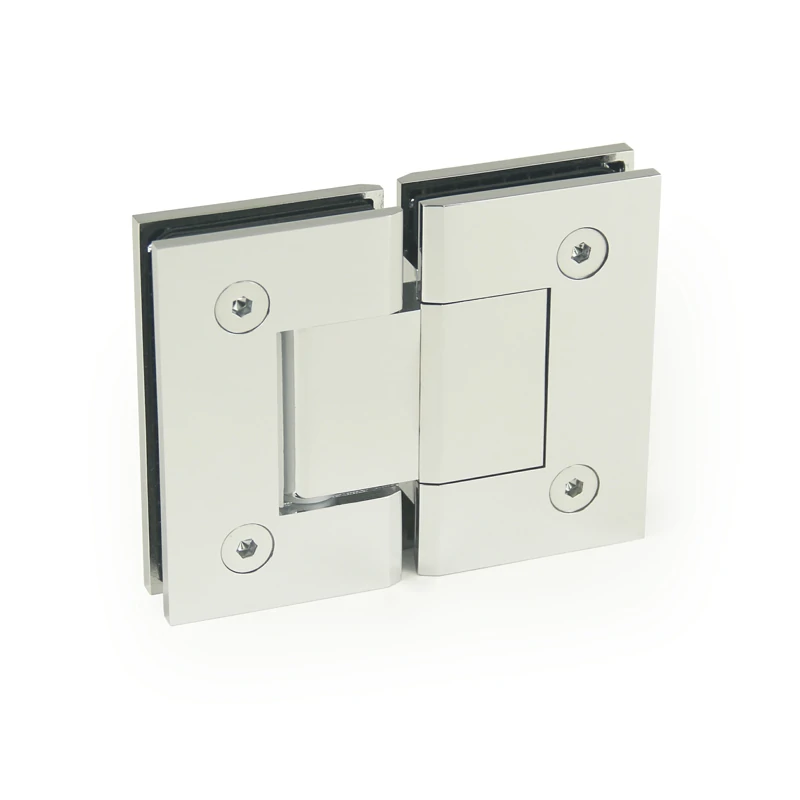
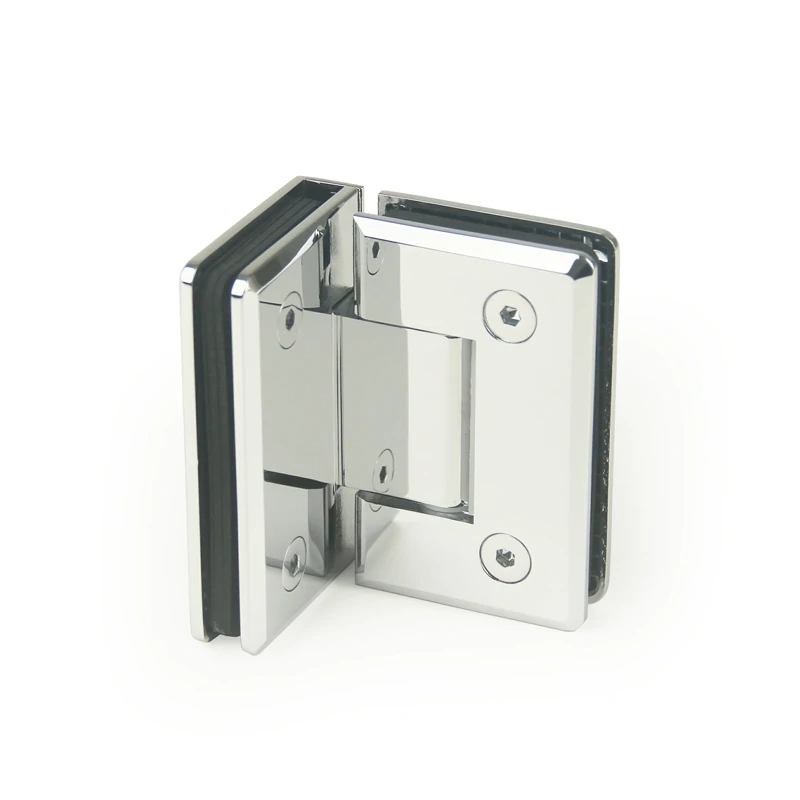
Glass-to-Glass Hinges connect the door to a fixed glass panel. Depending on the layout, they are available in 180° inline, 135° neo-angle, and 90° corner configurations. These hinges play a major role in determining how the door swings and how much space the enclosure occupies.
The Game-Changer: Self-Centering Technology
One feature that clearly separates professional-grade hinges from entry-level options is self-centering functionality. Self-centering hinges gently pull the door into the closed position from roughly 25 degrees open, ensuring consistent closure every time.
This is more than a convenience feature. A door that reliably closes is far less likely to leak water onto the bathroom floor. When comparing hinge options, self-centering should be considered essential rather than optional.
The Essentials: 2. Glass Clamps & Clips (The Stabilizers)
Glass clamps are used to secure fixed glass panels to walls, floors, or other glass panels without bulky metal channels. Their minimal footprint is what allows frameless showers to maintain their open, floating appearance.
High-quality clamps are designed to provide strong support while remaining visually unobtrusive. An often-overlooked detail is the internal rubber gasket. These gaskets protect the glass from direct metal contact, absorb vibration, and prevent movement over time. Poor-quality clamps with thin or poorly fitted gaskets significantly increase the risk of glass damage.
While clamps tend to blend into the background when they are doing their job well, their role is foundational. Stability issues almost always trace back to inferior clamps or improper installation.
The Essentials: 3. Handles & Knobs (The Touch Points)
The shower handle is the one piece of hardware you interact with every single day. Because of that, it has to balance comfort, durability, and appearance.
Back-to-Back Handles remain the most popular choice for frameless shower doors. Ladder-style handles provide multiple grip points and a substantial feel, while D-handles offer a more compact profile with excellent ergonomics. Both styles distribute pulling force evenly across the glass.
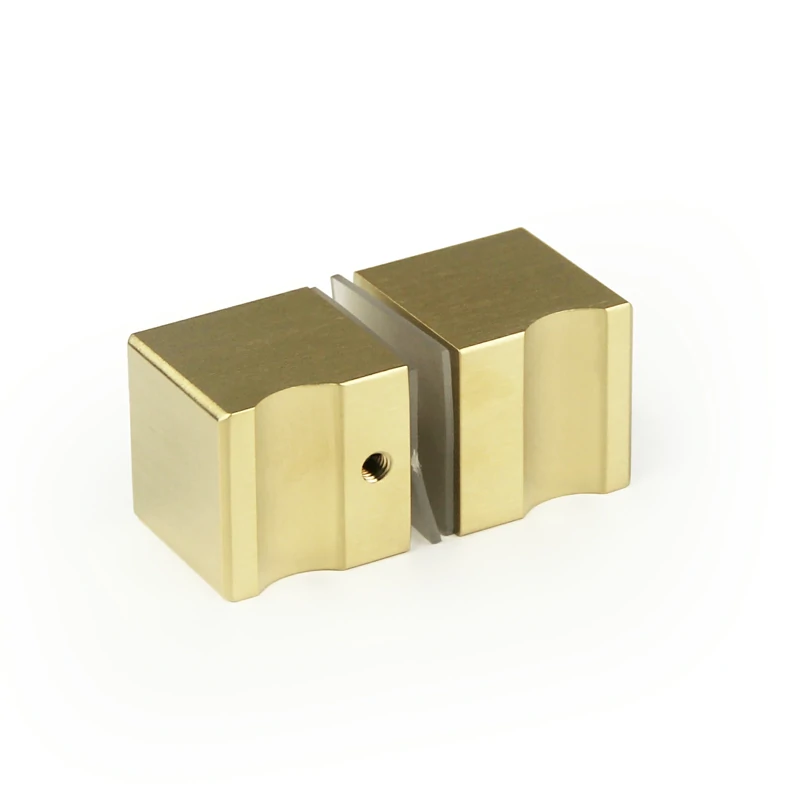
Knobs are a minimalist option best suited for smaller or lighter doors where less leverage is required. They work well in tight spaces and contemporary designs.
Towel Bar Combinations serve a dual purpose by providing an interior handle and an exterior towel bar. This design is particularly practical in smaller bathrooms where space efficiency matters.
Because handles are constantly exposed to moisture and frequent use, finish quality is critical. Inferior plating will show wear, corrosion, and water spotting much sooner. Investing in well-finished hardware pays off in both appearance and longevity.
The Essentials: 4. Support Bars (Header & Stabilizer Bars)
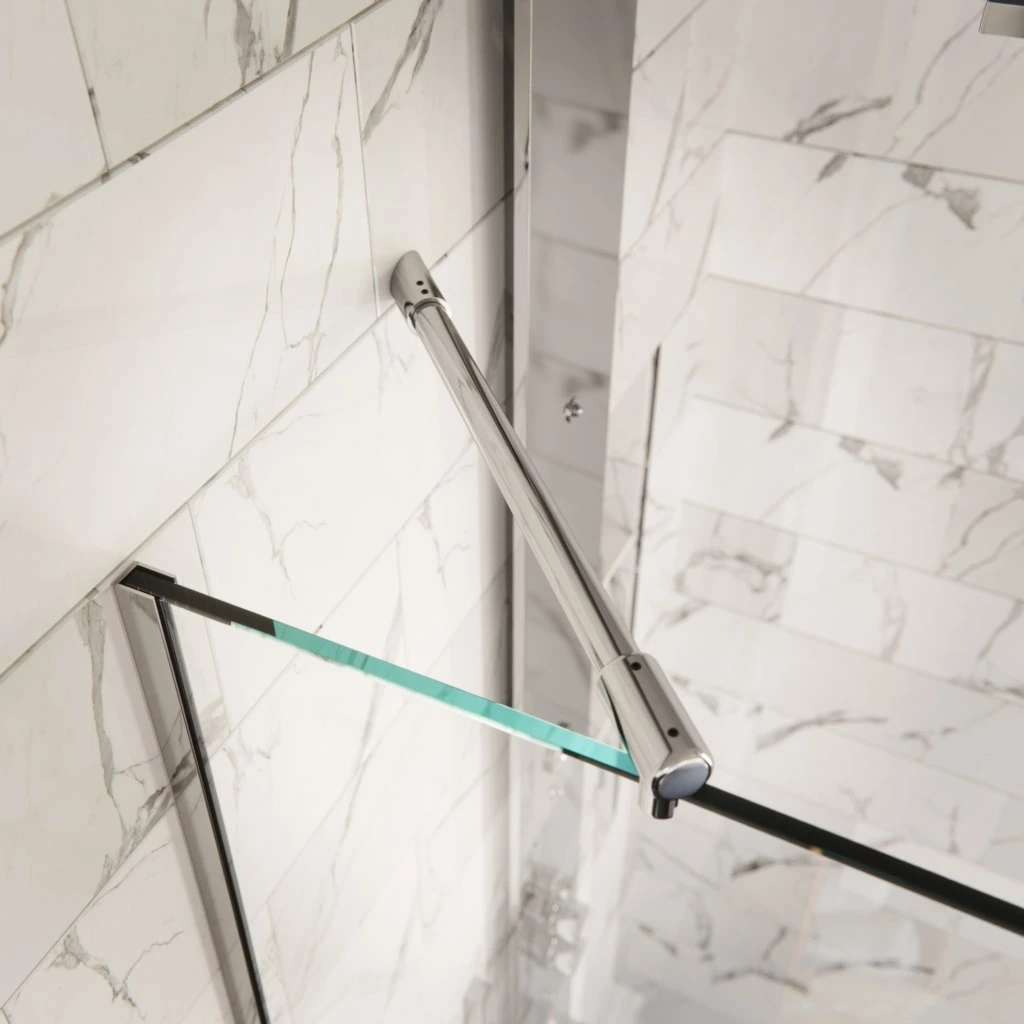
Frameless glass delivers a clean look, but glass panels are heavy and require proper reinforcement. A large fixed panel can easily exceed 100 pounds, and without adequate support, even thick tempered glass can flex.
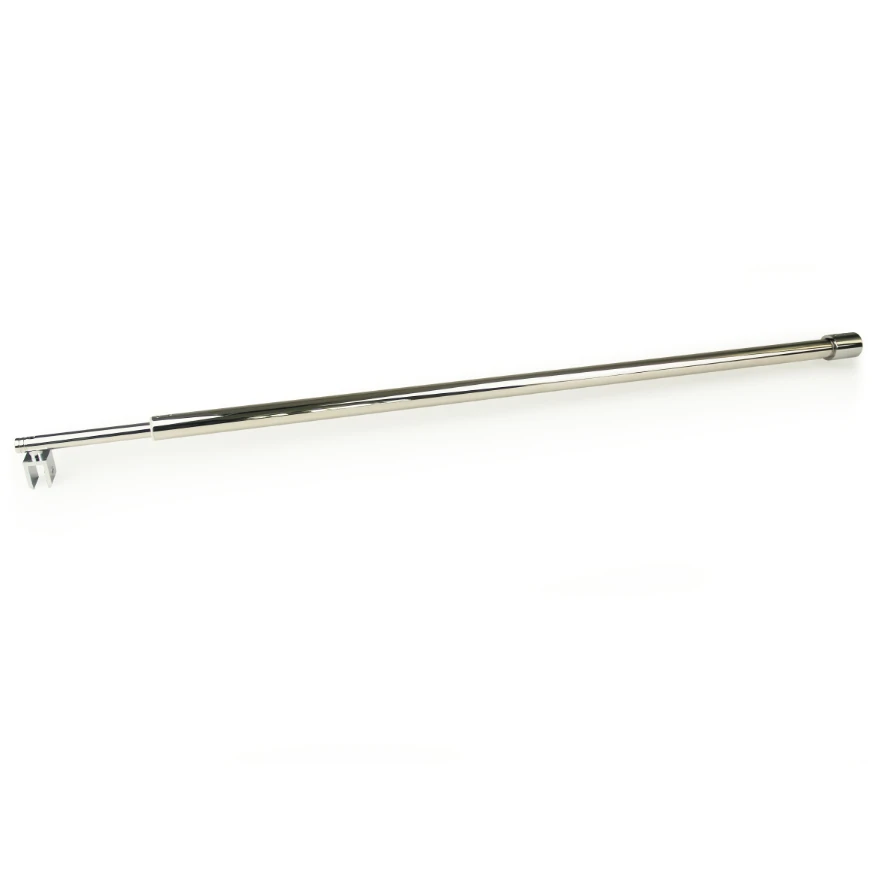
45° Stabilizer Bars connect the top corner of a fixed panel to the wall, creating a rigid triangular brace. These bars are typically recommended when a fixed panel exceeds 18–24 inches in width, depending on glass thickness and height.
Header Bars and T-Bar Systems run horizontally across the top of the enclosure, tying multiple panels together. They are required for sliding door systems and are often used for oversized or tall installations to evenly distribute weight.
Skipping support components may reduce upfront costs, but it significantly increases long-term risk. Replacing damaged glass or addressing safety issues is far more expensive than installing proper reinforcement from the start.
The Essentials: 5. Water Seals & Sweeps (The Invisible Heroes)
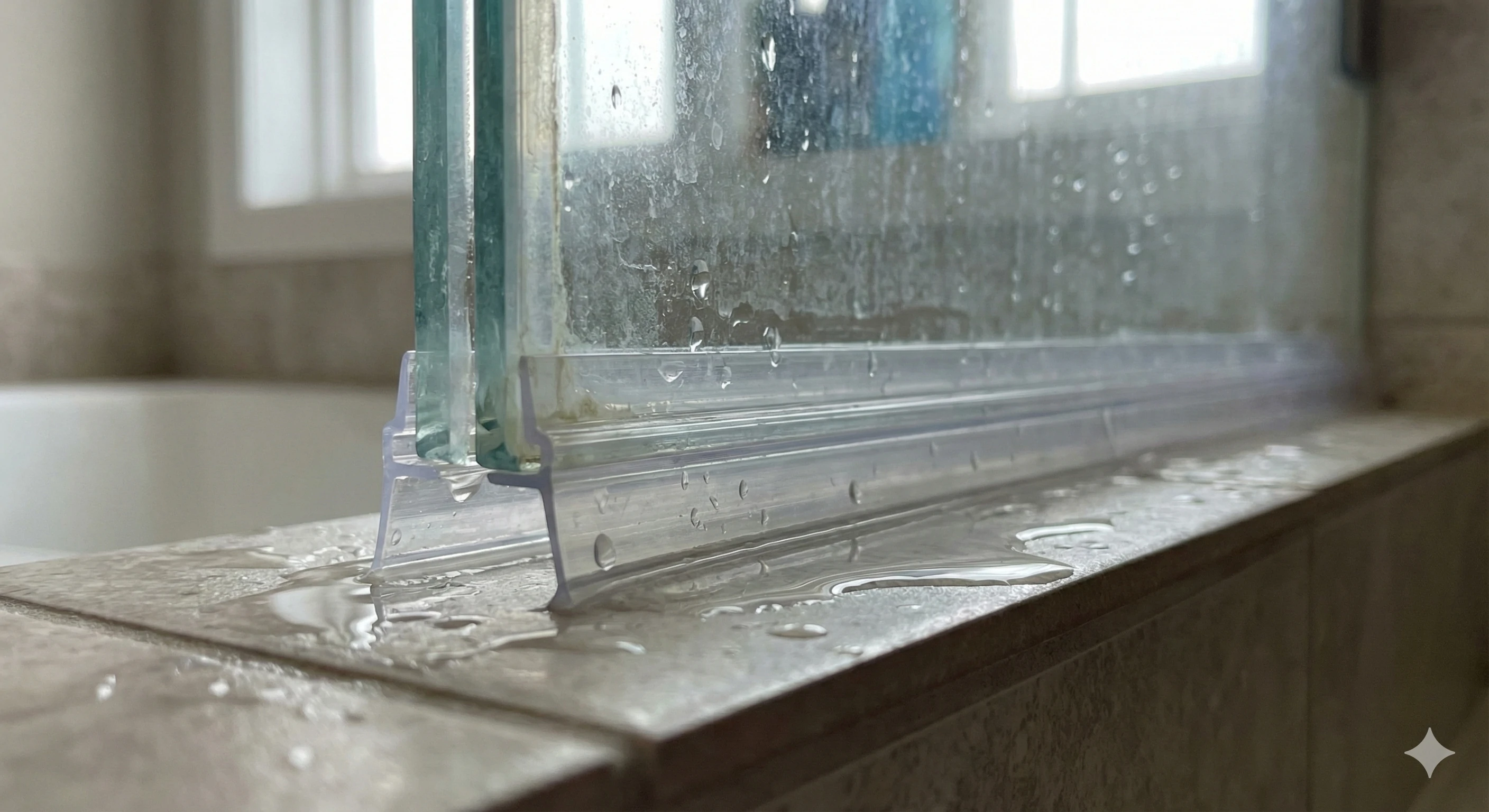
While metal components get most of the attention, seals and sweeps are what actually keep water inside the shower. Their performance directly affects everyday usability.
Bottom Sweeps attach to the lower edge of the door, forming a flexible barrier against water escaping onto the floor. A good sweep accommodates minor tile irregularities while maintaining consistent contact.
Magnetic Seals run vertically along the door edge. When the door closes, the magnets align and pull together, creating a tight vertical seal and assisting self-centering hinges.
Bulb Seals are installed along the hinge side of the door to close gaps that would otherwise allow water to leak through.
These seals should be viewed as consumable components. Replacing them periodically is simple and helps maintain a leak-free shower for years.
Material Matters: Brass vs. Stainless Steel
Choosing the right material affects not only durability, but also finish quality and long-term appearance.
Solid Brass: The Gold Standard
Solid brass is widely regarded as the preferred material for shower hardware. Its machinability allows for precise detailing and tight tolerances, which translates to smoother hinge movement and better overall fit. Brass also accepts plating exceptionally well, resulting in finishes that are more durable and visually refined.
In humid shower environments, properly plated brass offers excellent corrosion resistance. This is why most premium shower hardware is manufactured from solid brass.
Stainless Steel 304: The Alternative
304 stainless steel provides good corrosion resistance and strength, making it common in outdoor applications. In showers, it performs well structurally, but achieving high-end polished finishes can be more challenging, and fine machining details are harder to execute compared to brass.
Trending Finishes for 2025
Finish selection has a major impact on the overall bathroom aesthetic. Matte black remains a popular choice for modern designs, while brushed gold and champagne bronze bring warmth and a boutique-hotel feel. Satin nickel offers a softer, more forgiving appearance, and polished chrome continues to be a timeless classic.
Regardless of finish, a strong warranty—ideally five years or more—provides reassurance that the coating will hold up under daily use.
Sliding Shower Systems (The "Barn Door" Look)
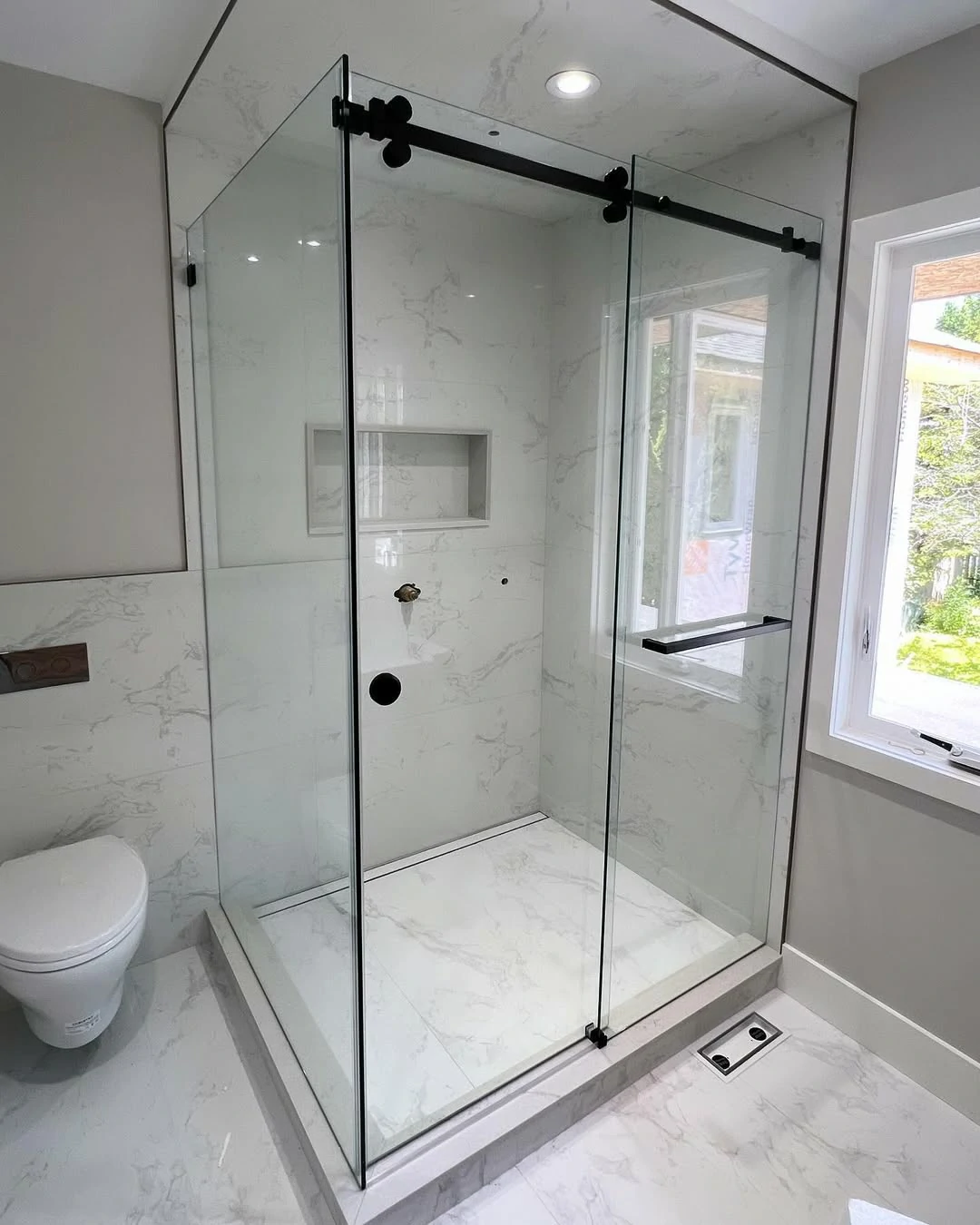
In bathrooms where swing space is limited, sliding shower doors are often the most practical option. What was once a purely functional solution has evolved into a design feature.
Modern sliding systems feature exposed tracks and oversized rollers that add architectural character. These systems combine space efficiency with visual appeal, especially in contemporary interiors.
Key components include a precisely leveled top track, high-quality rollers with ball bearings for smooth movement, and stoppers to prevent over-travel and impact.
Critical Consideration: Glass Cutouts and Templates
Tempered safety glass cannot be modified after fabrication. All holes, notches, and cutouts must be defined in advance. This makes coordination between hardware selection and glass fabrication essential.
Reliable hardware manufacturers provide detailed drilling templates that specify hole locations, sizes, and setbacks. Reviewing these details before glass is tempered helps prevent costly mistakes and installation delays.
Quality Makes the Daily Difference
The true value of quality shower hardware becomes clear over time. Well-made components operate smoothly, maintain alignment, and resist corrosion despite daily exposure to water and cleaning products.
Lower-grade hardware may appear similar initially, but wear and performance issues often surface within months. Choosing durable, well-engineered fittings reduces long-term maintenance and replacement costs.
Ready to Transform Your Bathroom?
A frameless shower is the result of careful planning and well-chosen components. From reliable hinges to thoughtfully selected finishes, every detail contributes to the final experience.
Whether you’re specifying hardware for a high-end project or planning your own renovation, investing in quality ensures your shower performs as beautifully as it looks.
Explore our Solid Brass Shower Collection, engineered for long-term reliability and backed by a 5-year finish warranty.
Frequently Asked Questions
What is the best metal for shower hinges?
Solid brass is widely considered the best choice due to its durability, corrosion resistance, and superior finish quality. Its ability to be precisely machined results in smoother operation and longer service life.
Do I need a support bar for my shower glass?
If a fixed panel exceeds 18–24 inches in width, a stabilizer or header bar is strongly recommended. Larger panels without reinforcement can flex and create safety concerns over time.
What thickness glass do I need for frameless hardware?
Most frameless hardware is designed for 10mm (3/8-inch) or 12mm (1/2-inch) tempered glass. Always confirm compatibility, as hardware is manufactured to fit specific glass thicknesses.