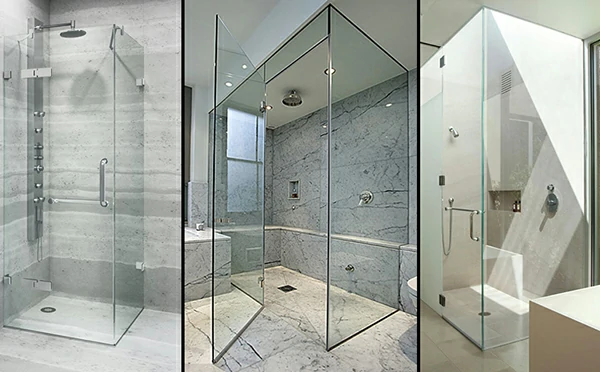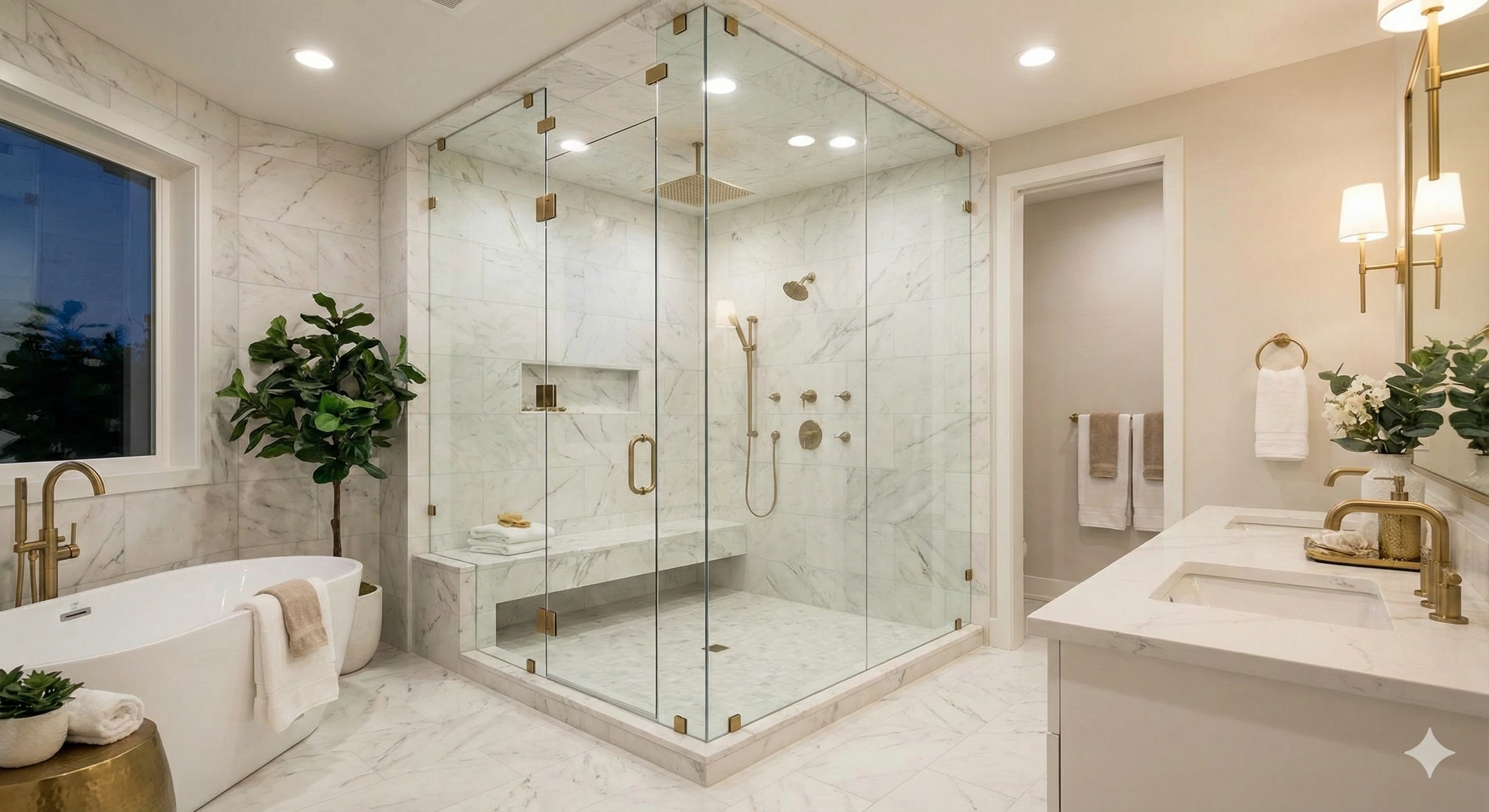
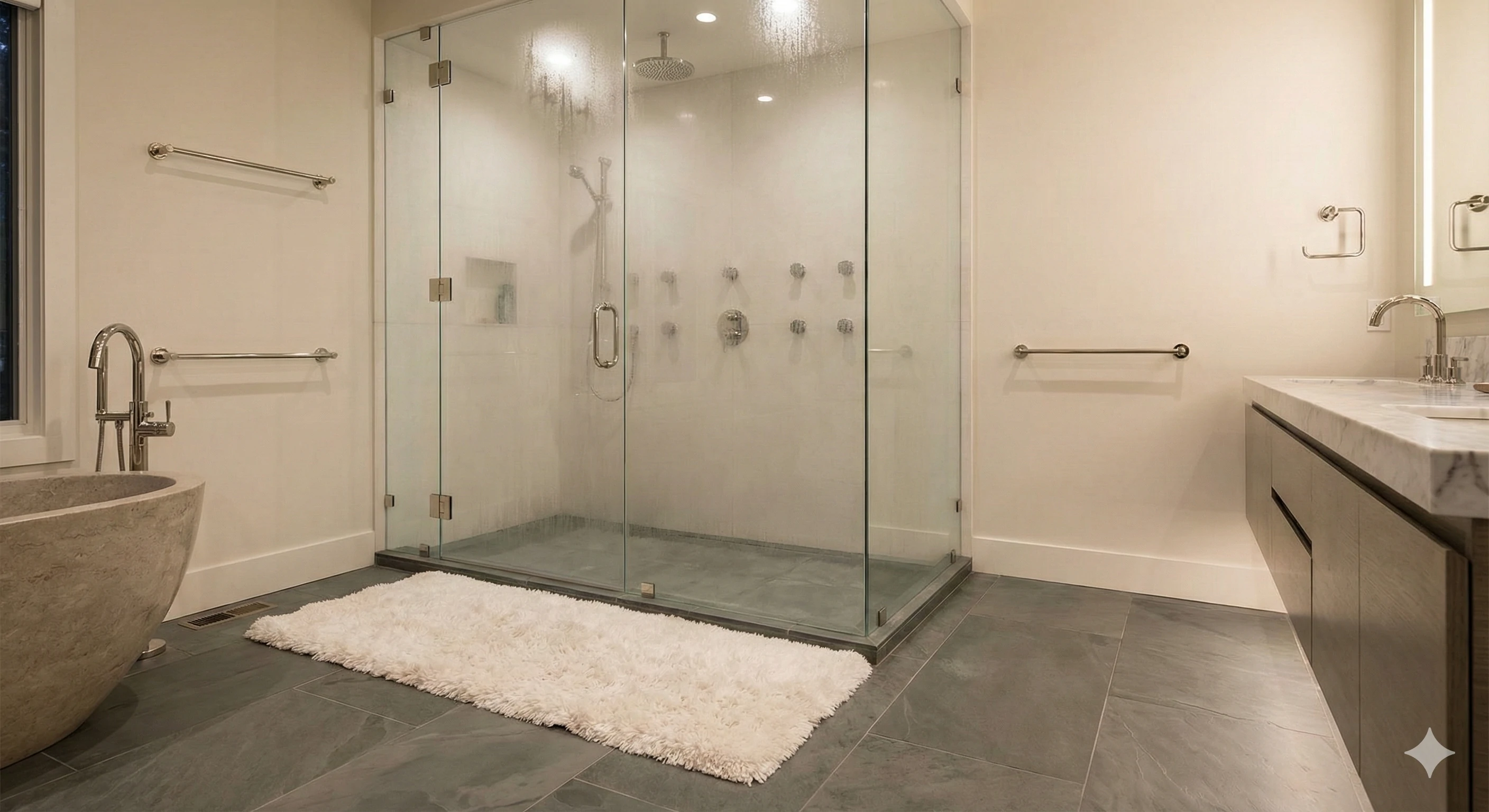
Frameless glass shower doors are popular for a reason—they look clean, modern, and instantly elevate a bathroom. But before committing, many homeowners and designers pause at the same question: Will water leak out everywhere?
It’s a fair concern. Without thick metal frames around every edge, frameless showers can look like they’re leaving the door wide open for water to escape.
The reality is this: frameless shower doors are not designed to be completely watertight like an aquarium. Instead, they function as water deflection systems, guiding spray and runoff back into the shower enclosure. While small gaps are intentionally built into the design, proper hardware, quality seals, correct slope, and self-centering hinges work together to keep water exactly where it should be.
Understanding how each of these elements works makes all the difference.
1. The "Gap" Myth: Why Spaces Exist and How We Fill Them
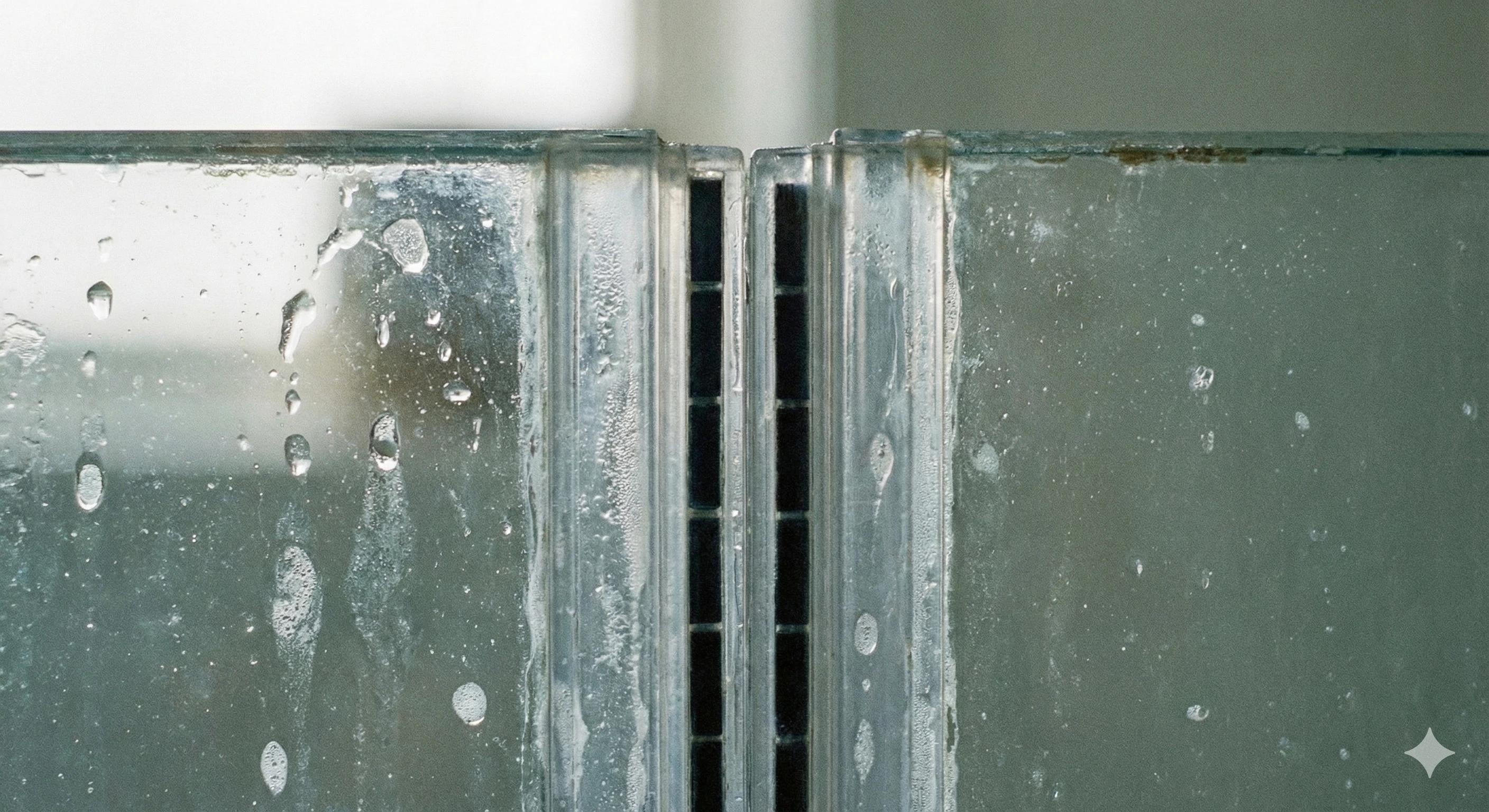
Let’s address the biggest misconception first. Yes, frameless shower doors have gaps—but they’re not mistakes.
Glass doors require 2mm to 5mm of clearance so they can swing freely without contacting tile or adjacent glass. Without this tolerance, rigid glass would chip or crack during normal use. These gaps are a structural necessity.
So how is water kept in? The answer lies in polycarbonate seals, a crucial but often overlooked component.
H-Jambs and Bulb Seals: Protecting the Hinge Side
On the hinge side of the door, H-jambs or bulb seals are commonly used. These flexible plastic seals attach directly to the glass edge. When the door closes, the bulb compresses, filling the gap and creating a flexible barrier against water spray.
It’s similar to weather stripping on an exterior door—it doesn’t require perfect alignment, but it effectively blocks airflow (or in this case, water).
Magnetic Strips: Locking the Handle Side
The handle side of the door experiences more direct water pressure, which is why magnetic seals are typically used here. One magnetic strip is mounted on the door, and the matching strip is installed on the fixed panel or wall channel.
When the door closes, the magnets pull together firmly, holding the seam closed even when shower spray hits it directly. This “snap shut” action ensures the seal stays compressed instead of being pushed apart by water.
2. The Bottom Sweep: The Most Critical Component
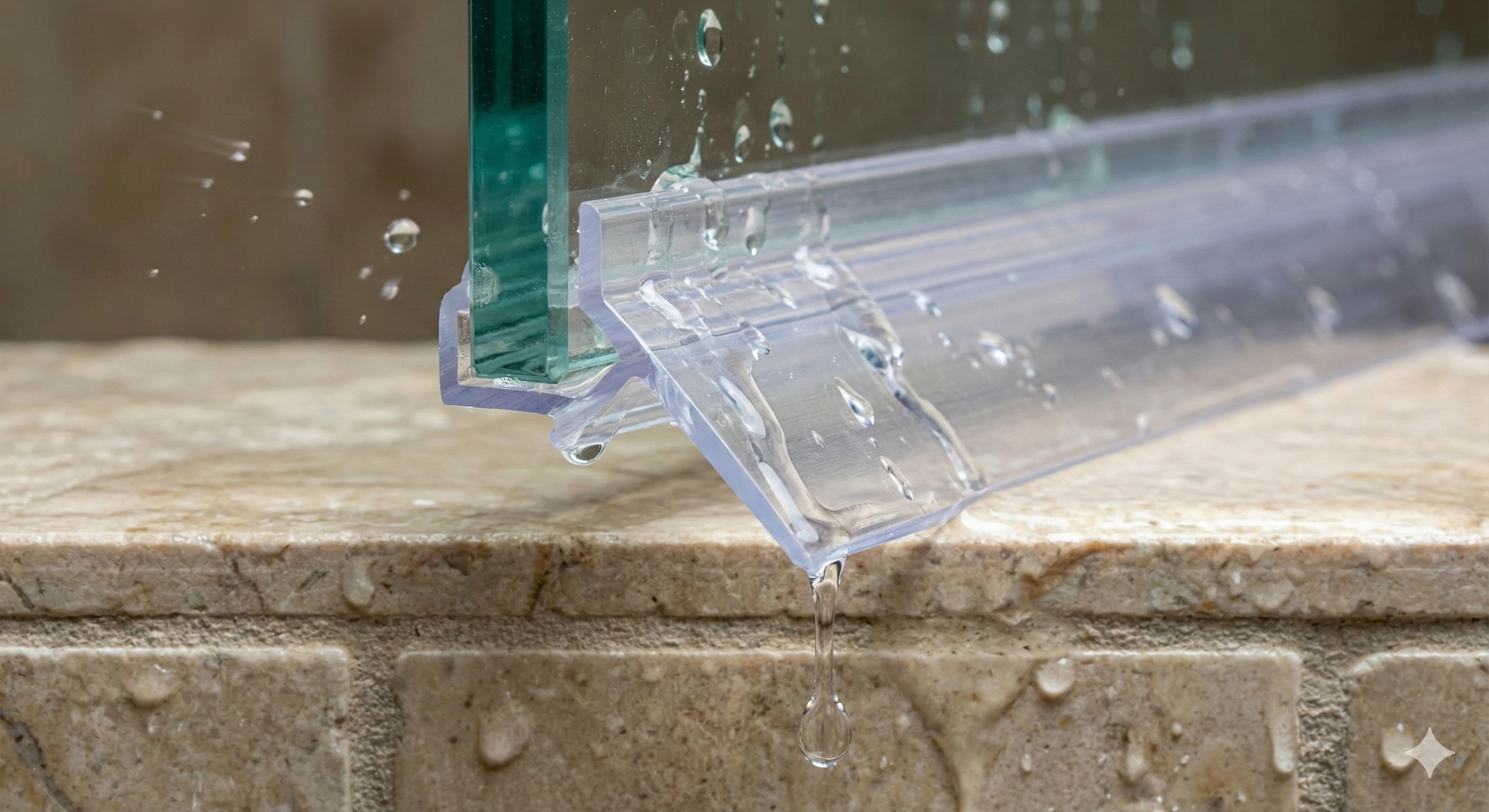
If there’s one component that has the biggest impact on leaks, it’s the bottom sweep. A good sweep does far more than simply cover the bottom edge of the glass—it actively manages water flow.
The Deflector: Your 45-Degree Insurance Policy
Quality bottom sweeps include a 45-degree deflector fin on the outside face. As water runs down the glass, the deflector catches it and redirects it back into the shower pan.
Without this feature, water would drip straight off the glass and onto the bathroom floor. The deflector turns gravity into an advantage rather than a problem.
The Wiper: Stopping Water at the Source
Along the bottom edge of the sweep is a soft wiper blade that lightly contacts the curb or threshold. This prevents water—especially thin surface runoff—from slipping underneath the door.
The key is balance: enough contact to block water, but not so much resistance that the door becomes difficult to open.
Installation Matters
A common installation mistake is cutting the sweep incorrectly. It must fit precisely between the hinges.
Too short: gaps form at the ends and allow water to escape
Too long: the sweep bunches up and won’t sit flat
Accurate measurement and a clean cut with a fine-tooth saw ensure the sweep performs as intended.
3. The Role of Hinges: Self-Centering Mechanics
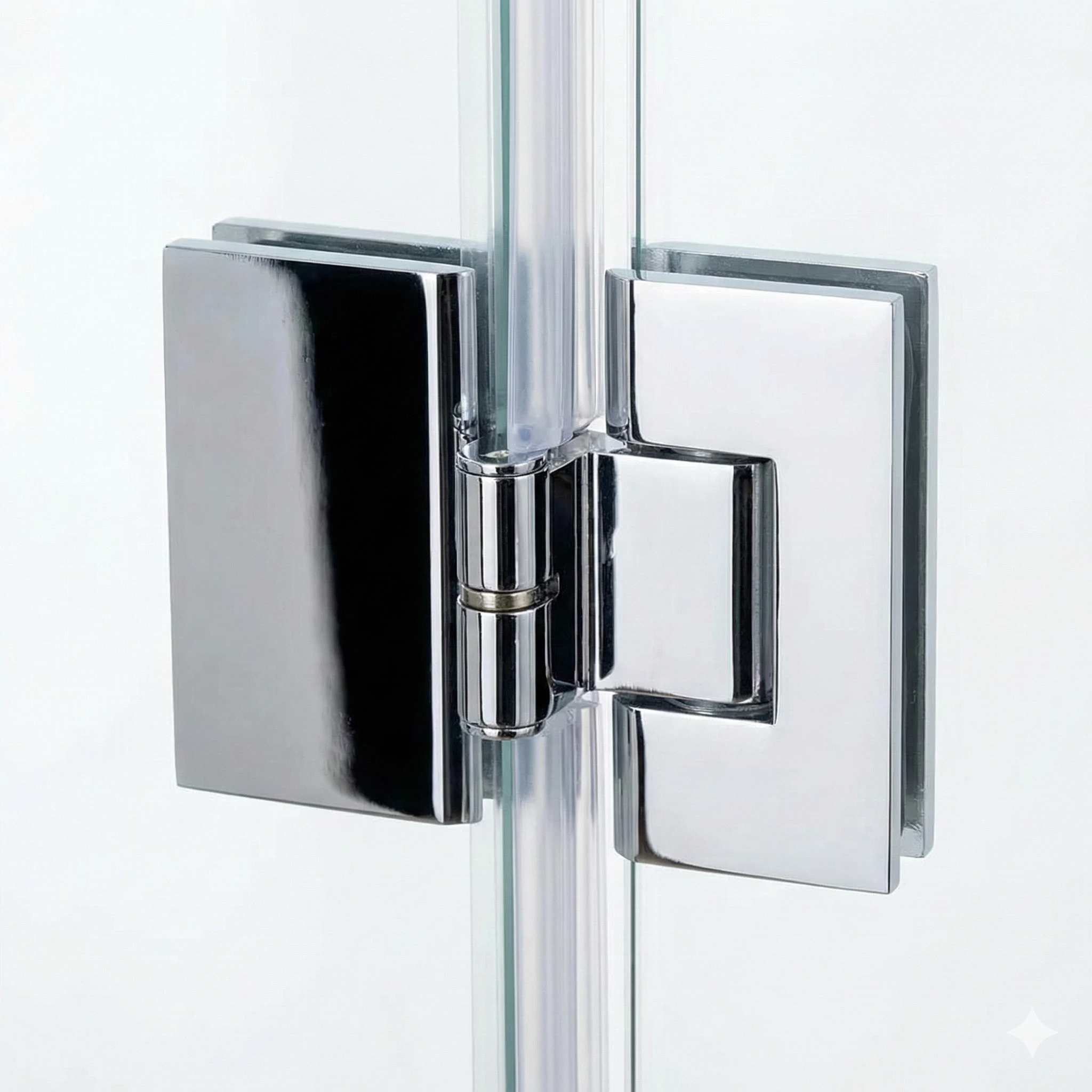
Even the best seals won’t help if the door isn’t fully closed.
A door that’s left open—even slightly—creates a direct escape route for water. That’s why hinge design plays such a critical role.
The Problem with Basic Hinges
Standard hinges simply hold the door wherever it’s left. If someone doesn’t push the door completely shut, it stays partially open. Over time, wear in the hinge can make this problem worse.
The Solution: Self-Centering Spring Hinges
High-quality frameless shower hinges include internal springs that pull the door into a preset closed position, often called the “zero position.”
When you let go of the door, the spring tension finishes the job—closing the door fully, engaging the magnetic seals, and compressing the bulb seals automatically. This feature is especially important in shared households, where not everyone is careful about door placement.
4. Structural Design: Slope and Spray Direction
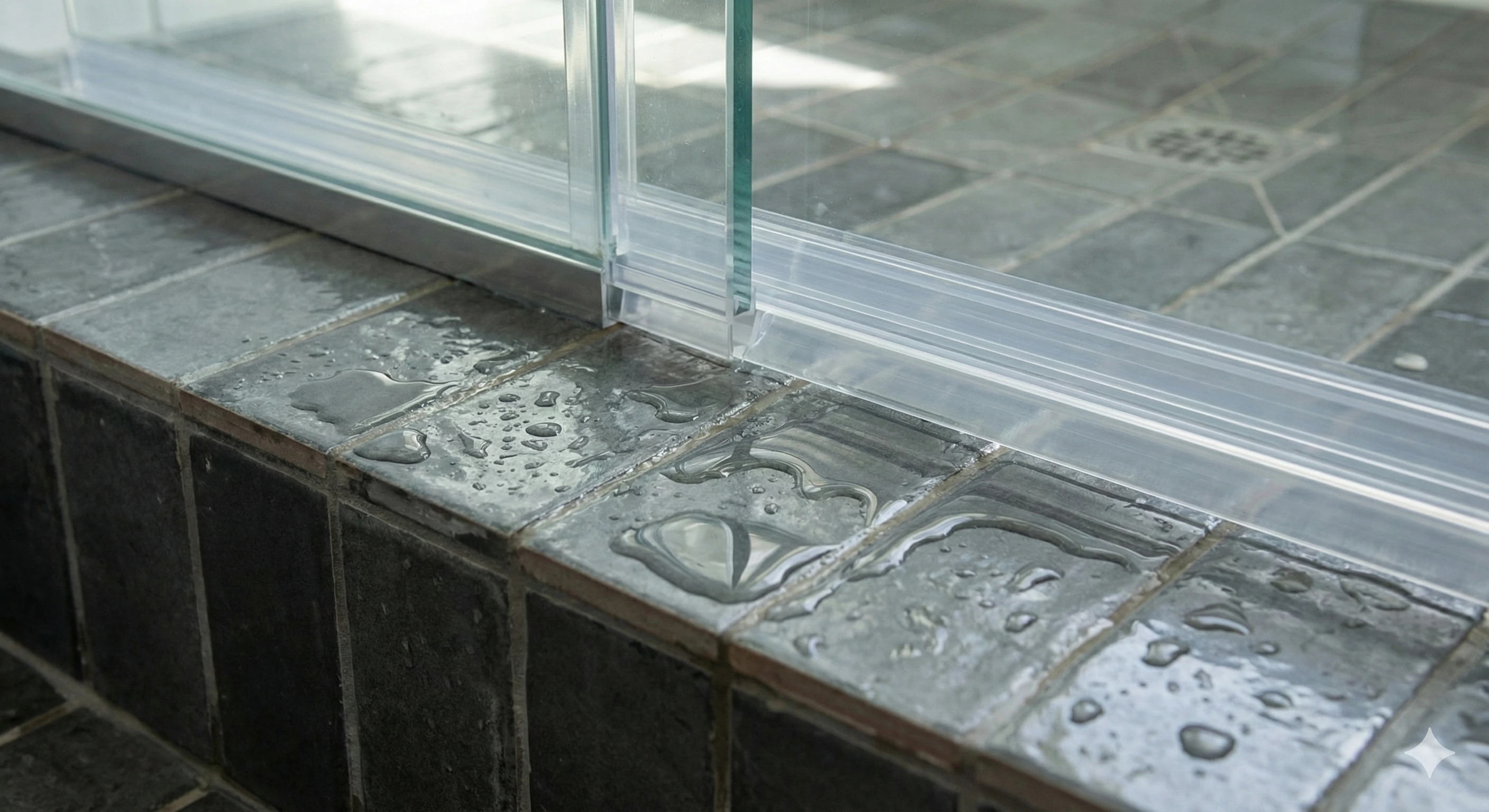
Even perfect hardware can’t compensate for poor shower design.
The Pitch: Why Your Curb Must Slope Inward
Your shower curb should slope about 1/4 inch toward the drain. This ensures any water that reaches the curb flows back into the shower pan instead of pooling against the door.
A flat or outward-sloping curb works against gravity—and against your seals.
Showerhead Placement: Understanding the Line of Fire
Avoid directing the showerhead straight at the door seams. Constant high-pressure spray aimed at seals will eventually overwhelm them. Position the primary spray pattern toward the back or side walls, keeping the door outside the main “line of fire.”
The Curb Debate: Why a Small Barrier Helps
Curbless showers look great, but they demand near-perfect floor slope across the entire bathroom. A modest curb—just 2 to 3 inches—adds an extra layer of protection and significantly reduces the risk of leaks.
5. Troubleshooting: Why Is My Shower Leaking?
Most leaks come down to one of three issues:
Check 1: Seal Condition
Polycarbonate seals degrade over time due to heat, soap, minerals, and daily use. If they’re yellowed, brittle, or cracked—and older than 18–24 months—it’s time to replace them.
Check 2: Silicone Caulk Integrity
Inspect where fixed glass panels meet the wall or floor. Cracked or peeling silicone creates hidden pathways for water. Resealing with high-quality silicone often solves stubborn leak issues in minutes.
Check 3: Blocked Weep Holes
Some hardware systems rely on small weep holes to drain internal moisture. Soap scum and mineral buildup can block them. Clearing these openings with a toothpick or small wire can restore proper drainage immediately.
Keep Your Shower Watertight
Leaks aren’t caused by the frameless concept itself—they’re usually the result of worn seals, poor installation, or overlooked maintenance.
When seals are fresh, the curb slopes correctly, hinges close the door fully, and spray is aimed properly, frameless showers do an excellent job containing water.
You don’t have to sacrifice performance for style. With the right components and basic upkeep, a frameless shower can stay both beautiful and dry for years.
Seals looking worn? Refresh your enclosure with our Universal Frameless Seal Kits—easy to trim and install in minutes.
Frequently Asked Questions
Are frameless shower doors watertight?
No. Frameless shower doors are water-resistant, not watertight. Small clearances (2mm–5mm) are required for safe operation, but polycarbonate seals and magnetic strips block normal shower spray and redirect water back into the enclosure.
How do I stop water from coming out from under my shower door?
Install a bottom sweep with a built-in deflector and wiper blade. Also confirm that your shower curb slopes inward toward the drain so water naturally flows back into the pan.
Do I need to replace the plastic strips on my shower door?
Yes. These seals are wear items and typically need replacement every 12–24 months. Fresh seals maintain clarity, flexibility, and a tight fit—key factors in preventing leaks.