
When developing new railing systems in our engineering department, we often encounter a common psychological barrier with our clients. People naturally feel that standing against a transparent wall ten stories up feels incredibly unnatural and dangerous. It is completely normal to feel nervous leaning against it, because we are conditioned to believe that if you drop a standard drinking cup, it will simply shatter into pieces. However, is this fear justified when it comes to modern structural panels?
Architectural glass is a highly engineered structural material designed to withstand hurricane-force winds, blunt impacts, and massive crowd loads without failing. Its incredible strength relies entirely on proper manufacturing processes and the structural integrity of the metal hardware holding it.
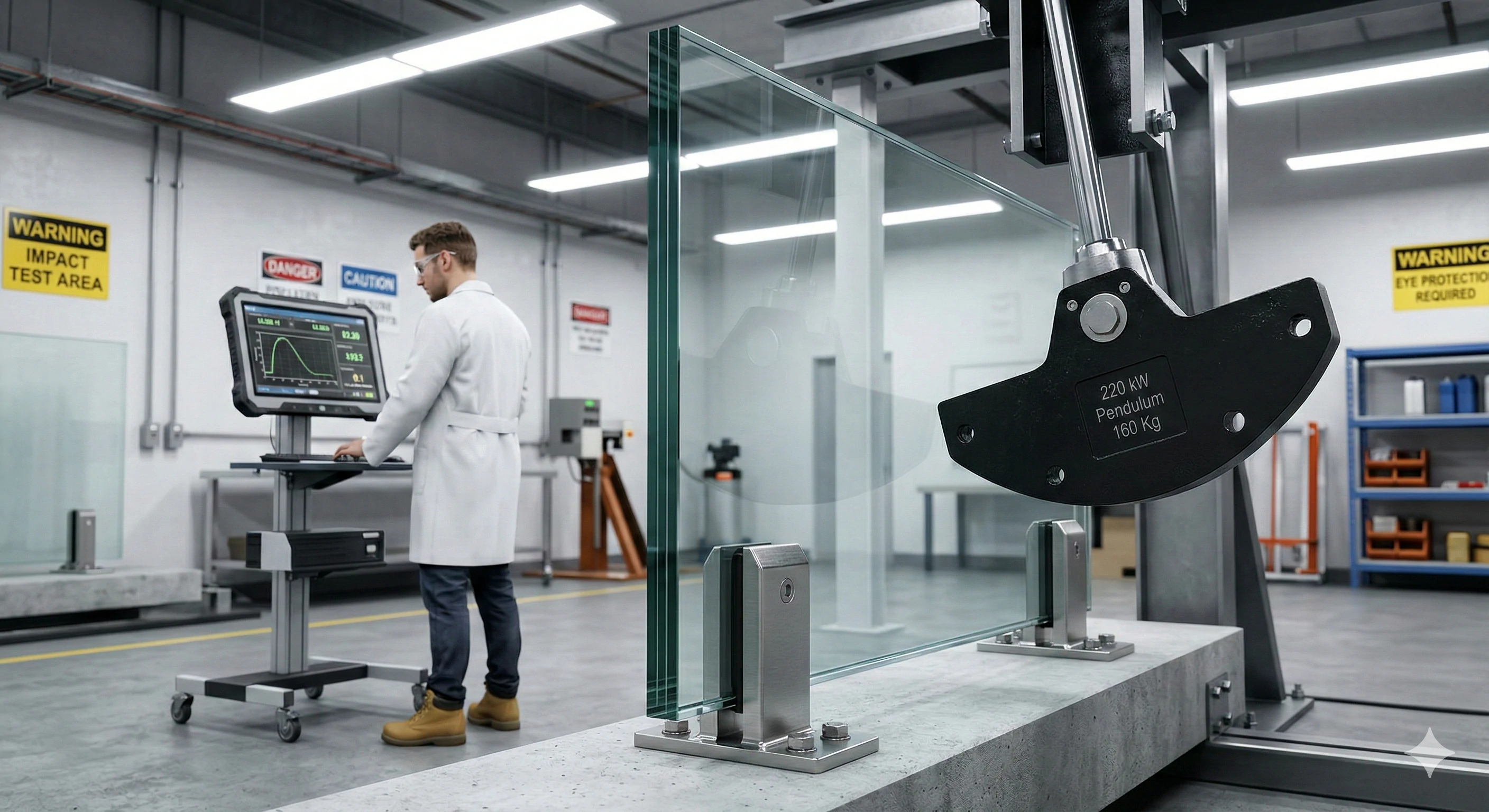
The reality is far more reassuring than our basic instincts suggest. This guide breaks down the true strength levels of modern panels, how they are rigorously tested, and why the anchoring system is actually the most critical factor in your overall safety .
The Baseline: Why Regular Glass (Annealed) Is Banned?
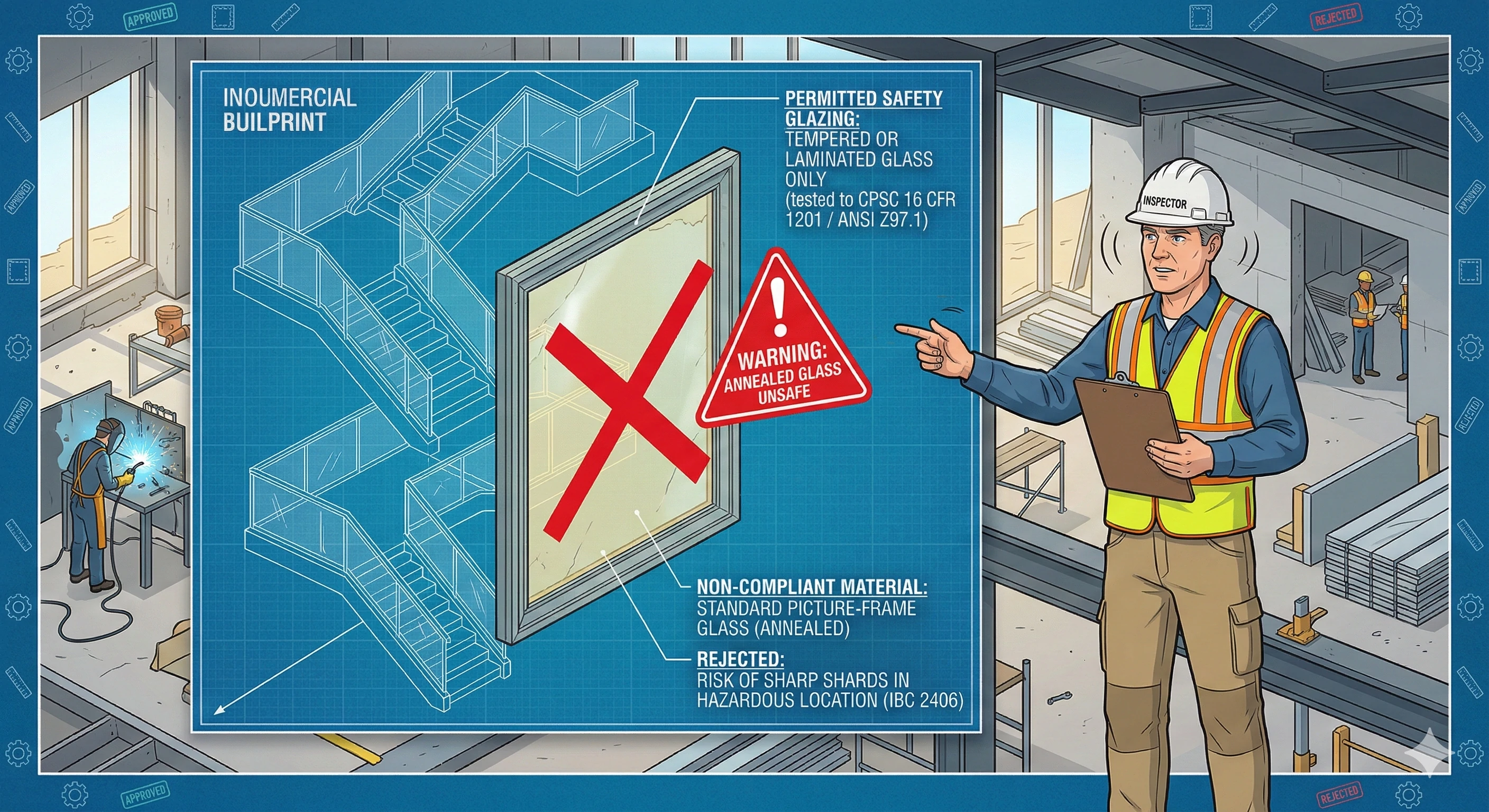
Before we ship any certified panels from our facility, we rigorously educate our partners on what materials to avoid entirely. You might wonder why the standard material used in old windows or picture frames is never seen in modern balcony projects. The answer comes down to severe safety risks that no responsible project manager can ignore. Are you unknowingly risking your project with the wrong material?
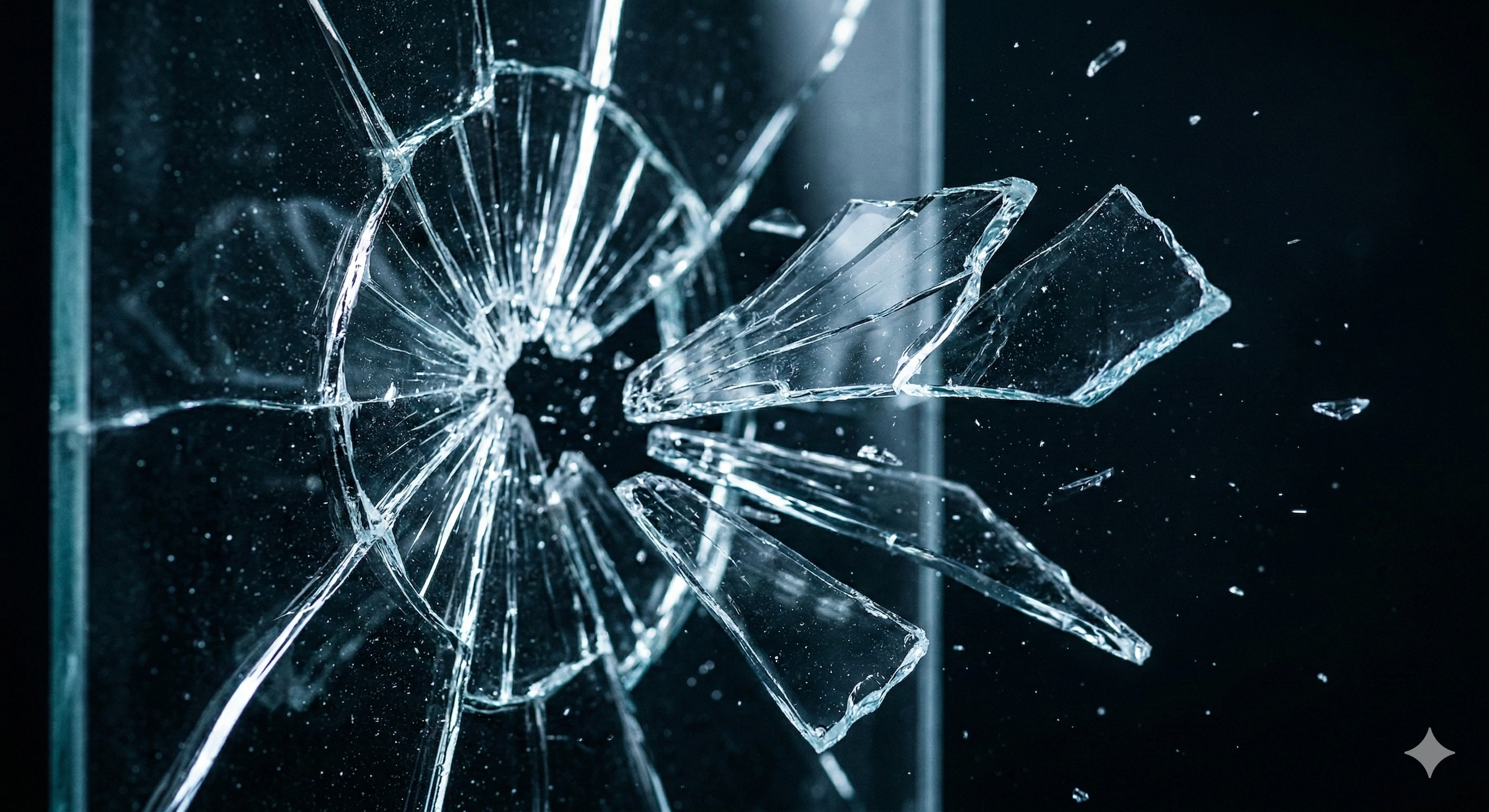
Regular annealed glass breaks easily under low impact and shatters into large, razor-sharp, guillotine-like shards. Because it possesses zero structural rating, building codes strictly prohibit its use in modern railings, doors, or low windows.
Understanding the baseline helps us appreciate modern engineering. Annealed glass is essentially the rawest form of the material. When it cools down during the basic manufacturing process, it does so slowly and without any special thermal treatments. This leaves it relatively weak against any form of physical stress or environmental pressure. If a heavy object strikes it, the energy travels directly through the pane, causing it to fail instantly and catastrophically. The resulting fragments are massive and incredibly dangerous.
The Dangers in Construction
In the past, many injuries occurred because people accidentally walked into or fell against these fragile panes. The large shards act like heavy blades when they fall. This is exactly why stepped in. Today, no legitimate building code allows this basic material anywhere near areas where human safety is a factor, such as staircases or elevated platforms.
Comparison of Basic Properties
To better understand why we never use it for structural purposes, consider how it compares to the upgraded versions we produce daily.
| Material Type | Structural Rating | Breakage Pattern | Safe for Railings |
|---|---|---|---|
| Annealed | Zero | Large, sharp shards | No |
| Tempered | High | Small, dull pebbles | Yes |
| Laminated | Very High | Sticks to interlayer | Yes |
We always advise our clients to ensure their local contractors are not cutting corners by installing unrated panes in critical zones. The risk simply outweighs any initial cost savings.
Level 1: Tempered (Toughened) Glass – The Workhorse
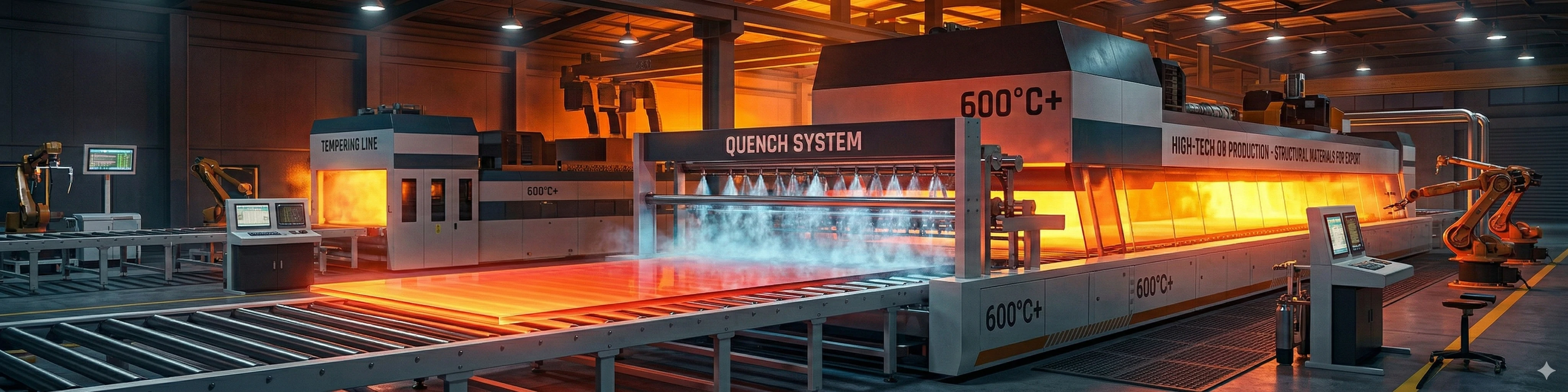
When we run panels through our high-temperature tempering furnaces, we witness a fascinating transformation in the material's internal structure. This process is the foundation of modern architectural safety, providing the necessary durability for everyday commercial and residential applications. Have you ever wondered what makes these panels strong enough to stop a person in their tracks?
Tempered glass is heated to over 600°C and blasted with cold air, making it four to five times stronger than regular glass. If broken, extreme internal tension causes it to instantly explode into thousands of tiny, dull pebbles, preventing serious injury.
The process is a marvel of industrial physics. By heating the material to extreme temperatures and then rapidly cooling the exterior surfaces, we force the outer layers into a state of extreme compression. Meanwhile, the inner core remains in a state of tension. This invisible push-and-pull dynamic gives the final product its incredible resilience.
Everyday Impact Resistance
To put this into perspective, a standard half-inch (12mm) thick tempered panel can comfortably withstand a grown adult running full speed directly into it. It is also highly resistant to smaller impacts. For example, a bird flying into a balcony railing will absolutely not break it. It requires a severe, concentrated strike from a very hard, sharp object, like a hammer or a ceramic spark plug, to actually breach the surface tension.
Managing Spontaneous Breakage
Sometimes, clients ask why a pool fence might shatter seemingly out of nowhere. This rare event, known as spontaneous breakage, usually stems from uneven hardware tightening that stresses the vulnerable edges. Alternatively, a microscopic nickel-sulfide inclusion from the raw manufacturing phase can expand when heated by direct sunlight.
| Feature | Tempered Glass Benefit |
|---|---|
| Impact Strength | 4 to 5 times stronger than annealed glass |
| Breakage Pattern | Tiny, safe pebbles that prevent cuts |
| Common Usage | Pool fences, standard indoor stair railings |
Proper edge finishing and precise hardware alignment during installation drastically reduce any risk of unexpected failure.
Level 2: Laminated Glass – The High-Rise Standard
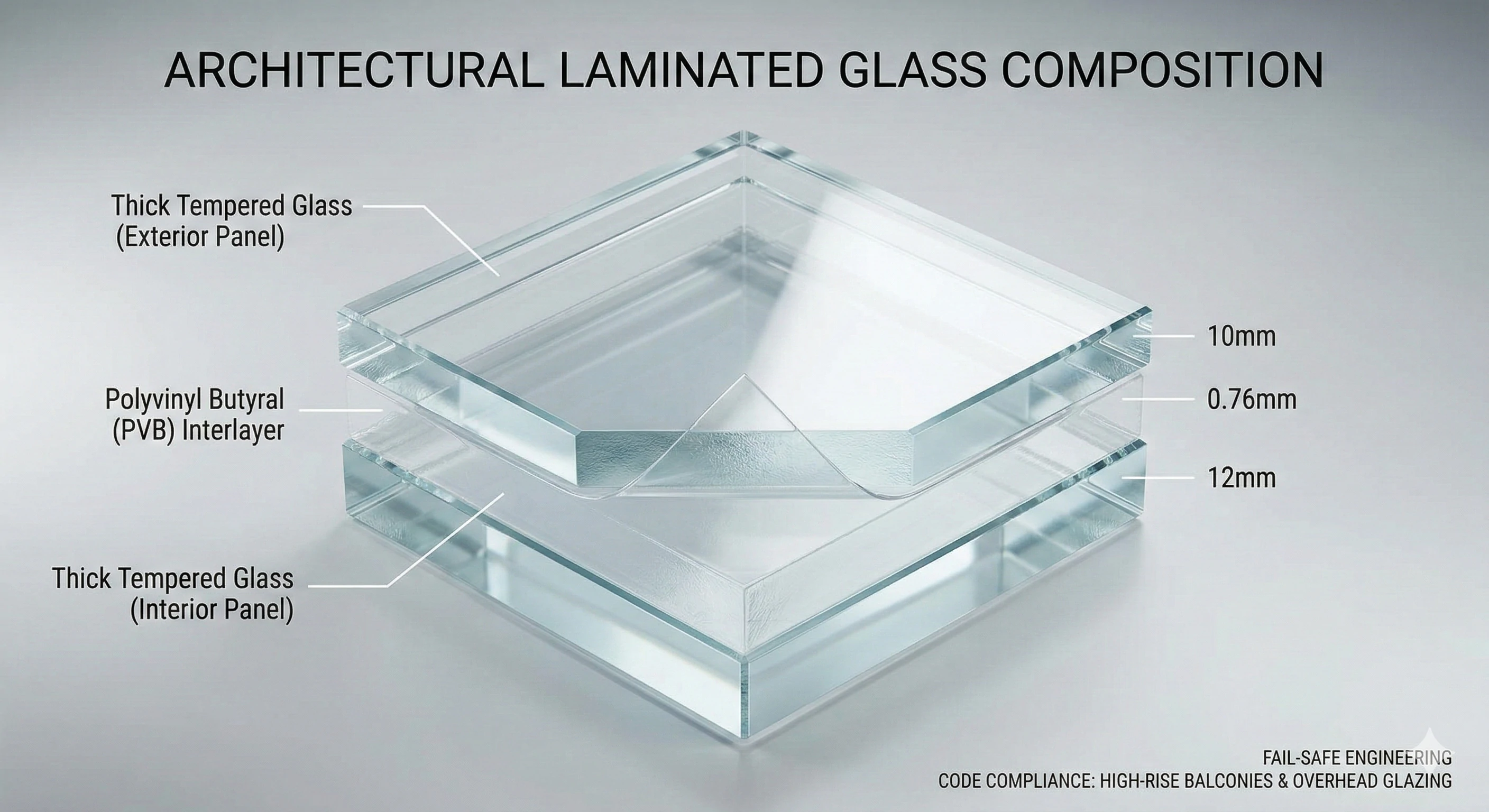
In our experience supplying major commercial projects, high-altitude installations demand an entirely different approach to safety. When dealing with high-rise balconies, the risk of falling debris is a primary concern that standard toughened panes alone cannot solve. How do we ensure that a shattered panel does not rain down on the streets below?
Laminated glass sandwiches a tough plastic interlayer, typically Polyvinyl Butyral, between two tempered panels. If both panes shatter, the broken pebbles remain firmly glued to the plastic, keeping the panel safely in place and preventing anyone from falling.
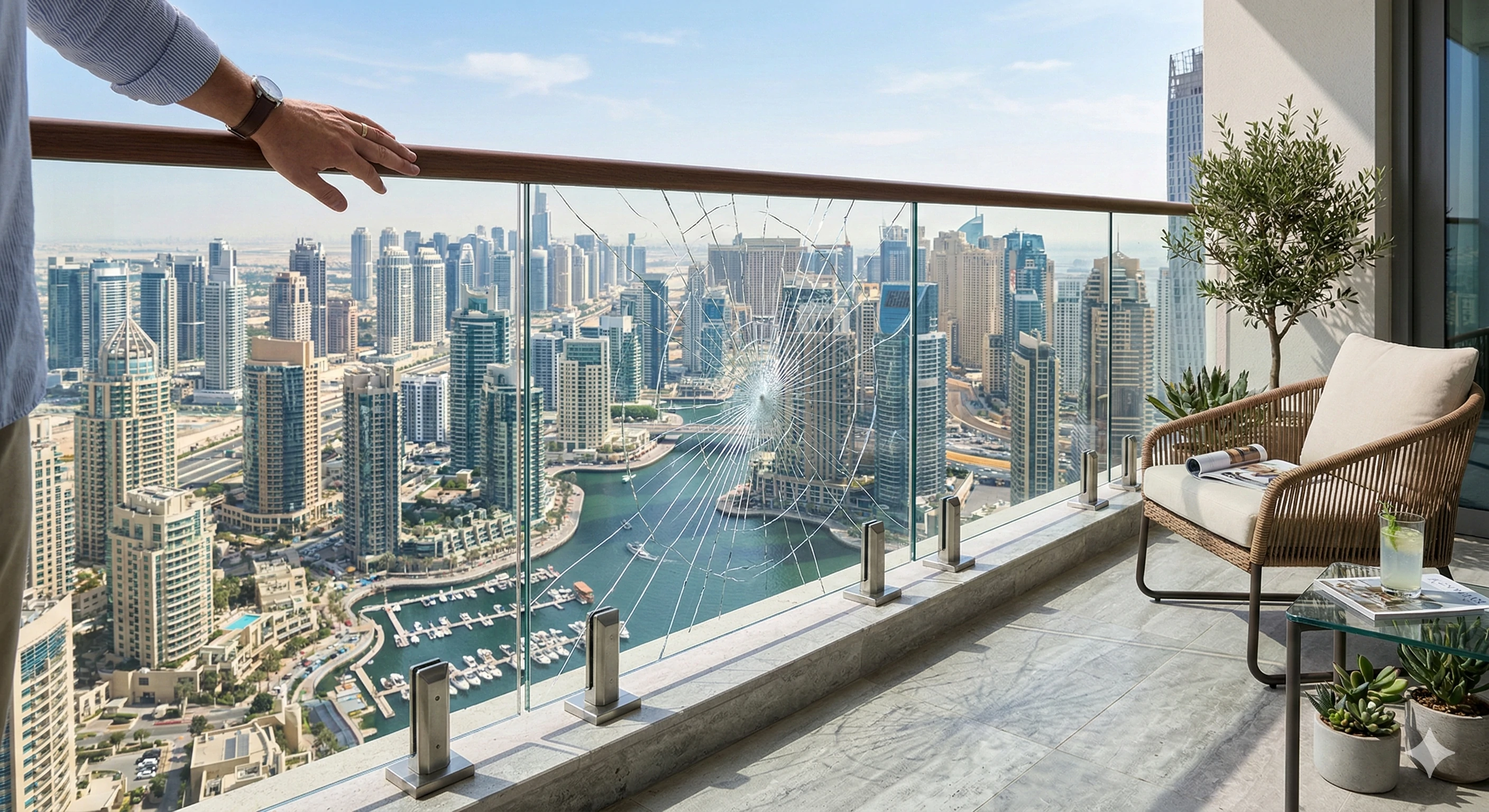
To easily understand this technology, think of a standard car windshield. Everyone knows that when a windshield is struck by a rock, it cracks but stays entirely in one solid piece. Architectural laminated panels use this exact same technology, just scaled up to be much thicker and stronger .
The Crucial Safety Upgrade
While this configuration offers the same initial impact resistance as standard toughened panes, it introduces a massive safety upgrade for elevated spaces. If an extreme force manages to break both layers of glass, the tough plastic core acts as a high-strength net. The broken fragments adhere strongly to this interlayer. This means the barrier remains intact, effectively preventing people or heavy objects from falling through the opening.
Mandatory Code Requirements
Because of this fail-safe mechanism, international building codes make this specific configuration mandatory for high-rise balconies and overhead glazing.
| Glass Layer | Function in Laminated System |
|---|---|
| Outer Tempered Pane | Resists initial weather and blunt force impacts |
| PVB Interlayer | Catches and holds broken fragments securely |
| Inner Tempered Pane | Provides secondary structural support |
We always verify that the lamination process is flawless in our factory, as any trapped air or moisture can compromise the clarity and strength of the final bond.
Level 3: SGP (SentryGlas) – The Hurricane Defender
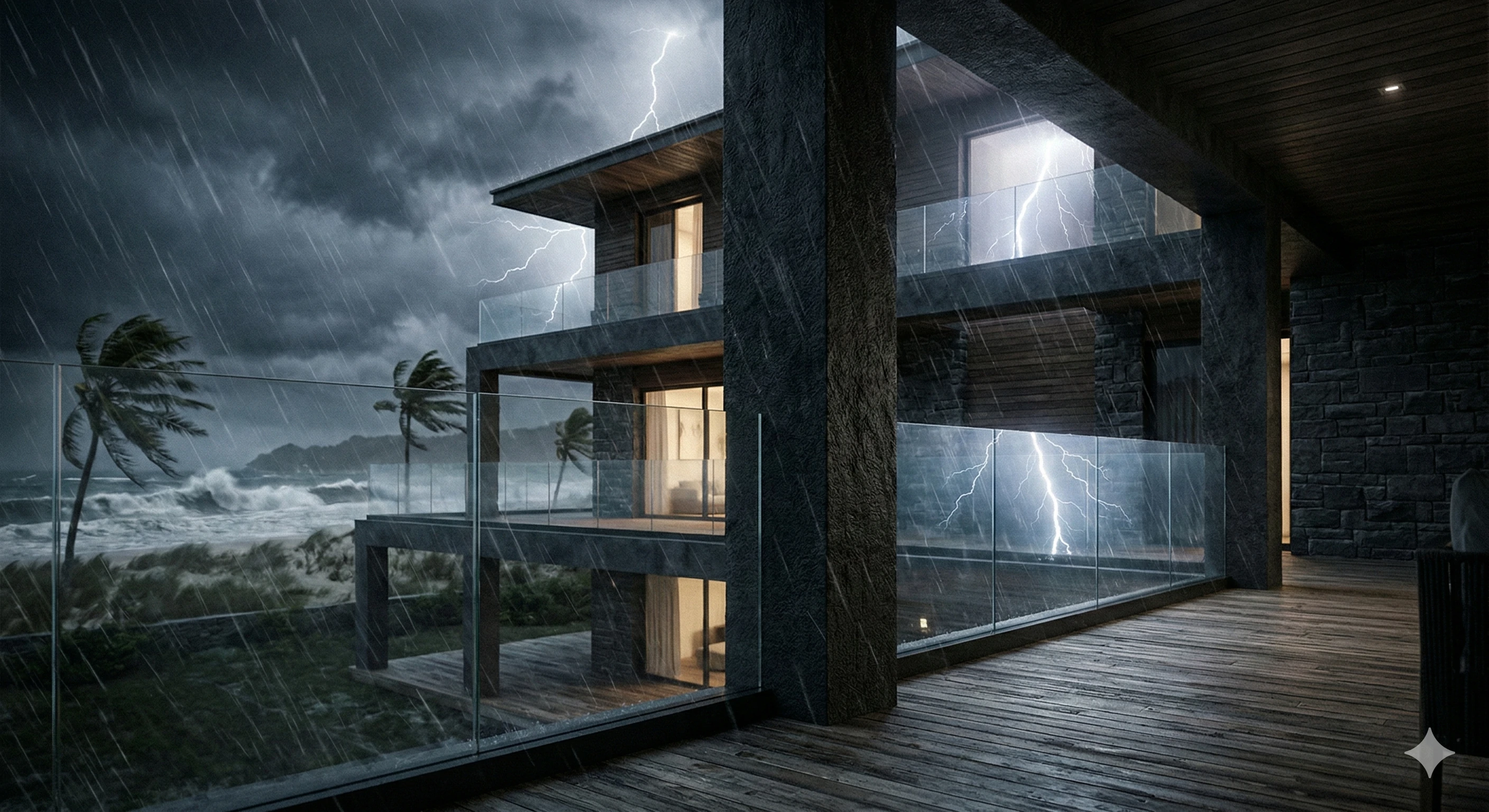
When consulting on projects located in extreme coastal weather zones, we frequently upgrade specifications to utilize advanced aerospace-grade materials. Standard PVB interlayers are excellent, but they have their limits under sustained, catastrophic wind pressures. What is the ultimate defense against Mother Nature's worst storms?
SGP, or SentryGlas, utilizes an ultra-stiff Ionoplast interlayer that is 100 times stiffer and five times stronger than standard PVB. If shattered, this rigid layer ensures the broken panel remains standing upright to bear heavy loads without sagging.
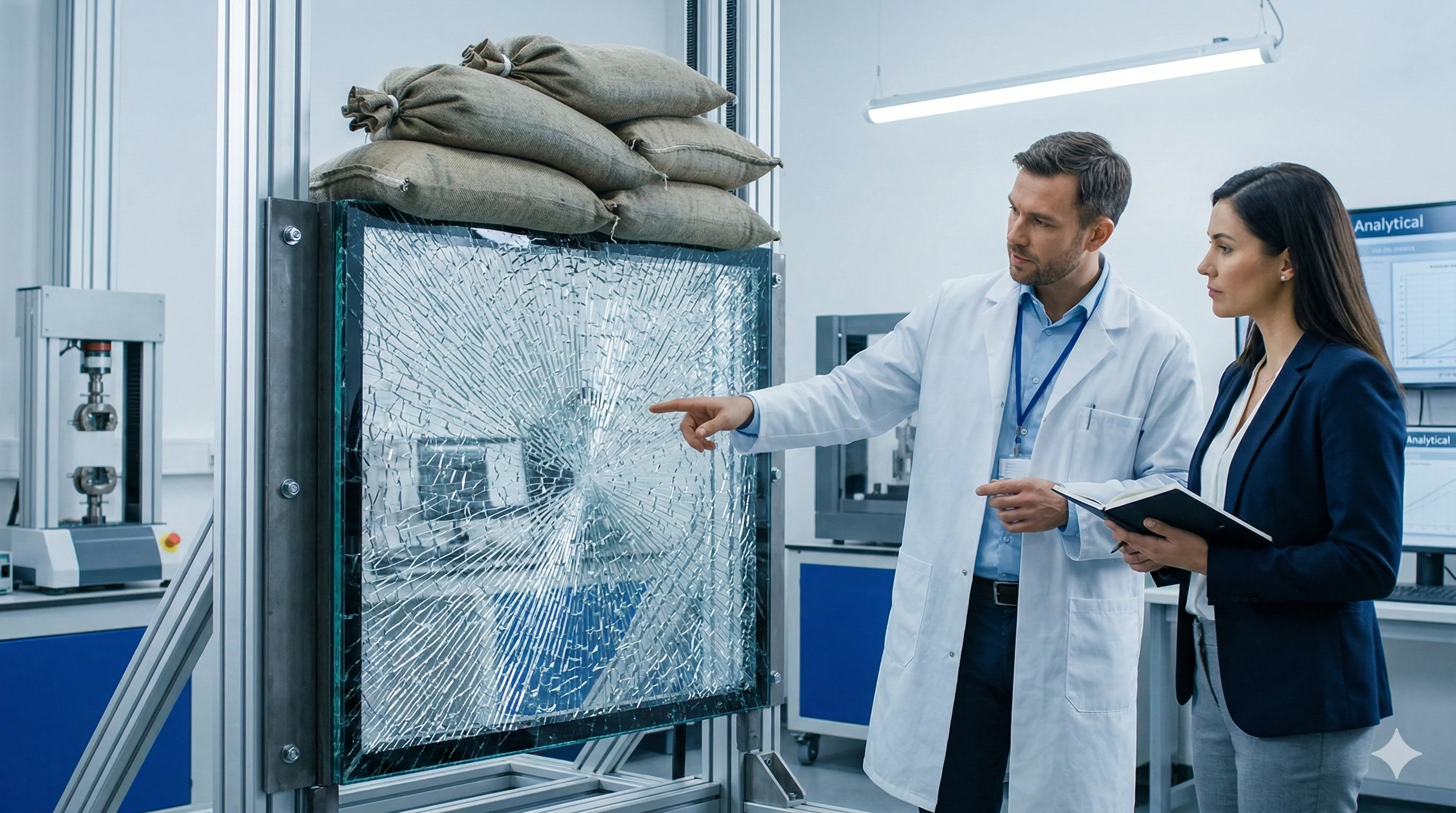
represents the absolute pinnacle of current architectural glazing technology. While PVB is flexible and rubbery, the Ionoplast material used in SGP is incredibly rigid. This stiffness completely changes how the panel behaves under extreme stress. It is specifically designed for the most demanding environments on earth, frequently used in hurricane zones and even blast-resistant military buildings.
The Engineering Magic
The true magic of SGP is revealed only after a catastrophic failure. If a massive impact manages to shatter both glass layers, a standard PVB panel might sag under its own weight or fold over if pushed. In contrast, the SGP plastic layer is so incredibly stiff that the broken panel will continue to stand completely upright. It will still act as a solid barrier and bear a significant load without giving way.
Superior Performance Comparison
For contractors and architects deciding between high-end options, the difference is clear in the data.
| Interlayer Material | Stiffness | Strength | Post-Breakage Behavior |
|---|---|---|---|
| Standard PVB | Baseline | Baseline | Holds glass, may sag |
| SGP (Ionoplast) | 100x Stiffer | 5x Stronger | Stands upright, bears load |
By incorporating this advanced interlayer, we can confidently supply materials for projects facing the strictest hurricane impact codes in the world, ensuring total peace of mind for the end user.
The Weakest Link: Why Do Glass Railings Fail?
During our failure analysis investigations on third-party installations, we consistently find that the panels themselves are rarely the root cause of an accident. People often fear leaning on a balcony, assuming their body weight might push the barrier over. Why do these incredibly tough barriers occasionally crack and fail?
Architectural glass rarely breaks from human weight; it primarily fails due to point loading or hardware deflection. Cheap metal clamps pressing directly against the pane or weak aluminum mounts twisting in the wind easily shatter structural panels.
Understanding how these strong materials fail is crucial for building safe structures. Glass is exceptionally good at handling immense compression forces, meaning you can press flat against it with incredible weight. However, it absolutely cannot handle twisting or bending forces.
The Danger of Point Loading
The first major issue is point loading. This occurs when a cheap metal clamp presses directly into the pane without a proper, high-quality rubber gasket cushioning it. The hard steel creates a microscopic, concentrated point on the surface. When the temperature inevitably changes between day and night, the materials expand and contract at different rates, causing the stressed pane to crack instantly.
Hardware Deflection Risks
The second common cause is hardware deflection. If a strong wind blows and a cheap, hollow aluminum base spigot bends, it forces the entire rigid panel to twist. Because the pane cannot flex to accommodate this twist, it shatters.
Common Points of Failure
| Failure Cause | Mechanism | Prevention Strategy |
|---|---|---|
| Point Loading | Hard metal touches glass | Premium rubber gaskets |
| Deflection | Mounts bend under wind | Solid cast stainless mounts |
| Edge Stress | Uneven clamp tightening | Precision torque installation |
Our goal is always to educate installers that the most beautiful, highest-grade panel in the world is useless if mounted on inferior fittings.
The Hardware Equation: Securing the "Invisible Wall"
In our foundry, we focus heavily on the structural integrity of the entire system, knowing that the foundation dictates the success of a project. A barrier is fundamentally only as strong as the anchors holding it to the ground. How do we guarantee that the foundation will never compromise the structural panels above it?
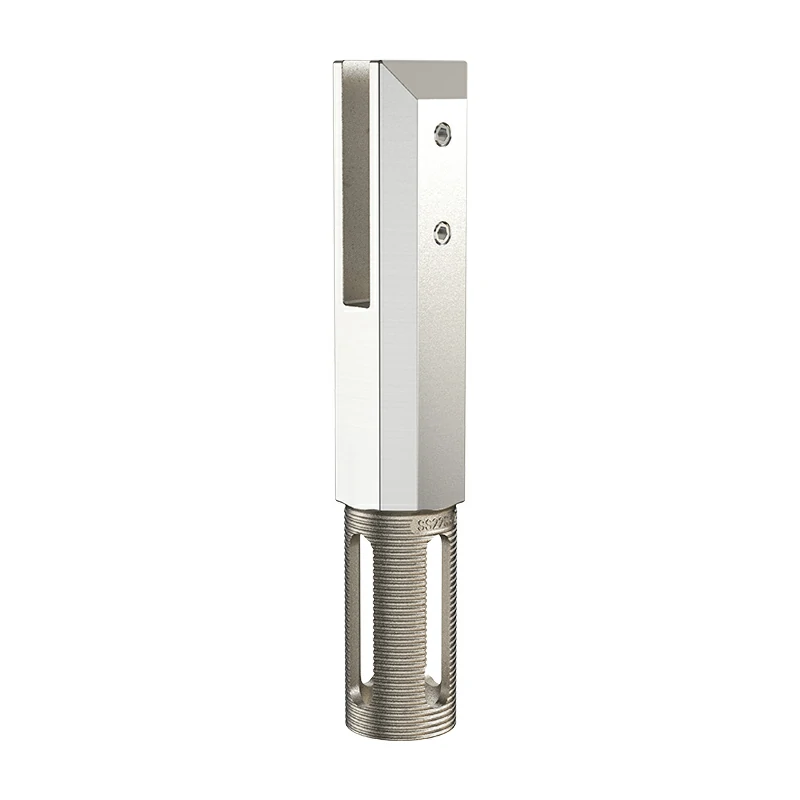
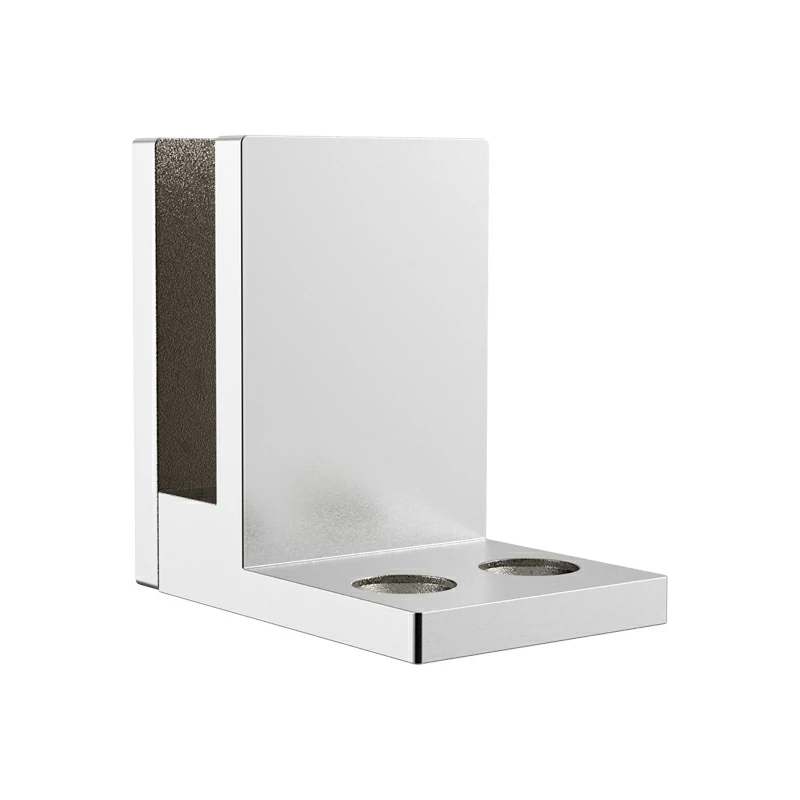
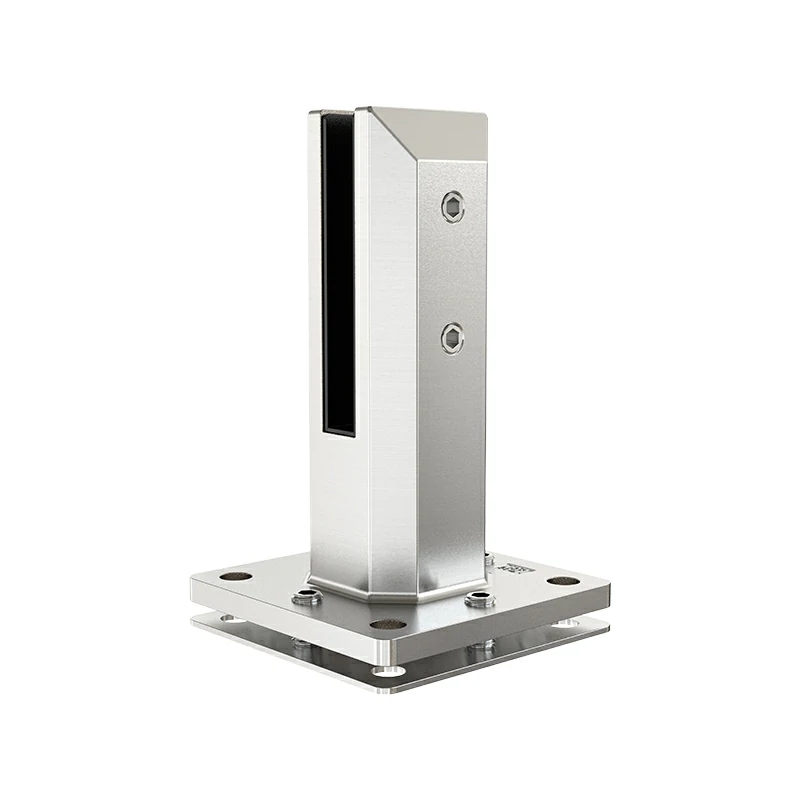
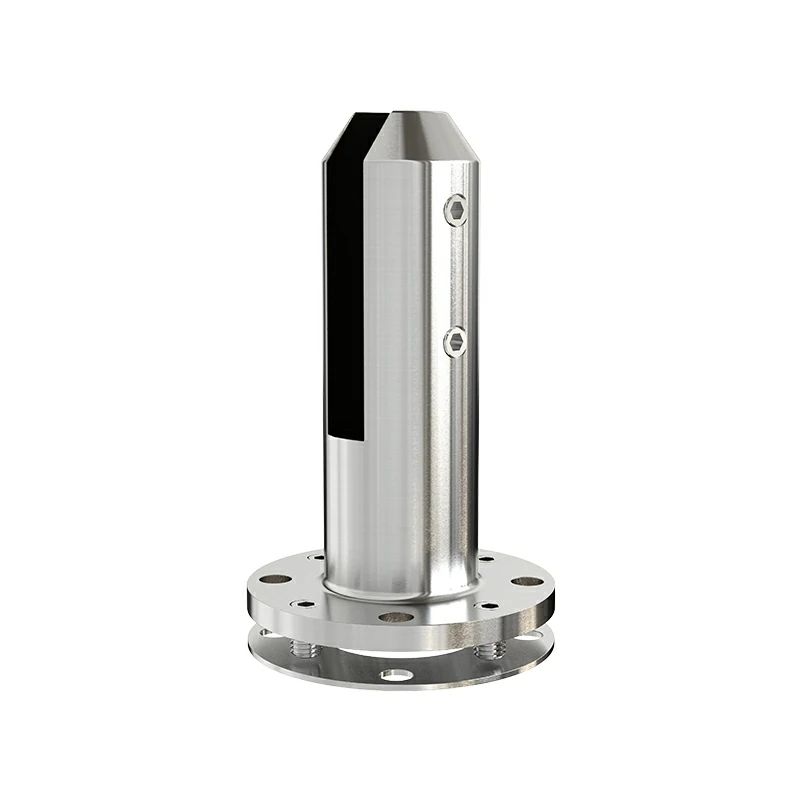
We manufacture solid investment cast stainless steel spigots and standoffs that will not bend under heavy wind loads. Combined with precision-engineered EPDM gaskets, our hardware perfectly distributes clamping pressure to eliminate point loading and prevent twisting.
To meet strict international safety standards, the anchoring system must be flawless. Under the , a structural barrier must be capable of withstanding a concentrated load of 200 lbs applied at any point along the top edge, or a uniform load of 50 lbs per linear foot, entirely without failing. Thick toughened panes easily exceed these limits, but only when properly mounted.
Solid Casting vs. Hollow Tubes
We specifically utilize solid , in premium grades, rather than hollow or extruded aluminum. Solid cast steel provides unmatched rigidity, ensuring the mounts will not deflect or bend even under extreme weather events. This absolute rigidity is what protects the barrier from the twisting forces that lead to catastrophic shattering.
Precision Friction Fitting
Furthermore, how the mount grips the panel is just as important as its strength. We use precision-engineered EPDM gaskets to create a secure friction fit. These high-quality rubber insulators distribute the clamping pressure perfectly and evenly across the surface area, completely eliminating the risk of dangerous point loading.
| Hardware Component | Function | Material Quality |
|---|---|---|
| Spigots & Standoffs | Anchors panel to floor | Solid Cast Stainless Steel |
| Gaskets | Cushions grip, stops point loads | Precision EPDM Rubber |
By investing heavily in the manufacturing quality of these small but mighty components, we secure the entire "invisible wall" for decades of safe use.
Conclusion
Modern architectural glass is remarkably strong, engineered to easily stop severe impacts, crowd pressure, and heavy winds. However, as we have explored, that incredible strength is entirely dependent on the quality and rigidity of the hardware anchoring it to the ground.
Don't trust heavy architectural structures to cheap, hollow hardware that puts your project at risk. We manufacture heavy-duty, marine-grade stainless steel fittings designed specifically to meet strict international safety codes. Request a quote for your next project to ensure total compliance and peace of mind.
Footnotes
1. Standards for determining the wind and load resistance of architectural glass panels.
2. Official regulatory codes for international building safety and structural requirements.
3. Technical explanation of how thermal tempering increases the strength of glass panels.
4. Safety standards and testing protocols for architectural glazing materials used in hazardous locations.
5. Engineering data regarding Polyvinyl Butyral (PVB) interlayers for high-strength laminated glass.
6. Learn about Ionoplast interlayers designed for hurricane zones and high-security applications.
7. Scientific overview of how stress concentrations lead to structural failure in rigid materials.
8. Detailed load requirements for railings and barriers under the latest building codes.
9. Explanation of the investment casting process used to create high-durability hardware.