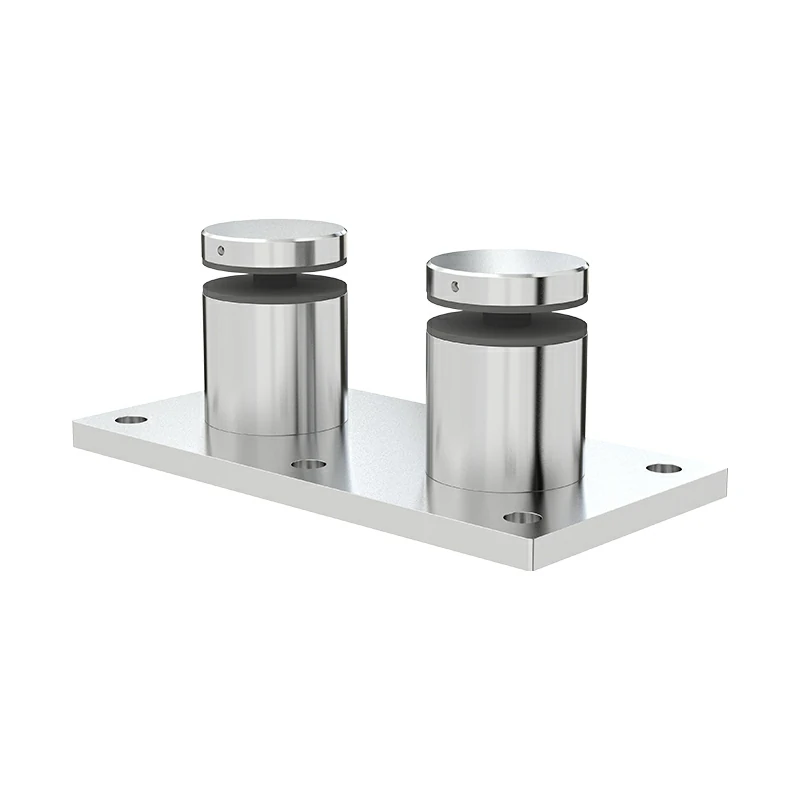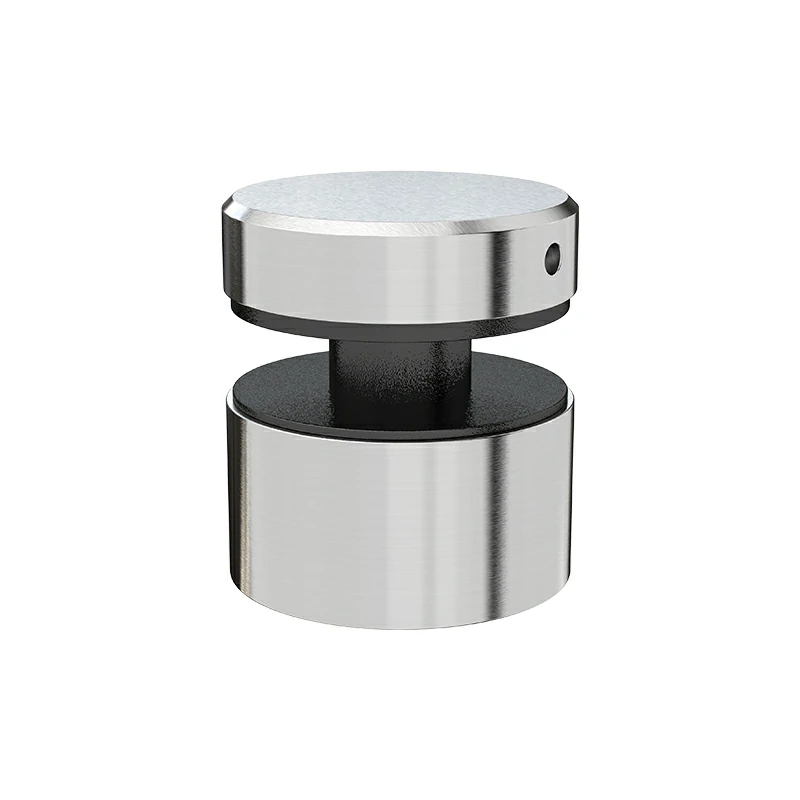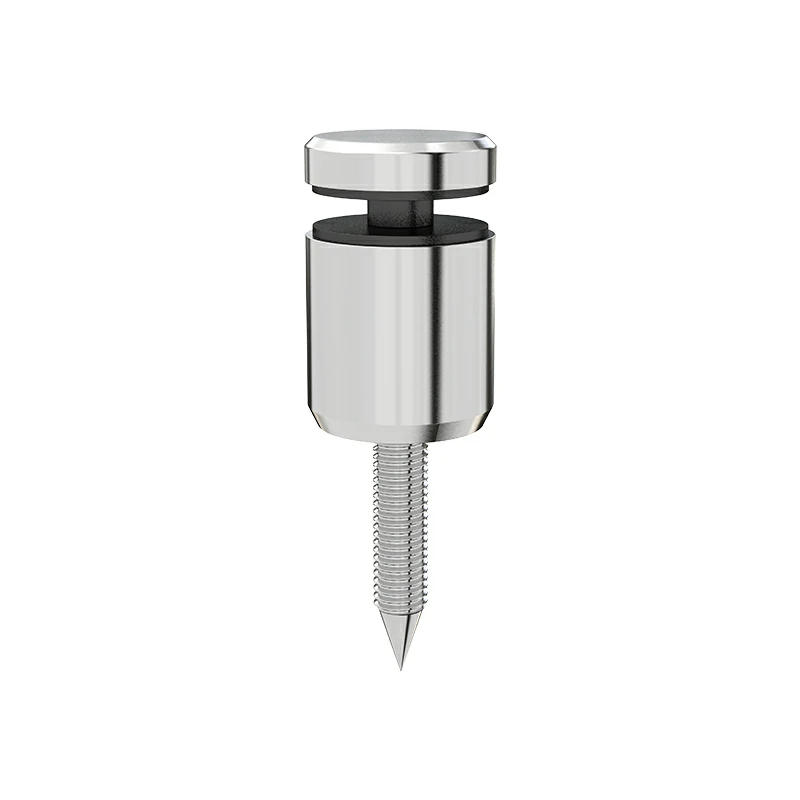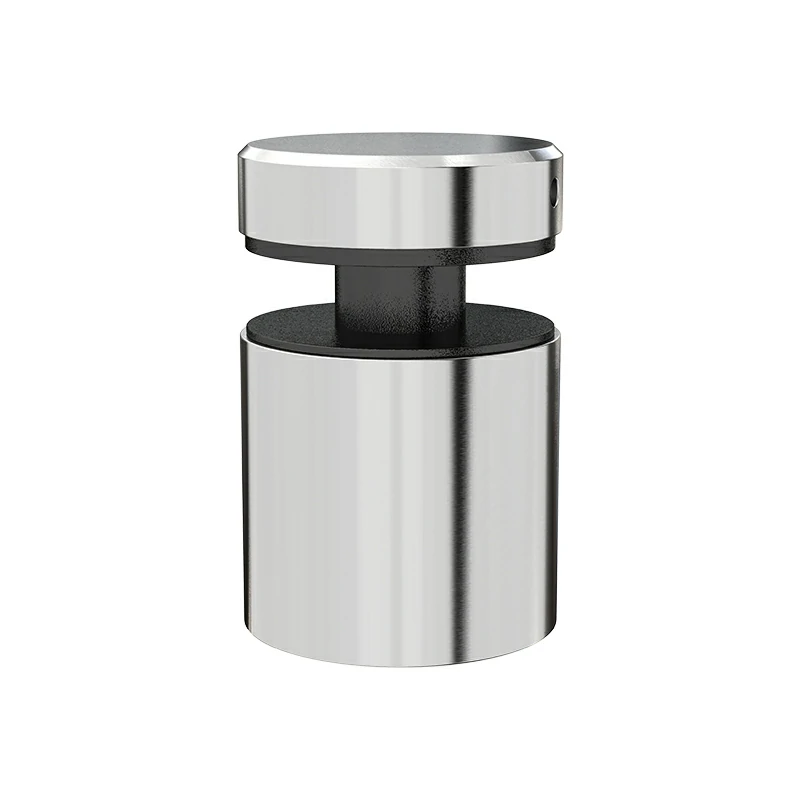
What Is a Glass Standoff?
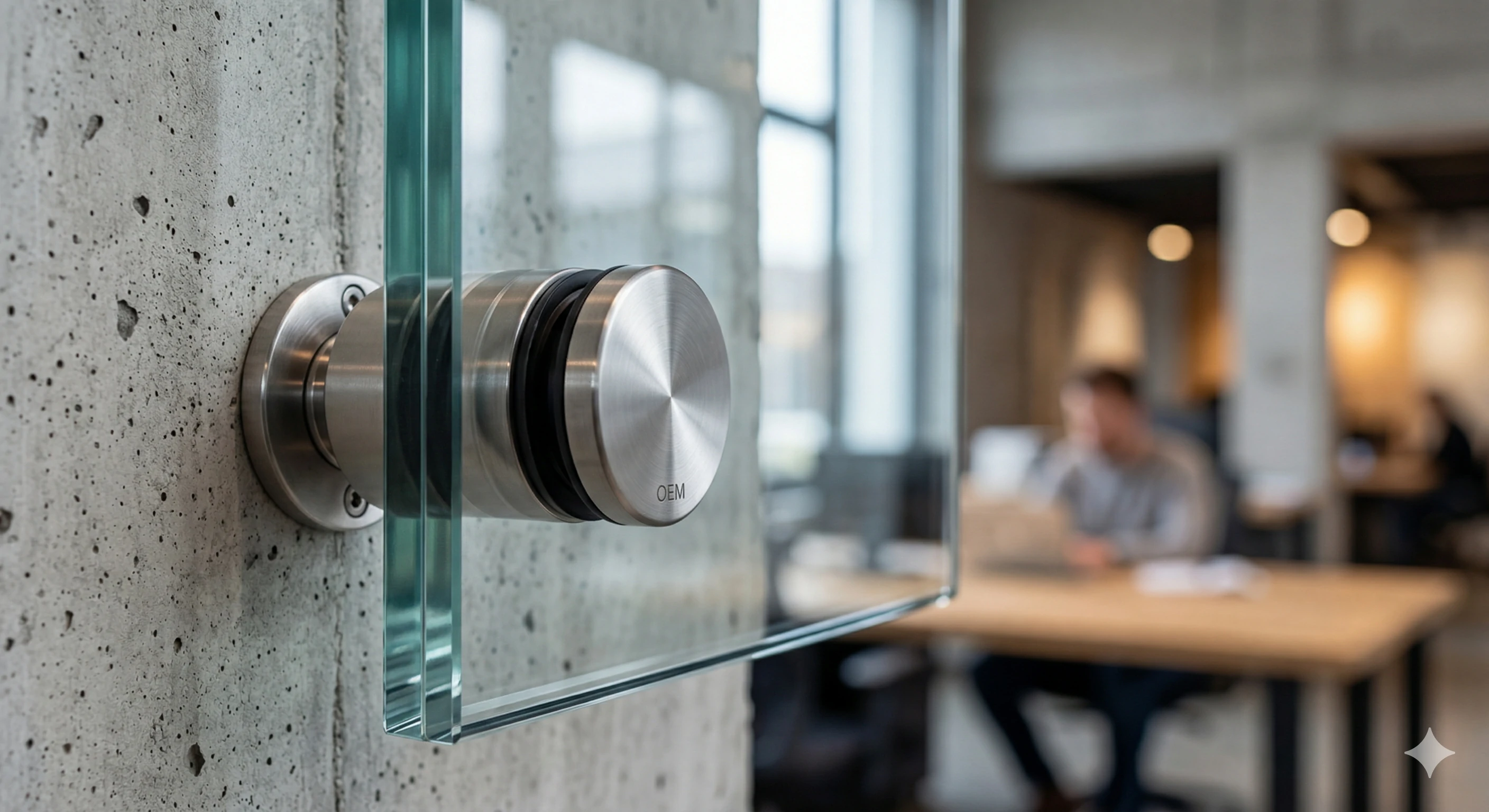
A glass standoff is a specialized piece of mounting hardware designed to secure glass panels while holding them at a fixed distance from a wall, post, or other structural surface. The result is a clean, "floating" effect that has become a defining feature of .
At their core, standoffs are cylindrical fasteners — typically made from stainless steel, brass, or aluminum — that pass through pre-drilled holes in the glass. They clamp the glass securely between a base and a cap, creating a rigid connection that distributes weight evenly and prevents stress points from forming.
You will find glass standoffs in everything from sleek balcony railings and frameless stair guards to corporate signage and retail displays. Their versatility makes them one of the most widely used hardware components in the glass industry.

How Glass Standoffs Work
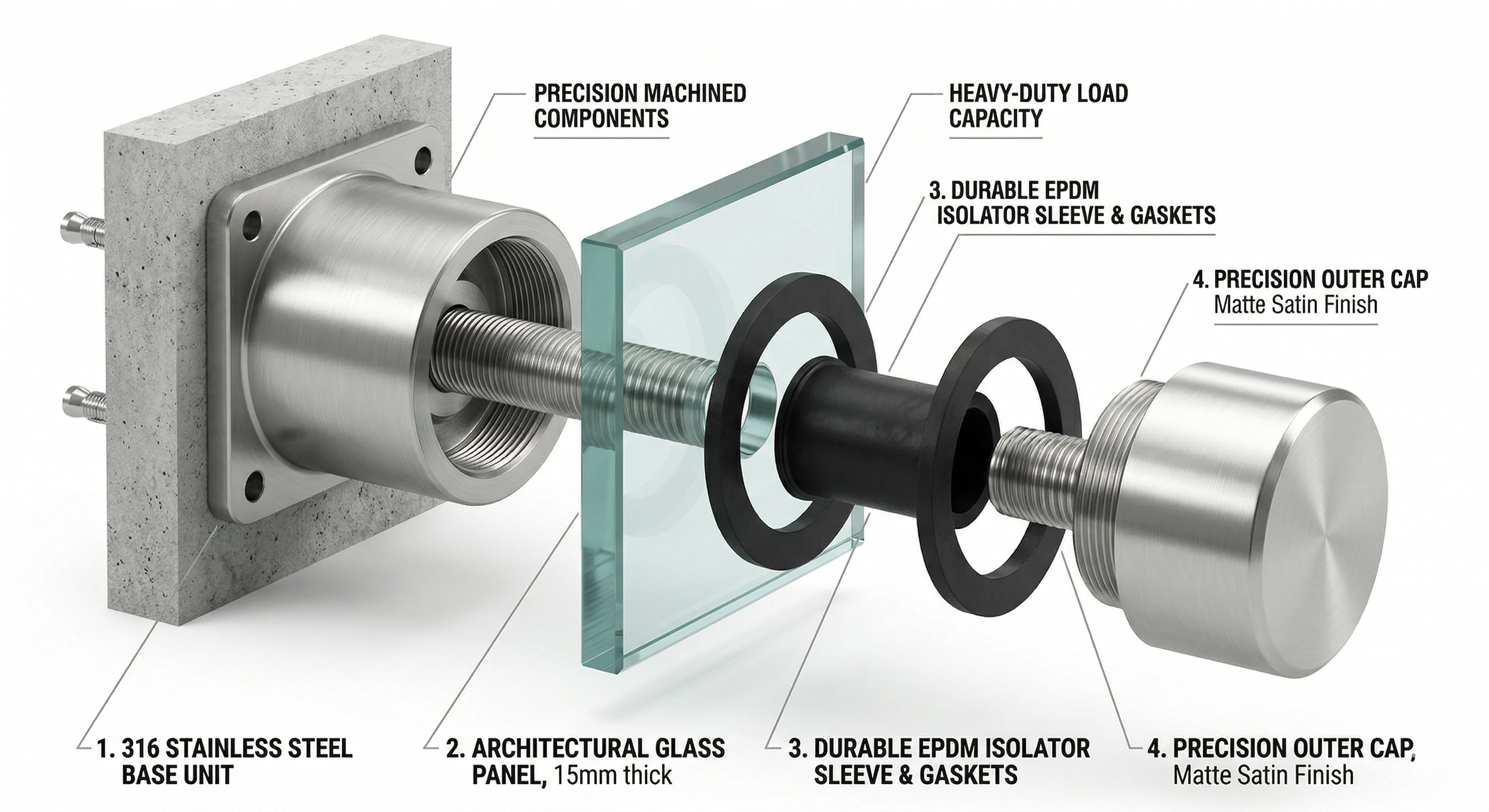
Every glass standoff system consists of three core components that work together to create a secure, visually clean attachment.
The base (or barrel) is the cylindrical body that anchors into the mounting surface — whether that is a wall, a post, a concrete slab, or a wood fascia. It typically accepts a hanger bolt or expansion anchor, depending on the substrate.
The sleeve or spacer sits between the base and the glass. This component sets the offset distance (usually between 1/2 inch and 2 inches) and often includes a rubber or vinyl isolator that cushions the glass and prevents metal-on-glass contact.
The cap screws onto the barrel from the opposite side of the glass, sandwiching the panel in place. Caps come in low-profile and standard-profile options, and they are often the most visible part of the assembly — which is why finish selection matters.
When installed correctly, these three parts create a clamping force that holds each glass panel firmly without creating localized stress that could lead to cracking.

Types of Glass Standoffs
Choosing the right standoff type is one of the most important decisions you will make during a glass installation project. Each type serves a slightly different purpose.
Round Standoffs
Round standoffs are by far the most popular shape on the market. Their smooth, cylindrical profile blends easily into both traditional and contemporary designs. Diameters typically range from 1 inch to 2 inches, and they are available in virtually every finish imaginable.
Use round standoffs when you want a classic, understated look that will not compete with the glass itself.
Square Standoffs
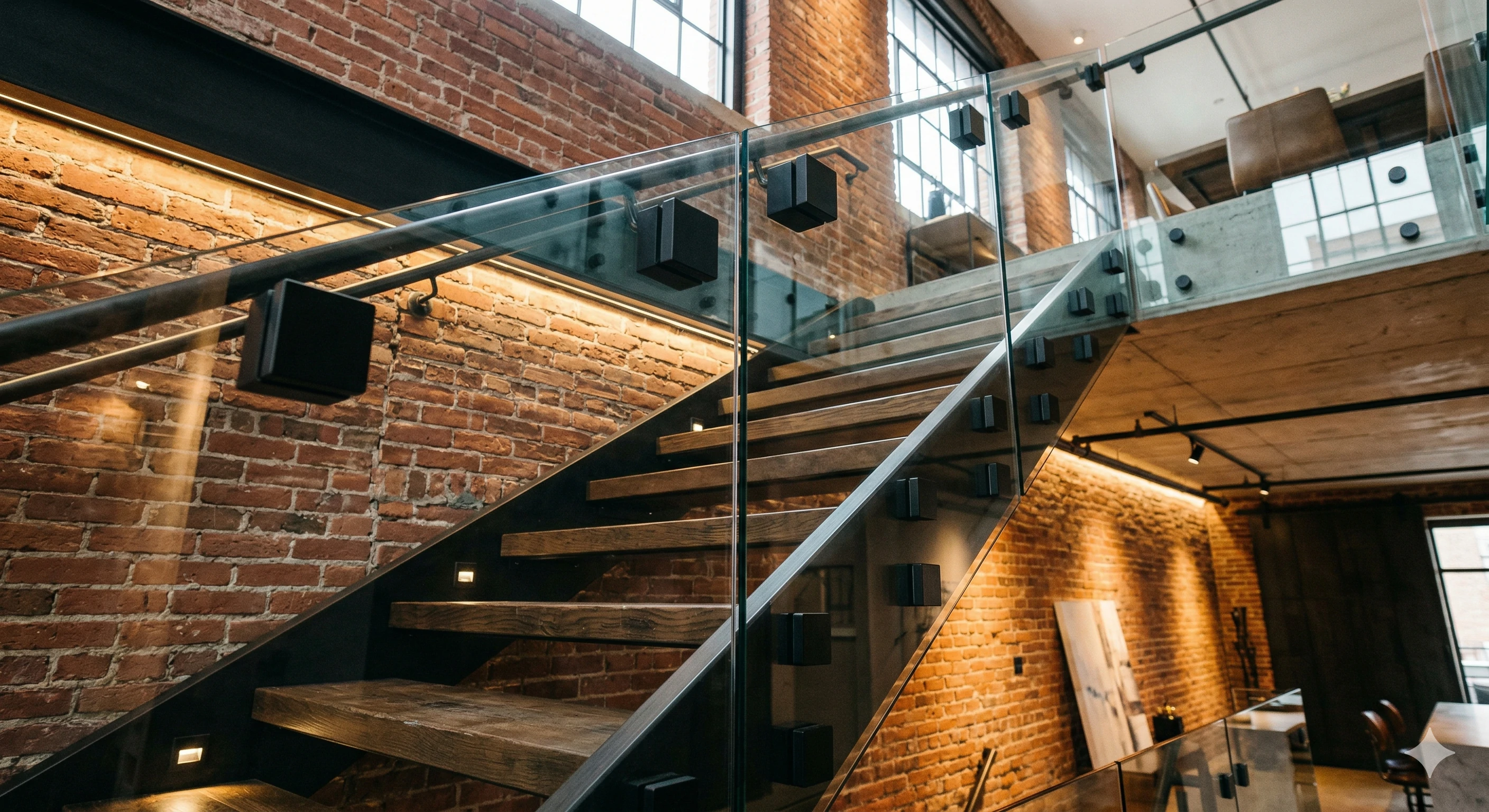
Square standoffs deliver a bolder, more geometric aesthetic. Their angular lines complement industrial lofts, modern office spaces, and architectural projects that feature hard edges and straight lines. They are slightly more challenging to align during installation, but the visual payoff is worth the extra effort.
Adjustable Standoffs
Adjustable standoffs are a game-changer for projects where the mounting surface is uneven. They allow you to fine-tune the glass projection — often by up to 1/2 inch (12 mm) — without removing and re-drilling the panel. CRL's Adjustable Standoff Railing System, for example, features concealed adjustment threads that maintain a clean look while giving installers the ability to align panels precisely.
If you are working on an exterior deck with wood framing that has settled over time, adjustable standoffs will save you hours of frustration.
Edge Grip Standoffs
Edge grip standoffs for glass take a fundamentally different approach: instead of passing through a hole in the glass, they clamp onto the edge of the panel. This eliminates the need for pre-drilled holes entirely, which simplifies fabrication and reduces the risk of breakage during manufacturing.
Edge grips are ideal for signage, display cases, and interior partitions where the glass does not need to meet guardrail load requirements.
Flush Mount Standoffs
Flush mount standoffs sit closer to the mounting surface than standard models, creating a low-profile appearance. They work well in applications where you want the glass to appear as close to the wall as possible while still maintaining the floating effect.
Slot Mount Standoffs
Slot mount standoffs accommodate glass panels with slotted cutouts rather than round holes. They offer slightly more flexibility during installation because you can slide the glass horizontally to fine-tune its position before tightening the cap.
Materials and Finishes
The material you choose for your glass standoffs directly affects durability, corrosion resistance, and long-term appearance.
Stainless Steel
Stainless steel is the industry standard for structural glass standoff applications. Within this category, two grades dominate:
304 stainless steel offers excellent corrosion resistance for interior applications and mild exterior environments. It is the most cost-effective option for the majority of projects.
316 stainless steel (often called "marine grade") contains molybdenum, which significantly improves resistance to salt spray and chloride corrosion. If your project is near the coast, around a swimming pool, or in any high-moisture environment, 316 is the only responsible choice.
Brass
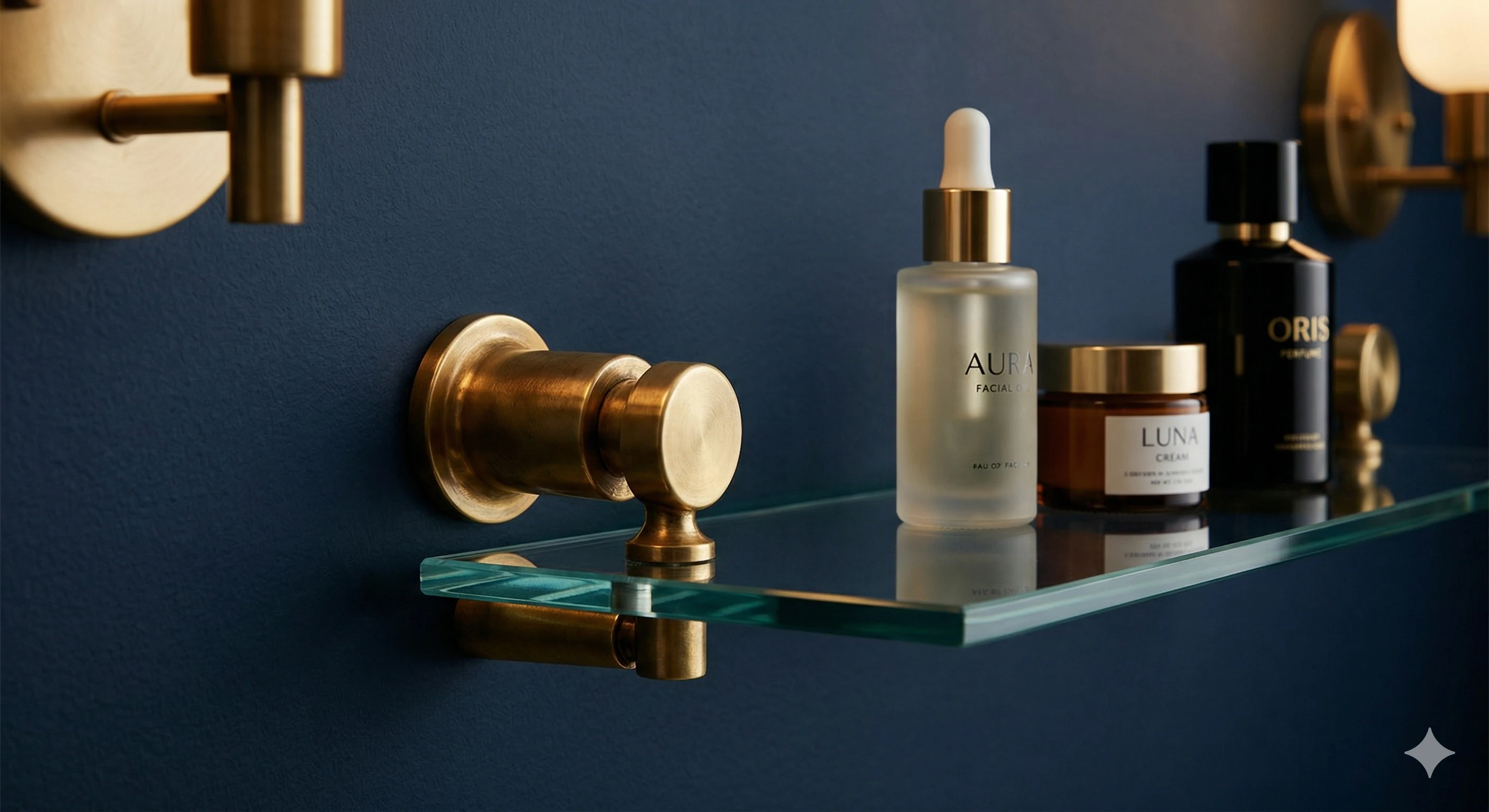
Brass standoffs deliver a warm, golden tone that pairs beautifully with traditional or transitional interiors. They are strong and , though they will develop a patina over time unless sealed or lacquered.
Aluminum
Aluminum standoffs are lightweight and affordable. They work well for signage and display applications where load requirements are modest. is sometimes used for structural railing standoff pins, where its high strength-to-weight ratio is an advantage.
Common Finishes
| Finish | Best For | Notes |
|---|---|---|
| Brushed / Satin | Contemporary interiors & exteriors | Hides fingerprints and minor scratches |
| Polished Chrome | High-end commercial spaces | Requires regular cleaning to maintain shine |
| Matte Black | Industrial and modern farmhouse | Powder coat offers best durability |
| Brushed Nickel | Residential bathrooms and kitchens | Warm, neutral tone |
| Powder Coat (Custom) | Color matching to surrounding elements | Available in virtually any RAL color |
Glass Standoff Mounts: Mounting Styles Explained
The term "glass standoff mounts" refers to how the standoff attaches to the structural surface. Your substrate determines which mounting method you need.
Side Mount (Fascia Mount)
Side-mounted standoffs anchor horizontally into the side of a deck fascia, balcony edge, or wall face. This is the most common configuration for glass railing systems because it keeps the walking surface completely clear. However, side mounting places significant lateral force on the fasteners, so adequate structural backing is essential.
Minimum substrate requirement: At least 3 to 4 inches of solid wood blocking behind the fascia, or a steel plate of appropriate thickness. Thin fascia boards and decorative trim are never acceptable mounting surfaces on their own.
Surface Mount (Top Mount)
Surface-mounted standoffs bolt vertically through a horizontal surface — typically a concrete slab, a steel beam, or the top of a knee wall. This orientation works with gravity rather than against it, which simplifies the engineering. It does, however, consume some of the usable floor or deck space.
Core Mount
Core-mounted standoffs are embedded directly into a concrete slab or masonry wall using . They offer the highest load capacity and are commonly specified for commercial projects where building codes demand rigorous structural performance.
Common Applications
Glass standoffs serve a remarkable range of functions across residential, commercial, and industrial settings.
Glass Railings and Guardrails
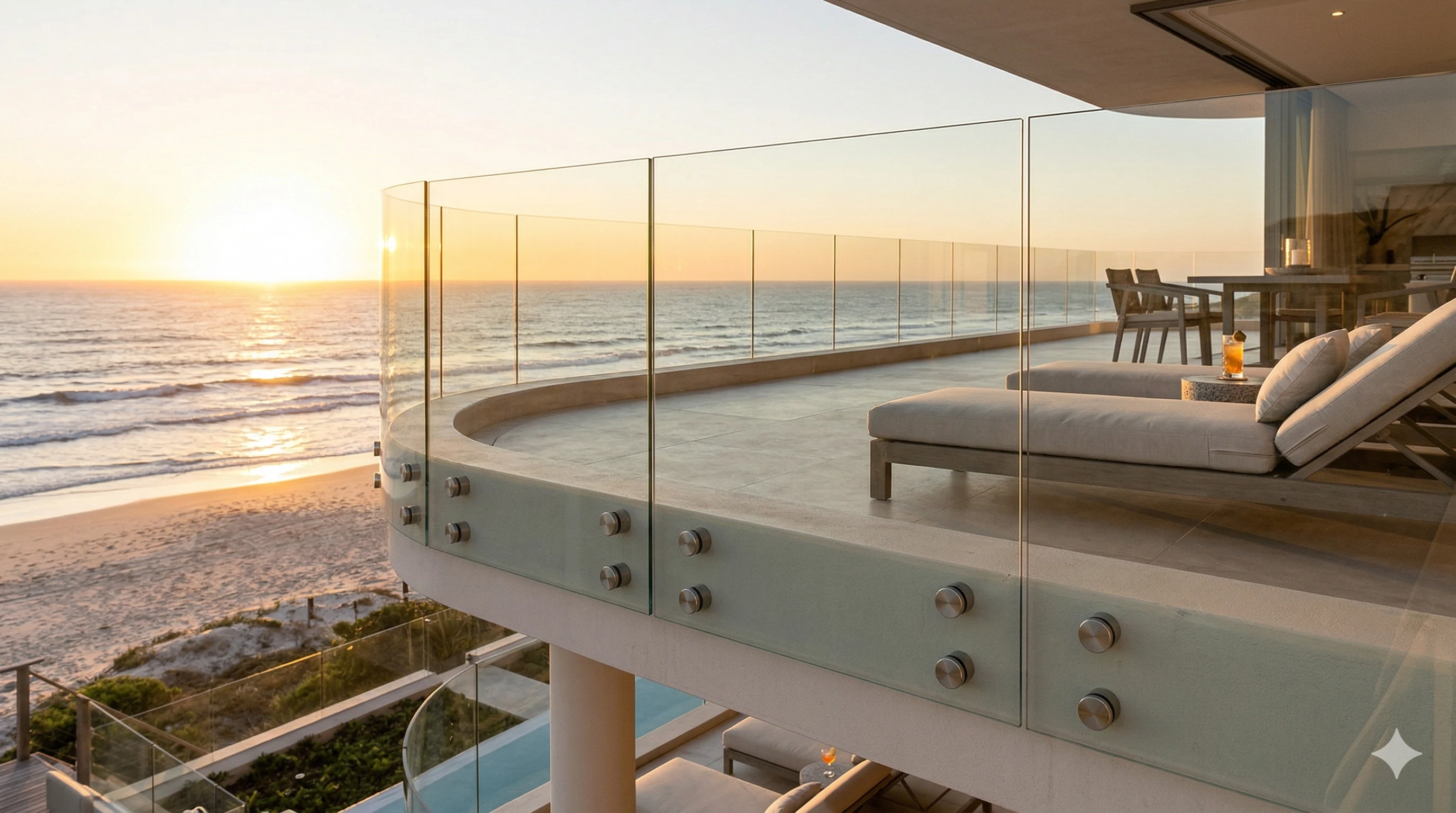
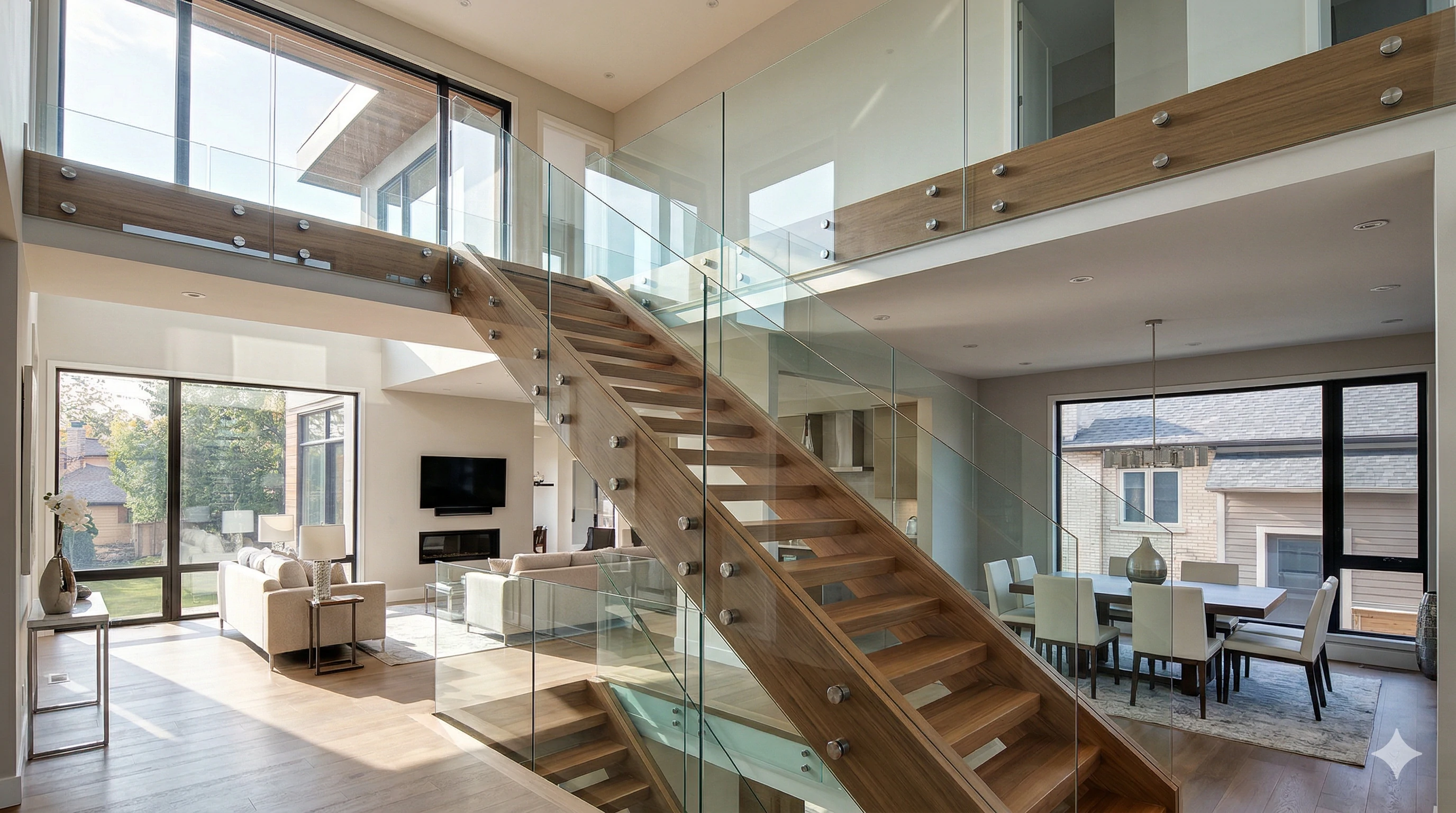
This is the flagship application for standoff hardware. Whether you are building a staircase railing, a balcony guard, a pool fence, or a mezzanine barrier, standoffs provide the structural connection between the glass panel and the building frame. The maximizes sightlines and lets natural light flood through a space.
Signage and Wayfinding
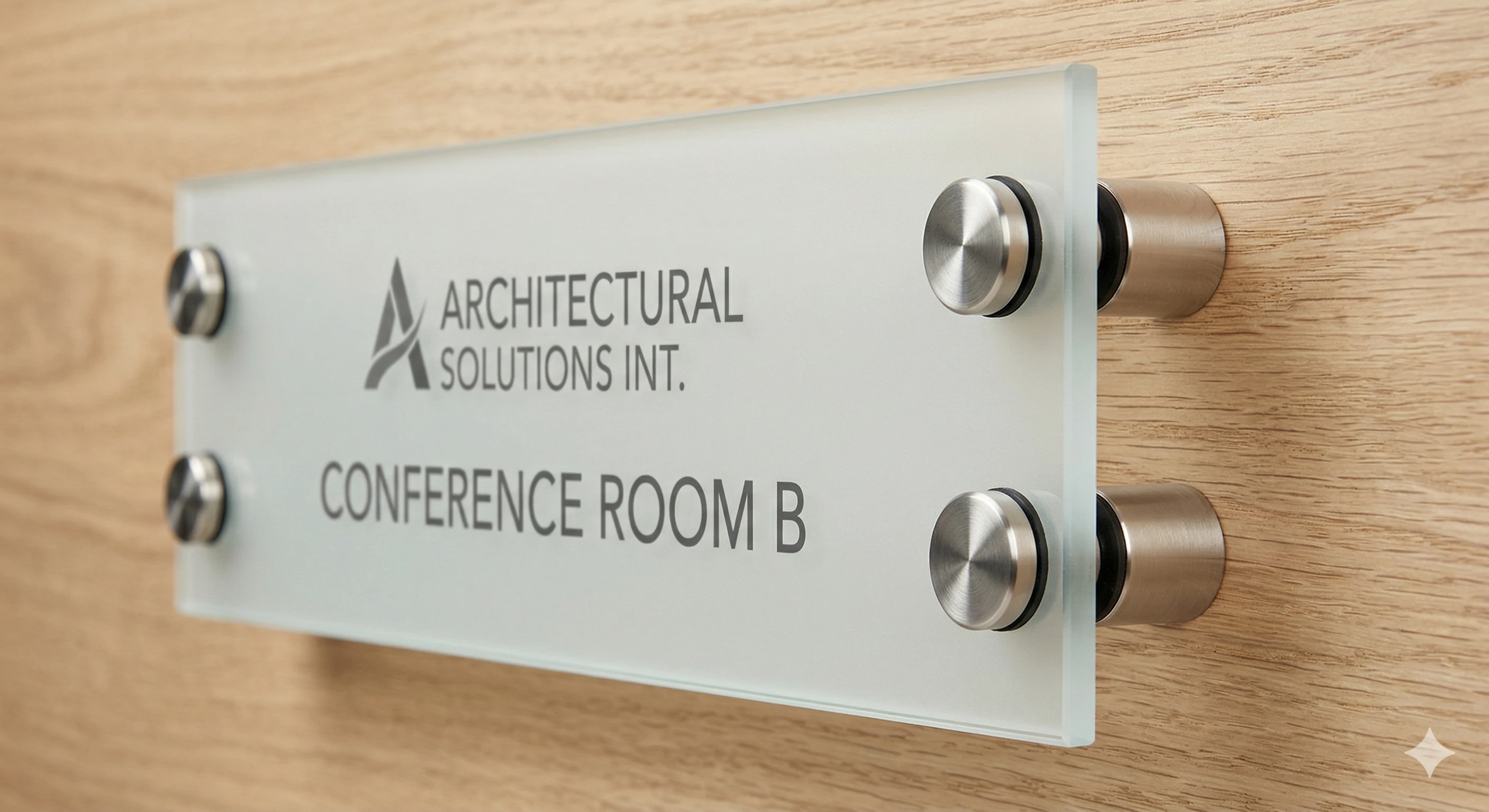
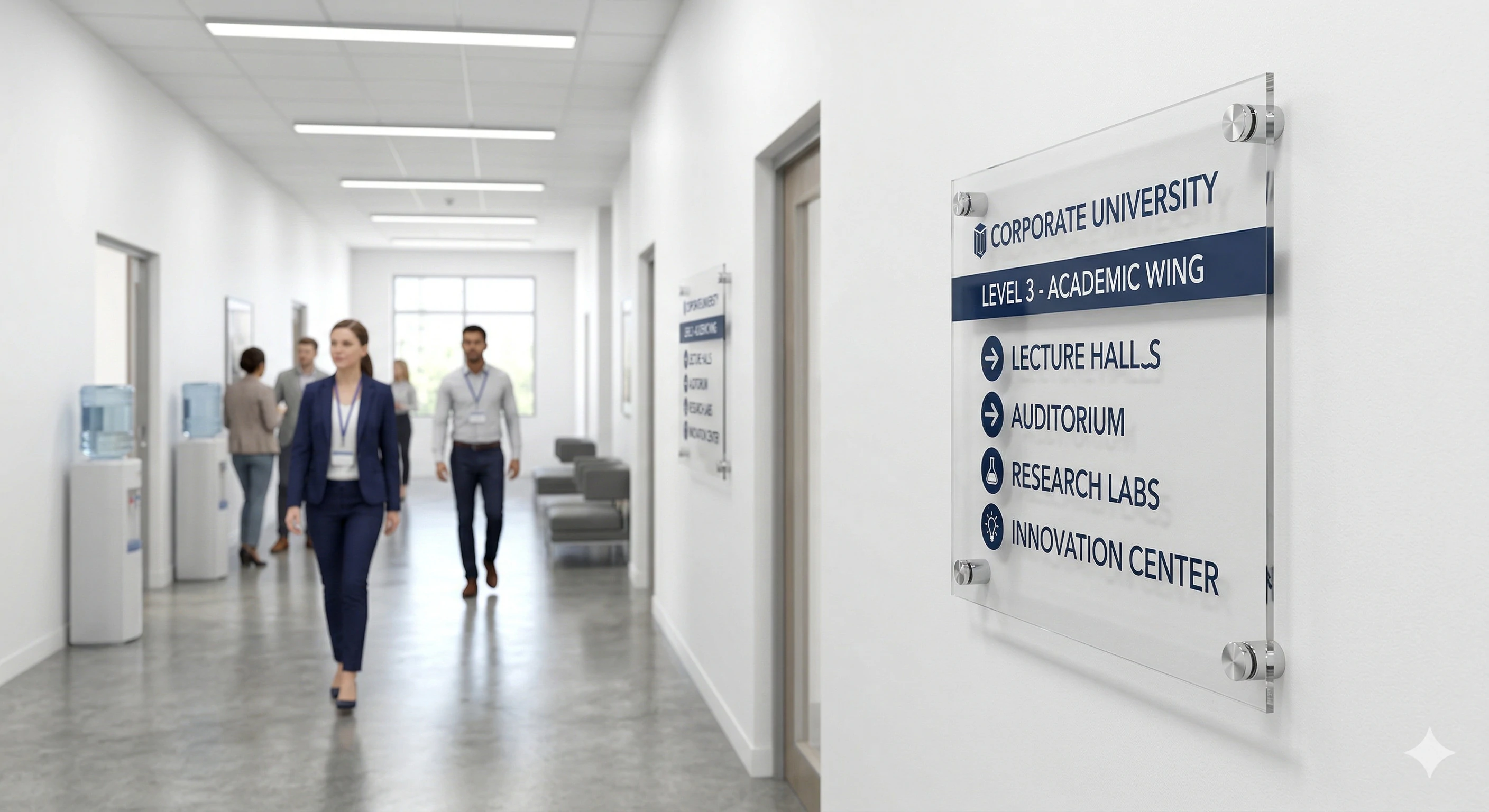
Businesses, hospitals, universities, and retail stores use glass standoffs to mount acrylic or glass signs at a professional-looking offset from the wall. The shadow created behind the sign adds depth and visual interest. Standard signage standoffs are typically smaller in diameter (3/4 inch to 1-1/2 inches) than railing standoffs.
Glass Partitions and Room Dividers
In open-plan offices, restaurants, and co-working spaces, standoff-mounted glass partitions create visual separation without blocking light or air flow. They are especially popular in post-pandemic office redesigns where physical barriers are desired but enclosed rooms are not.
Mirror Standoffs
Mirror standoffs follow the same mechanical principle as glass standoffs, but they are specifically designed for mounting mirrors to walls. They often feature decorative caps in polished chrome or brushed nickel and are sized for thinner glass (typically 1/4 inch). You will see them in commercial restrooms, hotel lobbies, and residential bathrooms.
Glass Shelving and Displays
Retailers, museums, and homeowners use standoffs to create floating glass shelves. The standoff holds the shelf at a precise distance from the wall, creating a modern, minimalist display surface. Load capacity varies widely — always verify the standoff's rated weight before placing heavy objects on a glass shelf.
Decorative Glass Wall Panels
Architects and designers use standoff-mounted glass panels as feature walls in reception areas, hotel lobbies, and high-end residences. Backlit glass panels mounted on standoffs can transform a blank wall into a dramatic focal point.
Choosing the Right Glass Standoff for Your Project
Selecting the correct standoff requires you to match several variables to your specific project conditions.
Step 1: Determine the Glass Thickness
Glass standoffs are manufactured to accommodate specific thickness ranges. Common ranges include:
-
1/4 inch (6 mm): Signage, displays, decorative panels
-
3/8 inch (10 mm): Interior partitions, light-duty shelving
-
1/2 inch (12 mm): Interior railings, heavier partitions
-
3/4 inch (19 mm) to 7/8 inch (21 mm): Exterior railings, guardrails, windscreens
Always verify that the standoff's clamping range matches your glass thickness. Using a standoff rated for 1/2-inch glass on a 3/4-inch panel is a safety hazard.
Step 2: Evaluate the Load Requirements
For railing and guardrail applications, the standoff system must meet applicable building code load requirements. In the United States, the requires guardrails to withstand a concentrated load of 200 pounds applied at any point along the top rail, plus a uniform load of 50 pounds per linear foot. Your standoff system — including the anchor, barrel, glass, and cap rail — must be engineered to handle these forces.
For signage and display applications, load requirements are much less demanding, and standard standoffs are almost always sufficient.
Step 3: Identify the Substrate
The mounting surface dictates the anchor type and the overall feasibility of a standoff system:
-
Concrete: Use expansion anchors or chemical (epoxy) anchors. Maintain a minimum edge distance of approximately 3 inches from the slab edge to avoid blow-out.
-
Steel: Use through-bolts or tap directly into the steel. Pre-drill with appropriate HSS or cobalt bits.
-
Wood framing: Requires solid structural blocking — at minimum, double or triple joists behind the fascia. Standard 1-inch fascia boards are not adequate.
-
Drywall/sheetrock: Never mount structural standoffs directly to drywall. Remove the drywall, install plywood or solid blocking flush with the surface, and then mount the standoff through the blocking into the studs.
Step 4: Choose the Finish
Match the standoff finish to the surrounding hardware and design palette. In most residential projects, brushed stainless steel is the safest choice. For commercial projects where brand identity is a factor, powder-coated standoffs in a custom color can create a cohesive look.
Step 5: Glass Type
Building codes require tempered or laminated glass for railing and guardrail applications. Tempered glass is approximately four times stronger than annealed glass and fractures into small, blunt pieces rather than sharp shards. Laminated glass consists of two layers of tempered glass bonded with an interlayer — if one layer breaks, the interlayer holds the fragments together.
For signage and decorative applications, annealed or tempered glass are both acceptable.
Standoff Caps and Accessories
The standoff cap is the finishing piece that completes the assembly and determines the visible aesthetic of the hardware.
Standard Profile Caps vs. Low Profile Caps
Standard caps have a taller, more pronounced barrel that is easy to grip and tighten. Low-profile caps sit nearly flush with the glass surface, creating a sleeker, more discreet appearance. CRL's standoff cap lineup, for example, includes both options in matching finishes so you can choose the look that best fits your project.
Cap Rail
For railing applications, a cap rail (also called a top rail) is a continuous channel that sits on the top edge of the glass panels, tying them together into a unified structure. Most building codes in the United States and Canada require a cap rail when the fall height exceeds 30 inches. Beyond code compliance, a cap rail significantly increases the lateral stiffness of the system.
A typical cap rail assembly includes a rubber gasket that cushions the glass, a slotted aluminum or stainless steel rail, and end caps or returns.
Isolation Bushings and Washers
Every properly engineered standoff assembly includes rubber or vinyl bushings that sit between the metal and the glass. These isolators serve two critical purposes: they prevent direct metal-to-glass contact (which could cause stress fractures), and they allow minor movement from thermal expansion and contraction.
Never skip the isolators — even if the assembly "looks fine" without them.
Installation Guide: Step by Step
Installing glass standoffs requires precision, the right tools, and a methodical approach. Rushing the process invites alignment problems, water intrusion, and, in the worst case, glass failure.
Tools and Materials You Will Need
-
Drill and appropriate bits (masonry, HSS, or wood)
-
Spirit level (4-foot level recommended)
-
Torque wrench
-
Tape measure
-
Pencil or marking tool
-
Safety glasses and gloves
-
Stainless steel screws or appropriate anchors
-
Silicone sealant (for exterior applications)
Step 1: Plan and Measure
Mark the exact centerline for each standoff on the mounting surface. Typical standoff spacing for railing applications is 12 to 18 inches apart, but always follow the engineered drawings for your specific project. Double-check every measurement before drilling — errors are expensive when glass panels have already been fabricated with pre-drilled holes.
Step 2: Prepare the Substrate
For wood framing, confirm that adequate blocking is in place behind the fascia. Drill a pilot hole to full depth and verify that you encounter consistent, solid resistance throughout. If resistance drops or you hit hollow space, add blocking before proceeding.
For concrete, inspect the edge for cracks, chips, or exposed aggregate. Repair any defects and maintain a minimum edge distance of approximately 3 inches from the slab edge to the center of each drilled hole.
Step 3: Drill and Set Anchors
Drill the mounting holes to the diameter and depth specified by the standoff manufacturer. Insert wall anchors (for masonry) or thread hanger bolts (for wood). Ensure each anchor is fully seated and tight.
Step 4: Install the Standoff Bases
Thread the standoff bases onto the anchors or hanger bolts. Use a level to confirm that all bases are aligned both horizontally and vertically. Shims (typically 1/16-inch increments) can be stacked behind the bases to correct for minor surface irregularities.
Step 5: Mount the Glass
This step requires at least two people for railing panels, and three people for larger panels. Carefully lower the glass onto the standoff bases, aligning the pre-drilled holes with the barrels. Once the glass is seated, install the outer caps hand-tight. Do not fully torque any single cap until all panels are in place and aligned.
Step 6: Torque and Level
With all panels loosely in place, use a spirit level to check each panel for plumb. Adjust as needed, then torque each cap to the manufacturer's specification using a torque wrench. Over-tightening can crack the glass; under-tightening can allow the panel to shift.
Step 7: Waterproof (Exterior Applications)
For outdoor installations, every hole drilled through a deck edge or balcony facade creates a potential pathway for water intrusion. Apply silicone sealant around each standoff base, and verify that the surrounding waterproofing membrane is intact. Neglecting this step virtually guarantees long-term water damage to the underlying structure.
Step 8: Install the Cap Rail
If your system includes a cap rail, install a continuous rubber gasket along the top edge of the glass, position the slotted rail over the gasket, and press firmly along the full length to seat the glass. Secure the rail per the manufacturer's instructions.
Heavy Duty Standoffs for Demanding Applications
Standard standoffs are designed for signage, displays, and light-duty partitions. When you move into structural railing, windscreen, or barrier applications, you need heavy duty standoffs engineered for significantly higher loads.
Heavy duty glass standoffs are distinguished by several features:
-
Larger barrel diameter: Typically 1-3/4 inches to 2 inches, compared to 3/4 inch to 1-1/4 inches for standard models.
-
316 stainless steel construction: Marine-grade corrosion resistance is standard at this tier.
-
Thicker glass compatibility: Heavy duty standoffs accommodate 1/2-inch to 3/4-inch tempered or laminated glass.
-
Higher anchor requirements: They typically use 3/8-inch hanger bolts or M10 threaded rod rather than standard wood screws.
-
Engineered load ratings: Reputable manufacturers publish load test data showing compliance with IBC guardrail requirements.
If your project involves a fall height of more than 30 inches — or any application where a barrier failure could result in injury — heavy duty standoffs are not optional. They are a code requirement.
Building Code and Safety Considerations
Glass railing standoff systems are regulated by building codes that vary by jurisdiction but share several common requirements.
International Building Code (IBC) Requirements
The IBC — adopted by most U.S. jurisdictions — specifies that guardrails must resist a concentrated load of 200 pounds applied at any point along the top rail, as well as a uniform load of 50 pounds per linear foot applied horizontally. The glass panels themselves must be tempered or laminated safety glass conforming to or .
International Residential Code (IRC) Requirements
For residential projects, the IRC applies. Requirements are similar to the IBC but include specific provisions for stair guards (36-inch minimum height) and balcony guards (42-inch minimum height in many jurisdictions). A cap rail is typically required when the fall height exceeds 30 inches.
Working with Your Authority Having Jurisdiction (AHJ)
Before ordering glass or hardware, contact your local building department — your Authority Having Jurisdiction (AHJ) — to confirm which code version has been adopted and whether any local amendments apply. Some jurisdictions have additional requirements for wind load, seismic performance, or glass thickness that exceed the base IBC or IRC provisions.
Glass Thickness and Panel Sizing
Panel dimensions are engineered based on glass type, exposure category, and load requirements. Typical glass heights for railing applications range from 42 to 54 inches, and widths vary based on the specific standoff system's engineering. Always work from engineered shop drawings — never guess at panel sizes.
Glass Standoffs vs. Other Mounting Systems
Standoffs are not the only way to mount glass panels. Understanding the alternatives helps you choose the best system for each project.
Standoffs vs. Base Shoe (Channel) Systems
Base shoe systems secure the glass in a continuous aluminum or stainless steel channel at the floor or deck level. They offer a completely hardware-free glass surface but consume floor space and are more expensive to fabricate and install. Standoffs, by contrast, mount to the side and leave the walking surface clear.
Standoffs vs. Point-Fixed Spider Fittings
Spider fittings are large, multi-armed connectors used primarily in . They distribute load across multiple connection points and accommodate movement in multiple directions. They are overkill for most residential railing projects but essential for large-scale commercial facades.
Standoffs vs. Clamp Systems
Glass clamps grip the edge of the glass without requiring pre-drilled holes. They are faster to install in some cases but generally provide less adjustability and can create more visible hardware on the glass surface.
| Feature | Standoffs | Base Shoe | Spider Fittings | Clamps |
|---|---|---|---|---|
| Aesthetic | Minimal hardware visible | No hardware on glass | Bold, architectural | Moderate hardware visible |
| Glass prep | Pre-drilled holes required | No holes | Pre-drilled holes required | No holes |
| Load capacity | High (with heavy duty models) | Very high | Very high | Moderate |
| Adjustability | Good (excellent with adjustable models) | Limited | Limited | Moderate |
| Cost | Moderate | Higher | Highest | Lower |
| Best for | Railings, signage, partitions | High-end railings | Commercial facades | Quick installations |
Maintenance and Long-Term Care
Glass standoffs require very little maintenance, but a basic care routine will keep them looking and performing their best for decades.
Cleaning: Wipe standoffs with a soft cloth and mild soapy water every few months. Avoid abrasive cleaners, steel wool, or harsh chemicals — they can scratch or discolor the finish. For brushed stainless steel, wipe in the direction of the grain.
Inspection: Check all standoff caps annually for tightness. Thermal expansion and contraction, building movement, and wind loading can gradually loosen connections over time. Re-torque any caps that have loosened.
Coastal environments: In salt-air environments, rinse stainless steel standoffs with fresh water monthly to prevent chloride buildup. Even 316 stainless steel can develop surface staining (called "tea staining") if salt deposits are not removed regularly.
Isolator replacement: Rubber and vinyl isolators degrade over time, especially in UV-exposed outdoor applications. Inspect isolators during your annual check and replace any that show cracking, compression, or hardening.
CRL Glass Standoffs and Other Leading Brands
Several manufacturers have established themselves as industry leaders in glass standoff hardware.
CRL (CR Laurence)
CRL is one of the most widely recognized names in architectural glass hardware. Their standoff product line includes standard support assemblies, adjustable standoff railing systems, and a full range of standoff caps and accessories. CRL standoffs are specified frequently by architects and are stocked by glass distributors across North America. Their adjustable standoff system — with its concealed adjustment threads and 316 stainless steel construction — is a favorite among professional glass installers.
CRL Standoff & Support System Assemblies
Sugatsune
Sugatsune is a Japanese manufacturer known for precision-engineered hardware. Their glass standoffs are popular in high-end residential and commercial interiors where fit, finish, and quality are paramount.
Viewrail
Viewrail specializes in modern railing systems, including standoff pin systems milled from solid aircraft-grade aluminum. They offer end-to-end engineering, custom shop drawings, and a nationwide network of certified installers — a strong option if you want a turnkey solution.
Richelieu
Richelieu carries a broad selection of standoff solutions, including standard bases, standard caps, edge grips, and complete standoff sets. They cater primarily to the cabinet, furniture, and commercial display markets.
FAQ
What size standoff do I need for my glass?
Match the standoff's clamping range to your glass thickness. For signage and displays using 1/4-inch glass, a standoff rated for 1/8-inch to 3/8-inch glass will work. For railing applications using 1/2-inch to 3/4-inch tempered glass, you need heavy duty standoffs rated for that specific range.
Can I install glass standoffs myself, or do I need a professional?
For signage, displays, and mirror mounting, a confident DIYer with basic tools can handle the installation. For structural railing and guardrail applications, professional installation is strongly recommended. Errors in anchor placement, torque, or waterproofing can lead to system failure, water damage, or code violations.
What is the difference between a glass standoff and a glass clamp?
A standoff passes through a pre-drilled hole in the glass and creates an offset from the mounting surface. A clamp grips the edge of the glass without requiring holes. Standoffs generally provide more adjustability and a cleaner appearance; clamps are faster to install on undrilled glass.
Do glass standoffs work on curved glass?
Standard standoffs are designed for flat glass panels. Some manufacturers offer specially engineered standoffs for curved or bent glass, but these are typically custom-order items. Consult the manufacturer before specifying standoffs for a curved application.
How far apart should glass standoffs be spaced?
For railing applications, typical spacing is 12 to 18 inches on center, but this depends on glass thickness, panel height, load requirements, and the specific standoff system's engineering. Always follow the engineered shop drawings for your project.
What glass type do I need for a standoff railing system?
Building codes require tempered or laminated safety glass for railing and guardrail applications. The most common choice is 1/2-inch to 3/4-inch tempered glass or laminated tempered glass. Your engineer or AHJ will specify the exact requirement.
Are glass standoffs suitable for outdoor use?
Yes, provided you choose the right material. Use 316 stainless steel standoffs for any exterior application, especially in coastal or poolside environments. Ensure all anchors, fasteners, and isolators are also rated for outdoor exposure.
What are edge grip standoffs?
Edge grip standoffs clamp onto the edge of a glass panel rather than passing through a drilled hole. They are ideal for signage, displays, and light-duty partitions where pre-drilling the glass is impractical or undesirable.
How do I prevent my glass standoffs from rusting?
Choose 304 stainless steel for interior applications or 316 stainless steel for exterior and marine environments. Clean regularly with mild soap and water, and rinse with fresh water in salt-air locations. Avoid contact with dissimilar metals, which can cause .
Can standoffs be used with acrylic panels instead of glass?
Yes. Many signage and display standoffs are compatible with both glass and acrylic panels. Verify the standoff's clamping range accommodates the acrylic thickness, and use isolator bushings to prevent cracking at the mounting points.
Conclusion
Glass standoffs are one of the most versatile and visually impactful hardware solutions available to architects, contractors, designers, and homeowners. Whether you are installing a frameless glass railing on a coastal balcony, mounting corporate signage in an office lobby, or creating floating glass shelves in a retail display, the right standoff system delivers structural integrity and modern aesthetics in a single, compact package.
The key to a successful installation is matching the standoff type, material, and mounting method to your specific project requirements — and never compromising on substrate preparation or code compliance.
Ready to start your project? Review the standoff types and selection criteria in this guide, consult your local building department for code requirements, and choose hardware from a reputable manufacturer with published engineering data. Your glass deserves hardware that is engineered to perform as beautifully as it looks.
Footnotes
1. Overview of modern architectural styles and interior design elements.
2. Information on materials and their inherent resistance to corrosion.
3. Exploring the aesthetic and structural benefits of architectural glass.
4. Technical specifications of 6061 aluminium alloy for structural uses.
5. Guide to different types of anchor bolts and their applications.
6. Official portal for the International Building Code standards.
7. American National Standards Institute safety glazing standards portal.
8. Consumer Product Safety Commission regulations for architectural glazing.
9. Detailed look at curtain wall systems in commercial buildings.