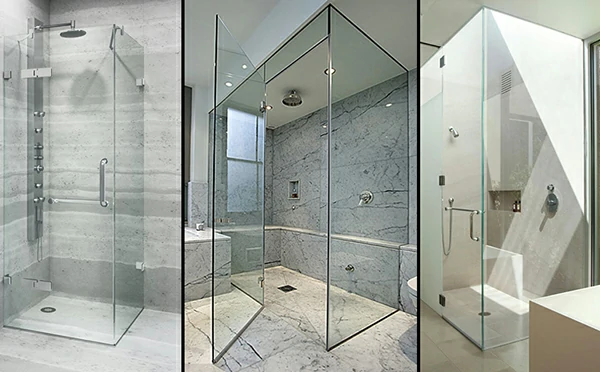

At our factory, we often receive a photo of a stylish knob but no door measurements. That creates a large risk. A knob may look identical online yet fail to fit the glass, clear a sliding panel, or feel secure. A compatibility check prevents wasted orders and unsafe improvisation.
目录
Glass shower door knobs should be selected by matching the glass thickness, existing hole diameter, mounting type, fastener length, door movement, and available clearance before comparing style or price. The best option then combines a corrosion-resistant base material, a practical grip, a coordinated finish, and replaceable protective washers.
This guide explains what to check before you buy. It also shows how procurement teams, installers, and homeowners can compare similar-looking products on practical value.
How Do You Choose the Right Glass Shower Door Knob?
When our engineers review a replacement request, the first problem is usually missing dimensions. Buyers may focus on the finish and assume that all knobs use the same hole or bolt. If the parts do not match, tightening them harder may stress the glass. We therefore confirm the door before discussing appearance.
Choose the right glass shower door knob by confirming glass thickness, hole diameter, fastener length, mounting layout, door direction, and interior clearance in that order. Once those measurements match, compare grip size, base material, finish, spare parts, and warranty terms to find a knob that fits both the door and the buyer’s service expectations.
Measure the Door Before Comparing Finishes
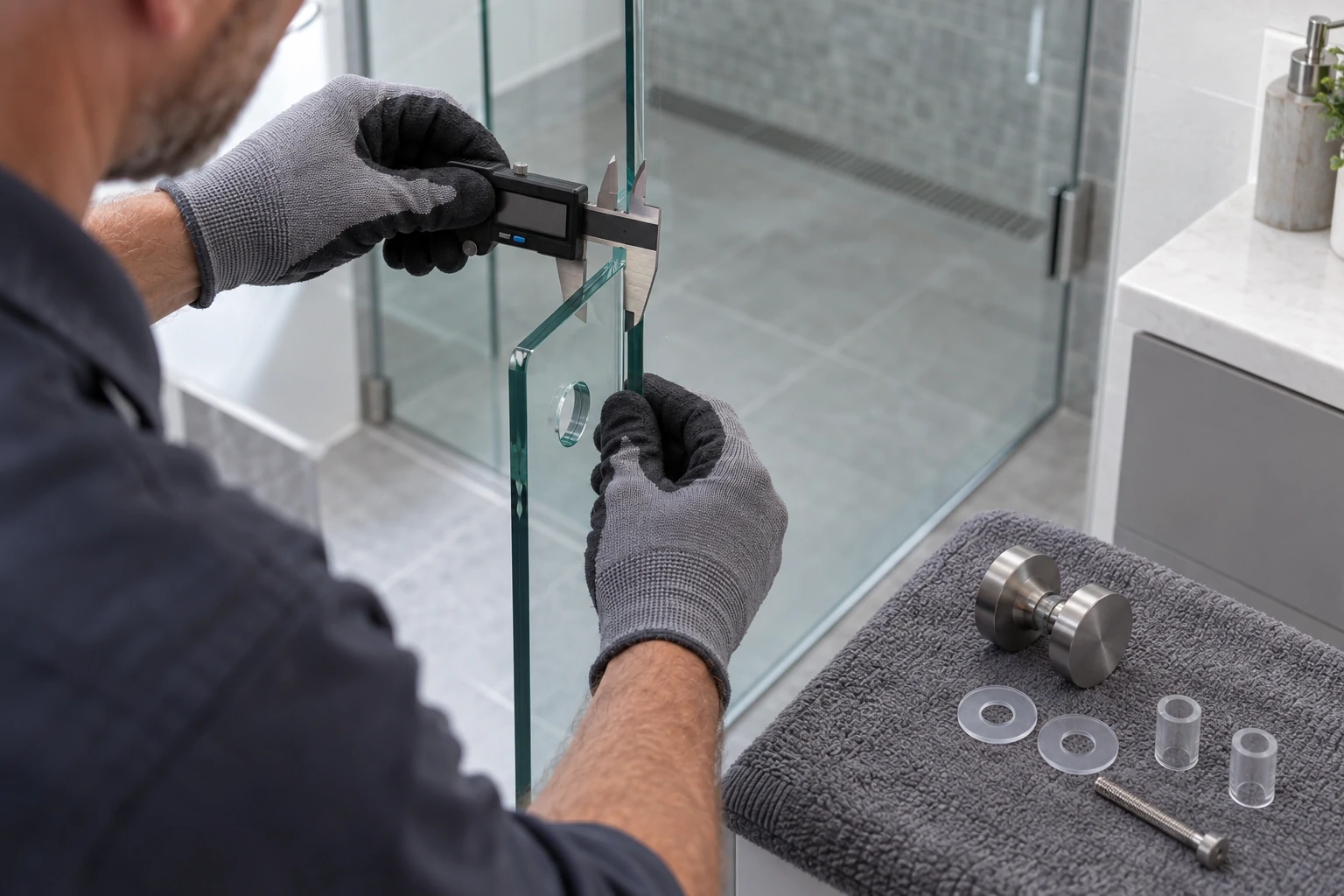
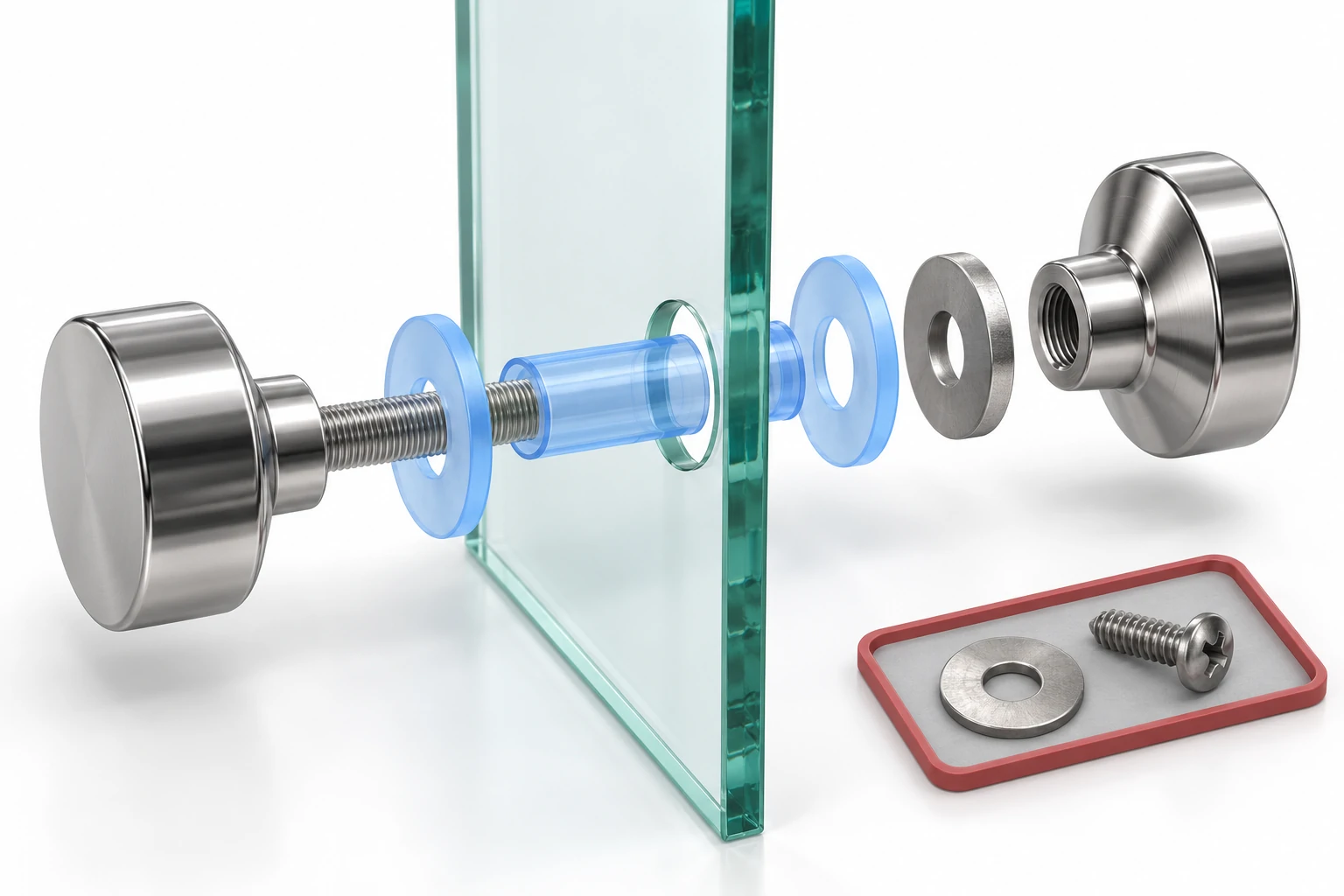
Start with the existing glass rather than the old knob’s appearance. Use a caliper where practical to record glass thickness and hole diameter. Fastener reach must suit the complete assembly, including the knob bases, glass, washers, sleeves, and any supplied spacer.
Next, identify how the door moves. A swinging door can often use a back-to-back knob with projection on both sides. A sliding panel may pass close to another glass panel, so a large inside knob can collide with it. Measure that clearance while the door travels through its full path.
| Check | What to Record | Why It Matters |
|---|---|---|
| Glass thickness | Actual panel thickness | Determines the suitable fastener and sleeve range |
| Existing hole | Diameter and location | Must match the mounting stem without drilling |
| Door movement | Swinging, sliding, or bypass | Controls projection and collision risk |
| Interior clearance | Nearest glass, wall, or fixture | Prevents contact during opening and closing |
| Mounting layout | Back-to-back, single-sided, or recessed | Defines how the user grips each side |
| Fastener system | Thread, length, washers, and sleeves | Protects the glass and holds the assembly correctly |
Ask the supplier for a dimensioned drawing, not only a product photo. It should show knob width, projection, mounting-stem diameter, fastener range, and included protective parts. For a project order, also send the glass drawing and expected quantity.
Glass Shower Door Knob Types and Grip Designs
On our production line, two knobs with the same finish can serve very different doors. A buyer who selects only by shape may receive an inside grip that blocks a sliding panel or a small surface that feels awkward with wet hands. The right mounting type and grip profile solve those problems before decorative details are added.
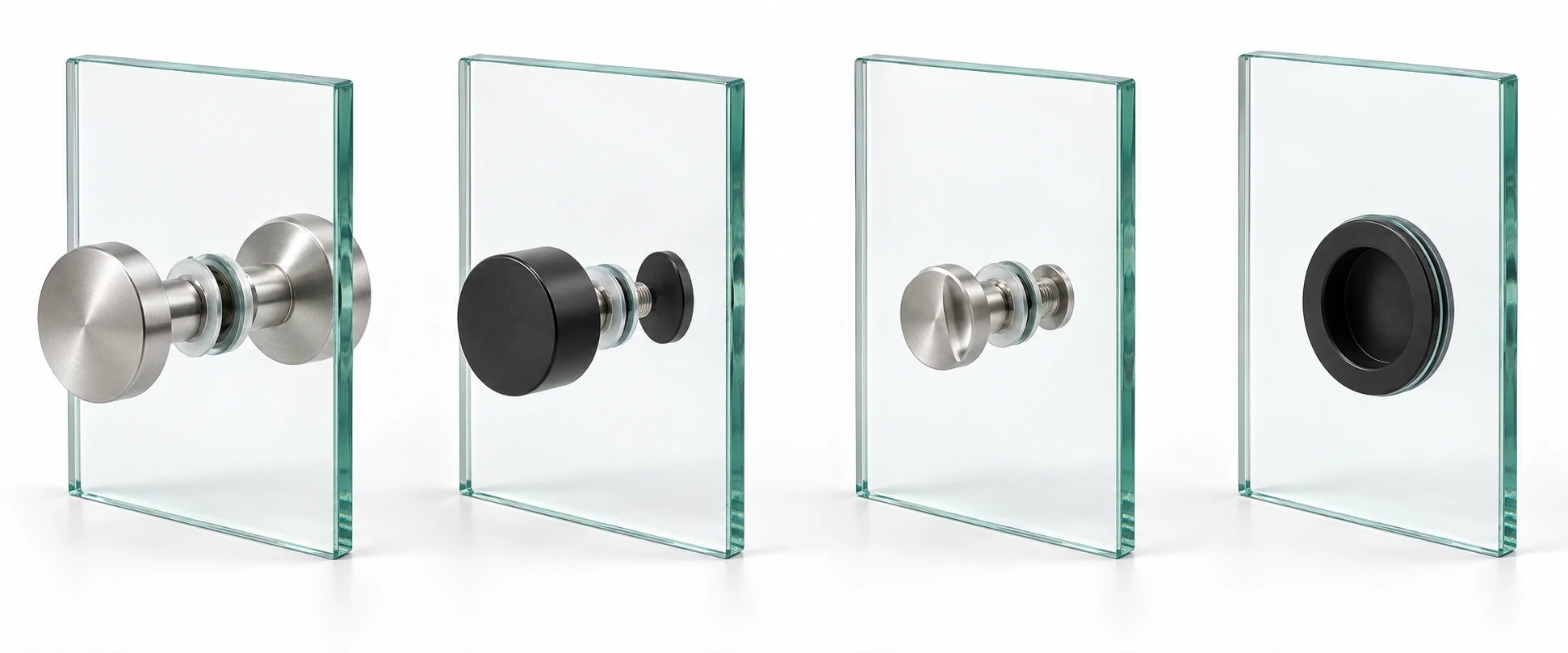
Back-to-back glass shower door knobs provide a gripping surface on both sides of a swinging door, while single-sided knobs and recessed finger pulls reduce interior projection or protect sliding-door clearance. The best type depends on door movement, user position, available space, grip comfort, and the look required for the complete shower enclosure.
Match the Mounting Type to the Door
Back-to-back sets are a familiar choice for frameless swinging doors. They provide a defined grip from inside and outside the enclosure. Single-sided designs may use a low-profile part, finger grip, or cap on the opposite face. These designs can reduce projection where space is limited. Recessed finger pulls are often considered when sliding or bypass panels need to move past each other.
| Type | Typical Advantage | Point to Confirm |
|---|---|---|
| Back-to-back knob | Grip on both sides | Enough clearance around both projections |
| Single-sided knob | Lower projection on one side | Outside and inside operating method |
| Knob with finger grip | Compact secondary grip | Comfort and edge clearance |
| Recessed finger pull | Minimal obstruction for sliding panels | Required hole shape and glass preparation |
Shape also changes how the knob feels. Round and oval profiles have smooth edges and suit many bathroom styles. Square knobs create a more architectural look, but corner radius and orientation matter. Fluted, reeded, or knurled surfaces can provide more texture. However, deep texture may require more cleaning in a wet setting.
Compare Grip, Projection, and Cleaning
Do not treat diameter as a style measurement only. A larger grip may be easier to hold, while a very small knob may demand more fingertip force. Projection affects knuckle room and door clearance. The best balance depends on the user and the enclosure.
For a distributor range, label every model with clear mounting data. This makes replacement selection easier and reduces reliance on product images alone.
Materials and Finishes for Glass Shower Door Knobs
When we prepare samples for export buyers, finish names often receive more attention than the metal underneath. That can hide an important difference. Two polished chrome knobs may have different substrates, coating processes, and care needs. If the specification is unclear, buyers cannot compare durability or keep the finish consistent across hinges, pulls, and brackets.
Materials and finishes for glass shower door knobs should be evaluated separately: the base metal supports strength and corrosion performance, while the finish controls appearance and part of the surface protection. Buyers should confirm the stated substrate, coating method, care instructions, and matching hardware before comparing color names alone.
Separate the Base Material from the Finish
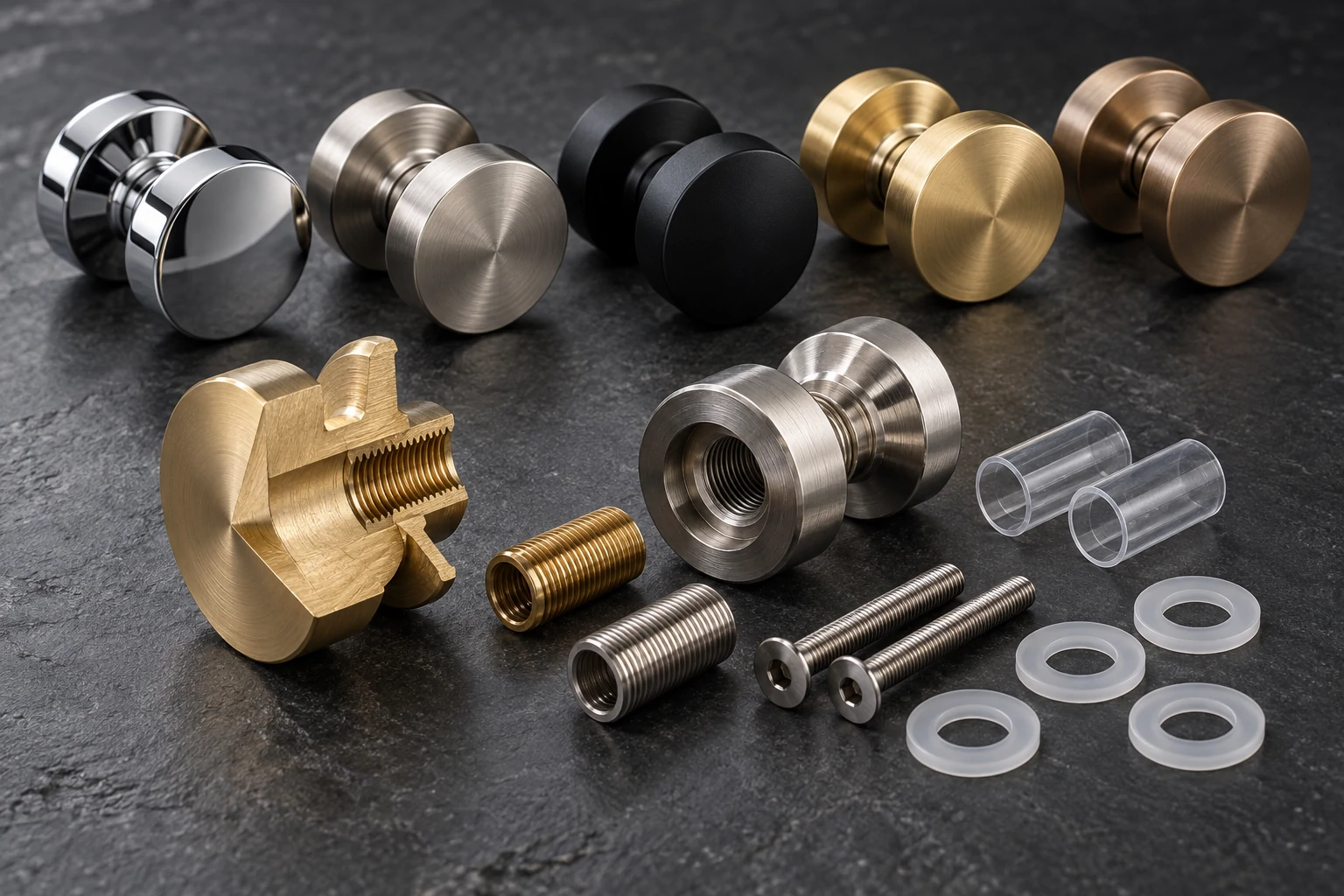
Solid brass and specified stainless steel grades are common base-material choices for shower hardware. Each can perform well when the alloy, machining, surface preparation, and finish system suit the application. A phrase such as “chrome finish” describes appearance; it does not identify the base material by itself.
Ask suppliers to state the substrate on quotations, samples, and packaging. For stainless steel, request the specified grade. For brass, confirm whether the main body is solid brass. Also check the screw, threaded insert, sleeves, and washers because the knob is a complete assembly.
| Comparison Area | Questions for the Supplier | Buying Purpose |
|---|---|---|
| Base material | Is the body brass, stainless steel, or another stated material? | Compare structure and corrosion performance |
| Finish | What process and color standard are used? | Coordinate knobs with the full hardware set |
| Small components | What are the screw, insert, sleeve, and washer materials? | Evaluate the complete assembly |
| Care | Which cleaners and tools should be avoided? | Reduce staining, scratching, and coating damage |
| Batch control | How is color consistency checked? | Limit visible differences across project hardware |
Popular finish families include polished chrome, brushed nickel, matte black, polished or satin brass, champagne bronze, and oil-rubbed bronze. Names are not fully standardized across every supplier. One company’s brushed gold may not match another company’s satin brass. Compare physical samples under the project’s actual lighting when color coordination is important.
Use the cleaning method recommended by the hardware supplier. Harsh chemicals or abrasive tools may damage a decorative surface. Give the same care guidance to dealers, installers, and final users.
Replacement Safety, Accessibility, and Lifecycle Value
In our export work, the most expensive replacement mistakes happen when someone tries to make an unsuitable part fit. A mismatched stem, missing sleeve, or improvised washer can concentrate pressure at the hole. A knob can also technically fit but remain difficult for an older user to grip. Safe selection must include the glass, the person, and future maintenance.
Replacement safety, accessibility, and lifecycle value require more than a knob that fits the existing hole. Glass shower door knobs must protect the panel with correct sleeves and washers, remain comfortable to operate, avoid clearance conflicts, support future retightening, and offer practical access to spare fasteners or replacement components.
Do Not Alter Tempered Glass to Fit a Knob
According to the U.S. Consumer Product Safety Commission 1, shower-door glazing falls within the architectural glazing safety requirements addressed by 16 CFR Part 1201 2. According to standard tempered-glass fabrication guidance 3, holes and edge work are completed before the glass is tempered. Existing tempered shower glass should not be casually drilled, cut, or ground to accept a different knob.
If the replacement does not match the existing hole, stop and consult a qualified glass professional. Do not remove a protective sleeve or substitute a metal washer against the glass to gain space. Confirm the correct assembly and tightening guidance with the hardware supplier. The knob should be secure, but excessive tightening is not a substitute for compatible parts.
Consider the User, Not Only the Door
According to U.S. Access Board guidance 4, operable parts covered by applicable accessibility requirements should not require tight grasping, pinching, or twisting of the wrist. A small knob may therefore be a poor choice for an older adult or a person with limited hand strength. A larger pull or another easy-grip design may be more suitable. Project requirements and local rules should always be reviewed by the responsible professional.
Use this pre-purchase worksheet before approving a sample:
| Decision | Confirm Before Ordering | Lifecycle Question |
|---|---|---|
| Fit | Glass, hole, thread, fastener reach, and clearance | Can the same specification be reordered? |
| Protection | Correct sleeves, gaskets, and washers | Are replacement protective parts available? |
| Usability | Grip size, texture, projection, and user needs | Will the knob remain easy to operate and clean? |
| Finish | Match with hinges, faucets, and nearby hardware | What care can preserve the surface? |
| Service | Installation guidance and warranty terms | Are spare screws and technical support available? |
The lowest purchase price is not always the lowest service cost. Compare replaceable washers, spare fasteners, finish care, warranty coverage, and ease of retightening. A stable specification and accessible spare parts can simplify after-sales support.
Conclusion
Glass shower door knobs are small components with several important interfaces. The right choice matches the existing glass and hole, suits the door movement, provides a comfortable grip, and coordinates with the rest of the enclosure. Material and finish should be specified separately, while sleeves, washers, fasteners, cleaning, and future spare parts should be included in the buying decision.
If you are sourcing knobs for a replacement range or a new shower-hardware program, send us your glass dimensions, drawings, finish targets, and expected quantity. You can request a quotation, download our shower hardware specifications, or explore our glass shower fittings to compare suitable options.
Footnotes
1. CPSC announcement on the mandatory architectural glazing safety standard. ↩︎
2. Federal rule covering safety glazing, including shower doors and enclosures. ↩︎
3. Vitro guidance advises against further fabrication after glass has been heat treated. ↩︎
4. Access Board guidance explains operability requirements for handles, pulls, and knobs. ↩︎