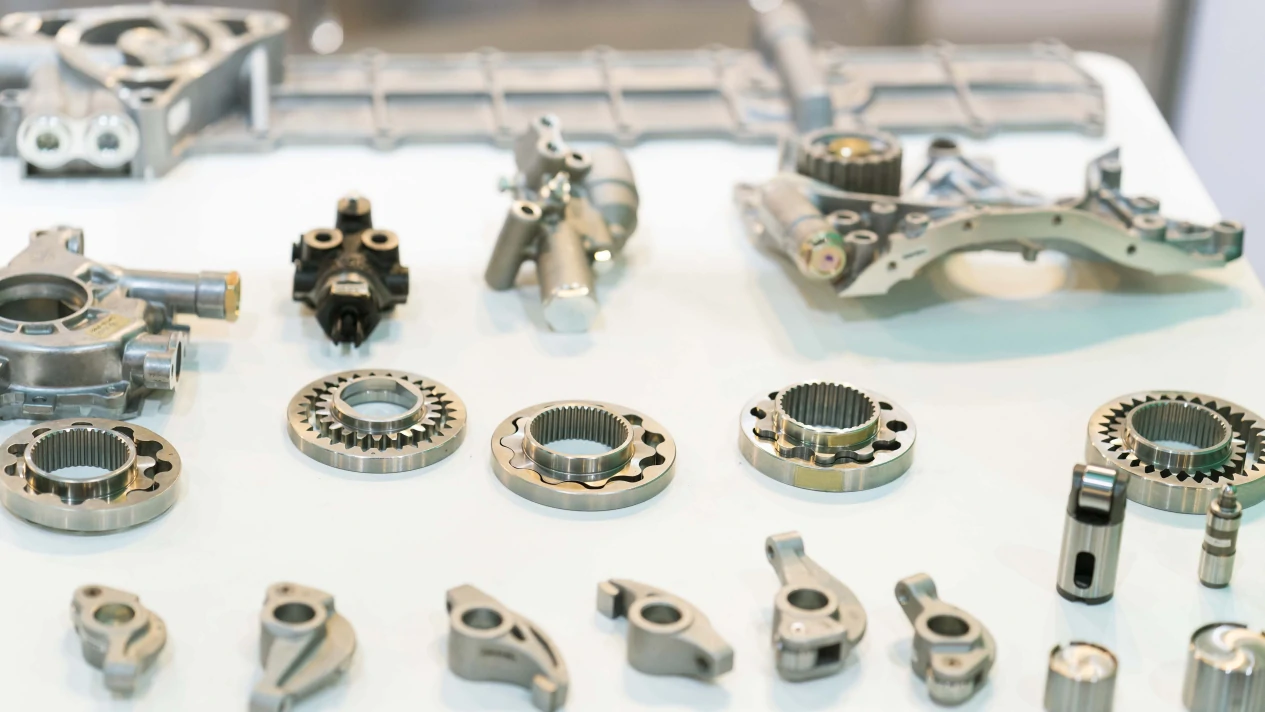
At our machining facilities, we constantly evaluate the best equipment to keep component costs low for our clients. You might hear that horizontal machines are the undisputed kings of high-volume manufacturing. Because the spindle is horizontal, gravity pulls the metal chips away from the cut, resulting in incredible speed and tool life. However, investing in the wrong equipment can severely damage your production budget if your parts do not match the machine's strengths. If HMCs are so great, why does not every machine shop use them exclusively?
The main disadvantages of a Horizontal Machining Center include a massive initial investment cost, highly complex and expensive tombstone fixturing, a massive floor space footprint, and poor visibility with awkward loading ergonomics for flat, single-sided parts.
Let us break down these massive barriers to entry and operational disadvantages, so you can understand exactly how we choose the right machine for your project.
What is the massive initial investment cost of an HMC?
When we plan our annual equipment upgrades, is always the biggest hurdle. You might be shocked to learn how much a horizontal setup drains a budget. We want to ensure that every dollar spent translates directly into value for your machined parts, rather than wasting capital on unnecessary machinery.
An HMC typically costs two to three times more than a comparable Vertical Machining Center because they are built substantially heavier to absorb vibration and include expensive standard features like built-in pallet changers and rotary tables.
Understanding the massive initial investment is crucial for both manufacturers and buyers. An HMC typically costs 2 to 3 times more than a with a similar work envelope. The reasons for this price hike are deeply embedded in the machine's architecture. HMCs are built heavier to absorb vibration. They also almost always include complex features like built-in pallet changers and 4th-axis rotary tables as standard equipment.
Financial Overkill for Simple Geometries
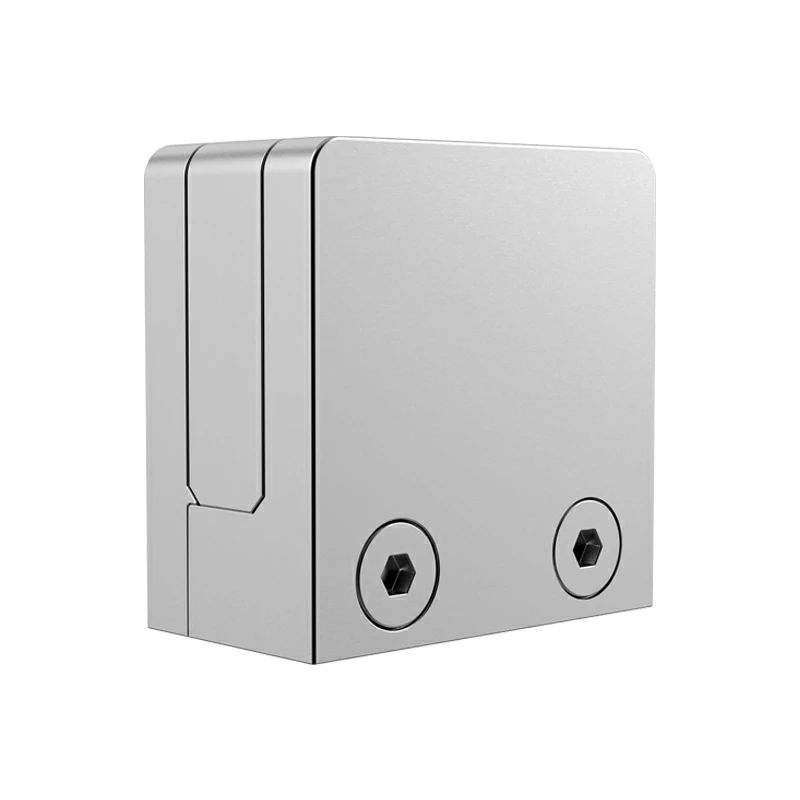
This high initial cost has a direct impact on buyers. If a factory uses an HMC to machine a simple, flat part, they have to charge a higher hourly rate to pay for the machine. This practice is simply financial overkill for simple geometries. We always advise our clients against using a million-dollar HMC to drill a hole in a flat glass clamp, because that wastes the client's money. Instead, we match the investment to the complexity of the part to protect your bottom line.
| Cost Factor | Vertical Machining Center (VMC) | Horizontal Machining Center (HMC) |
|---|---|---|
| Initial Purchase Price | Lower base price | 2 to 3 times higher |
| Standard Features | Basic flat table | Built-in pallet changers, 4th-axis |
| Hourly Shop Rate | Standard rate | Premium rate required |
| Machine Build | Lighter frame | Built heavier to absorb vibration |
Why is tombstone fixturing considered complex and expensive?
In our engineering department, designing workholding is a daily challenge. You need to hold parts securely, but complex clamps eat up precious development time. We focus on streamlining this setup process to avoid passing unnecessary and inflated engineering costs onto you during the .
Unlike a VMC that uses a flat table, HMCs require a tall, multi-sided block called a tombstone mounted on a rotary axis, making the design and machining of custom clamps for curved castings highly complex and expensive.
The setup process on an HMC introduces significant engineering hurdles. Unlike a VMC where you clamp a part to a flat table, HMCs use a "Tombstone". This is a tall, multi-sided block mounted on a . Designing and machining custom clamps to hold curved castings onto a vertical tombstone is highly complex engineering.
The Problem with Short Production Runs
Because of this complexity, setup and programming take significantly longer. The time factor is a massive disadvantage for low-volume orders. If you only need 50 parts, designing an HMC tombstone fixture is a waste of time and money. We carefully evaluate your order volume before designing custom fixtures. For projects that do justify this effort, you can view a direct link to our custom fixture capabilities here. We only deploy tombstone fixturing when the production volume guarantees a return on the engineering investment.
| Fixturing Aspect | VMC Setup | HMC Setup |
|---|---|---|
| Workholding Base | Flat table | Tall, multi-sided tombstone |
| Clamp Design | Standard, simple clamps | Highly complex custom clamps |
| Setup Time | Fast and straightforward | Significantly longer |
| Best Volume | Low to medium runs | High-volume production |
Why does an HMC require a massive floor space footprint?
Walking across our shop floor, space optimization is incredibly important for smooth logistics. You might not realize how much real estate a single machine demands when planning production. We carefully map our facility layout to maximize efficiency and maintain the flexibility needed for diverse client projects.
HMCs are exceptionally bulky machines, often taking up the floor space of three VMCs because they require large automated pallet pools to load the next part and massive chip conveyors to handle high-volume metal debris.
The physical reality of the shop floor cannot be ignored when evaluating machining centers. HMCs are exceptionally bulky. A single HMC can take up the space of three VMCs. This massive footprint is necessary because they require pallet pools, which are stations that load the next part while the machine is running. Furthermore, they need large to manage the aggressive metal removal.
Managing Shop Floor Logistics
This space requirement creates a severe drawback for many manufacturers. For smaller job shops, dedicating that much floor space to a single machine limits their flexibility to take on diverse projects. By consuming the space of three separate vertical mills, a factory reduces the number of simultaneous jobs it can run. This balanced approach allows us to scale production without suffering from . We actively manage our floor plan to ensure we have the right mix of bulky horizontal powerhouses and compact vertical machines.
| Space Requirement | VMC Footprint | HMC Footprint |
|---|---|---|
| Machine Size | Compact | Bulky |
| Space Ratio | 1x Space | Takes up the space of 3 VMCs |
| Automation Add-ons | Optional | Requires pallet pools |
| Conveyor Needs | Small chip bins | Large chip conveyors |
Why do HMCs have poor visibility and awkward loading for flat parts?
Watching our operators work, ergonomics and safety are always our top priorities. You want your parts handled with care and precision, but some machine layouts make that incredibly difficult. We train our production team to avoid forcing the wrong parts into the wrong machines to maintain consistent quality.
On an HMC, the spindle is buried deep inside a heavy enclosure, making it incredibly awkward and ergonomically challenging to fight gravity while loading a large, flat, heavy plate onto a vertical tombstone fixture.
The ergonomics of a machine directly affect production speed and operator safety. On an HMC, the spindle is buried deep inside a heavy enclosure. Loading a large, flat, heavy plate onto a vertical tombstone fights gravity and is incredibly awkward. This setup forces operators to struggle against the weight of the .
The Importance of Operator Ergonomics
Contrast this with the workflow on a vertical machine. On a VMC, the operator simply looks down at the part. It is easy to see the tool cutting and easy to crane heavy, flat plates onto the table. Because of these extreme differences in visibility and loading comfort, we follow a strict rule of thumb: If a part only needs machining on one face, like a simple base plate, an HMC is the wrong tool. Utilizing a VMC for these geometries protects our operators and ensures faster, safer setup times for your components.
| Ergonomic Factor | VMC Operation | HMC Operation |
|---|---|---|
| Visibility | Easy to see the tool cutting | Spindle is buried deep |
| Loading Posture | Operator looks down | Fights gravity, vertical load |
| Heavy Part Handling | Easy to crane flat plates | Incredibly awkward to load |
| Best Geometry | Single face base plates | Multi-sided geometries |
VMC vs. HMC: How do we make the final decision?
When reviewing client drawings, selecting the proper machining strategy is our first critical step. You need reliable results without overpaying for unnecessary technology. We use a strict evaluation process to match your part's geometry to the perfect machine platform, ensuring efficiency and cost-effectiveness.
We decide between a VMC and an HMC by evaluating the part's complexity, volume, and geometry; VMCs are chosen for flat, single-sided, short runs, while HMCs are strictly reserved for multi-sided castings and high-volume production.
Choosing the right machine is the cornerstone of cost-effective manufacturing. We rely on a clear decision matrix to guide our production planning. For instance, is a major deciding factor. On a VMC, chip evacuation is poor because chips pool on the part as the end mill cuts straight down. On an HMC, chip evacuation is excellent because the end mill cuts sideways, and gravity pulls the chips away to fall to the floor conveyor.
Analyzing the Decision Matrix
We analyze every new drawing against these core capabilities. VMCs offer fast setup times using standard vises, while HMCs suffer from slow setup times due to custom tombstone fixtures. We ensure that your project is routed to the equipment that offers the best balance of speed, cost, and precision.
| Feature | Vertical Machining Center (VMC) | Horizontal Machining Center (HMC) |
|---|---|---|
| Best For | Flat parts, single-sided work, short runs | Multi-sided castings, high-volume production |
| Initial Cost | Lower ($) | Very High ($$$) |
| Chip Evacuation | Poor (Chips pool on the part) | Excellent (Gravity pulls chips away) |
| Setup Speed | Fast (Standard vises) | Slow (Custom Tombstone Fixtures) |
Why do we overcome these disadvantages for complex castings?
During our specialized production runs, we frequently tackle components that challenge standard machining methods. You might wonder why we still invest in horizontal mills despite their massive drawbacks. We rely on them because certain intricate designs absolutely demand their unique and powerful capabilities.
We overcome the high setup costs and operational disadvantages of an HMC because it provides unmatched consistency and speed by machining three or four sides of a complex, high-volume OEM casting in a single, perfectly concentric operation.
The B2B pivot reveals exactly why these expensive machines dominate high-end manufacturing floors. The best example is the "Valve Body" challenge. A cast Stainless Steel Valve Body or requires precision machining on 3 or 4 different sides to create perfectly aligned flanges and internal threads. You use an HMC to machine a 4-way hydraulic manifold where precision is mandatory.
The Ultimate Verdict on High-Volume Production
The HMC advantage becomes undeniable for these complex parts. If we use a VMC, the operator has to manually unclamp and flip the valve body 4 times, which introduces human error. On an HMC, we mount it to a rotary tombstone, and the machine cuts all 4 sides in one perfectly concentric operation. The verdict is clear: The high setup cost of an HMC pays for itself through unmatched consistency and speed on complex, high-volume OEM castings.
| Production Factor | VMC Approach | HMC Approach |
|---|---|---|
| Part Flipping | Manual unclamping (4 times) | Automated rotary movement |
| Human Error | High risk during refixturing | Eliminated in a single operation |
| Concentricity | Difficult to maintain across sides | Perfectly concentric operation |
| Ideal Component | Simple brackets | Valve bodies, pump housings |
Conclusion
In summary, HMCs are expensive, bulky, and hard to set up. But for multi-sided, heavy-duty production, they are unrivaled. The secret to cost-effective manufacturing is matching the complexity of the part to the right machine. We position our factory as wise investors, utilizing a right-tool mentality to protect your budget.
Need precision machining for your raw castings? We operate a balanced shop of VMCs for simple brackets and high-end HMCs for complex valve and pump components. Send us your drawing for a complete manufacturing review.
Frequently Asked Questions (FAQ Schema)
Is a VMC or HMC better for heavy metal removal? Generally, an HMC is vastly superior for heavy metal removal. Because the chips fall away freely, you do not end up "re-cutting" chips, which ruins tools. HMCs also typically have much more rigid to handle the vibration of aggressive cutting.
What is a Tombstone in CNC machining? A tombstone is a tall, multi-sided column (usually 4-sided) that mounts to the rotary table of an HMC. It allows operators to bolt dozens of parts to the column. The machine can then rotate the tombstone to access multiple sides of every part in a single cycle.
Why do HMCs cost so much more than VMCs? HMCs almost always include an automatic pallet changer (so the machine never stops while the operator loads the next part), a 4th-axis rotary table, and a heavy-duty chip management system. These are usually expensive add-ons for a VMC, but they are standard requirements for an HMC's workflow.
Footnotes
1. Understand how companies determine the most efficient distribution of financial resources.
2. Learn about the fundamentals and industrial applications of computer numerical control milling machines.
3. Overview of the prototyping process and its importance in modern manufacturing validation.
4. Discover how rotary tables enable complex, multi-axis positioning during automated machining processes.
5. Information on how automated conveyor systems manage and remove industrial metal swarf safely.
6. Learn how to identify and resolve capacity constraints within automated production environments.
7. Basic definition and economic importance of utilizing untreated raw materials in industrial processing.
8. Read about the physics of metal removal and the critical importance of clearing swarf.
9. Overview of industrial pump mechanics and the necessity for precision-machined pressure housings.