
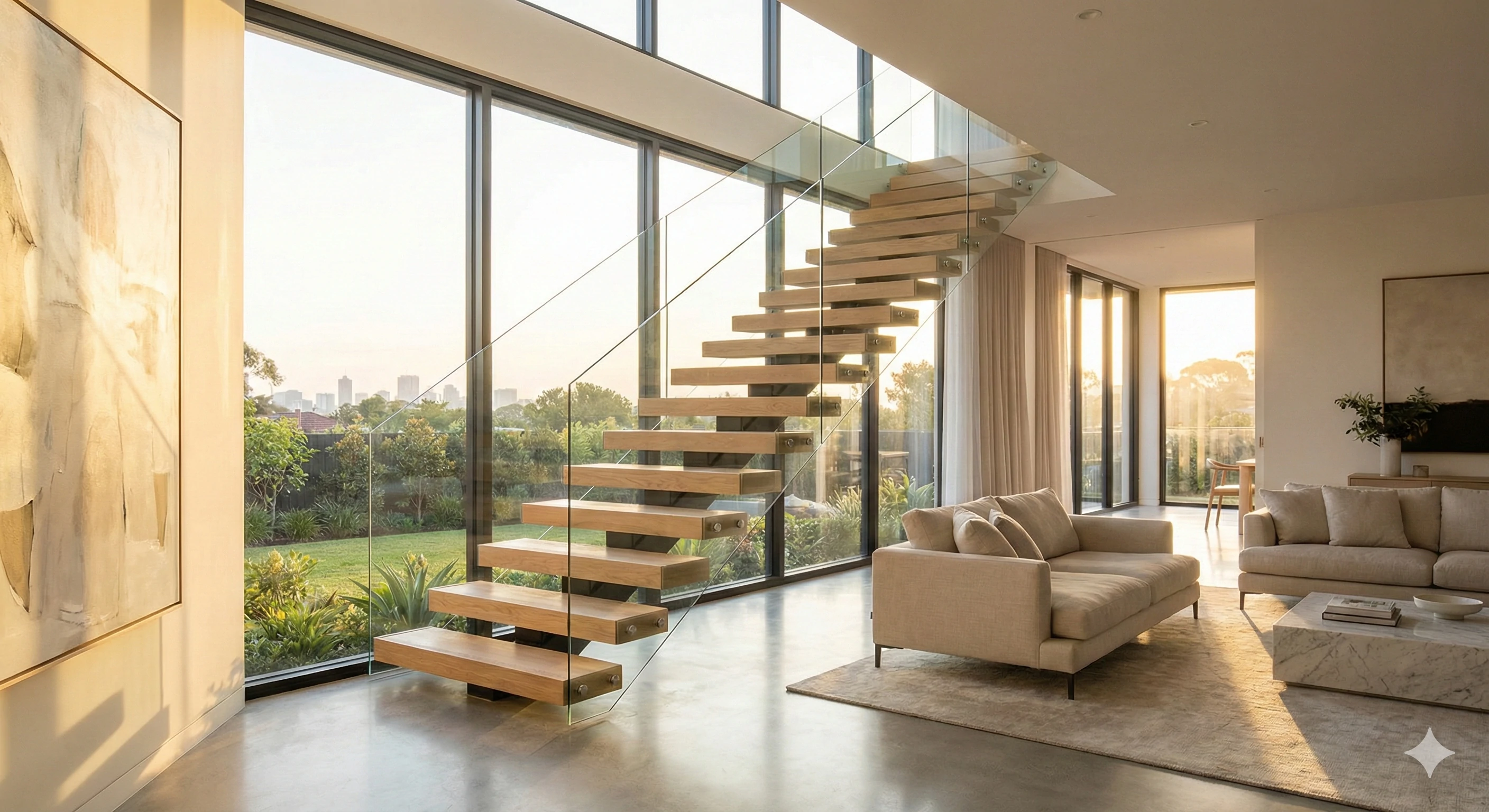
When we design and machine stair hardware in our factory, we often hear the same frustration from clients: they feel trapped by traditional vertical wood spindles. These "jail bars" block light and make hallways feel cramped. However, simply removing the rail is dangerous and illegal. You want the open feeling of having no rail, but you need the safety that meets building codes. The solution lies in choosing materials that disappear from view.
The legal and safe alternative to traditional stair rails is not removing the barrier entirely, but installing a transparent or minimalist system. Options like frameless glass standoffs, tensioned cable railings, or structural pony walls provide necessary fall protection and code compliance while delivering the open, invisible aesthetic that modern homeowners desire.
Let’s explore the specific systems that allow you to ditch the spindles without breaking the law.
1. The "Invisible" Option: Glass Standoffs (The Pin Fix)?
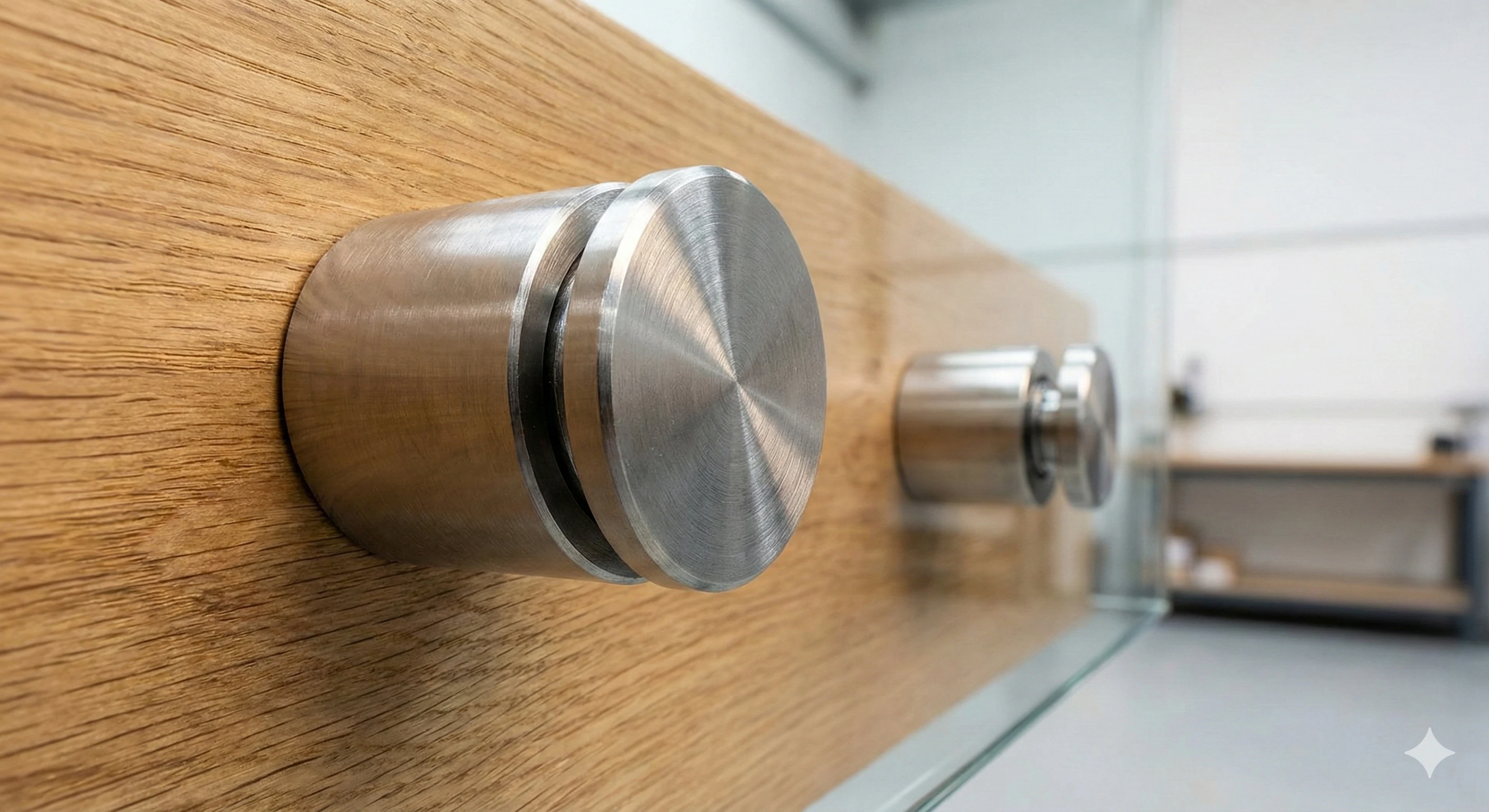
In our daily operations machining 316 stainless steel components, we have seen a massive shift toward "pin fixed" glass. It is currently the most requested style for modern renovations. The problem with posts is that they interrupt the view. Glass standoffs solve this by eliminating the posts entirely, using heavy-duty buttons to hold the glass panel securely to the side of the staircase.
Glass standoffs are heavy-duty stainless steel anchors that bolt glass panels directly to the side of the stair stringer or floor fascia. By mounting the hardware to the side rather than the top, they eliminate vertical posts and top rails, creating a true "floating glass" effect that maximizes stair width.
Why Standoffs Are the Top Choice
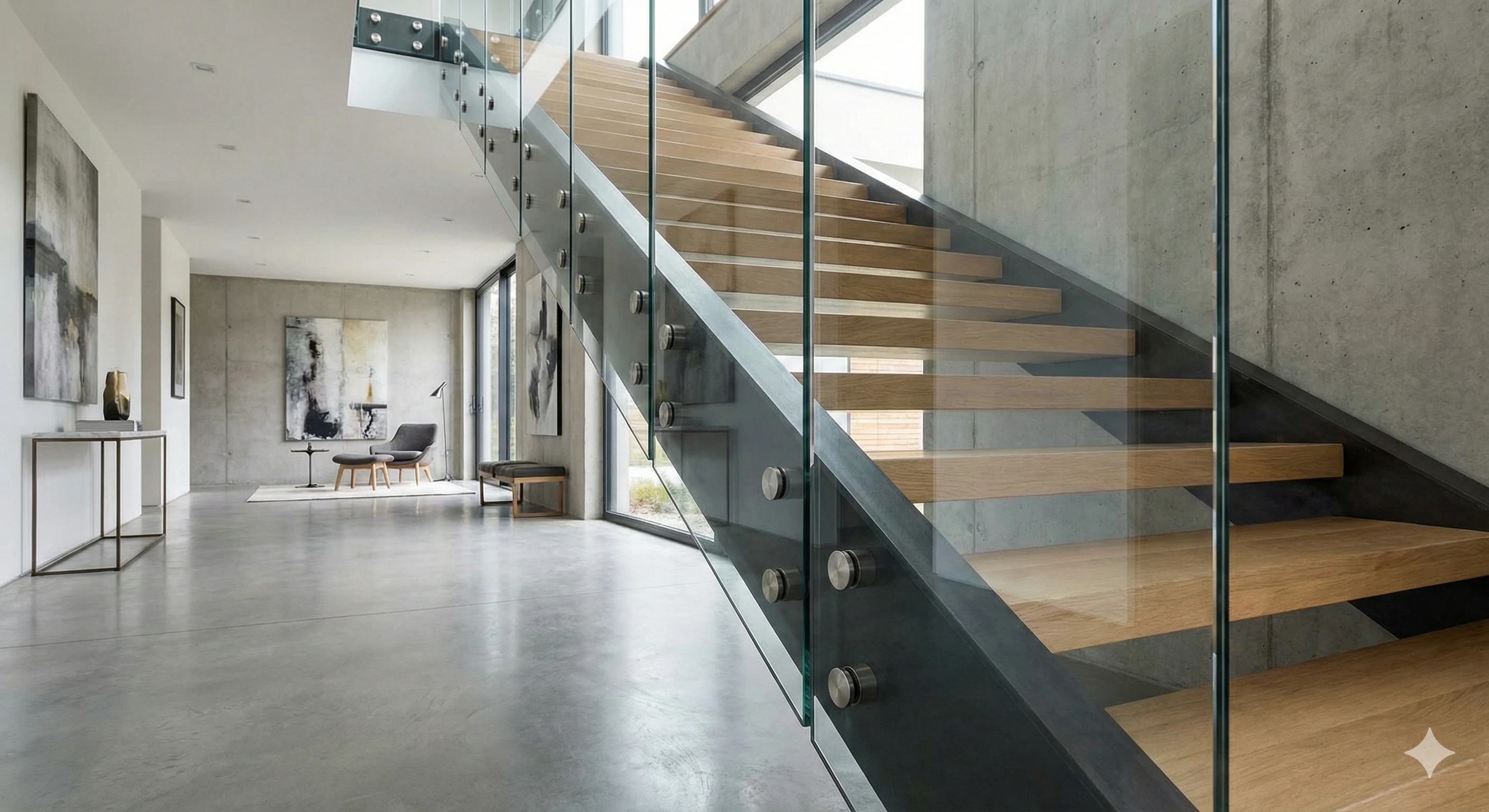
When we engineer these components, we focus on the "side-mounting" capability. This is the technical secret to why they look so good. Traditional railings are top-mounted, meaning they sit on the stair tread and take up 3 to 5 inches of walkable space. Standoffs move the hardware to the outside face (the fascia).
Critical Material Considerations
Because these small steel buttons hold heavy (often weighing over 100 lbs), the steel quality is non-negotiable. At our facility, we strictly use for standoffs. Standard 304 steel contains less nickel and no molybdenum, which means it will eventually rust if used in this application, especially near windows or outdoors.
Installation and Cost Comparison
Many of our distributors ask how standoffs compare to other glass systems like spigots or U-channels. Standoffs offer the most "invisible" look but require high precision during installation. You must drill holes in the glass that perfectly match the holes in the wall. To help with this, we manufacture our standoffs with adjustable spacers, allowing installers to tweak the glass alignment by a few millimeters after hanging the panel.
System Comparison Table
Here is how standoffs compare to other common glass mounting methods we manufacture:
| Feature | Glass Standoffs (Pin Fix) | Glass Spigots (Mini Posts) | Aluminum U-Channel (Shoe) |
|---|---|---|---|
| Visual Impact | Lowest (Most Invisible) | Medium (Visible hardware at bottom) | Medium (Thick line at bottom) |
| Mounting Position | Side (Fascia) | Top (Floor/Tread) | Top or Side |
| Space Saving | Excellent (Clears the stairs) | Poor (Consumes tread width) | Varies |
| Glass Prep | Requires pre-drilled holes | No holes needed (Clamping) | No holes needed (Wet/Dry Glaze) |
| Cost Level | Mid-Range | Mid-Range | High (Due to heavy aluminum) |
2. The "Industrial" Option: Cable Railing?
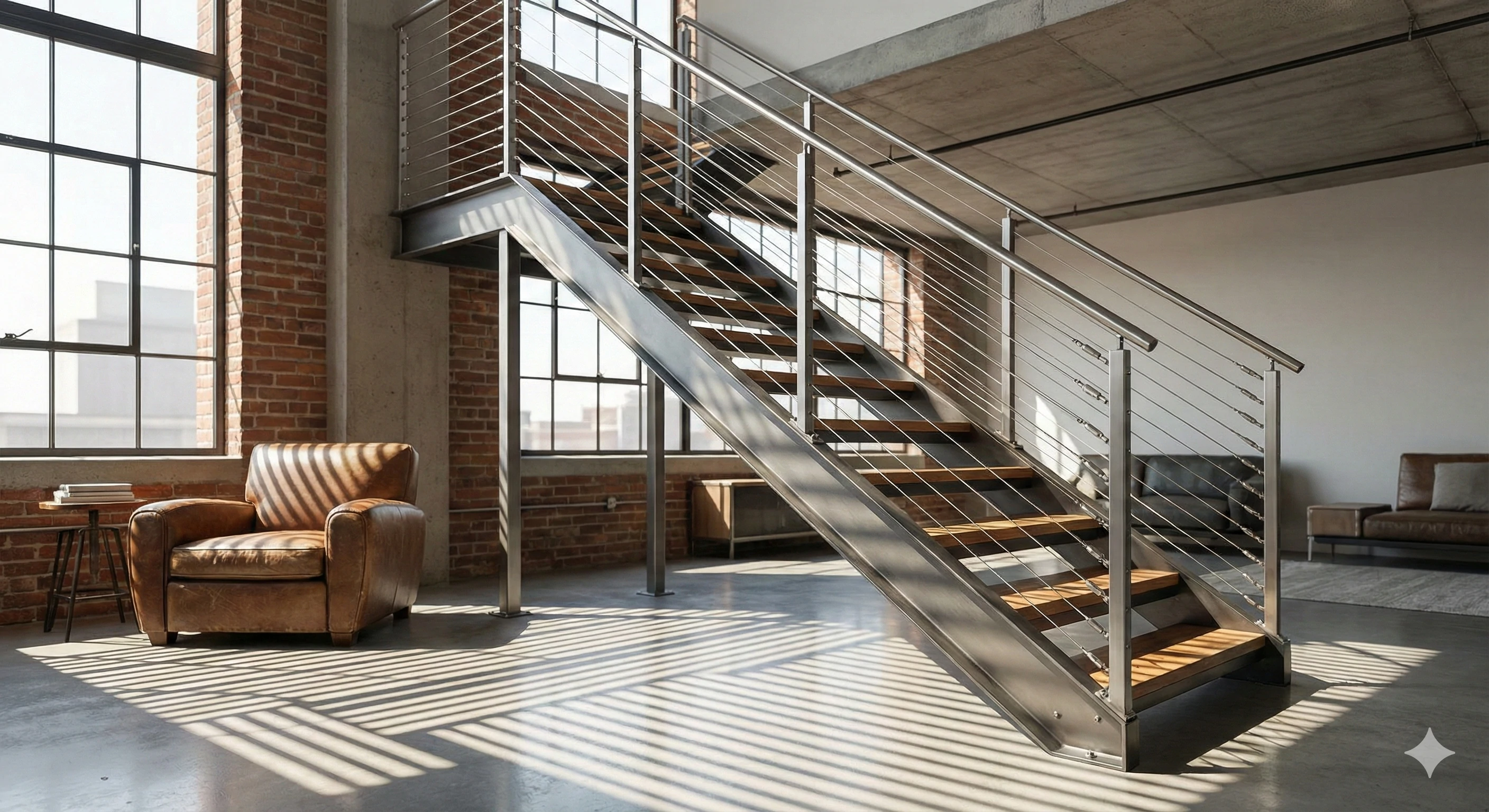
We frequently supply hardware to projects where the architect wants an industrial or nautical vibe. Cable railing is often the runner-up when a client decides against glass. The issue with glass is that it requires frequent cleaning to remove fingerprints. Cable railing solves the cleaning problem but introduces a different visual aesthetic. It uses tensioned wires instead of solid barriers.
Cable railing consists of thin stainless steel wires running horizontally between metal or wood posts, tightened by tensioners to prevent sagging. While these cables are thin enough to disappear from a distance, they create a horizontal "ladder effect," which can be a safety hazard for climbing children in some residential jurisdictions.
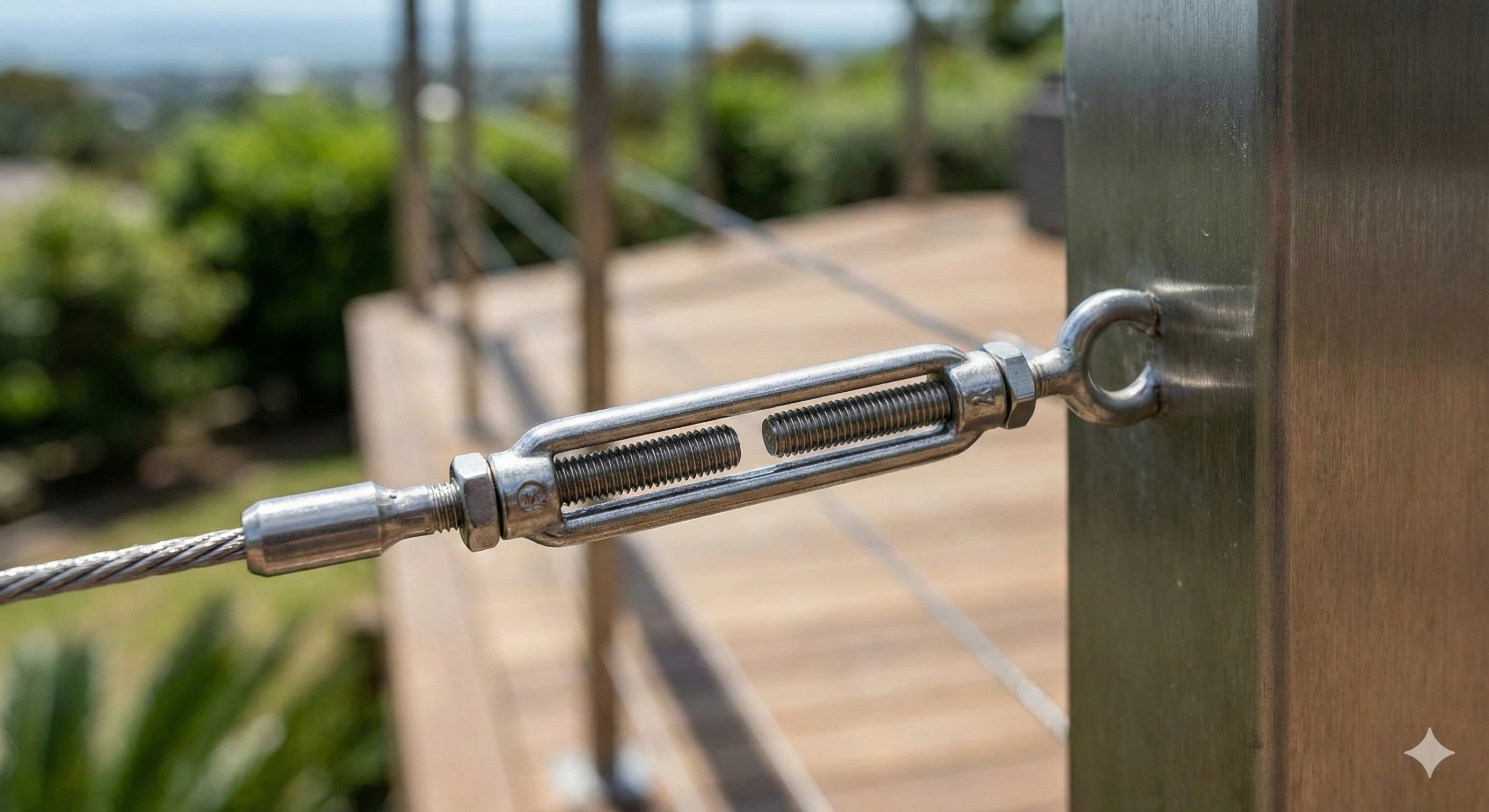
The "Ladder Effect" Controversy
As exporters, we have to stay updated on building codes globally. In the United States, the generally allows horizontal infill. However, you must be very careful with local amendments. Some local inspectors view horizontal cables as a ladder that small children can climb easily.
If you have toddlers, this is a serious consideration. While the cables are strong (our tensioners are rated for thousands of pounds of force), the design itself presents a climbability risk that glass does not.
Maintenance and Tensioning
One reality we tell our partners is that cables stretch over time. Unlike glass, which is set-and-forget, cable systems require re-tensioning after the first year. We design our to be easily adjustable with a simple wrench, but it is a maintenance task that homeowners often overlook.
Pros and Cons of Cable Systems
Before choosing cable over glass, consider these factors we have observed from customer feedback:
| Feature | Advantage | Disadvantage |
|---|---|---|
| Airflow | Excellent ventilation, perfect for hot climates. | Does not block wind on outdoor decks. |
| Cleaning | Very low maintenance; no glass to wipe. | Cables collect dust; turnbuckles need tightening. |
| Safety | High tensile strength; very durable. | Climbable by children (Ladder Effect). |
| View | Good, but horizontal lines are always visible. | The posts are usually thicker than glass standoffs. |
3. The "Solid" Option: The Pony Wall (Half-Wall)?
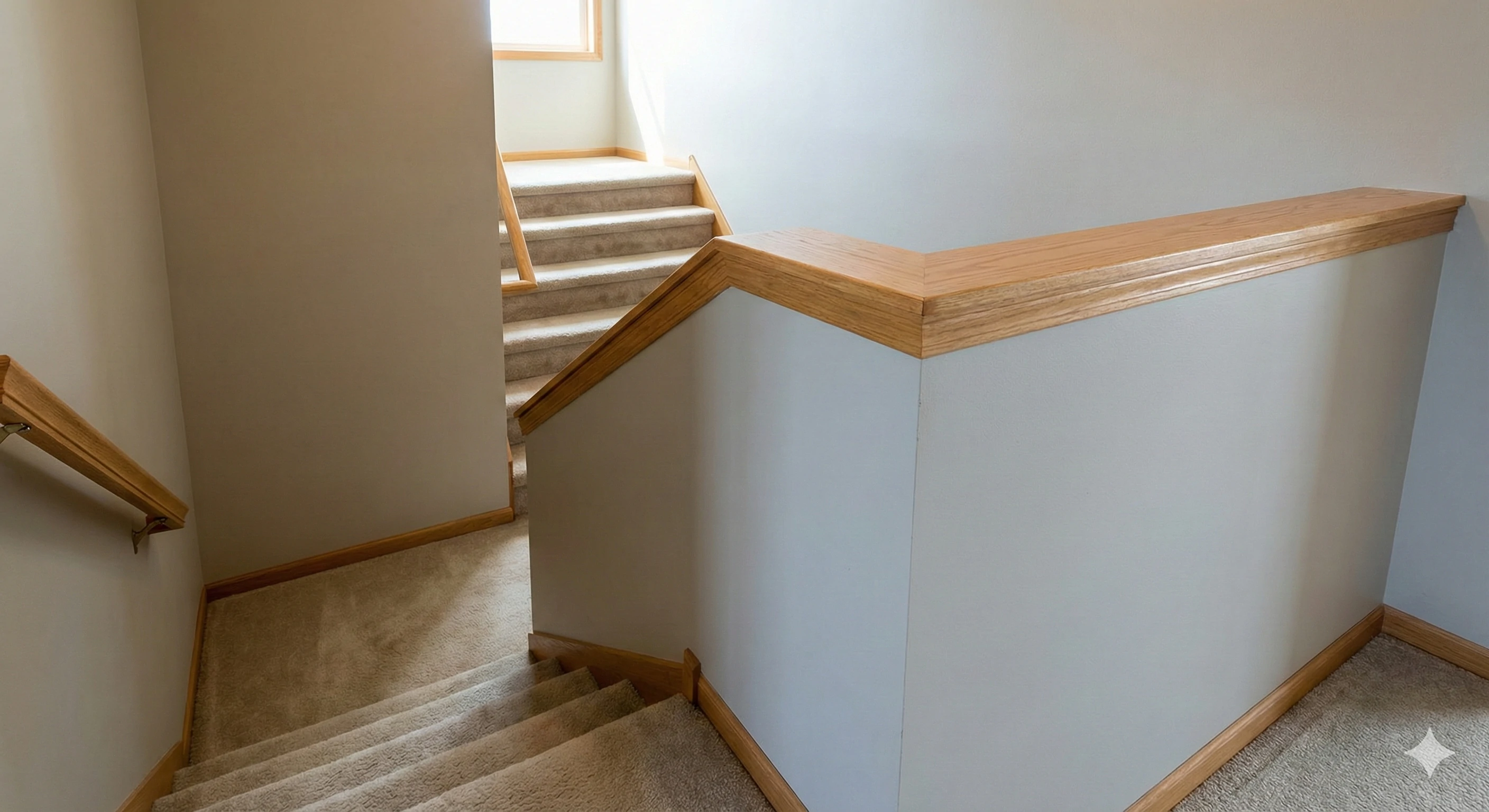
While we specialize in metal and glass hardware, we respect that sometimes the budget dictates the design. A pony wall is essentially a framing solution rather than a hardware solution. The problem with custom railing is the lead time and material cost. A pony wall solves the budget issue because it is built by the framers and drywallers who are already on site.
A pony wall, or half-wall, is a framed structure covered in drywall that extends from the floor up to the required guardrail height of 36 or 42 inches. It provides a solid, low-cost safety barrier that hides the stairs, but it significantly blocks light and makes stairwells feel narrower and more enclosed.
When to Choose a Pony Wall
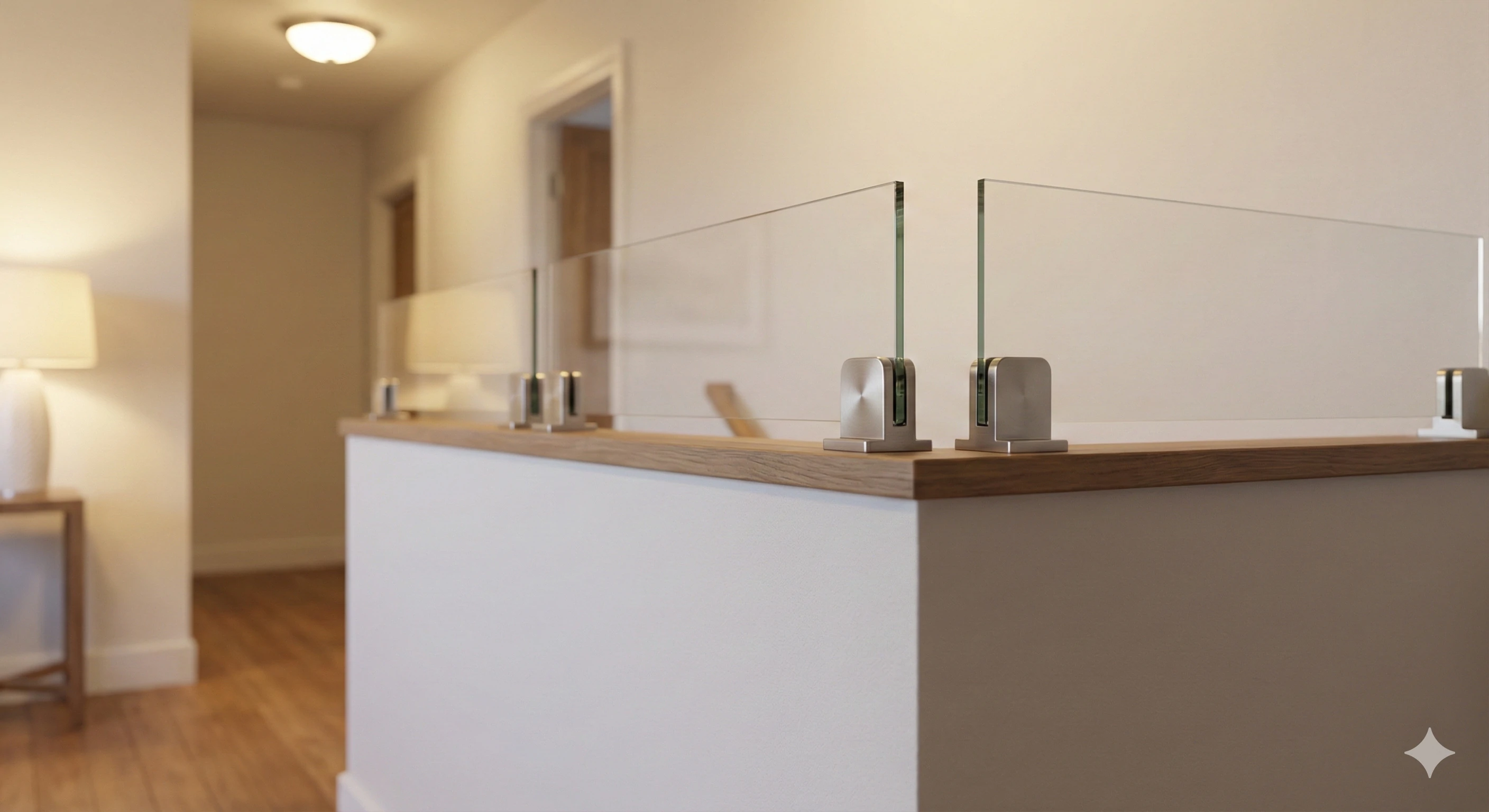
In our experience, a pony wall is the default choice for where the builder wants to minimize costs. It requires no specialized hardware—just 2x4 studs, drywall, and paint.
However, from a design perspective, it is the exact opposite of an "invisible" rail. It closes off the room. If your staircase is in a dark hallway or basement, a pony wall will make the space feel like a tunnel.
The Hybrid Approach
We have seen creative contractors compromise by building a pony wall and mounting a glass top rail on it. Or, they might use a pony wall for the straight sections and use our glass hardware for the landings to open up the view slightly.
One hidden benefit of the pony wall is cleanliness. Open stairs with glass railings show every dust bunny and sock that falls on the stairs. A solid wall hides the mess on the stairs from the living room view. It is a practical, albeit less attractive, alternative.
Comparison: Pony Wall vs. Glass Hardware
-
Cost: Pony Wall is significantly cheaper (Labor dominates, materials are cheap).
-
Light: Pony Wall blocks 100% of light; Glass allows 100%.
-
Space: Pony walls are usually 4.5 inches thick; Glass is 0.5 inches thick.
-
Durability: Drywall scuffs and dents easily; Tempered glass and stainless steel are incredibly hard.
4. The "Artistic" Option: Laser-Cut Metal Screens?
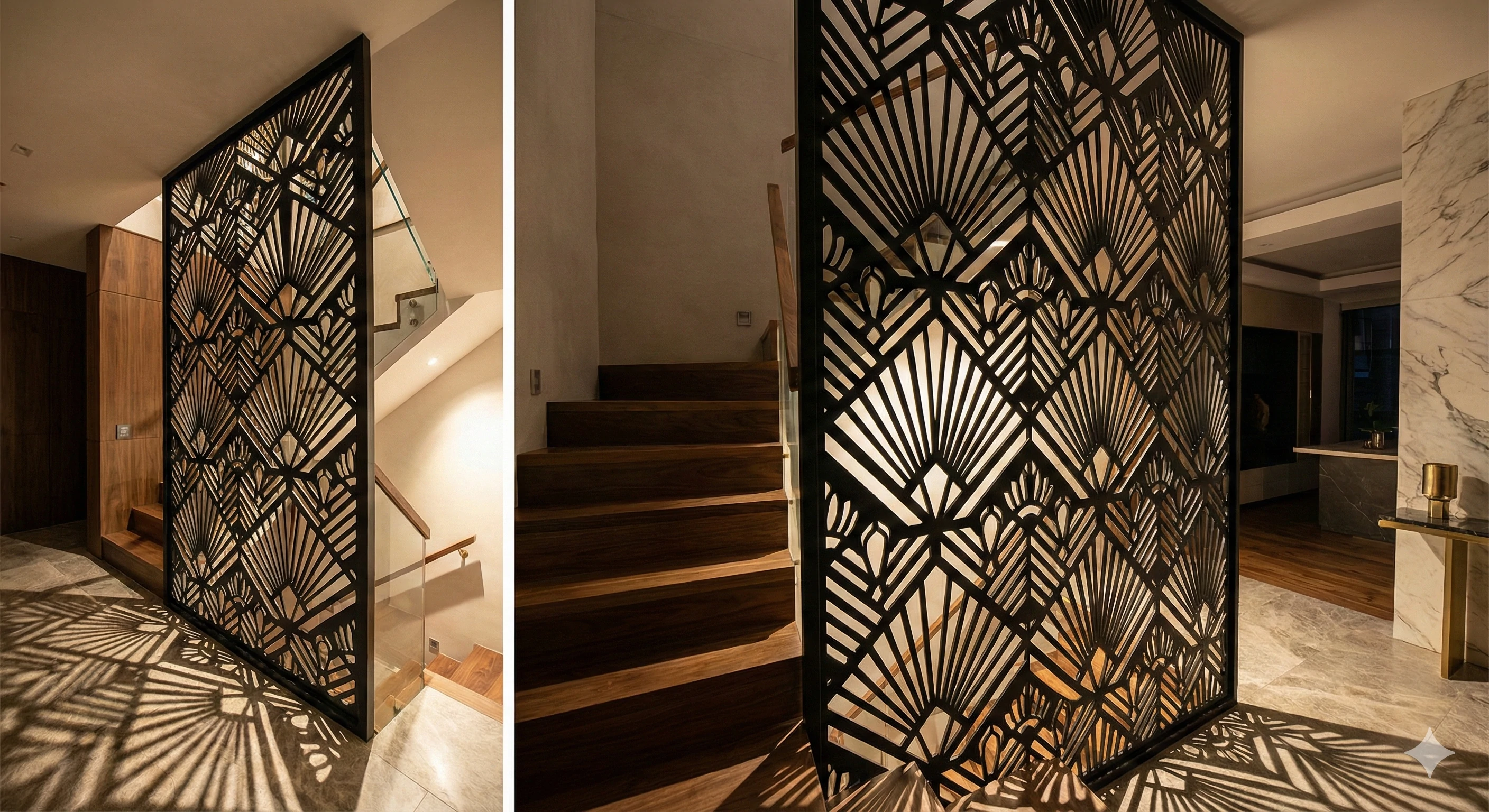
Our production line focuses on standardized hardware, but we occasionally collaborate on custom fabrication projects involving laser cutting. The desire here is not to be invisible, but to be unique. Some homeowners want their staircase to be a piece of art. Laser-cut screens solve the "boring" problem by turning the safety barrier into a patterned sculpture.
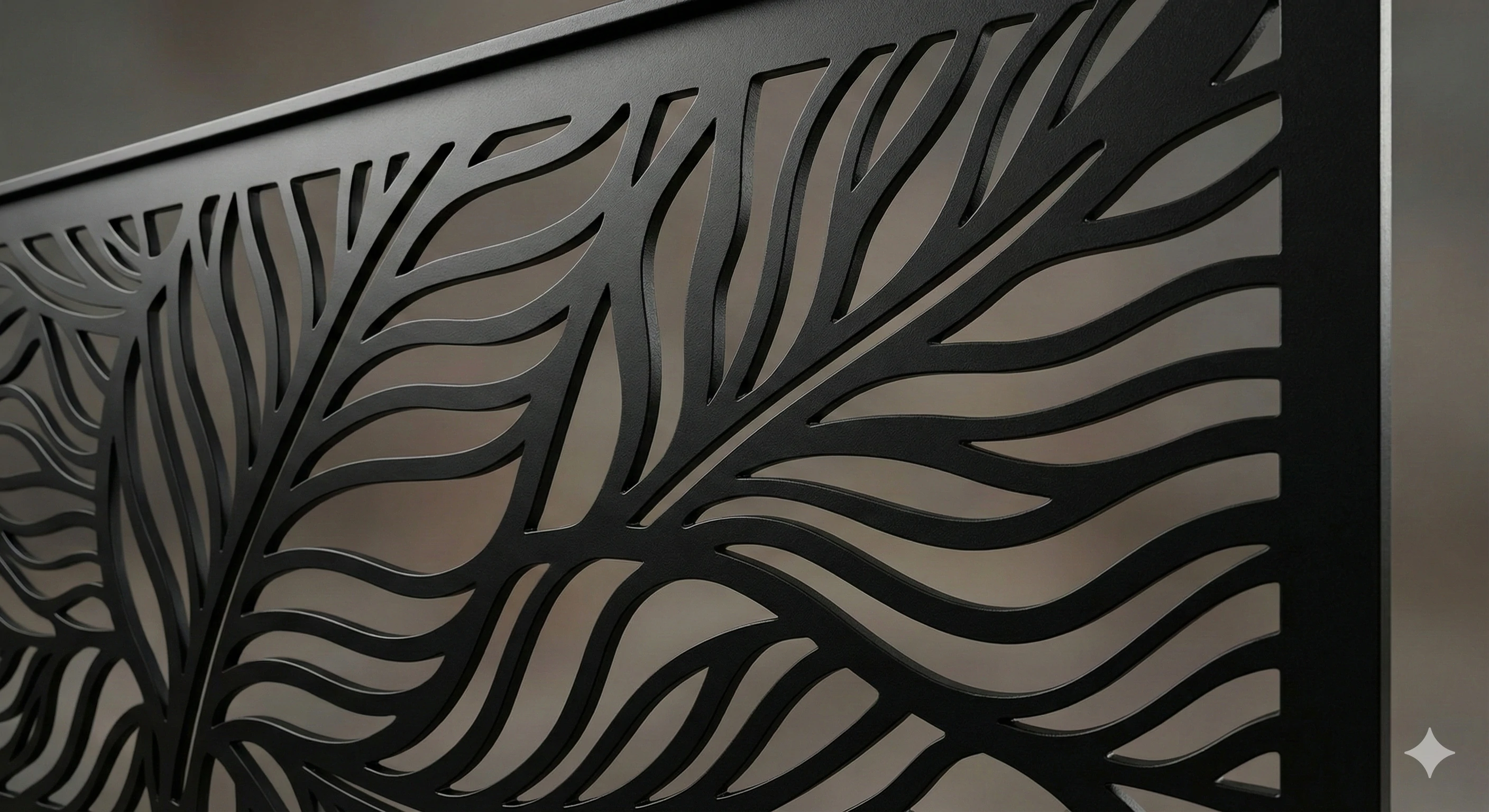
Laser-cut metal screens are single sheets of steel or aluminum featuring intricate geometric or organic patterns cut by high-precision machinery. These panels serve as the structural guardrail and offer a unique artistic statement, though they are often expensive due to custom fabrication and can block light depending on the design density.
The Customization Factor
This option is for the homeowner who wants a specific motif—perhaps Art Deco, mid-century modern, or a nature-inspired leaf pattern. Unlike glass standoffs which we keep in stock, these panels are almost always made to order.
We recommend for these screens. It is lighter than steel, making it easier to install indoors, and it holds paint finishes well.
Considerations for Light and Safety
The main challenge we see with these screens is the "goldilocks" zone of the pattern.
-
Too open: If the holes in the pattern are too large (usually over 4 inches), a sphere (representing a child's head) can pass through, failing the in building codes.
-
Too closed: If the metal is too solid, you lose the light and open feel, similar to a pony wall.
Cost Implications
Because these are not mass-produced like our standoff buttons, the cost is high. You are paying for:
-
CAD design time to map the pattern to your specific stair angle.
-
Laser machine time.
-
Powder coating.
-
Crating and shipping large metal sheets.
It creates a stunning visual, but usually at 3x to 4x the cost of a standard glass railing system.
Important Distinction: Handrail vs. Guardrail?
Our support team answers this question more than any other. Clients frequently confuse the barrier with the grip. You might want a minimalist look, but you cannot ignore ergonomics and code. The problem is assuming that a glass wall means you don't need a rail to hold onto. In most jurisdictions, you need both, but they serve different functions.
A guardrail is the structural barrier that prevents accidental falls from an elevated surface, while a handrail is the graspable support used for balance while walking up and down. Even if you use frameless glass as your guardrail, building codes usually mandate a separate, continuous handrail for safety.
Understanding the Code Requirements
We engineer our products to meet strict load tests. The (the glass and standoffs) must withstand pushing outward. The handrail must also withstand 200 lbs of force in any direction.
Often, clients install our glass standoffs and think they are done. Then the inspector fails them because there is nothing to grab.
Minimalist Handrail Solutions
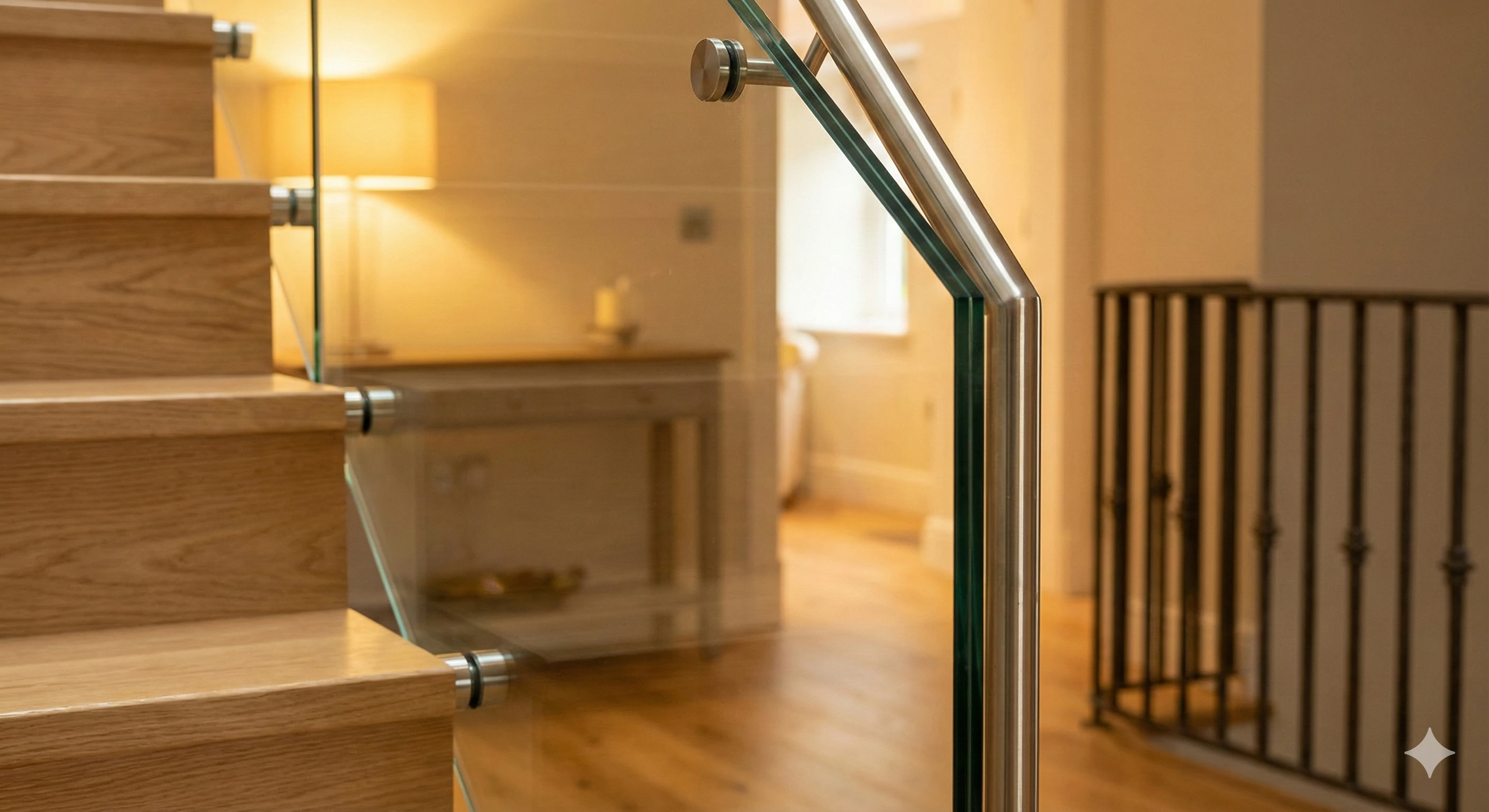
To maintain the "invisible" look while satisfying the inspector, we recommend mounting the handrail directly to the glass. We manufacture stainless steel brackets specifically for this. They clamp through holes in the glass panel and hold a slim metal tube.
This setup keeps the handrail floating in the air, maintaining the open aesthetic. Alternatively, you can mount the handrail on the wall opposite the glass.
Technical Specs for Handrails
When sourcing your handrail components, ensure they meet these general specs (always check your local code):
| Specification | Requirement | Why it matters |
|---|---|---|
| Height | 34" to 38" above | optimal height for an average adult to grab. |
| Grip Size | 1.25" to 2" diameter | Too thick, and your hand can't lock around it. |
| Clearance | Min 1.5" from wall | Knuckles need space so they don't scrape the wall. |
| Continuity | Must be continuous | You shouldn't have to let go while navigating the full flight. |
Why "Standoffs" Are the Best Alternative for Modern Homes?
After years of supplying projects from Sydney to San Francisco, we have seen trends come and go. But glass standoffs remain the superior choice for a specific reason: Value. Homeowners want a "million-dollar look" without necessarily spending a million dollars. Standoffs offer the highest return on investment regarding visual impact.
Glass standoffs are the best alternative because they provide the only true "floating" aesthetic by side-mounting to the fascia, clearing 100% of the stair tread width. They maximize natural light flow, increase the perceived size of the room, and use minimal stainless steel hardware to ensure the view remains unobstructed.
Maximizing Usable Width
This is a benefit we always highlight to architects. If you have a narrow staircase (say, the standard 36 inches), adding a traditional post railing on top of the treads reduces your walking width to about 32 inches. It makes moving furniture a nightmare.
By using our side-mounted standoffs, the glass hangs outside the walking path. You retain the full 36-inch width. In tight urban homes, those extra 4 inches make a massive difference.
The Light Factor
We cannot overstate the impact of light. Basements and hallways are often the darkest parts of a home. Replacing wood spindles or pony walls with glass instantly transforms the area. Light from adjacent windows travels through the stairs, illuminating the floor below.
Durability and ROI
From a manufacturing standpoint, 316 stainless steel and tempered glass are incredibly durable materials. They do not warp like wood, they do not chip like drywall, and they do not rot. While the initial investment is higher than a wood rail, the longevity and the increase in property value—the "wow factor" when selling the home—make it a smart financial decision for the renovation.
Conclusion
You do not have to settle for traditional "jail bars" or dark, enclosed stairwells. The alternative to stair rails is a system that offers safety without visual obstruction. Whether you choose the industrial look of cable, the budget-friendly pony wall, or the artistic metal screen, you have options. However, for the ultimate blend of modern luxury, light flow, and space-saving design, frameless glass standoffs are the clear winner. They provide the safety of a barrier with the beauty of invisibility.
Footnotes
1. Differences in strength and safety between tempered and regular glass.
2. Chemical properties and corrosion resistance of 316 stainless steel.
3. Current building codes for residential stairways and railings.
4. Mechanism used for adjusting tension in cable railing systems.
5. Definition and characteristics of speculative (spec) housing construction.
6. Benefits of powder coating for durability and finish options.
7. Code rule preventing sphere passage through guardrail openings.
8. Distinction between fall protection barriers and hand supports.
9. Structural load requirements for commercial and residential handrails.

